
Pioneer Venus Galileo Probe Development ComparisonAssessment John Givens
Pioneer Venus & Galileo Probe Development: Comparison/Assessment John Givens
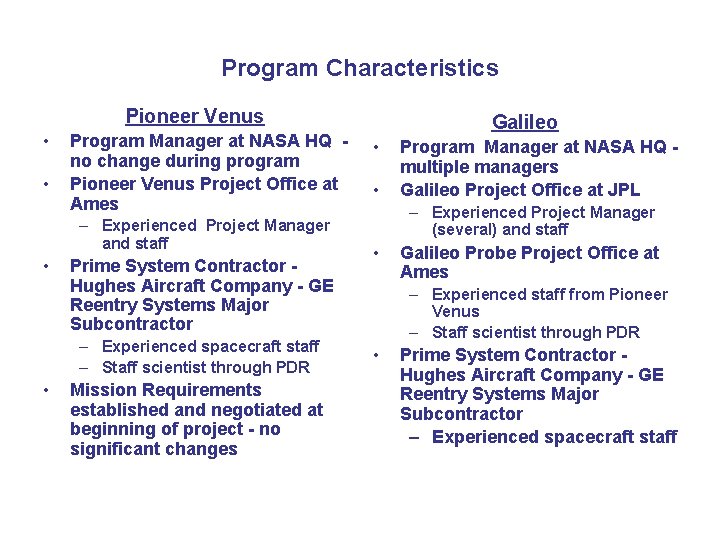
Program Characteristics Pioneer Venus • • Program Manager at NASA HQ no change during program Pioneer Venus Project Office at Ames – Experienced Project Manager and staff • Prime System Contractor Hughes Aircraft Company - GE Reentry Systems Major Subcontractor – Experienced spacecraft staff – Staff scientist through PDR • Mission Requirements established and negotiated at beginning of project - no significant changes Galileo • • Program Manager at NASA HQ multiple managers Galileo Project Office at JPL – Experienced Project Manager (several) and staff • Galileo Probe Project Office at Ames – Experienced staff from Pioneer Venus – Staff scientist through PDR • Prime System Contractor Hughes Aircraft Company - GE Reentry Systems Major Subcontractor – Experienced spacecraft staff
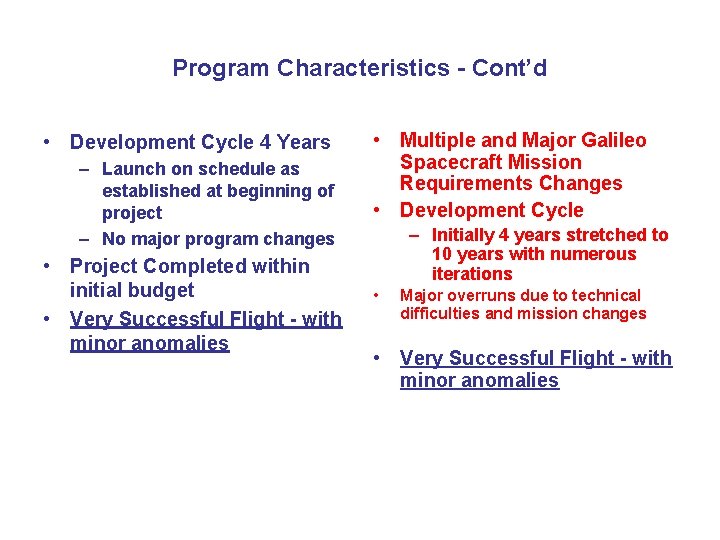
Program Characteristics - Cont’d • Development Cycle 4 Years – Launch on schedule as established at beginning of project – No major program changes • Project Completed within initial budget • Very Successful Flight - with minor anomalies • Multiple and Major Galileo Spacecraft Mission Requirements Changes • Development Cycle – Initially 4 years stretched to 10 years with numerous iterations • Major overruns due to technical difficulties and mission changes • Very Successful Flight - with minor anomalies
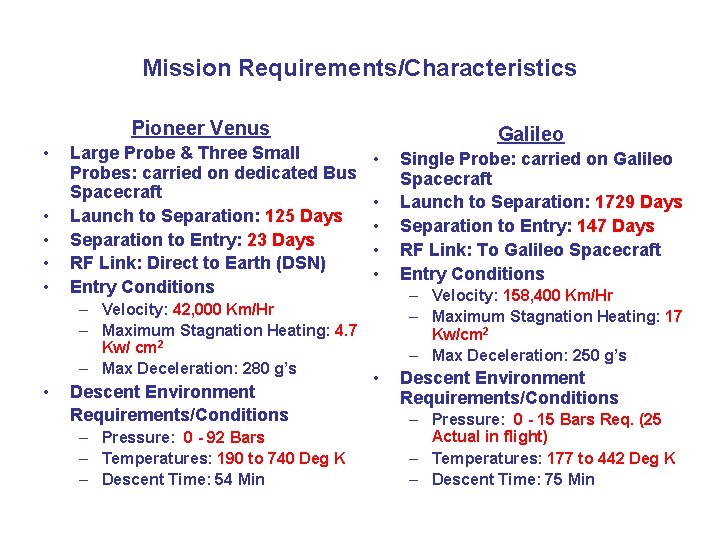
Mission Requirements/Characteristics Pioneer Venus • • • Large Probe & Three Small Probes: carried on dedicated Bus Spacecraft Launch to Separation: 125 Days Separation to Entry: 23 Days RF Link: Direct to Earth (DSN) Entry Conditions – Velocity: 42, 000 Km/Hr – Maximum Stagnation Heating: 4. 7 Kw/ cm 2 – Max Deceleration: 280 g’s • Descent Environment Requirements/Conditions – Pressure: 0 - 92 Bars – Temperatures: 190 to 740 Deg K – Descent Time: 54 Min Galileo • • • Single Probe: carried on Galileo Spacecraft Launch to Separation: 1729 Days Separation to Entry: 147 Days RF Link: To Galileo Spacecraft Entry Conditions – Velocity: 158, 400 Km/Hr – Maximum Stagnation Heating: 17 Kw/cm 2 – Max Deceleration: 250 g’s • Descent Environment Requirements/Conditions – Pressure: 0 - 15 Bars Req. (25 Actual in flight) – Temperatures: 177 to 442 Deg K – Descent Time: 75 Min
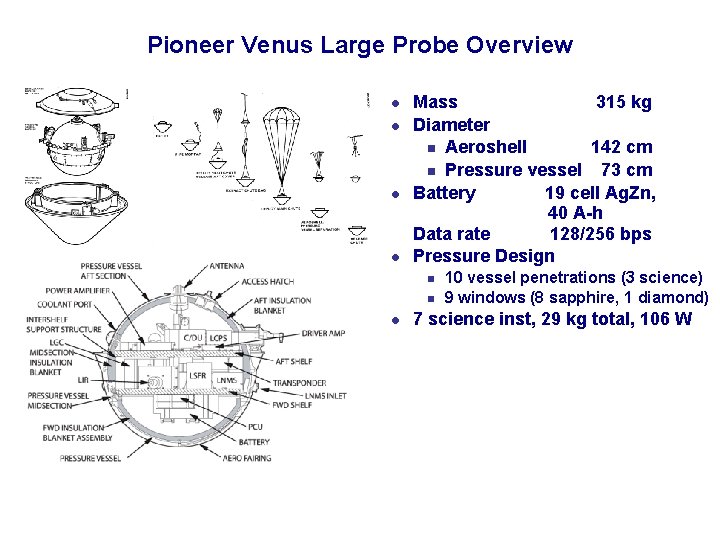
Pioneer Venus Large Probe Overview l l Mass 315 kg Diameter n Aeroshell 142 cm n Pressure vessel 73 cm Battery 19 cell Ag. Zn, 40 A-h Data rate 128/256 bps Pressure Design n n l 10 vessel penetrations (3 science) 9 windows (8 sapphire, 1 diamond) 7 science inst, 29 kg total, 106 W
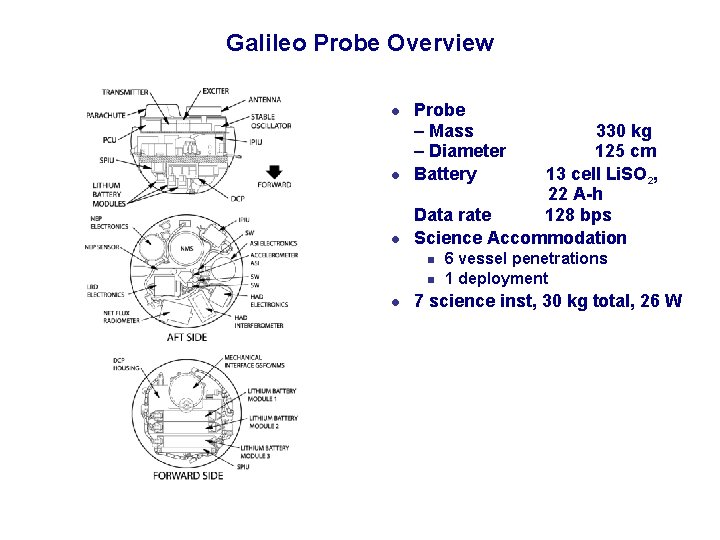
Galileo Probe Overview l l l Probe – Mass – Diameter Battery 330 kg 125 cm 13 cell Li. SO 2, 22 A-h Data rate 128 bps Science Accommodation n n l 6 vessel penetrations 1 deployment 7 science inst, 30 kg total, 26 W
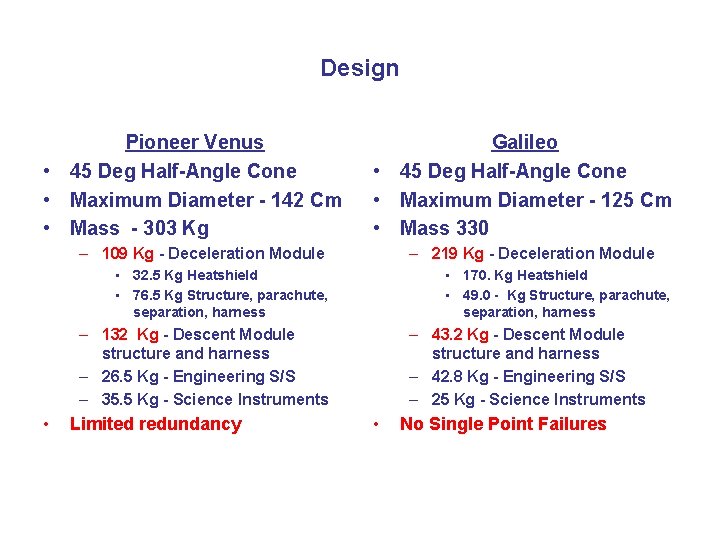
Design Pioneer Venus • 45 Deg Half-Angle Cone • Maximum Diameter - 142 Cm • Mass - 303 Kg Galileo • 45 Deg Half-Angle Cone • Maximum Diameter - 125 Cm • Mass 330 – 109 Kg - Deceleration Module – 219 Kg - Deceleration Module • 32. 5 Kg Heatshield • 76. 5 Kg Structure, parachute, separation, harness • 170. Kg Heatshield • 49. 0 - Kg Structure, parachute, separation, harness – 132 Kg - Descent Module structure and harness – 26. 5 Kg - Engineering S/S – 35. 5 Kg - Science Instruments • Limited redundancy – 43. 2 Kg - Descent Module structure and harness – 42. 8 Kg - Engineering S/S – 25 Kg - Science Instruments • No Single Point Failures
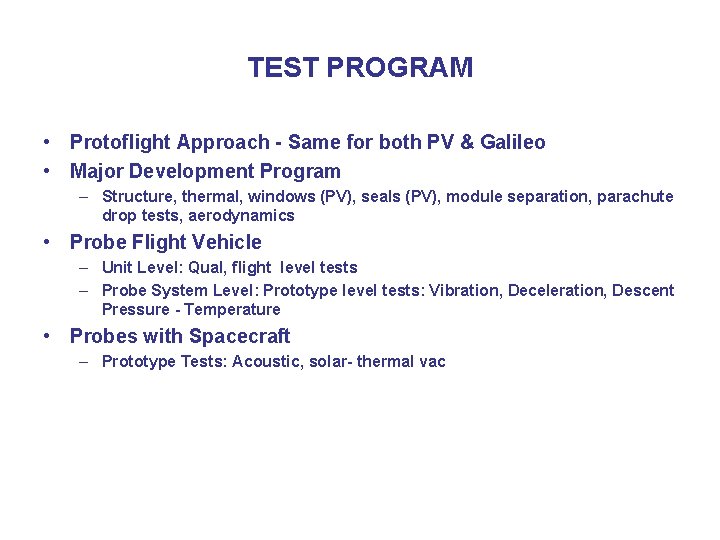
TEST PROGRAM • Protoflight Approach - Same for both PV & Galileo • Major Development Program – Structure, thermal, windows (PV), seals (PV), module separation, parachute drop tests, aerodynamics • Probe Flight Vehicle – Unit Level: Qual, flight level tests – Probe System Level: Prototype level tests: Vibration, Deceleration, Descent Pressure - Temperature • Probes with Spacecraft – Prototype Tests: Acoustic, solar- thermal vac
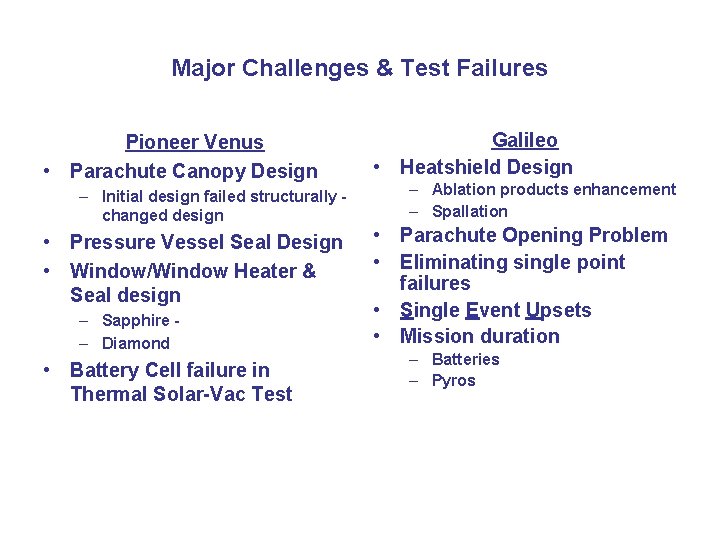
Major Challenges & Test Failures Pioneer Venus • Parachute Canopy Design – Initial design failed structurally changed design • Pressure Vessel Seal Design • Window/Window Heater & Seal design – Sapphire – Diamond • Battery Cell failure in Thermal Solar-Vac Test Galileo • Heatshield Design – Ablation products enhancement – Spallation • Parachute Opening Problem • Eliminating single point failures • Single Event Upsets • Mission duration – Batteries – Pyros
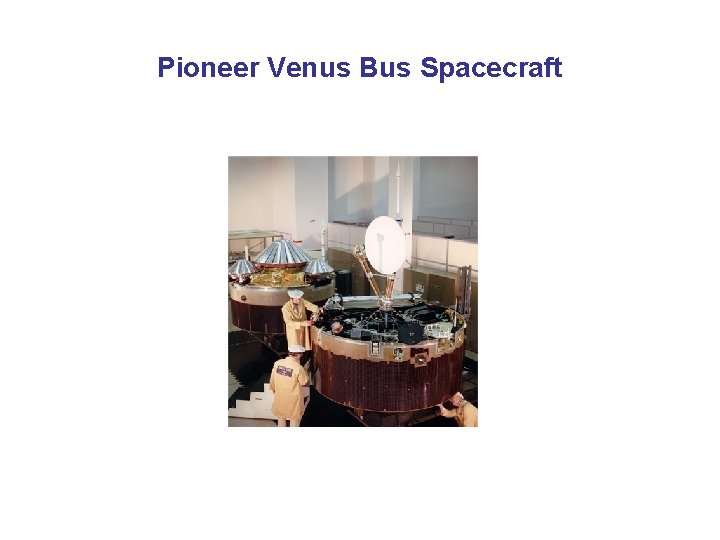
Pioneer Venus Bus Spacecraft
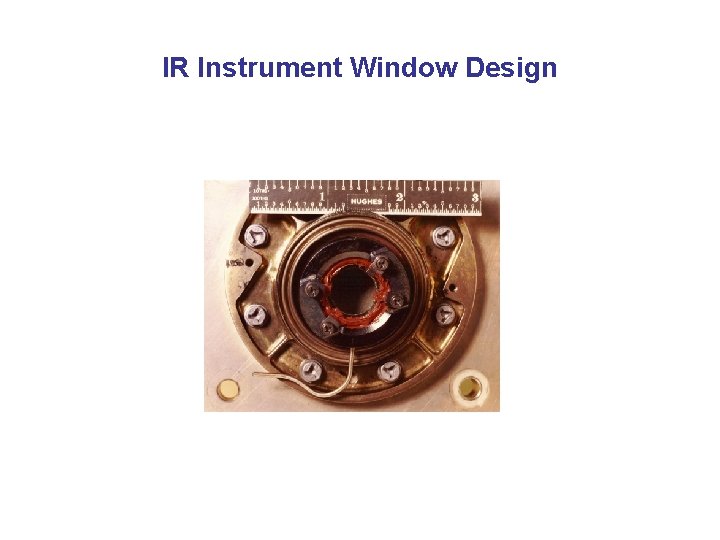
IR Instrument Window Design
SUMARY/CONCLUSIONS • Both missions were highly successful - met mission requirements and returned good science • Bernie is right: “Test what you fly and fly what you test. ” • Analyze flight-data for anomalies - find out what caused them • Space projects are hard work – It takes a dedicated team – There are difficult, perplexing, unexpected and discouraging problems MISSION SUCCESS REMOVES ALL OF THE PAIN AND AGONY IT TOOK TO GET THERE!
- Slides: 12