
PINGOS Jennifer Vinck Geology 495 University of Regina
- Slides: 17
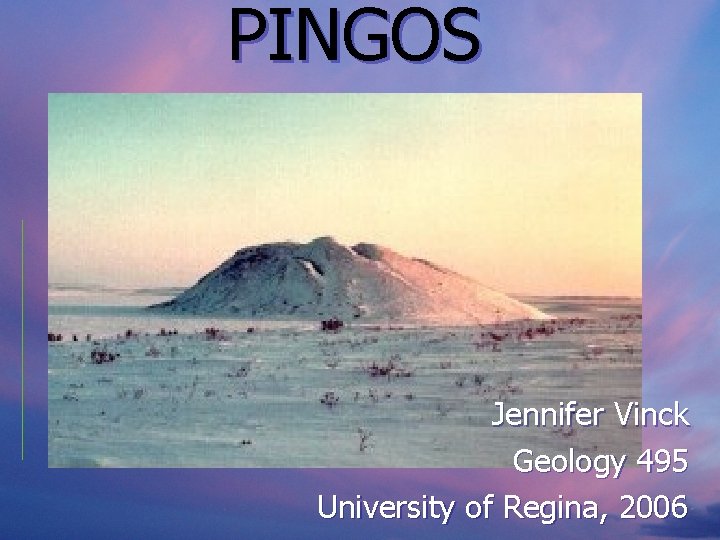
PINGOS Jennifer Vinck Geology 495 University of Regina, 2006
To be discussed: • What is a pingo? • Distribution • Pingo Features • Pingo Growth and Development - Hydrostatic (closed) System - Hydraulic (open) system • Case Study: Ibyuk Pingo, Tuktoyaktuk • Current Research
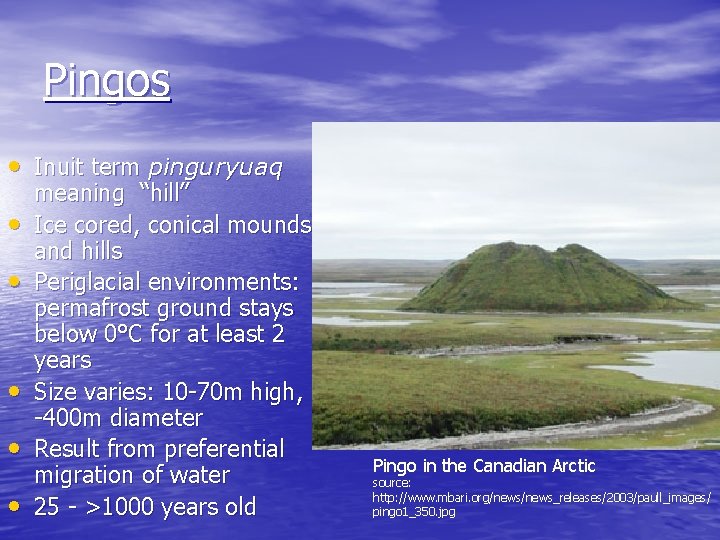
Pingos • Inuit term pinguryuaq • • • meaning “hill” Ice cored, conical mounds and hills Periglacial environments: permafrost ground stays below 0°C for at least 2 years Size varies: 10 -70 m high, 20 -400 m diameter Result from preferential migration of water 25 - >1000 years old Pingo in the Canadian Arctic source: http: //www. mbari. org/news_releases/2003/paull_images/ pingo 1_350. jpg
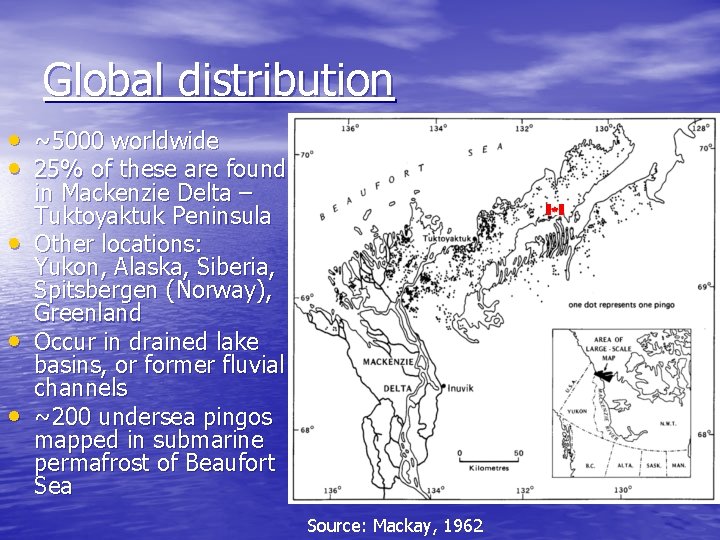
Global distribution • ~5000 worldwide • 25% of these are found • • • in Mackenzie Delta – Tuktoyaktuk Peninsula Other locations: Yukon, Alaska, Siberia, Spitsbergen (Norway), Greenland Occur in drained lake basins, or former fluvial channels ~200 undersea pingos mapped in submarine permafrost of Beaufort Sea Source: Mackay, 1962
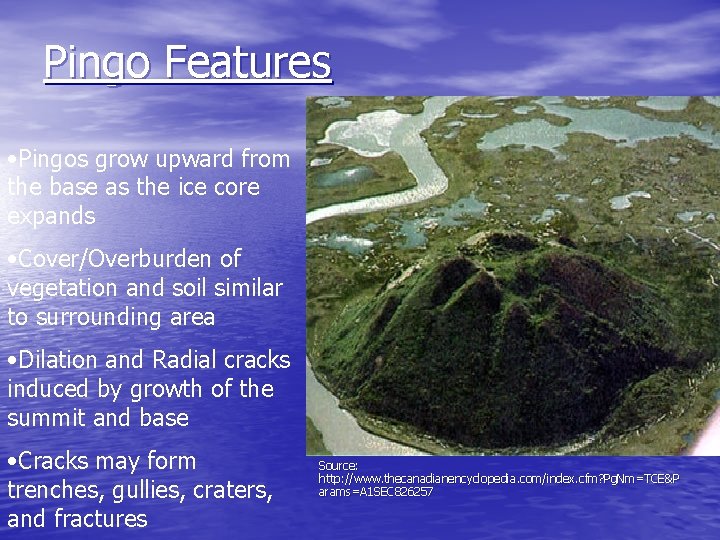
Pingo Features • Pingos grow upward from the base as the ice core expands • Cover/Overburden of vegetation and soil similar to surrounding area • Dilation and Radial cracks induced by growth of the summit and base • Cracks may form trenches, gullies, craters, and fractures Source: http: //www. thecanadianencyclopedia. com/index. cfm? Pg. Nm=TCE&P arams=A 1 SEC 826257
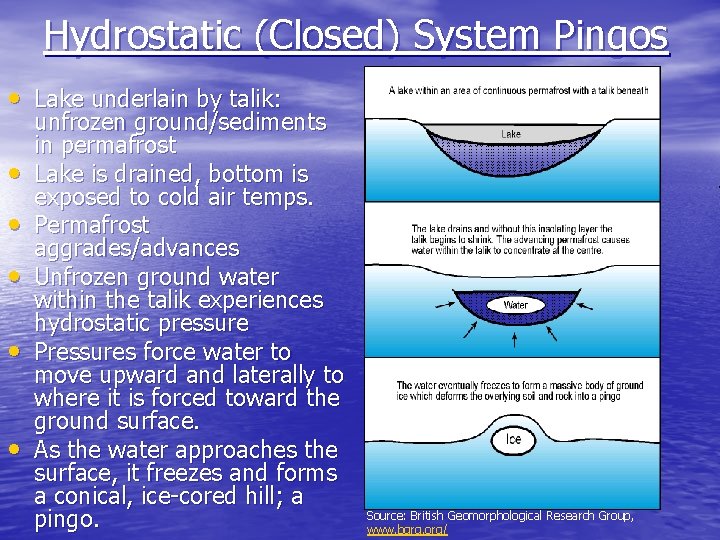
Hydrostatic (Closed) System Pingos • Lake underlain by talik: • • • unfrozen ground/sediments in permafrost Lake is drained, bottom is exposed to cold air temps. Permafrost aggrades/advances Unfrozen ground water within the talik experiences hydrostatic pressure Pressures force water to move upward and laterally to where it is forced toward the ground surface. As the water approaches the surface, it freezes and forms a conical, ice-cored hill; a pingo. Source: British Geomorphological Research Group, www. bgrg. org/
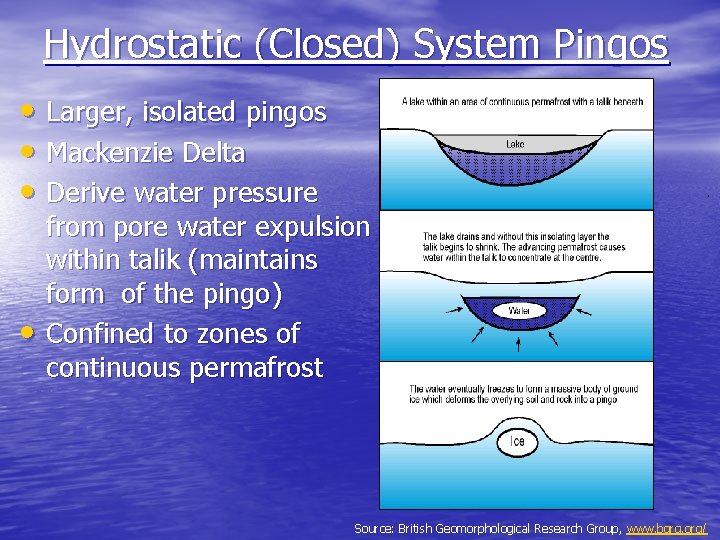
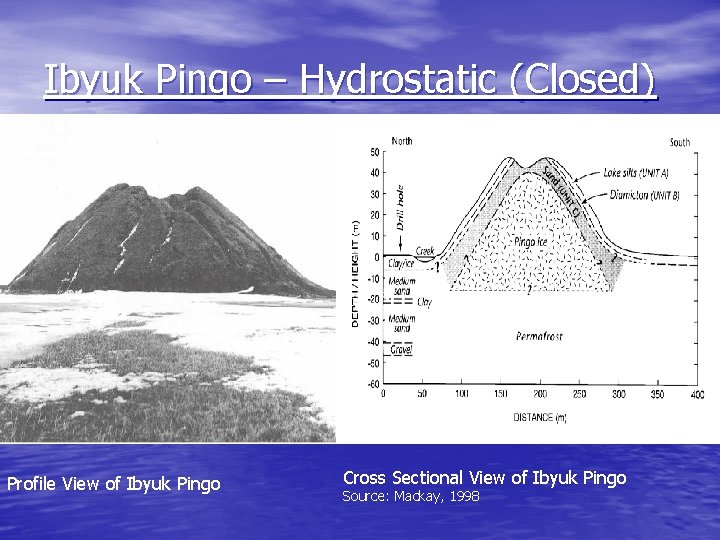
Hydrostatic (Closed) System Pingos • Larger, isolated pingos • Mackenzie Delta • Derive water pressure • from pore water expulsion within talik (maintains form of the pingo) Confined to zones of continuous permafrost Source: British Geomorphological Research Group, www. bgrg. org/
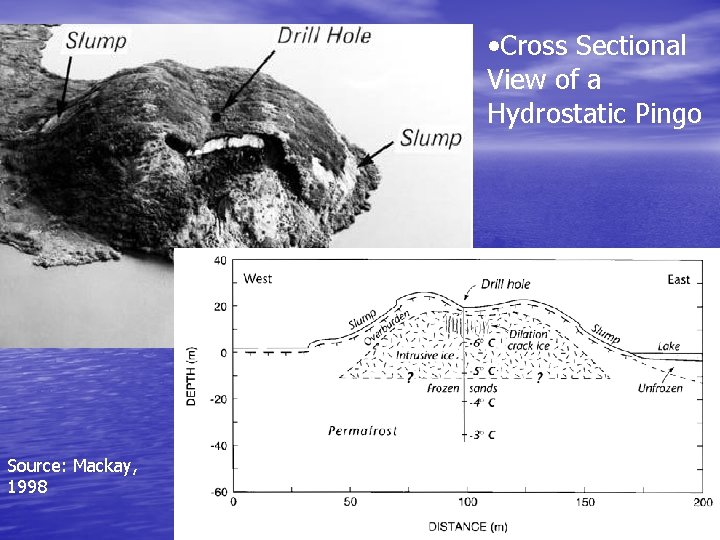
• Cross Sectional View of a Hydrostatic Pingo Source: Mackay, 1998
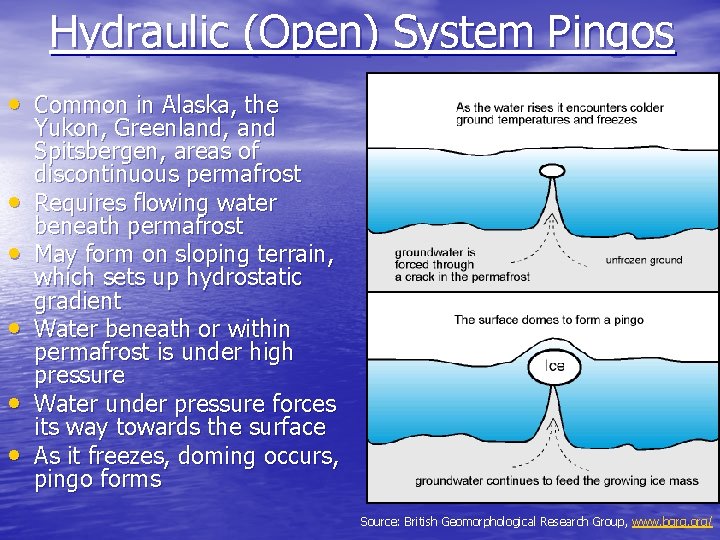
Hydraulic (Open) System Pingos • Common in Alaska, the • • • Yukon, Greenland, and Spitsbergen, areas of discontinuous permafrost Requires flowing water beneath permafrost May form on sloping terrain, which sets up hydrostatic gradient Water beneath or within permafrost is under high pressure Water under pressure forces its way towards the surface As it freezes, doming occurs, pingo forms Source: British Geomorphological Research Group, www. bgrg. org/
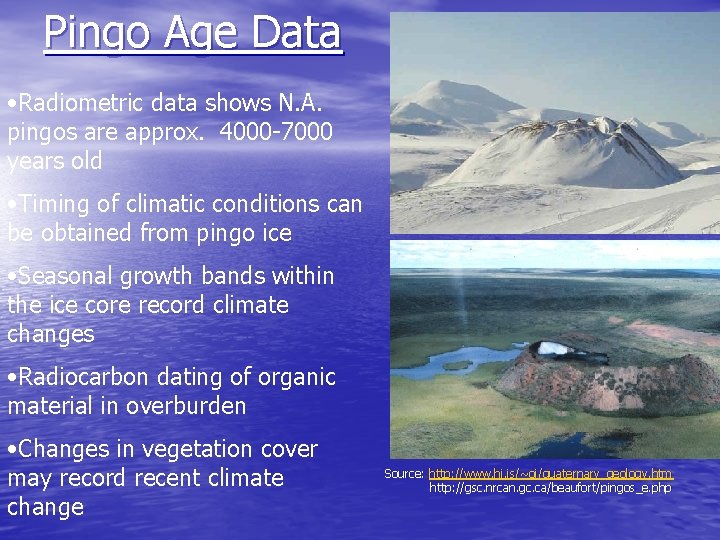
Pingo Age Data • Radiometric data shows N. A. pingos are approx. 4000 -7000 years old • Timing of climatic conditions can be obtained from pingo ice • Seasonal growth bands within the ice core record climate changes • Radiocarbon dating of organic material in overburden • Changes in vegetation cover may record recent climate change Source: http: //www. hi. is/~oi/quaternary_geology. htm http: //gsc. nrcan. gc. ca/beaufort/pingos_e. php
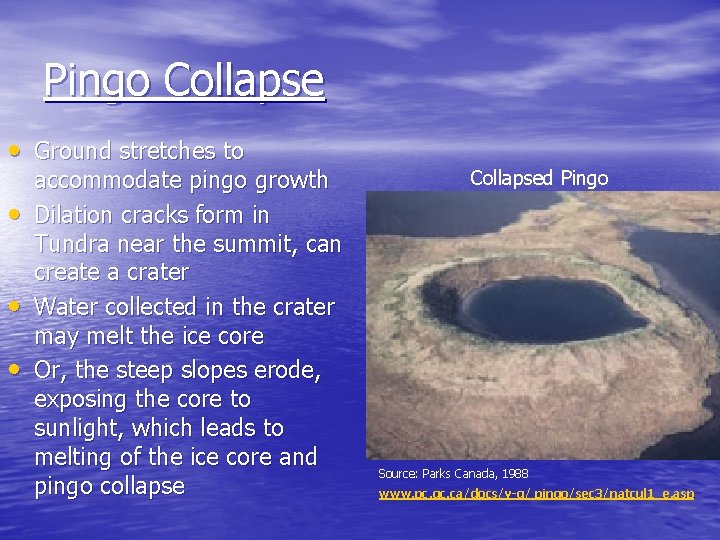
Pingo Collapse • Ground stretches to • • • accommodate pingo growth Dilation cracks form in Tundra near the summit, can create a crater Water collected in the crater may melt the ice core Or, the steep slopes erode, exposing the core to sunlight, which leads to melting of the ice core and pingo collapse Collapsed Pingo Source: Parks Canada, 1988 www. pc. gc. ca/docs/v-g/ pingo/sec 3/natcul 1_e. asp
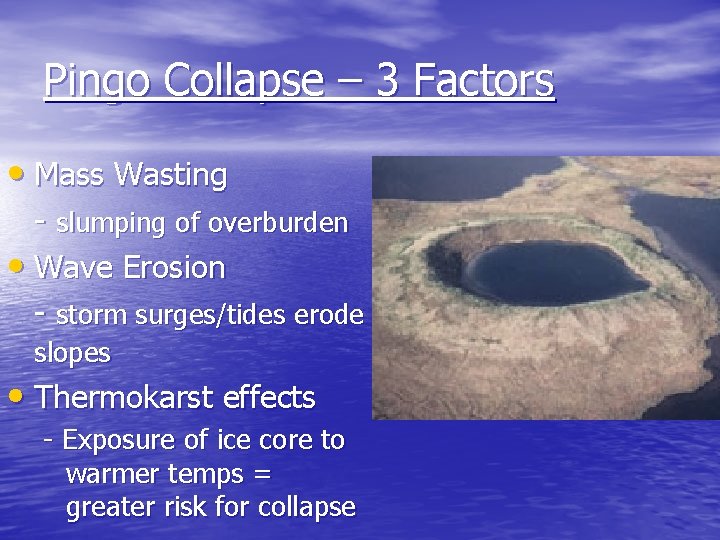
Pingo Collapse – 3 Factors • Mass Wasting - slumping of overburden • Wave Erosion - storm surges/tides erode slopes • Thermokarst effects - Exposure of ice core to warmer temps = greater risk for collapse
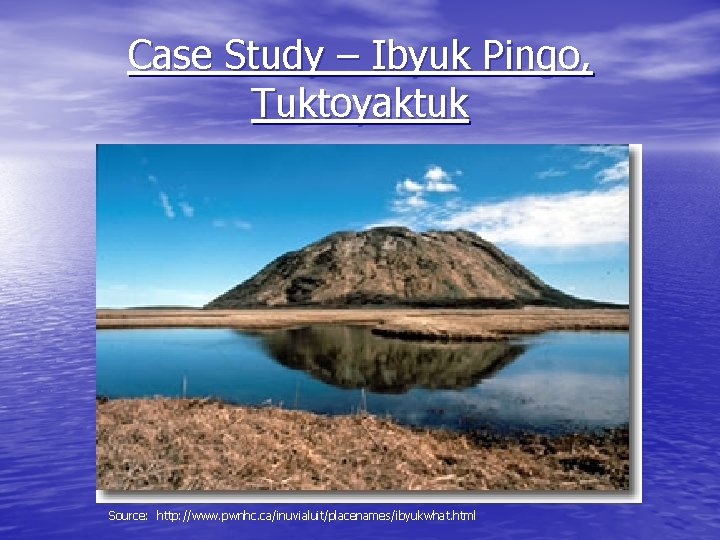
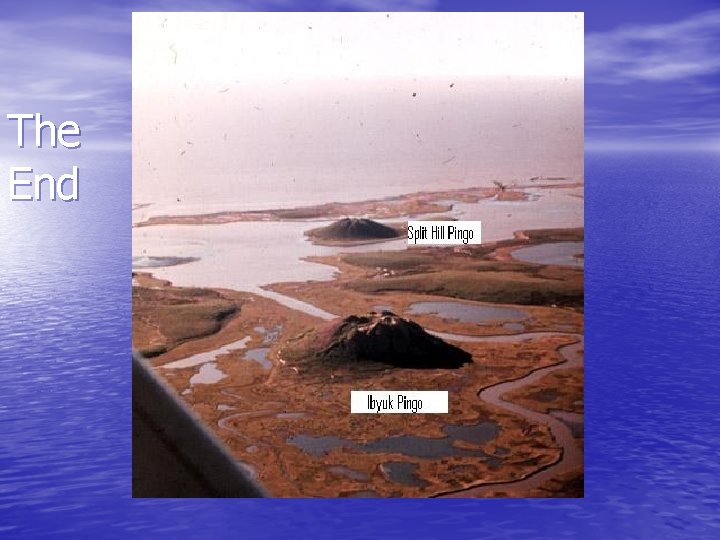
Case Study – Ibyuk Pingo, Tuktoyaktuk Source: http: //www. pwnhc. ca/inuvialuit/placenames/ibyukwhat. html
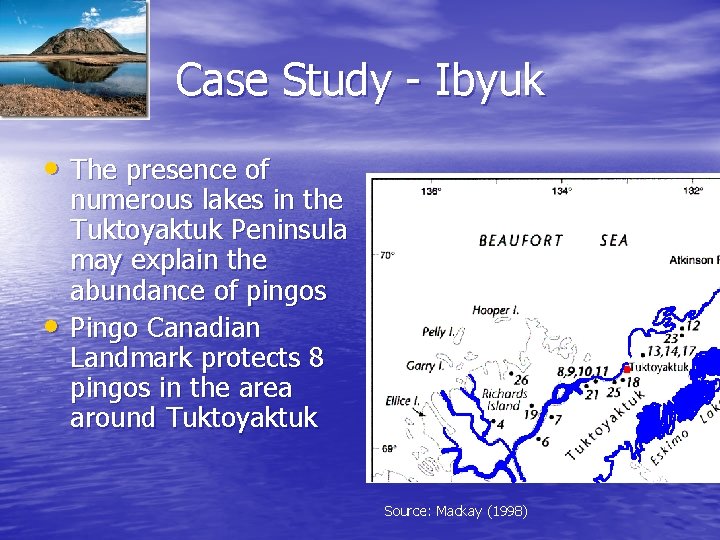
Case Study - Ibyuk • The presence of • numerous lakes in the Tuktoyaktuk Peninsula may explain the abundance of pingos Pingo Canadian Landmark protects 8 pingos in the area around Tuktoyaktuk Source: Mackay (1998)
Ibyuk Pingo – Hydrostatic (Closed) Profile View of Ibyuk Pingo Cross Sectional View of Ibyuk Pingo Source: Mackay, 1998
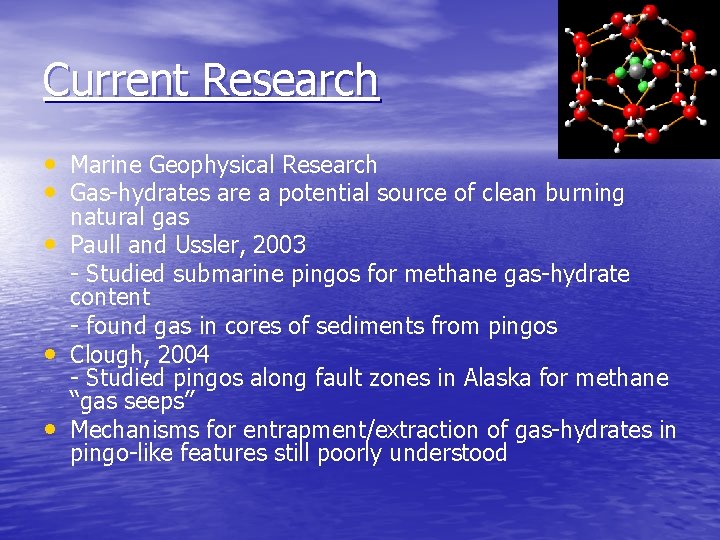
Current Research • Marine Geophysical Research • Gas-hydrates are a potential source of clean burning • • • natural gas Paull and Ussler, 2003 - Studied submarine pingos for methane gas-hydrate content - found gas in cores of sediments from pingos Clough, 2004 - Studied pingos along fault zones in Alaska for methane “gas seeps” Mechanisms for entrapment/extraction of gas-hydrates in pingo-like features still poorly understood
The End