
Pine Silviculture Site Preparation and Planting Longleaf Pine
- Slides: 26
Pine Silviculture Site Preparation and Planting Longleaf Pine Pat Minogue, Ph. D. , R. F. Assistant Professor of Silviculture
Natural Regeneration of Longleaf Uneven aged Stands Even Aged Stands Group selection system: Shelter wood system: Allows periodic harvests while maintaining continuous forest cover. Groups of trees of various sizes are harvested at fixed intervals, every 10 to 25 years (cutting cycle), to create small openings which may be regenerated by natural seeding or planting. Maximizes seed production and provides sufficient needle litter to fuel fires hot enough to inhibit hardwoods and to prepare a seed bed. Prep Cut- thinning to stimulate seed production Seed Cut- for good seed year, burn before seed fall Removal Cut- after adequate seedlings established
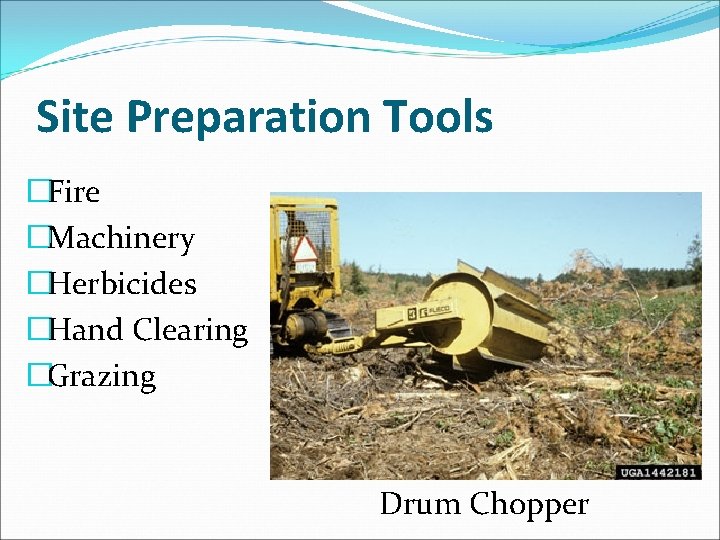
Site Preparation Tools �Fire �Machinery �Herbicides �Hand Clearing �Grazing Drum Chopper
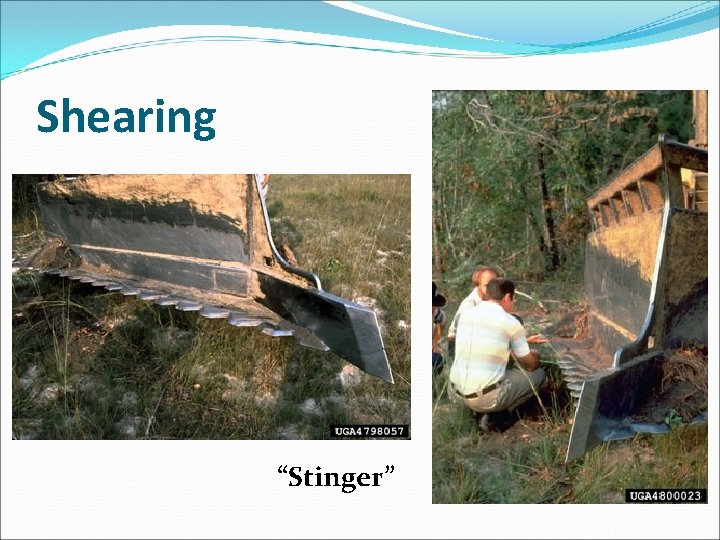
Shearing “Stinger”
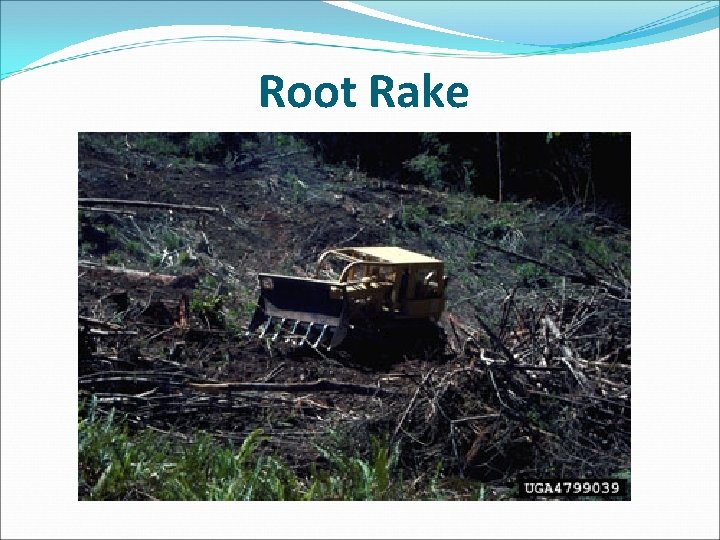
Root Rake
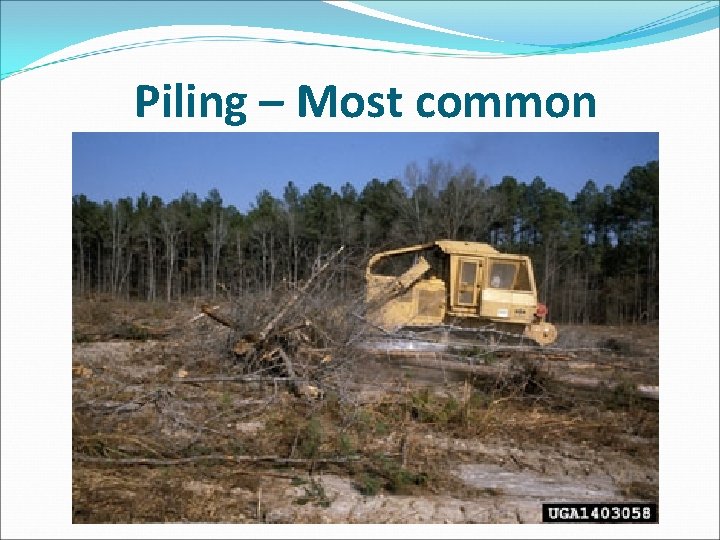
Piling – Most common
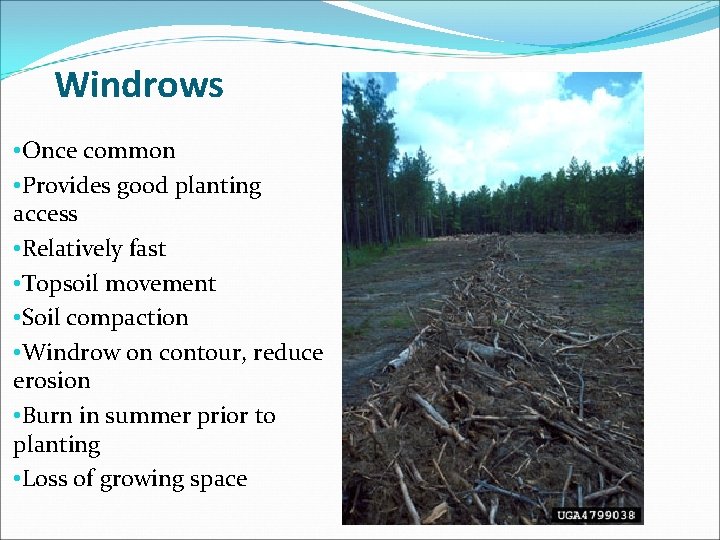
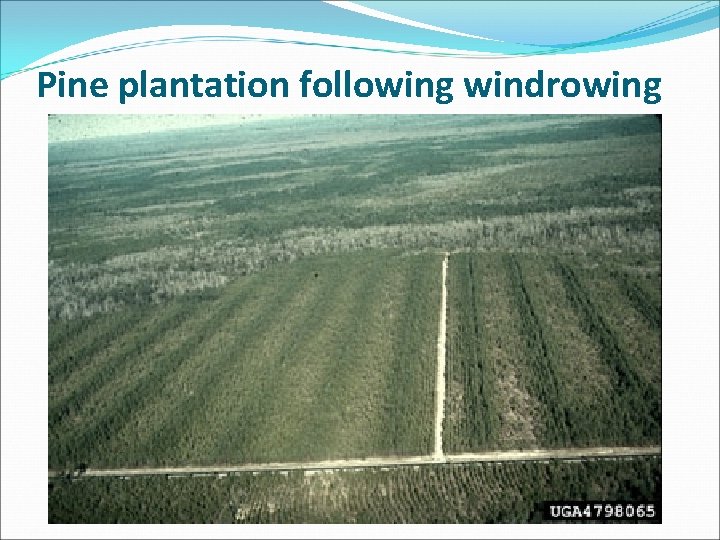
Windrows • Once common • Provides good planting access • Relatively fast • Topsoil movement • Soil compaction • Windrow on contour, reduce erosion • Burn in summer prior to planting • Loss of growing space
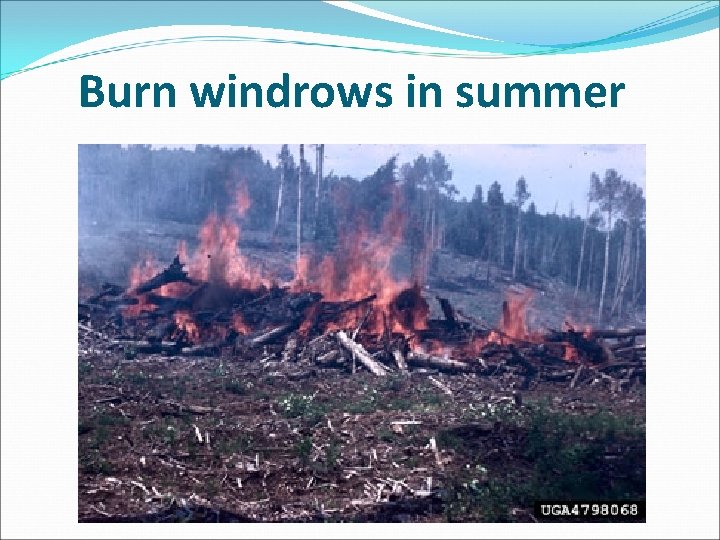
Burn windrows in summer
Pine plantation following windrowing
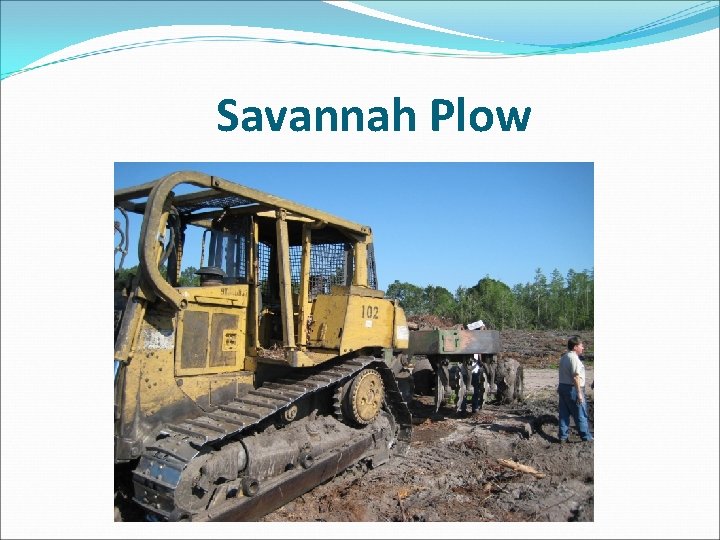
Savannah Plow
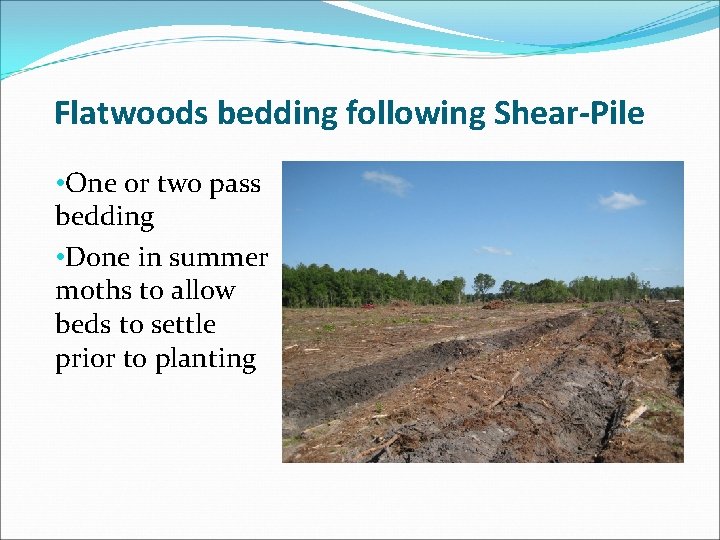
Flatwoods bedding following Shear-Pile • One or two pass bedding • Done in summer moths to allow beds to settle prior to planting
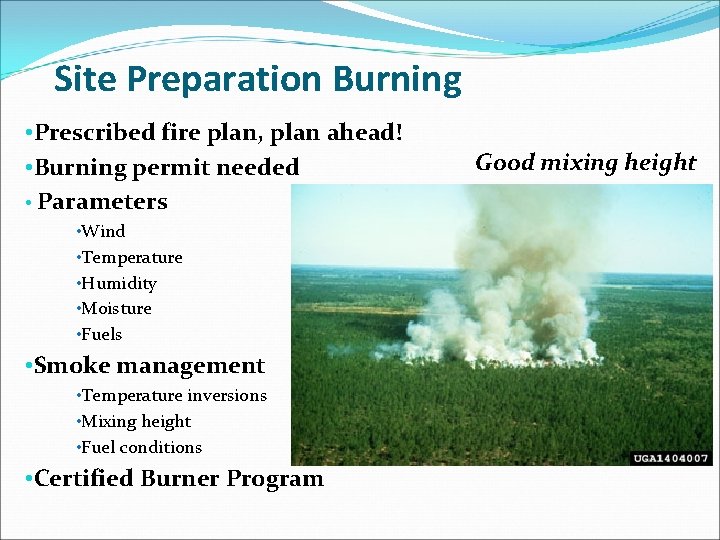
Site Preparation Burning • Prescribed fire plan, plan ahead! • Burning permit needed • Parameters • Wind • Temperature • Humidity • Moisture • Fuels • Smoke management • Temperature inversions • Mixing height • Fuel conditions • Certified Burner Program Good mixing height
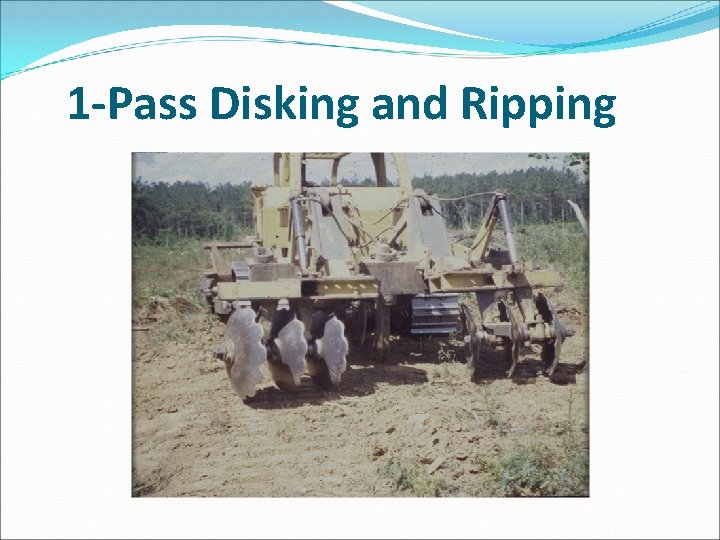
1 -Pass Disking and Ripping
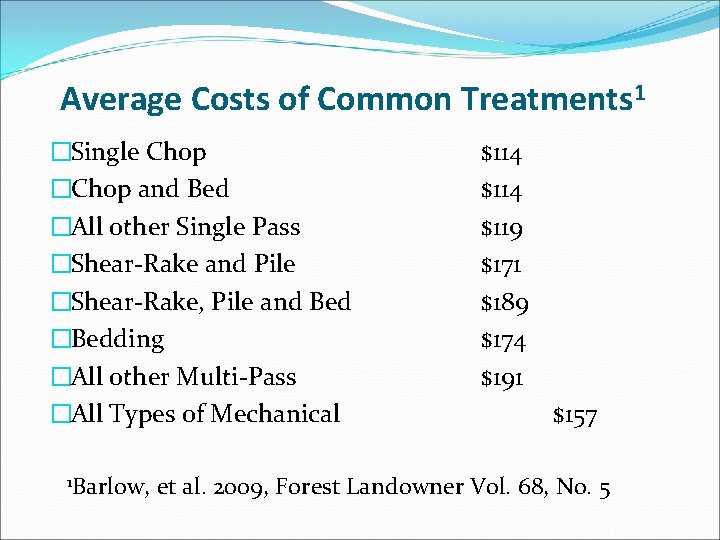
Average Costs of Common Treatments 1 �Single Chop �Chop and Bed �All other Single Pass �Shear-Rake and Pile �Shear-Rake, Pile and Bed �Bedding �All other Multi-Pass �All Types of Mechanical 1 Barlow, $114 $119 $171 $189 $174 $191 $157 et al. 2009, Forest Landowner Vol. 68, No. 5
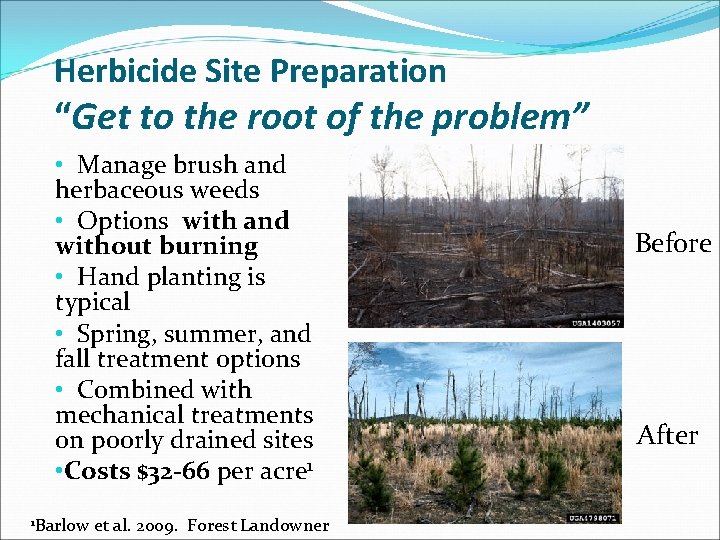
Herbicide Site Preparation “Get to the root of the problem” • Manage brush and herbaceous weeds • Options with and without burning • Hand planting is typical • Spring, summer, and fall treatment options • Combined with mechanical treatments on poorly drained sites • Costs $32 -66 per acre 1 1 Barlow et al. 2009. Forest Landowner Before After
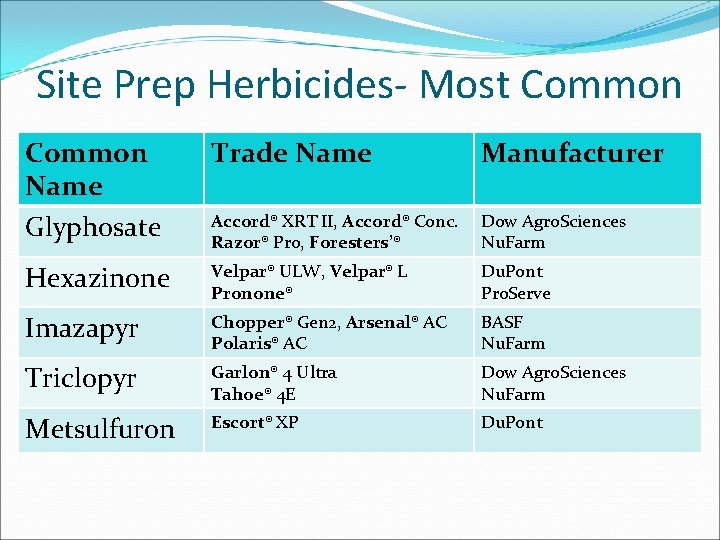
Site Prep Herbicides- Most Common Name Glyphosate Trade Name Manufacturer Accord® XRT II, Accord® Conc. Razor® Pro, Foresters’® Dow Agro. Sciences Nu. Farm Hexazinone Velpar® ULW, Velpar® L Pronone® Du. Pont Pro. Serve Imazapyr Chopper® Gen 2, Arsenal® AC Polaris® AC BASF Nu. Farm Triclopyr Garlon® 4 Ultra Tahoe® 4 E Dow Agro. Sciences Nu. Farm Metsulfuron Escort® XP Du. Pont
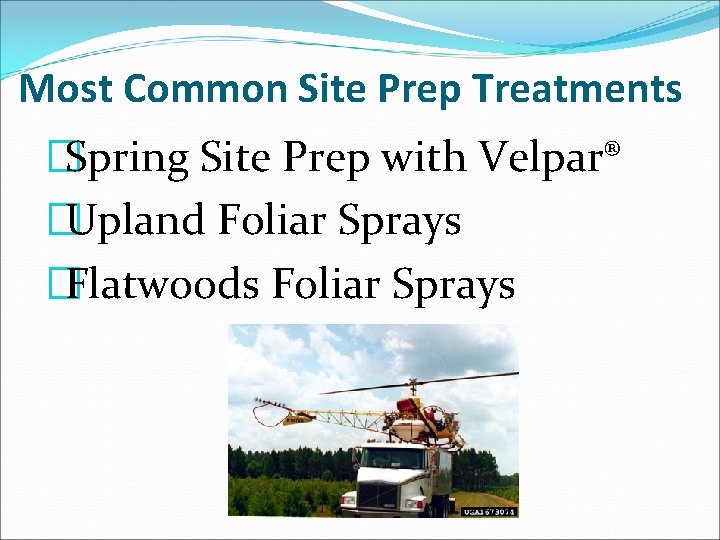
Most Common Site Prep Treatments �Spring Site Prep with Velpar® �Upland Foliar Sprays �Flatwoods Foliar Sprays
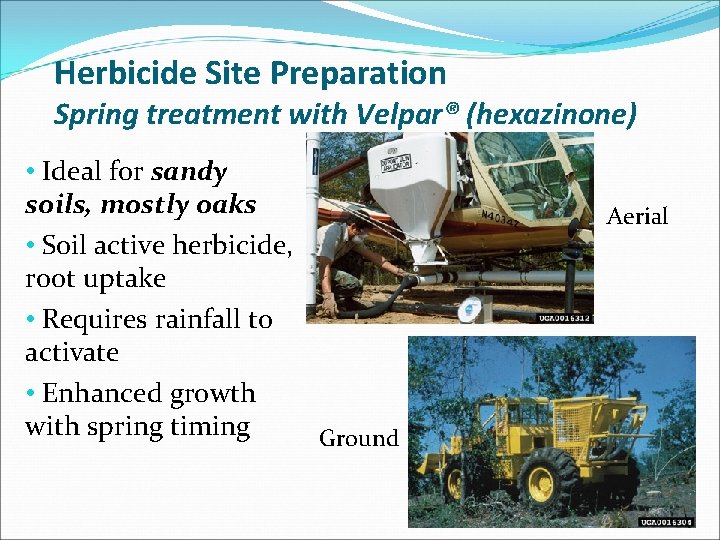
Herbicide Site Preparation Spring treatment with Velpar® (hexazinone) • Ideal for sandy soils, mostly oaks • Soil active herbicide, root uptake • Requires rainfall to activate • Enhanced growth with spring timing Ground Aerial
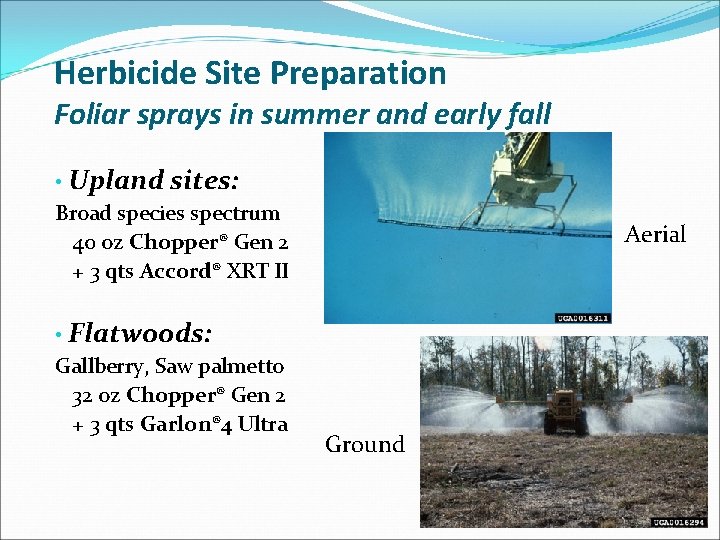
Herbicide Site Preparation Foliar sprays in summer and early fall • Upland sites: Broad species spectrum 40 oz Chopper® Gen 2 + 3 qts Accord® XRT II • Flatwoods: Gallberry, Saw palmetto 32 oz Chopper® Gen 2 + 3 qts Garlon® 4 Ultra Aerial Ground
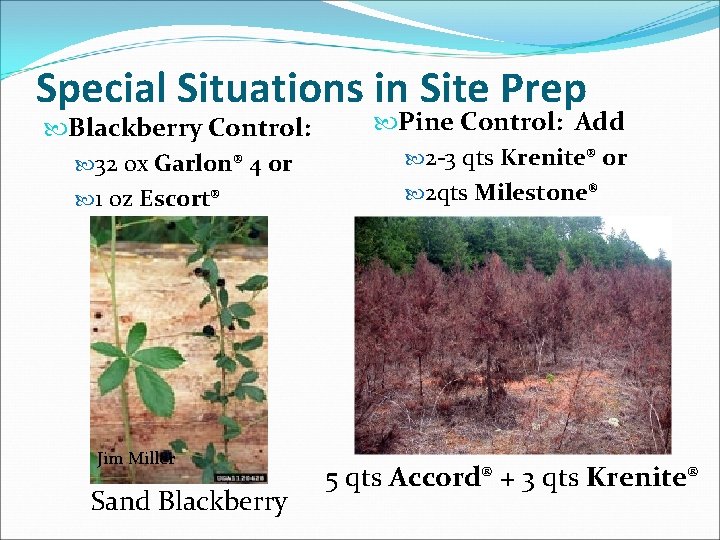
Special Situations in Site Prep Blackberry Control: 32 ox Garlon® 4 or 1 oz Escort® Jim Miller Sand Blackberry Pine Control: Add 2 -3 qts Krenite® or 2 qts Milestone® 5 qts Accord® + 3 qts Krenite®
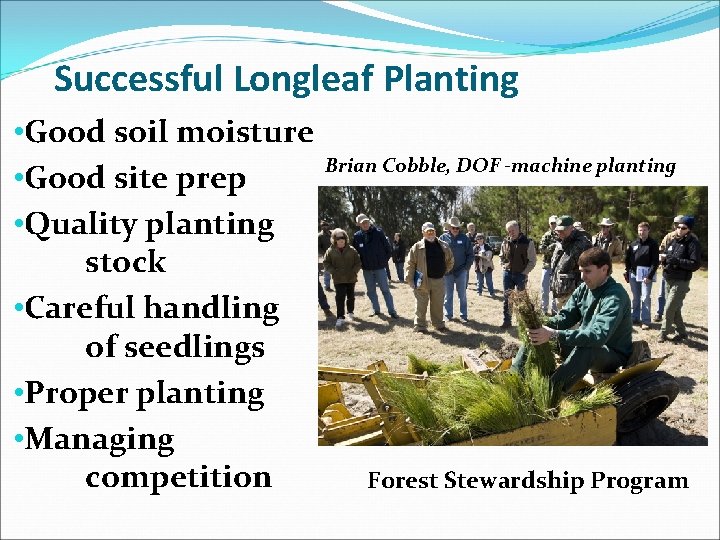
Successful Longleaf Planting • Good soil moisture • Good site prep • Quality planting stock • Careful handling of seedlings • Proper planting • Managing competition Brian Cobble, DOF -machine planting Forest Stewardship Program
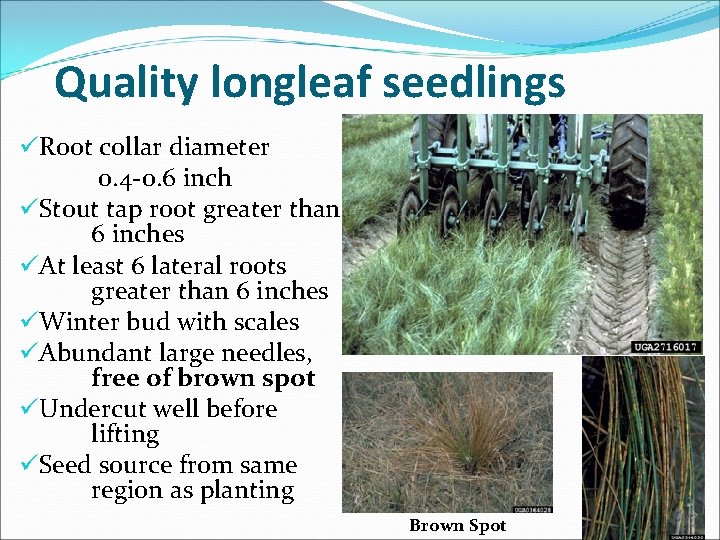
Quality longleaf seedlings üRoot collar diameter 0. 4 -0. 6 inch üStout tap root greater than 6 inches üAt least 6 lateral roots greater than 6 inches üWinter bud with scales üAbundant large needles, free of brown spot üUndercut well before lifting üSeed source from same region as planting Brown Spot
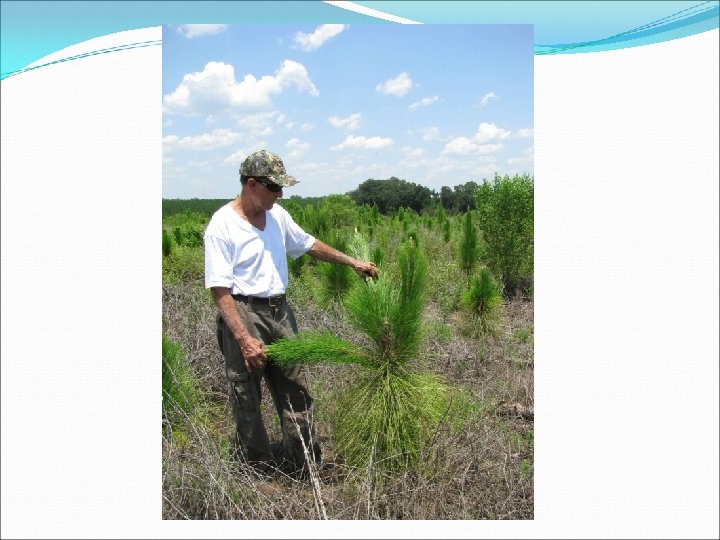
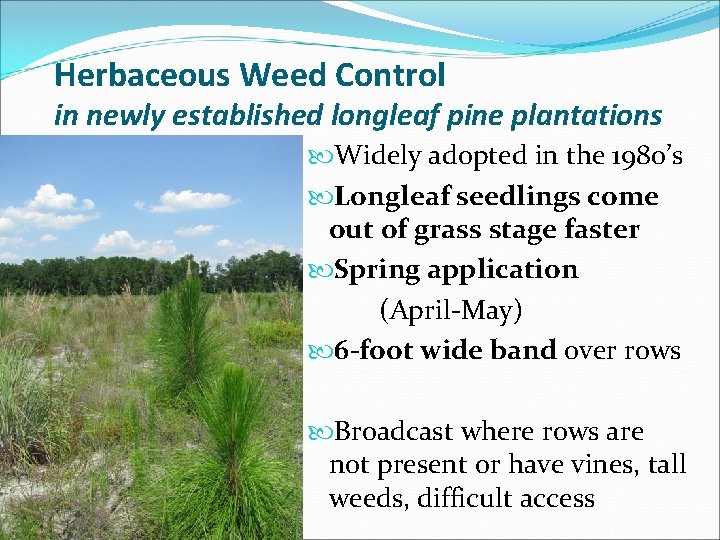
Herbaceous Weed Control in newly established longleaf pine plantations Widely adopted in the 1980’s Longleaf seedlings come out of grass stage faster Spring application (April-May) 6 -foot wide band over rows Broadcast where rows are not present or have vines, tall weeds, difficult access
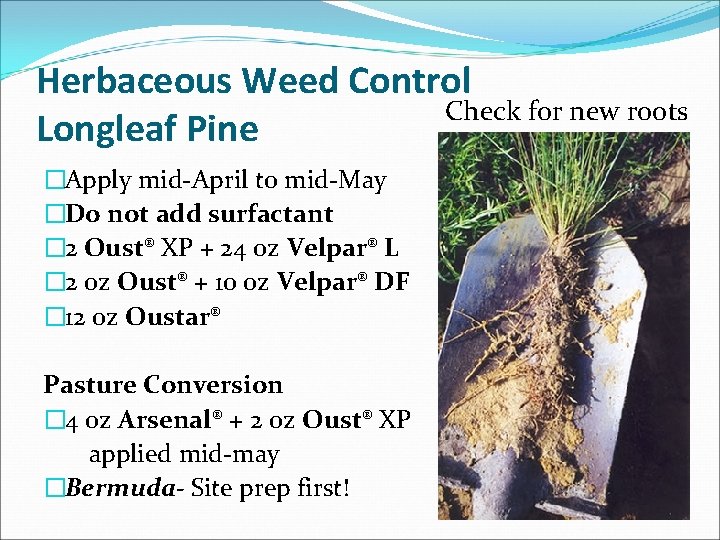
Herbaceous Weed Control Check for new roots Longleaf Pine �Apply mid-April to mid-May �Do not add surfactant � 2 Oust® XP + 24 oz Velpar® L � 2 oz Oust® + 10 oz Velpar® DF � 12 oz Oustar® Pasture Conversion � 4 oz Arsenal® + 2 oz Oust® XP applied mid-may �Bermuda- Site prep first!
Sources of Additional Information �Forest Stewardship Program, School of Forest Resources, University of Florida http: //www. sfrc. ufl. edu/Extension/florida_forestry_information /index. htm �Southern Regional Extension Forestry http: //www. sref. info/ �Longleaf Alliance http: //longleafalliance. org Patrick J. Minogue, Ph. D. , R. F. Assistant Professor of Silviculture North Florida Research and Education Center Quincy, FL 32303 pminogue@ufl. edu