
Pillars of a comprehensive classification system Introduction of
- Slides: 12
Pillars of a comprehensive classification system Introduction of a New Chart of Accounts in the South African context CABRI and World Bank Institute Training Programme: Budget Management and Public Financial Accountability Presented by: Hennie Swanepoel Chief Director: Public Finance Statistics National Treasury, South Africa 21 June 2007
Why focus on classification reform? • Part of a good governance reform agenda • Ensuring improved service delivery through: – Availability of clear, relevant financial information for management purposes – Improved policy making & monitoring implementation – Enhanced executive oversight – Encouraging greater accountability by providing properly classified and standardised financial data – Economic analysis
Elements of a “good” classification system • Clarity and accessibility • Useful management information • Legislative compliance • Relevant economic aggregates • International compliance (GFS & IFAC ) • Include all aspects of accountability cycle • Full coverage of all government accounts
Challenges • Change management • Inconsistent classifications • Complicates transacting • Inappropriate information included • Financial systems constraints • Different accounting conventions • Harmonization of terminology
Stakeholders • Parliament / Legislatures • Financial practitioners • Departments and entities / agencies • National Treasury • Central Bank (SA Reserve Bank) • Statistical agency (Statistics SA) • General public • Research institutions • International community
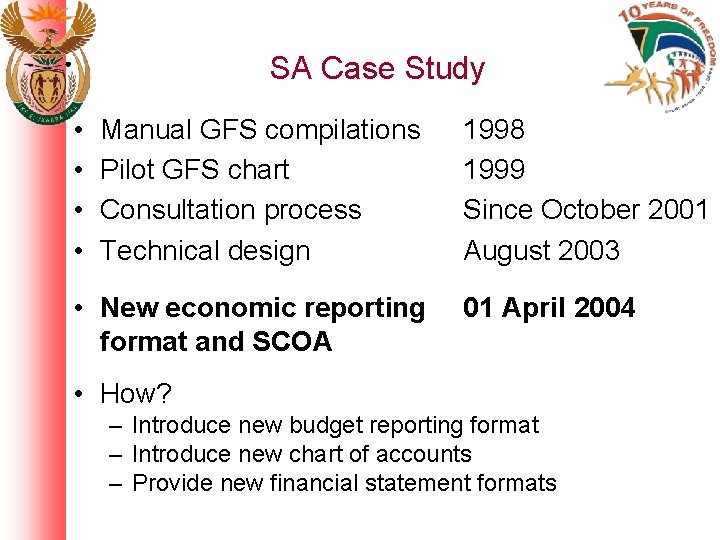
SA Case Study • • Manual GFS compilations Pilot GFS chart Consultation process Technical design • New economic reporting format and SCOA 1998 1999 Since October 2001 August 2003 01 April 2004 • How? – Introduce new budget reporting format – Introduce new chart of accounts – Provide new financial statement formats
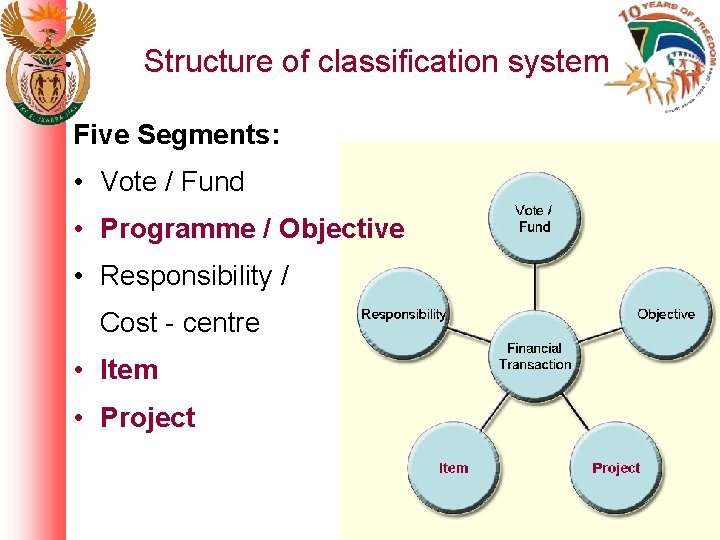
Structure of classification system Five Segments: • Vote / Fund • Programme / Objective • Responsibility / Cost - centre • Item • Project
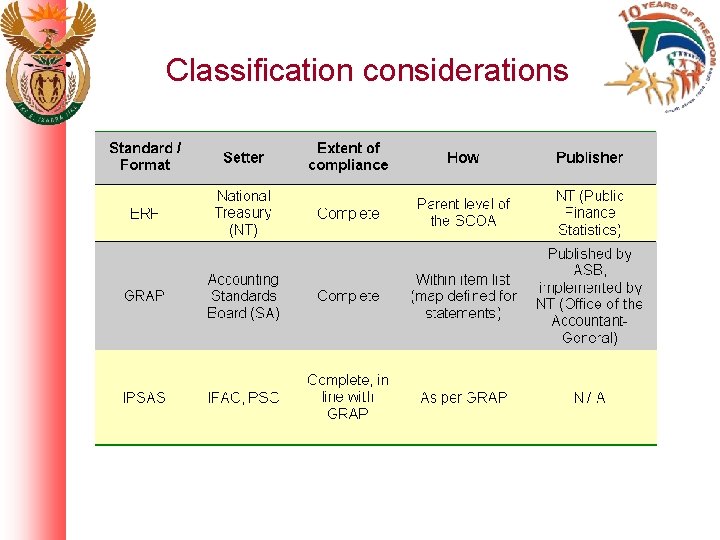
Classification considerations
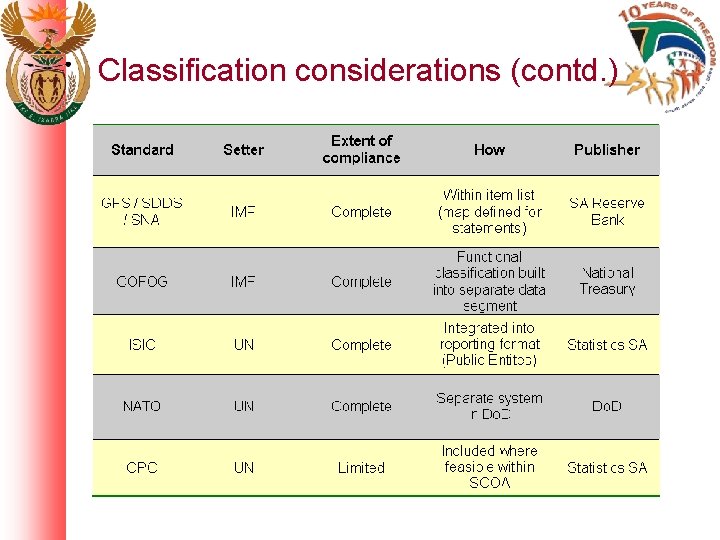
Classification considerations (contd. )
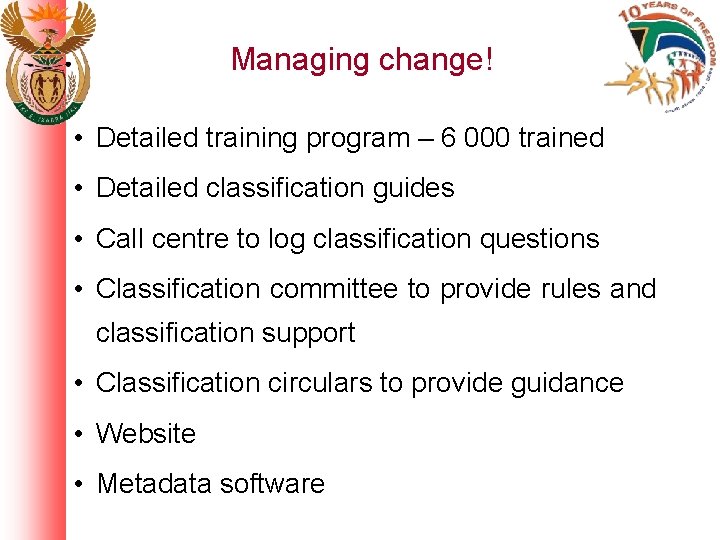
Managing change! • Detailed training program – 6 000 trained • Detailed classification guides • Call centre to log classification questions • Classification committee to provide rules and classification support • Classification circulars to provide guidance • Website • Metadata software
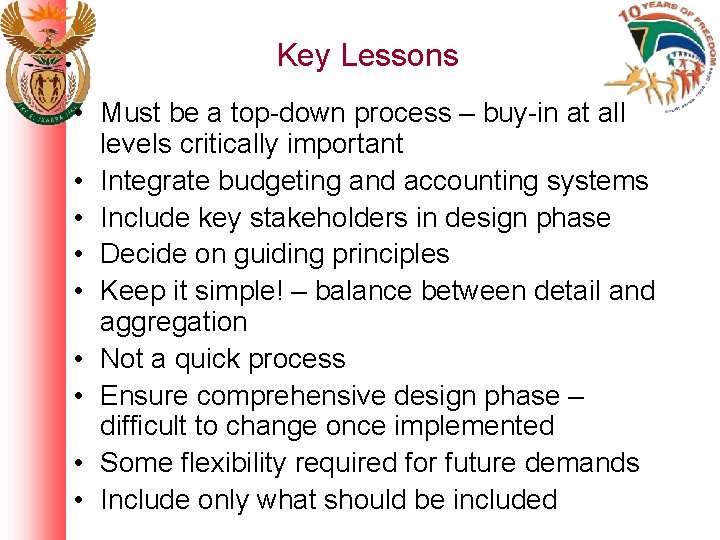
Key Lessons • Must be a top-down process – buy-in at all levels critically important • Integrate budgeting and accounting systems • Include key stakeholders in design phase • Decide on guiding principles • Keep it simple! – balance between detail and aggregation • Not a quick process • Ensure comprehensive design phase – difficult to change once implemented • Some flexibility required for future demands • Include only what should be included
Introduction of a New Chart of Accounts in the South African context The End Questions? CABRI and World Bank Institute Training Programme: Budget Management and Public Financial Accountability Presented by: Hennie Swanepoel Chief Director: Public Finance Statistics National Treasury, South Africa 21 June 2007