
Piezoelectric precipitation sensor from VAISALA Atte Salmi Project

- Slides: 29
Piezoelectric precipitation sensor from VAISALA Atte Salmi Project Manager Vaisala Instruments
Contents Construction of the sensor Measurement method Sensor calibration Errors in measurement method Field test results Conclusions ©Vaisala | date | Ref. code | Page 2
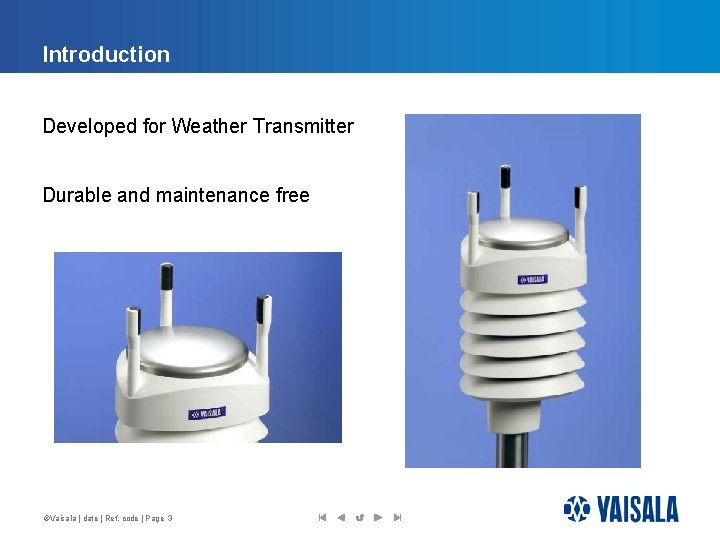
Introduction Developed for Weather Transmitter Durable and maintenance free ©Vaisala | date | Ref. code | Page 3
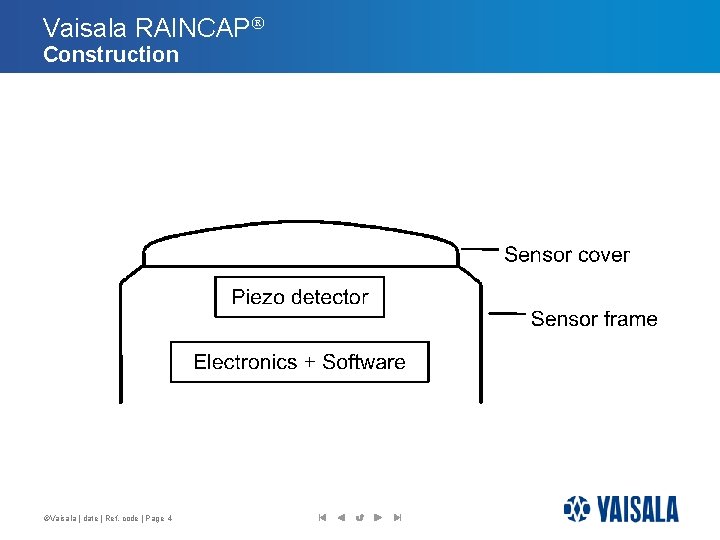
Vaisala RAINCAP Construction ©Vaisala | date | Ref. code | Page 4
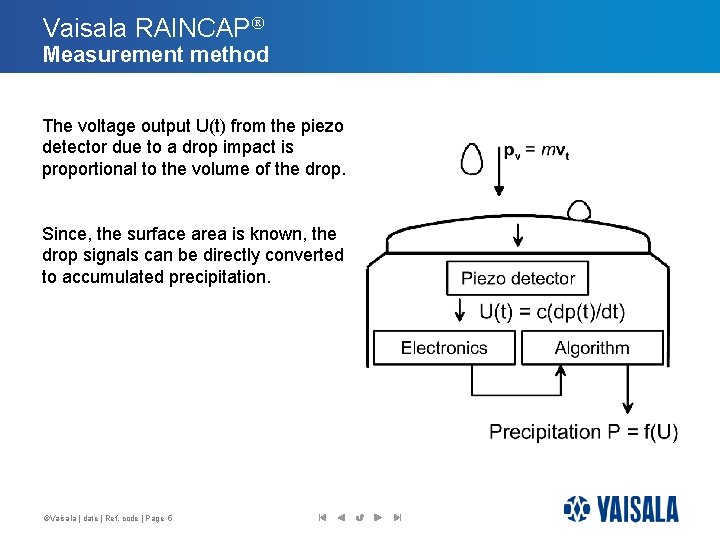
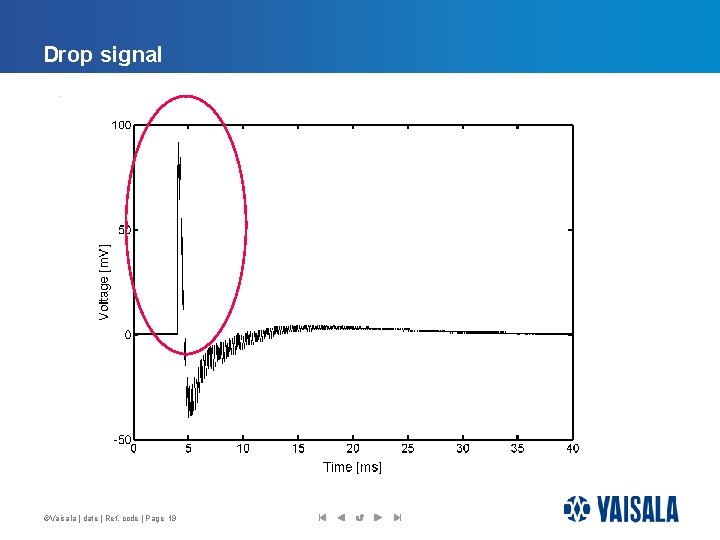
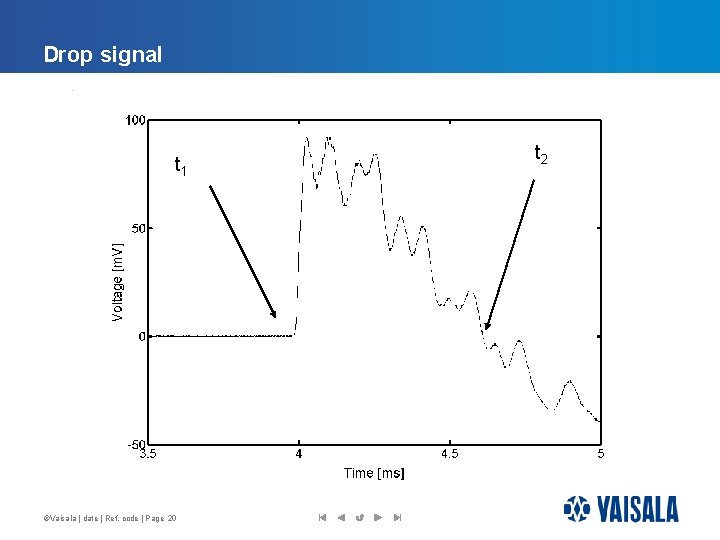
Vaisala RAINCAP Measurement method The voltage output U(t) from the piezo detector due to a drop impact is proportional to the volume of the drop. Since, the surface area is known, the drop signals can be directly converted to accumulated precipitation. ©Vaisala | date | Ref. code | Page 5
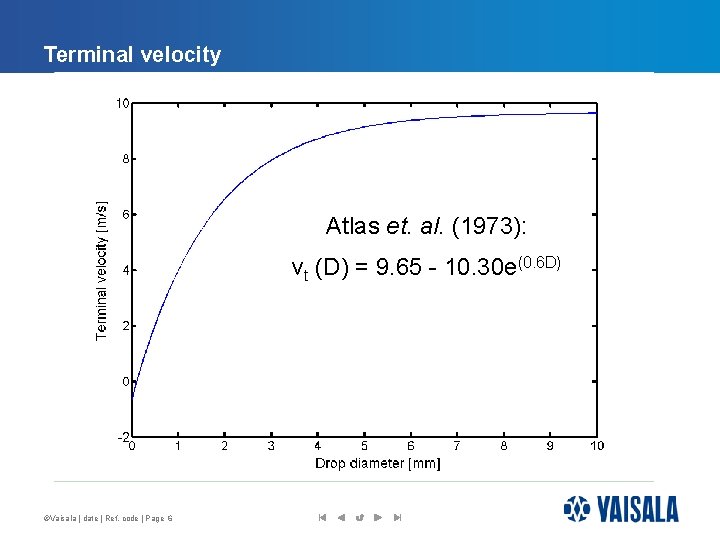
Terminal velocity Atlas et. al. (1973): vt (D) = 9. 65 - 10. 30 e(0. 6 D) ©Vaisala | date | Ref. code | Page 6
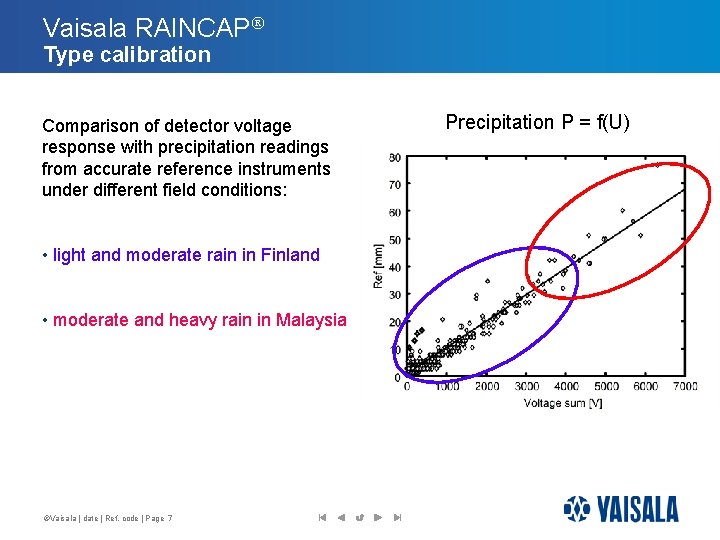
Vaisala RAINCAP Type calibration Comparison of detector voltage response with precipitation readings from accurate reference instruments under different field conditions: • light and moderate rain in Finland • moderate and heavy rain in Malaysia ©Vaisala | date | Ref. code | Page 7 Precipitation P = f(U)
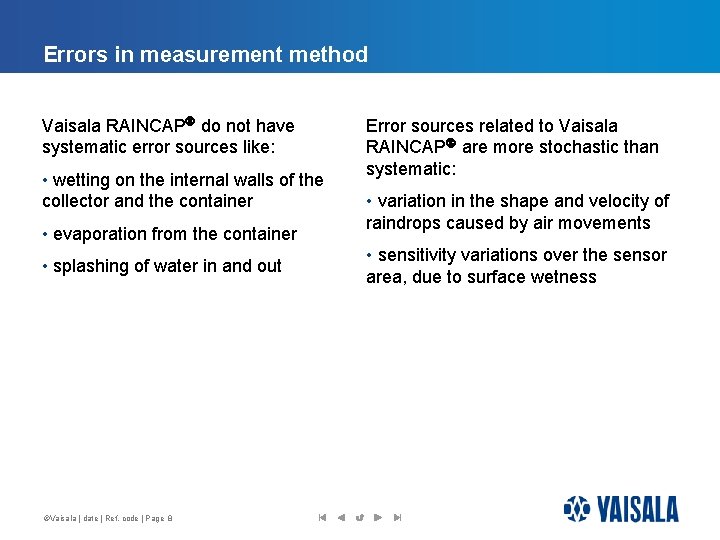
Errors in measurement method Vaisala RAINCAP do not have systematic error sources like: • wetting on the internal walls of the collector and the container • evaporation from the container • splashing of water in and out ©Vaisala | date | Ref. code | Page 8 Error sources related to Vaisala RAINCAP are more stochastic than systematic: • variation in the shape and velocity of raindrops caused by air movements • sensitivity variations over the sensor area, due to surface wetness
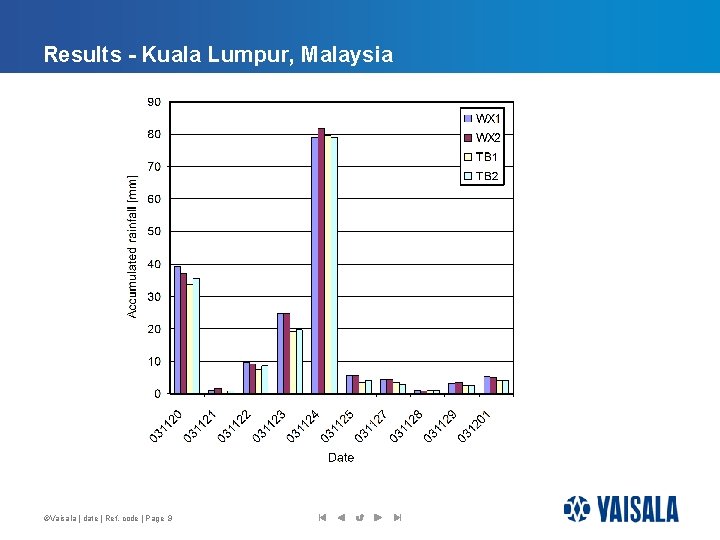
Results - Kuala Lumpur, Malaysia ©Vaisala | date | Ref. code | Page 9
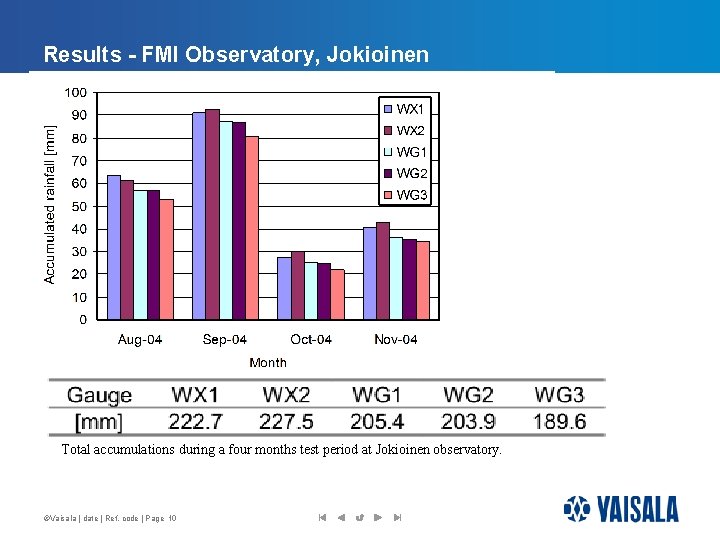
Results - FMI Observatory, Jokioinen Total accumulations during a four months test period at Jokioinen observatory. ©Vaisala | date | Ref. code | Page 10
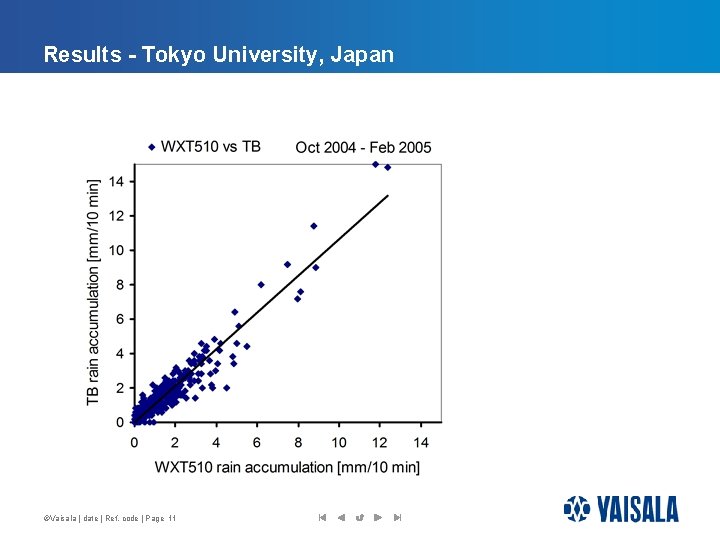
Results - Tokyo University, Japan ©Vaisala | date | Ref. code | Page 11
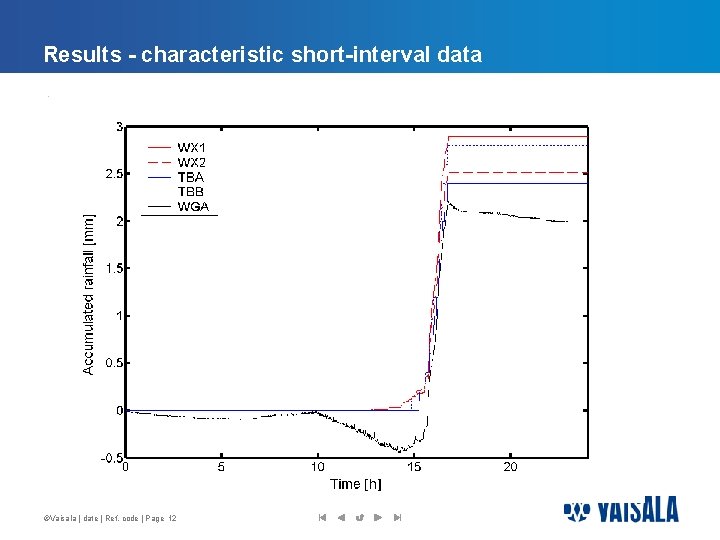
Results - characteristic short-interval data ©Vaisala | date | Ref. code | Page 12
Conclusions Due to the measurement method and construction of the sensor, the Vaisala RAINCAP is virtually maintenance free. The sensor does not suffer from systematic errors due to wetting, evaporation or splashing of raindrops. It is also capable for true real time intensity measurement. The field results show good comparability of the sensor to traditional tipping buckets and weighing-recording gauges. Because of its robust design with no moving parts the Vaisala RAINCAP is especially suitable for dense measurement networks. ©Vaisala | date | Ref. code | Page 13
Contact Information Atte Salmi Project Manager Vaisala Instruments Phone +358 9 8949 2785 atte. salmi@vaisala. com ©Vaisala | date | Ref. code | Page 14
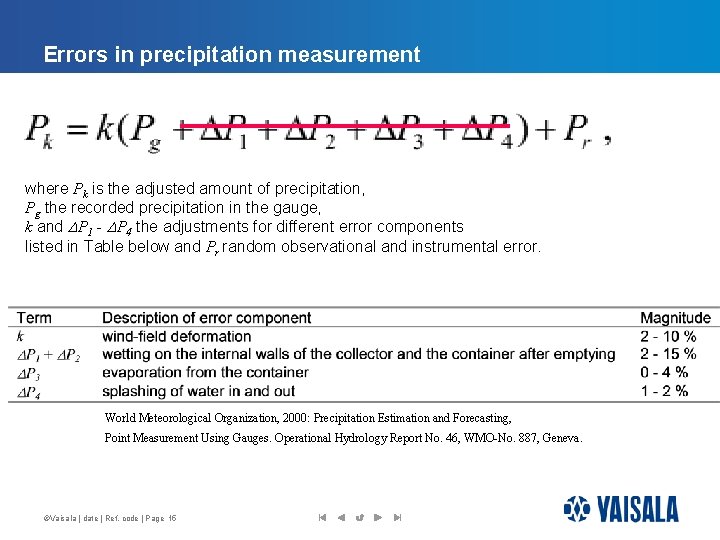
Errors in precipitation measurement where Pk is the adjusted amount of precipitation, Pg the recorded precipitation in the gauge, k and P 1 - P 4 the adjustments for different error components listed in Table below and Pr random observational and instrumental error. World Meteorological Organization, 2000: Precipitation Estimation and Forecasting, Point Measurement Using Gauges. Operational Hydrology Report No. 46, WMO-No. 887, Geneva. ©Vaisala | date | Ref. code | Page 15
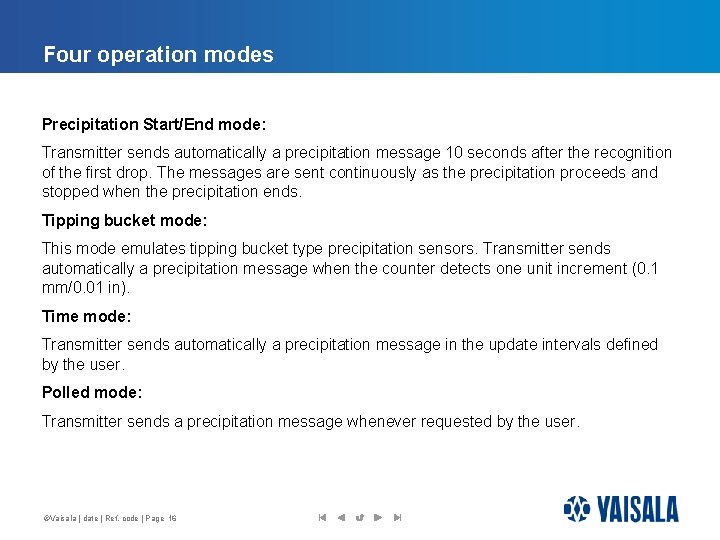
Four operation modes Precipitation Start/End mode: Transmitter sends automatically a precipitation message 10 seconds after the recognition of the first drop. The messages are sent continuously as the precipitation proceeds and stopped when the precipitation ends. Tipping bucket mode: This mode emulates tipping bucket type precipitation sensors. Transmitter sends automatically a precipitation message when the counter detects one unit increment (0. 1 mm/0. 01 in). Time mode: Transmitter sends automatically a precipitation message in the update intervals defined by the user. Polled mode: Transmitter sends a precipitation message whenever requested by the user. ©Vaisala | date | Ref. code | Page 16
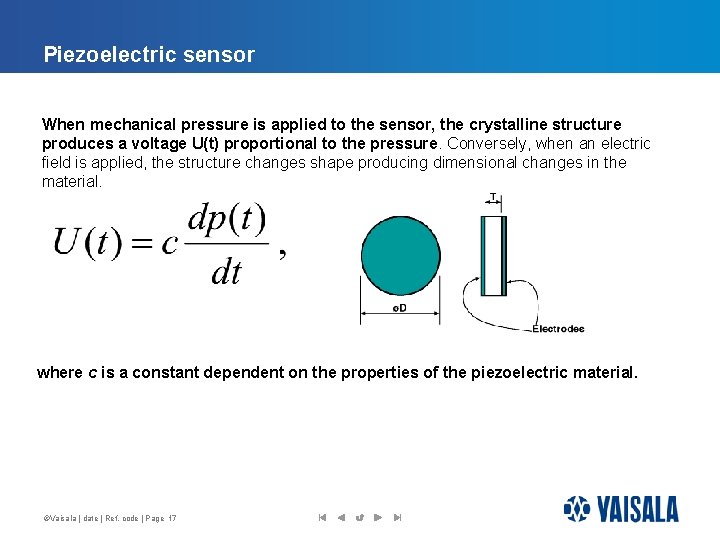
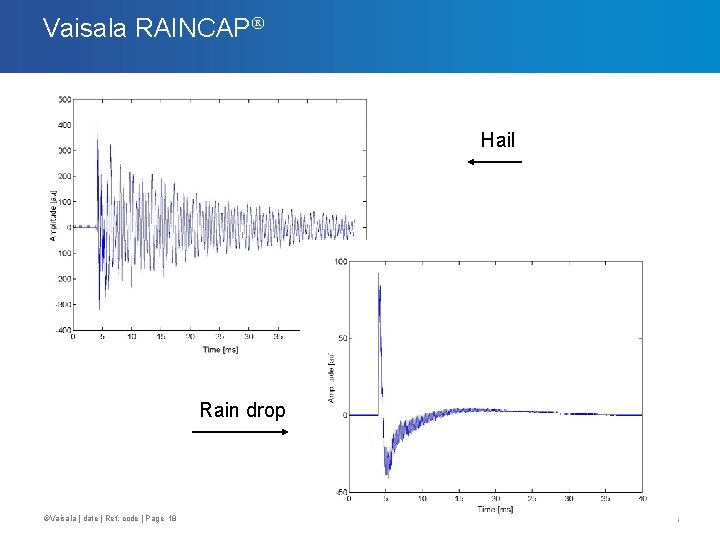
Piezoelectric sensor When mechanical pressure is applied to the sensor, the crystalline structure produces a voltage U(t) proportional to the pressure. Conversely, when an electric field is applied, the structure changes shape producing dimensional changes in the material. where c is a constant dependent on the properties of the piezoelectric material. ©Vaisala | date | Ref. code | Page 17
Vaisala RAINCAP Hail Rain drop ©Vaisala | date | Ref. code | Page 18
Drop signal ©Vaisala | date | Ref. code | Page 19
Drop signal t 1 ©Vaisala | date | Ref. code | Page 20 t 2
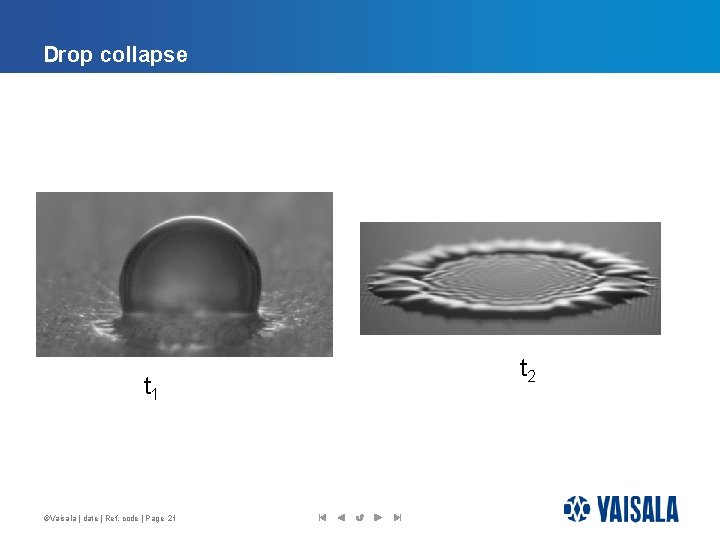
Drop collapse t 1 ©Vaisala | date | Ref. code | Page 21 t 2
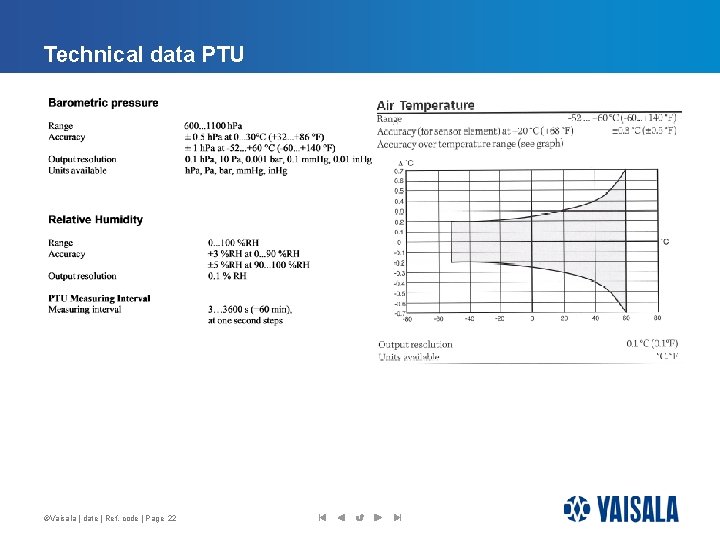
Technical data PTU ©Vaisala | date | Ref. code | Page 22
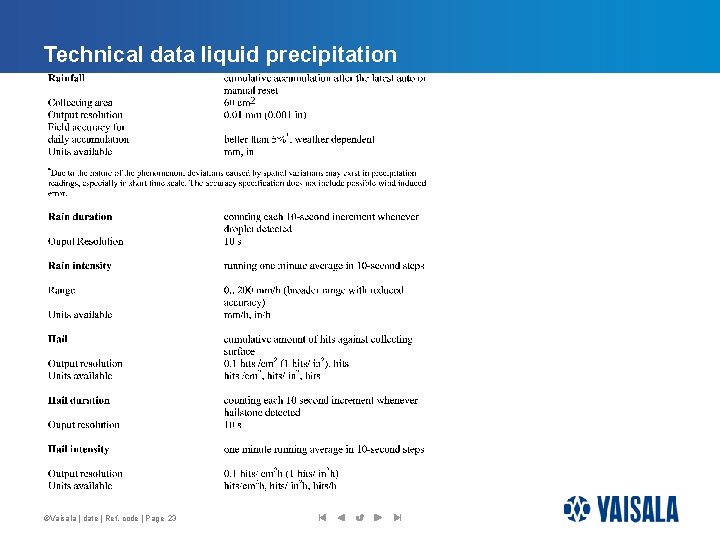
Technical data liquid precipitation ©Vaisala | date | Ref. code | Page 23
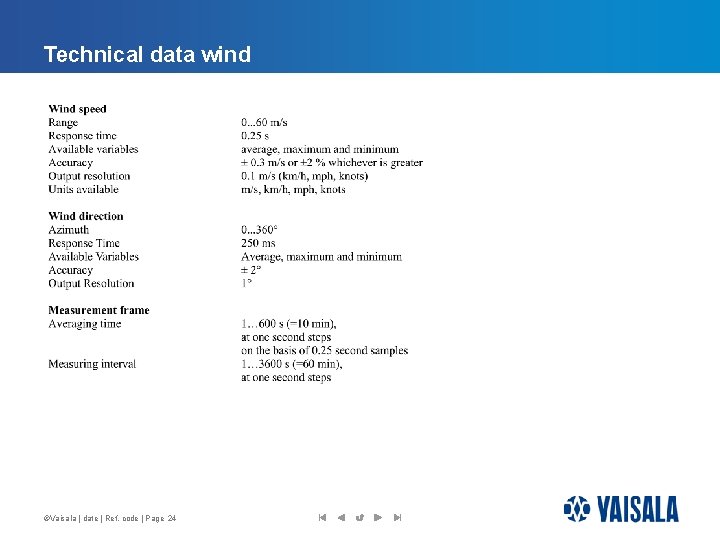
Technical data wind ©Vaisala | date | Ref. code | Page 24
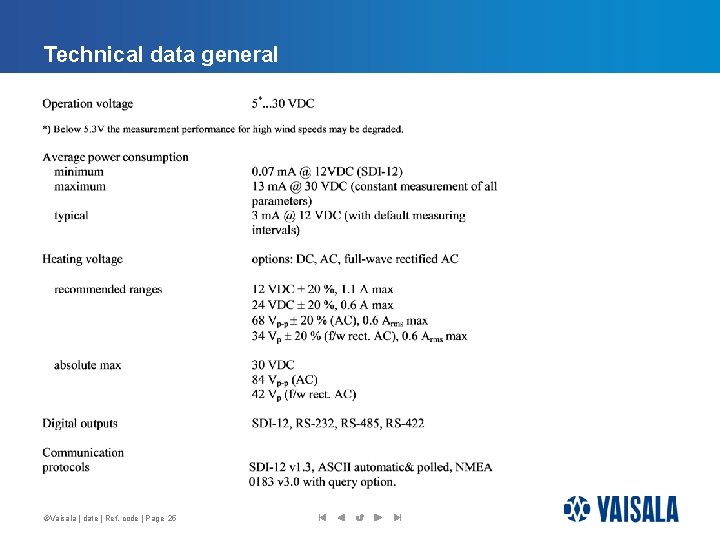
Technical data general ©Vaisala | date | Ref. code | Page 25
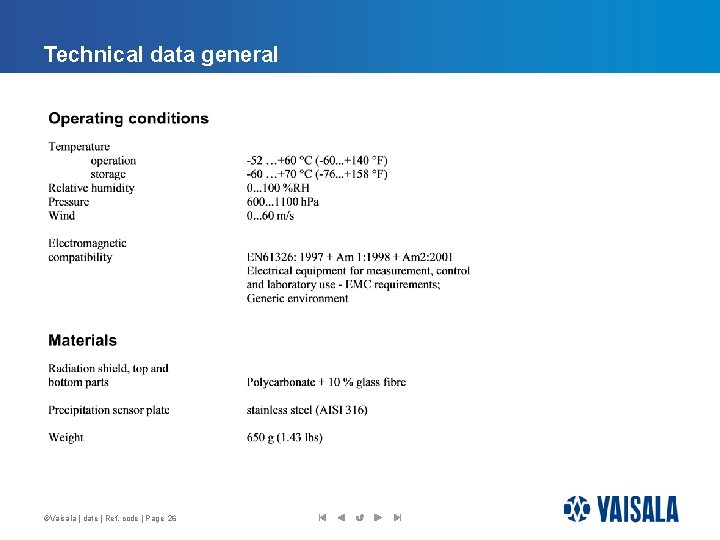
Technical data general ©Vaisala | date | Ref. code | Page 26
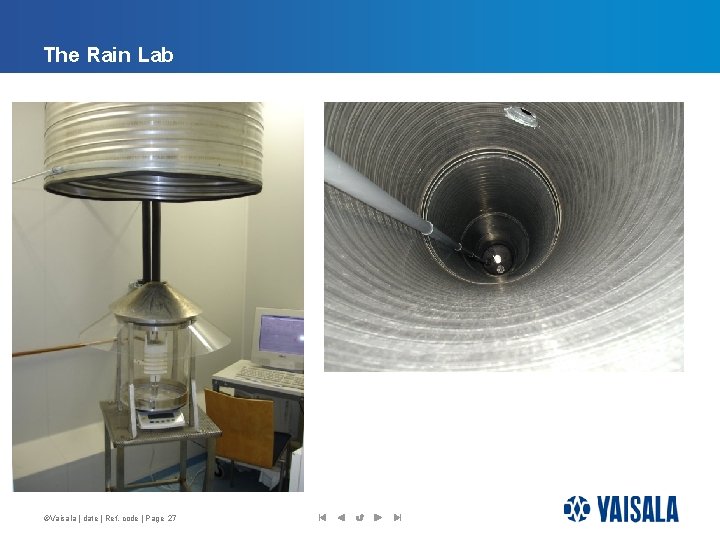
The Rain Lab ©Vaisala | date | Ref. code | Page 27
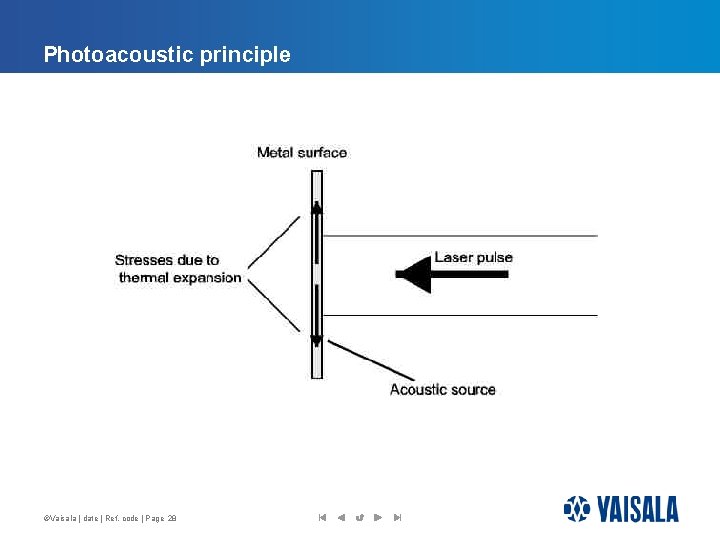
Photoacoustic principle ©Vaisala | date | Ref. code | Page 28
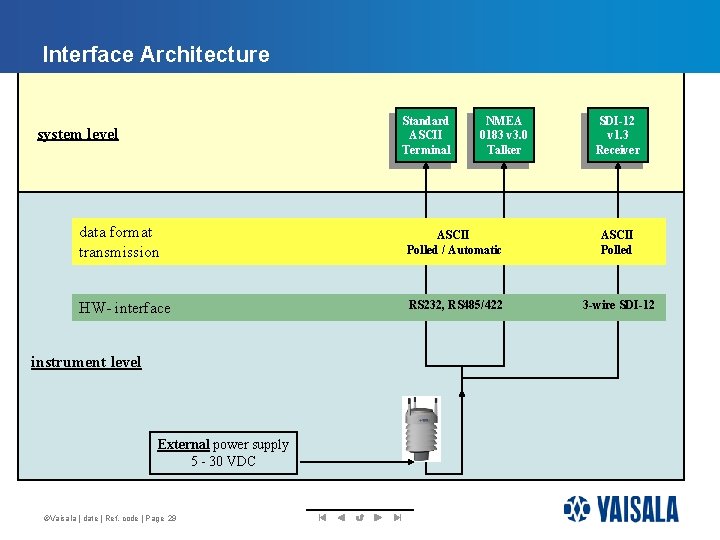
Interface Architecture Standard ASCII Terminal system level NMEA 0183 v 3. 0 Talker SDI-12 v 1. 3 Receiver data format transmission ASCII Polled / Automatic ASCII Polled HW- interface RS 232, RS 485/422 3 -wire SDI-12 instrument level External power supply 5 - 30 VDC ©Vaisala | date | Ref. code | Page 29