
PIES Principles By Theresa Walker 31910 There are
PIES Principles By Theresa Walker 3/19/10

There are four basic principles that must be incorporated into a classroom to successfully achieve cooperative learning. P I E S - Positive Interdependence - Individual Accountability - Equal Participation - Simultaneous Interaction
Positive Interdependence 2 Distinct Concepts that Promote Cooperative Learning § Positive Correlation when students are linked together working towards a common goal § Interdependence structuring a task so students have to work together to achieve desired results
Creating Positive Interdependence § Setting Team Goals § Team Rewards § Team Handshake or Cheer § Praise from Teacher or Peers § Group Recognition § Challenging Tasks that Require Varied Knowledge or Skills § Assign Roles within the Teams § Limit Access to Specific Resources § Students have to rely on teammates to complete the task
Individual Accountability Ø There is an “I” in Team Ø Students are Responsible for their own Learning! 3 Components of Individual Accountability 1. Individual – the performance is done without help 2. Public – someone witnesses the performance, students cannot hide 3. Required – the performance is required
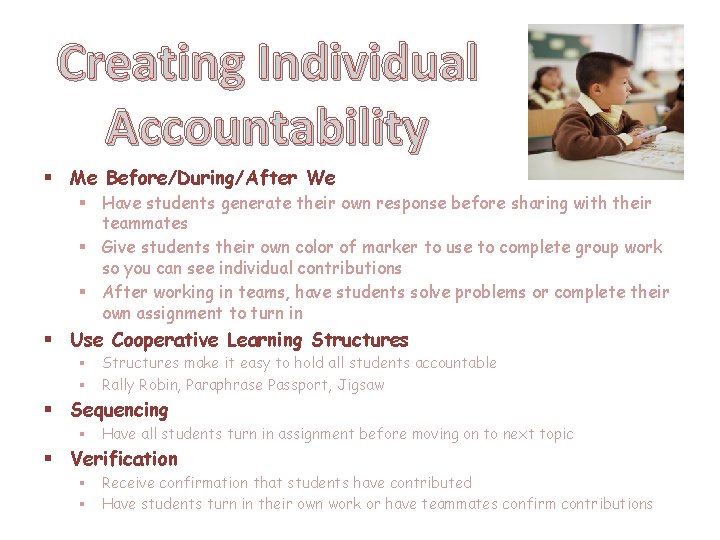
Creating Individual Accountability § Me Before/During/After We § Have students generate their own response before sharing with their teammates § Give students their own color of marker to use to complete group work so you can see individual contributions § After working in teams, have students solve problems or complete their own assignment to turn in § Use Cooperative Learning Structures § Structures make it easy to hold all students accountable § Rally Robin, Paraphrase Passport, Jigsaw § Sequencing § Have all students turn in assignment before moving on to next topic § Verification § Receive confirmation that students have contributed § Have students turn in their own work or have teammates confirm contributions
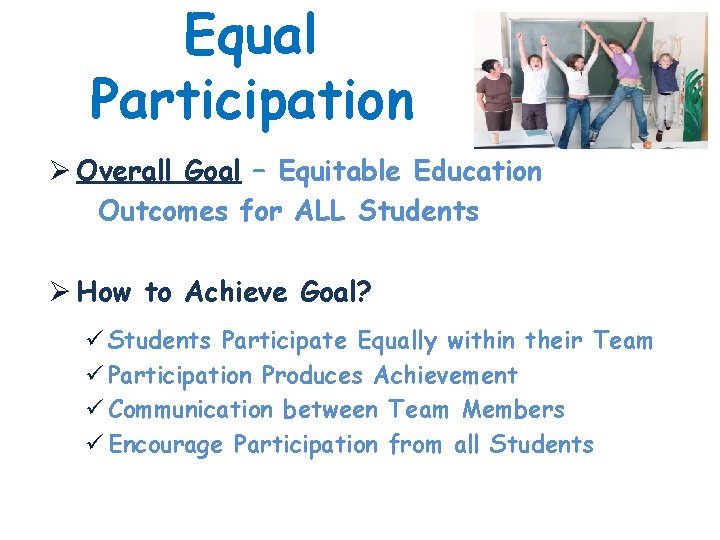
Equal Participation Ø Overall Goal – Equitable Education Outcomes for ALL Students Ø How to Achieve Goal? ü Students Participate Equally within their Team ü Participation Produces Achievement ü Communication between Team Members ü Encourage Participation from all Students
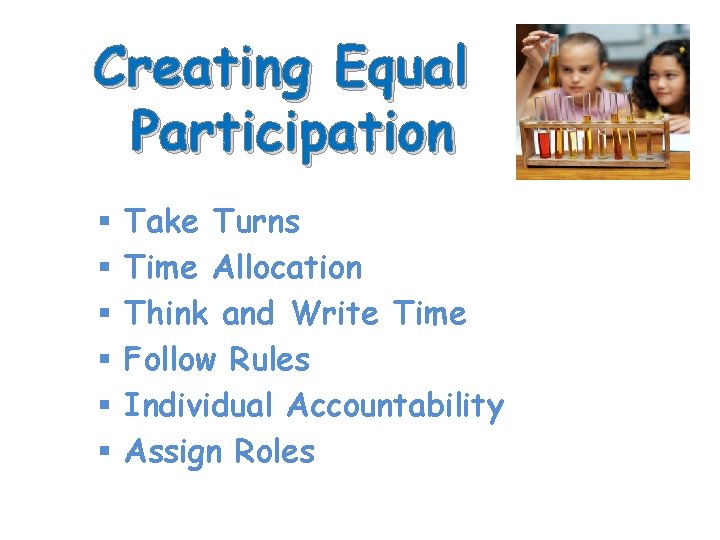
Creating Equal Participation § § § Take Turns Time Allocation Think and Write Time Follow Rules Individual Accountability Assign Roles

Simultaneous Interaction § Active Engagement § Students learn more when they are actively engaged in the activity rather than being off task § Simultaneous Interaction § Engages a high number of students at once § Overt Engagement § Something that you can see or hear § Have every student respond to questions by using thumbs up or down, Choral Response, or Answer Board
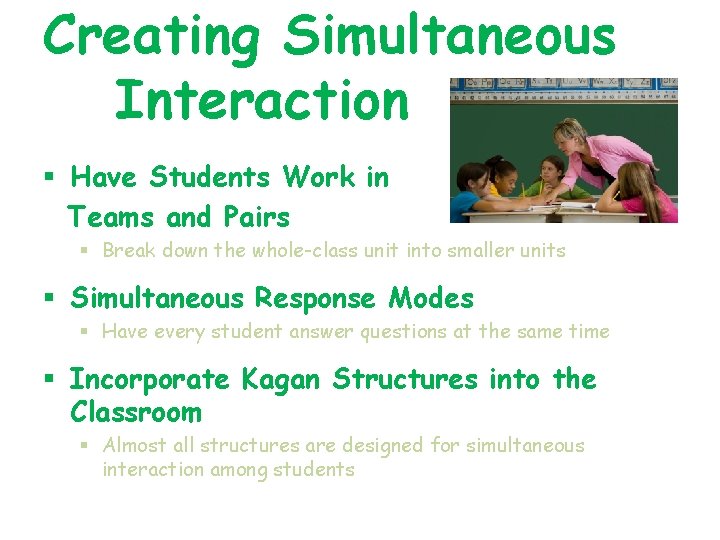
Creating Simultaneous Interaction § Have Students Work in Teams and Pairs § Break down the whole-class unit into smaller units § Simultaneous Response Modes § Have every student answer questions at the same time § Incorporate Kagan Structures into the Classroom § Almost all structures are designed for simultaneous interaction among students
References Kagan, S. , & Kagan, M. (2009). Kagan Cooperative Learning. San Clemente, CA: Kagan Publishing.
- Slides: 11