
PID Curriculum Pelvic Inflammatory Disease PID Samuel L
- Slides: 45
PID Curriculum Pelvic Inflammatory Disease (PID) Samuel L. Jacobs, MD, FACOG Senior Physician – Family Planning Florida Department of Health in Broward County Fort Lauderdale, FL
PID Curriculum Learning Objectives Upon completion of this content, the learner will be able to: 1. Describe the epidemiology of PID in the U. S. 2. Describe the pathogenesis of PID. 3. Discuss the clinical manifestations of PID. 4. Identify the clinical criteria used in the diagnosis of PID. 5. List CDC-recommended treatment regimens for PID. 6. Summarize appropriate prevention counseling messages for a patient with PID. 7. Describe public health measures to prevent PID.
PID Curriculum Lessons I. III. IV. V. VI. Epidemiology: Disease in the U. S. Pathogenesis Clinical manifestations PID diagnosis Patient management Prevention
PID Curriculum Lesson I: Epidemiology: PID in the U. S.
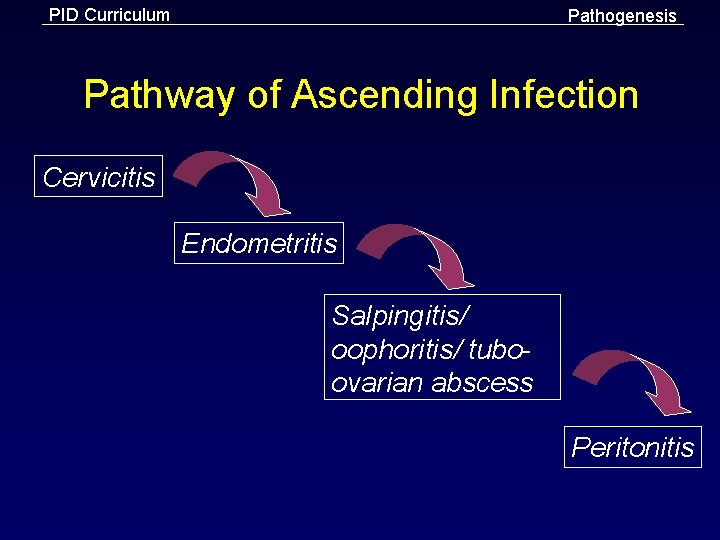
PID Curriculum Epidemiology Pelvic Inflammatory Disease • Clinical syndrome associated with ascending spread of microorganisms from the vagina or cervix to the endometrium, fallopian tubes, ovaries, and contiguous structures. • Comprises a spectrum of inflammatory disorders including any combination of endometritis, salpingitis, tubo-ovarian abscess, and pelvic peritonitis.
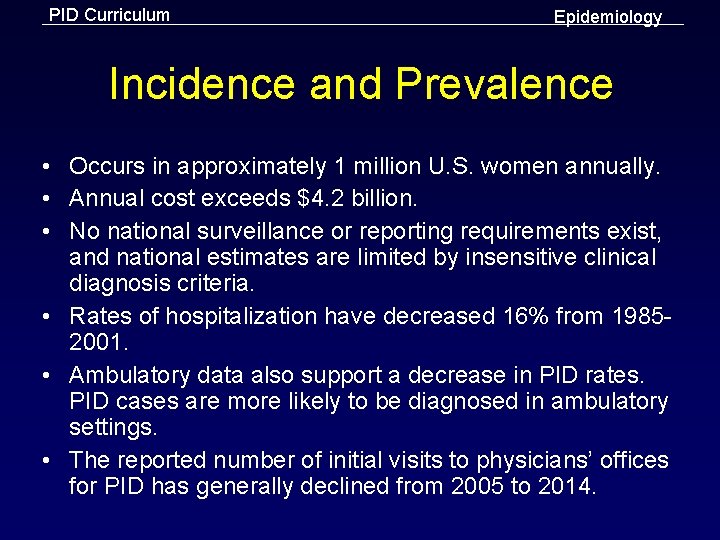
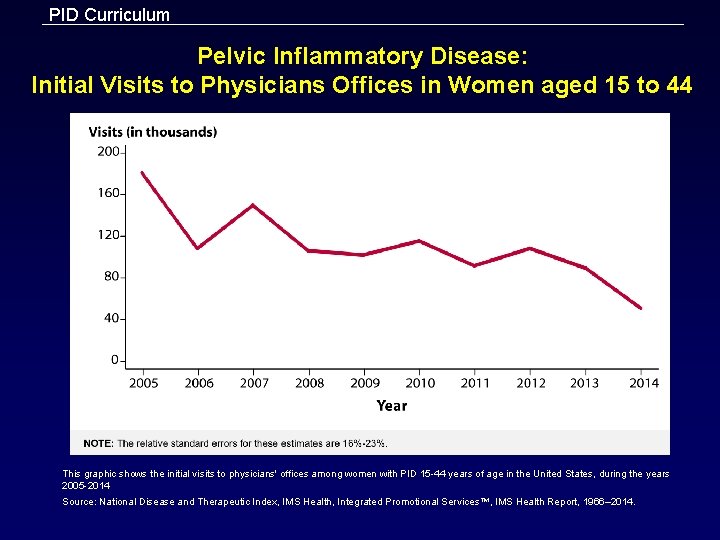
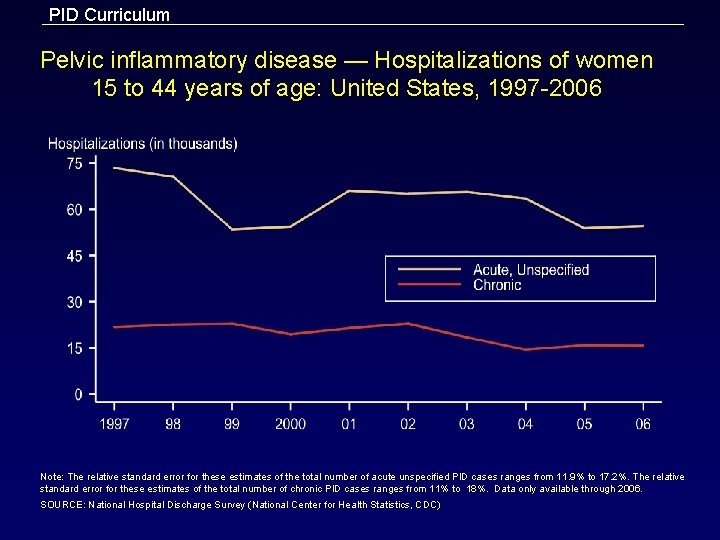
PID Curriculum Epidemiology Incidence and Prevalence • Occurs in approximately 1 million U. S. women annually. • Annual cost exceeds $4. 2 billion. • No national surveillance or reporting requirements exist, and national estimates are limited by insensitive clinical diagnosis criteria. • Rates of hospitalization have decreased 16% from 19852001. • Ambulatory data also support a decrease in PID rates. PID cases are more likely to be diagnosed in ambulatory settings. • The reported number of initial visits to physicians’ offices for PID has generally declined from 2005 to 2014.
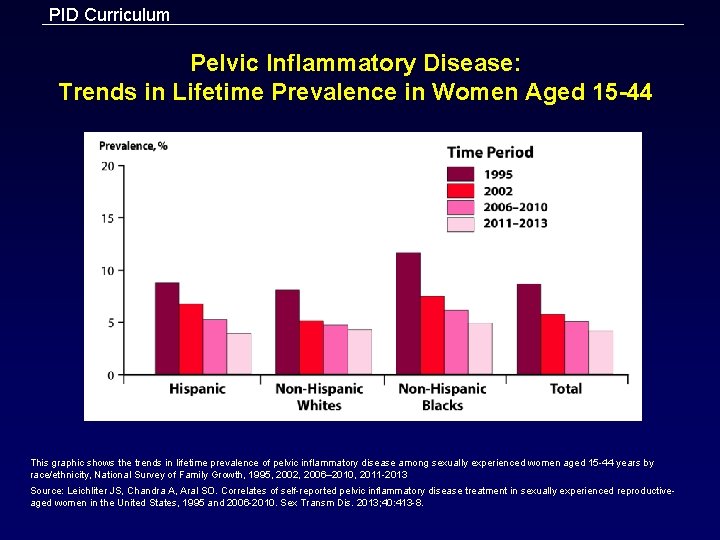
PID Curriculum Pelvic Inflammatory Disease: Trends in Lifetime Prevalence in Women Aged 15 -44 This graphic shows the trends in lifetime prevalence of pelvic inflammatory disease among sexually experienced women aged 15 -44 years by race/ethnicity, National Survey of Family Growth, 1995, 2002, 2006– 2010, 2011 -2013 Source: Leichliter JS, Chandra A, Aral SO. Correlates of self-reported pelvic inflammatory disease treatment in sexually experienced reproductiveaged women in the United States, 1995 and 2006 -2010. Sex Transm Dis. 2013; 40: 413 -8.
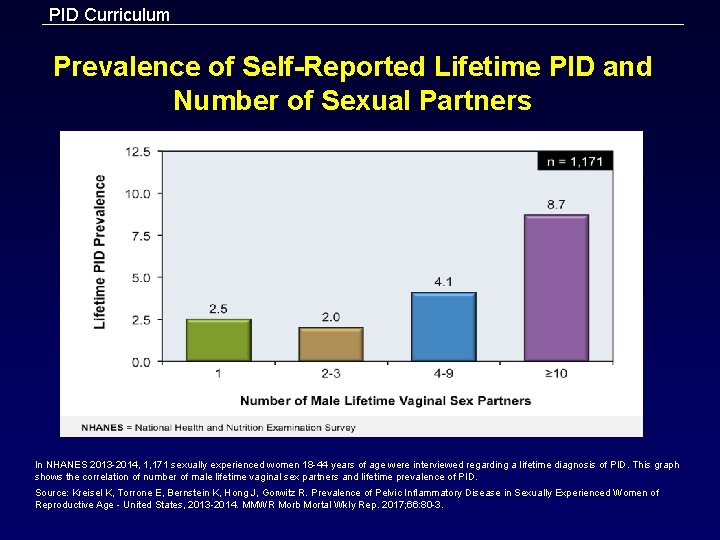
PID Curriculum Prevalence of Self-Reported Lifetime PID and Number of Sexual Partners In NHANES 2013 -2014, 1, 171 sexually experienced women 18 -44 years of age were interviewed regarding a lifetime diagnosis of PID. This graph shows the correlation of number of male lifetime vaginal sex partners and lifetime prevalence of PID. Source: Kreisel K, Torrone E, Bernstein K, Hong J, Gorwitz R. Prevalence of Pelvic Inflammatory Disease in Sexually Experienced Women of Reproductive Age - United States, 2013 -2014. MMWR Morb Mortal Wkly Rep. 2017; 66: 80 -3.
PID Curriculum Pelvic Inflammatory Disease: Initial Visits to Physicians Offices in Women aged 15 to 44 This graphic shows the initial visits to physicians' offices among women with PID 15 -44 years of age in the United States, during the years 2005 -2014 Source: National Disease and Therapeutic Index, IMS Health, Integrated Promotional Services™, IMS Health Report, 1966– 2014.
PID Curriculum Pelvic inflammatory disease — Hospitalizations of women 15 to 44 years of age: United States, 1997 -2006 Note: The relative standard error for these estimates of the total number of acute unspecified PID cases ranges from 11. 9% to 17. 2%. The relative standard error for these estimates of the total number of chronic PID cases ranges from 11% to 18%. Data only available through 2006. SOURCE: National Hospital Discharge Survey (National Center for Health Statistics, CDC)
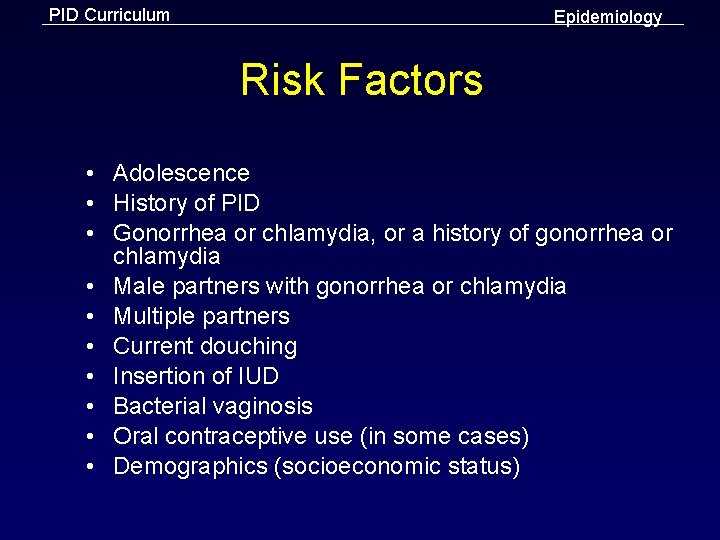
PID Curriculum Epidemiology Risk Factors • Adolescence • History of PID • Gonorrhea or chlamydia, or a history of gonorrhea or chlamydia • Male partners with gonorrhea or chlamydia • Multiple partners • Current douching • Insertion of IUD • Bacterial vaginosis • Oral contraceptive use (in some cases) • Demographics (socioeconomic status)
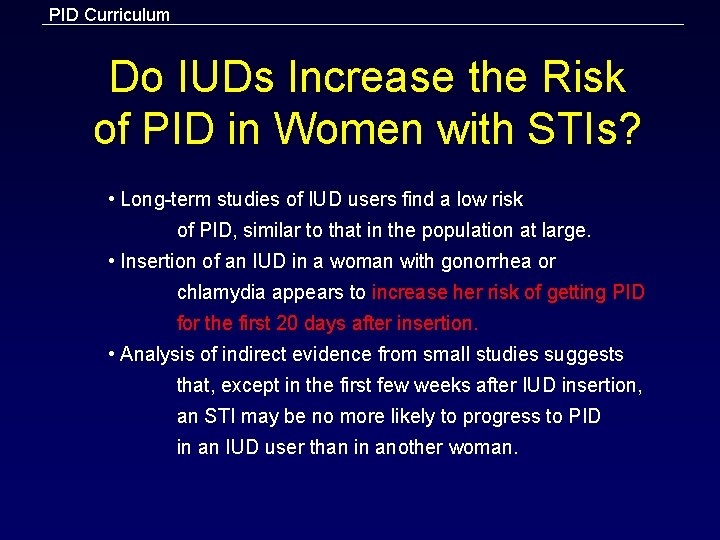
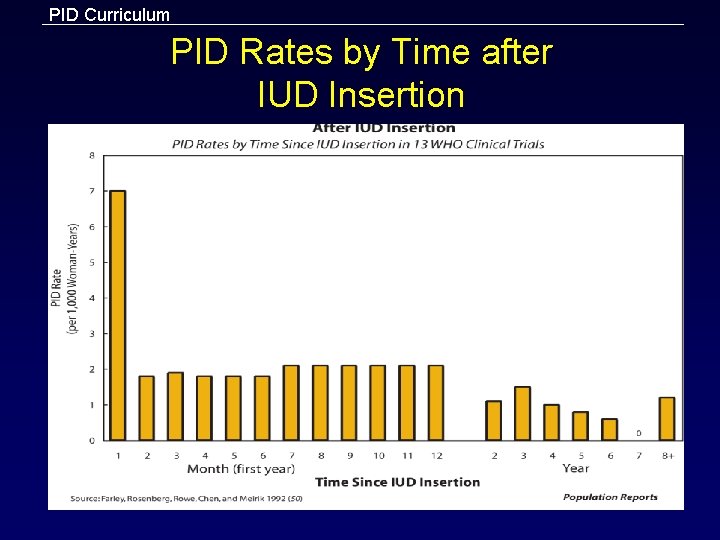
PID Curriculum Do IUDs Increase the Risk of PID in Women with STIs? • Long-term studies of IUD users find a low risk of PID, similar to that in the population at large. • Insertion of an IUD in a woman with gonorrhea or chlamydia appears to increase her risk of getting PID for the first 20 days after insertion. • Analysis of indirect evidence from small studies suggests that, except in the first few weeks after IUD insertion, an STI may be no more likely to progress to PID in an IUD user than in another woman.
PID Curriculum PID Rates by Time after IUD Insertion
PID Curriculum Lesson II: Pathogenesis
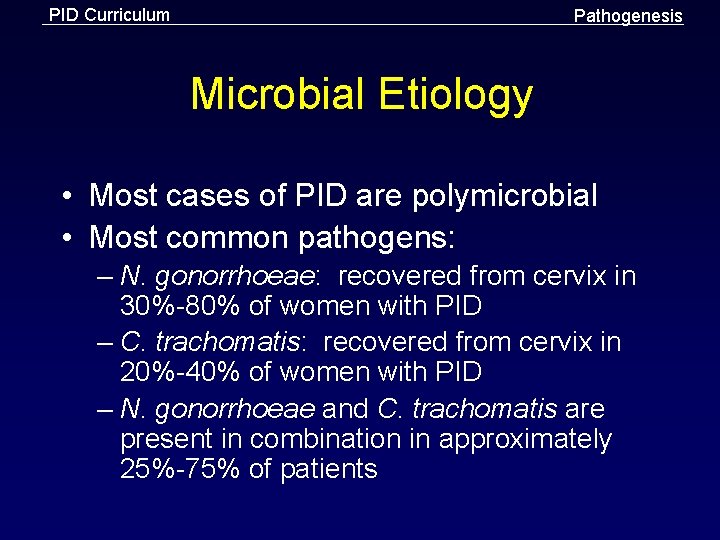
PID Curriculum Pathogenesis Microbial Etiology • Most cases of PID are polymicrobial • Most common pathogens: – N. gonorrhoeae: recovered from cervix in 30%-80% of women with PID – C. trachomatis: recovered from cervix in 20%-40% of women with PID – N. gonorrhoeae and C. trachomatis are present in combination in approximately 25%-75% of patients
PID Curriculum Pathogenesis Pathway of Ascending Infection Cervicitis Endometritis Salpingitis/ oophoritis/ tuboovarian abscess Peritonitis
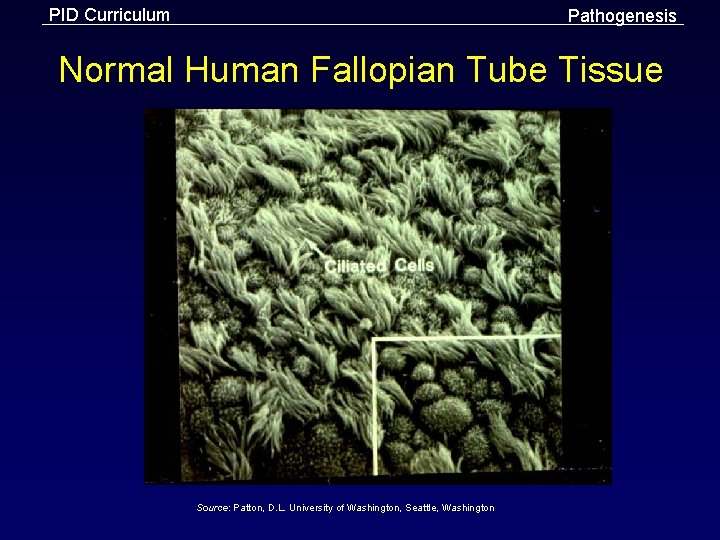
PID Curriculum Pathogenesis Normal Human Fallopian Tube Tissue Source: Patton, D. L. University of Washington, Seattle, Washington
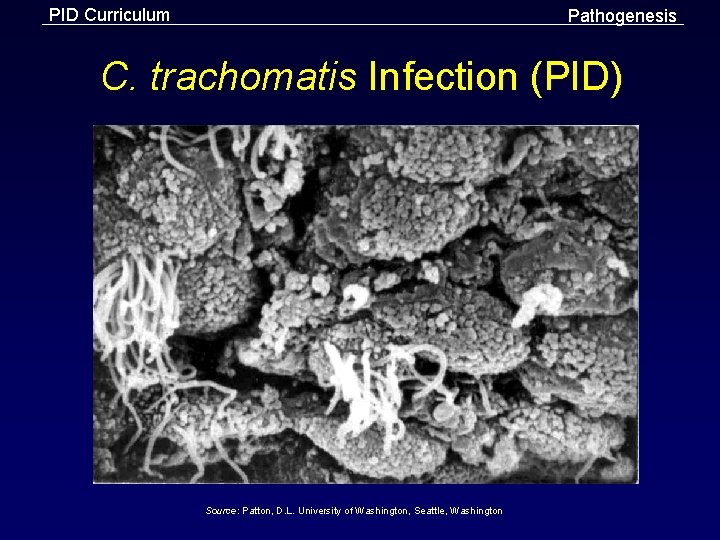
PID Curriculum Pathogenesis C. trachomatis Infection (PID) Source: Patton, D. L. University of Washington, Seattle, Washington
PID Curriculum Lesson III: Clinical Manifestations
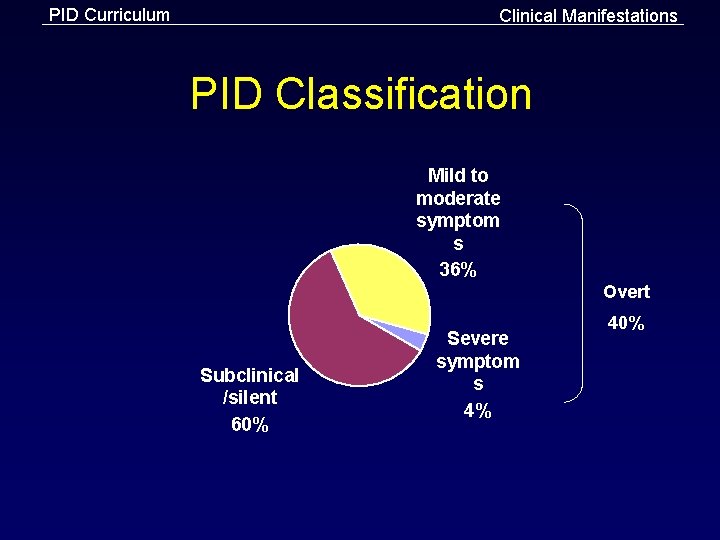
PID Curriculum Clinical Manifestations PID Classification Mild to moderate symptom s 36% Overt Subclinical /silent 60% Severe symptom s 4% 40%
PID Curriculum Clinical Manifestations Sequelae • • Approximately 25% of women with a single episode of PID will experience sequelae, including ectopic pregnancy, infertility, or chronic pelvic pain. Tubal infertility occurs in 8% of women after 1 episode of PID, in 20% of women after 2 episodes, and in 50% of women after 3 episodes.
PID Curriculum Lesson IV: PID Diagnosis
PID Curriculum Minimum Criteria in the Diagnosis of PID • Uterine tenderness, or • Adnexal tenderness, or • Cervical motion tenderness Diagnosis
PID Curriculum Diagnosis Additional Criteria to Increase Specificity of Diagnosis • Temperature >38. 3°C (101°F) • Abnormal cervical or vaginal mucopurulent discharge • Presence of abundant numbers of WBCs on saline microscopy of vaginal secretions • Elevated erythrocyte sedimentation rate (ESR) • Elevated C-reactive protein (CRP) • Gonorrhea or chlamydia test positive
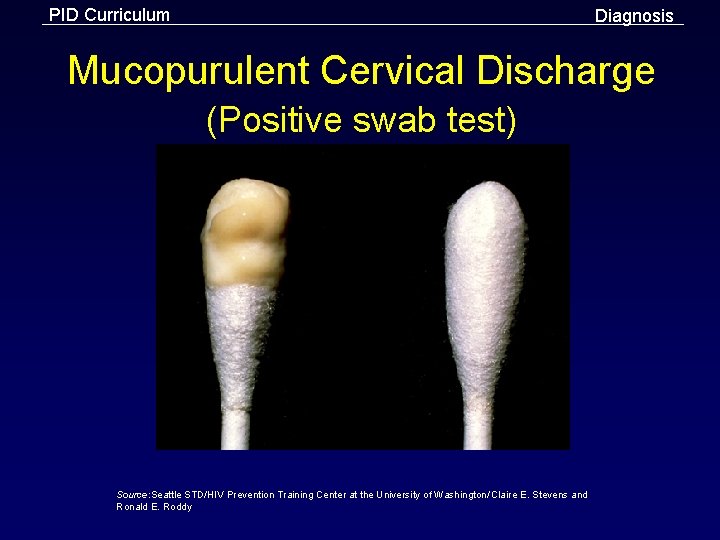
PID Curriculum Diagnosis Mucopurulent Cervical Discharge (Positive swab test) Source: Seattle STD/HIV Prevention Training Center at the University of Washington/ Claire E. Stevens and Ronald E. Roddy
PID Curriculum Diagnosis More Specific Criteria • Endometrial biopsy • Transvaginal sonography or MRI • Laparoscopy
PID Curriculum Lesson V: Patient Management
PID Curriculum Management General PID Considerations • Regimens must provide coverage of N. gonorrhoeae, C. trachomatis, anaerobes, Gram-negative bacteria, and streptococci • Treatment should be instituted as early as possible to prevent long term sequelae
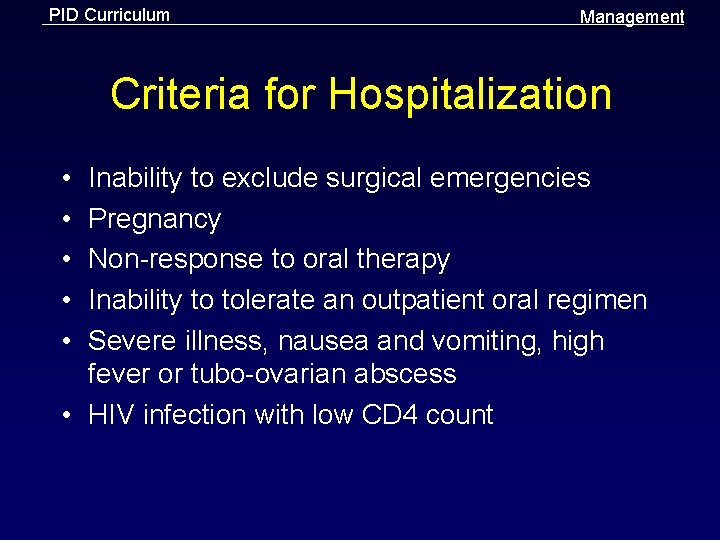
PID Curriculum Management Criteria for Hospitalization • • • Inability to exclude surgical emergencies Pregnancy Non-response to oral therapy Inability to tolerate an outpatient oral regimen Severe illness, nausea and vomiting, high fever or tubo-ovarian abscess • HIV infection with low CD 4 count
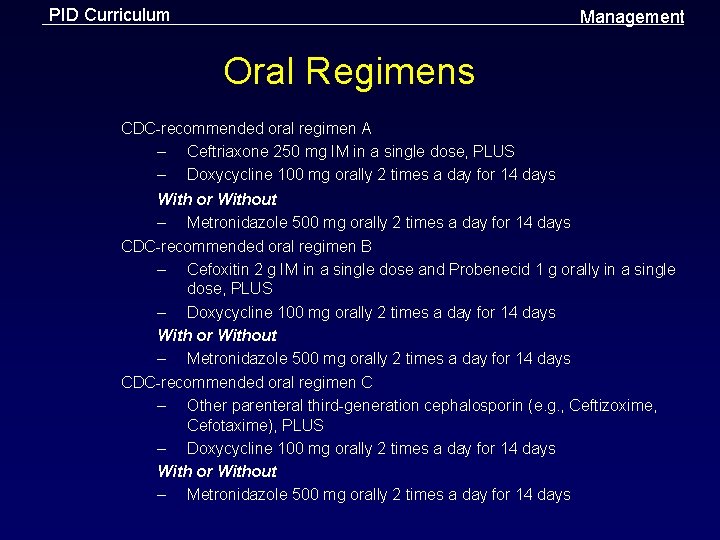
PID Curriculum Management Oral Regimens CDC-recommended oral regimen A – Ceftriaxone 250 mg IM in a single dose, PLUS – Doxycycline 100 mg orally 2 times a day for 14 days With or Without – Metronidazole 500 mg orally 2 times a day for 14 days CDC-recommended oral regimen B – Cefoxitin 2 g IM in a single dose and Probenecid 1 g orally in a single dose, PLUS – Doxycycline 100 mg orally 2 times a day for 14 days With or Without – Metronidazole 500 mg orally 2 times a day for 14 days CDC-recommended oral regimen C – Other parenteral third-generation cephalosporin (e. g. , Ceftizoxime, Cefotaxime), PLUS – Doxycycline 100 mg orally 2 times a day for 14 days With or Without – Metronidazole 500 mg orally 2 times a day for 14 days
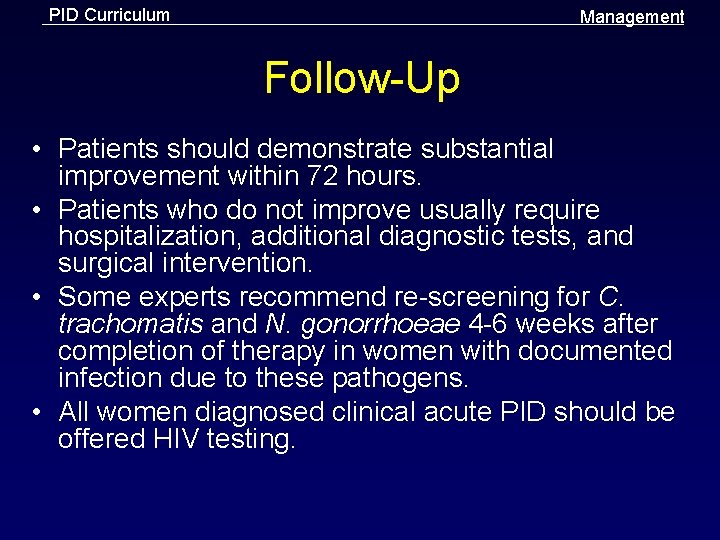
PID Curriculum Management Follow-Up • Patients should demonstrate substantial improvement within 72 hours. • Patients who do not improve usually require hospitalization, additional diagnostic tests, and surgical intervention. • Some experts recommend re-screening for C. trachomatis and N. gonorrhoeae 4 -6 weeks after completion of therapy in women with documented infection due to these pathogens. • All women diagnosed clinical acute PID should be offered HIV testing.
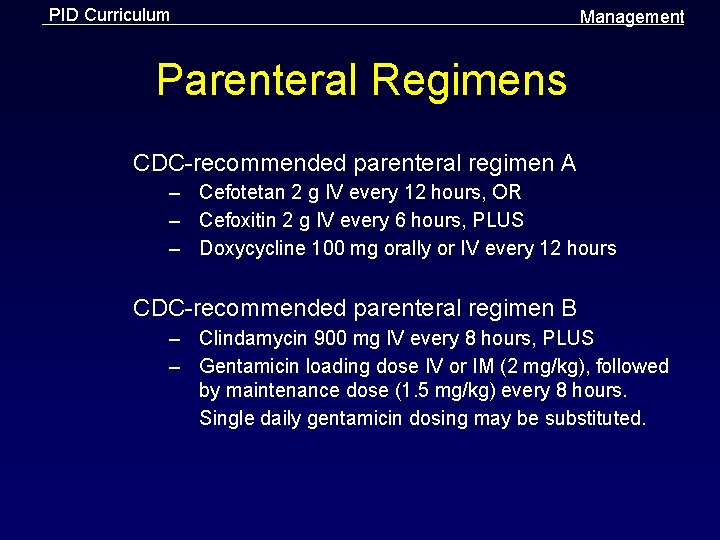
PID Curriculum Management Parenteral Regimens CDC-recommended parenteral regimen A – Cefotetan 2 g IV every 12 hours, OR – Cefoxitin 2 g IV every 6 hours, PLUS – Doxycycline 100 mg orally or IV every 12 hours CDC-recommended parenteral regimen B – Clindamycin 900 mg IV every 8 hours, PLUS – Gentamicin loading dose IV or IM (2 mg/kg), followed by maintenance dose (1. 5 mg/kg) every 8 hours. Single daily gentamicin dosing may be substituted.
PID Curriculum Management Alternative Parenteral Regimen • Ampicillin/Sulbactam 3 g IV every 6 hours, PLUS Doxycycline 100 mg orally or IV every 12 hours. • It is important to continue either regimen A or B or alternative regimens for at least 24 hours after substantial clinical improvement occurs and also to complete a total of 14 days therapy with: – Doxycycline 100 mg orally twice a day OR – Clindamycin 450 mg orally four times a day.
PID Curriculum Lesson VI: Prevention
PID Curriculum Prevention Screening • To reduce the incidence of PID, screen and treat for chlamydia. • Annual chlamydia screening is recommended for: – Sexually active women 25 and under – Sexually active women >25 at high risk • Screen pregnant women in the 1 st trimester.
PID Curriculum Prevention Partner Management • Male sex partners of women with PID should be examined and treated if they had sexual contact with the patient during the 60 days preceding the patient’s onset of symptoms. • Male partners of women who have PID caused by C. trachomatis or N. gonorrhoeae are often asymptomatic. • Sex partners should be treated empirically with regimens effective against both C. trachomatis and N. gonorrhoeae, regardless of the apparent etiology of PID or pathogens isolated from the infected woman.
PID Curriculum Prevention Reporting • Report cases of PID to the local STI program in states where reporting is mandated. • Gonorrhea and chlamydia are reportable in all states.
PID Curriculum Prevention Patient Counseling and Education • Nature of the infection • Transmission • Risk reduction – Assess patient's behavior-change potential – Discuss prevention strategies – Develop individualized risk-reduction plans
PID Curriculum Case Study
PID Curriculum Case Study Patient history: Jane • 24 yo G 1 P 1001 who presents with lower abdominal pain, cramping, slight fever, and dysuria for 4 days • LMP 2 weeks ago (regular without dysmenorrhea). • Uses oral contraceptives (for 2 years). • Gradual onset of symptoms of lower bilateral abdominal discomfort, dysuria (no gross hematuria), abdominal cramping and a slight lowgrade fever in the evenings for 4 days. Discomfort has gradually worsened. • Denies GI disturbances or constipation. Denies vaginal d/c. • States that she is happily partnered in a monogamous relationship. Plans another pregnancy in about 6 months. No condom use. • No history of STIs. Occasional "yeast infections“. • Douches regularly after menses and intercourse; last douched this morning.
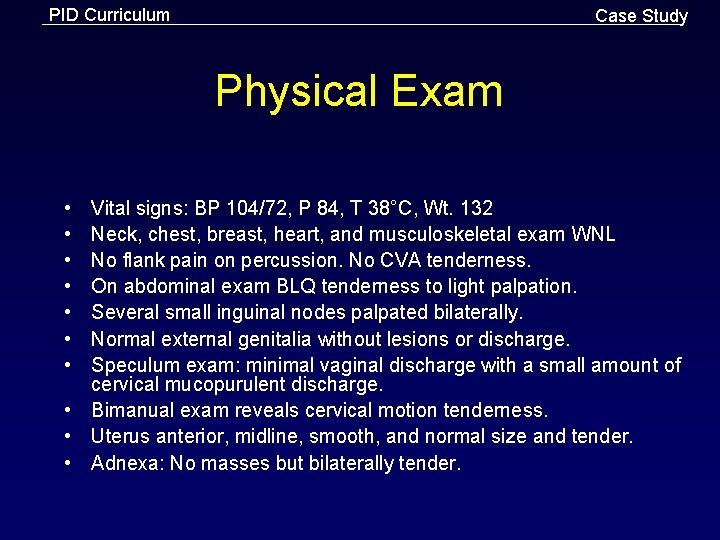
PID Curriculum Case Study Physical Exam • • Vital signs: BP 104/72, P 84, T 38°C, Wt. 132 Neck, chest, breast, heart, and musculoskeletal exam WNL No flank pain on percussion. No CVA tenderness. On abdominal exam BLQ tenderness to light palpation. Several small inguinal nodes palpated bilaterally. Normal external genitalia without lesions or discharge. Speculum exam: minimal vaginal discharge with a small amount of cervical mucopurulent discharge. • Bimanual exam reveals cervical motion tenderness. • Uterus anterior, midline, smooth, and normal size and tender. • Adnexa: No masses but bilaterally tender.
PID Curriculum Case Study Questions 1. What should be included in the differential diagnosis? 2. What laboratory tests should be performed or ordered?
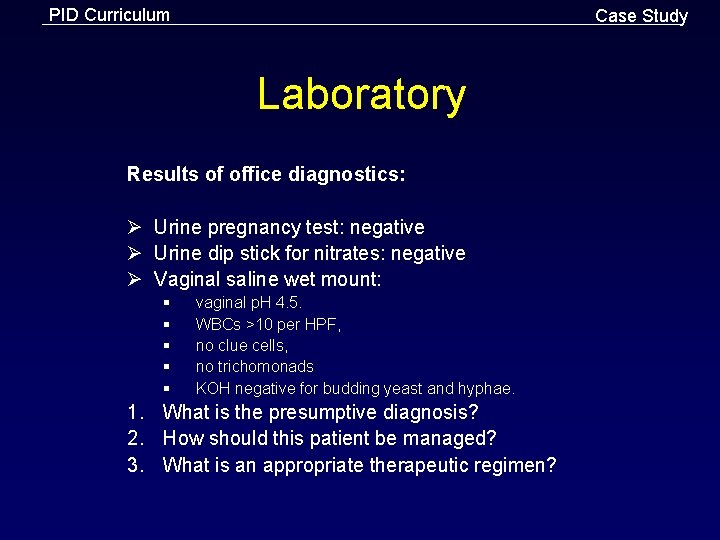
PID Curriculum Case Study Laboratory Results of office diagnostics: Ø Urine pregnancy test: negative Ø Urine dip stick for nitrates: negative Ø Vaginal saline wet mount: § § § vaginal p. H 4. 5. WBCs >10 per HPF, no clue cells, no trichomonads KOH negative for budding yeast and hyphae. 1. What is the presumptive diagnosis? 2. How should this patient be managed? 3. What is an appropriate therapeutic regimen?
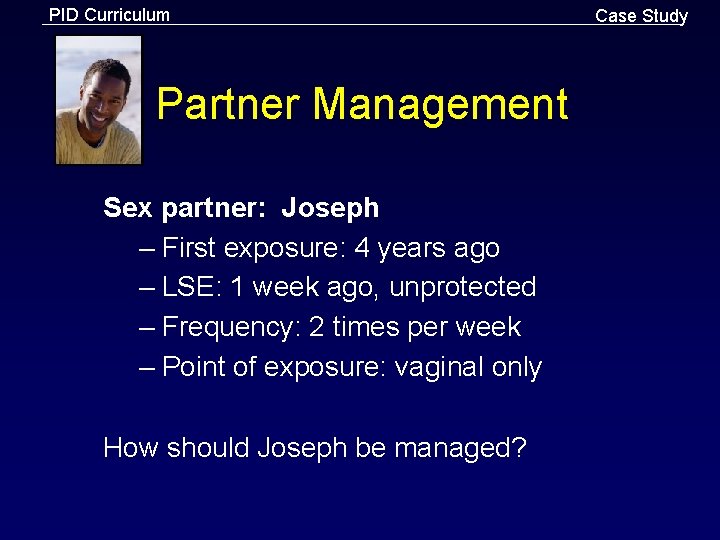
PID Curriculum Partner Management Sex partner: Joseph – First exposure: 4 years ago – LSE: 1 week ago, unprotected – Frequency: 2 times per week – Point of exposure: vaginal only How should Joseph be managed? Case Study
PID Curriculum Case Study Follow-Up Ø On follow up 3 days later, Jane was improved clinically. Ø The culture for gonorrhea was positive. Ø Nucleic acid amplification test (NAAT) for chlamydia was negative. Ø Joseph (Jane’s partner) came in with Jane at follow-up. Ø He was asymptomatic but did admit to a "one-night stand" while traveling. Ø He was treated. Ø They were offered HIV testing which they accepted. What are appropriate prevention counseling recommendations for this patient?