
Picture Exchange Communication System PECS What is PECS

- Slides: 11
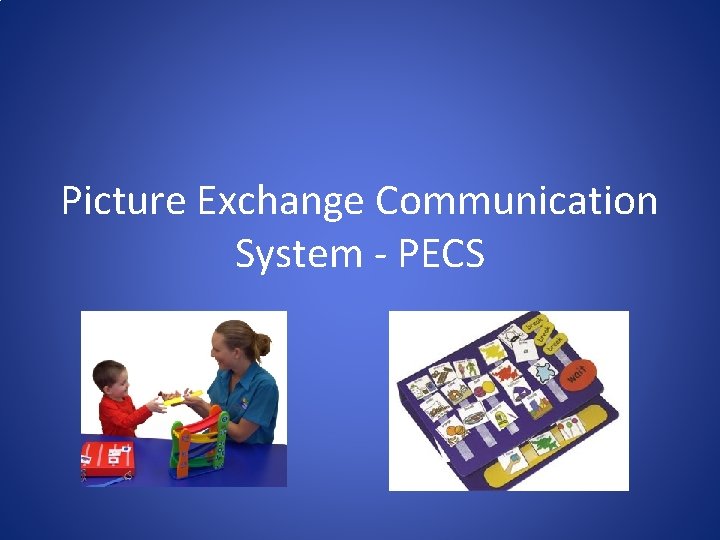
Picture Exchange Communication System - PECS
What is PECS? • A structured approach to teach the process of communication to individuals who do not develop these skills as a typically developing child would e. g. non-verbal children with ASD • Teaches individuals to communicate with a range of different people across different environments • Supports children to independently initiate an interaction, rather than it being prompt dependant • A form of alternative and augmentative communication (AAC) • Functional communciation skills • The aim is not to teach a child to talk!
https: //www. youtube. com/watch? v=F e. Gaff. IJv. HM
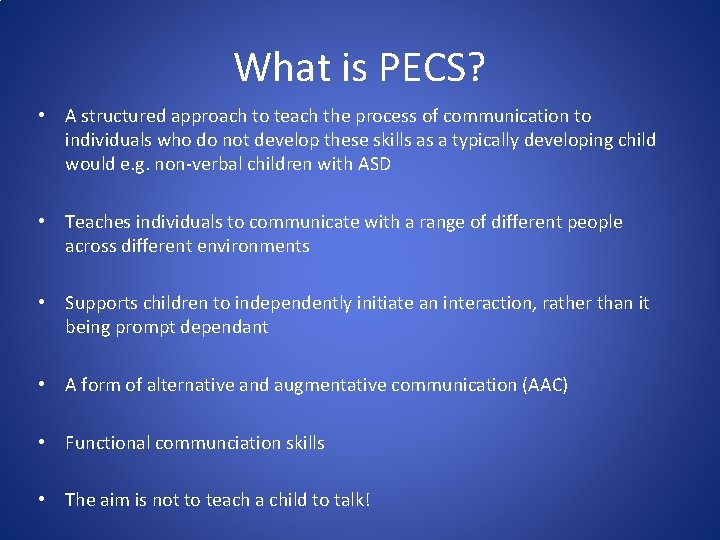
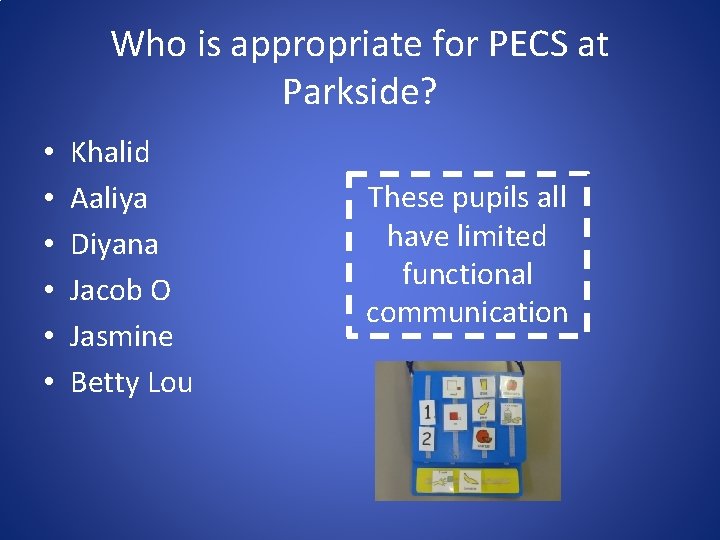
PECS and symbols • A child who is using symbols is not necessarily using PECS. They are using symbols for visual support as part of a total communication approach • Symbols (e. g. widgit symbols) can be used as part of the PECS process but so can photos • Children using PECS are working through PECS ‘phases’ to develop their communication skills • PECS books are different to communication books
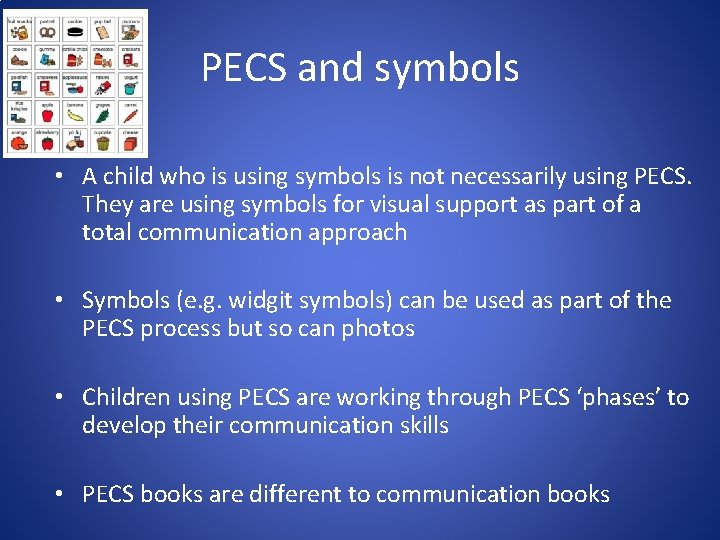
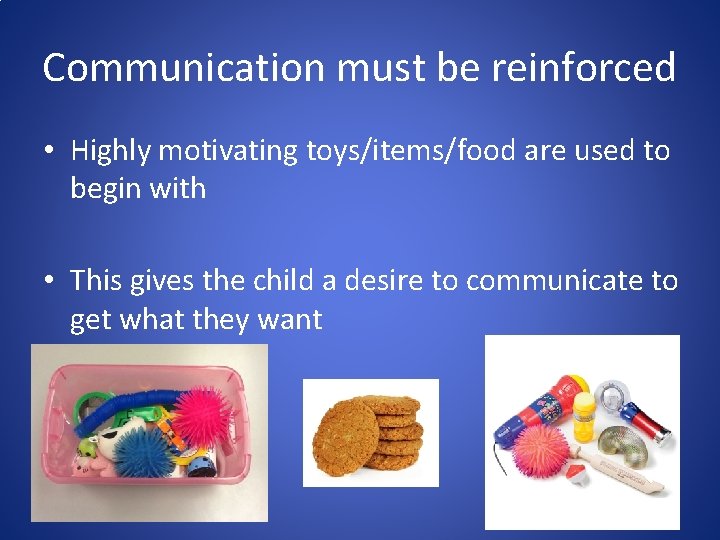
Communication must be reinforced • Highly motivating toys/items/food are used to begin with • This gives the child a desire to communicate to get what they want
Phase 1 • Only 1 symbol at a time – child doesn’t need to be able to discriminate • Teaching ‘how’ to communicate • Lots of repetition (people and places) • 2 people are needed ideally
Phase 2 – Distance and persistence • Aim: the child to travel to their, communciation partner and PECS book • Own PECS book • 1 picture at a time • Physical rather than verbal prompting if the child needs guidance
Phase 3 • Part 1: Simple discrimination – highly preferred vs. non-preferred to check it’s a real choice • Child must be given what they have requested even if they have chosen the wrong picture • Part 2: Discrimination between preferred items
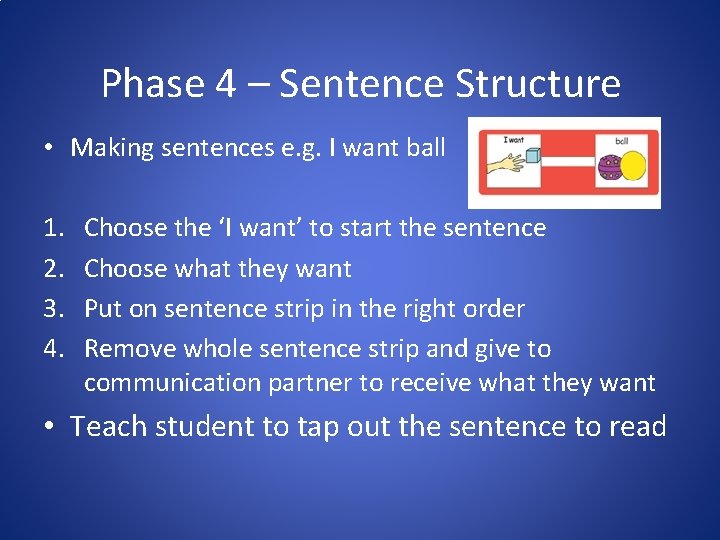
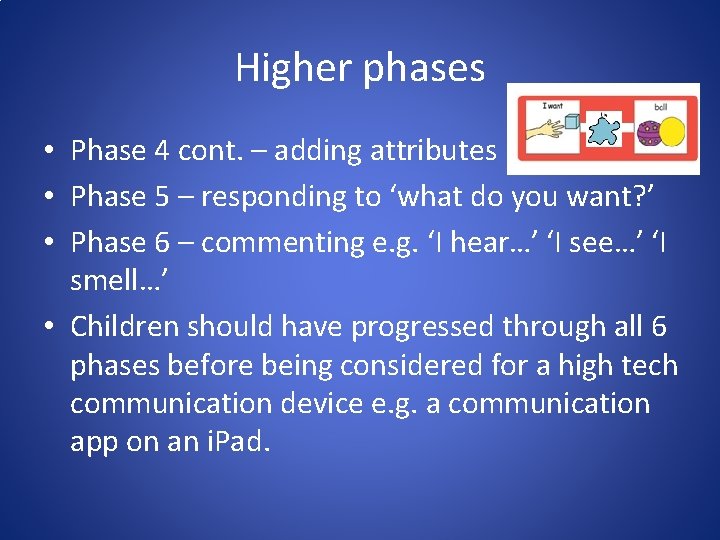
Phase 4 – Sentence Structure • Making sentences e. g. I want ball 1. 2. 3. 4. Choose the ‘I want’ to start the sentence Choose what they want Put on sentence strip in the right order Remove whole sentence strip and give to communication partner to receive what they want • Teach student to tap out the sentence to read
Higher phases • Phase 4 cont. – adding attributes • Phase 5 – responding to ‘what do you want? ’ • Phase 6 – commenting e. g. ‘I hear…’ ‘I see…’ ‘I smell…’ • Children should have progressed through all 6 phases before being considered for a high tech communication device e. g. a communication app on an i. Pad.
Who is appropriate for PECS at Parkside? • • • Khalid Aaliya Diyana Jacob O Jasmine Betty Lou These pupils all have limited functional communication