
Pictish symbol stones 2 Aim To examine Pictish
Pictish symbol stones (2) Aim: To examine Pictish symbol stones as evidence for the nature of Pictish society.
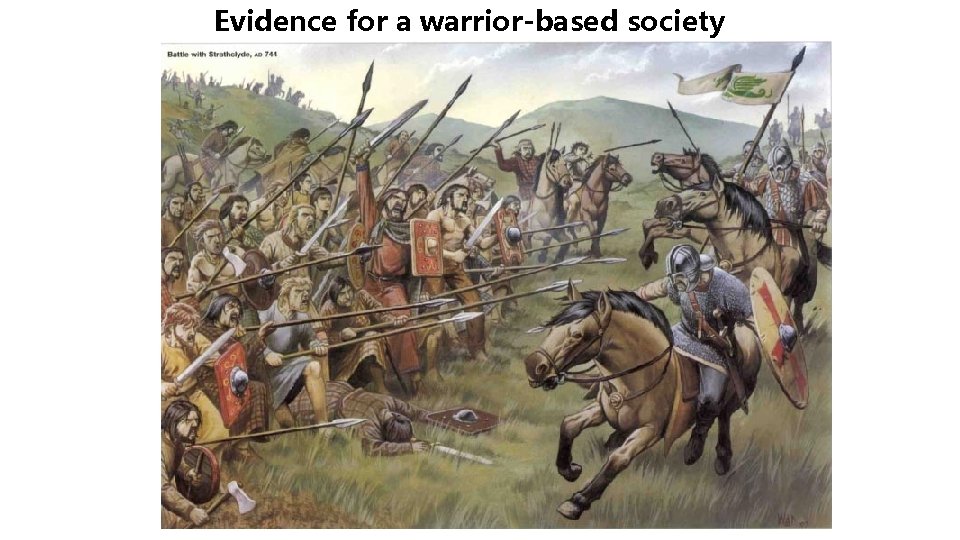
Evidence for a warrior-based society
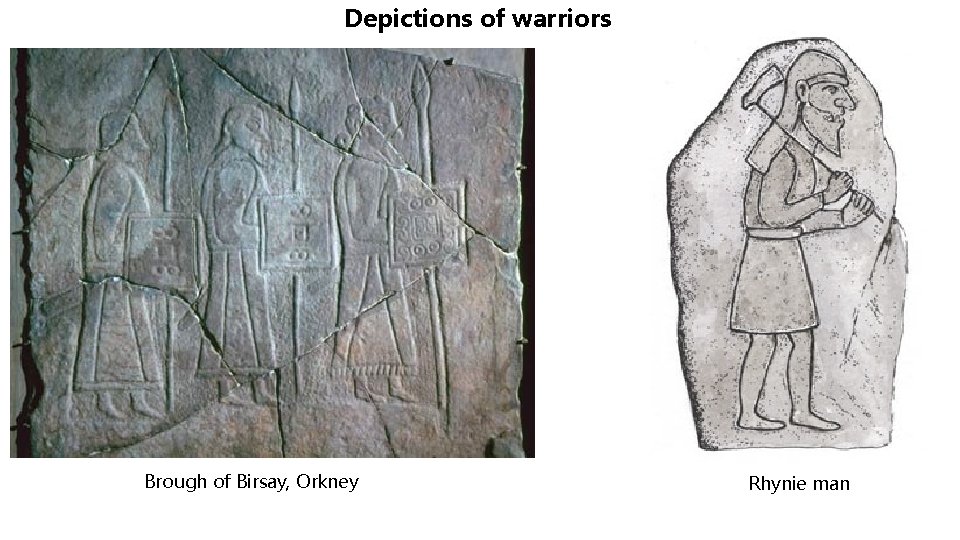
Depictions of warriors Brough of Birsay, Orkney Rhynie man
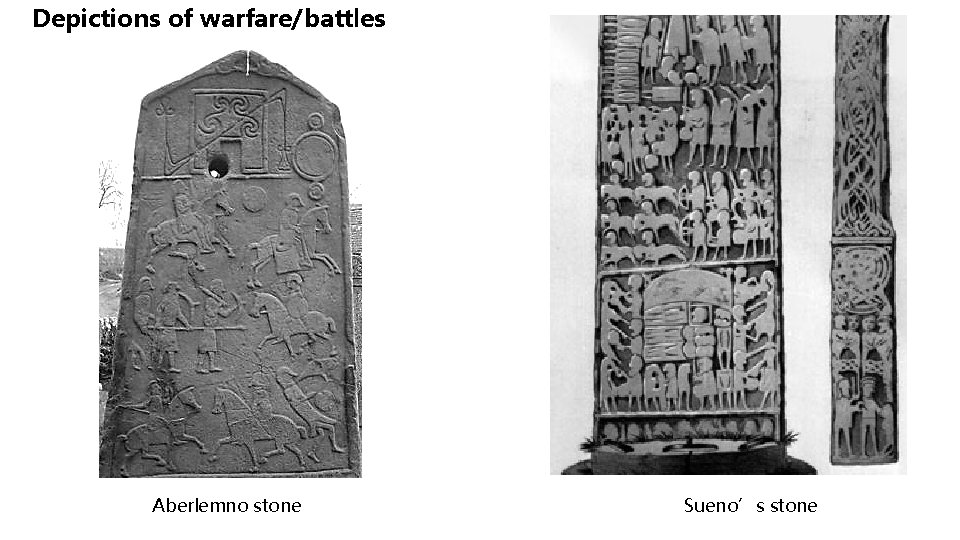
Depictions of warfare/battles Aberlemno stone Sueno’s stone
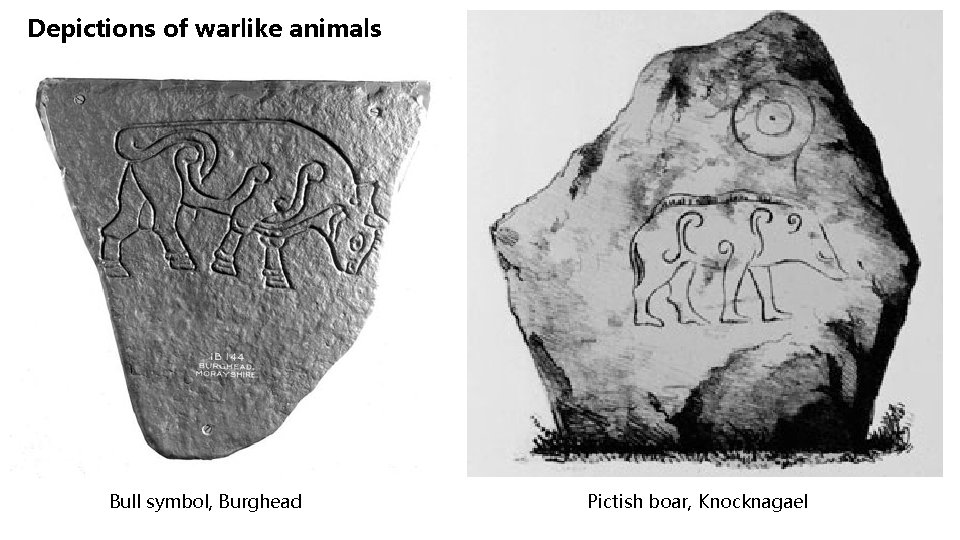
Depictions of warlike animals Bull symbol, Burghead Pictish boar, Knocknagael

Abstract symbols, possibly depicting weaponry “Tuning fork” symbol, Abernethy 1 Grantown-on-Spey
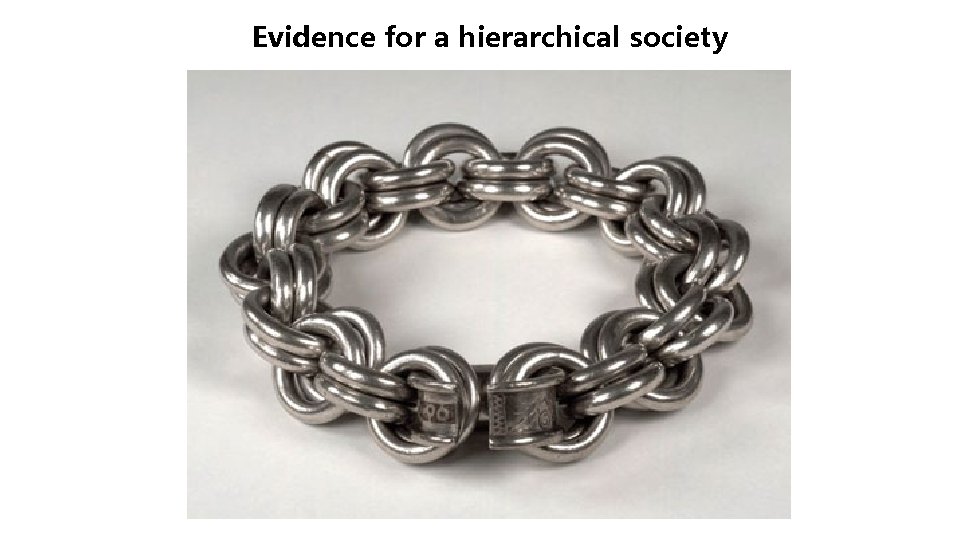
Evidence for a hierarchical society
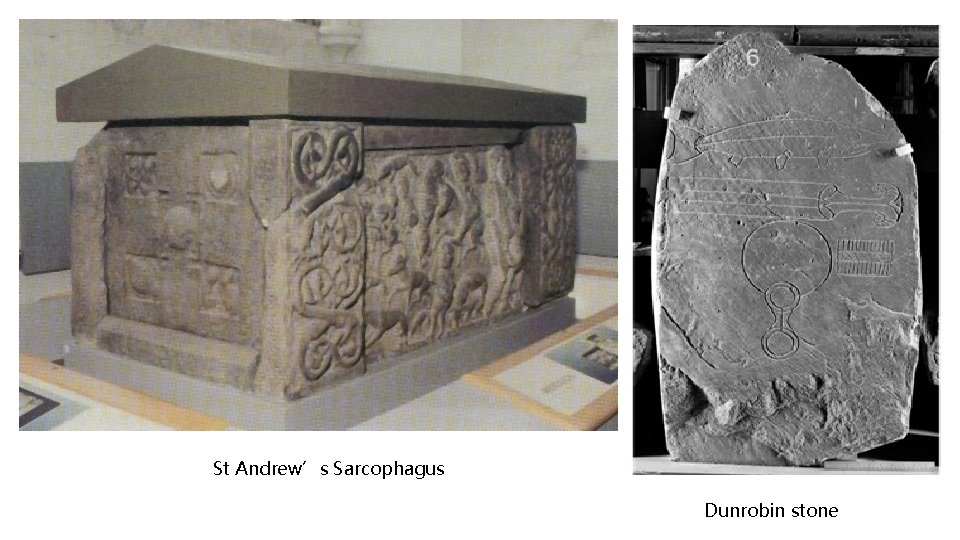
St Andrew’s Sarcophagus Dunrobin stone
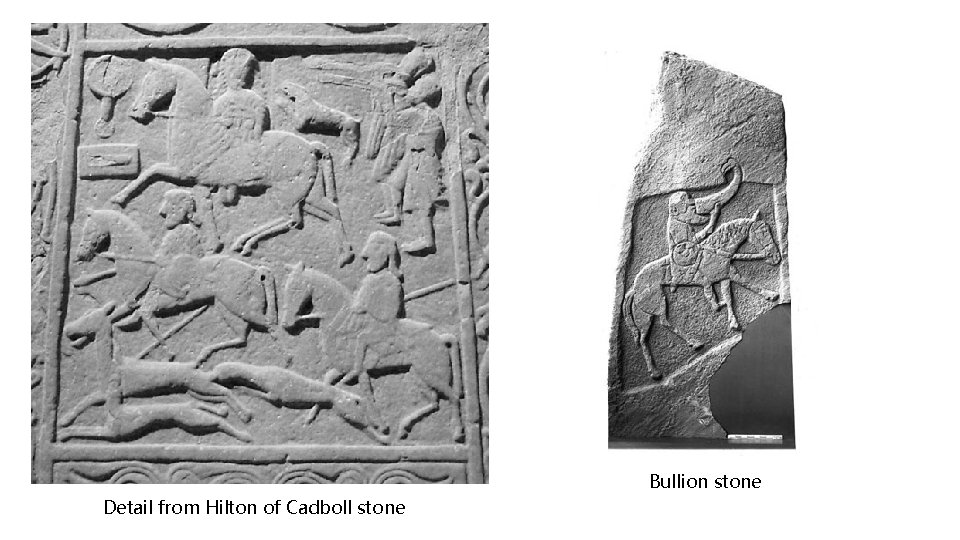
Bullion stone Detail from Hilton of Cadboll stone
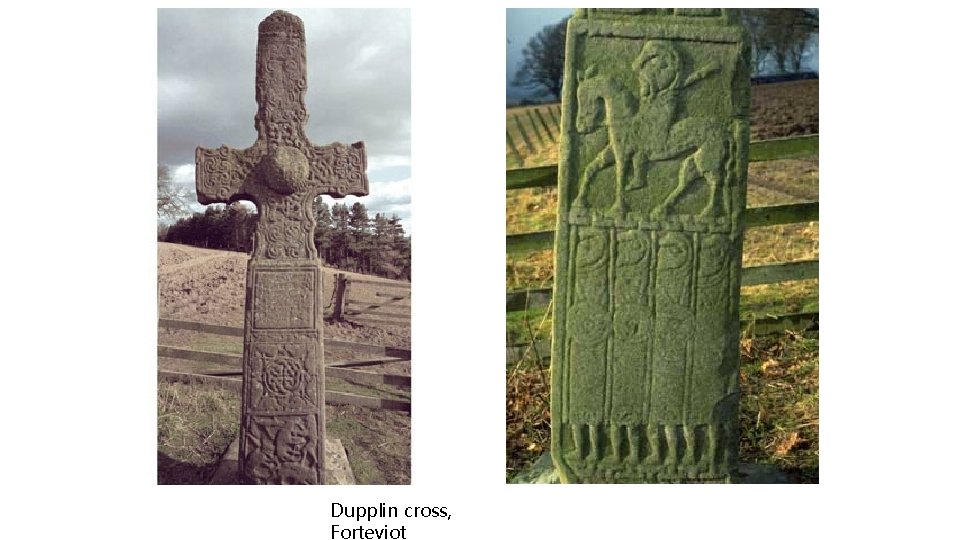
Dupplin cross, Forteviot
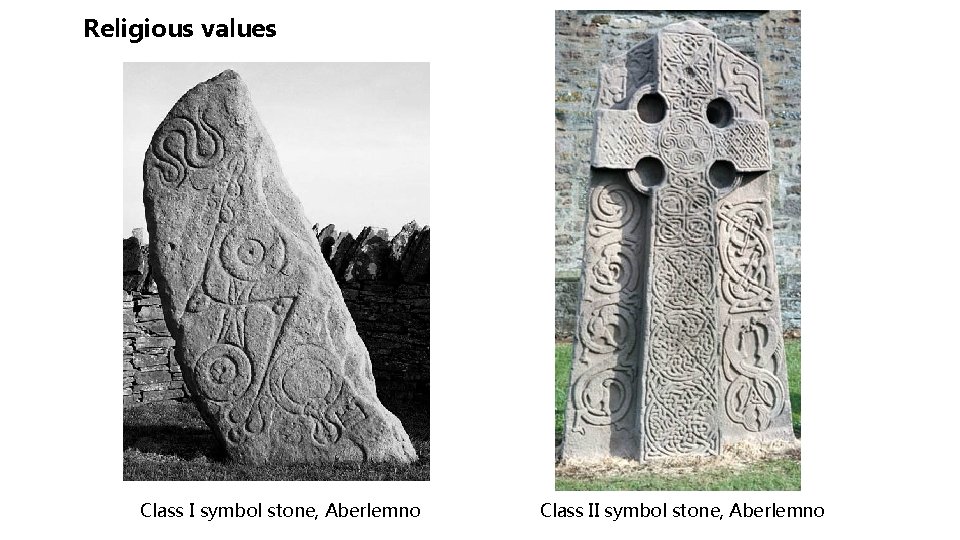
Religious values Class I symbol stone, Aberlemno Class II symbol stone, Aberlemno
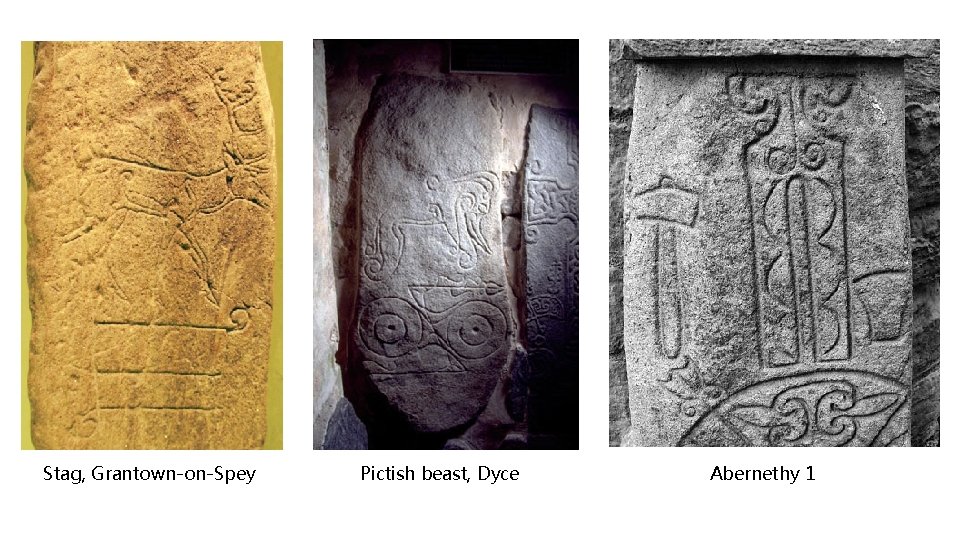
Stag, Grantown-on-Spey Pictish beast, Dyce Abernethy 1
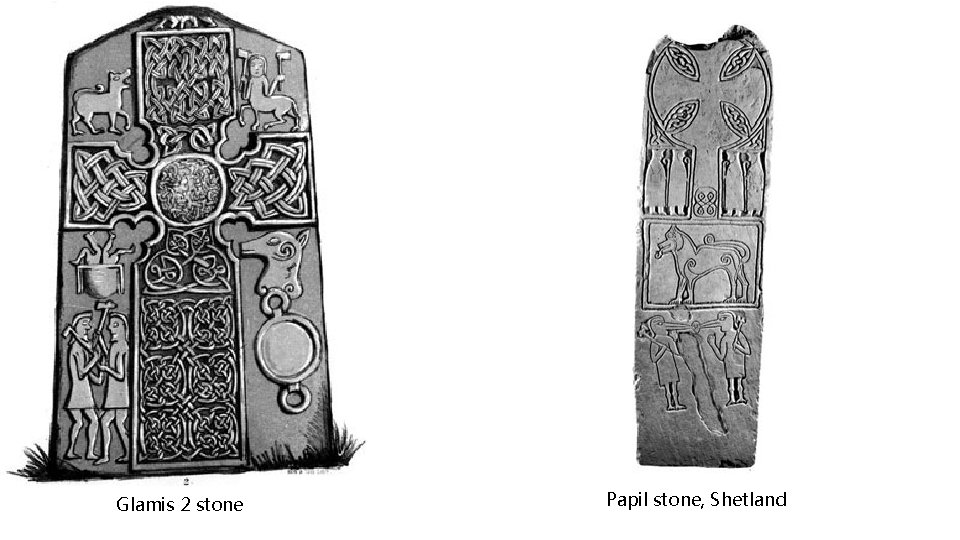
Glamis 2 stone Papil stone, Shetland
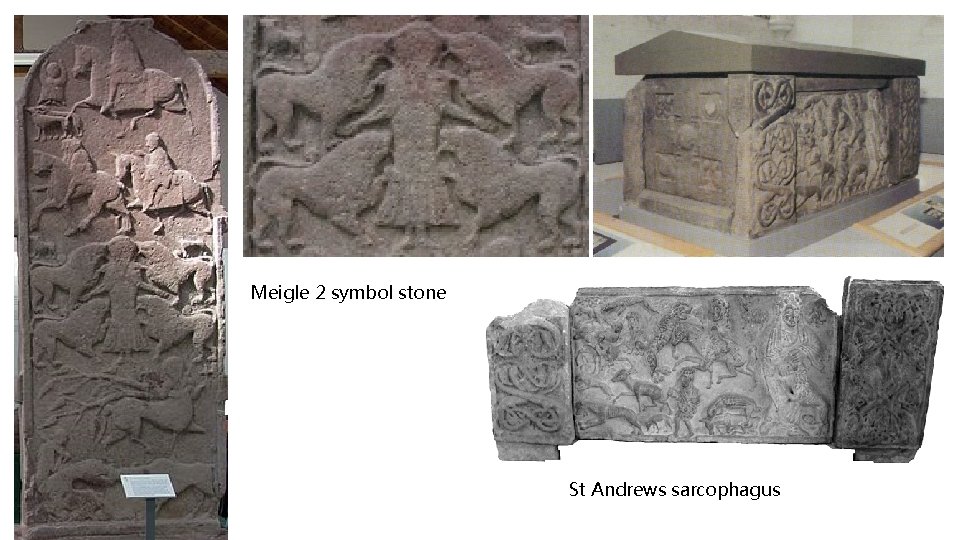
Meigle 2 symbol stone St Andrews sarcophagus
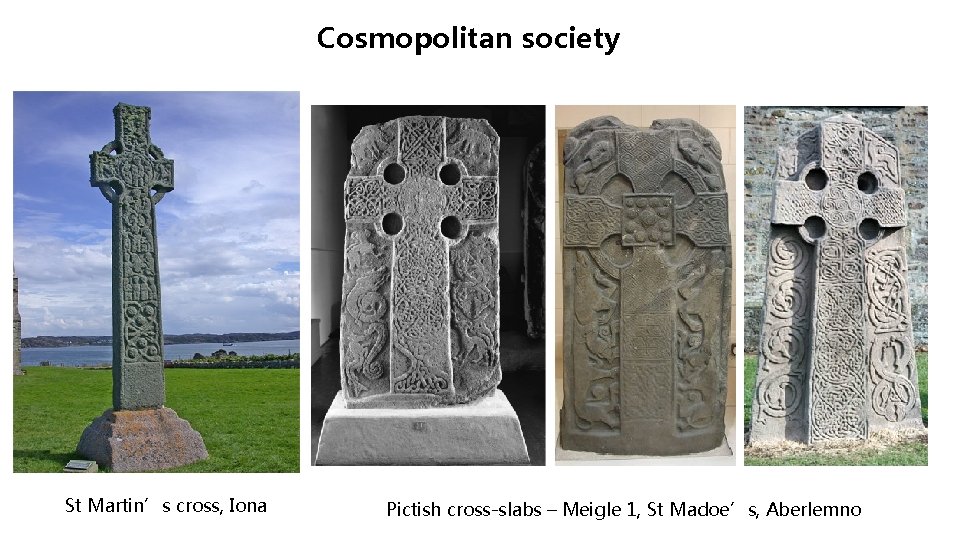
Cosmopolitan society St Martin’s cross, Iona Pictish cross-slabs – Meigle 1, St Madoe’s, Aberlemno
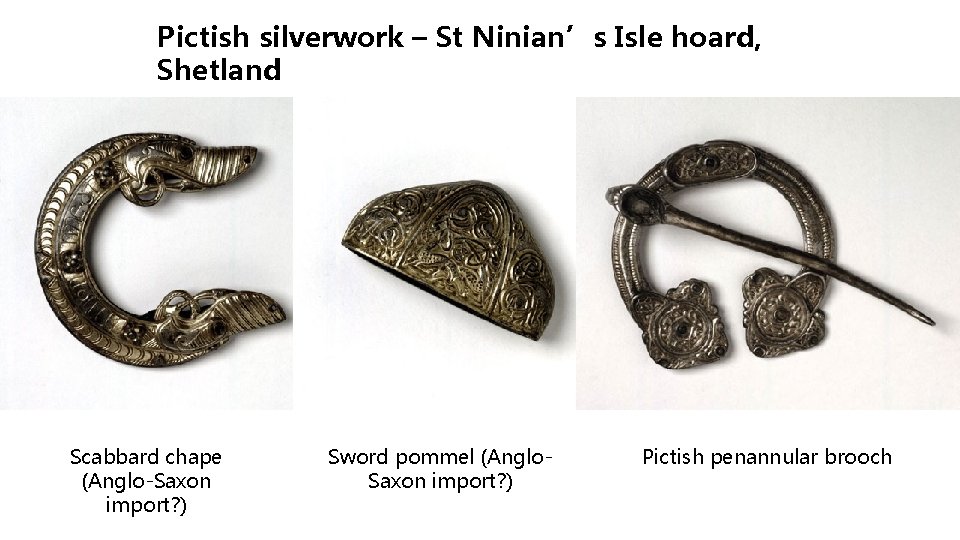
Pictish silverwork – St Ninian’s Isle hoard, Shetland Scabbard chape (Anglo-Saxon import? ) Sword pommel (Anglo. Saxon import? ) Pictish penannular brooch
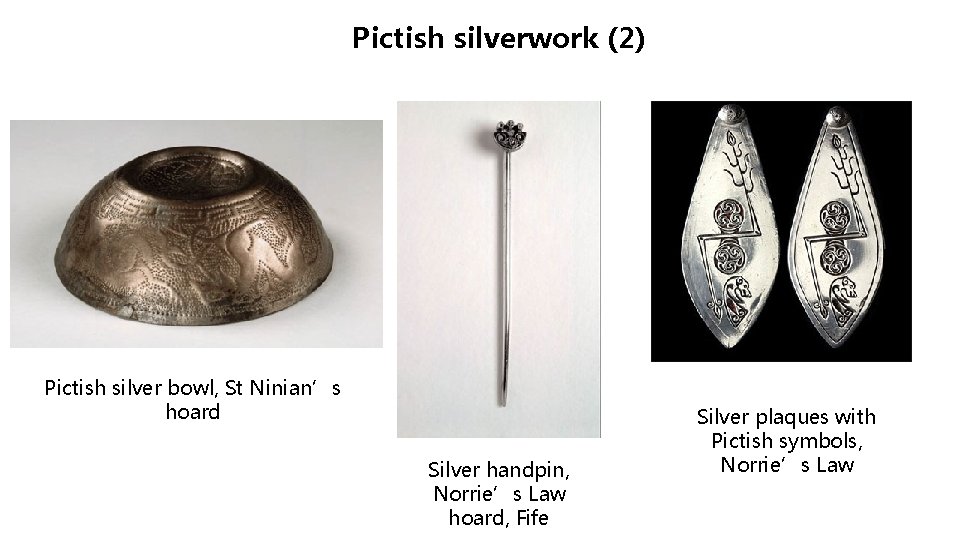
Pictish silverwork (2) Pictish silver bowl, St Ninian’s hoard Silver handpin, Norrie’s Law hoard, Fife Silver plaques with Pictish symbols, Norrie’s Law
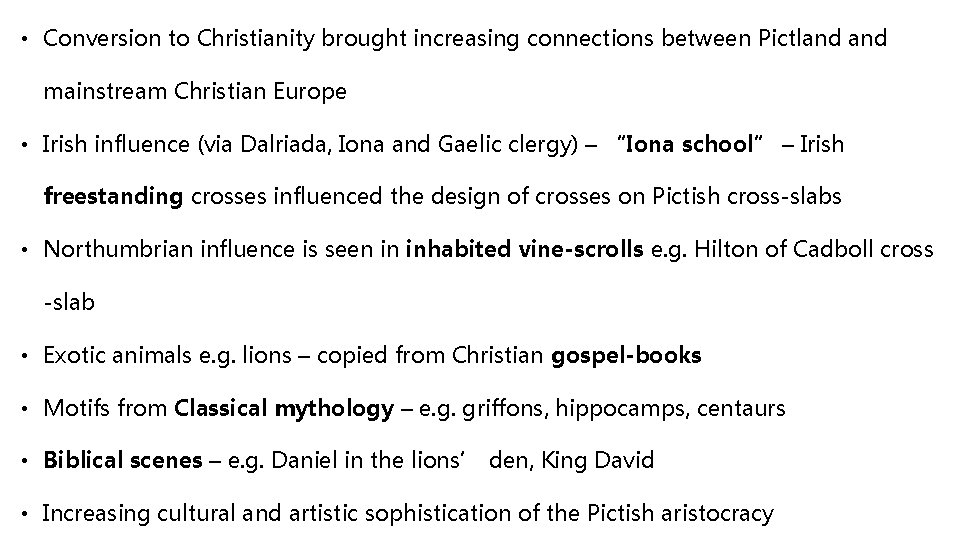
• Conversion to Christianity brought increasing connections between Pictland mainstream Christian Europe • Irish influence (via Dalriada, Iona and Gaelic clergy) – “Iona school” – Irish freestanding crosses influenced the design of crosses on Pictish cross-slabs • Northumbrian influence is seen in inhabited vine-scrolls e. g. Hilton of Cadboll cross -slab • Exotic animals e. g. lions – copied from Christian gospel-books • Motifs from Classical mythology – e. g. griffons, hippocamps, centaurs • Biblical scenes – e. g. Daniel in the lions’ den, King David • Increasing cultural and artistic sophistication of the Pictish aristocracy
- Slides: 18