
Pico SAR Shreders 725 Basics Small airborne radar
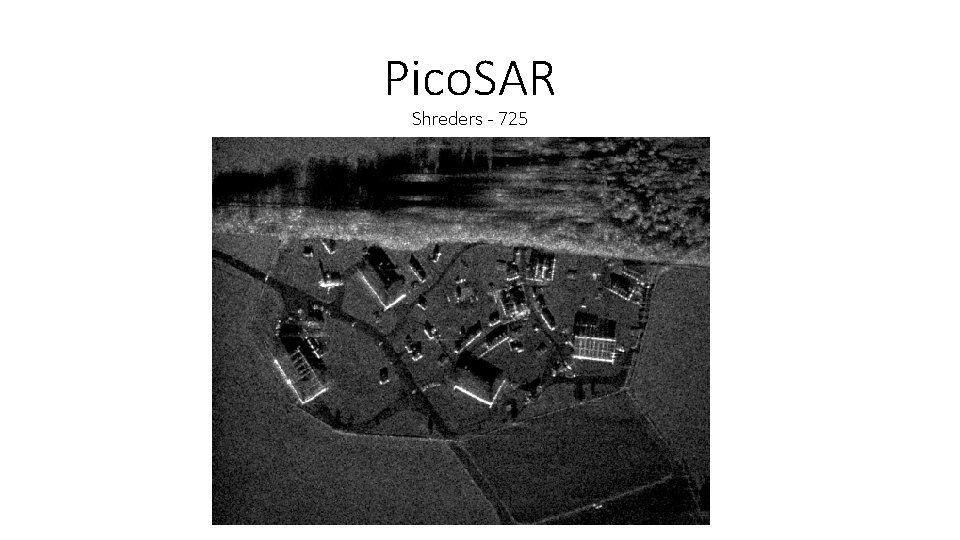
Pico. SAR Shreders - 725
Basics • Small airborne radar design for UAV/Fixed Wing/Helicopter • Houses IMU, signal processor, motion compensation in one package • Gives user high resolution SAR imaging • Strip SAR • Moving Target Detection • GMTI • AESA • • • Uses numerous TRMs in an array Provides improved reliability Low probability of intercept Resistance to ECM/ECCM Can be gimbal mounted for greater Fo. V
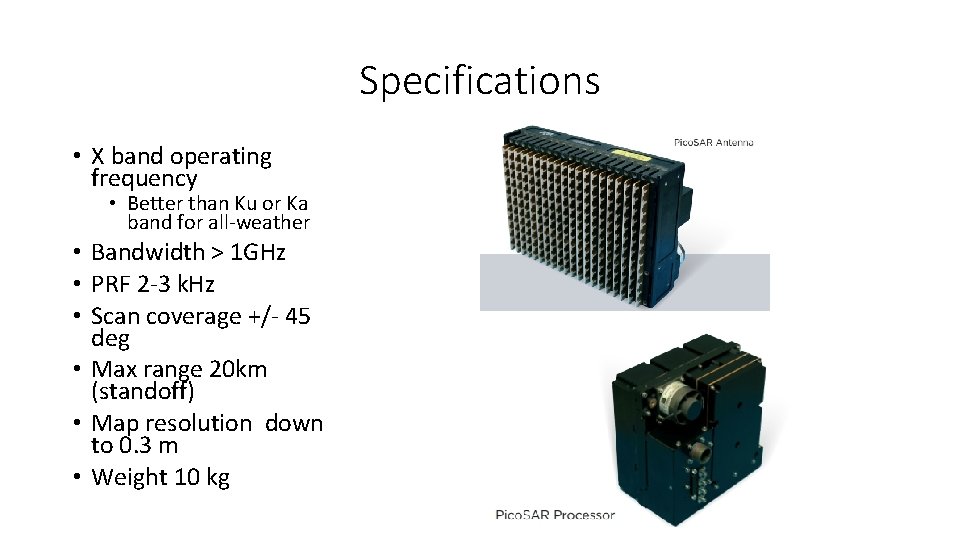
Specifications • X band operating frequency • Better than Ku or Ka band for all-weather • Bandwidth > 1 GHz • PRF 2 -3 k. Hz • Scan coverage +/- 45 deg • Max range 20 km (standoff) • Map resolution down to 0. 3 m • Weight 10 kg
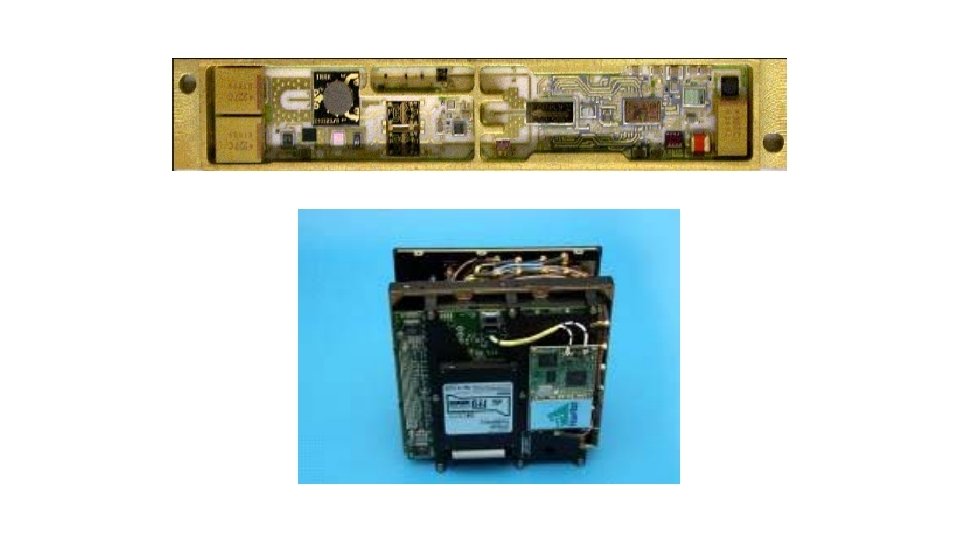
Signal/Image Processing • Some steps may be externally delegated (via datalink) • Real-time processing more desirable for a number of reasons • Uses commercially off-the-shelf platform • PMC/XMC architecture, PA 6 T-1682 M processor (So. C) • GNSS software-defined receiver • Uses Direct Digital Synthesis • 21 -state Kalman filter to process measurements from the IMU and the GPS sensors for motion compensation • Very important for high-res imagery • Solid-state memory records over two hours of raw data • Allows further processing to be done later (if real-time not be used)
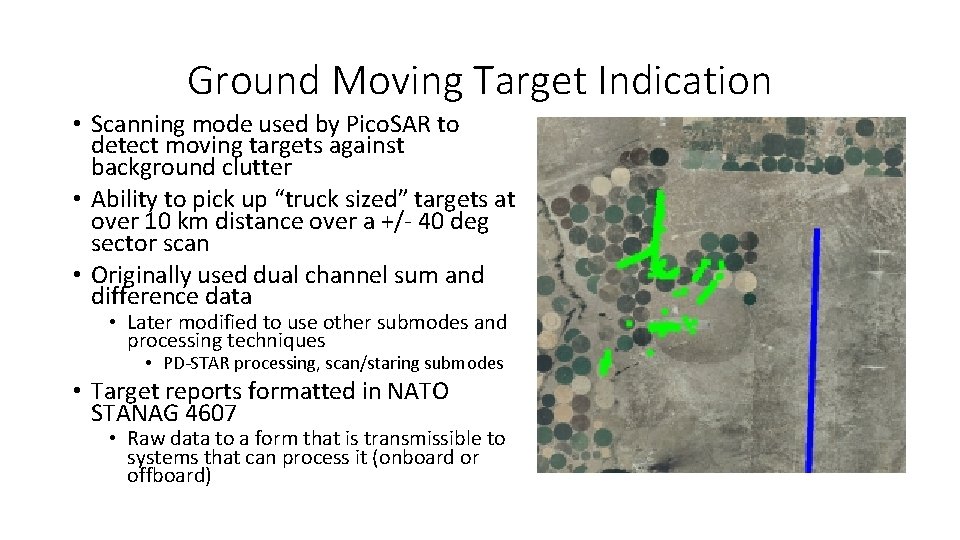
Ground Moving Target Indication • Scanning mode used by Pico. SAR to detect moving targets against background clutter • Ability to pick up “truck sized” targets at over 10 km distance over a +/- 40 deg sector scan • Originally used dual channel sum and difference data • Later modified to use other submodes and processing techniques • PD-STAR processing, scan/staring submodes • Target reports formatted in NATO STANAG 4607 • Raw data to a form that is transmissible to systems that can process it (onboard or offboard)
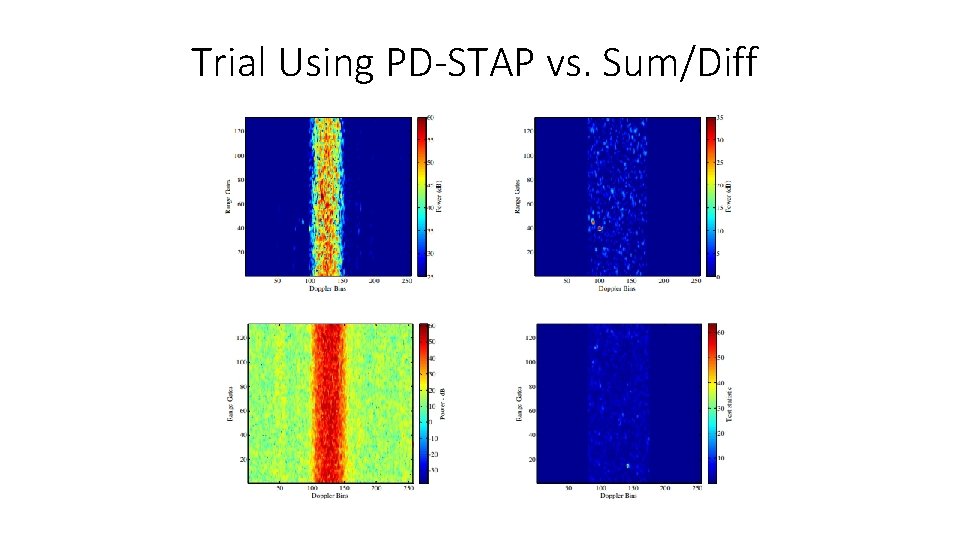
Trial Using PD-STAP vs. Sum/Diff
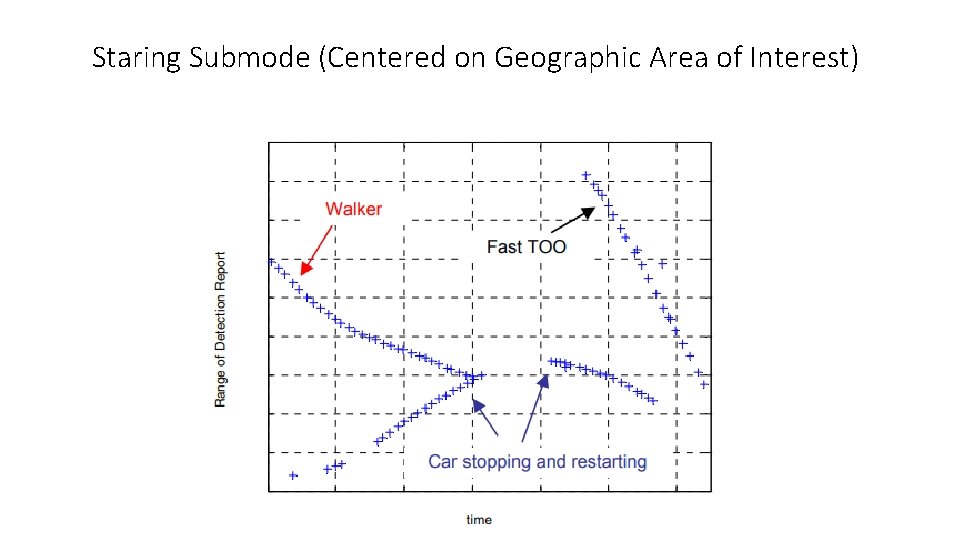
Staring Submode (Centered on Geographic Area of Interest)
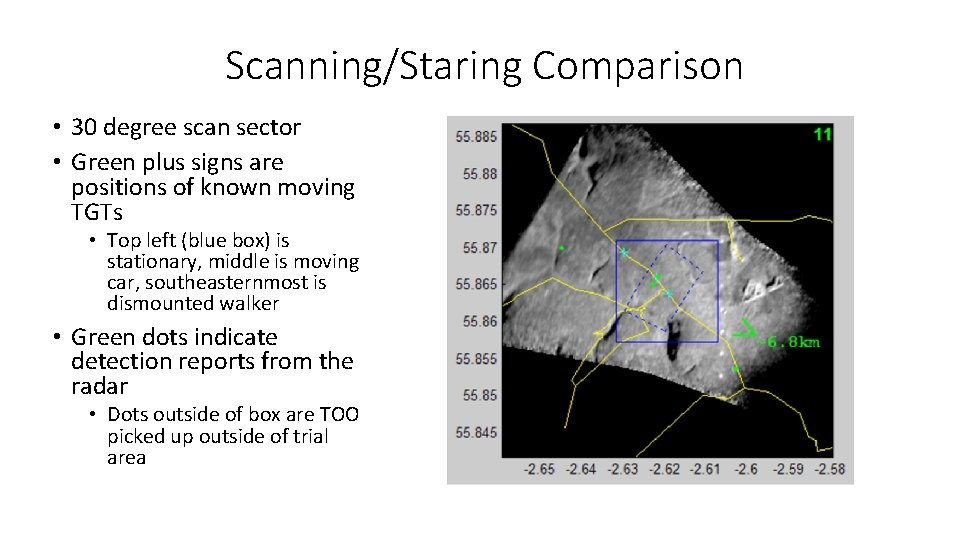
Scanning/Staring Comparison • 30 degree scan sector • Green plus signs are positions of known moving TGTs • Top left (blue box) is stationary, middle is moving car, southeasternmost is dismounted walker • Green dots indicate detection reports from the radar • Dots outside of box are TOO picked up outside of trial area
References • Kinghorn, A. , & Nejman, A. (2009). Pico. SAR- an advanced lightweight SAR system. 2009 European Radar Conference (Eu. RAD), 168 -171. • Goulding, M. , Stonehouse, Nejman, & Damini. (2011). AESA based dual channel GMTI: Mode design & flight trials. 2011 IEEE Radar. Con (RADAR), 917 -921. • Halcrow, G. , Greig, D. , Glass, A. , Mountford, C. , Robinson, A. , Stoyle, P. , & Kinghorn, A. (2013). Pico. SAR trials results. 2013 14 th International Radar Symposium (IRS), 1, 47 -52. • Knapskog, A. , Brovoll, S. , & Torvik, B. (2010). Characteristics of ships in harbour investigated in simultaneous images from Terra. SAR-X and Pico. SAR. 2010 IEEE Radar Conference, 422 -427. • https: //www. leonardocompany. com/documents/20142/3149735/Pico. SAR+%28 mm 0777 4%29+HQ. pdf? t=1604921700677 • Vick, Alan J. , Richard M. Moore, Bruce R. Pirnie, and John Stillion, Meeting the Challenge of Elusive Ground Targets, Santa Monica, Calif. : RAND Corporation, RB-76 -1 -AF, 2002. • Goulding, M. , Stonehouse, Nejman, & Damini. (2011). AESA based dual channel GMTI: Mode design & flight trials. 2011 IEEE Radar. Con (RADAR), 917 -921.
- Slides: 10