
PickUp Order Lead Time Project Storyboard The Bahama
Pick-Up Order Lead Time Project Storyboard The Bahama Bistro Sample Storyboard Visit Go. Lean. Six. Sigma. com for more Lean Six Sigma Resources
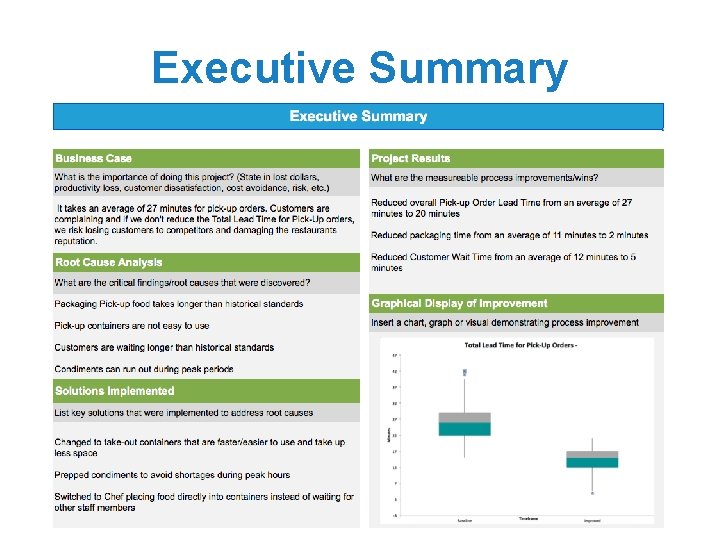
Executive Summary
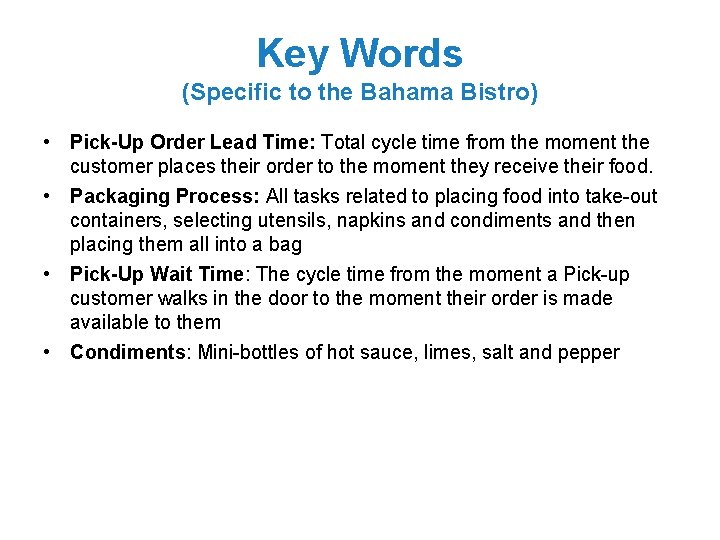
Key Words (Specific to the Bahama Bistro) • Pick-Up Order Lead Time: Total cycle time from the moment the customer places their order to the moment they receive their food. • Packaging Process: All tasks related to placing food into take-out containers, selecting utensils, napkins and condiments and then placing them all into a bag • Pick-Up Wait Time: The cycle time from the moment a Pick-up customer walks in the door to the moment their order is made available to them • Condiments: Mini-bottles of hot sauce, limes, salt and pepper
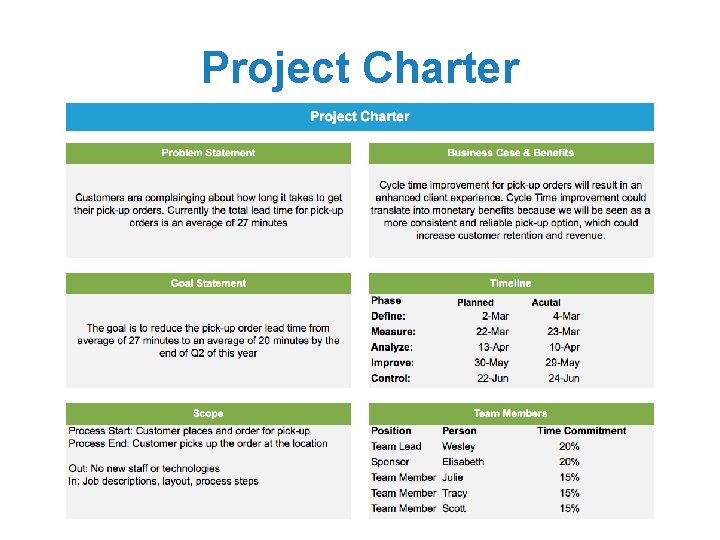
Project Charter

VOC Translation Matrix Key Take Away: Project needs to address overall Lead time which will impact customer wait time as well as food temperature
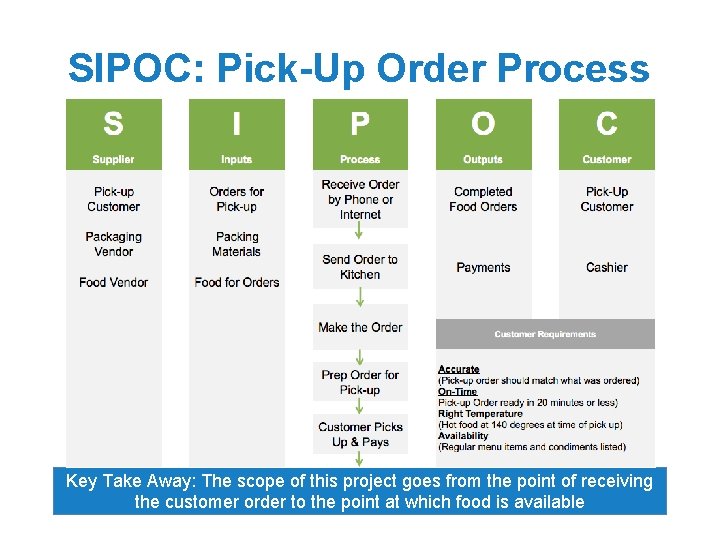
SIPOC: Pick-Up Order Process Key Take Away: The scope of this project goes from the point of receiving the customer order to the point at which food is available

Detailed Map – Pick-Up Process Key Take Away: The process needs more analysis – packaging segment seems to take longer than expected
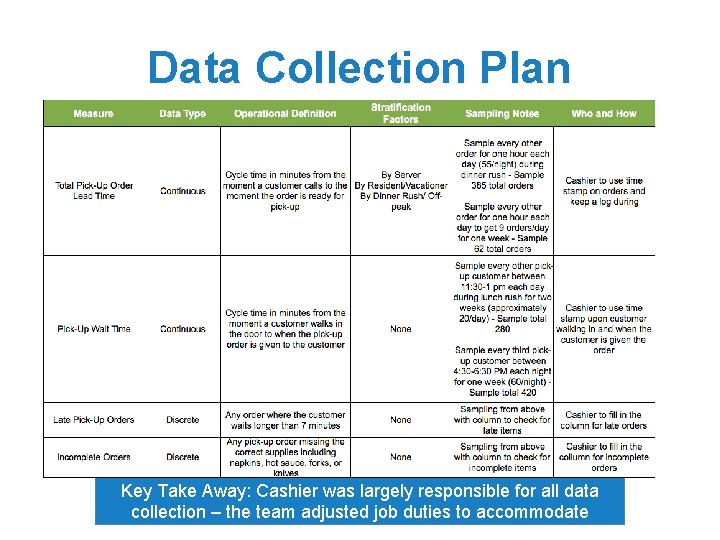
Data Collection Plan Key Take Away: Cashier was largely responsible for all data collection – the team adjusted job duties to accommodate
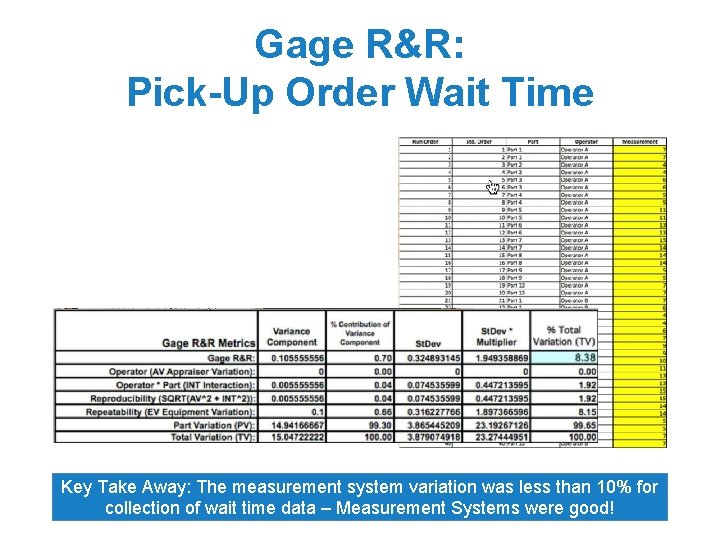
Gage R&R: Pick-Up Order Wait Time Key Take Away: The measurement system variation was less than 10% for collection of wait time data – Measurement Systems were good!
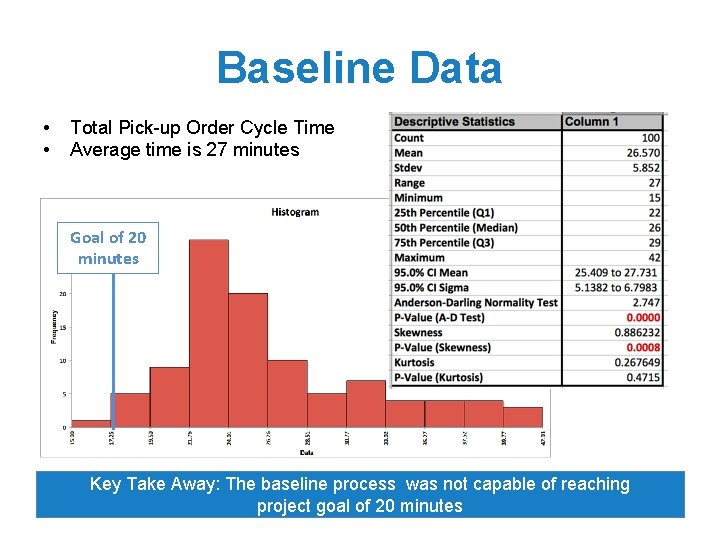
Baseline Data • • Total Pick-up Order Cycle Time Average time is 27 minutes Goal of 20 minutes Key Take Away: The baseline process was not capable of reaching project goal of 20 minutes
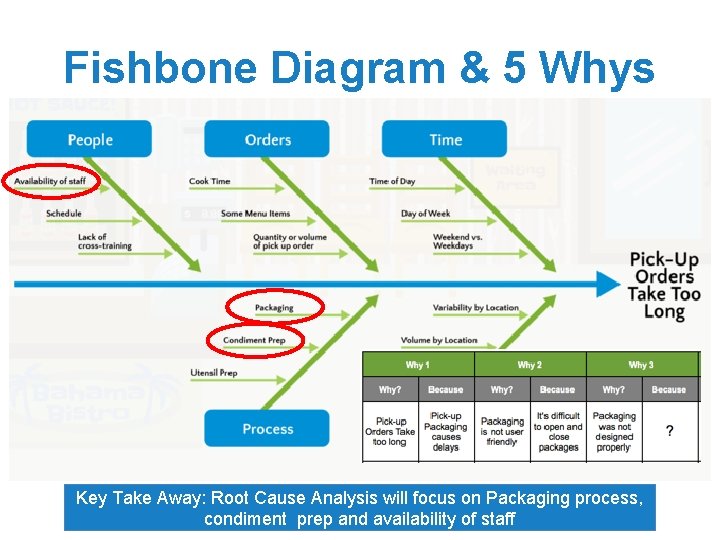
Fishbone Diagram & 5 Whys Key Take Away: Root Cause Analysis will focus on Packaging process, condiment prep and availability of staff

Process Map Analysis Key Take Away: Mapping highlighted packaging as a potential root cause of pick-up order delay
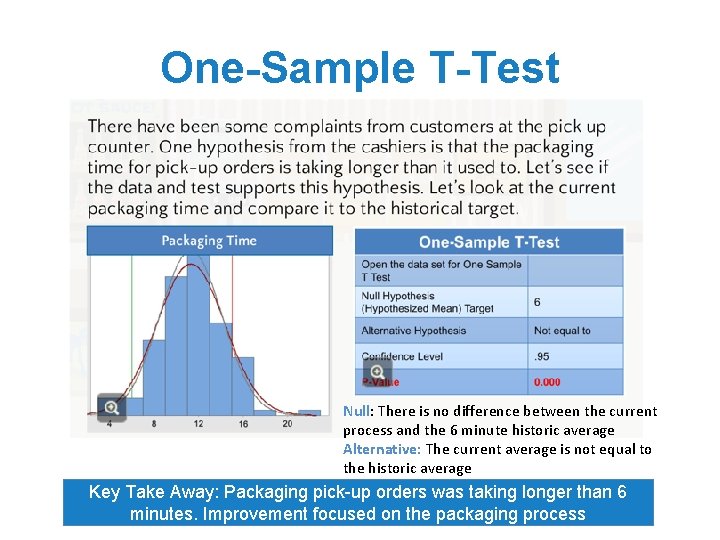
One-Sample T-Test Null: There is no difference between the current process and the 6 minute historic average Alternative: The current average is not equal to the historic average Key Take Away: Packaging pick-up orders was taking longer than 6 minutes. Improvement focused on the packaging process
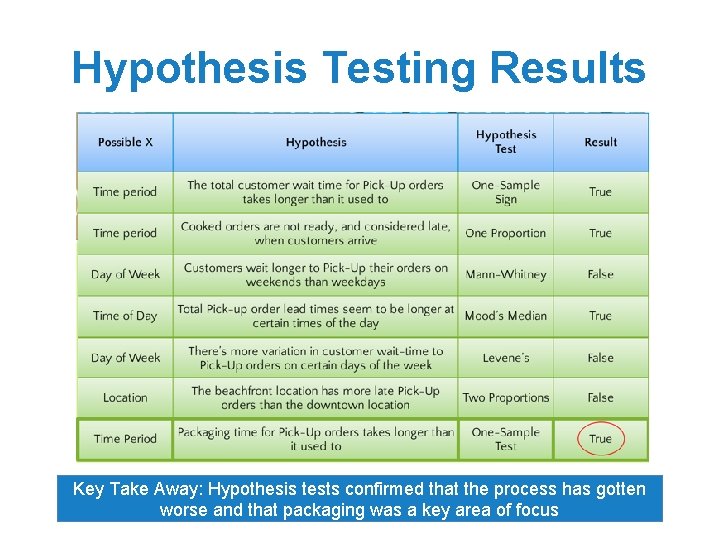
Hypothesis Testing Results Key Take Away: Hypothesis tests confirmed that the process has gotten worse and that packaging was a key area of focus
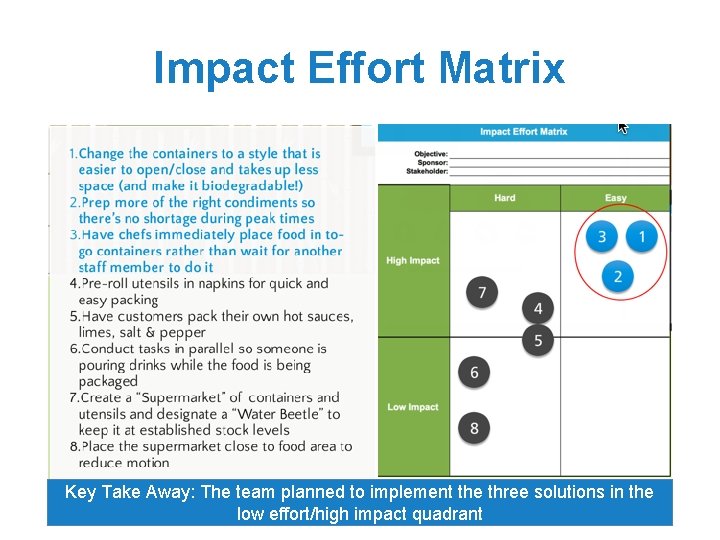
Impact Effort Matrix Key Take Away: The team planned to implement the three solutions in the low effort/high impact quadrant
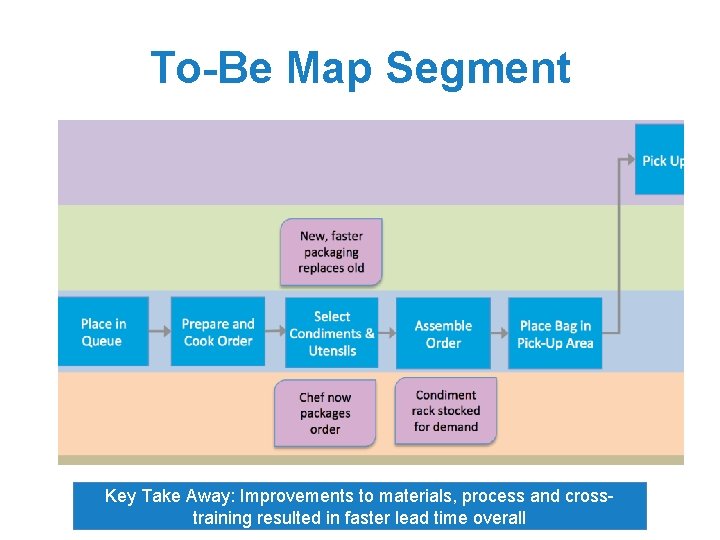
To-Be Map Segment Key Take Away: Improvements to materials, process and crosstraining resulted in faster lead time overall
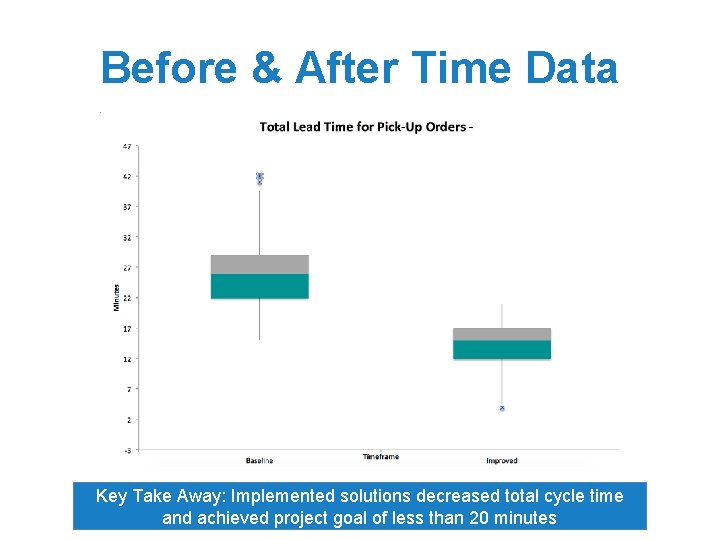
Before & After Time Data Key Take Away: Implemented solutions decreased total cycle time and achieved project goal of less than 20 minutes
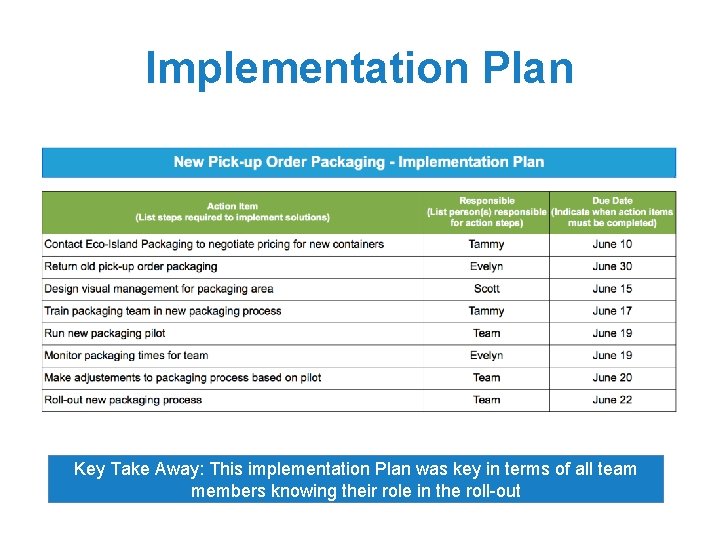
Implementation Plan Key Take Away: This implementation Plan was key in terms of all team members knowing their role in the roll-out
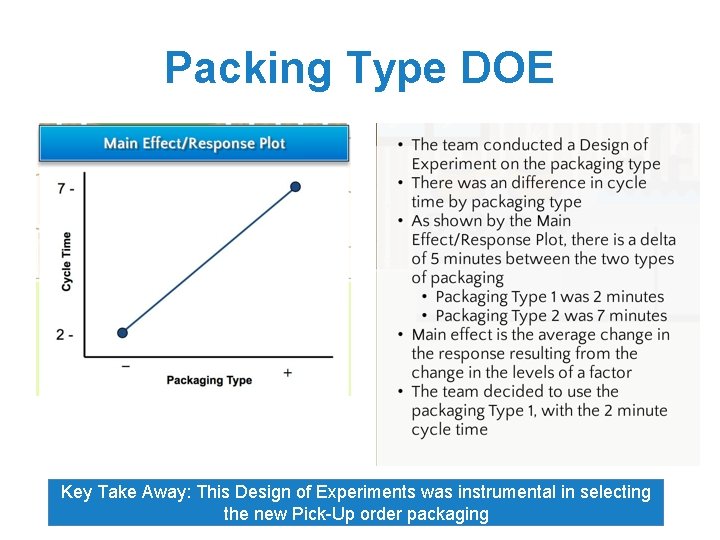
Packing Type DOE Key Take Away: This Design of Experiments was instrumental in selecting the new Pick-Up order packaging
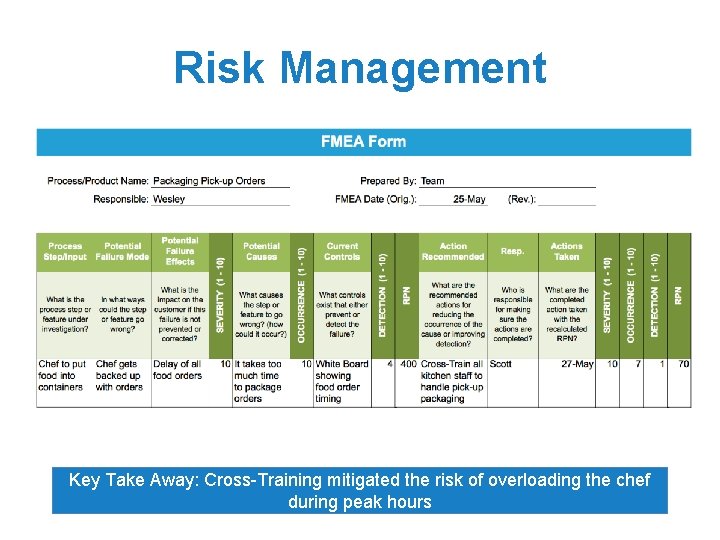
Risk Management Key Take Away: Cross-Training mitigated the risk of overloading the chef during peak hours
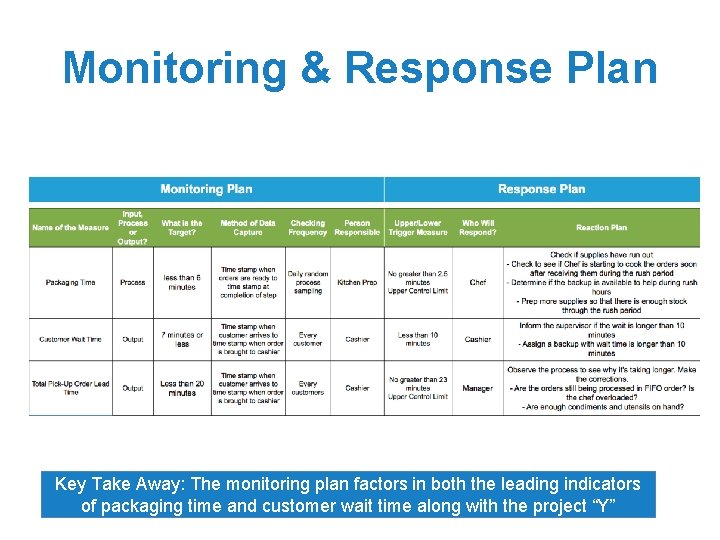
Monitoring & Response Plan Key Take Away: The monitoring plan factors in both the leading indicators of packaging time and customer wait time along with the project “Y”
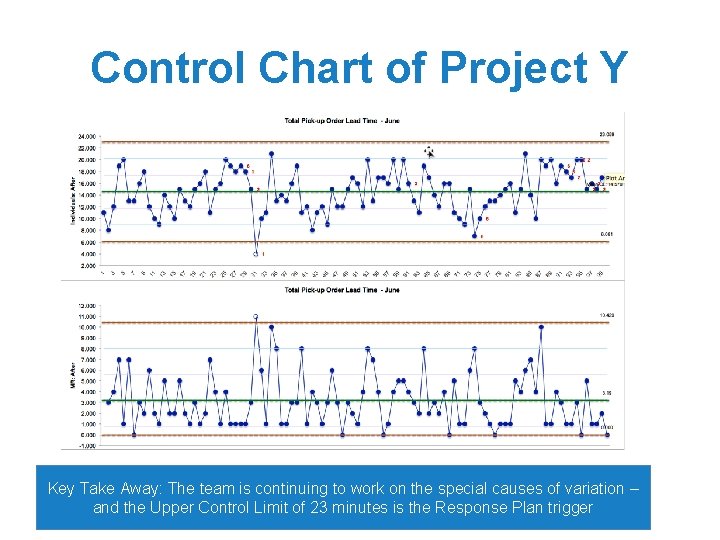
Control Chart of Project Y Key Take Away: The team is continuing to work on the special causes of variation – and the Upper Control Limit of 23 minutes is the Response Plan trigger
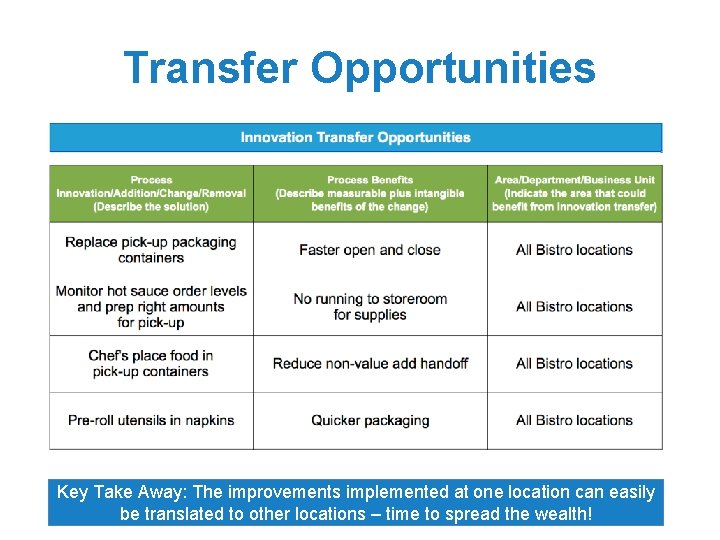
Transfer Opportunities Key Take Away: The improvements implemented at one location can easily be translated to other locations – time to spread the wealth!
Appendix
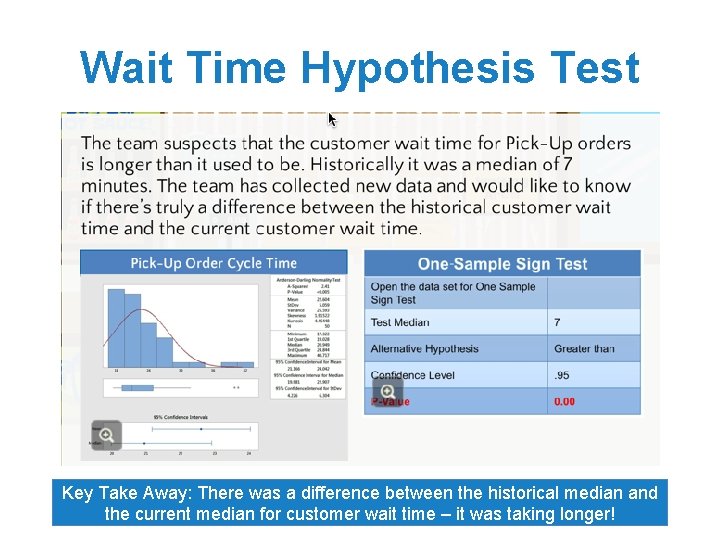
Wait Time Hypothesis Test Key Take Away: There was a difference between the historical median and the current median for customer wait time – it was taking longer!
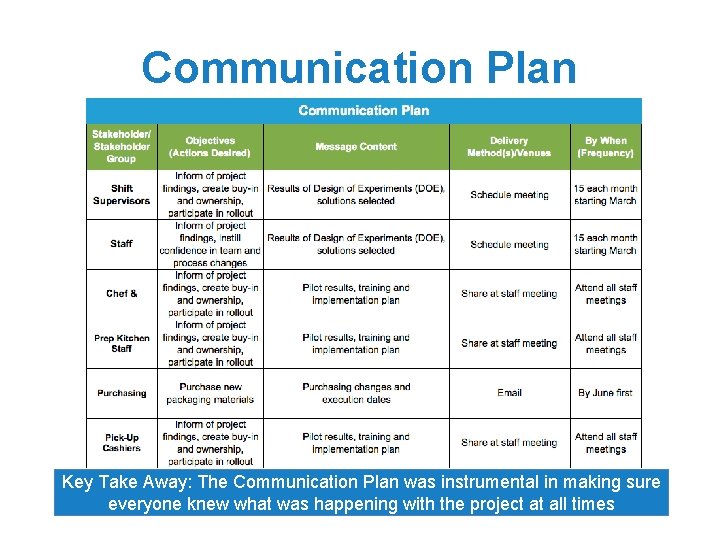
Communication Plan Key Take Away: The Communication Plan was instrumental in making sure everyone knew what was happening with the project at all times
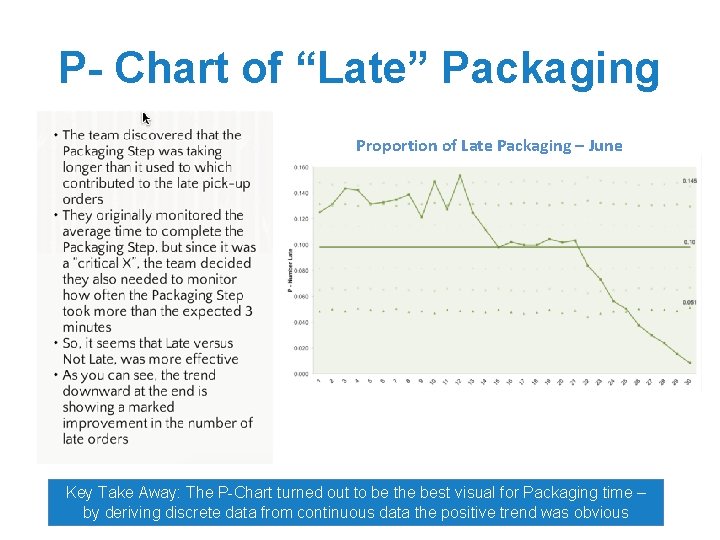
P- Chart of “Late” Packaging Proportion of Late Packaging – June Key Take Away: The P-Chart turned out to be the best visual for Packaging time – by deriving discrete data from continuous data the positive trend was obvious
- Slides: 27