
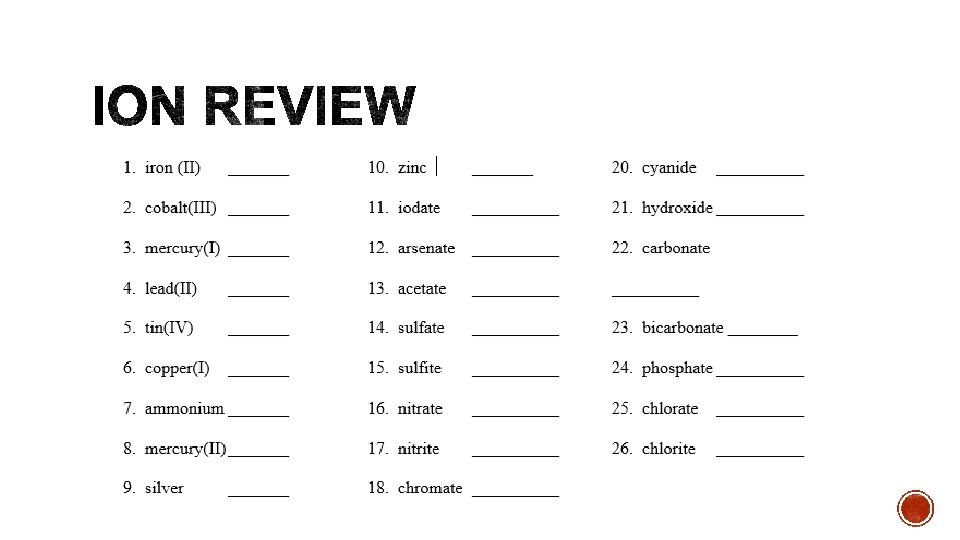
Pick up notes and handout Do Ion Review

- Slides: 12
§ Pick up notes and handout § Do Ion Review NOW – use your ion sheet.
Another word for covalent molecules § usually binary; called a molecule. § usually contain two nonmetals; solid, liquid or gas § need to be able to distinguish between molecular and ionic compounds.
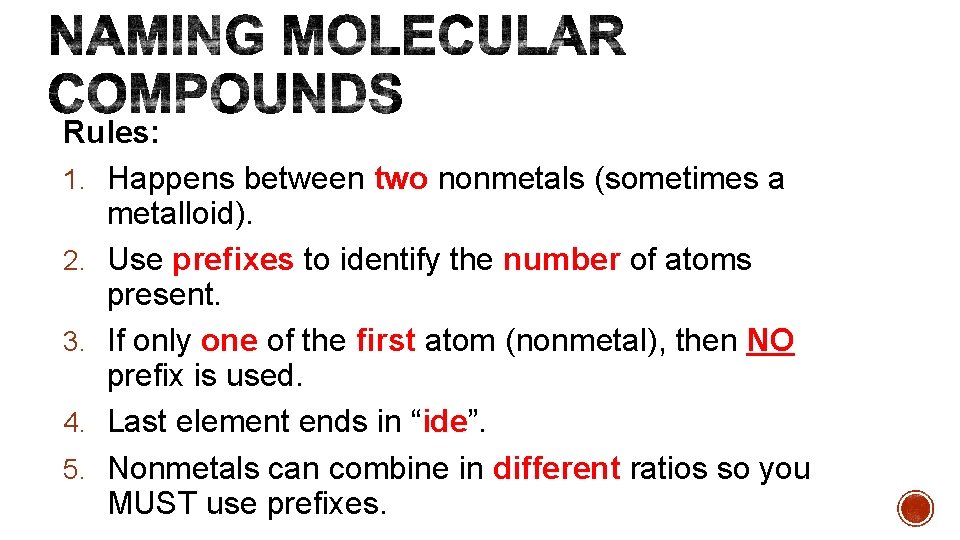
Rules: 1. Happens between two nonmetals (sometimes a metalloid). 2. Use prefixes to identify the number of atoms present. 3. If only one of the first atom (nonmetal), then NO prefix is used. 4. Last element ends in “ide”. 5. Nonmetals can combine in different ratios so you MUST use prefixes.
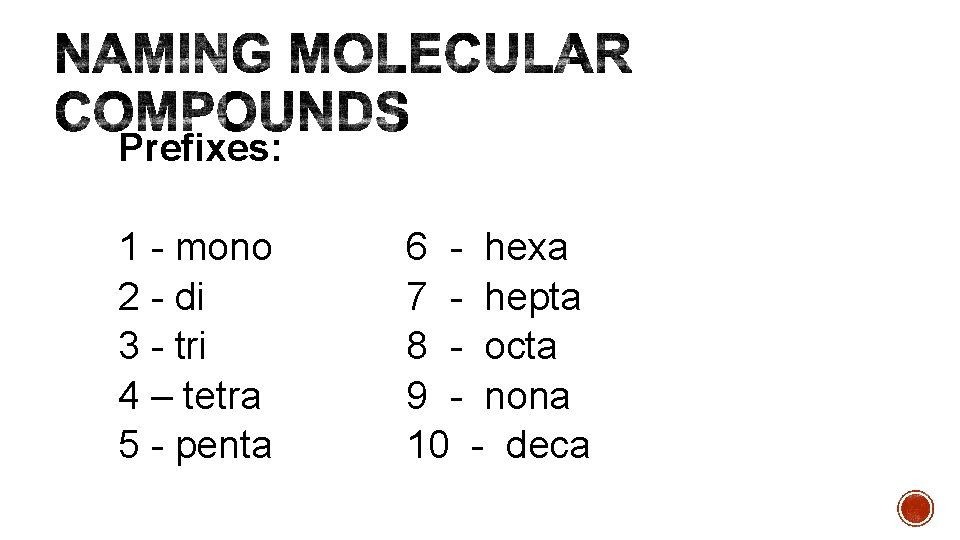
Prefixes: 1 - mono 2 - di 3 - tri 4 – tetra 5 - penta 6 - hexa 7 - hepta 8 - octa 9 - nona 10 - deca
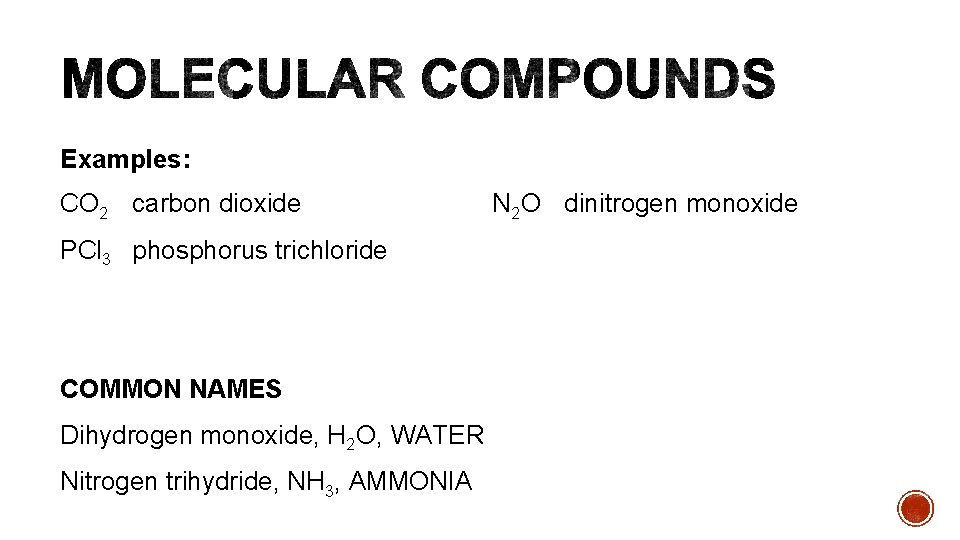
Examples: CO 2 carbon dioxide PCl 3 phosphorus trichloride COMMON NAMES Dihydrogen monoxide, H 2 O, WATER Nitrogen trihydride, NH 3, AMMONIA N 2 O dinitrogen monoxide
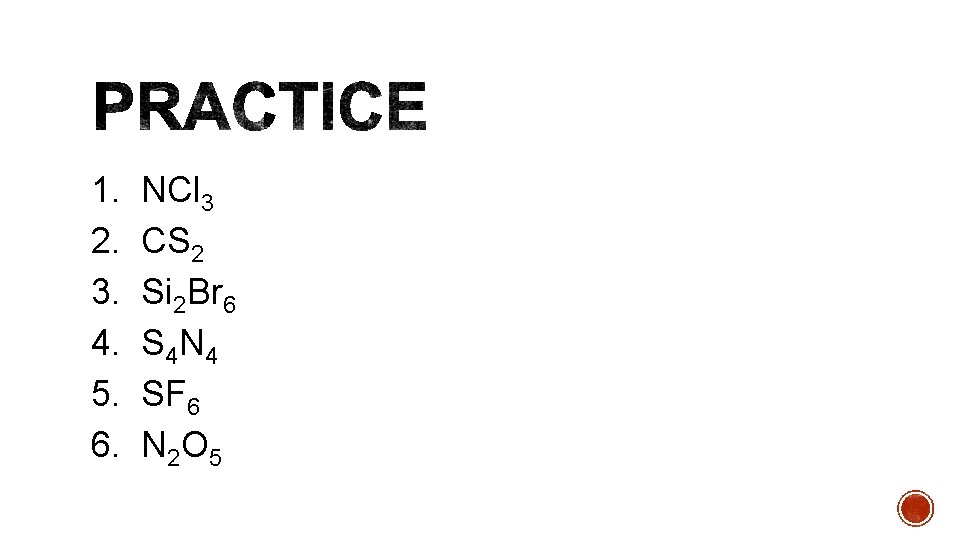
1. 2. 3. 4. 5. 6. NCl 3 CS 2 Si 2 Br 6 S 4 N 4 SF 6 N 2 O 5
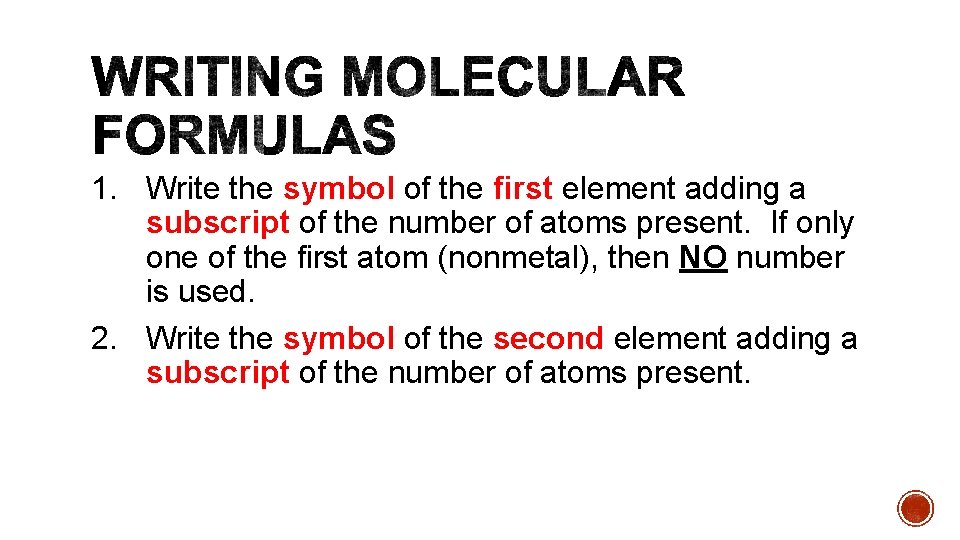
1. Write the symbol of the first element adding a subscript of the number of atoms present. If only one of the first atom (nonmetal), then NO number is used. 2. Write the symbol of the second element adding a subscript of the number of atoms present.
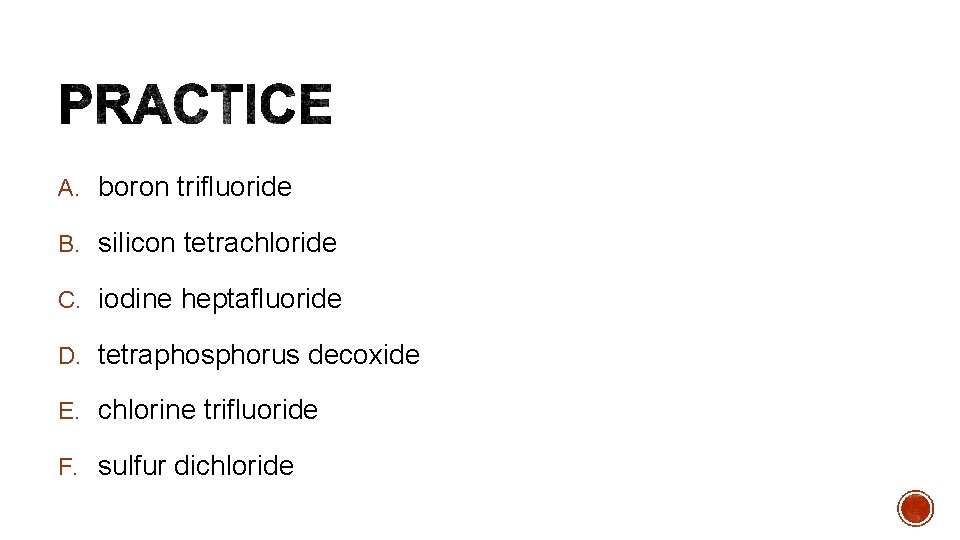
A. boron trifluoride B. silicon tetrachloride C. iodine heptafluoride D. tetraphosphorus decoxide E. chlorine trifluoride F. sulfur dichloride
§ Nomenclature Study Sheet #1 -40 due tomorrow.