
PHYTOPLANKTON Pelagic environment is the largest marine ecosystem

- Slides: 42
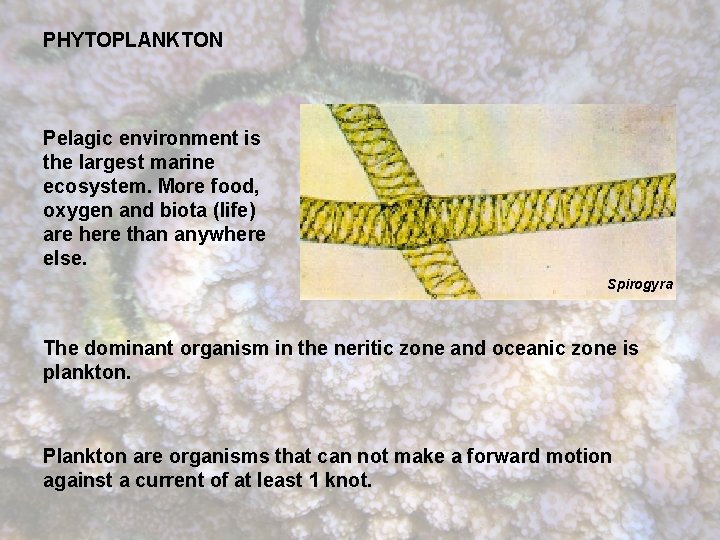
PHYTOPLANKTON Pelagic environment is the largest marine ecosystem. More food, oxygen and biota (life) are here than anywhere else. Spirogyra The dominant organism in the neritic zone and oceanic zone is plankton. Plankton are organisms that can not make a forward motion against a current of at least 1 knot.
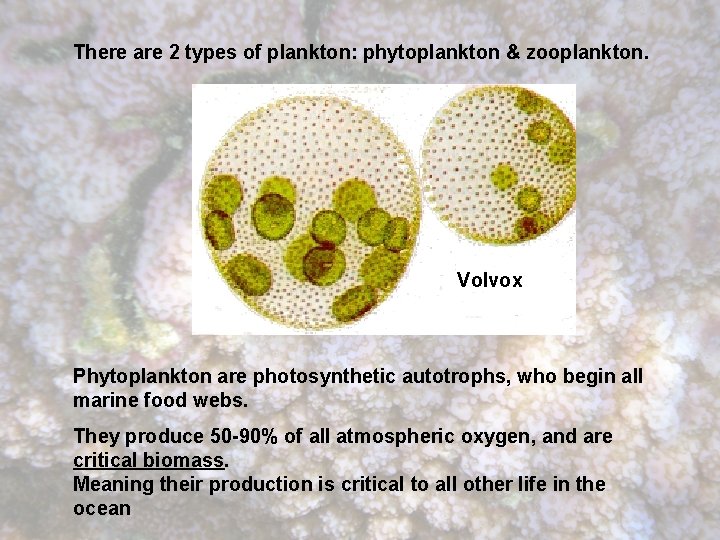
There are 2 types of plankton: phytoplankton & zooplankton. Volvox Phytoplankton are photosynthetic autotrophs, who begin all marine food webs. They produce 50 -90% of all atmospheric oxygen, and are critical biomass. Meaning their production is critical to all other life in the ocean
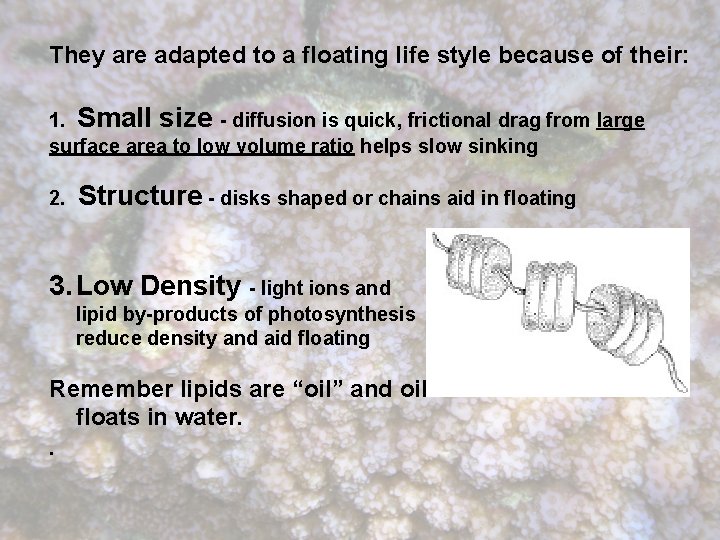
They are adapted to a floating life style because of their: 1. Small size - diffusion is quick, frictional drag from large surface area to low volume ratio helps slow sinking 2. Structure - disks shaped or chains aid in floating 3. Low Density - light ions and lipid by-products of photosynthesis reduce density and aid floating Remember lipids are “oil” and oil floats in water. .
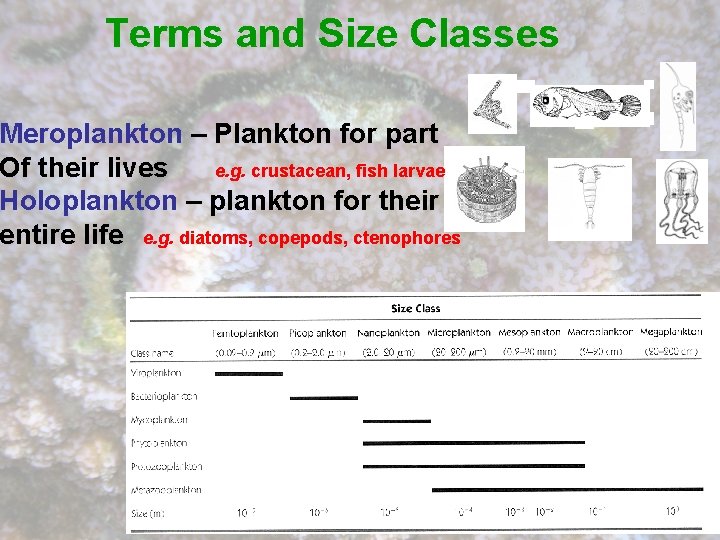
Terms and Size Classes Meroplankton – Plankton for part Of their lives e. g. crustacean, fish larvae Holoplankton – plankton for their entire life e. g. diatoms, copepods, ctenophores
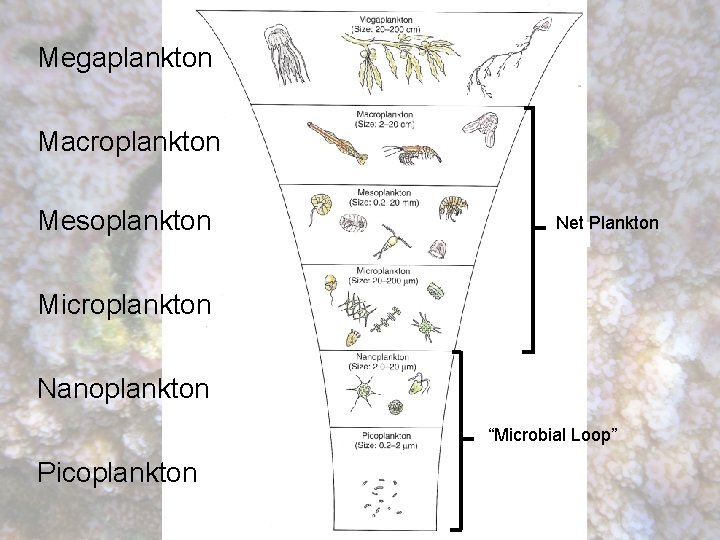
Megaplankton Macroplankton Mesoplankton Net Plankton Microplankton Nanoplankton “Microbial Loop” Picoplankton
Some Phytoplankton In Review
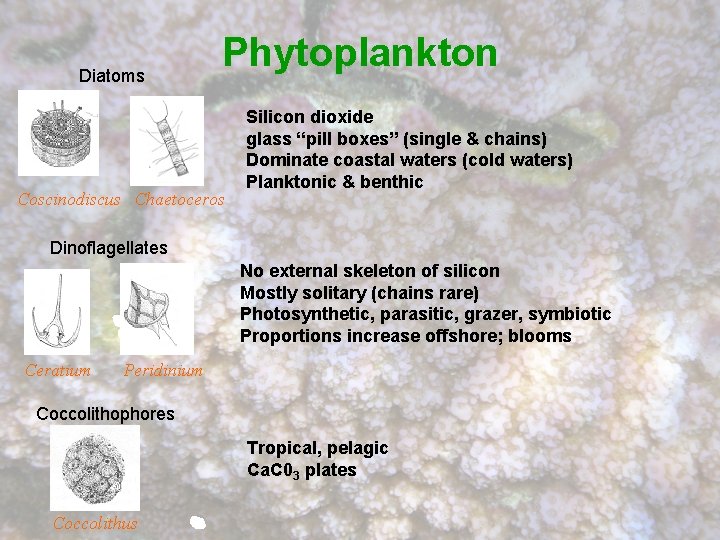
Diatoms Phytoplankton Coscinodiscus Chaetoceros Silicon dioxide glass “pill boxes” (single & chains) Dominate coastal waters (cold waters) Planktonic & benthic Dinoflagellates No external skeleton of silicon Mostly solitary (chains rare) Photosynthetic, parasitic, grazer, symbiotic Proportions increase offshore; blooms Ceratium Peridinium Coccolithophores Tropical, pelagic Ca. C 03 plates Coccolithus
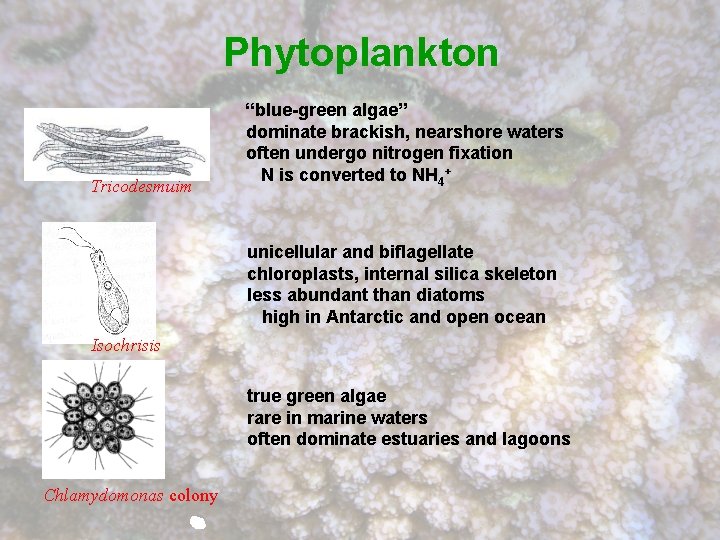
Phytoplankton Tricodesmuim “blue-green algae” dominate brackish, nearshore waters often undergo nitrogen fixation N is converted to NH 4+ unicellular and biflagellate chloroplasts, internal silica skeleton less abundant than diatoms high in Antarctic and open ocean Isochrisis true green algae rare in marine waters often dominate estuaries and lagoons Chlamydomonas colony
The two main divisions of marine habitats are 1. Benthic and Abyssal 2. Neritic and Oceanic 3. Photic and Aphotic 4. Neritic and Benthic
Organisms which cannot swim against a current of a least 1 knot are known as 1. 2. 3. 4. Neckton Plankton Demersal Benthic
Phytoplankton use ______ to help them to float 1. 2. 3. 4. Carbohydrates Proteins Glucose Lipids
Plankton are grouped by their 1. 2. 3. 4. Shape Weight Color Size
Fastest Responders (in seconds) 3. 85 4. 48 4. 99 5. 61 Jenna Fiore Arlinda Hasani Valentina Alsina 6. 01 John Cacace
Fastest Responders (in seconds) 3. 85 4. 48 4. 99 5. 61 Jenna Fiore Arlinda Hasani Valentina Alsina 6. 01 John Cacace
Homework p 312 -314 1. What percentage of photosynthesis is performed by Phytoplankton? 2. Outside of dinoflagellates what else can be a cause of red tides? 3. What group is considered the vital link between primary producers and the rest of the community? 4. Which type of Zooplankton is the most abundant? (Hint: they are crustaceans) 5. What are Krill and what do they eat?
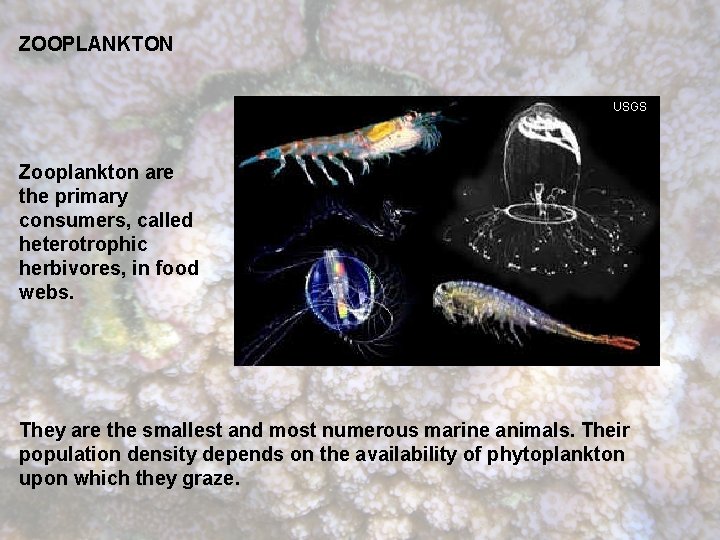
ZOOPLANKTON USGS Zooplankton are the primary consumers, called heterotrophic herbivores, in food webs. They are the smallest and most numerous marine animals. Their population density depends on the availability of phytoplankton upon which they graze.
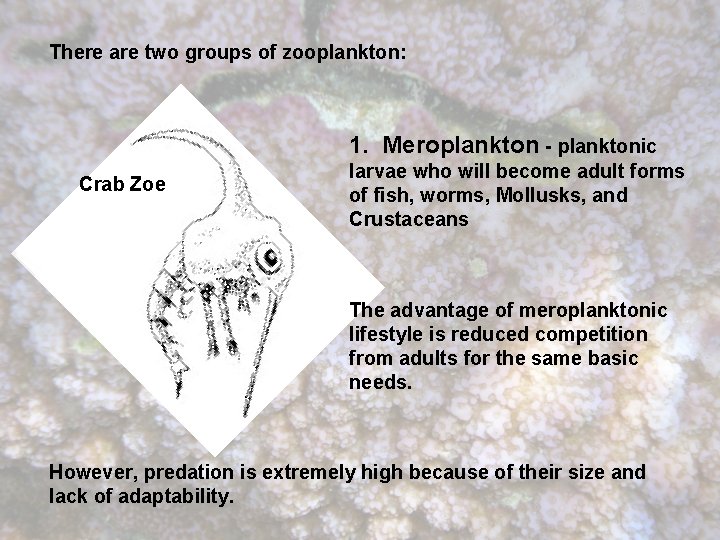
There are two groups of zooplankton: 1. Meroplankton - planktonic Crab Zoe larvae who will become adult forms of fish, worms, Mollusks, and Crustaceans The advantage of meroplanktonic lifestyle is reduced competition from adults for the same basic needs. However, predation is extremely high because of their size and lack of adaptability.
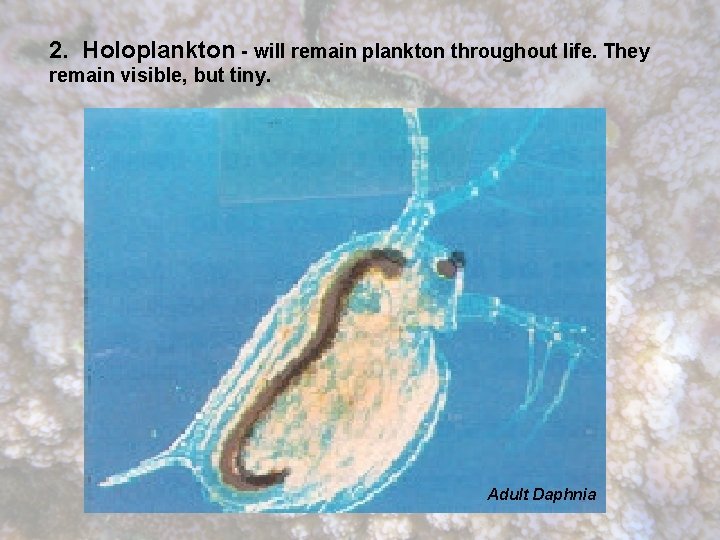
2. Holoplankton - will remain plankton throughout life. They remain visible, but tiny. Adult Daphnia
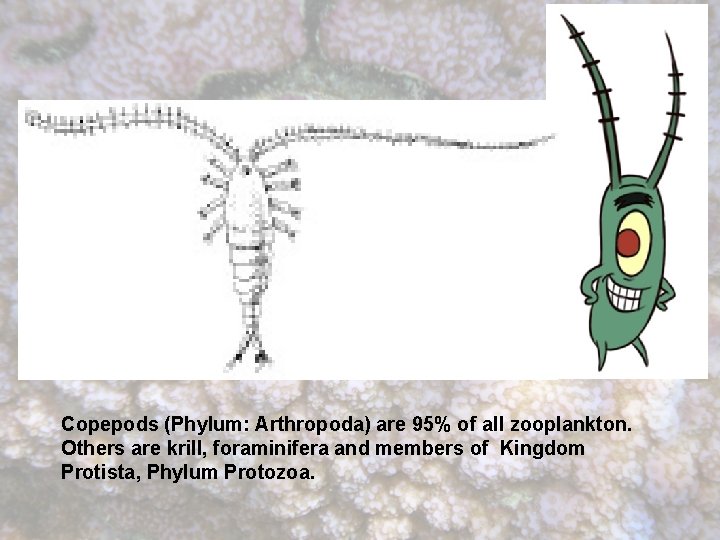
Copepods (Phylum: Arthropoda) are 95% of all zooplankton. Others are krill, foraminifera and members of Kingdom Protista, Phylum Protozoa.
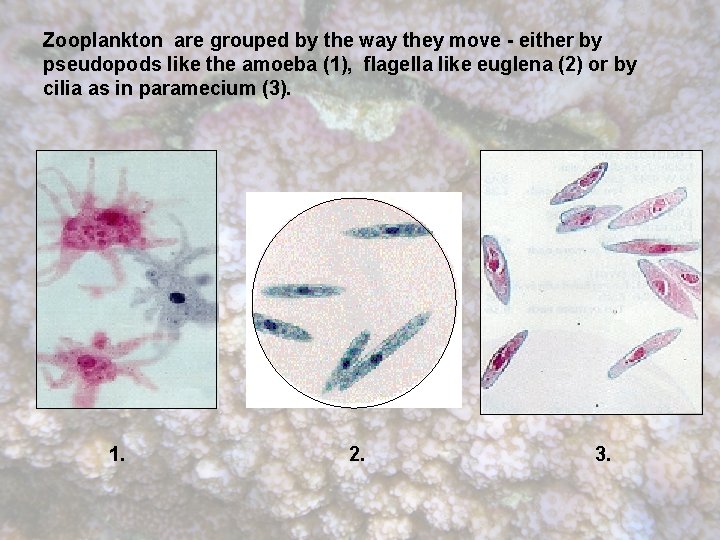
Zooplankton are grouped by the way they move - either by pseudopods like the amoeba (1), flagella like euglena (2) or by cilia as in paramecium (3). 1. 2. 3.
Vertical Migration And water column Stability
VERTICAL MIGRATION Vertical migration is a daily pattern of phytoplankton and zooplankton changing positions like a day and night shift. During the day phytoplankton produce lipids by photosynthesis. Because oils are less dense than water, the products of photosynthesis increase their buoyancy.
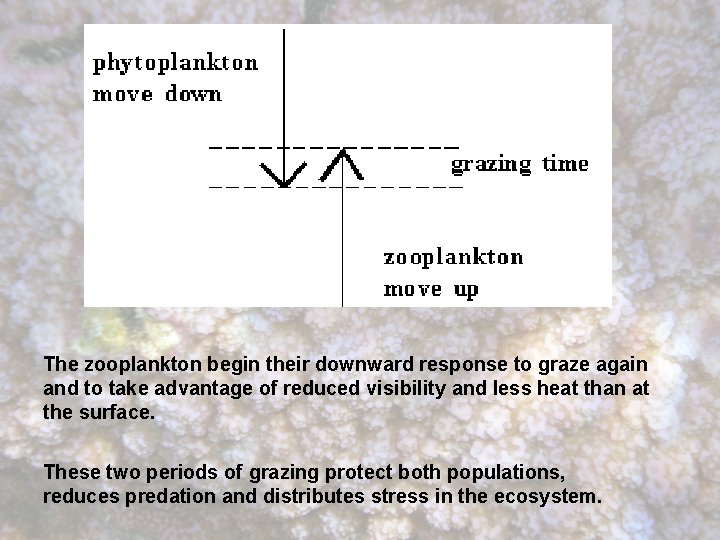
As the sun goes down, the phytoplankton use lipids for energy which causes them to sink in the water column. In response to the “rain” of phytoplankton descending, the zooplankton move up in the water column to graze on them. As the sun comes up, photosynthesis again causes more production than the organisms need at that time, the phytoplankton become lighter and begin to float upward.
The zooplankton begin their downward response to graze again and to take advantage of reduced visibility and less heat than at the surface. These two periods of grazing protect both populations, reduces predation and distributes stress in the ecosystem.
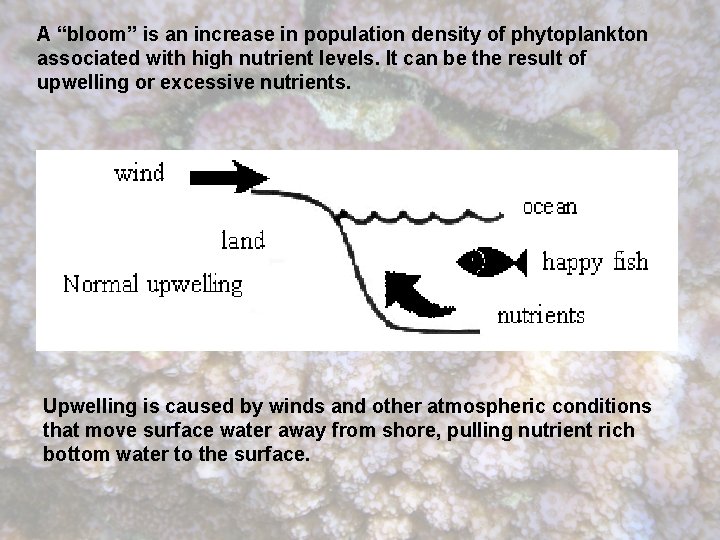
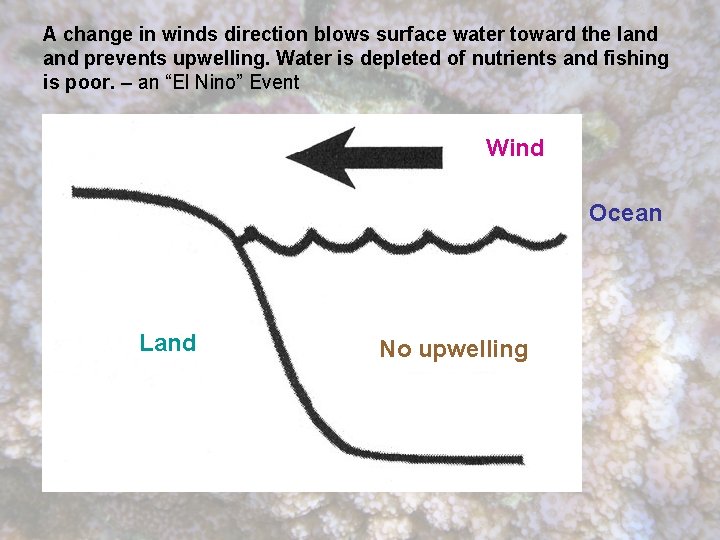
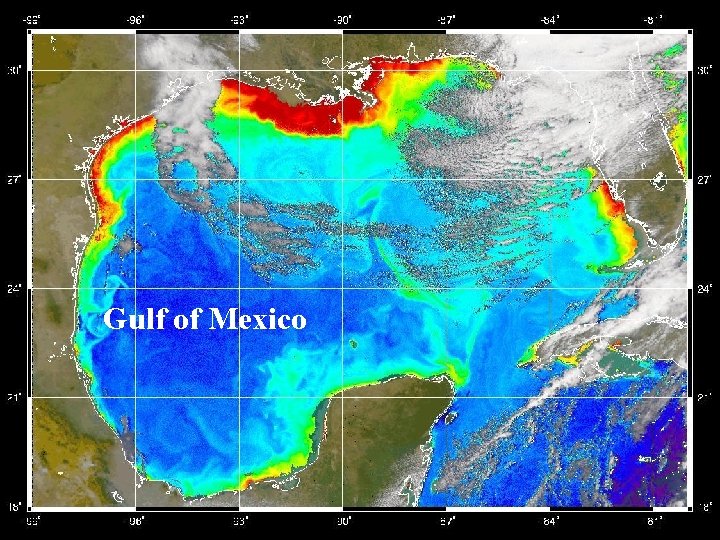
A “bloom” is an increase in population density of phytoplankton associated with high nutrient levels. It can be the result of upwelling or excessive nutrients. Upwelling is caused by winds and other atmospheric conditions that move surface water away from shore, pulling nutrient rich bottom water to the surface.
A change in winds direction blows surface water toward the land prevents upwelling. Water is depleted of nutrients and fishing is poor. – an “El Nino” Event Wind Ocean Land No upwelling
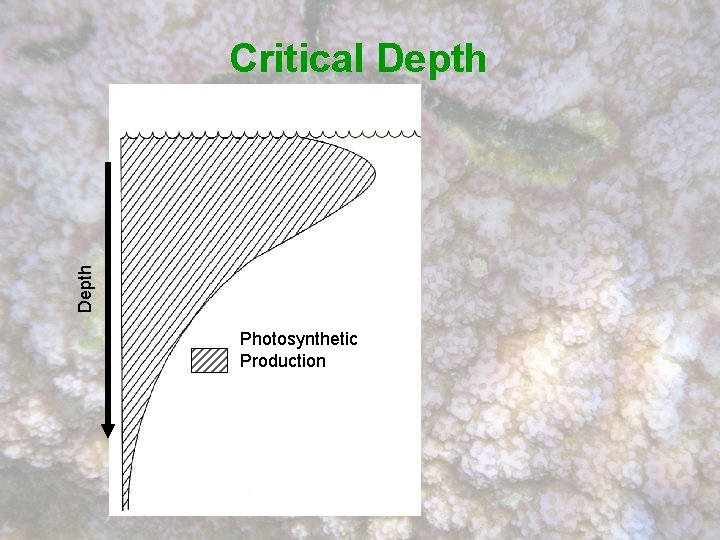
Depth Critical Depth Photosynthetic Production
Critical Depth & Mixing Depth
Gulf of Mexico
Upwelling draws _____ rich water to the surface 1. 2. 3. 4. Mineral Oxygen Nutrient Energy
Zooplankton which is plankton for its entire life is called 1. 2. 3. 4. Meroplankton Holoplankton Phytoplankton Picoplankton
Zooplankton which is plankton for only the beginning of its life is called 1. 2. 3. 4. Meroplankton Cytoplankton Holoplankton Phytoplankton
Zooplankton are Primary 1. 2. 3. 4. Consumers Producers Decomposers Prey
Copepods make up _______ of all Zooplankton 1. 2. 3. 4. 50% 25% 95% 5%
Zooplankton are grouped by 1. 2. 3. 4. Color Size Shape The way they move
Phytoplankton use lipids at night for energy and float down the water column 1. True 2. False
Zooplankton float up at night to graze on phytoplankton 1. True 2. False
Fastest Responders (in seconds) 3. 85 4. 48 4. 99 5. 61 Erica Wenzel Ciara Galligan Douglas Miller Charles Badman 6. 01 Anthony Bambach
“I will rule the world! All hail Plankton!” - Plankton