
Physiology of Vision Visible Light Spectrum light exists
Physiology of Vision
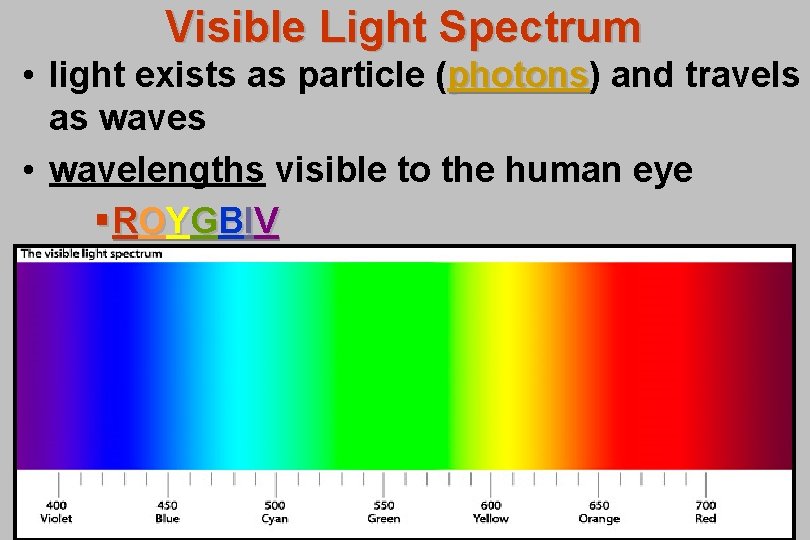
Visible Light Spectrum • light exists as particle (photons) photons and travels as waves • wavelengths visible to the human eye § RO Y G BI V
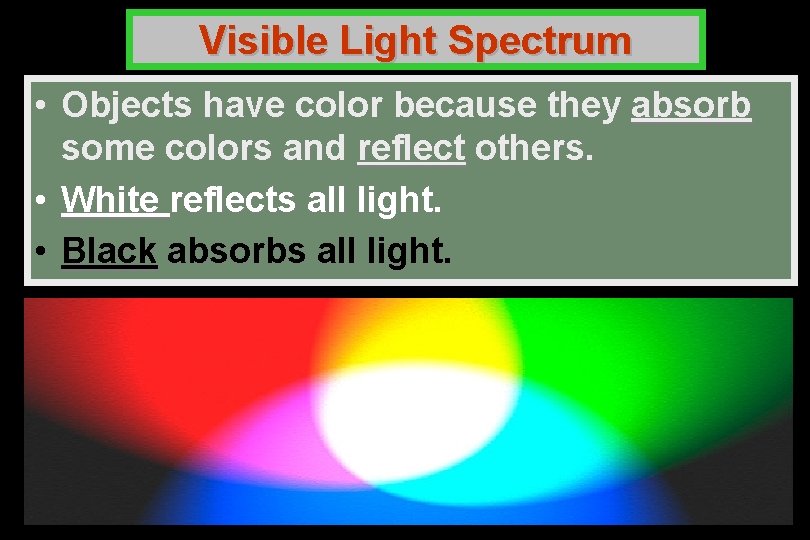
Visible Light Spectrum • Objects have color because they absorb some colors and reflect others. • White reflects all light. • Black absorbs all light.
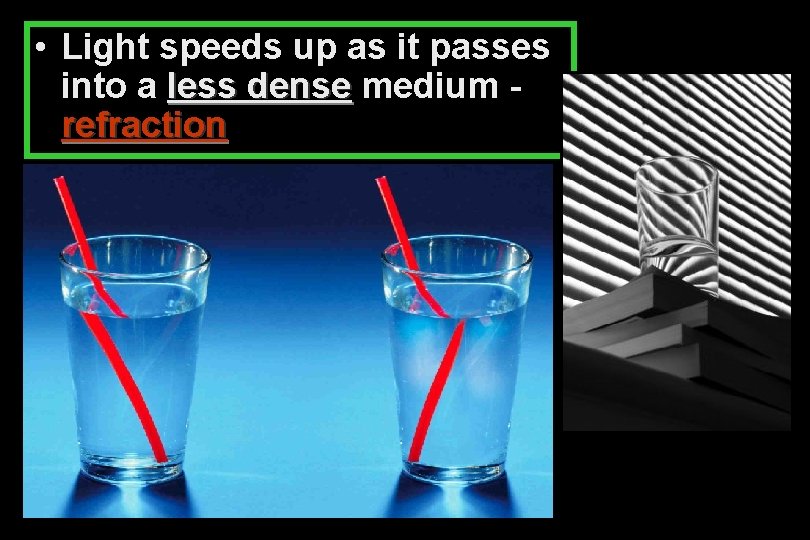
• Light speeds up as it passes into a less dense medium refraction
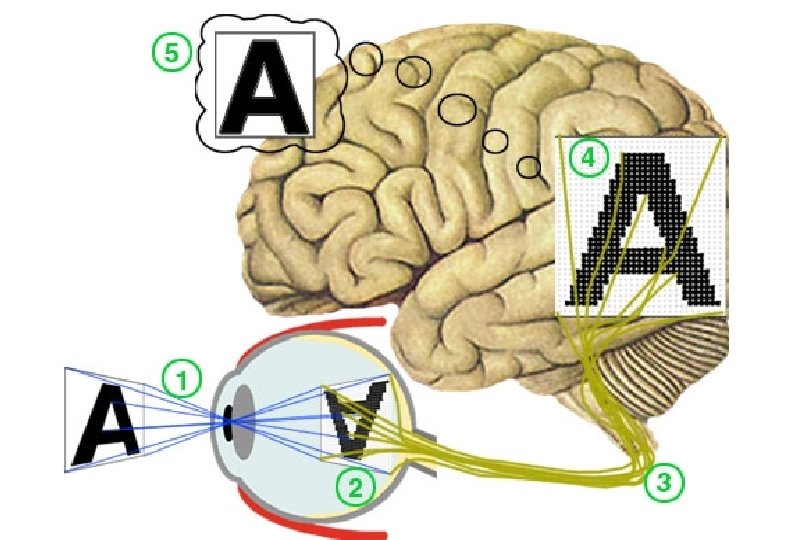
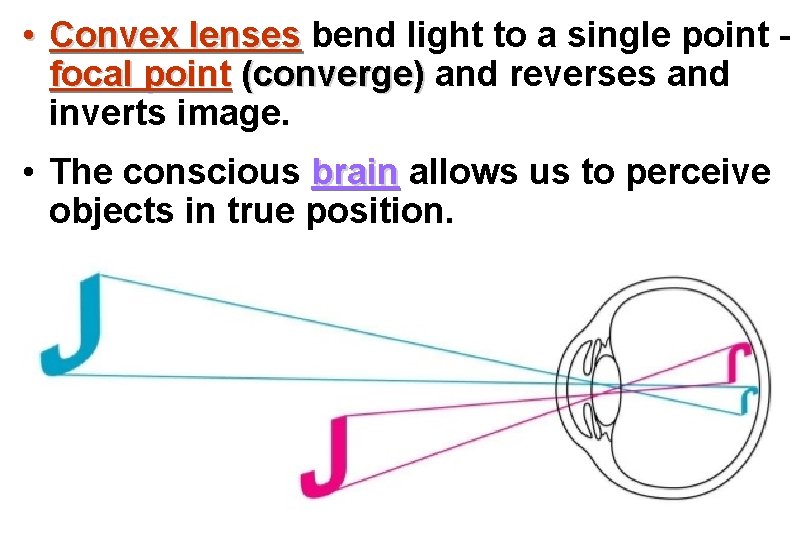
• Convex lenses bend light to a single point focal point (converge) and reverses and inverts image. • The conscious brain allows us to perceive objects in true position.
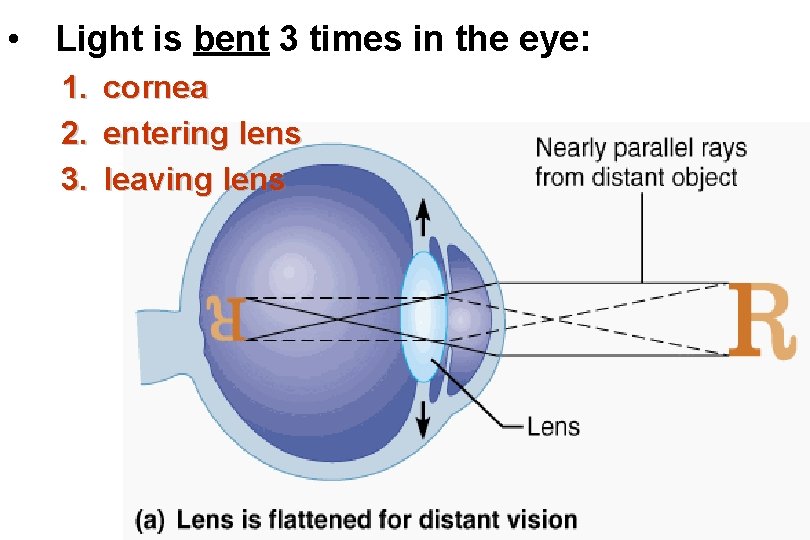
• Light is bent 3 times in the eye: 1. 2. 3. cornea entering lens leaving lens
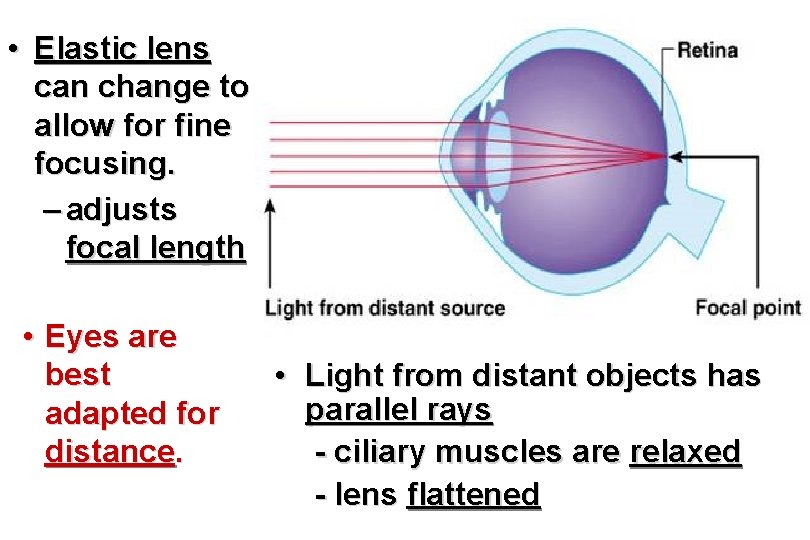
• Elastic lens can change to allow for fine focusing. – adjusts focal length • Eyes are best adapted for distance. • Light from distant objects has parallel rays - ciliary muscles are relaxed - lens flattened
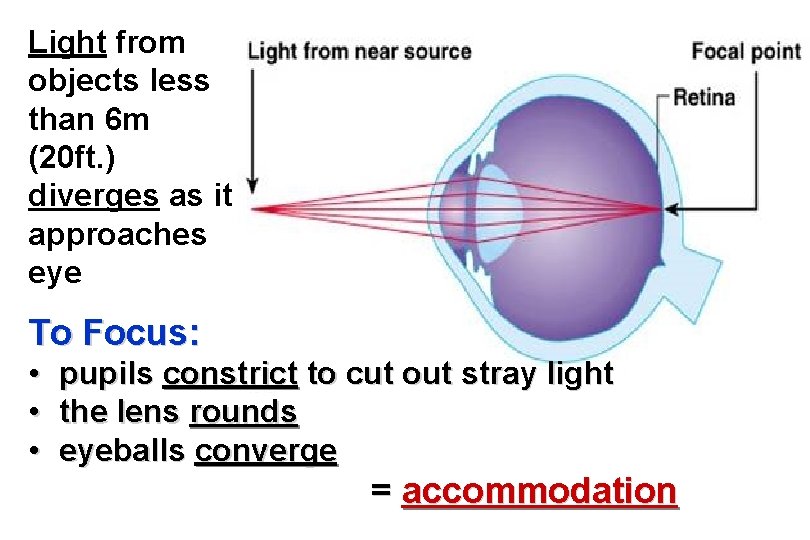
Light from objects less than 6 m (20 ft. ) diverges as it approaches eye To Focus: • • • pupils constrict to cut out stray light the lens rounds eyeballs converge = accommodation
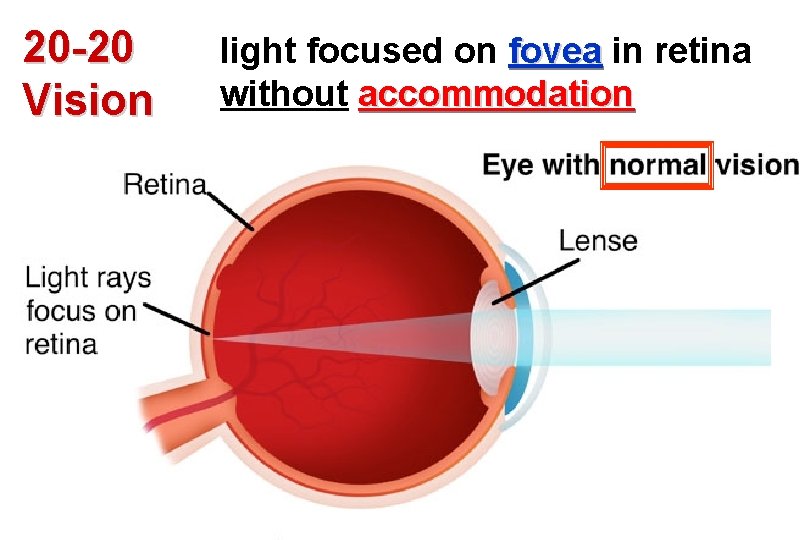
20 -20 Vision light focused on fovea in retina without accommodation
Eye Disorders
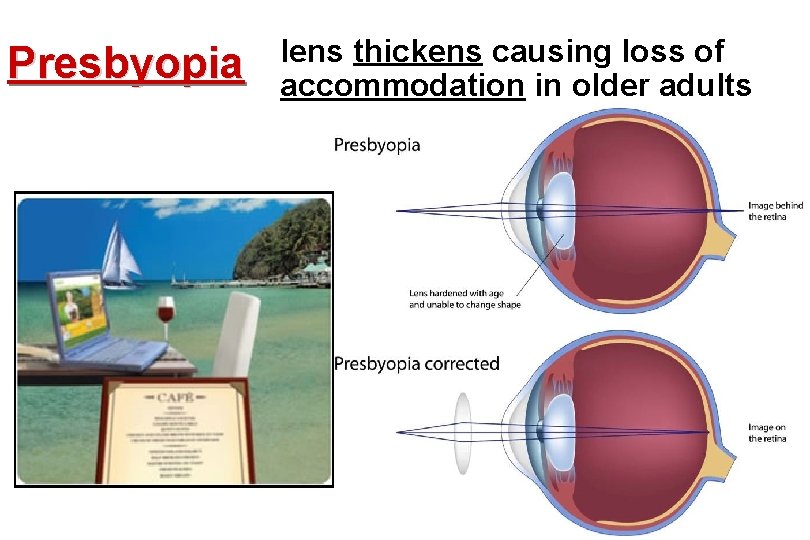
Presbyopia lens thickens causing loss of accommodation in older adults
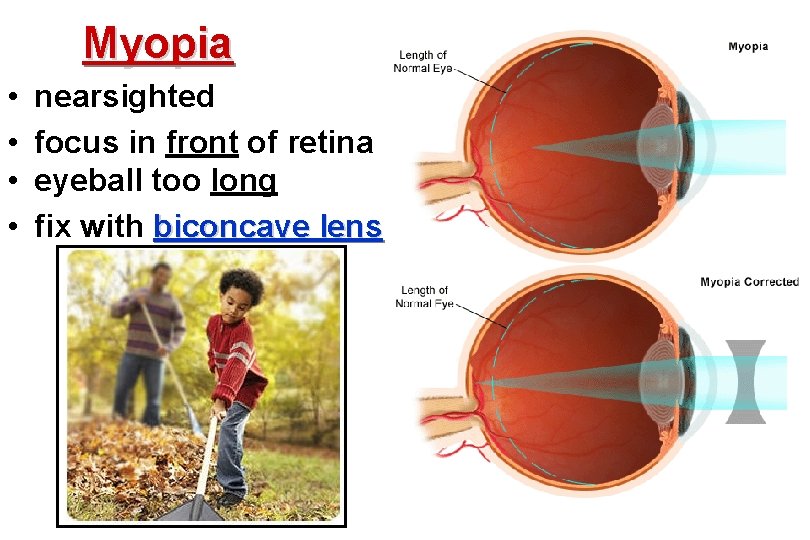
Myopia • • nearsighted focus in front of retina eyeball too long fix with biconcave lens
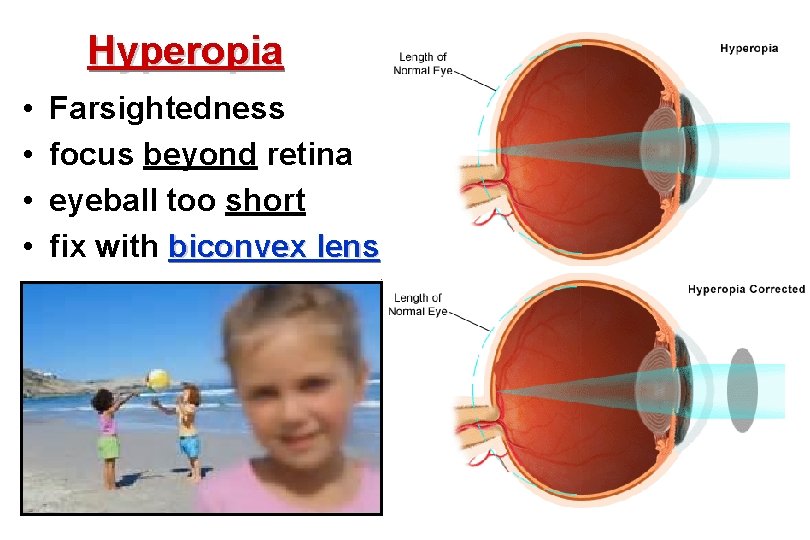
Hyperopia • • Farsightedness focus beyond retina eyeball too short fix with biconvex lens
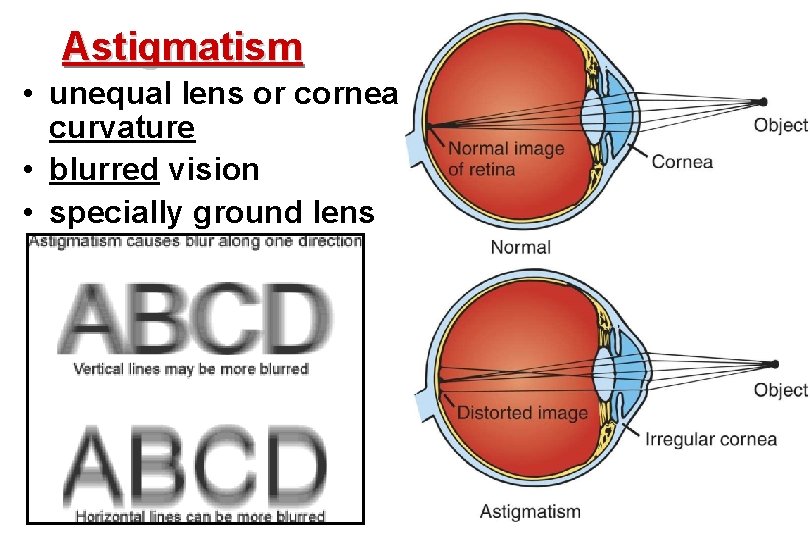
Astigmatism • unequal lens or cornea curvature • blurred vision • specially ground lens
Chemistry of Visual Pigments
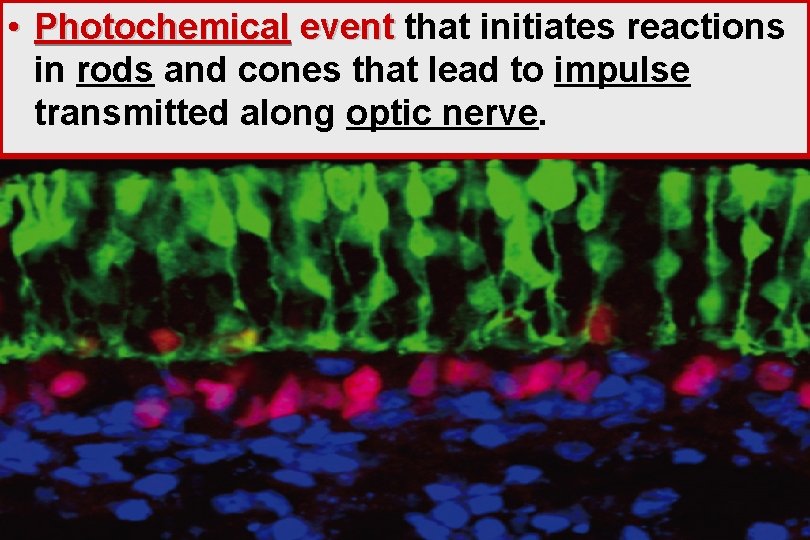
• Photochemical event that initiates reactions in rods and cones that lead to impulse transmitted along optic nerve.
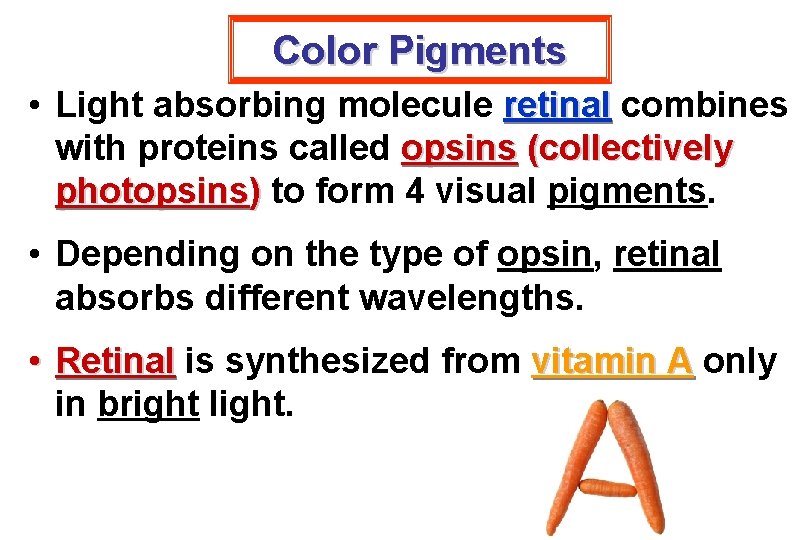
Color Pigments • Light absorbing molecule retinal combines with proteins called opsins (collectively photopsins) to form 4 visual pigments. • Depending on the type of opsin, retinal absorbs different wavelengths. • Retinal is synthesized from vitamin A only in bright light.
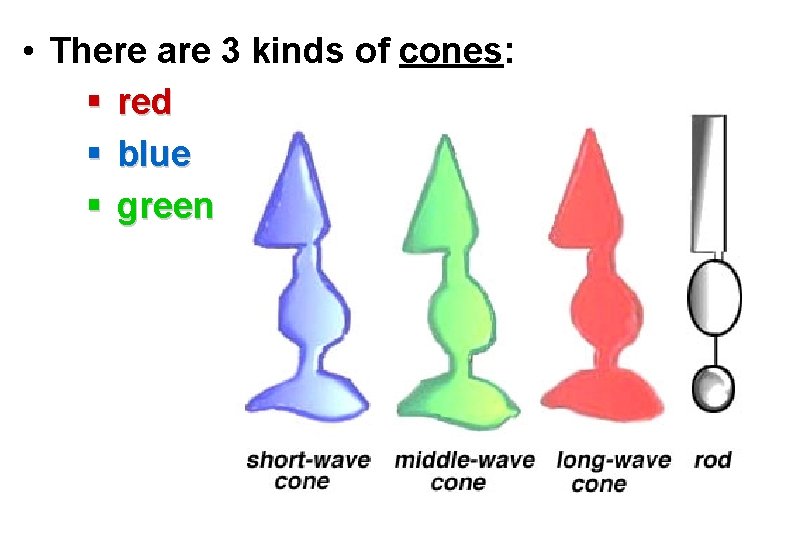
• There are 3 kinds of cones: § red § blue § green
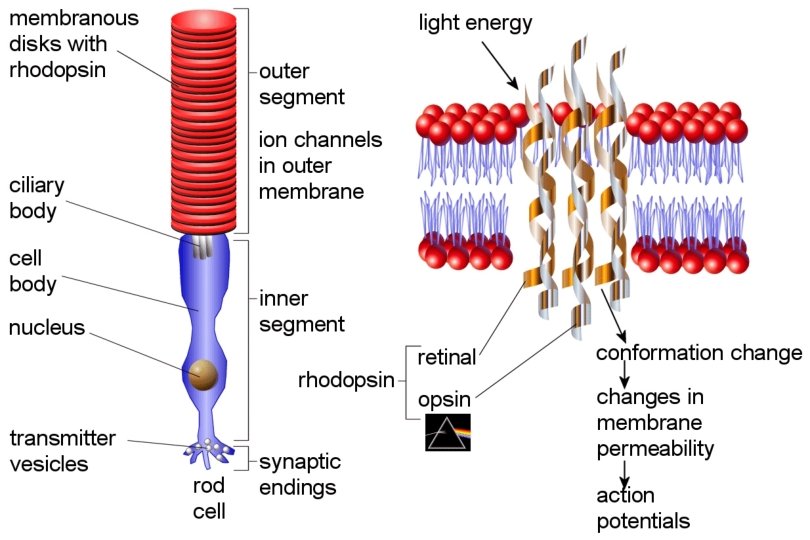
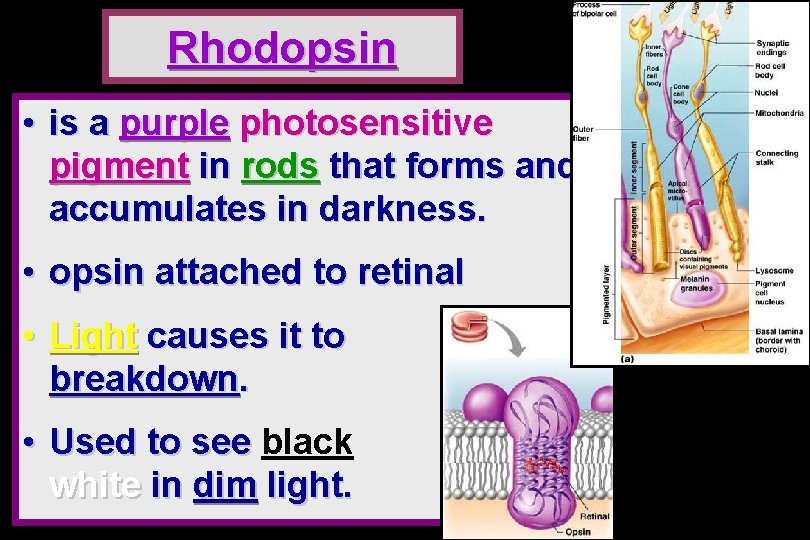
Rhodopsin • is a purple photosensitive pigment in rods that forms and accumulates in darkness. • opsin attached to retinal • Light causes it to breakdown. • Used to see black white in dim light. and
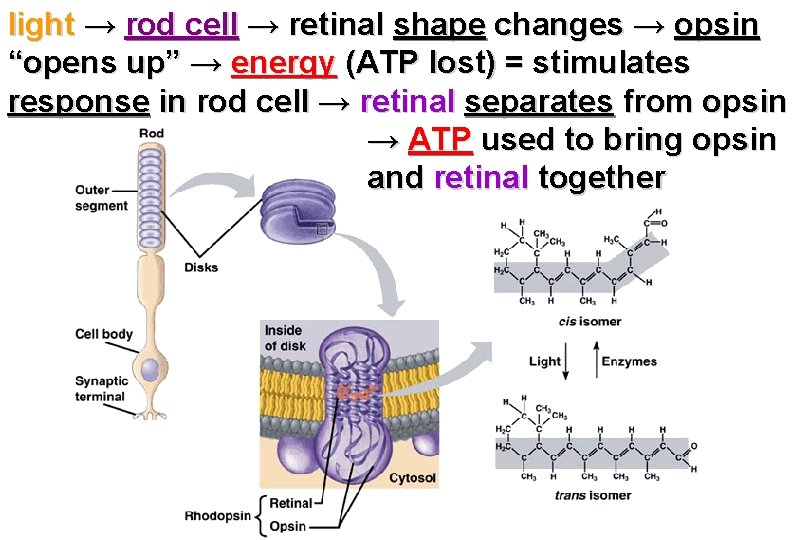
light → rod cell → retinal shape changes → opsin “opens up” → energy (ATP lost) = stimulates response in rod cell → retinal separates from opsin → ATP used to bring opsin and retinal together

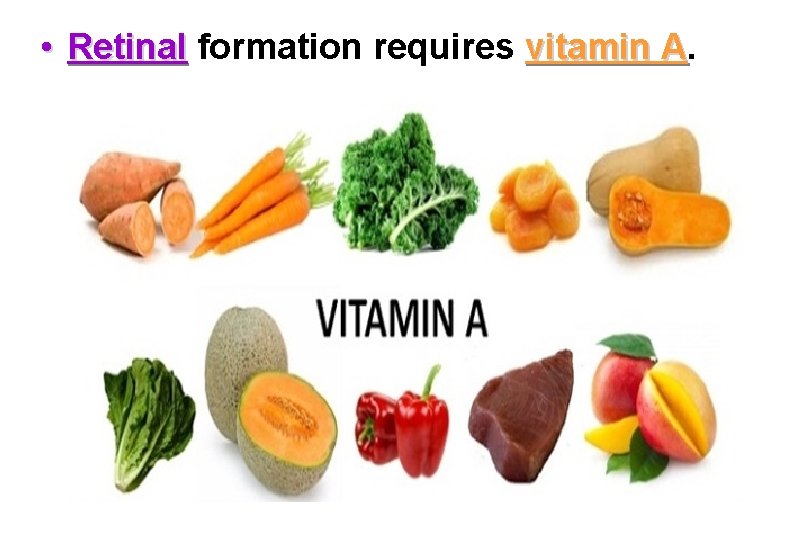
• Retinal formation requires vitamin A. A
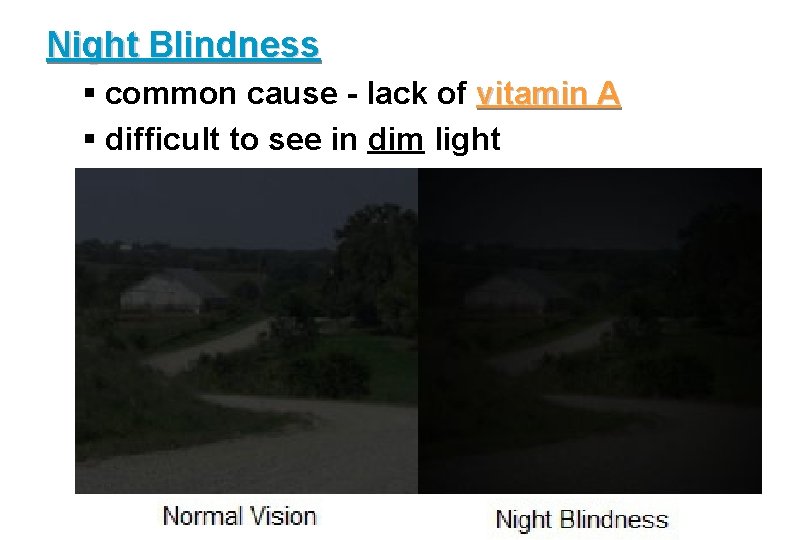
Night Blindness § common cause - lack of vitamin A § difficult to see in dim light
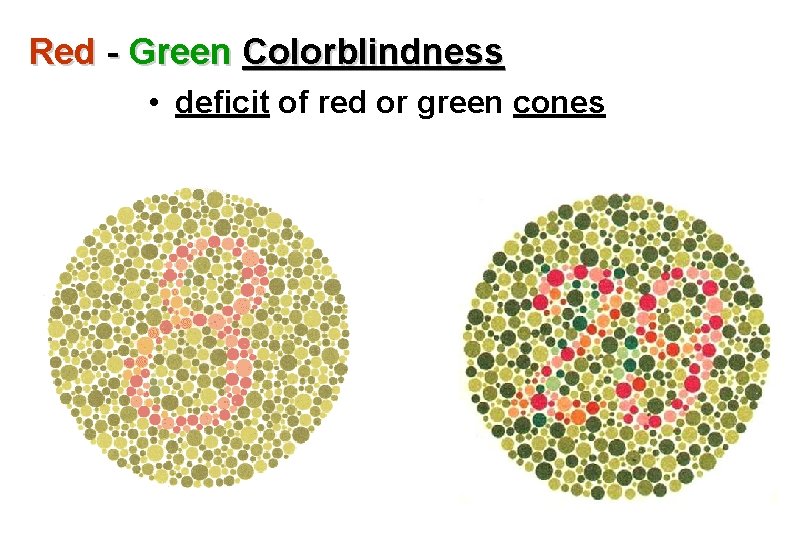
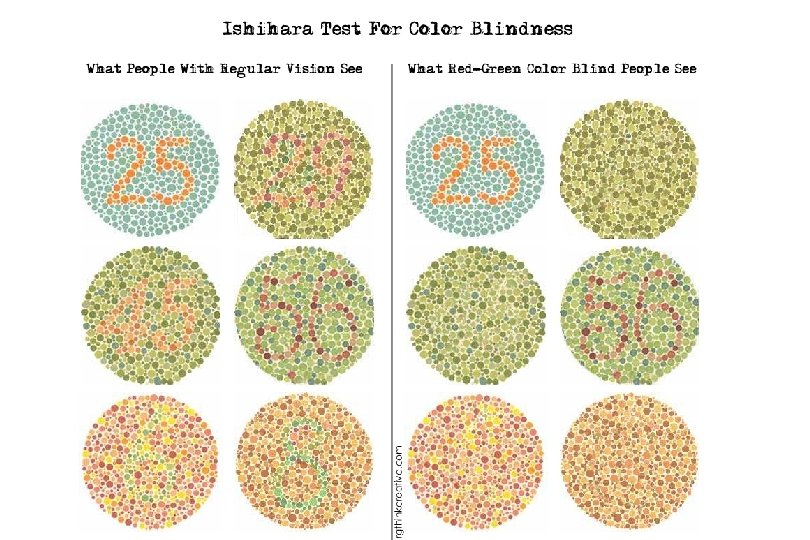
Red - Green Colorblindness • deficit of red or green cones
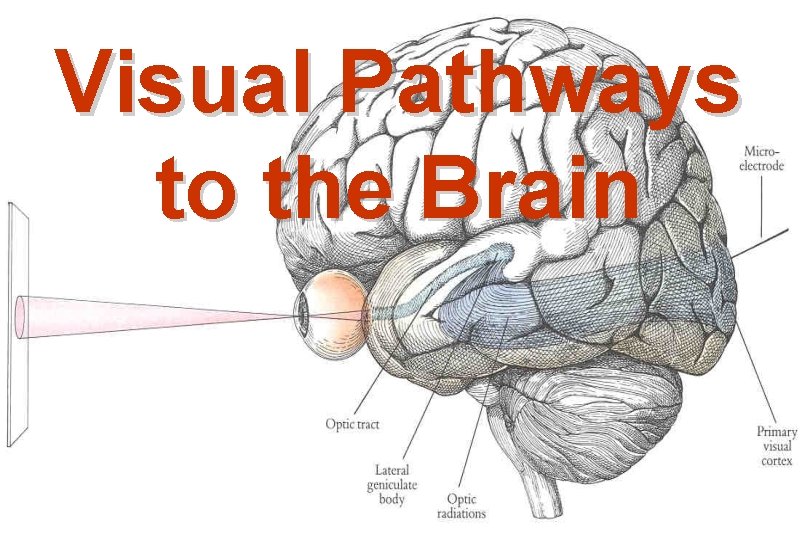
Visual Pathways to the Brain
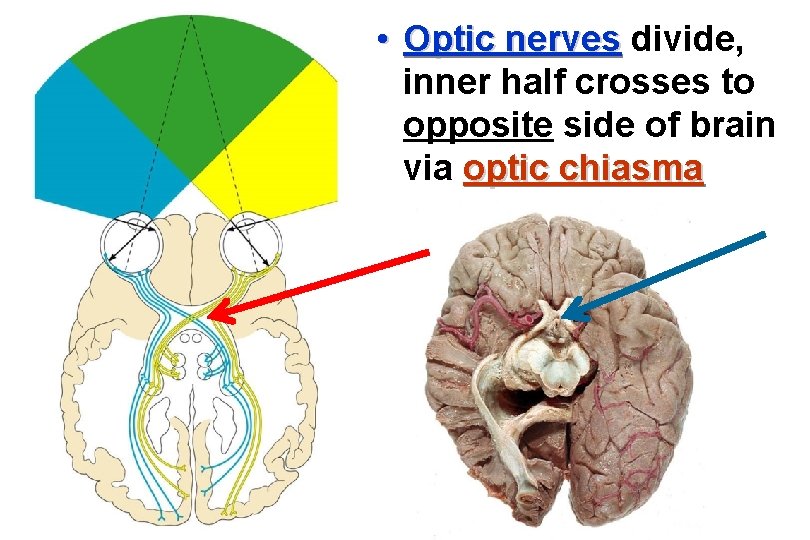
• Optic nerves divide, inner half crosses to opposite side of brain via optic chiasma
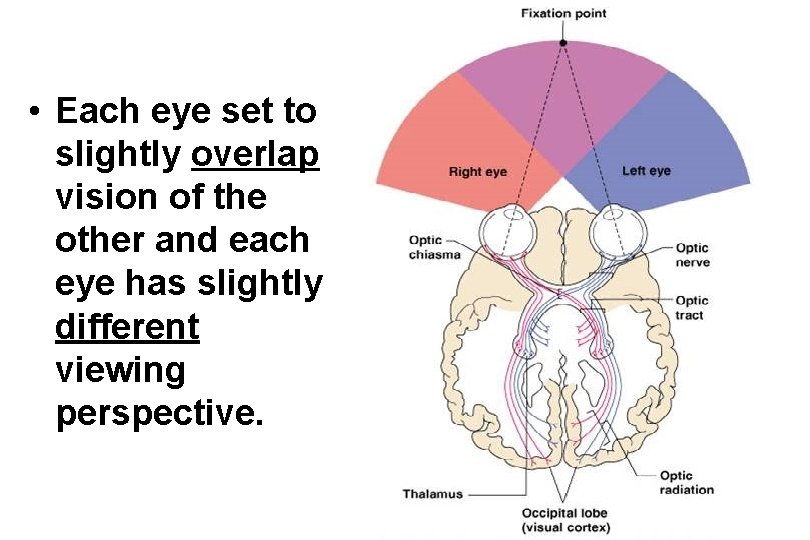
• Each eye set to slightly overlap vision of the other and each eye has slightly different viewing perspective.
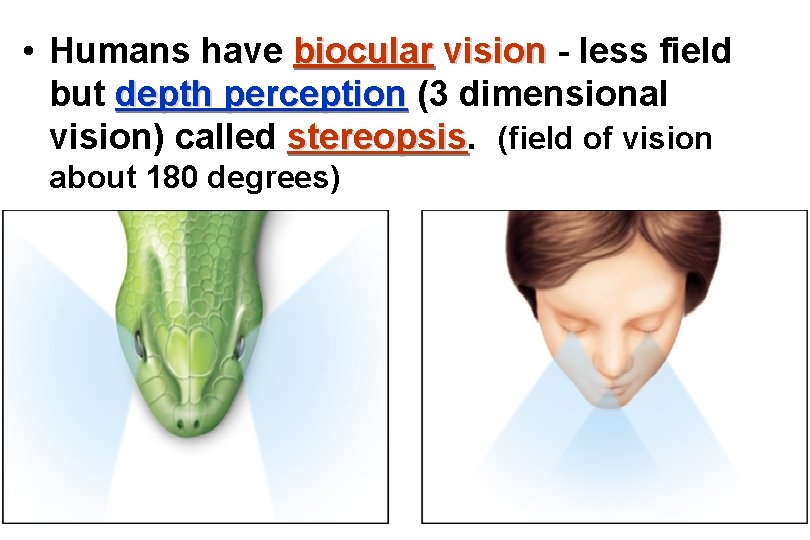
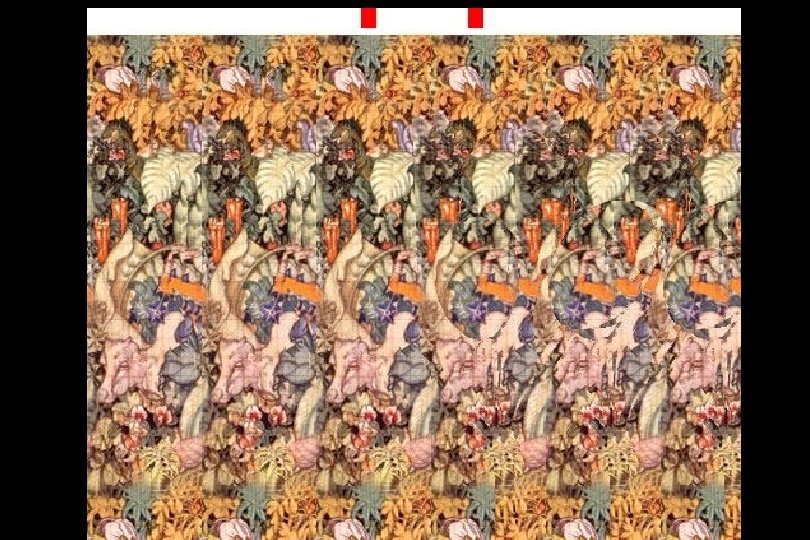
• Humans have biocular vision - less field but depth perception (3 dimensional vision) called stereopsis (field of vision about 180 degrees)
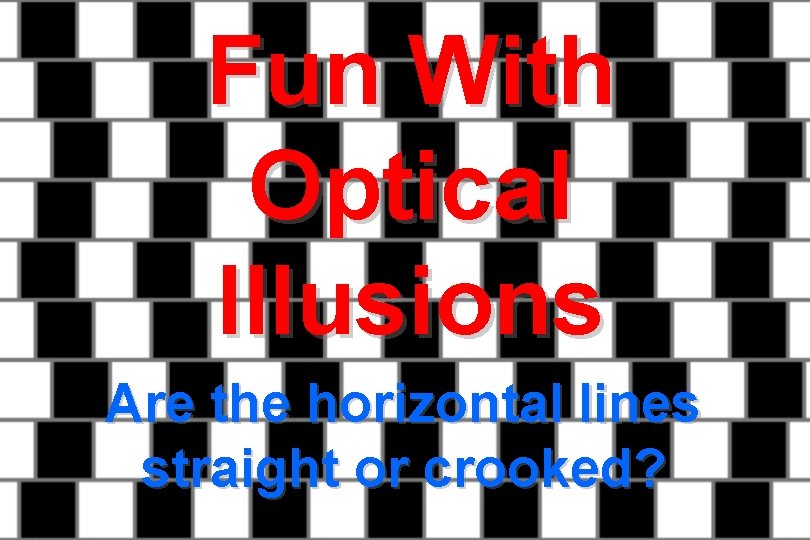
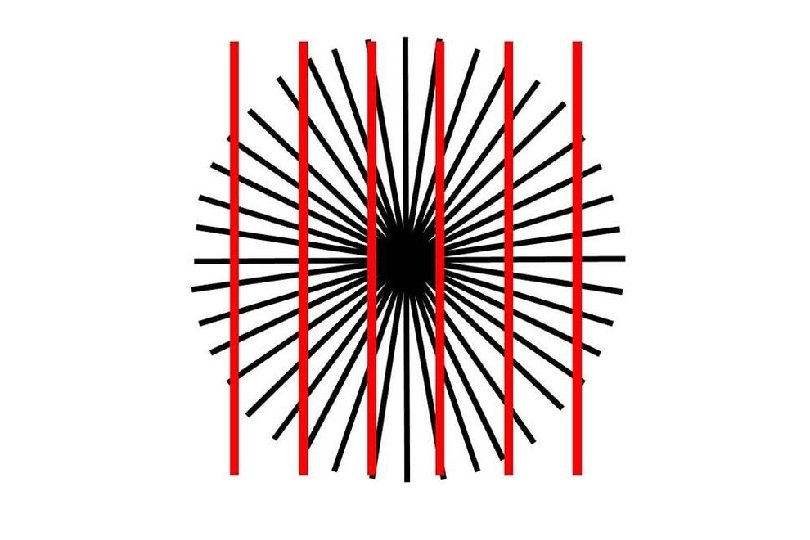
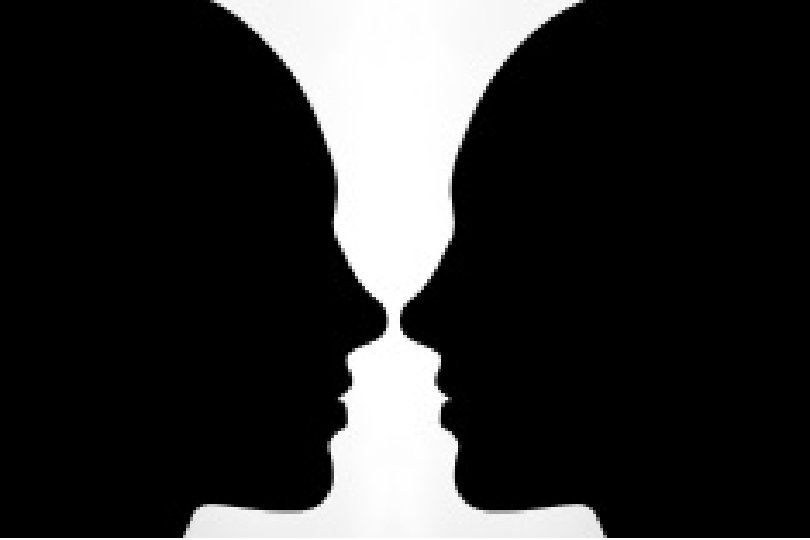
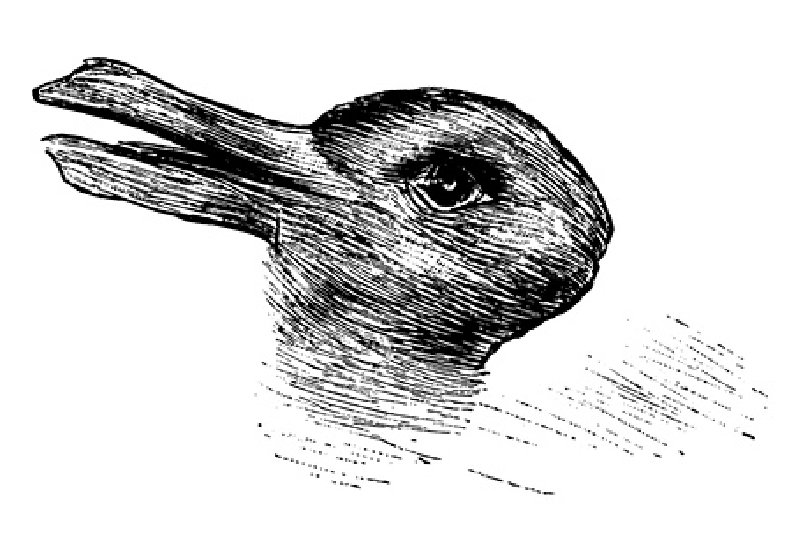
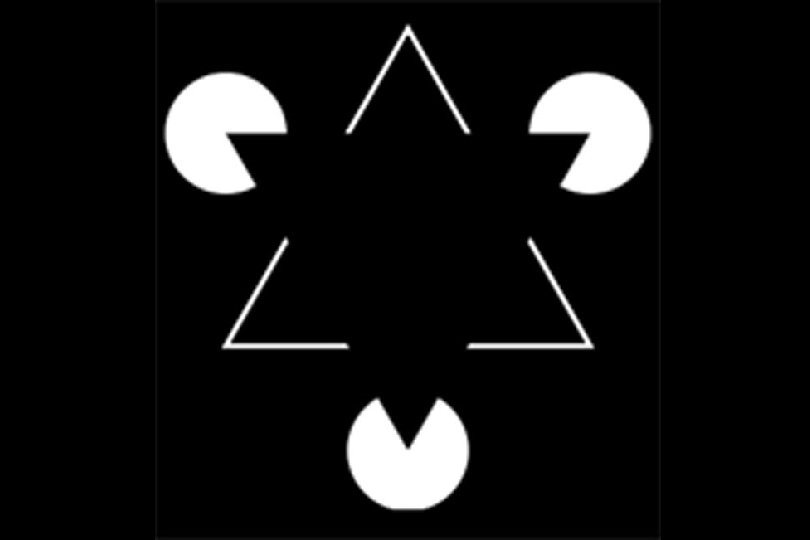
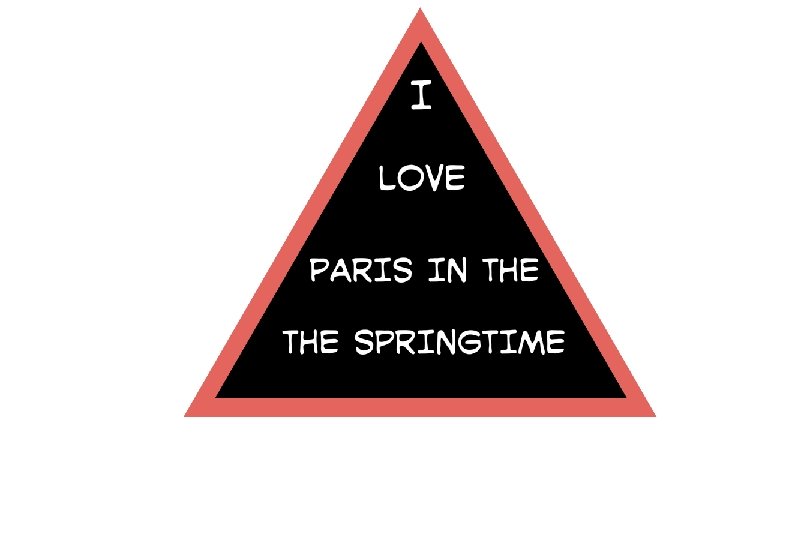
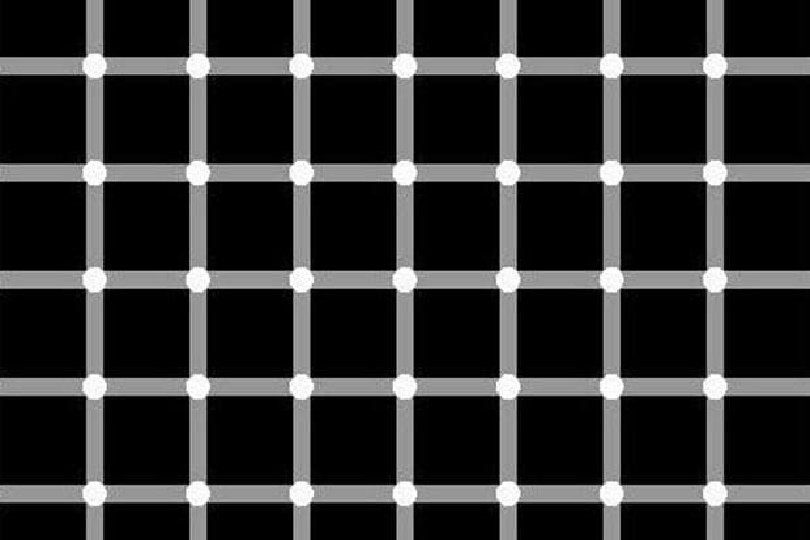
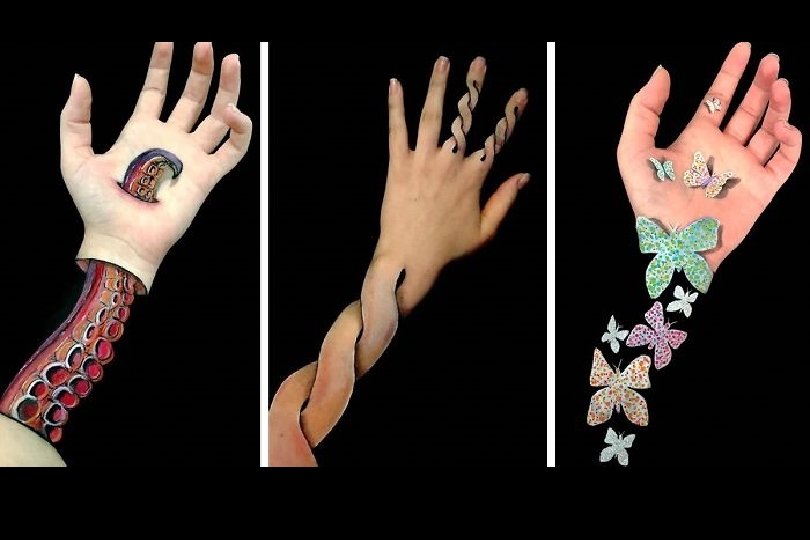
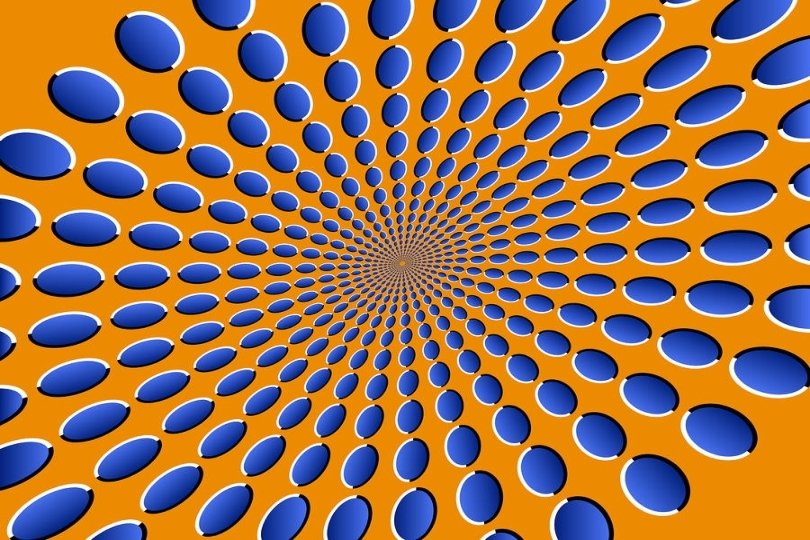
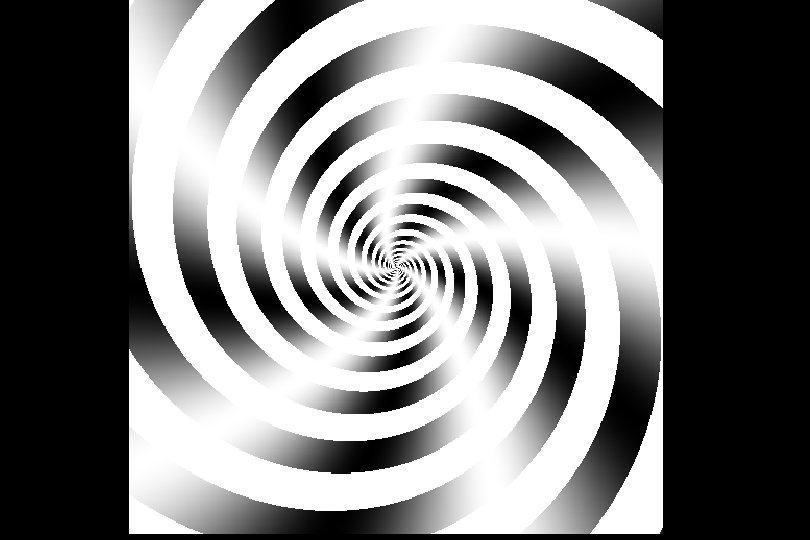
Fun With Optical Illusions Are the horizontal lines straight or crooked?
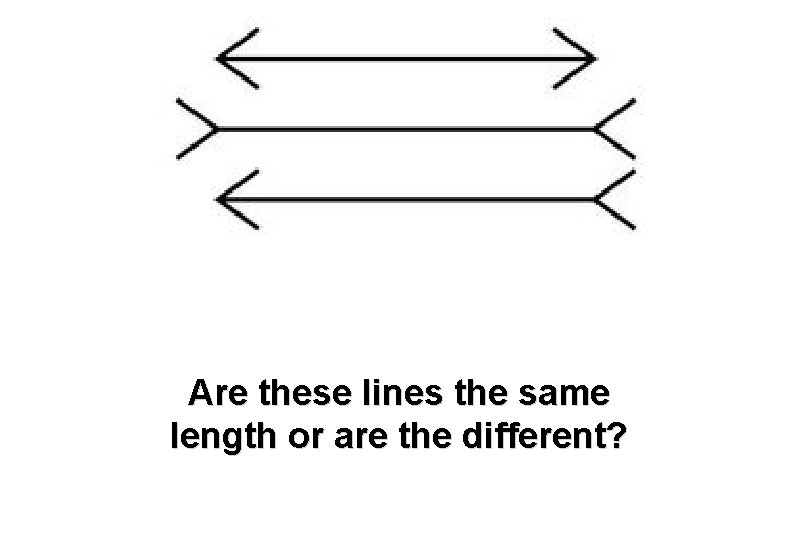
Are these lines the same length or are the different?
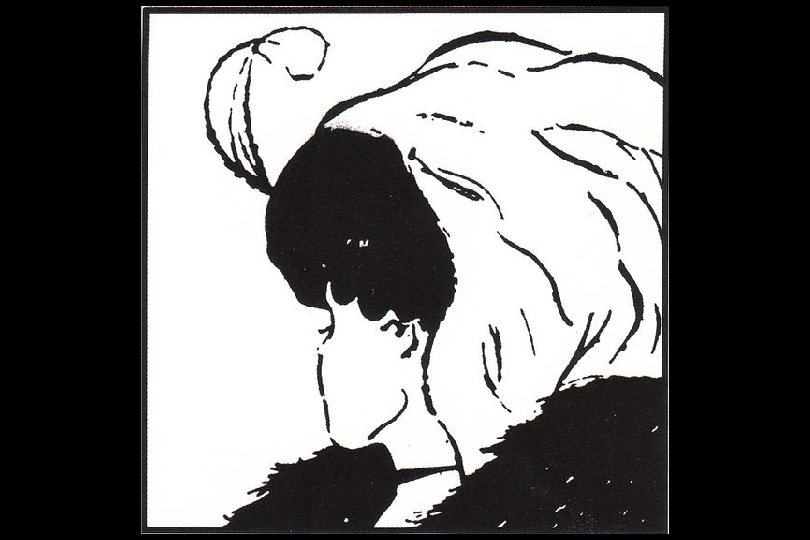
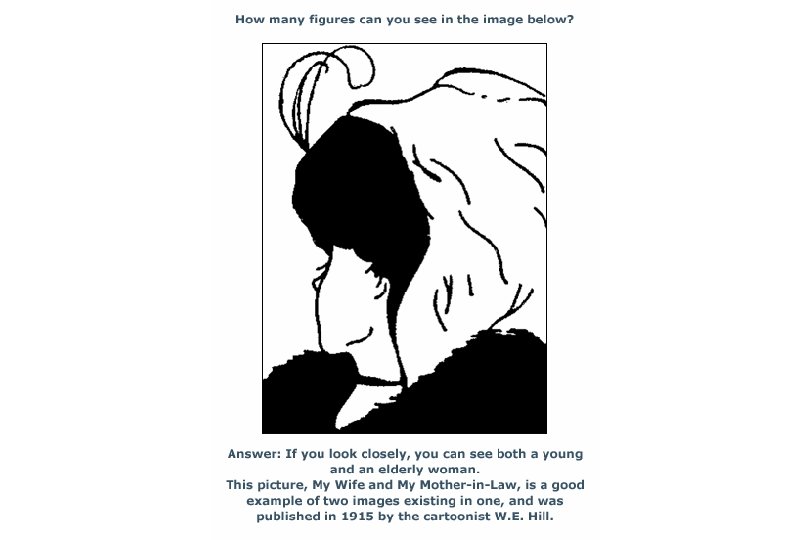

- Slides: 54