
Physiology of the Nervous System Ion channels n

- Slides: 45
Physiology of the Nervous System
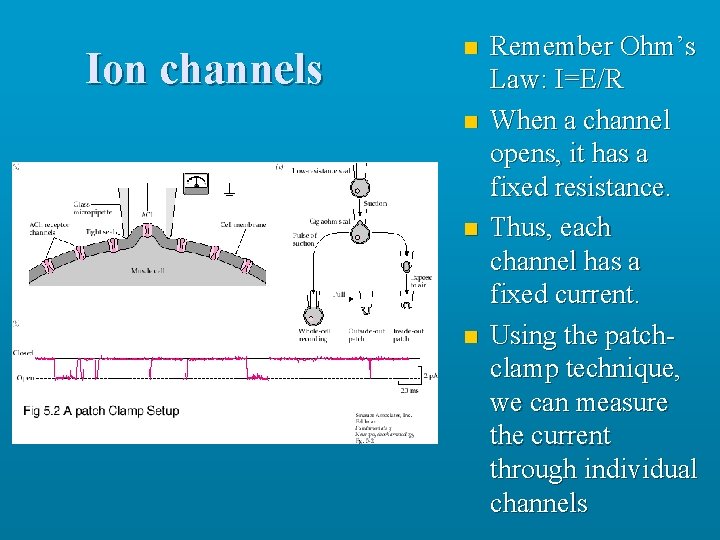
Ion channels n n Remember Ohm’s Law: I=E/R When a channel opens, it has a fixed resistance. Thus, each channel has a fixed current. Using the patchclamp technique, we can measure the current through individual channels
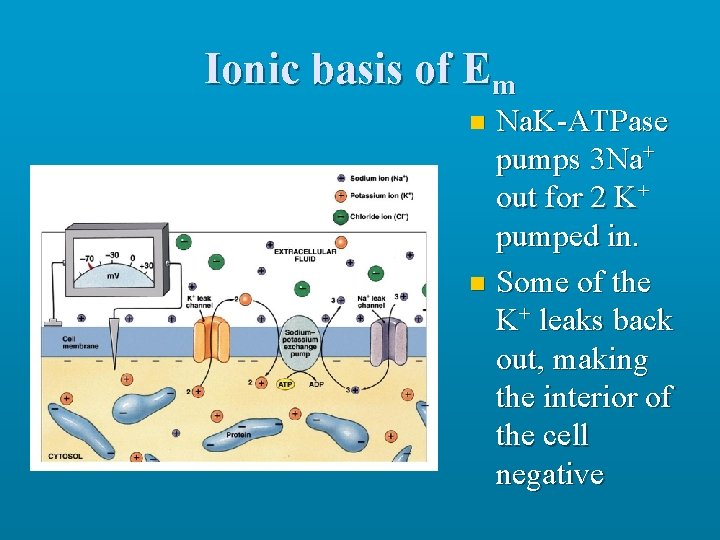
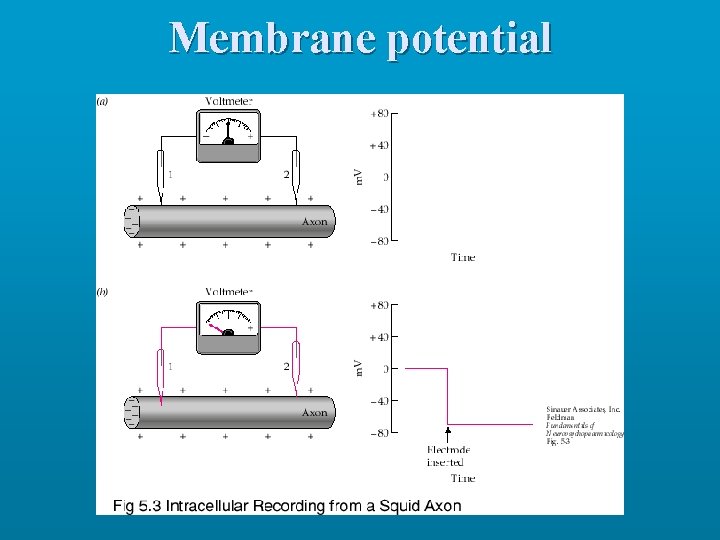
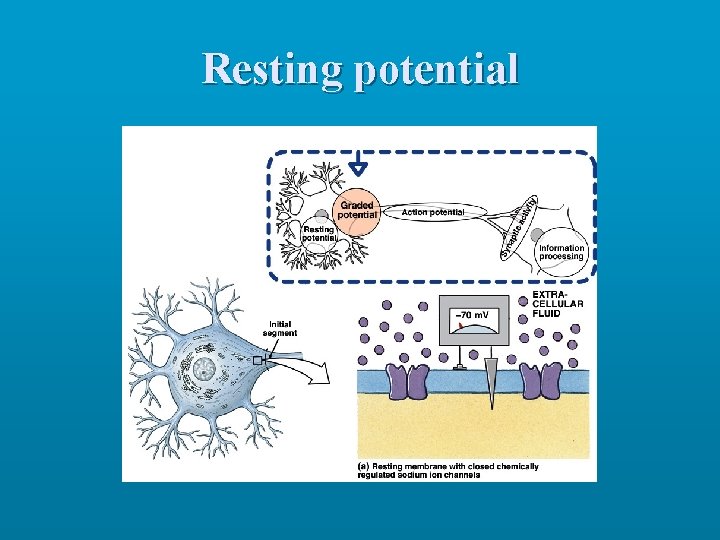
Ionic basis of Em Na. K-ATPase pumps 3 Na+ out for 2 K+ pumped in. n Some of the K+ leaks back out, making the interior of the cell negative n
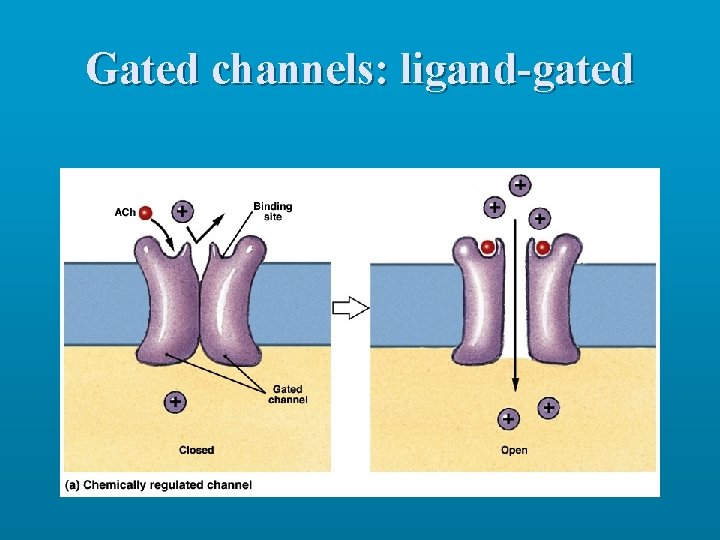
Gated channels: ligand-gated
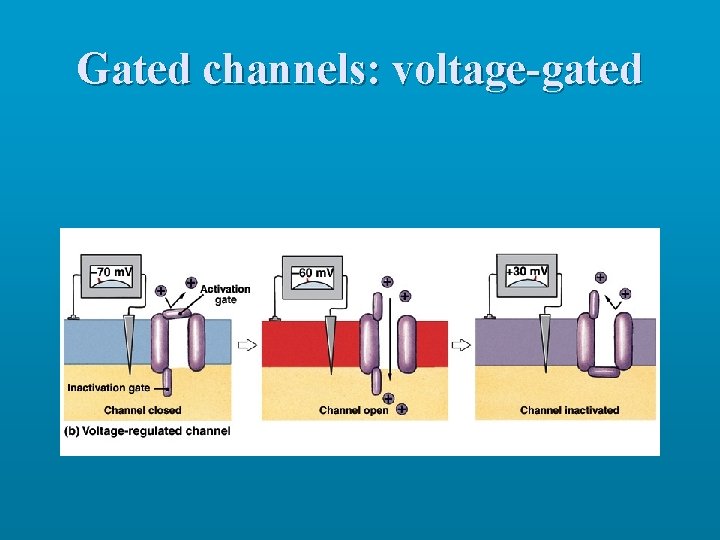
Gated channels: voltage-gated
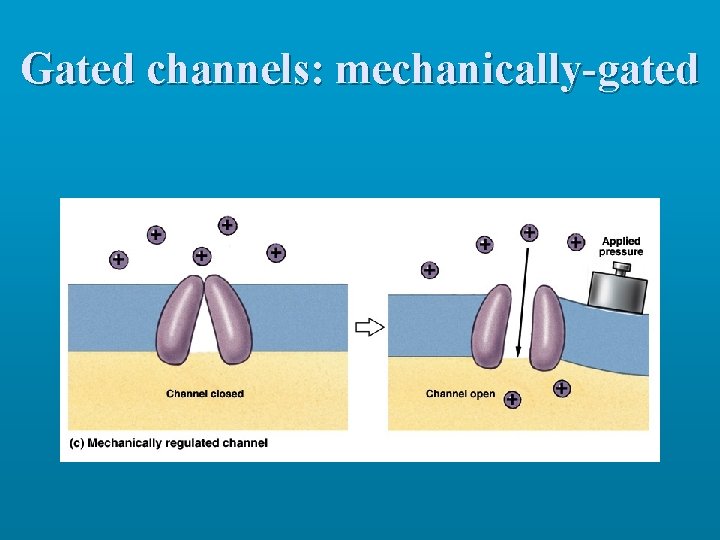
Gated channels: mechanically-gated
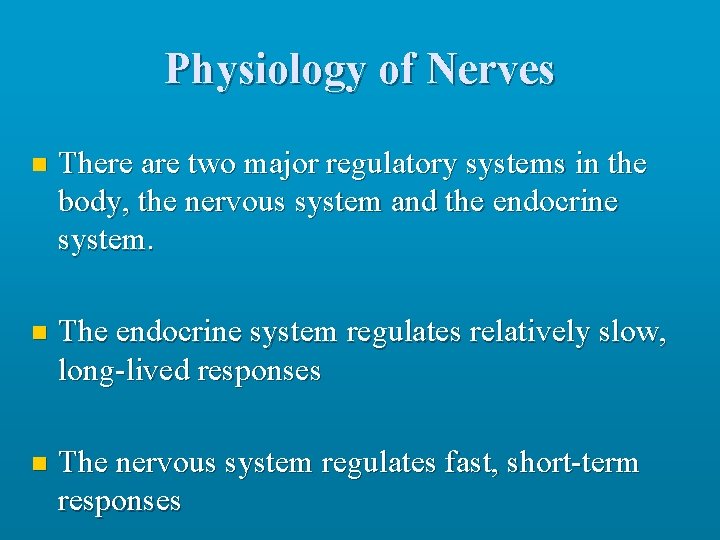
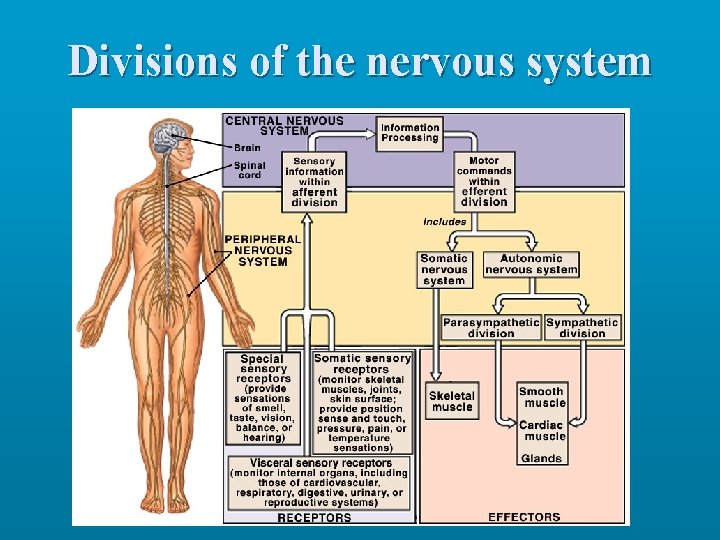
Physiology of Nerves n There are two major regulatory systems in the body, the nervous system and the endocrine system. n The endocrine system regulates relatively slow, long-lived responses n The nervous system regulates fast, short-term responses
Divisions of the nervous system
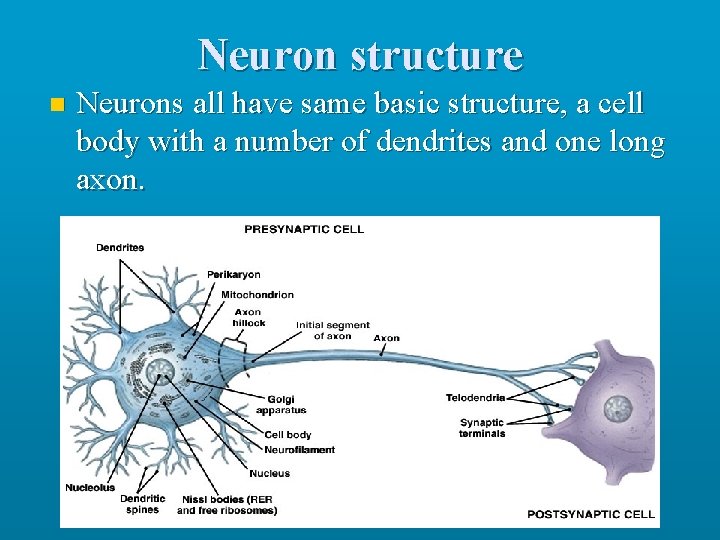
Neuron structure n Neurons all have same basic structure, a cell body with a number of dendrites and one long axon.
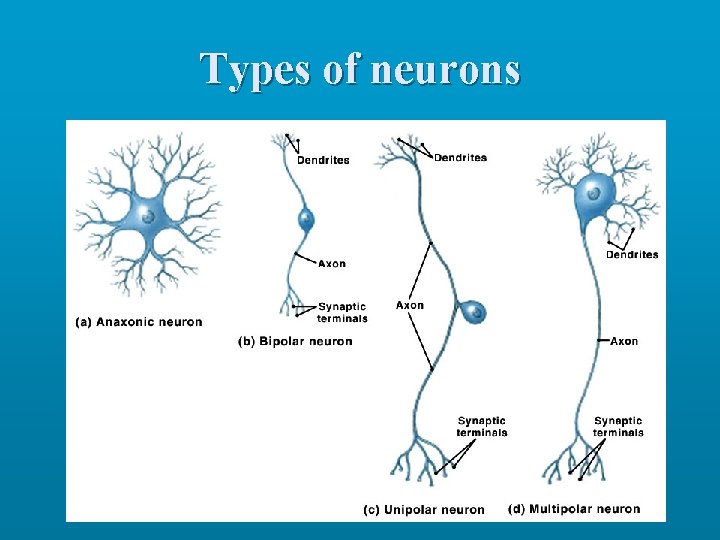
Types of neurons
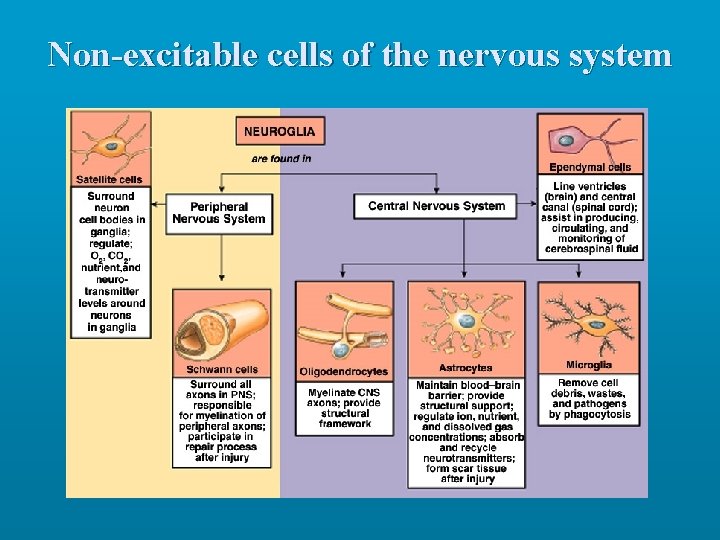
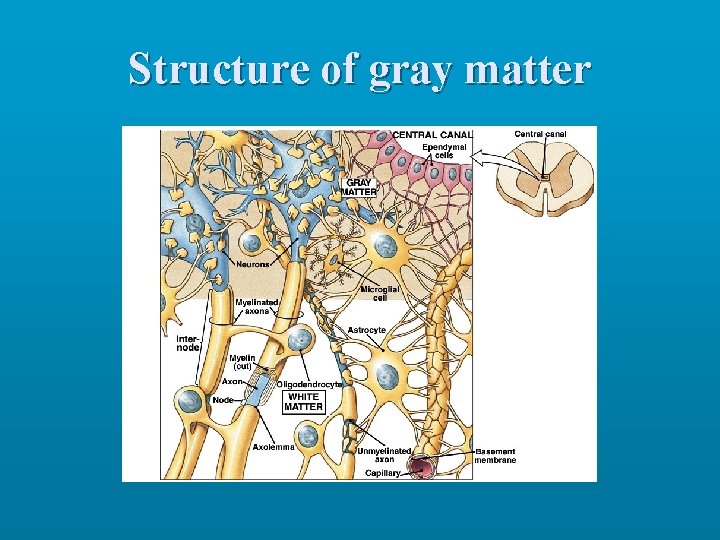
Non-excitable cells of the nervous system
Structure of gray matter
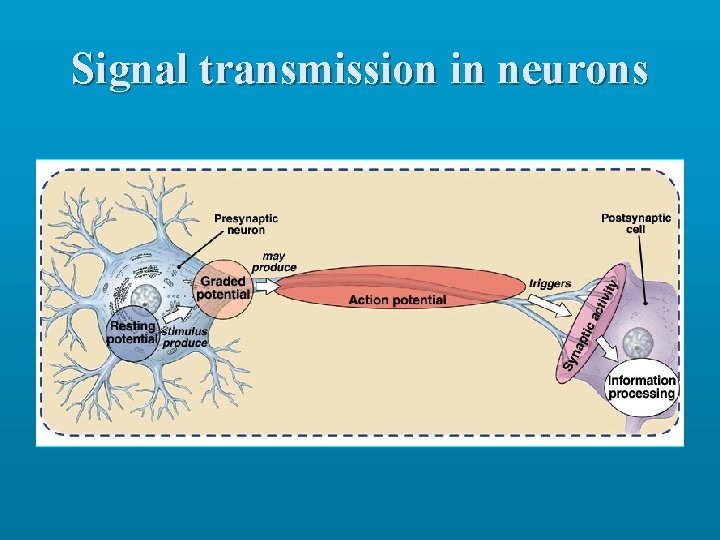
Signal transmission in neurons
Membrane potential
Resting potential
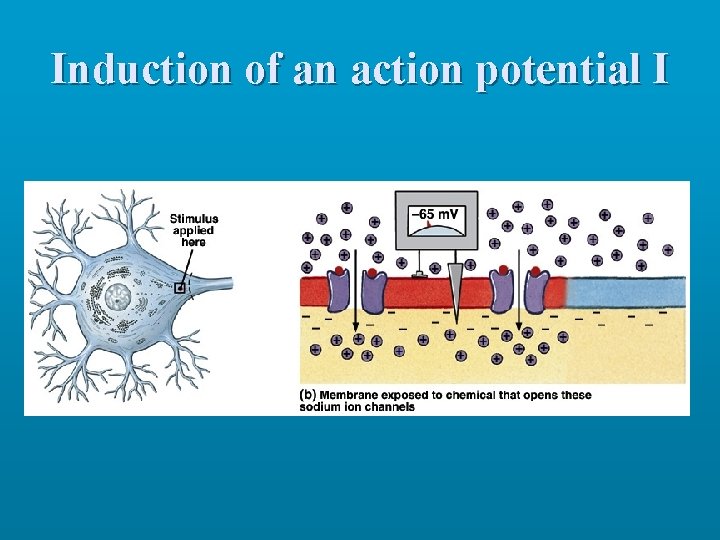
Induction of an action potential I
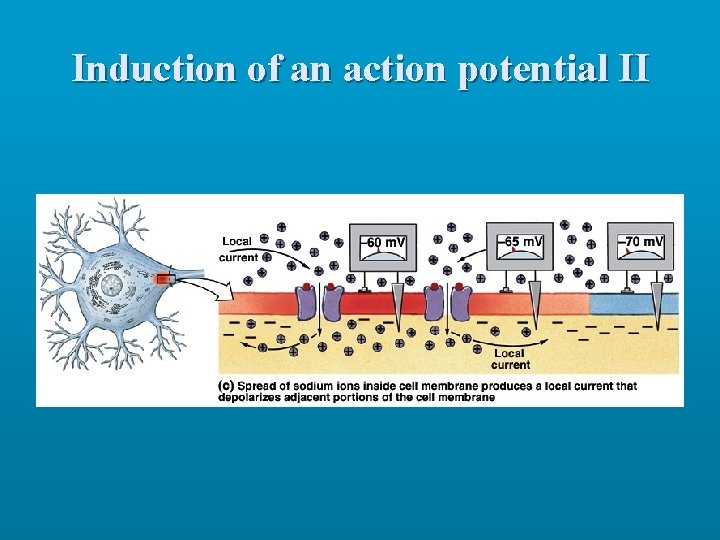
Induction of an action potential II
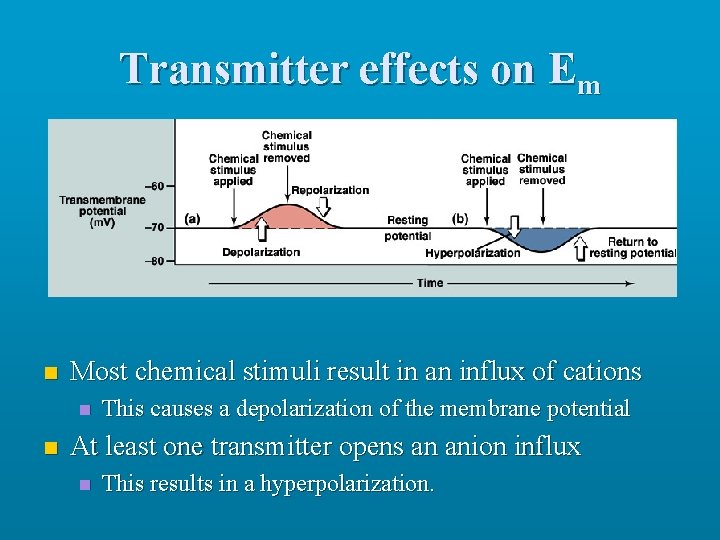
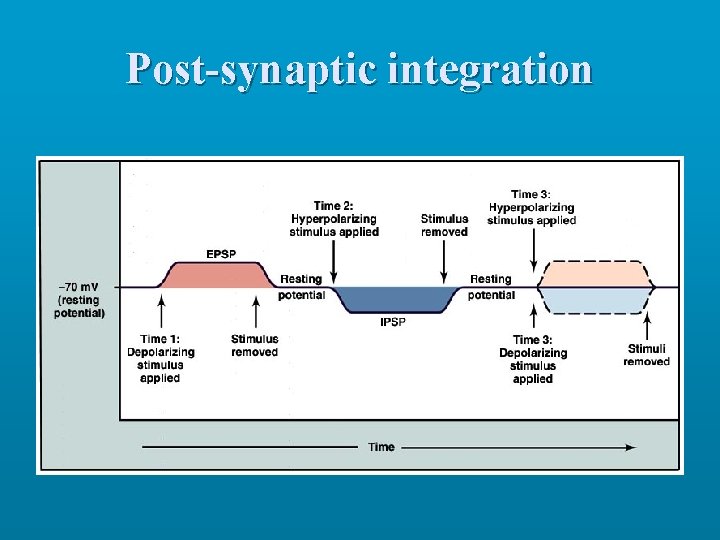
Transmitter effects on Em n Most chemical stimuli result in an influx of cations n n This causes a depolarization of the membrane potential At least one transmitter opens an anion influx n This results in a hyperpolarization.
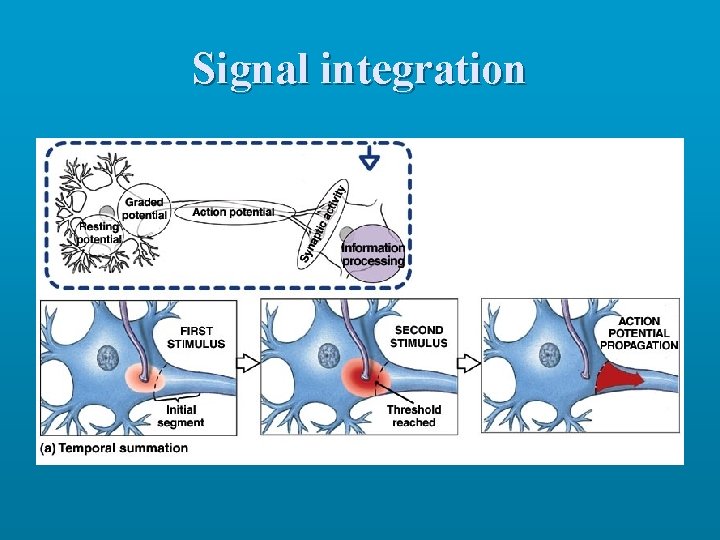
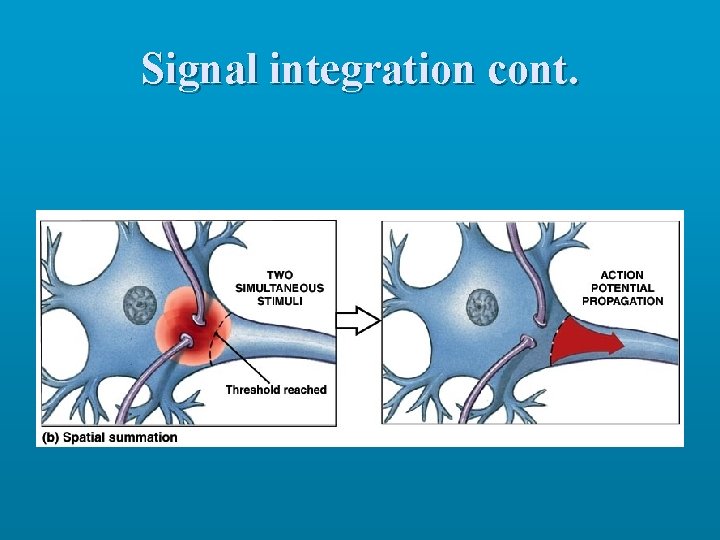
EPSPs and IPSPs If the transmitter opens a cation influx, the resulting depolarization is called an Excitatory Post Synaptic Potential (EPSP). n These individual potentials are sub-threshold. n If the transmitter opens an anion influx, the resulting hyperpolarization is called an Inhibitory Post Synaptic Potential (IPSP n All these potentials are additive. n
Signal integration
Signal integration cont.
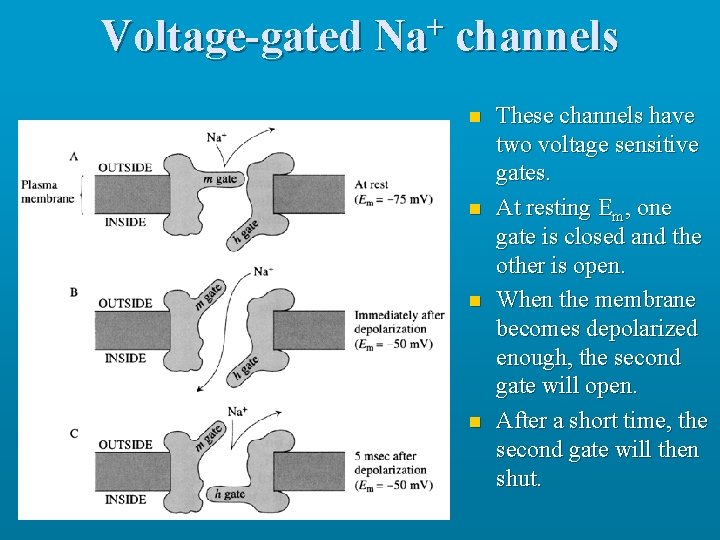
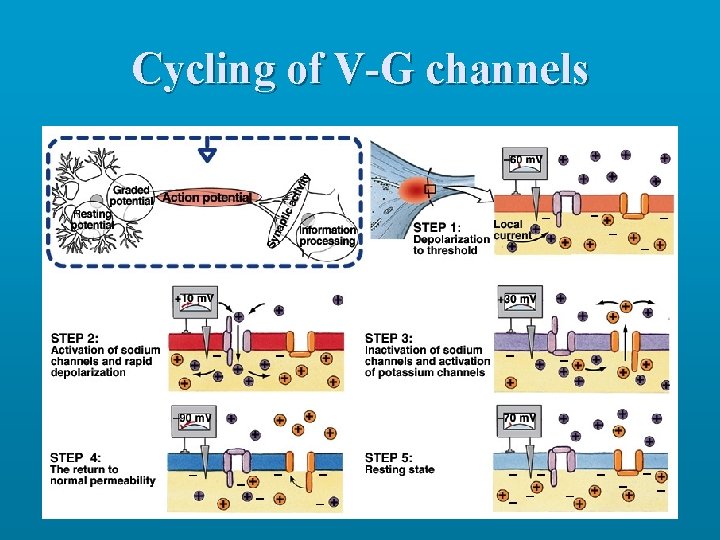
Voltage-gated Na+ channels n n These channels have two voltage sensitive gates. At resting Em, one gate is closed and the other is open. When the membrane becomes depolarized enough, the second gate will open. After a short time, the second gate will then shut.
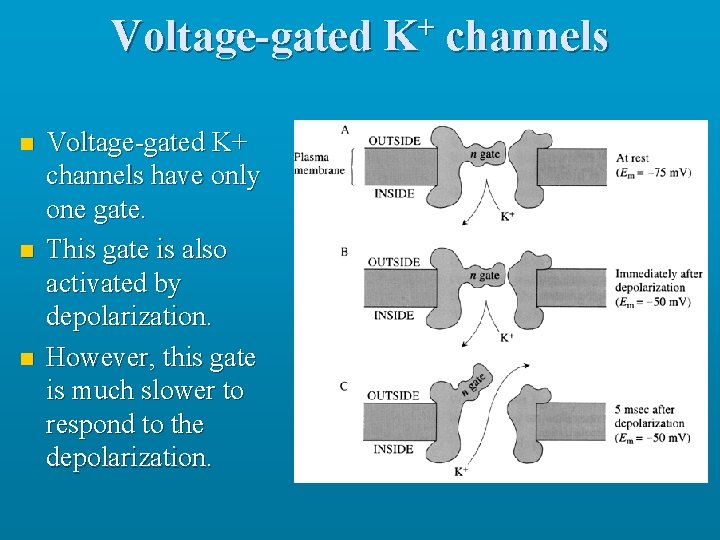
Voltage-gated K+ channels n n n Voltage-gated K+ channels have only one gate. This gate is also activated by depolarization. However, this gate is much slower to respond to the depolarization.
Cycling of V-G channels
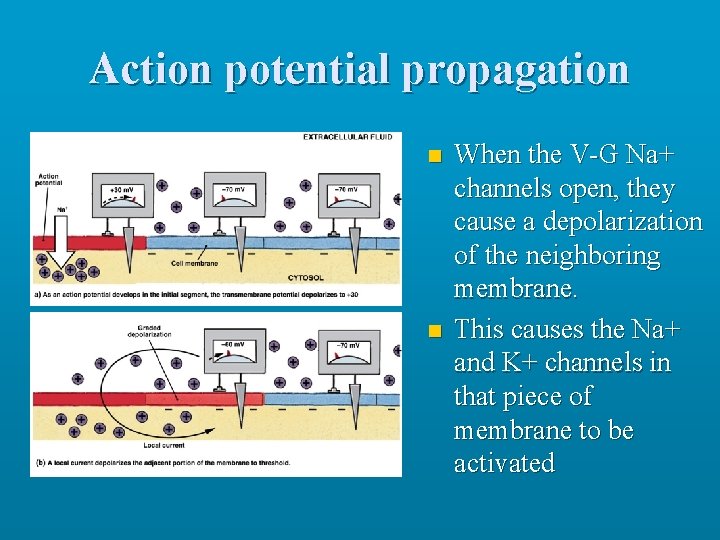
Action potential propagation n n When the V-G Na+ channels open, they cause a depolarization of the neighboring membrane. This causes the Na+ and K+ channels in that piece of membrane to be activated
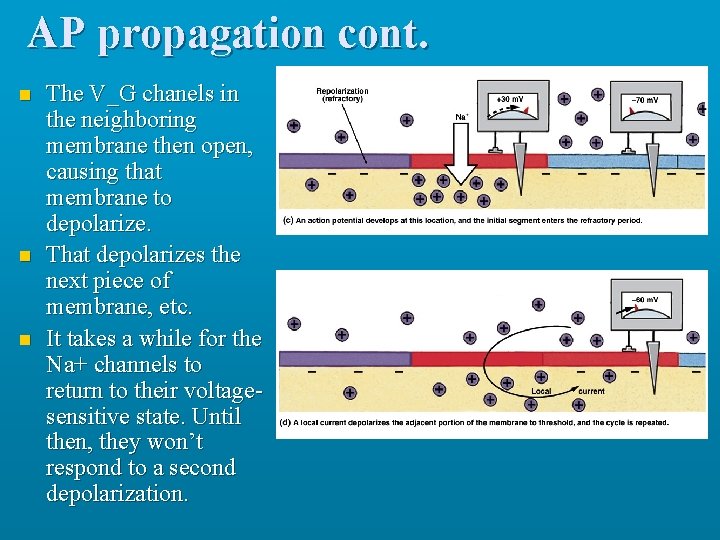
AP propagation cont. n n n The V_G chanels in the neighboring membrane then open, causing that membrane to depolarize. That depolarizes the next piece of membrane, etc. It takes a while for the Na+ channels to return to their voltagesensitive state. Until then, they won’t respond to a second depolarization.
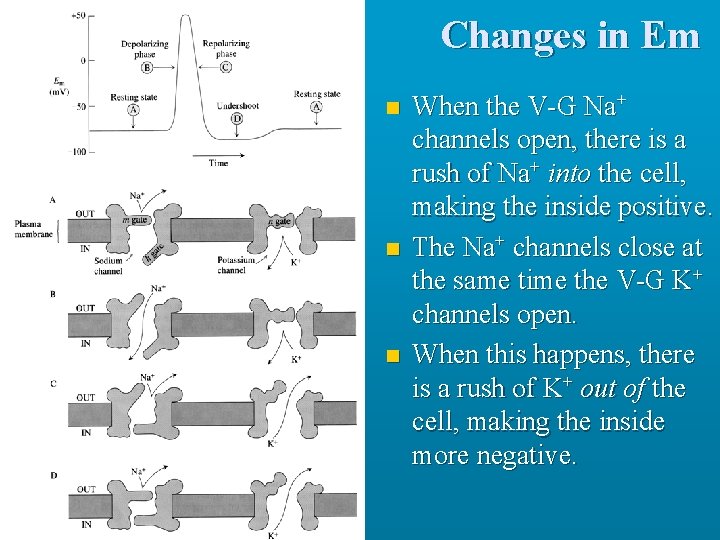
Changes in Em n n n When the V-G Na+ channels open, there is a rush of Na+ into the cell, making the inside positive. The Na+ channels close at the same time the V-G K+ channels open. When this happens, there is a rush of K+ out of the cell, making the inside more negative.
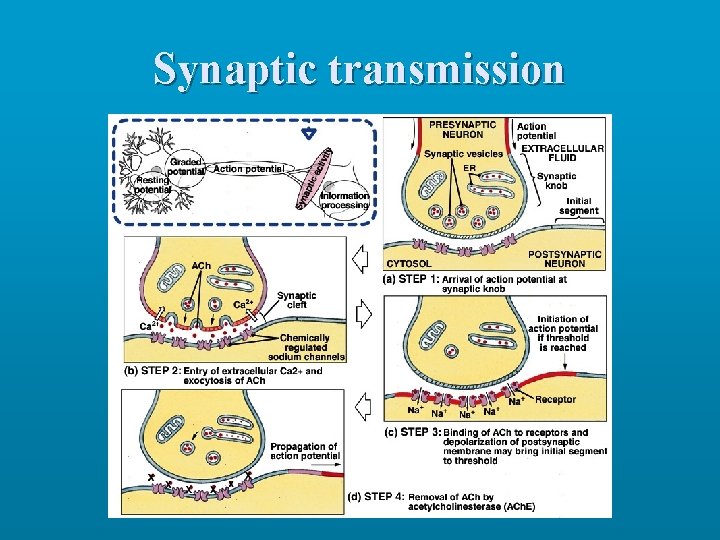
Synaptic transmission
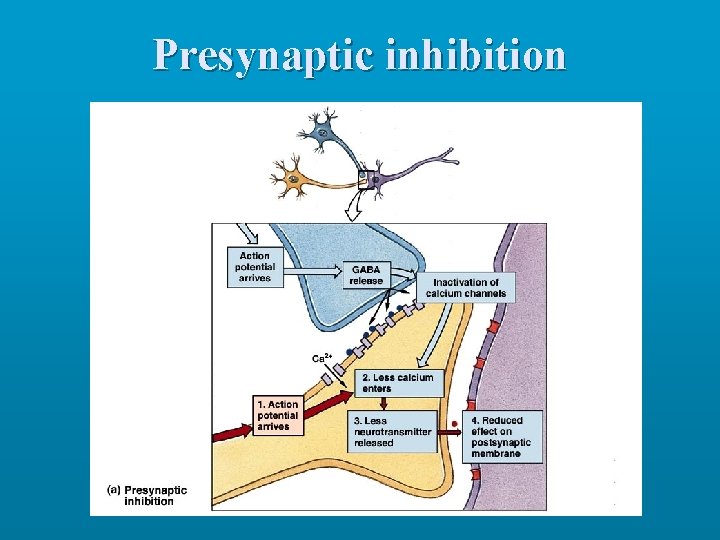
Presynaptic inhibition
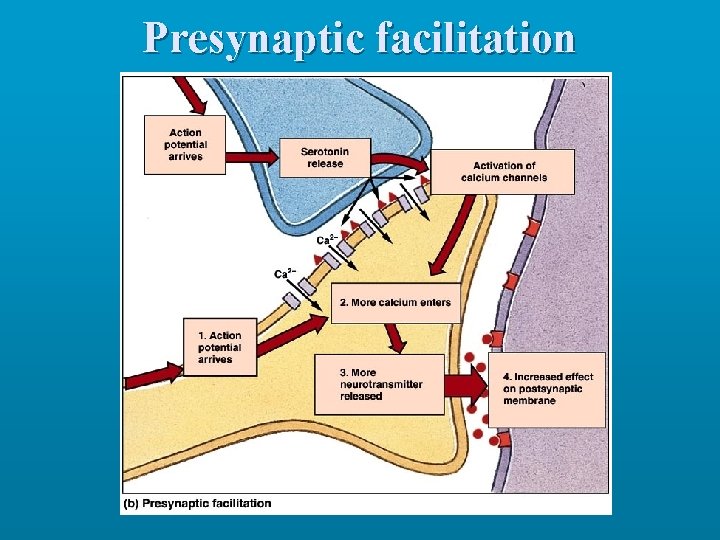
Presynaptic facilitation
Post-synaptic integration
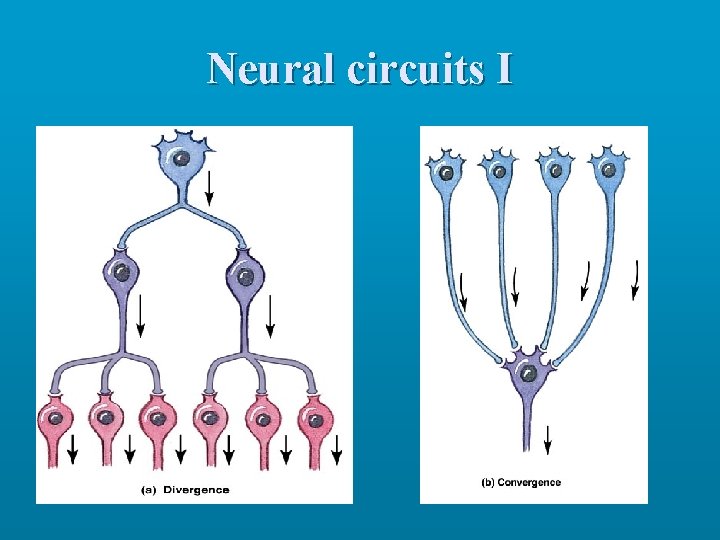
Neural circuits I
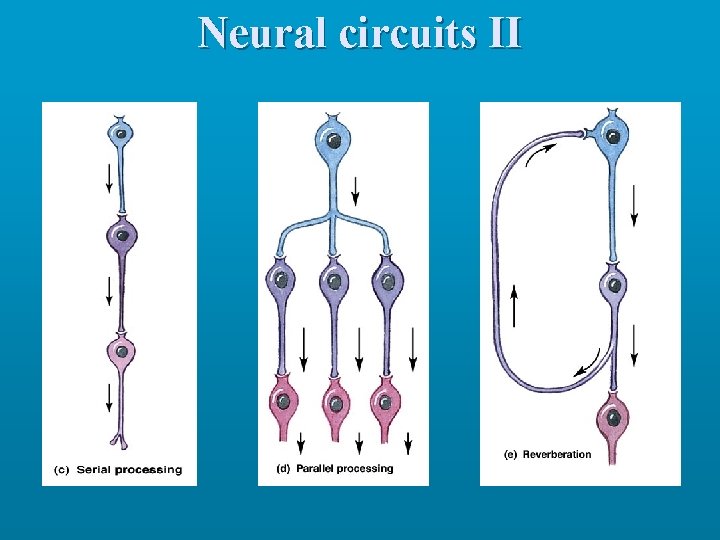
Neural circuits II
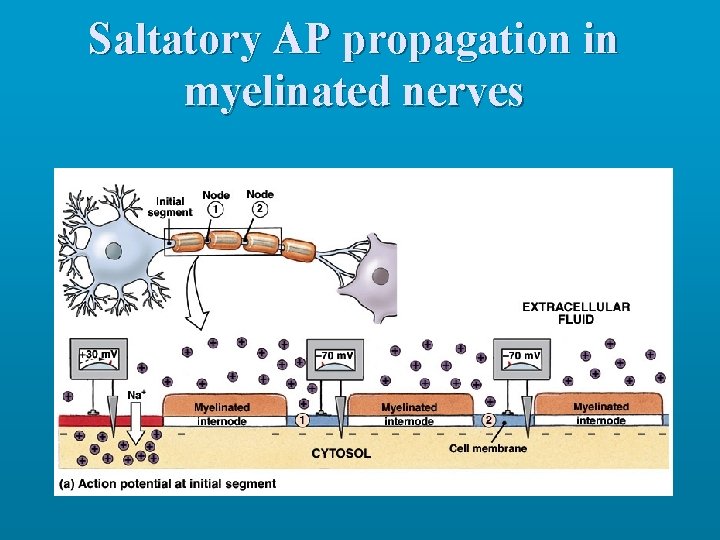
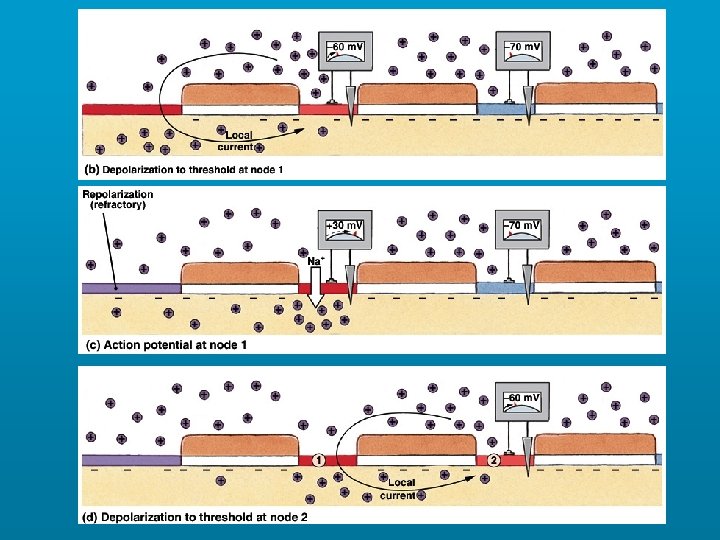
Saltatory AP propagation in myelinated nerves
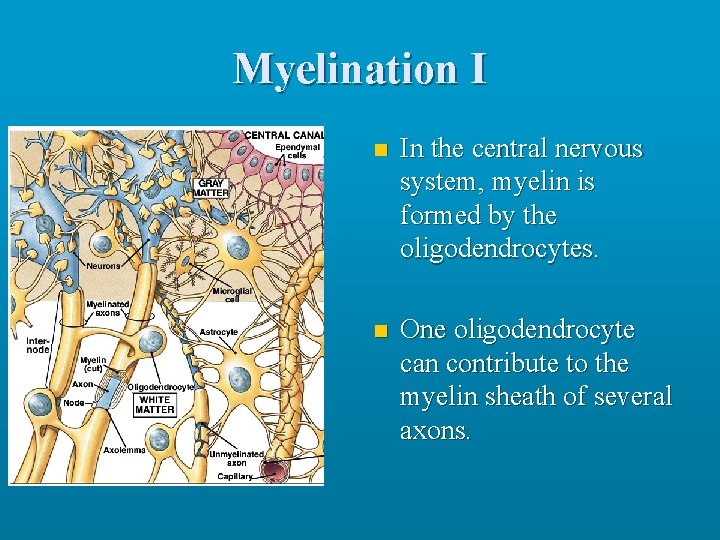
Myelination I n In the central nervous system, myelin is formed by the oligodendrocytes. n One oligodendrocyte can contribute to the myelin sheath of several axons.
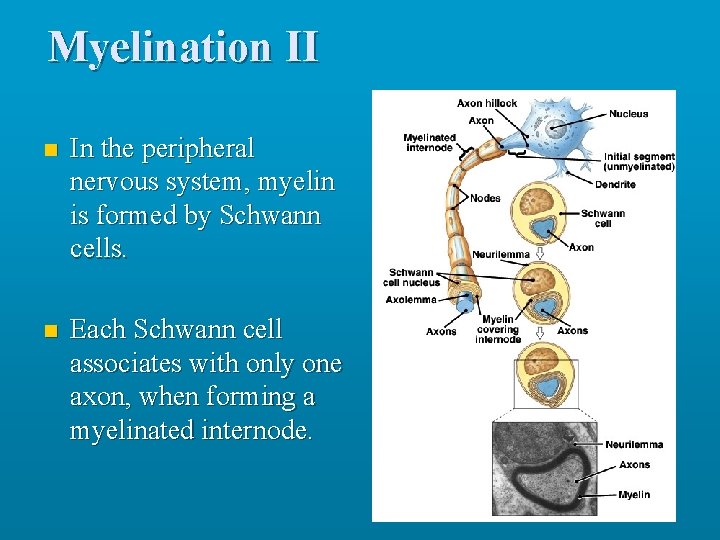
Myelination II n In the peripheral nervous system, myelin is formed by Schwann cells. n Each Schwann cell associates with only one axon, when forming a myelinated internode.
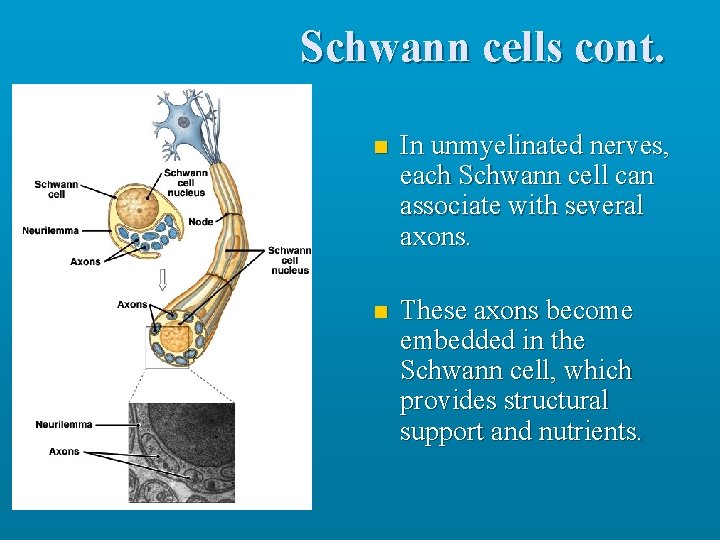
Schwann cells cont. n In unmyelinated nerves, each Schwann cell can associate with several axons. n These axons become embedded in the Schwann cell, which provides structural support and nutrients.
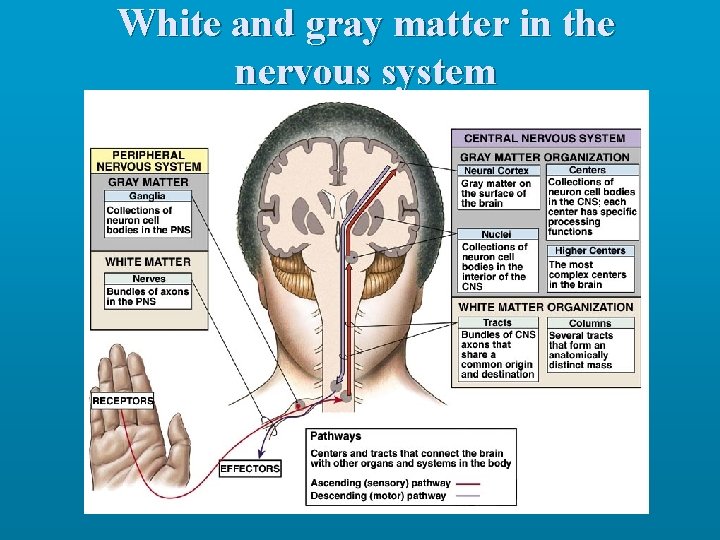
White and gray matter in the nervous system
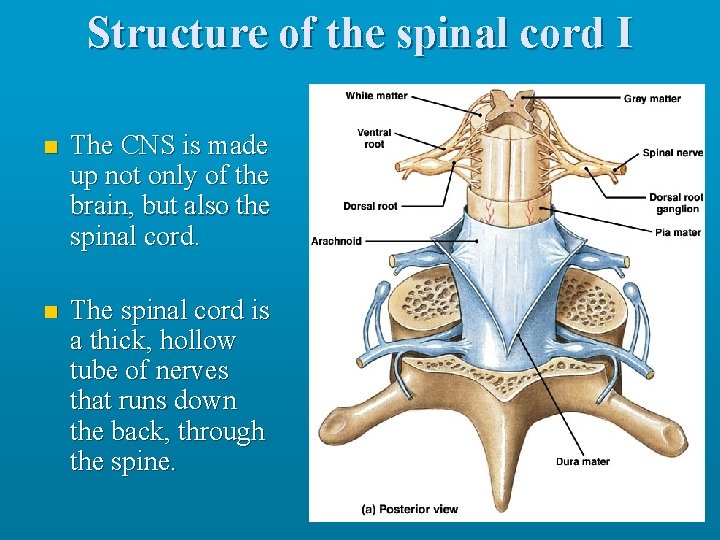
Structure of the spinal cord I n The CNS is made up not only of the brain, but also the spinal cord. n The spinal cord is a thick, hollow tube of nerves that runs down the back, through the spine.
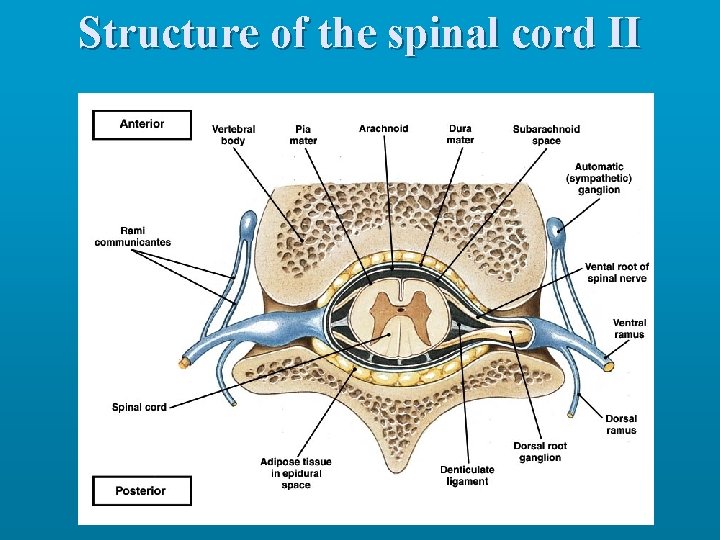
Structure of the spinal cord II
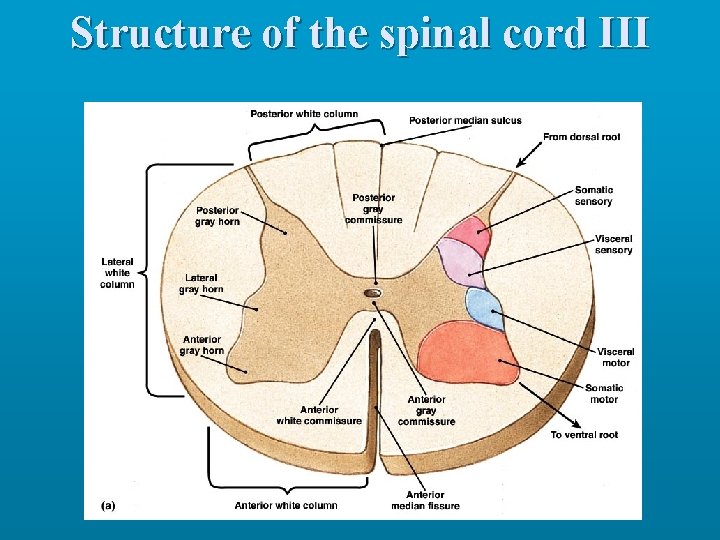
Structure of the spinal cord III
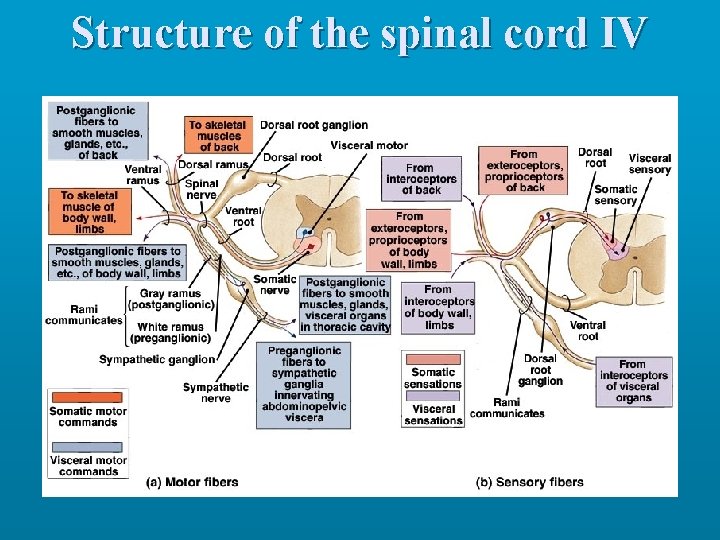
Structure of the spinal cord IV