
Physiology of NonInvasive NAVA Jennifer Beck Ph D

Physiology of Non-Invasive NAVA Jennifer Beck, Ph. D Keenan Research Center at the Li Ka Shing Knowledge Institute of St. Michael's Hospital, Toronto Department of Pediatrics, University of Toronto
Disclosure • • • Consultant: Maquet Critical Care Speakers Bureau: Maquet Critical Care Stock Shareholder: Nothing to disclose Employee: Nothing to disclose Other (identify): Royalties on patents The following disclosure was approved by University of Toronto and St-Michael’s Hospital: Dr. Beck has made inventions related to neural control of mechanical ventilation that are patented. The license for these patents belongs to Maquet Critical Care. Future commercial uses of this technology may provide financial benefit to Dr. Beck through royalties. Dr Beck owns 50% of Neurovent Research Inc (NVR). NVR is a research and development company that builds the equipment and catheters for research studies. NVR has a consulting agreement with Maquet Critical Care.

Definition and goals of NIPPV • NIV, just like INV, is mechanical ventilation delivered with intermittent inflations, usually with PEEP, to the airways, via a noninvasive interface • The goal of NIV is to maintain adequate oxygenation and adequate ventilation, reduce the work of breathing, and to keep the lung open without overdistension. • In order to avoid complications, NIV should be synchronized to the patient’s breathing effort
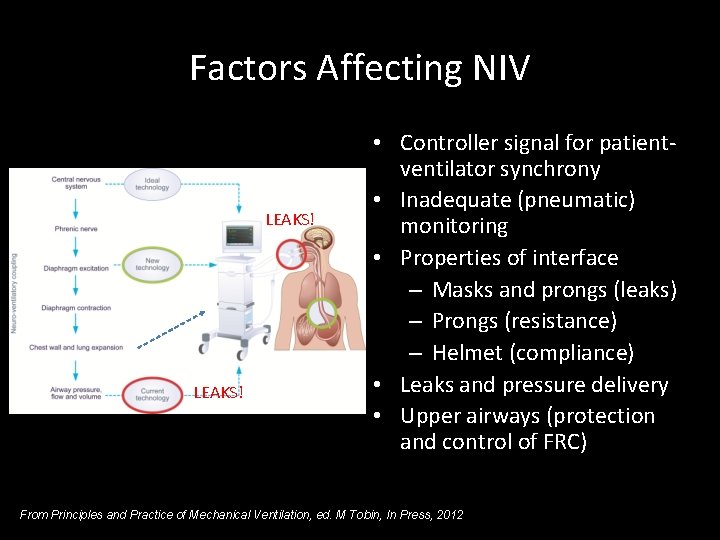
Factors Affecting NIV LEAKS! • Controller signal for patientventilator synchrony • Inadequate (pneumatic) monitoring • Properties of interface – Masks and prongs (leaks) – Prongs (resistance) – Helmet (compliance) • Leaks and pressure delivery • Upper airways (protection and control of FRC) From Principles and Practice of Mechanical Ventilation, ed. M Tobin, In Press, 2012
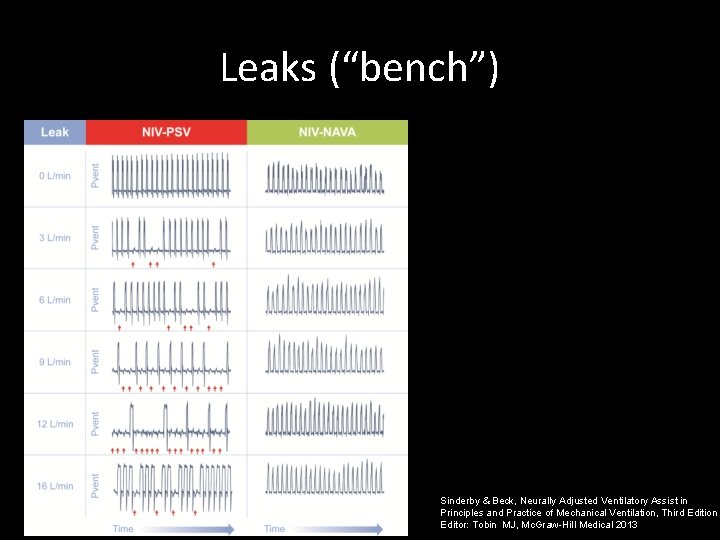
Leaks (“bench”) Sinderby & Beck, Neurally Adjusted Ventilatory Assist in Principles and Practice of Mechanical Ventilation, Third Edition Editor: Tobin MJ, Mc. Graw-Hill Medical 2013
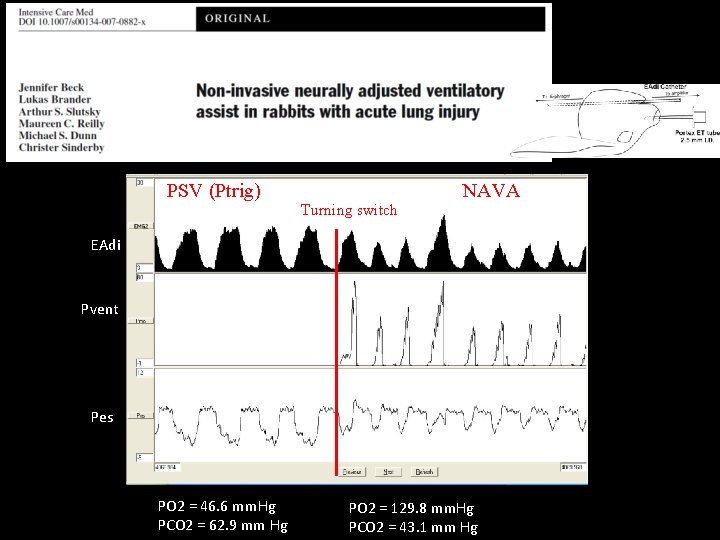
PSV (Ptrig) Turning switch NAVA EAdi Pvent Pes PO 2 = 46. 6 mm. Hg PCO 2 = 62. 9 mm Hg PO 2 = 129. 8 mm. Hg PCO 2 = 43. 1 mm Hg
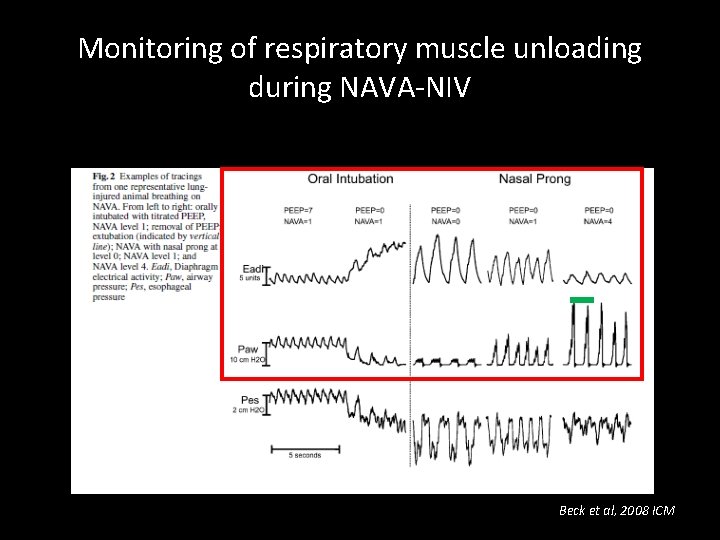
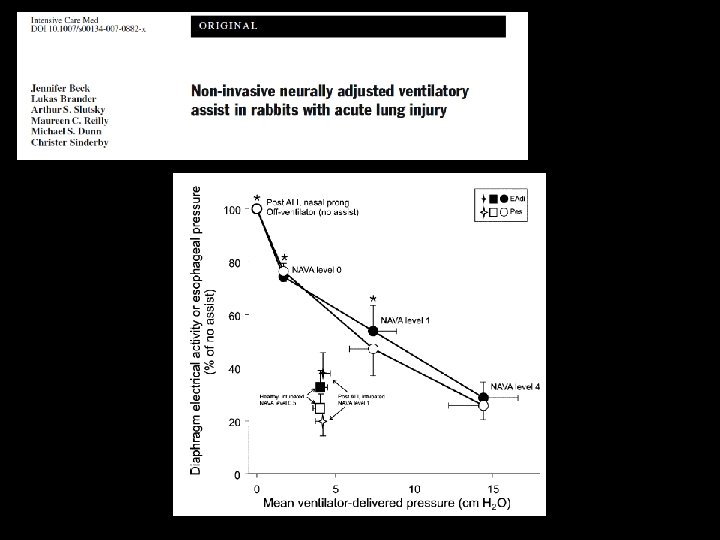
Monitoring of respiratory muscle unloading during NAVA-NIV Beck et al, 2008 ICM
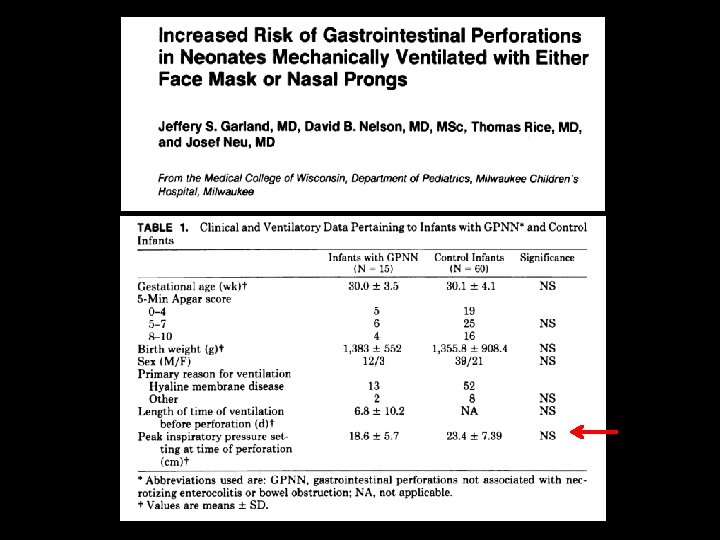
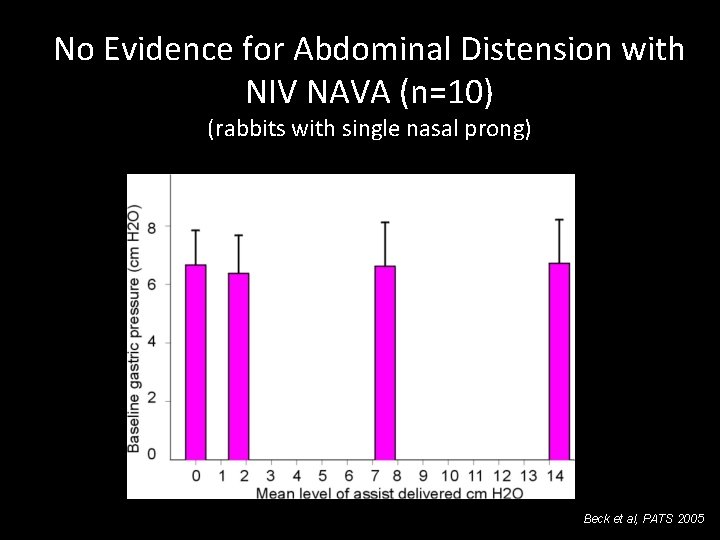
No Evidence for Abdominal Distension with NIV NAVA (n=10) (rabbits with single nasal prong) Beck et al, PATS 2005
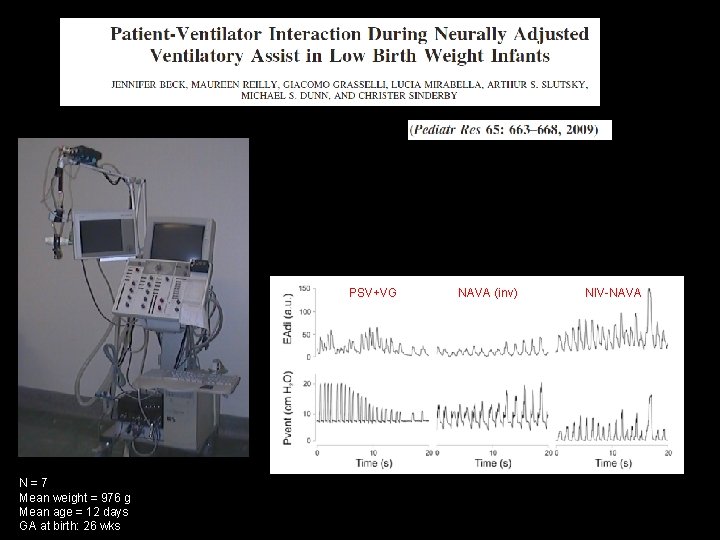
PSV+VG N=7 Mean weight = 976 g Mean age = 12 days GA at birth: 26 wks NAVA (inv) NIV-NAVA
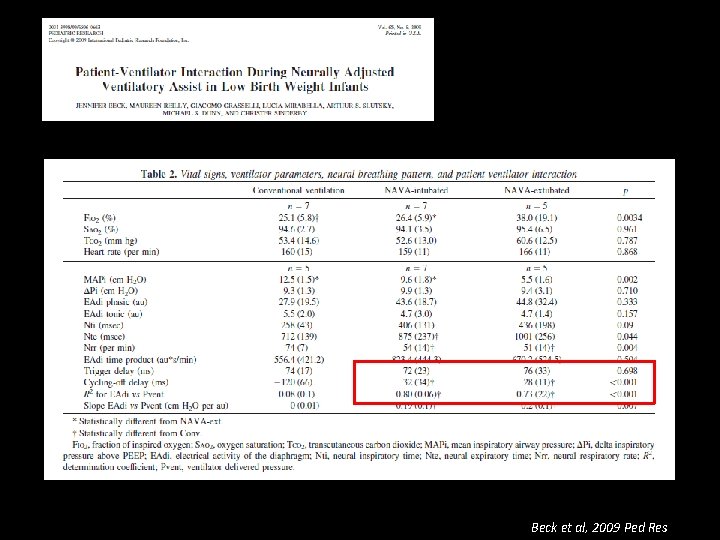
Beck et al, 2009 Ped Res
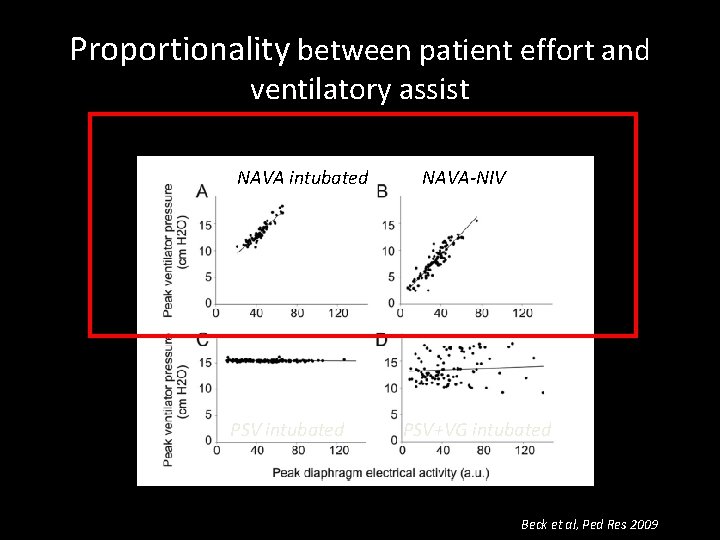
Proportionality between patient effort and ventilatory assist NAVA intubated PSV intubated NAVA-NIV PSV+VG intubated Beck et al, Ped Res 2009
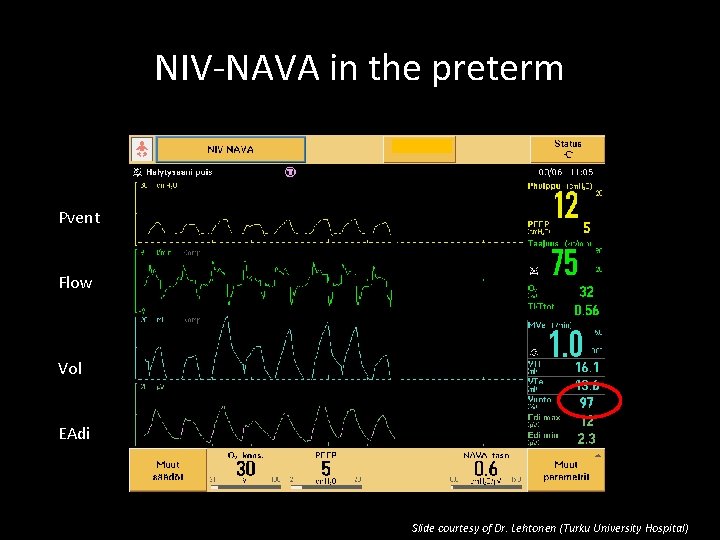
NIV-NAVA in the preterm Pvent Flow Vol EAdi Slide courtesy of Dr. Lehtonen (Turku University Hospital)
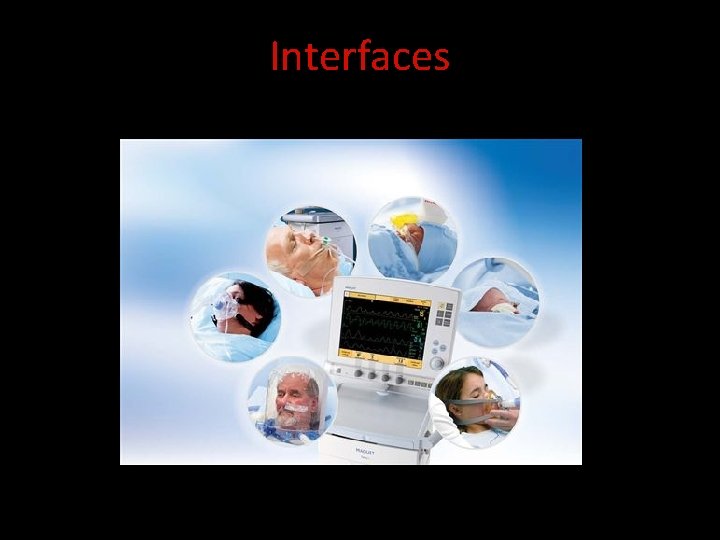
Interfaces
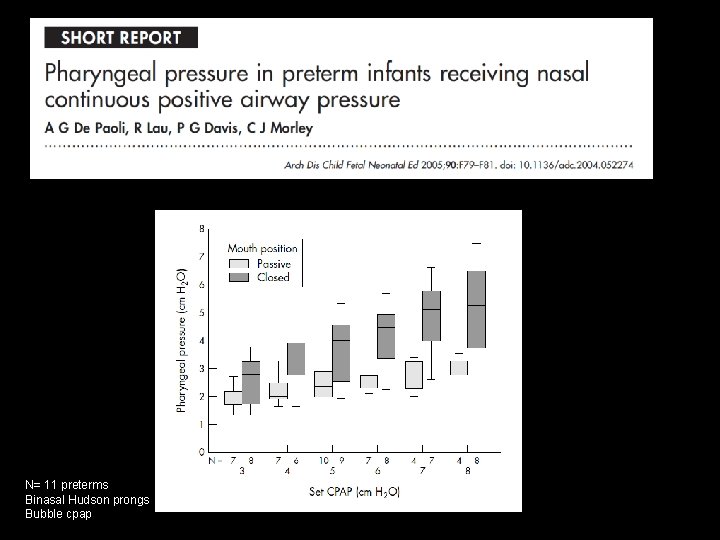
N= 11 preterms Binasal Hudson prongs Bubble cpap
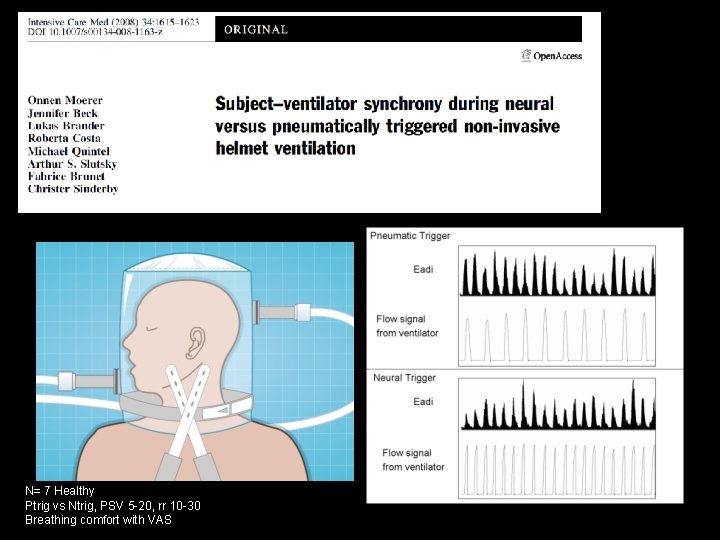
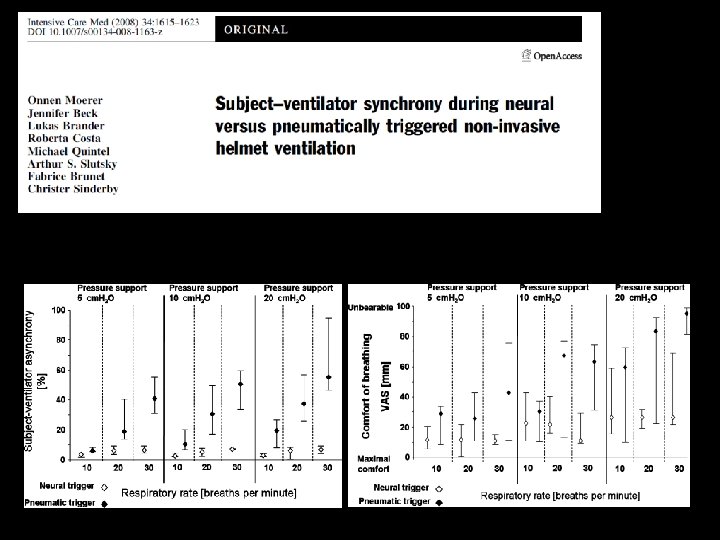
N= 7 Healthy Ptrig vs Ntrig, PSV 5 -20, rr 10 -30 Breathing comfort with VAS
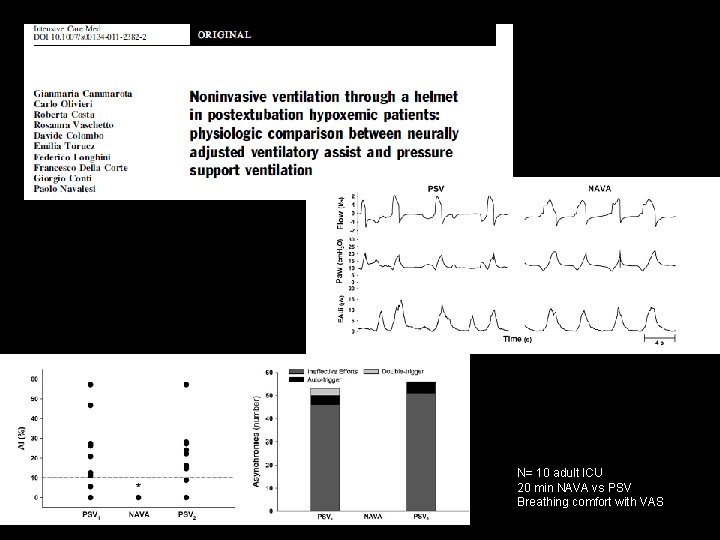
N= 10 adult ICU 20 min NAVA vs PSV Breathing comfort with VAS
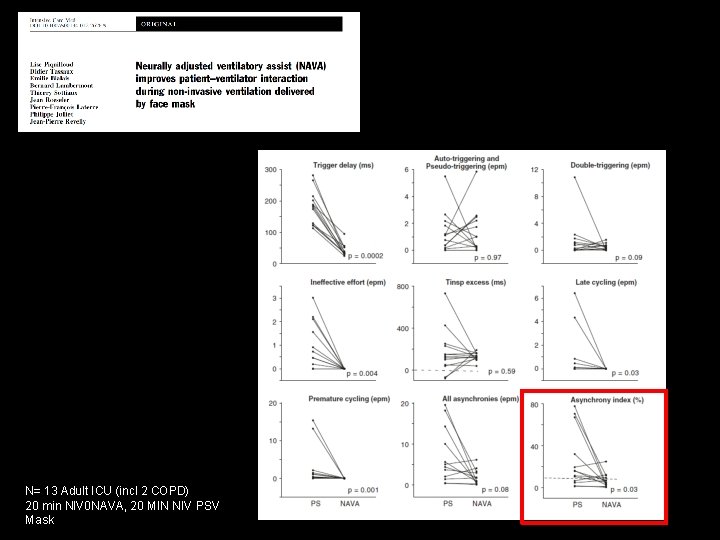
N= 13 Adult ICU (incl 2 COPD) 20 min NIV 0 NAVA, 20 MIN NIV PSV Mask
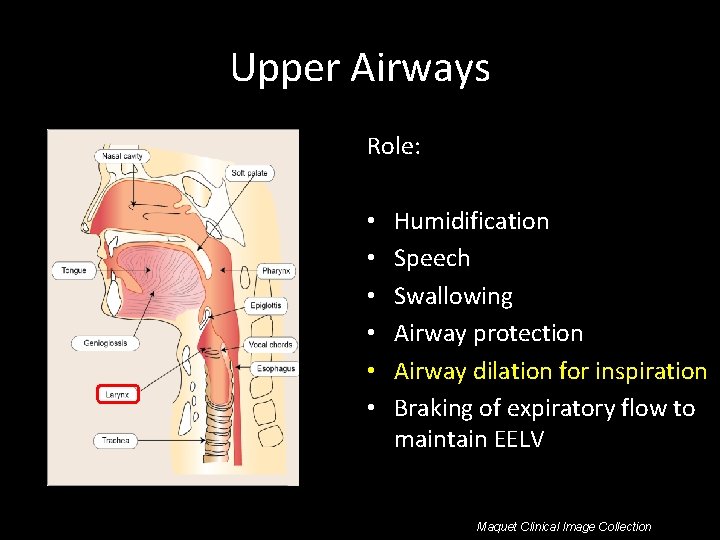
Upper Airways Role: • • • Humidification Speech Swallowing Airway protection Airway dilation for inspiration Braking of expiratory flow to maintain EELV Maquet Clinical Image Collection
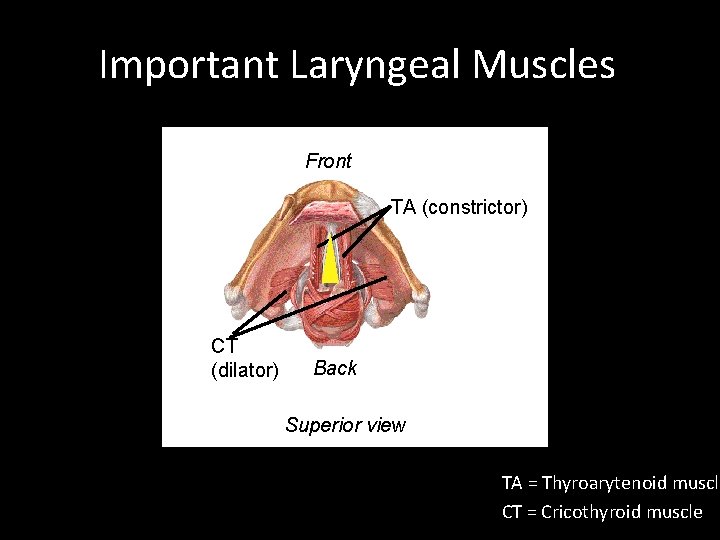
Important Laryngeal Muscles Front TA (constrictor) CT (dilator) Back Superior view TA = Thyroarytenoid muscle CT = Cricothyroid muscle
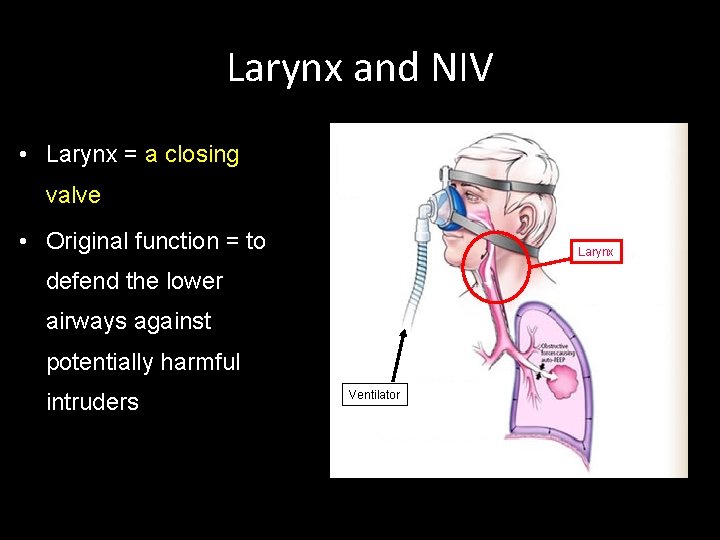
Larynx and NIV • Larynx = a closing valve • Original function = to Larynx defend the lower airways against potentially harmful intruders Ventilator
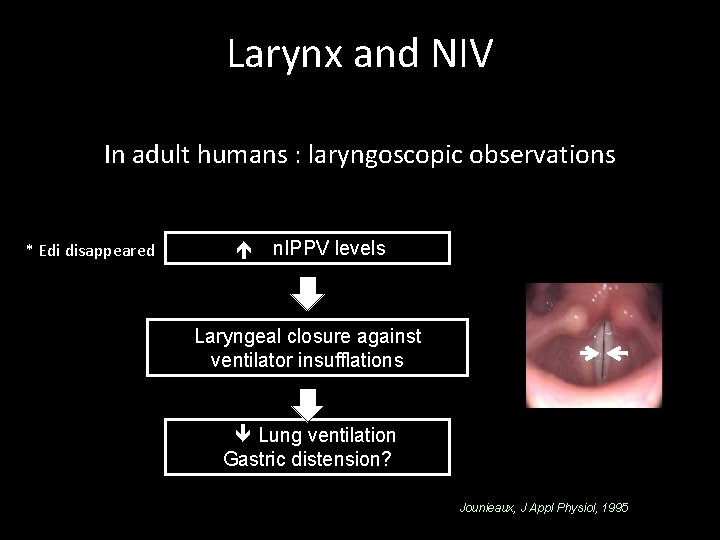
Larynx and NIV In adult humans : laryngoscopic observations * Edi disappeared n. IPPV levels Laryngeal closure against ventilator insufflations Lung ventilation Gastric distension? Jounieaux, J Appl Physiol, 1995
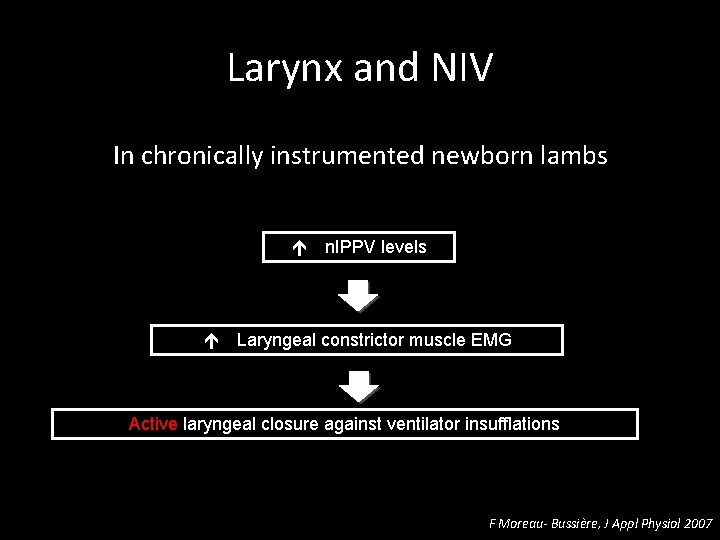
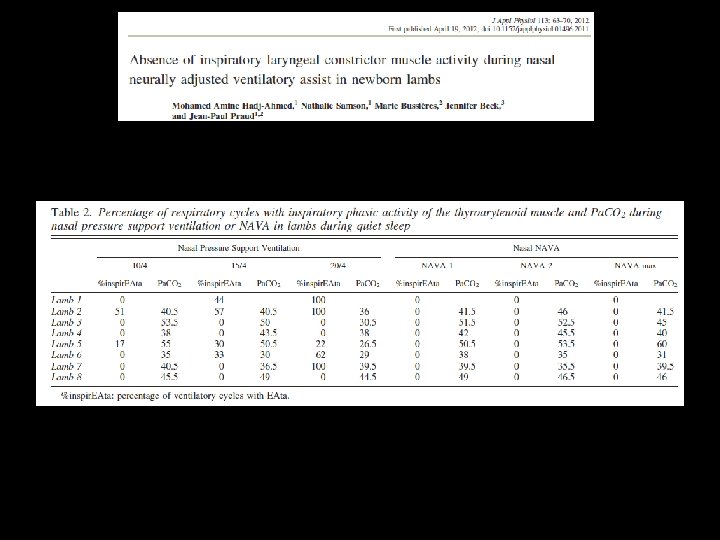
Larynx and NIV In chronically instrumented newborn lambs n. IPPV levels Laryngeal constrictor muscle EMG Active laryngeal closure against ventilator insufflations F Moreau- Bussière, J Appl Physiol 2007
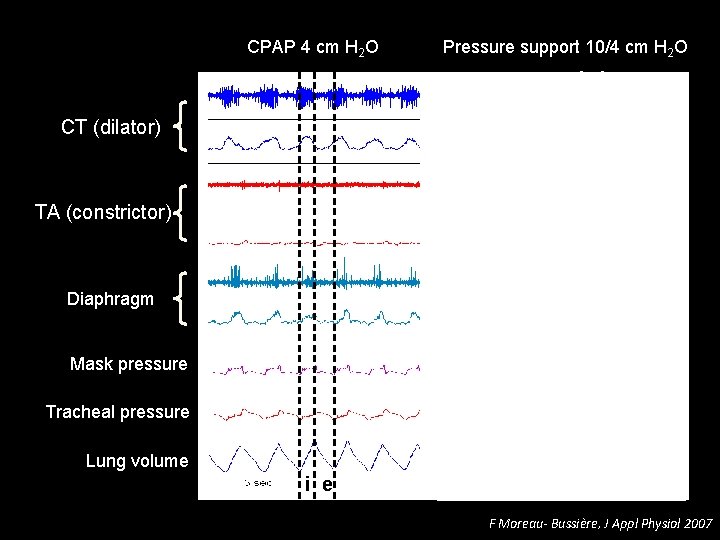
CPAP 4 cm H 2 O Pressure support 10/4 cm H 2 O CT (dilator) TA (constrictor) Diaphragm 10 Mask pressure 4 10 Tracheal pressure 4 Lung volume i e ii ee F Moreau- Bussière, J Appl Physiol 2007
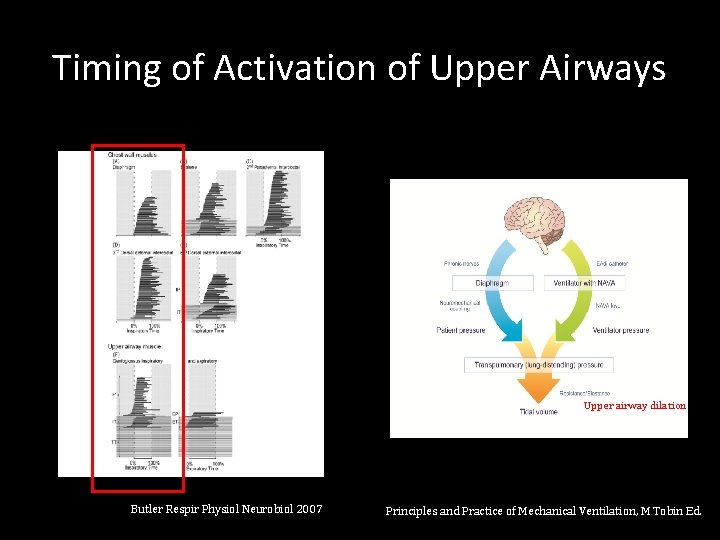
Timing of Activation of Upper Airways Upper airway dilation Butler Respir Physiol Neurobiol 2007 Principles and Practice of Mechanical Ventilation, M Tobin Ed.
Larynx during NIV-NAVA? Hypothesis: NIV-NAVA, offering a more physiological approach to assisting ventilation, would prevent activity of laryngeal constrictor muscle, contrary to n. PSV
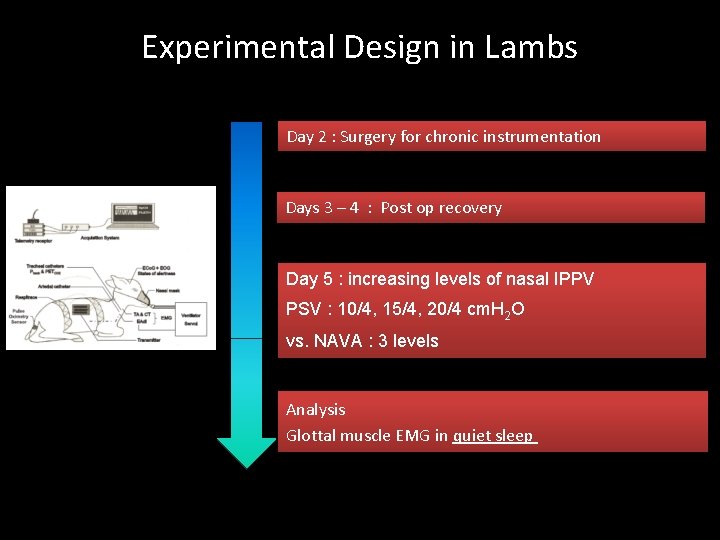
Experimental Design in Lambs Day 2 : Surgery for chronic instrumentation Days 3 – 4 : Post op recovery Day 5 : increasing levels of nasal IPPV PSV : 10/4, 15/4, 20/4 cm. H 2 O vs. NAVA : 3 levels Analysis Glottal muscle EMG in quiet sleep
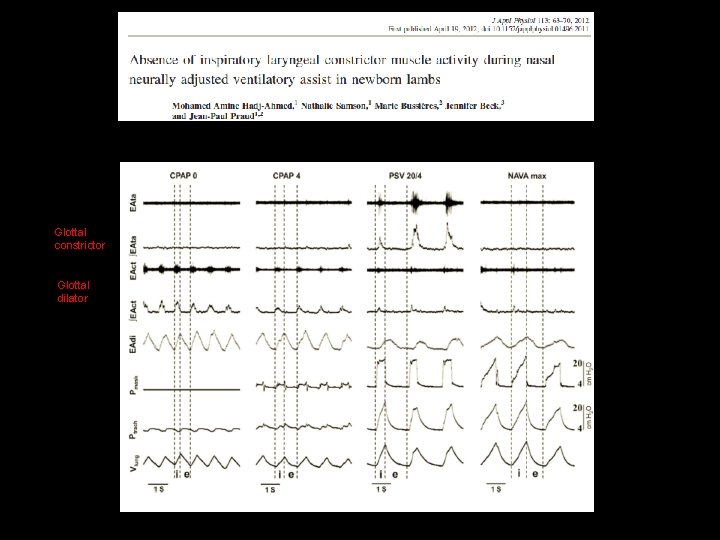
Glottal constrictor Glottal dilator
Conclusions • Using a controller signal that is not affected by leaks, can optimally synchronize the assist • Both leak, and interface resistance will affect pressure delivery and may need an increase in NAVA level • Edi useful for monitoring during NIV • Upper airways and NIV are integrated and necessary!
- Slides: 32