
Physiology of Marine Mammals Bob Gatten Emeritus Professor
Physiology of Marine Mammals Bob Gatten Emeritus Professor of Biology
Three Major Problems • 1. No lung ventilation for long periods
Three Major Problems • 1. No lung ventilation for long periods • 2. Cold water and high heat loss
Three Major Problems • 1. • 2. • 3. No lung ventilation for long periods Cold water and high heat loss High pressure at great depths
No Lung Ventilation • How long can you hold your breath underwater?

World Record for Static Apnea Stephane Mifsud, 2009 11 minutes, 35 sec
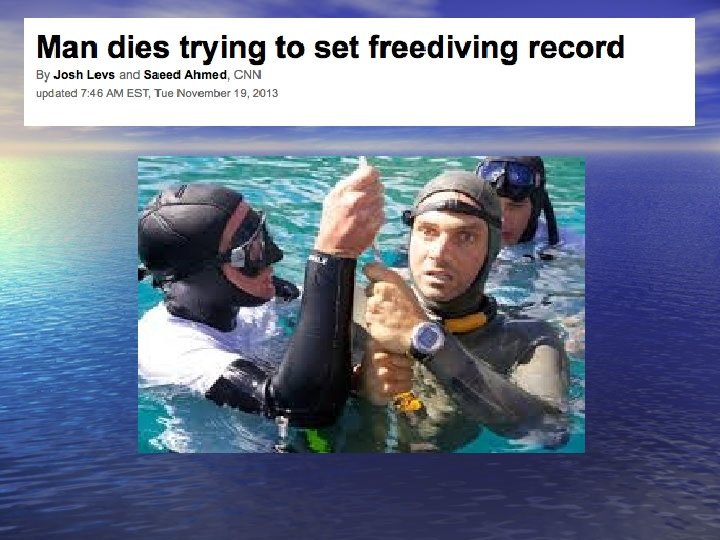
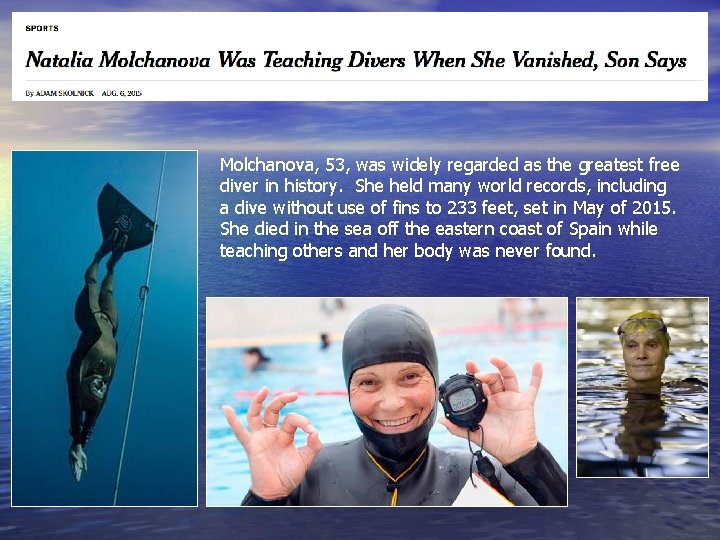
Molchanova, 53, was widely regarded as the greatest free diver in history. She held many world records, including a dive without use of fins to 233 feet, set in May of 2015. She died in the sea off the eastern coast of Spain while teaching others and her body was never found.
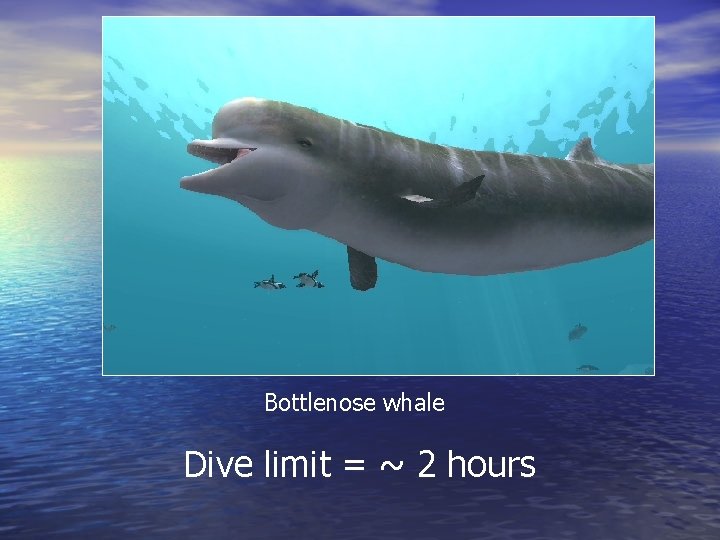
Bottlenose whale Dive limit = ~ 2 hours
Adaptations in Marine Mammals that prolong Dives • 1. Increased oxygen store a. Lungs?
Adaptations in Marine Mammals that prolong Dives • 1. Increased oxygen store a. Lungs – No b. Blood
Adaptations in Marine Mammals that prolong Dives • 1. Increased oxygen store a. Lungs – No b. Blood high red cell concentration high hemoglobin content of red cells high binding capacity of hemoglobin high blood volume
Adaptations in Marine Mammals that prolong Dives • 1. Increased oxygen store a. b. c. Lungs – No Blood Myoglobin
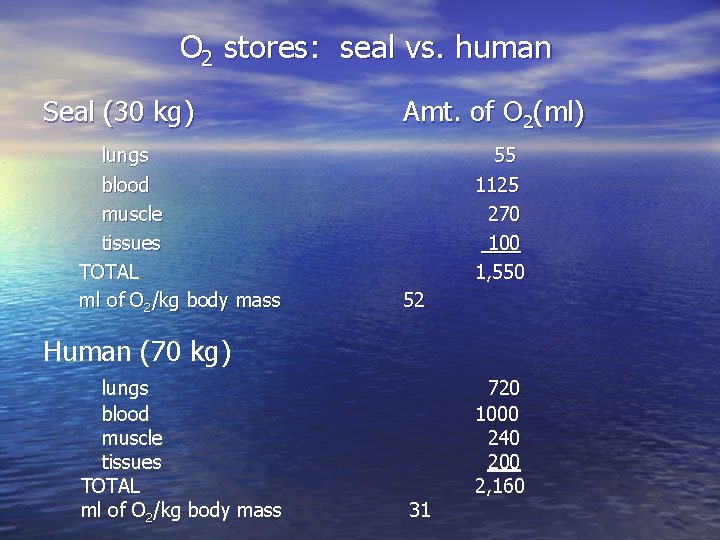
O 2 stores: seal vs. human Seal (30 kg) lungs blood muscle tissues TOTAL ml of O 2/kg body mass Amt. of O 2(ml) 55 1125 270 100 1, 550 52 Human (70 kg) lungs blood muscle tissues TOTAL ml of O 2/kg body mass 31 720 1000 240 200 2, 160
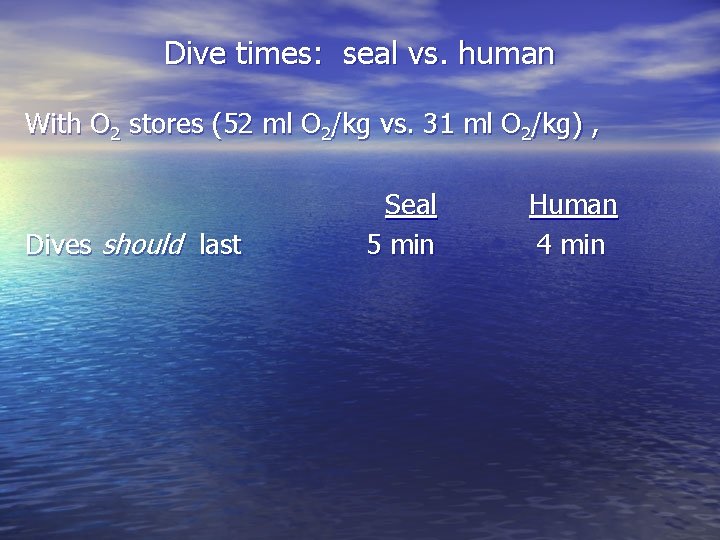
Dive times: seal vs. human With O 2 stores (52 ml O 2/kg vs. 31 ml O 2/kg) , Dives should last Seal 5 min Human 4 min
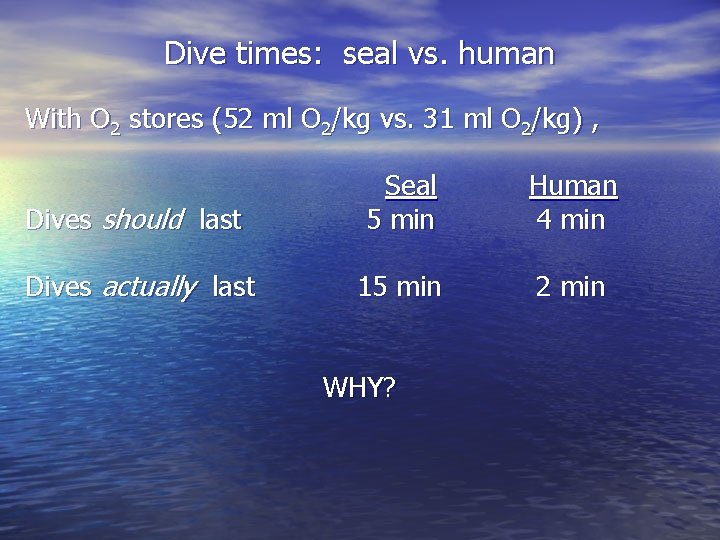
Dive times: seal vs. human With O 2 stores (52 ml O 2/kg vs. 31 ml O 2/kg) , Dives should last Seal 5 min Human 4 min Dives actually last 15 min 2 min WHY?
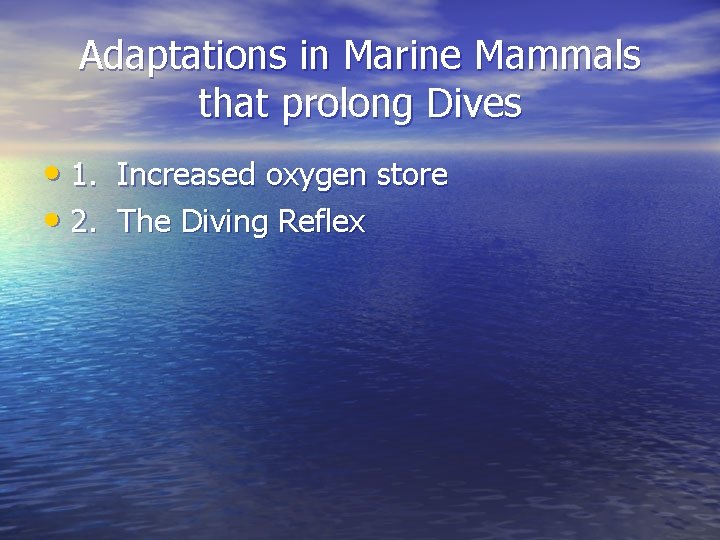
Adaptations in Marine Mammals that prolong Dives • 1. Increased oxygen store • 2. The Diving Reflex
Adaptations in Marine Mammals that prolong Dives • 1. Increased oxygen store • 2. The Diving Reflex • Bradycardia
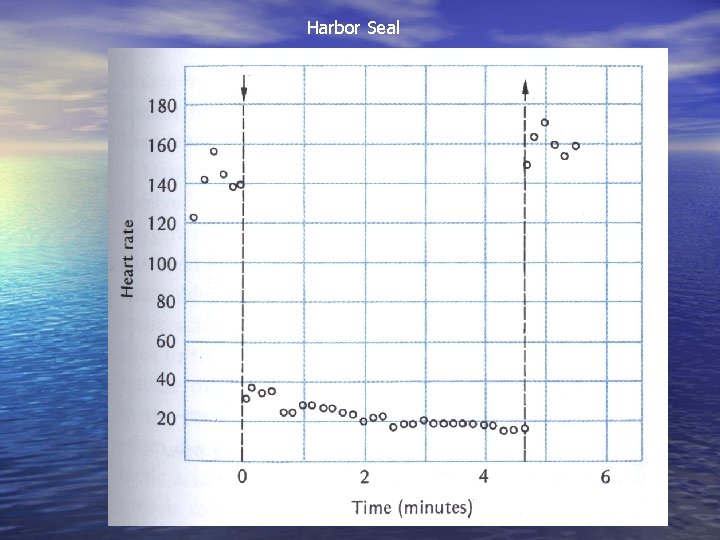
Harbor Seal
Adaptations in Marine Mammals that prolong Dives • 1. Increased oxygen store • 2. The Diving Reflex • Bradycardia • Peripheral vasoconstriction
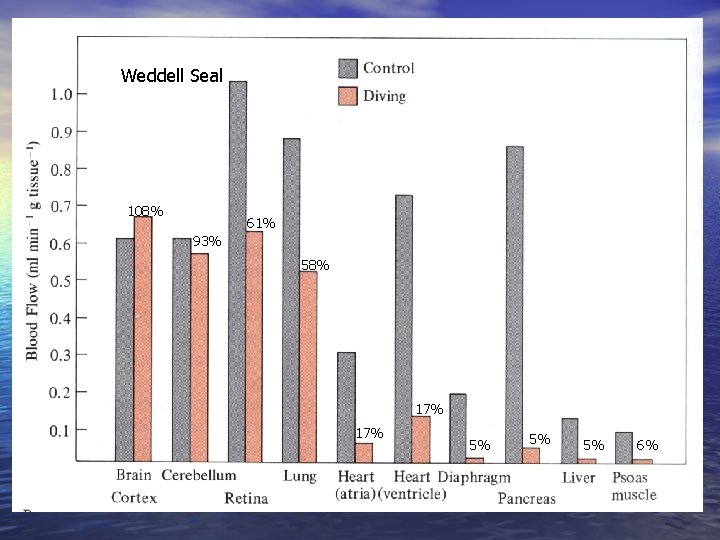
Weddell Seal 108% 61% 93% 58% 17% 5% 5% 5% 6%
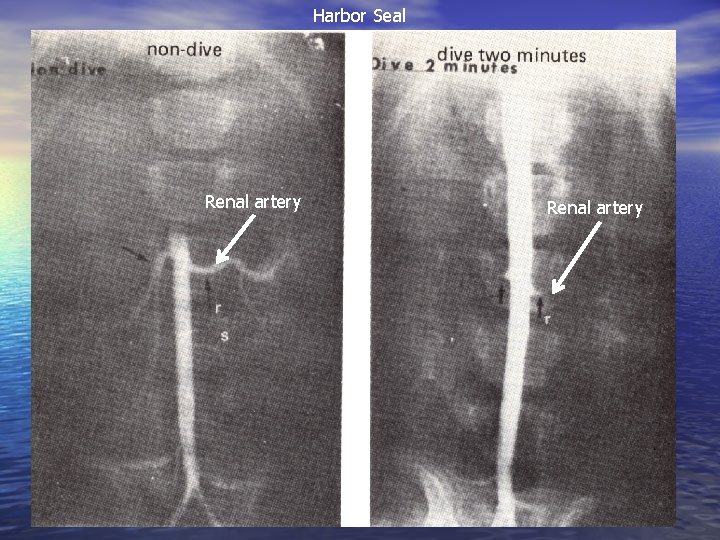
Harbor Seal Renal artery
Adaptations in Marine Mammals that prolong Dives • 1. Increased oxygen store • 2. The Diving Reflex • Bradycardia • Peripheral vasoconstriction • Oxygen stores saved for use by CNS
Adaptations in Marine Mammals that prolong Dives • 1. Increased oxygen store • 2. The Diving Reflex • Bradycardia • Peripheral vasoconstriction • Oxygen stores saved for use by CNS • Reliance on anaerobic metabolism by muscles and viscera
Adaptations in Marine Mammals that prolong Dives • 1. • 2. • 3. Increased oxygen store The Diving Reflex Unpowered descent
Three Major Problems • 1. No lung ventilation for long periods • 2. Cold water and high heat loss
Mammals in Cold Water • As much as 40°C difference between body core and water • Water with high heat capacity • Thus, potential for very high heat loss
Mammals in Cold Water • As much as 40°C difference between body core and water • Water with high heat capacity • Thus, potential for very high heat loss • To keep Tb constant, keep HG = HL • Either raise HG or lower HL Raising HG is very costly
Mammals in Cold Water Adaptations to lower heat loss o. High insulation from fur
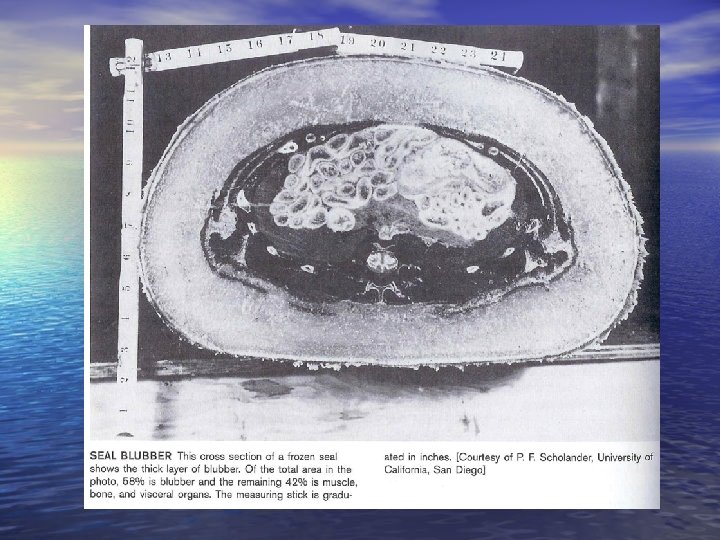
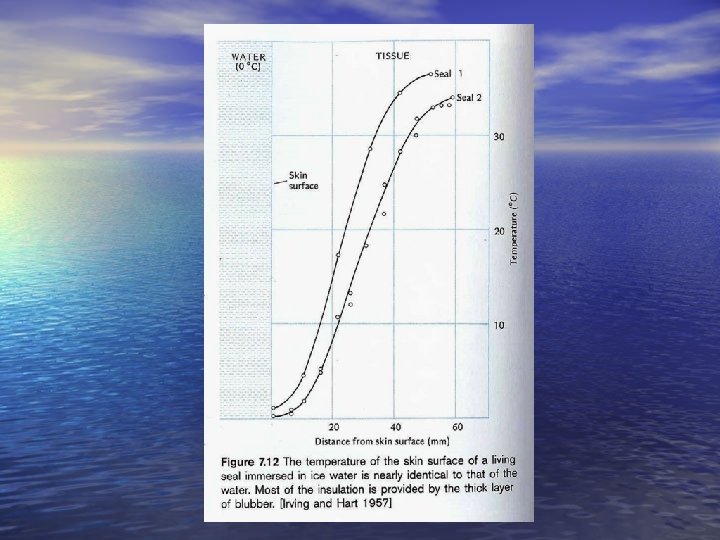
Mammals in Cold Water Adaptations to lower heat loss o. High insulation from fur o. High insulation from blubber
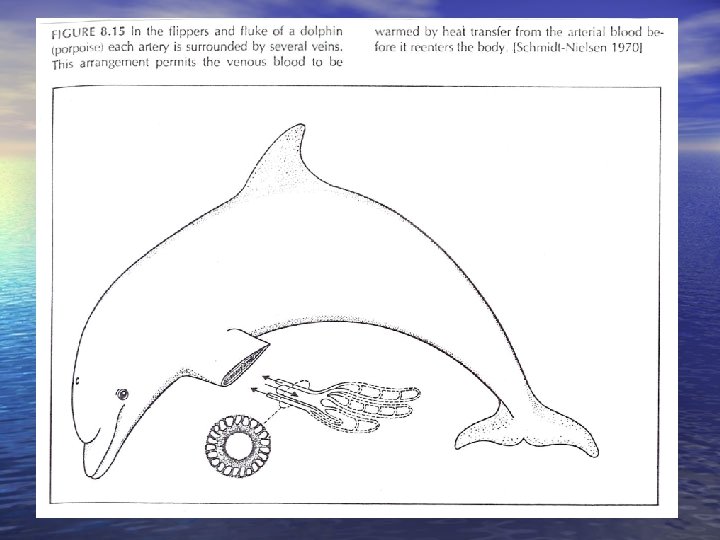
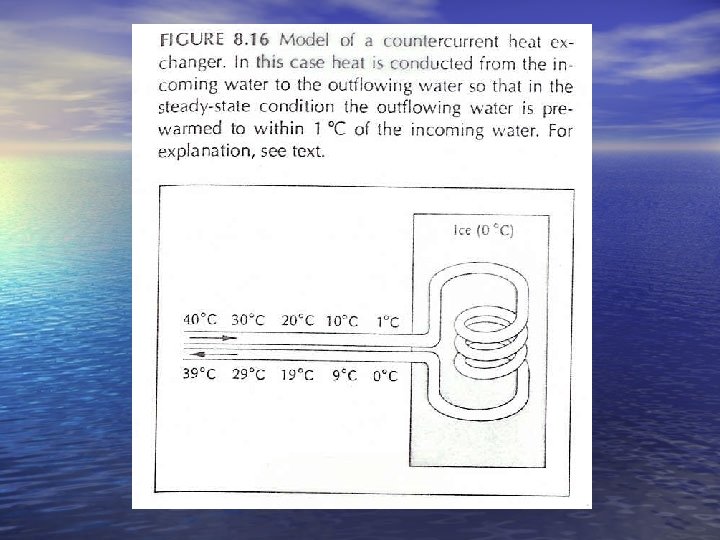
Mammals in Cold Water Adaptations to lower heat loss o. High insulation from fur o. High insulation from blubber o. Reduced blood flow in appendages o. Countercurrent heat exchange
Three Major Problems • 1. • 2. • 3. No lung ventilation for long periods Cold water and high heat loss High pressure at great depths

• The Bends in human divers

• The Bends in human divers During descent and at depth, nitrogen forced under high pressure from lungs into body fluids.
• The Bends in human divers During descent and at depth, nitrogen forced under high pressure from lungs into body fluids. During ascent, nitrogen comes out of solution and forms bubbles in tissues and capillaries, causing pain and blocking blood flow.
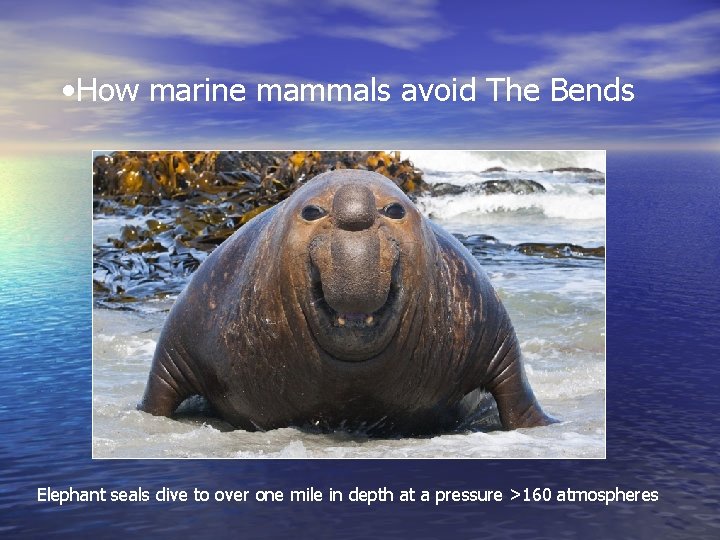
• How marine mammals avoid The Bends Elephant seals dive to over one mile in depth at a pressure >160 atmospheres
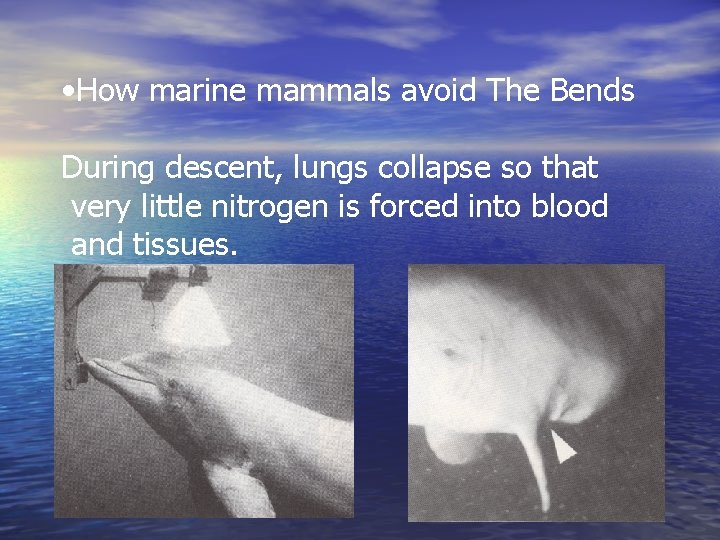
• How marine mammals avoid The Bends During descent, lungs collapse so that very little nitrogen is forced into blood and tissues.
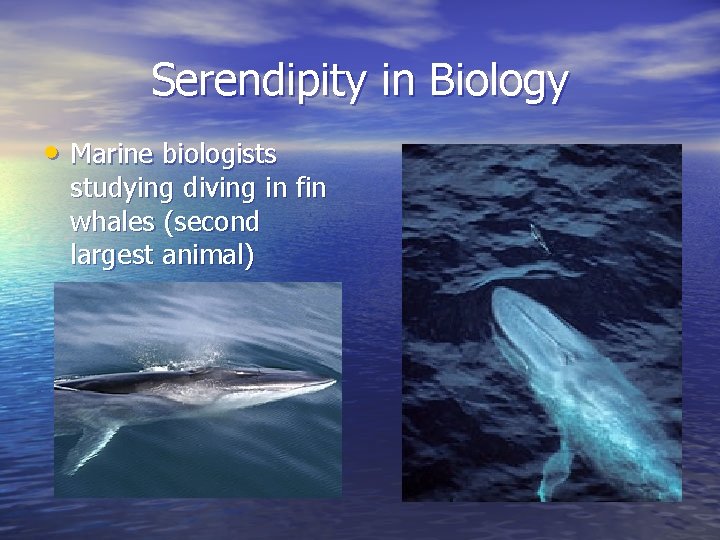
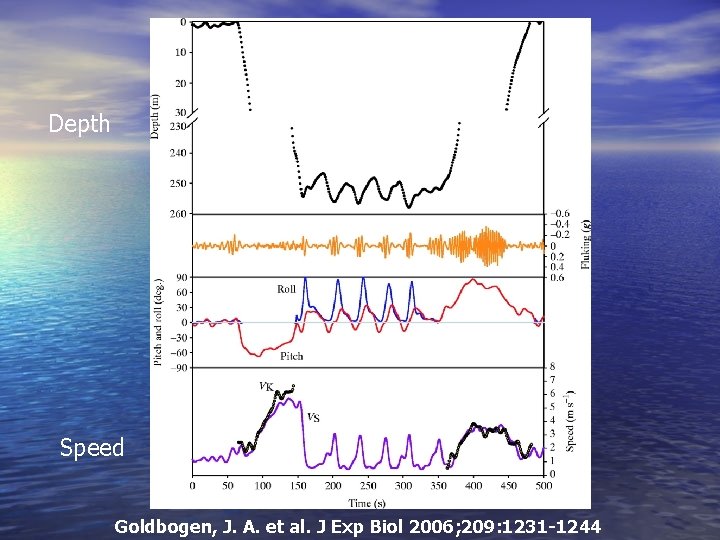
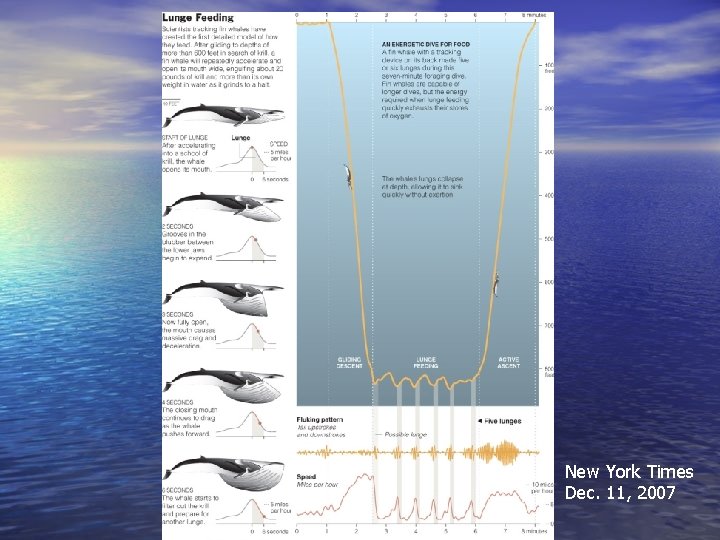
Serendipity in Biology • Marine biologists studying diving in fin whales (second largest animal)
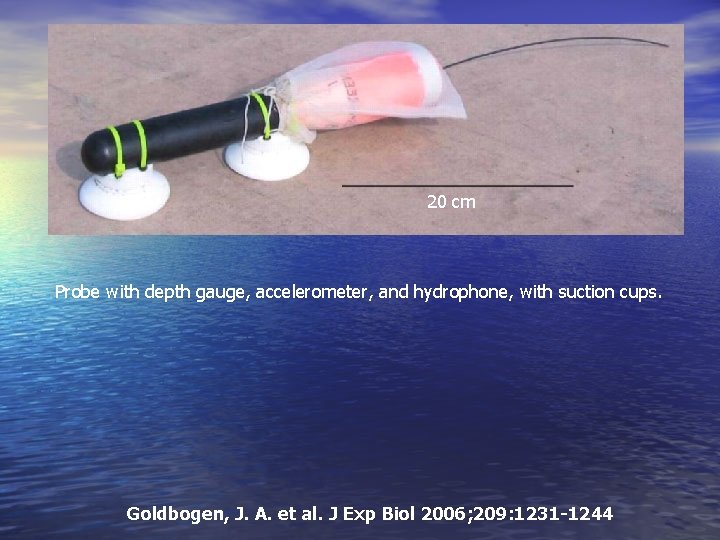
20 cm Probe with depth gauge, accelerometer, and hydrophone, with suction cups. Goldbogen, J. A. et al. J Exp Biol 2006; 209: 1231 -1244
Depth Speed Goldbogen, J. A. et al. J Exp Biol 2006; 209: 1231 -1244
New York Times Dec. 11, 2007
- Slides: 45