
PHYSIOLOGY OF HIGH ALTITUDE DR RASHMI TIWARI INTRODUCTION

- Slides: 37
PHYSIOLOGY OF HIGH ALTITUDE DR RASHMI TIWARI
INTRODUCTION • High altitude is the region of earth located at an altitude of above 8, 000 feet from mean sea level • People can ascend up to this level, without any adverse effect
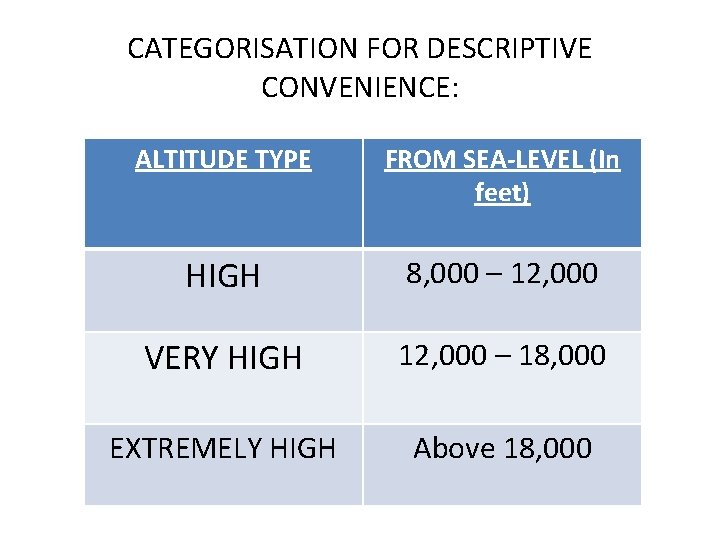
CATEGORISATION FOR DESCRIPTIVE CONVENIENCE: ALTITUDE TYPE FROM SEA-LEVEL (In feet) HIGH 8, 000 – 12, 000 VERY HIGH 12, 000 – 18, 000 EXTREMELY HIGH Above 18, 000
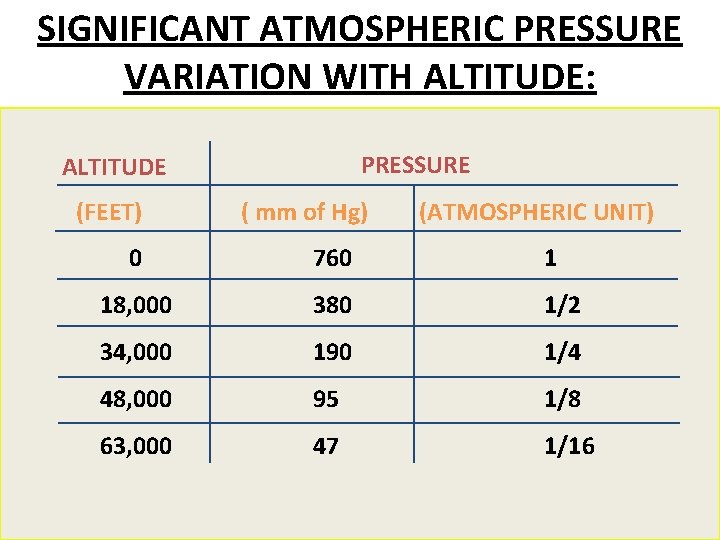
SIGNIFICANT ATMOSPHERIC PRESSURE VARIATION WITH ALTITUDE: PRESSURE ALTITUDE (FEET) ( mm of Hg) (ATMOSPHERIC UNIT) 0 760 1 18, 000 380 1/2 34, 000 190 1/4 48, 000 95 1/8 63, 000 47 1/16
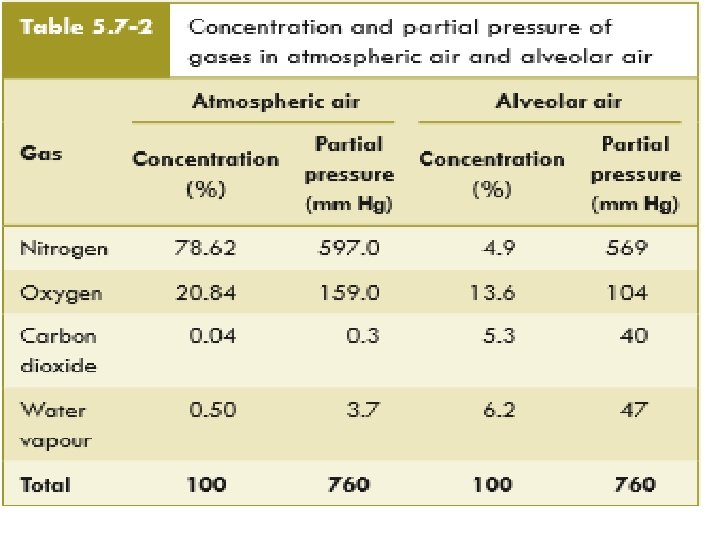
BAROMETRIC PRESSURE AND PARTIAL PRESSURE OF GASES. • Barometric pressure at sea level is 760 mm Hg and it falls progressively with the increasing height. • With decrease in total pressure of air at increasing altitude partial pressure of gases will change.
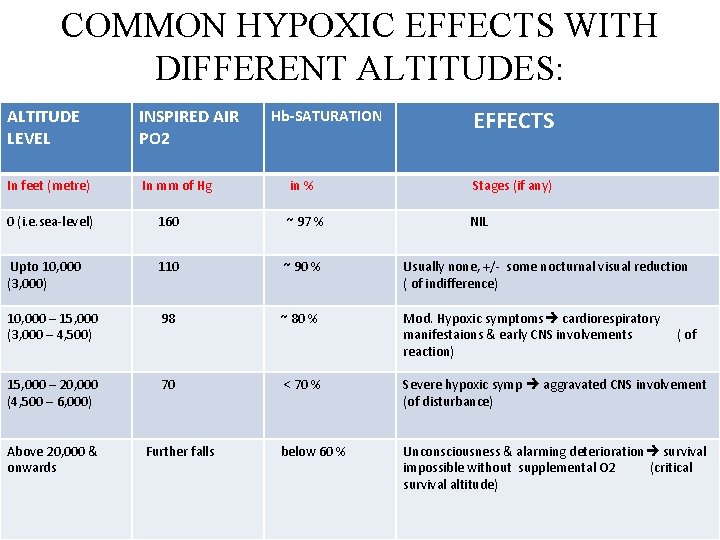
COMMON HYPOXIC EFFECTS WITH DIFFERENT ALTITUDES: ALTITUDE LEVEL INSPIRED AIR PO 2 In feet (metre) In mm of Hg Hb-SATURATION EFFECTS in % Stages (if any) NIL 0 (i. e. sea-level) 160 ~ 97 % Upto 10, 000 (3, 000) 110 ~ 90 % Usually none, +/- some nocturnal visual reduction ( of indifference) 10, 000 – 15, 000 (3, 000 – 4, 500) 98 ~ 80 % Mod. Hypoxic symptoms cardiorespiratory manifestaions & early CNS involvements reaction) 15, 000 – 20, 000 (4, 500 – 6, 000) 70 < 70 % Severe hypoxic symp aggravated CNS involvement (of disturbance) below 60 % Unconsciousness & alarming deterioration survival impossible without supplemental O 2 (critical survival altitude) Above 20, 000 & onwards Further falls ( of
HYPOXIA AT HIGH ALTITUDE • The effects of hypoxic hypoxia produced by decreasing p. O 2 at high altitude depend upon: • The level of altitude, • The rate at which hypoxia develops, i. e. hypoxia occurs due to a rapid ascent (acute hypoxia) or slow ascent (subacute hypoxia) and • Duration of exposure to hypoxia, i. e. whether shortterm stay or long-term stay (chronic hypoxia).
ALTITUDES & HEIGHTS • Normally most people on earth stay at around the Mean Sea Level (MSL) • However, groups of people stay at higher than normal attitudes. • The Sherpas, a mountain tribe of Himalayas live at around 5500 Meters above MSL, normally. • When people living around MSL go up to higher altitudes, changes occur in their physiology, especially in Respiration.
BAROMETRIC PRESSURE CHANGES IN HIGH ALTITUDE • As the altitude increases above the sea level, the corresponding atmospheric pressure decreases. • The partial pressure of Oxygen also decreases. • The arterial Oxygen saturation levels also decrease with increase in the altitude.
STAGES OF HYPOXIC HYPOXIA • In a classical mould four stages of hypoxic hypoxia depending upon the value of p. O 2 are described • 1. Stage of indifference is usually characterized by no symptoms of hypoxia as p. O 2 remains above 60 mm Hg. This occurs up to 10, 000 ft altitude.
CONTD. . . • Stage of reaction starts above 10, 000 ft altitude and is characterized by development of moderate hypoxia up to 15, 000 ft altitude at p. O 2 of 40– 60 mm Hg. • Hypoxic symptoms include: -Cardiovascular involvement in the form of tachycardia and hypertension.
CONTD. . • Respiratory symptoms in the form of increased pulmonary ventilation and Early central nervous system (CNS) involvement in the form of impaired judgement, feeling of overconfidence, talkativeness, reduction in visual acuity and emotional outburst of laughing or crying
CONTD. . . • Stage of disturbance occurs when p. O 2 values fall between 30 and 40 mm Hg, usually between 15, 000 and 20, 000 ft altitude. It is characterized by the development of severe hypoxia. • In addition to the symptoms described above, the CNS involvement is aggravated.
ACUTE EFFECTS OF HYPOXIA • As the altitude increases, the barometric pressure decreases. • This causes a handicap which may be: – Appreciable – Considerable – Serious – Causing Imminent Collapse
High-altitude pulmonary oedema • High-altitude pulmonary oedema (HAPO) usually occurs as an effect of a rapid ascent at high altitude (above 10, 000 ft). • It is usually seen in individuals who engage in heavy physical work during first 3– 4 days after a rapid ascent to high altitude due to sympathetic stimulation caused by hypoxia
Characteristics of HAPO • It responds to rest and O 2 therapy because it occurs due to aggravation of hypoxia and not due to cardiovascular or lung disease. • It is associated with an increased pulmonary artery pressure, so it also responds to calcium channel blockers such as nifedipine, which lowers the pulmonary artery pressure
ACUTE MOUNTAIN SICKNESS • This occurs in a small number of lowlanders who ascend rapidly to high altitudes. • Begins from a few hours up to 2 days after their ascent. • The symptoms develop 8– 24 hours after arrival at high altitude and last for 4– 8 days. • Is serious and results in their death unless they are given Oxygen or taken to a low altitude.
ACUTE MOUNTAIN SICKNESS : SYMPTOMS & SIGNS • Acute Cerebral Edema: – Hypoxia causes cerebral vasodilatation – Increases capillary pressure – Causes fluid to leak out into the tissues – This leads to cerebral edema causing: • Severe disorientation • Other cerebral dysfunctions
TREATMENT. • The symptoms of acute mountain sickness can be reduced by: • Decreasing cerebral oedema by the administration of large doses of glucocorticoids, and by • Decreasing alkalosis by administration of acetazolamide. Acetazolamide decreases H+ excretion through kidneys by inhibiting the enzyme carbonic anhydrase.
CHRONIC MOUNTAIN SICKNESS • • Seen in people who reside for long at high altitudes. Red cell number and mass increases exceptionally. Pulmonary arterial pressure becomes very high. The heart becomes enlarged in the right side. The peripheral arterial pressure begins to fall Congestive Cardiac failure & death follows They need to be taken to low altitudes as soon as possible. They recover in low altitudes within days or weeks.
• PHYSIOLOGICAL COMPENSATORY RESPONSES TO HIGH ALTITUDE HYPOXIA • Two types of physiological compensatory responses known to occur in the individuals exposed to high-altitude hypoxia are accommodation and acclimatization
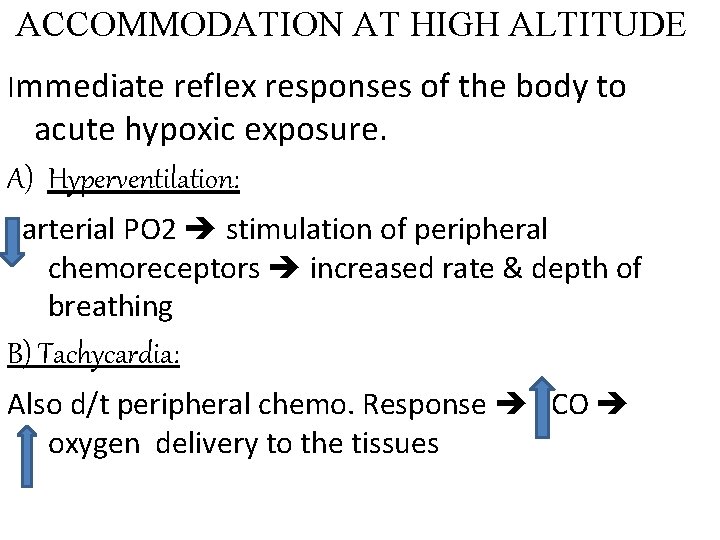
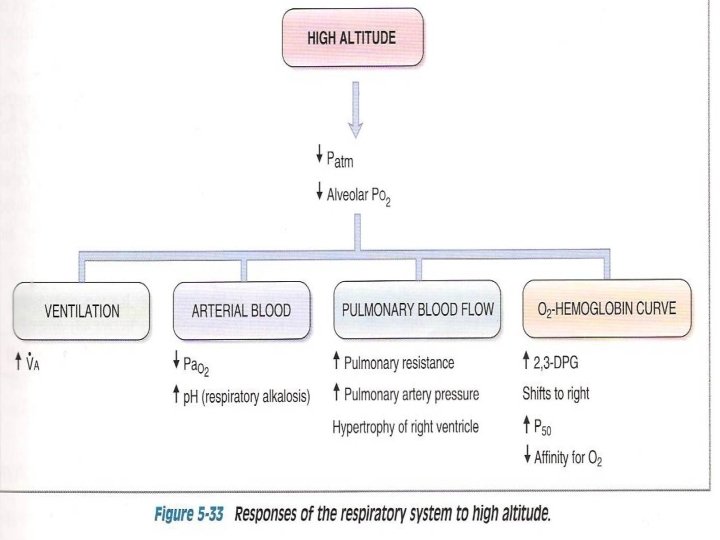
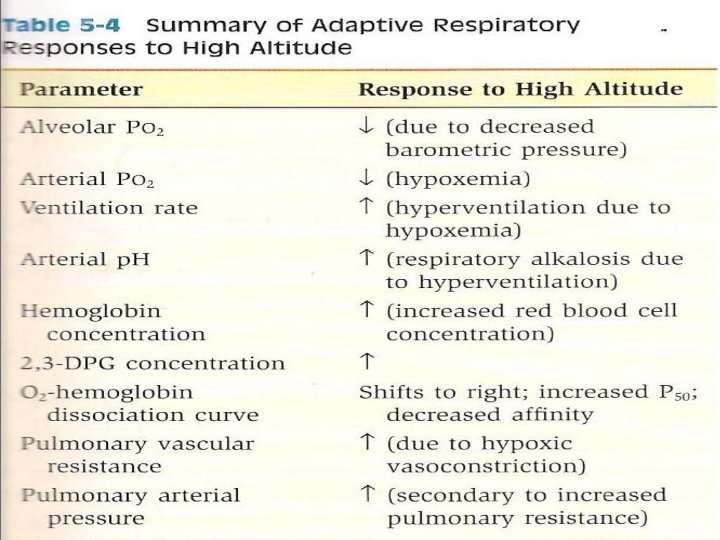
ACCOMMODATION AT HIGH ALTITUDE Immediate reflex responses of the body to acute hypoxic exposure. A) Hyperventilation: arterial PO 2 stimulation of peripheral chemoreceptors increased rate & depth of breathing B) Tachycardia: Also d/t peripheral chemo. Response CO oxygen delivery to the tissues
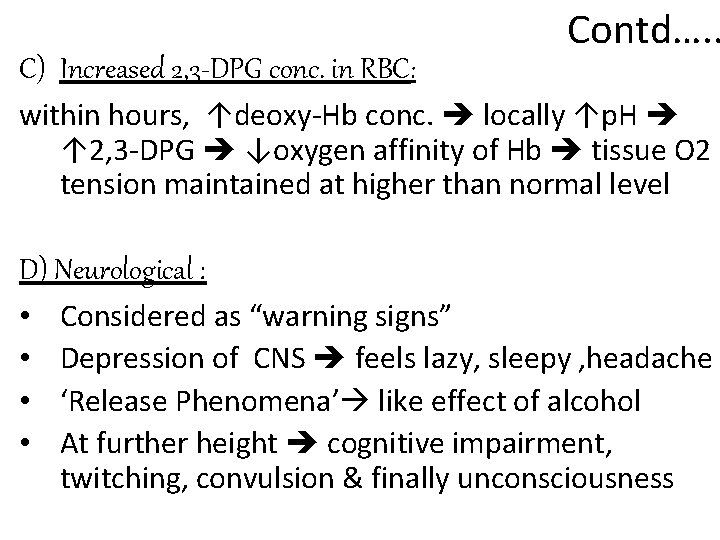
C) Increased 2, 3 -DPG conc. in RBC: Contd…. . within hours, ↑deoxy-Hb conc. locally ↑p. H ↑ 2, 3 -DPG ↓oxygen affinity of Hb tissue O 2 tension maintained at higher than normal level D) Neurological : • • Considered as “warning signs” Depression of CNS feels lazy, sleepy , headache ‘Release Phenomena’ like effect of alcohol At further height cognitive impairment, twitching, convulsion & finally unconsciousness
ACCLIMATIZATION • “Getting used to…” • People remaining at high altitudes for days, weeks or years become more and more acclimatized to low PO 2. • This causes the hypoxia to cause fewer deleterious effects on their bodies. • They can thus work harder at higher altitudes without hypoxic effects.
HOW DOES ACCLIMATIZATION OCCUR? • Increased : – Pulmonary ventilation. – Number of RBCs ( Hypoxia causes excess erythropoiesis). – Diffusing capacity of the lungs. – Vascularity of the peripheral tissues – Ability of the tissue cells to use Oxygen despite low PO 2.
NATURAL ACCLIMATIZATION • This occurs in people living from their birth at high altitudes. • Those living in the Andes & Himalayan mountains, for instance. • Acclimatization begins in them in infancy. • The chest size is greatly increased. • Their hearts are considerably larger than those of lowlanders
PHYSIOLOGICAL RESPONSES TO HIGH ALTITUDE HYPOXIA: • Arbitrarily Divided into following two--I) Acute responses (aka accommodation) II) Long term responses ( aka acclimatization) • “Arbitrary” because ---i) Acute are also beneficial for long-term coping up. ii) Acute are modified steadily & imperceptibly in such a way that after 2 -3 days are considered as beginninng of acclimatization. iii) Sharpness of division depends on rate of ascent.
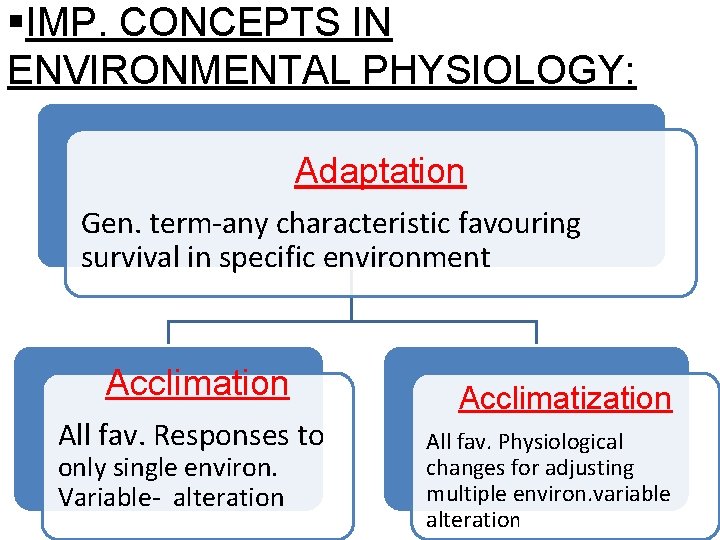
§IMP. CONCEPTS IN ENVIRONMENTAL PHYSIOLOGY: Adaptation Gen. term-any characteristic favouring survival in specific environment Acclimation All fav. Responses to only single environ. Variable- alteration Acclimatization All fav. Physiological changes for adjusting multiple environ. variable alteration
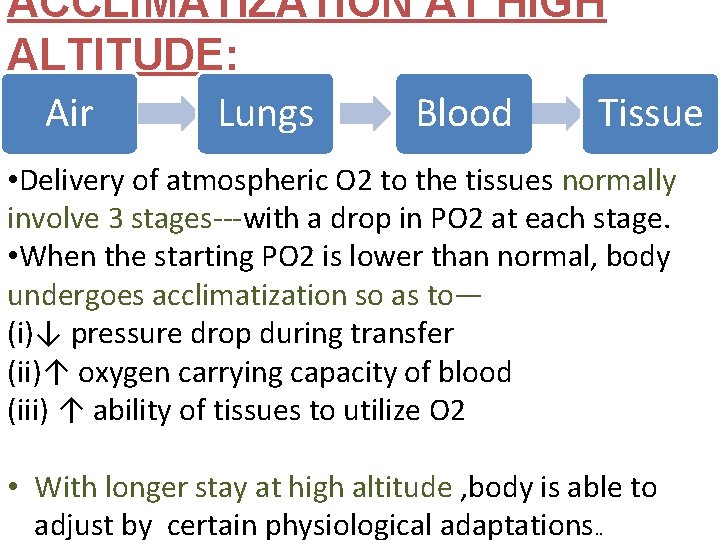
ACCLIMATIZATION AT HIGH ALTITUDE: Air Lungs Blood Tissue • Delivery of atmospheric O 2 to the tissues normally involve 3 stages---with a drop in PO 2 at each stage. • When the starting PO 2 is lower than normal, body undergoes acclimatization so as to— (i)↓ pressure drop during transfer (ii)↑ oxygen carrying capacity of blood (iii) ↑ ability of tissues to utilize O 2 • With longer stay at high altitude , body is able to adjust by certain physiological adaptations. .
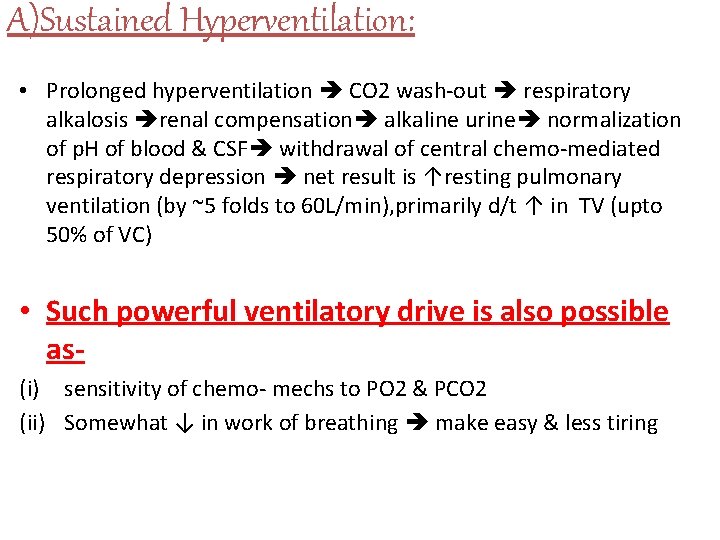
A)Sustained Hyperventilation: • Prolonged hyperventilation CO 2 wash-out respiratory alkalosis renal compensation alkaline urine normalization of p. H of blood & CSF withdrawal of central chemo-mediated respiratory depression net result is ↑resting pulmonary ventilation (by ~5 folds to 60 L/min), primarily d/t ↑ in TV (upto 50% of VC) • Such powerful ventilatory drive is also possible as(i) sensitivity of chemo- mechs to PO 2 & PCO 2 (ii) Somewhat ↓ in work of breathing make easy & less tiring
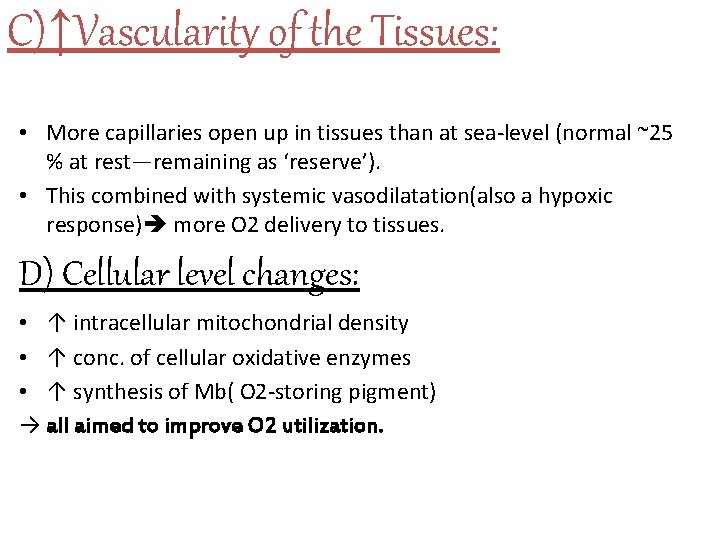
C)↑Vascularity of the Tissues: • More capillaries open up in tissues than at sea-level (normal ~25 % at rest—remaining as ‘reserve’). • This combined with systemic vasodilatation(also a hypoxic response) more O 2 delivery to tissues. D) Cellular level changes: • ↑ intracellular mitochondrial density • ↑ conc. of cellular oxidative enzymes • ↑ synthesis of Mb( O 2 -storing pigment) → all aimed to improve O 2 utilization.
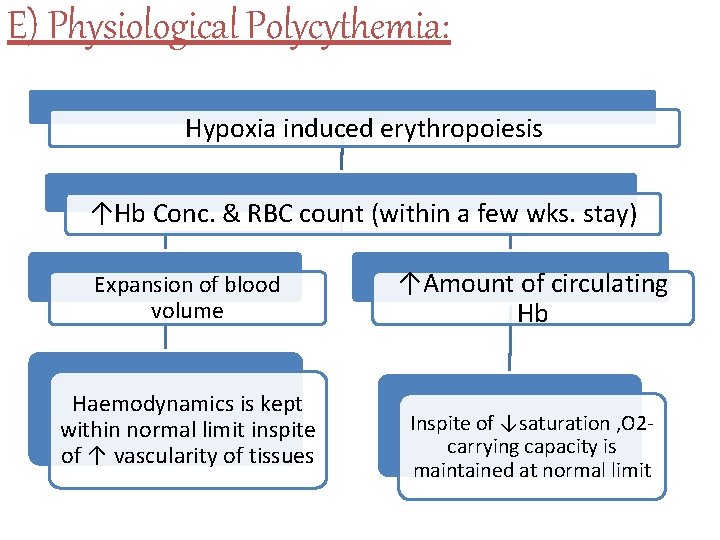
E) Physiological Polycythemia: Hypoxia induced erythropoiesis ↑Hb Conc. & RBC count (within a few wks. stay) Expansion of blood volume Haemodynamics is kept within normal limit inspite of ↑ vascularity of tissues ↑Amount of circulating Hb Inspite of ↓saturation , O 2 carrying capacity is maintained at normal limit
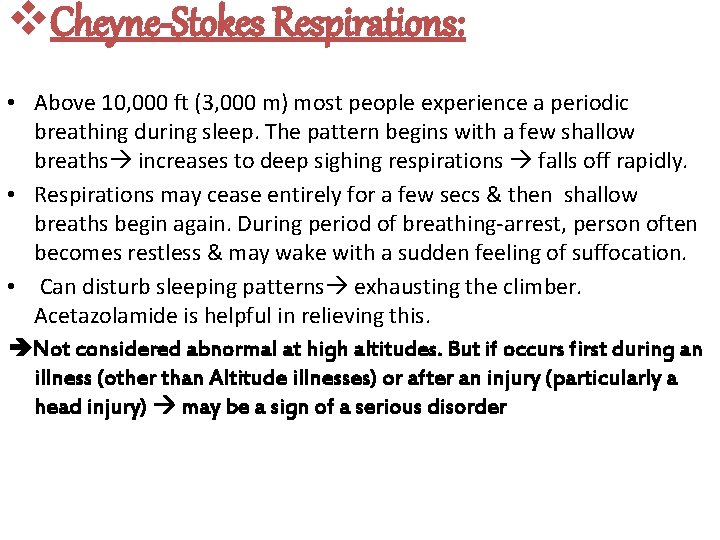
v. Cheyne-Stokes Respirations: • Above 10, 000 ft (3, 000 m) most people experience a periodic breathing during sleep. The pattern begins with a few shallow breaths increases to deep sighing respirations falls off rapidly. • Respirations may cease entirely for a few secs & then shallow breaths begin again. During period of breathing-arrest, person often becomes restless & may wake with a sudden feeling of suffocation. • Can disturb sleeping patterns exhausting the climber. Acetazolamide is helpful in relieving this. Not considered abnormal at high altitudes. But if occurs first during an illness (other than Altitude illnesses) or after an injury (particularly a head injury) may be a sign of a serious disorder.
THANK YOU