
PHYSIOLOGY OF HEARING SAURABH MARU ASSISTANT PROFESSOR SCHOOL

PHYSIOLOGY OF HEARING SAURABH MARU ASSISTANT PROFESSOR SCHOOL OF PHARMACY & TECHNOLOGY MANAGEMENT, SVKM’S NMIMS, SHIRPUR
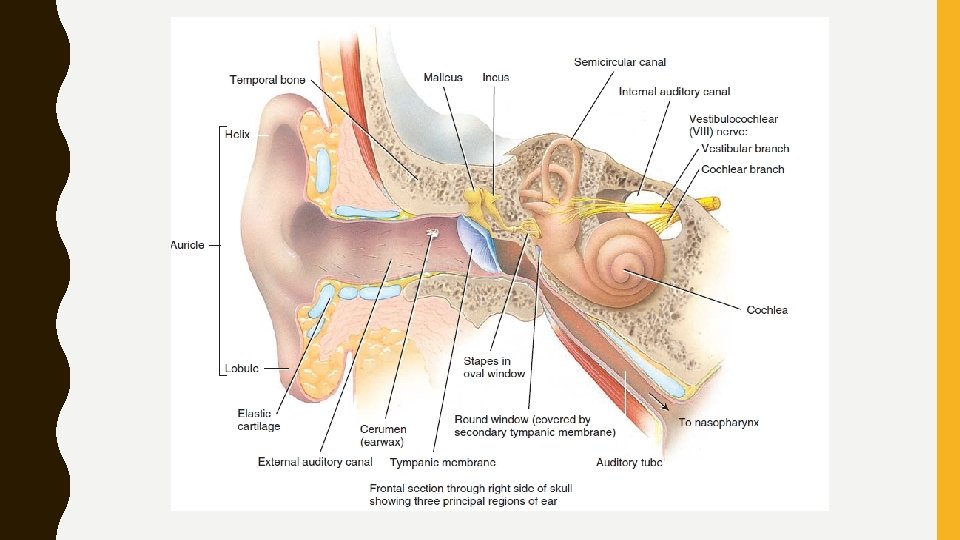
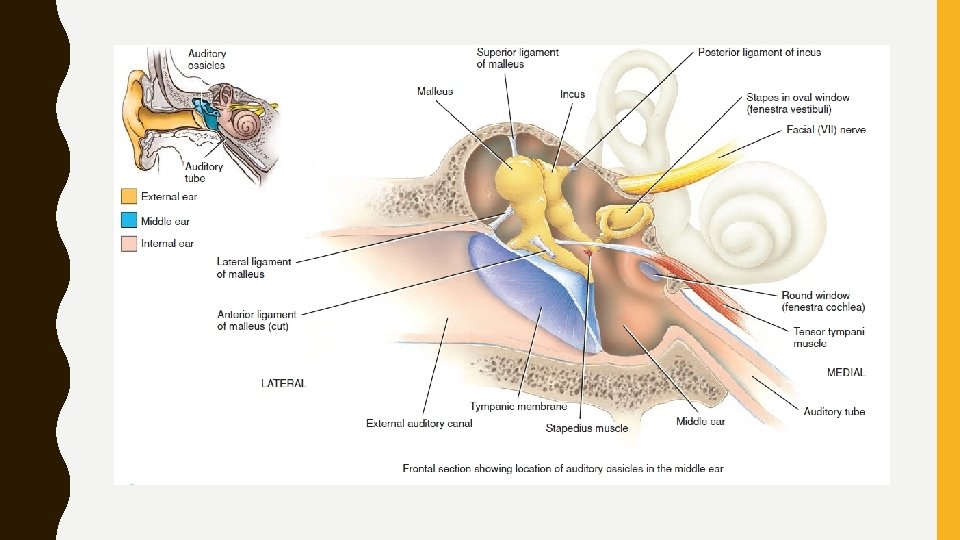
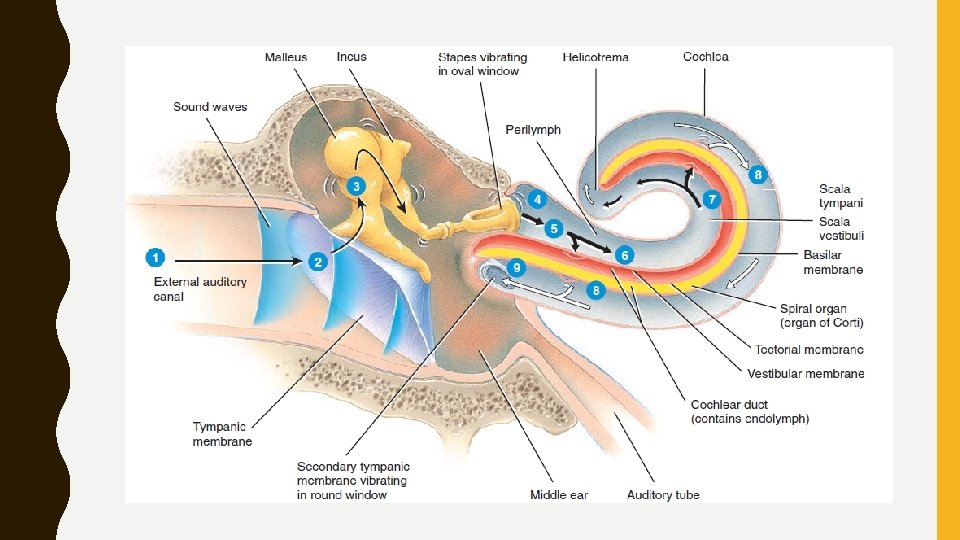
Physiology of Hearing The following events are involved in hearing: 1 Auricle directs sound waves into external auditory canal. 2 Sound waves strike tympanic membrane, alternating waves of high and low pressure air in cause tympanic membrane vibrate to back and forth • Slowly in response to low-frequency (low-pitched) sounds and • Rapidly in response to high frequency (high-pitched) sounds 3 Central area of tympanic membrane connects to malleus, • Vibration transmitted from malleus to incus & then to stapes 4 As stapes moves back and forth, its oval-shaped footplate, which is attached via a ligament to circumference of oval window, vibrates in oval window.
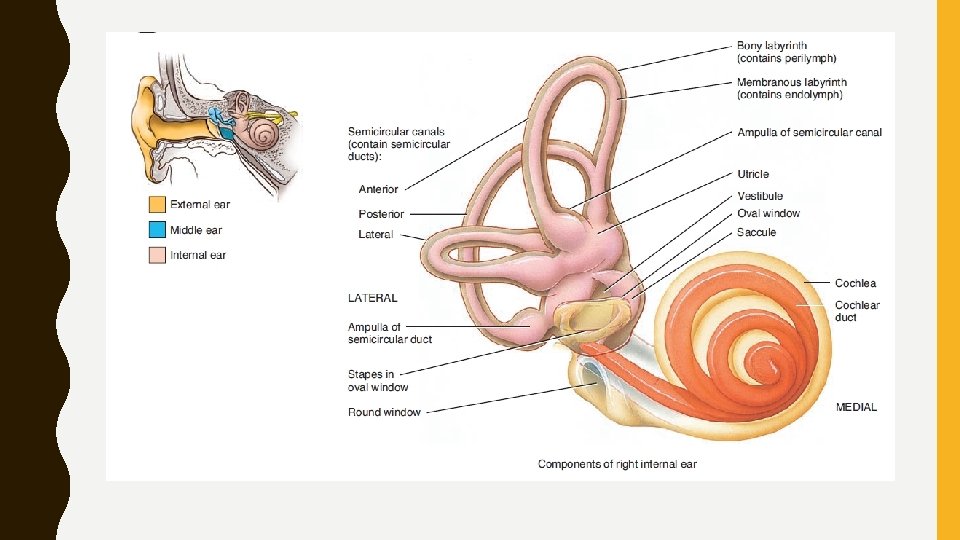
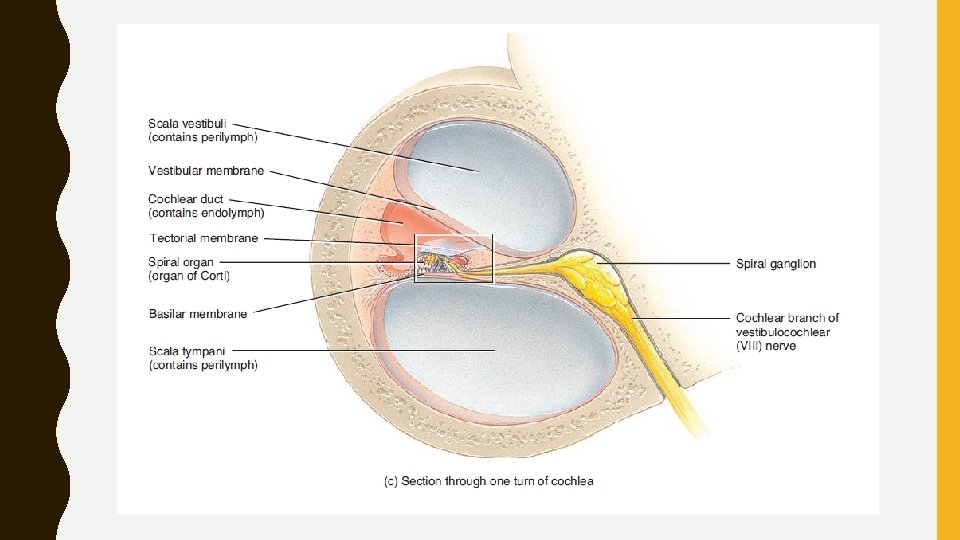
vibrations at oval window are about 20 times more vigorous than tympanic membrane – auditory ossicles efficiently transmit small vibrations spread over a large surface area (tympanic membrane) into larger vibrations at a smaller surface (oval window) 5. Movement of stapes at oval window sets up fluid pressure waves in perilymph of cochlea. As oval window bulges inward, it pushes on perilymph of scala vestibuli 6. Pressure waves are transmitted from scala vestibuli to scala tympani and eventually to round window, causing it to bulge outward into middle ear 7. pressure waves travel through perilymph of scala vestibuli, then vestibular membrane, and then move into endolymph inside cochlear duct
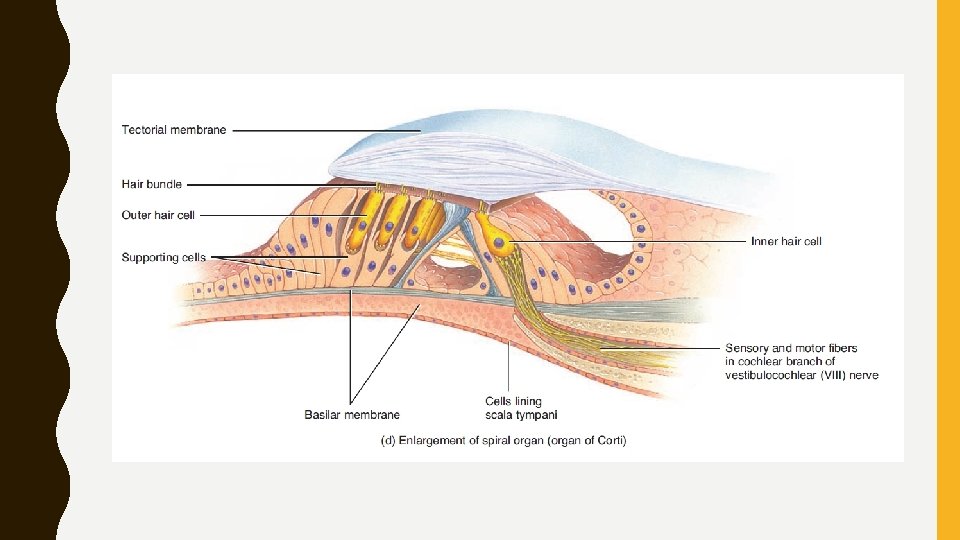
• This leads to bending of stereocilia and ultimately to generation of nerve impulses in first-order neurons in cochlear nerve fibers 9 Sound waves of various frequencies cause certain regions of basilar membrane to vibrate more intensely than other • Each segment of basilar membrane is “tuned” for a particular pitch • Because membrane is narrower and stiffer at base of cochlea (closer to the oval window), high-frequency (high-pitched) sounds induce maximal vibrations in this region • Toward apex of cochlea, basilar membrane is wider and more flexible; low-frequency (low-pitched) sounds cause maximal vibration of basilar membrane there • Loudness is determined by intensity of sound waves • Otoacoustic Emissions

• Reference: • https: //saurabhmaru. wordpress. com
- Slides: 14