
Physiology of Endocrine Abdelaziz M Hussein Assist prof
Physiology of Endocrine Abdelaziz M. Hussein Assist prof. of Medical Physiology

Introduction
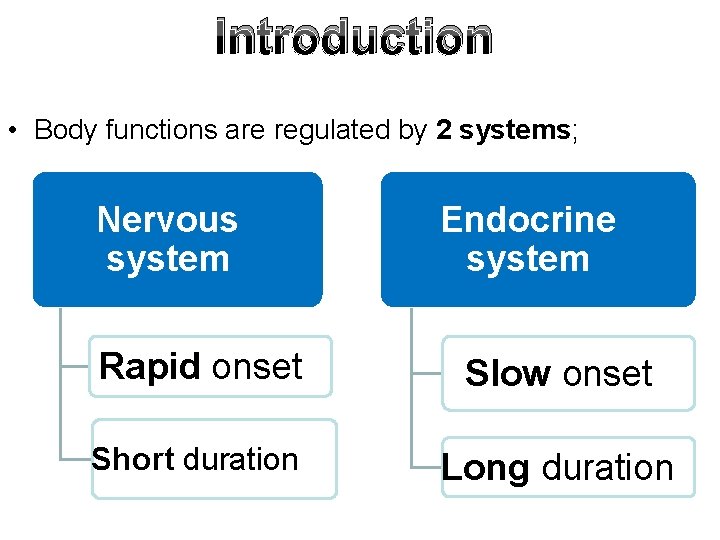
Introduction • Body functions are regulated by 2 systems; Nervous system Endocrine system Rapid onset Slow onset Short duration Long duration
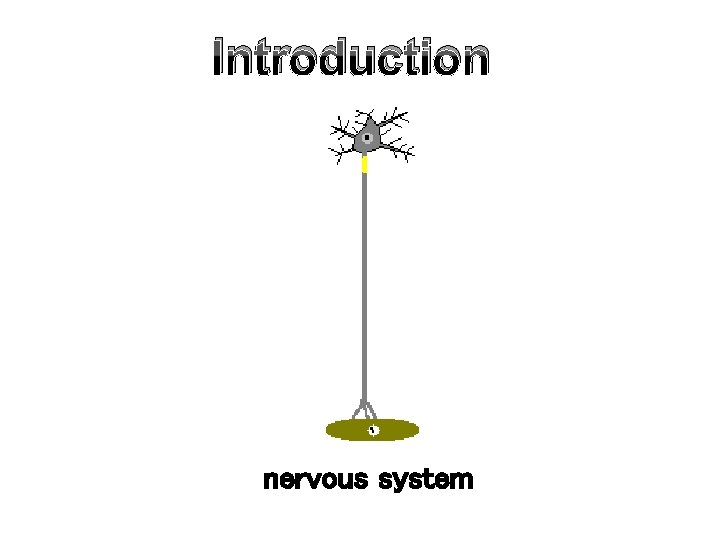
Introduction nervous system
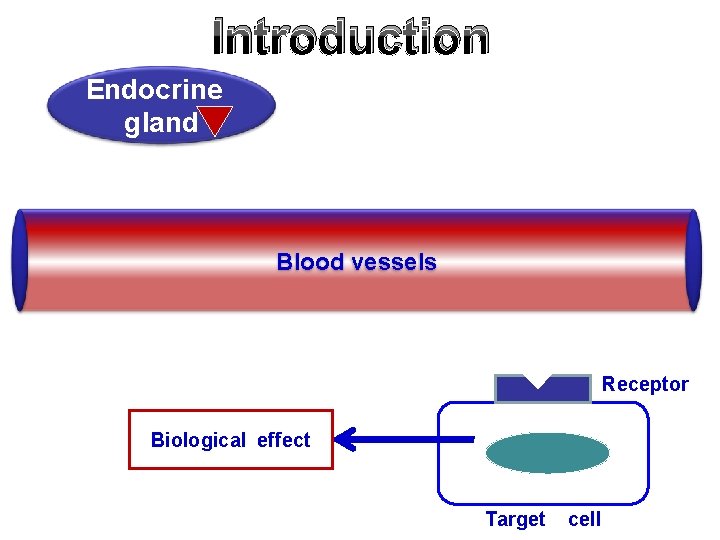
Introduction Endocrine gland Blood vessels Receptor Biological effect Target cell
Introduction • Endocrine glands are groups of cells that produce specific chemicals, called hormones, having well defined effects on body functions. • Also, called ductless glands since their secretion is not conveyed along ducts but pass directly into blood and lymphatic vessels.
Introduction General features of hormones (def. ) 1) 2) 3) 4) A specific chemical substance Secreted by ductless gland In a catalytic amount (very small amounts), Transported by the blood (directly or through lymphatics), To a specific target cells (which have a specific hormone receptors), 5) Where it produces: » physiologic, » morphologic and » biochemical responses
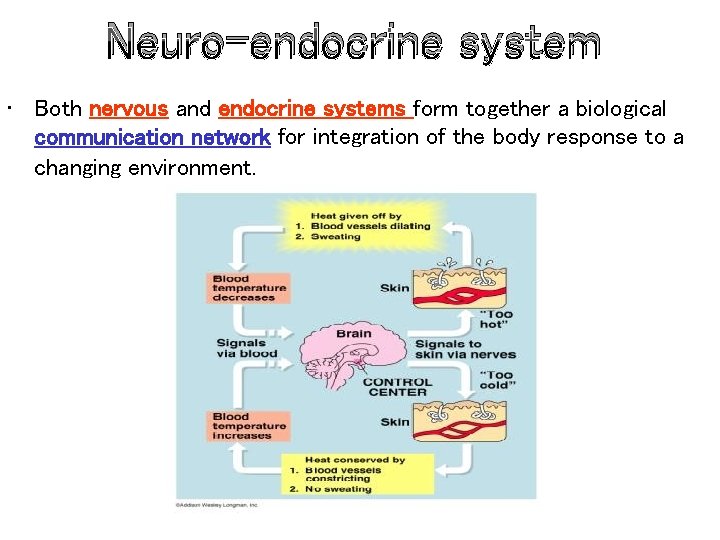
Neuro-endocrine system • Both nervous and endocrine systems form together a biological communication network for integration of the body response to a changing environment.
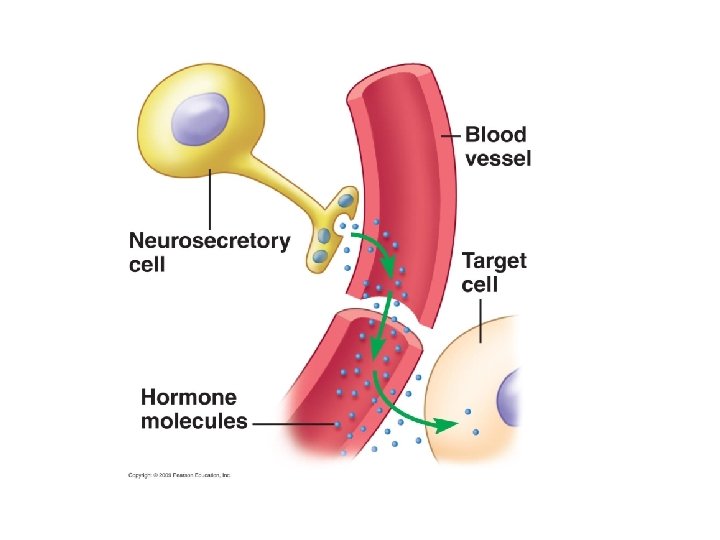
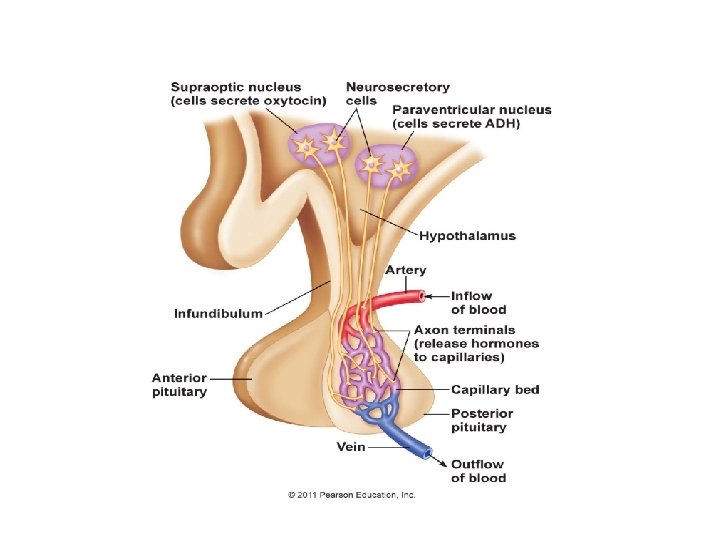
Neuro-endocrine system • Examples of this link: • 1) Hypothalamic neurosecretory cells, • A) Some neurons delivered substances through hypothalamo-hypophyseal portal vessels to the ant. pituitary to regulate its secretions. • • B) Other hypothalamic neurons send their axons to the post pituitary, where they release neurosecretory products directly into the blood stream.
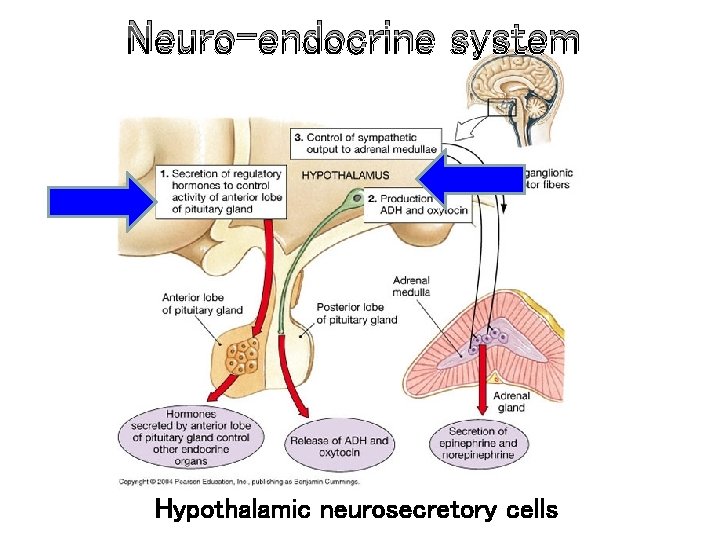
Neuro-endocrine system Hypothalamic neurosecretory cells
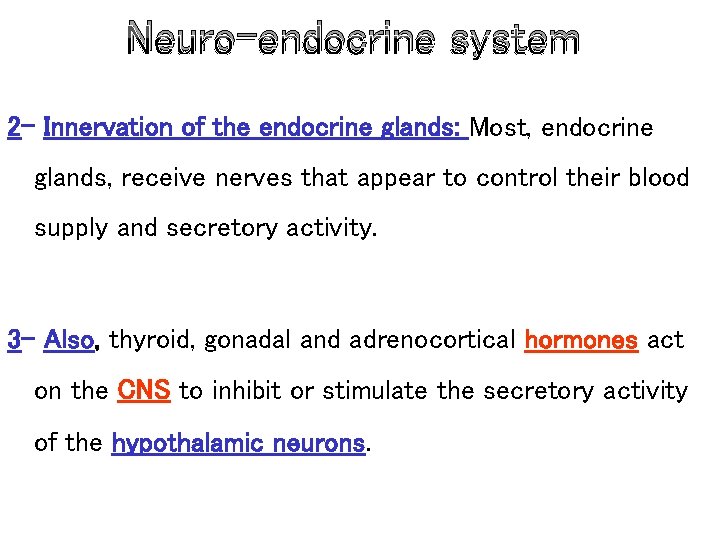
Neuro-endocrine system 2 - Innervation of the endocrine glands: Most, endocrine glands, receive nerves that appear to control their blood supply and secretory activity. 3 - Also, thyroid, gonadal and adrenocortical hormones act on the CNS to inhibit or stimulate the secretory activity of the hypothalamic neurons.
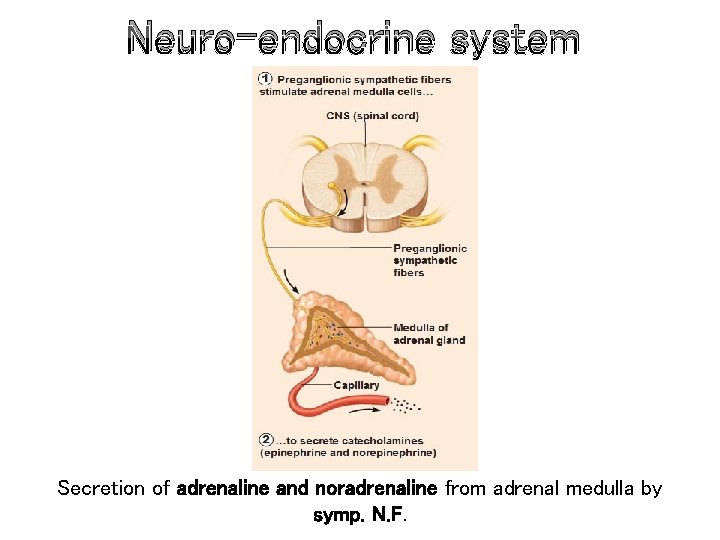
Neuro-endocrine system Secretion of adrenaline and noradrenaline from adrenal medulla by symp. N. F.
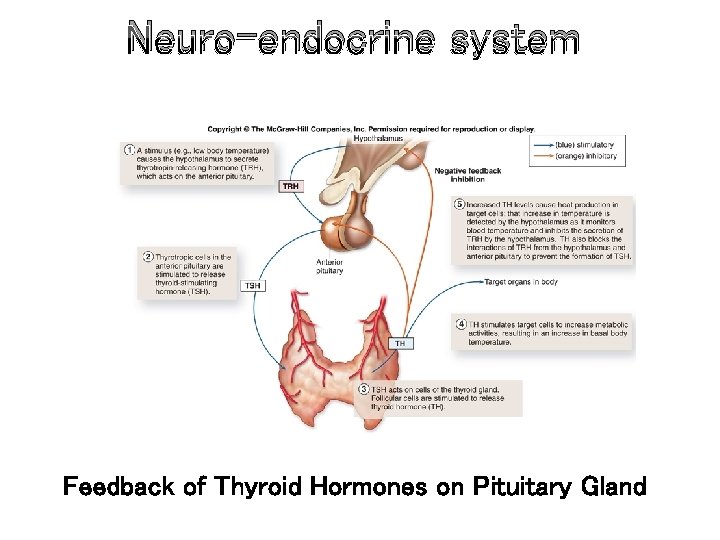
Neuro-endocrine system Feedback of Thyroid Hormones on Pituitary Gland
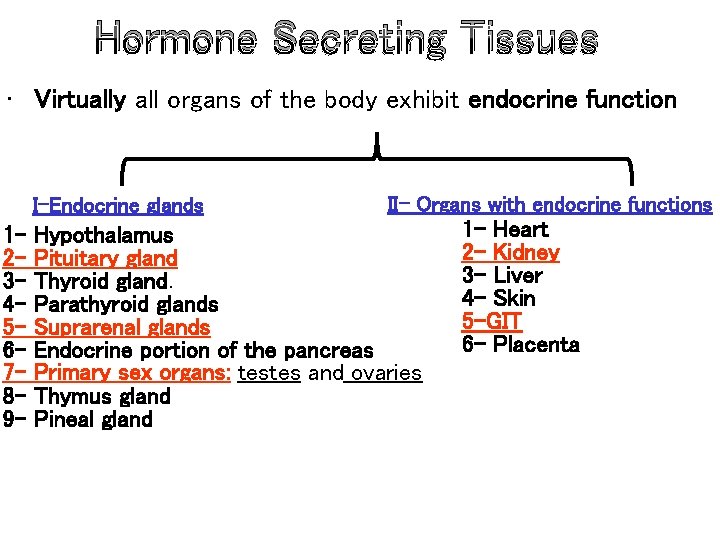
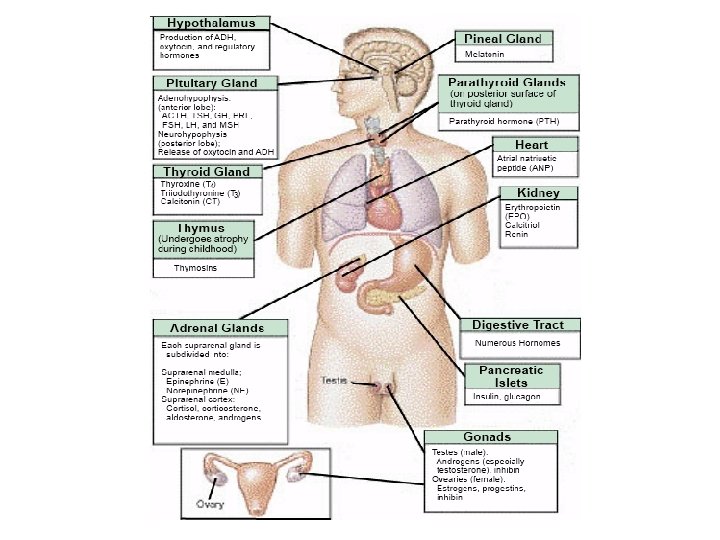
Hormone Secreting Tissues • Virtually all organs of the body exhibit endocrine function I-Endocrine glands 123456789 - II- Organs with endocrine functions Hypothalamus Pituitary gland Thyroid gland. Parathyroid glands Suprarenal glands Endocrine portion of the pancreas Primary sex organs: testes and ovaries Thymus gland Pineal gland 1 - Heart 2 - Kidney 3 - Liver 4 - Skin 5 -GIT 6 - Placenta
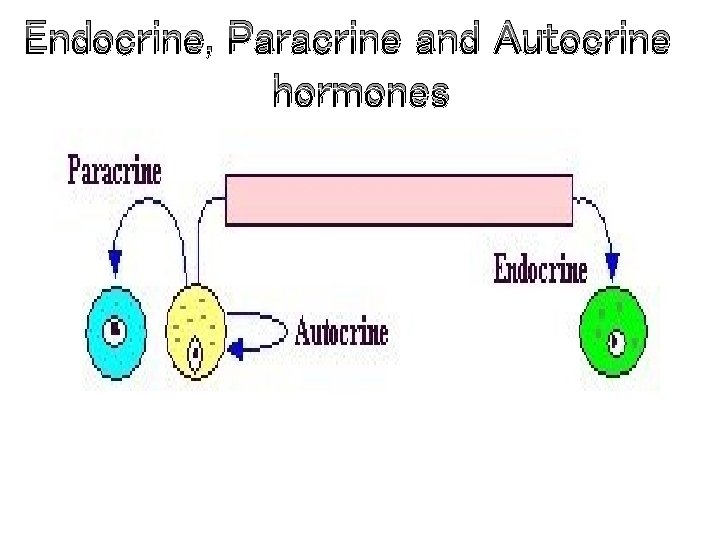
Local Hormones Some hormones act only locally, e. g. : 1 - Paracrine hormones, which diffuse for a short distance through the interstitial space to affect neighbouring cells. 2 - Autocrine hormones, which act on the same cells. 3 - Juxtacrine, whereby one cell interact with specific receptor on juxtaposed cells. Example: PGs, histamine, serotonin, bradykinin, epinephrine, acetylcholine, endorphins, encephalins, GIT hormones.
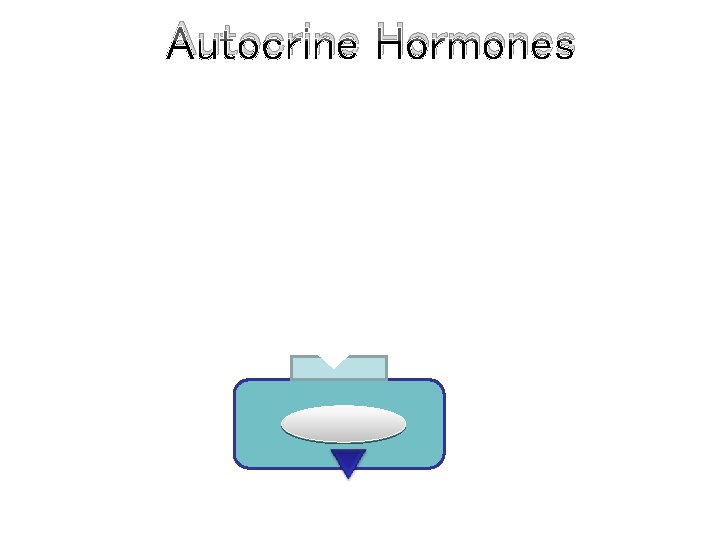
Autocrine Hormones
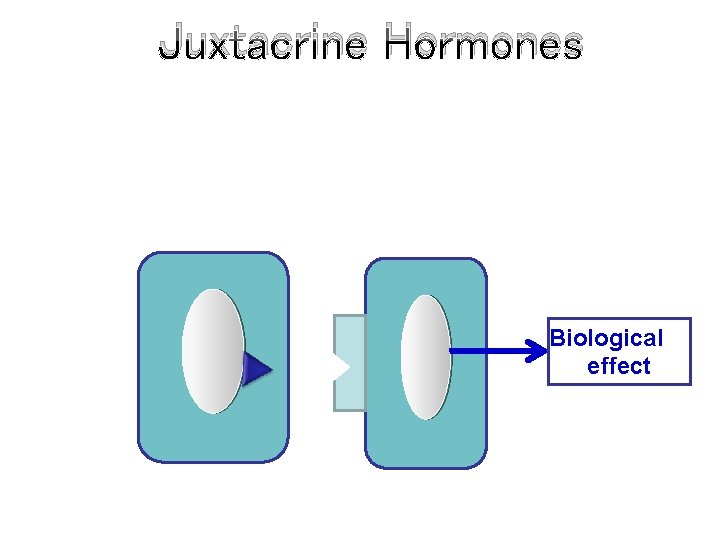
Juxtacrine Hormones Biological effect
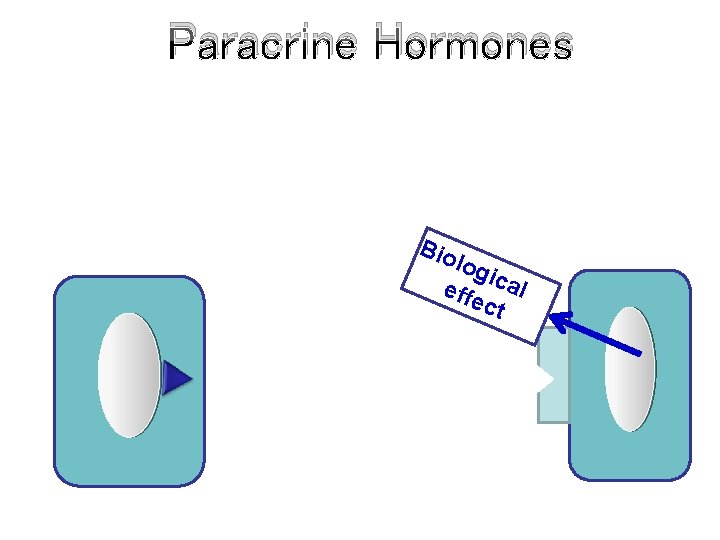
Paracrine Hormones Bio log i effe cal ct
Endocrine, Paracrine and Autocrine hormones
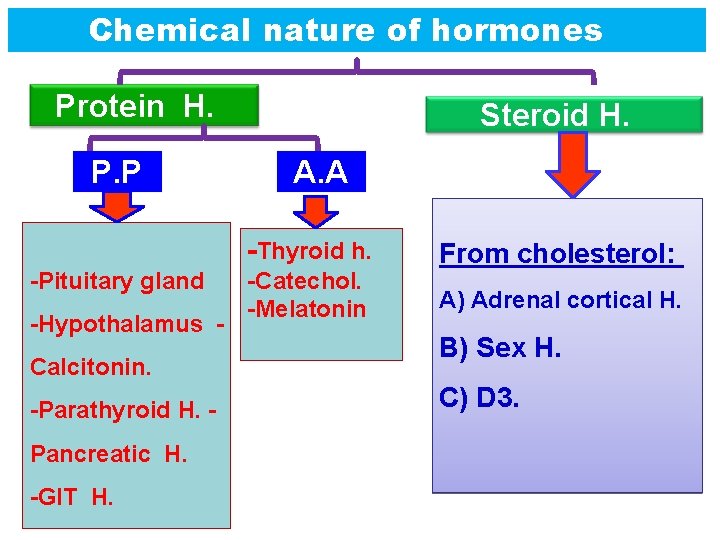
Chemical nature of hormones Protein H. P. P Steroid H. A. A -Thyroid h. -Pituitary gland -Hypothalamus Calcitonin. -Parathyroid H. Pancreatic H. -GIT H. -Catechol. -Melatonin From cholesterol: A) Adrenal cortical H. B) Sex H. C) D 3.
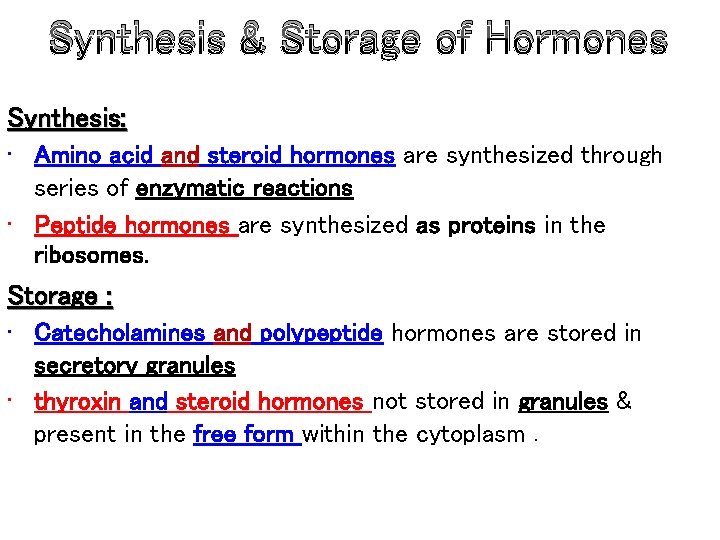
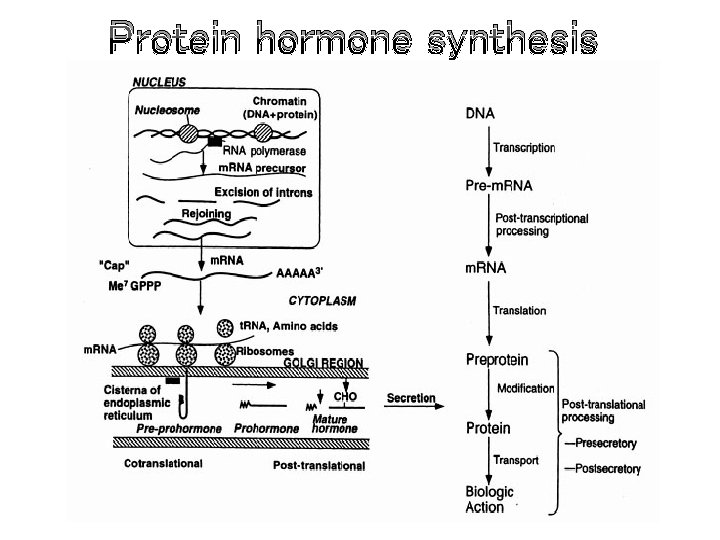
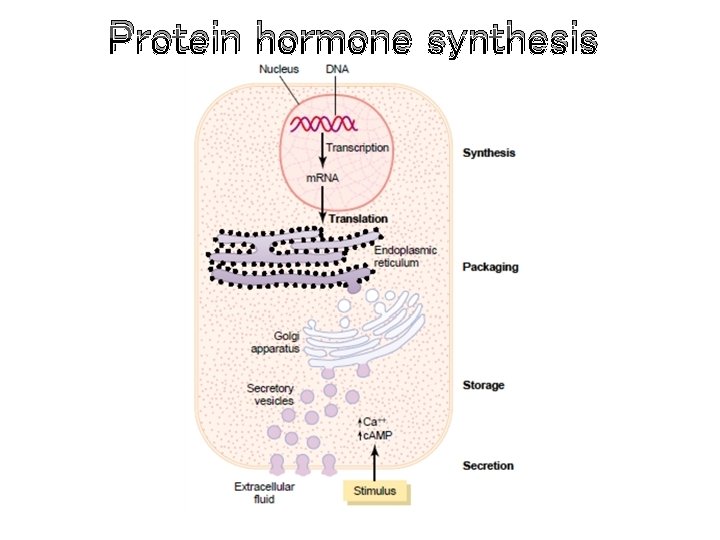
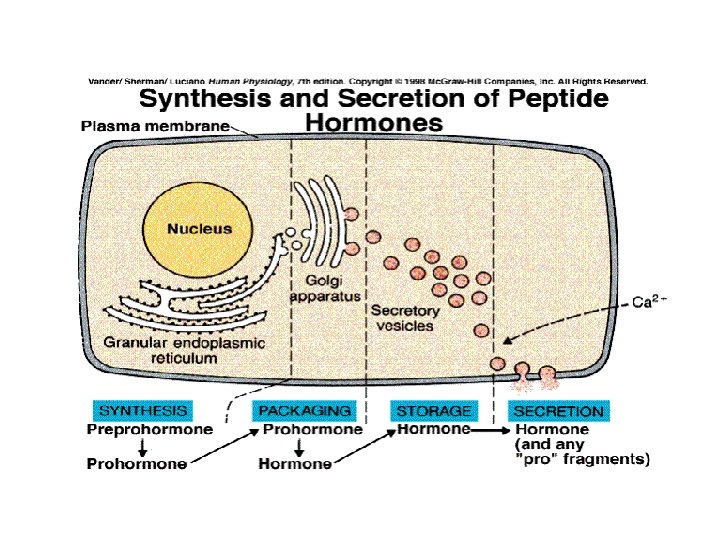
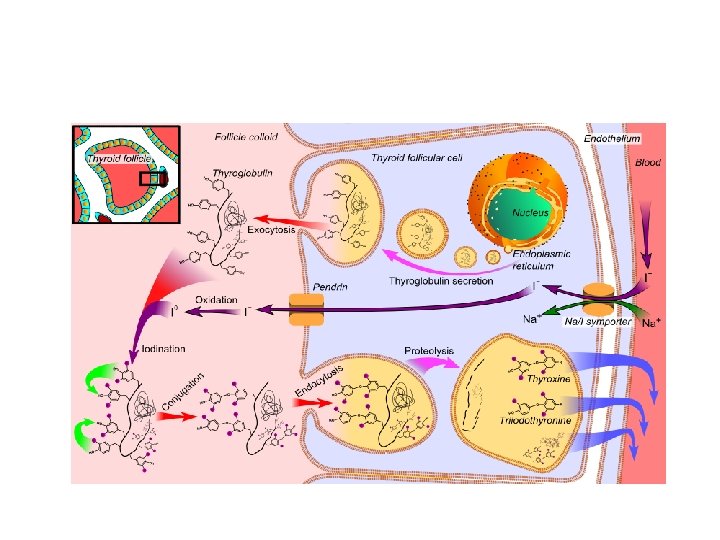
Synthesis & Storage of Hormones Synthesis: • Amino acid and steroid hormones are synthesized through series of enzymatic reactions • Peptide hormones are synthesized as proteins in the ribosomes. Storage : • Catecholamines and polypeptide hormones are stored in secretory granules • thyroxin and steroid hormones not stored in granules & present in the free form within the cytoplasm.
Protein hormone synthesis
Protein hormone synthesis
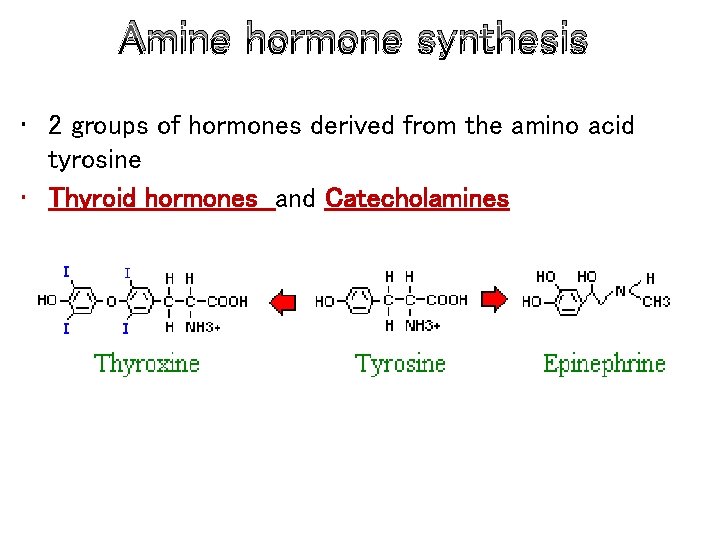
Amine hormone synthesis • 2 groups of hormones derived from the amino acid tyrosine • Thyroid hormones and Catecholamines
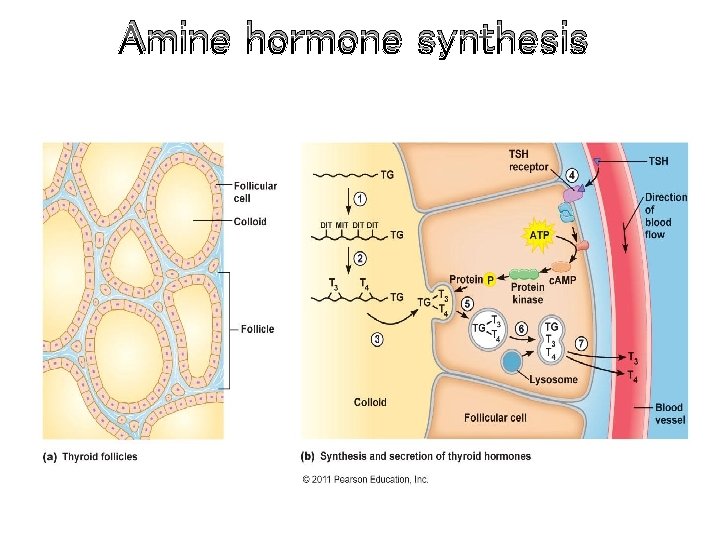
Amine hormone synthesis
Synthesis & Storage of Hormones Most endocrine glands produce their hormones continually at levels determined by: a) Body requirements. b) Rate of hormone inactivation. c) Rate of hormone clearance from the body.
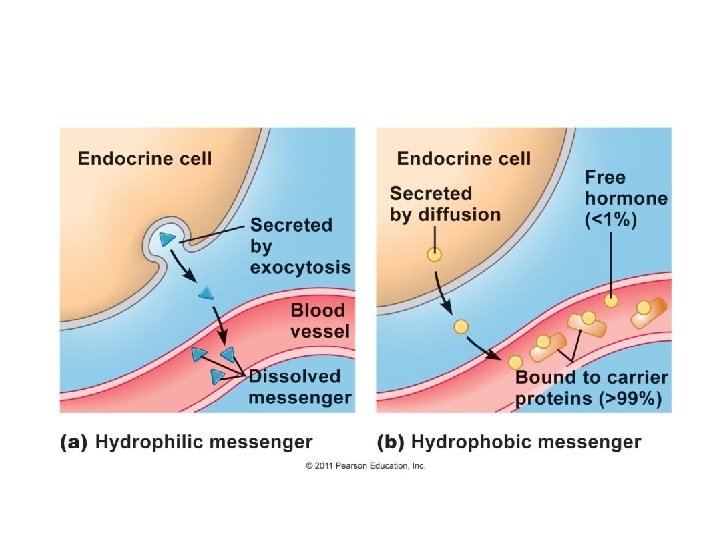
Hormone Release 1. Catecholamine and polypeptide hormones are stored in secretory granules, are released by the process of exocytosis. 2. Thyroxin and steroid hormones are present in the free form within the cytoplasm and leave the cell by simple transfer through the plasma membrane.
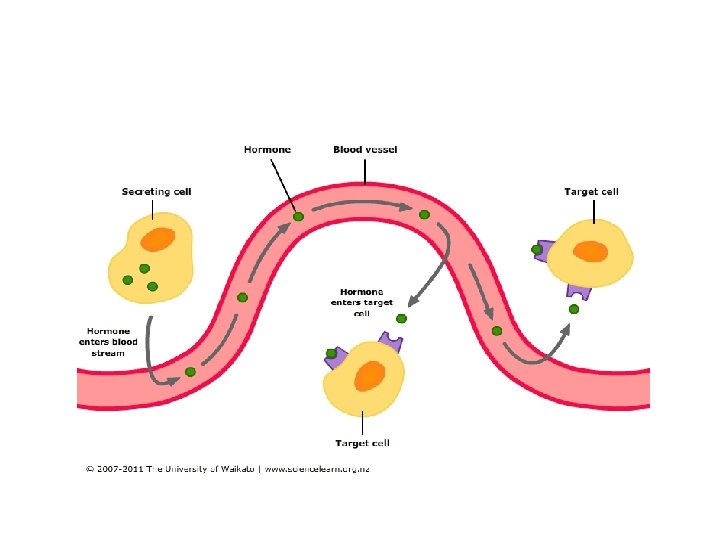
Hormone Transport The released hormones enter the blood, where they may circulate in 2 forms: – 1. Free (unbound) part: the active part which binds to receptor. – 2. Bound part: carried by specific albumins and globulins which are synthesized in the liver. In general, steroid and thyroid hormones are bound to transport proteins, whereas polypeptide and other amine hormones circulate in a free form.
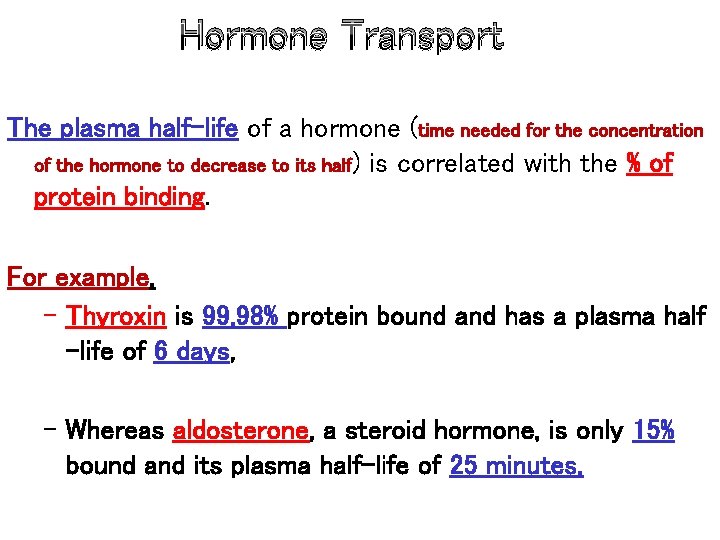
Hormone Transport The plasma half-life of a hormone (time needed for the concentration of the hormone to decrease to its half) is correlated with the % of protein binding. For example, – Thyroxin is 99. 98% protein bound and has a plasma half -life of 6 days, – Whereas aldosterone, a steroid hormone, is only 15% bound and its plasma half-life of 25 minutes.

- Slides: 37