
Physiology of CNS Sensory System By Dr Abdel
Physiology of CNS Sensory System By Dr. Abdel Aziz M. Hussein Lecturer of Physiology Member of American Society of Physiology
Sensory Receptors
Properties of Receptors
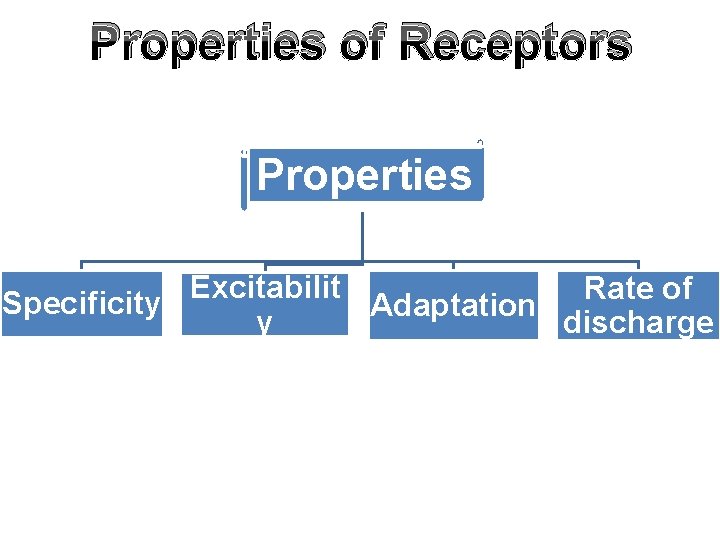
Properties of Receptors Properties Excitabilit Rate of Specificity Adaptation y discharge
1) Specificity This is Muller’s Law of specific nervous Energy: It states that; • Each type of receptor is most sensitive to a particular stimulus called the adequate stimulus • Each type of receptor when stimulated gives one type of sensation called modality (type) of sensation is specific to that receptor regardless the method of stimulation Examples: 1. Rods and cones → more sensitive to light waves 2. Auditory receptors → more sensitive to sound 6
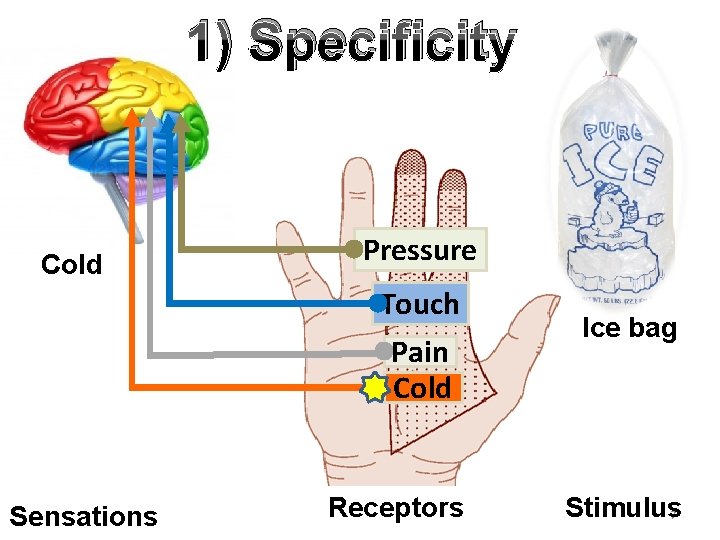
1) Specificity Cold Pressure Touch Pain Cold Sensations Receptors Ice bag Stimulus 7
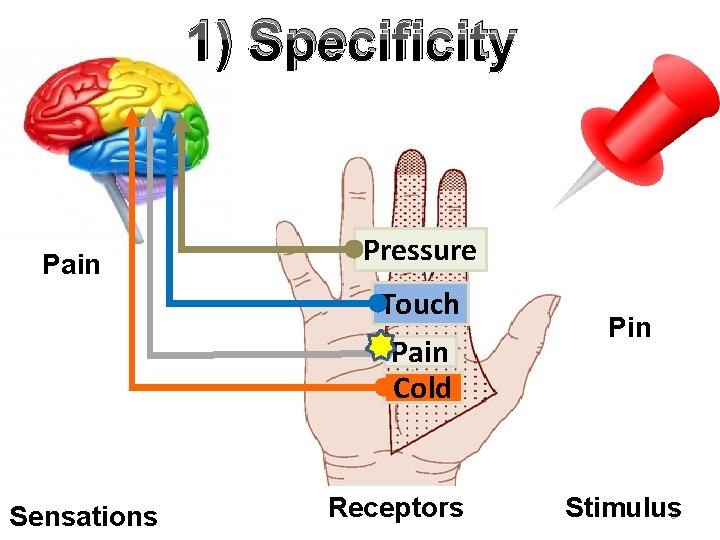
1) Specificity Pain Pressure Touch Pain Cold Sensations Receptors Pin Stimulus 8
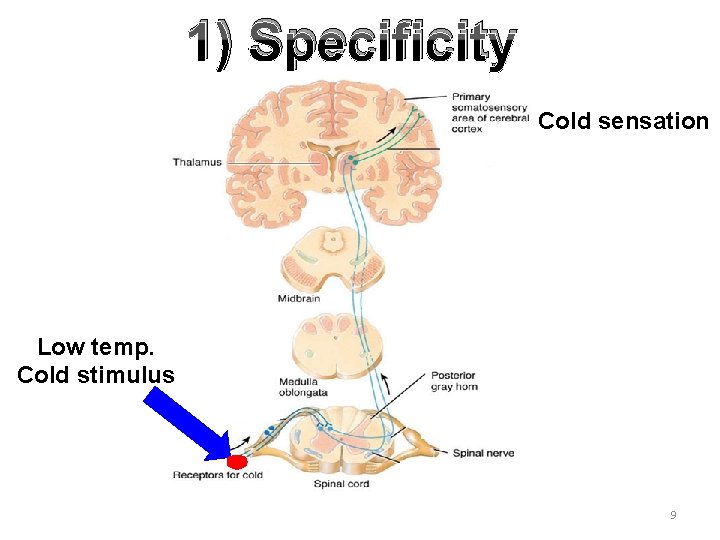
1) Specificity Cold sensation Low temp. Cold stimulus 9
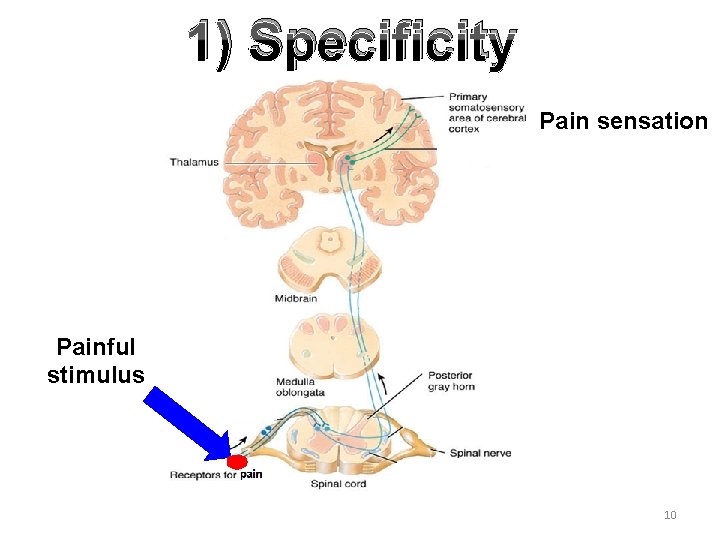
1) Specificity Pain sensation Painful stimulus 10
1) Specificity • However, the receptors can respond to stimuli other than adequate ones, provided that these stimuli are very strong; but still the response is the same modality to which the receptor is specialized • E. g. Heavy blow to the eye

2) Excitability Def. • The ability of the receptors to respond to their adequate stimuli. Mechanism: • Receptor potential may be; 1. Partial depolarization in most receptors 2. Hyperpolarization in photoreceptors (rods & cones) 12
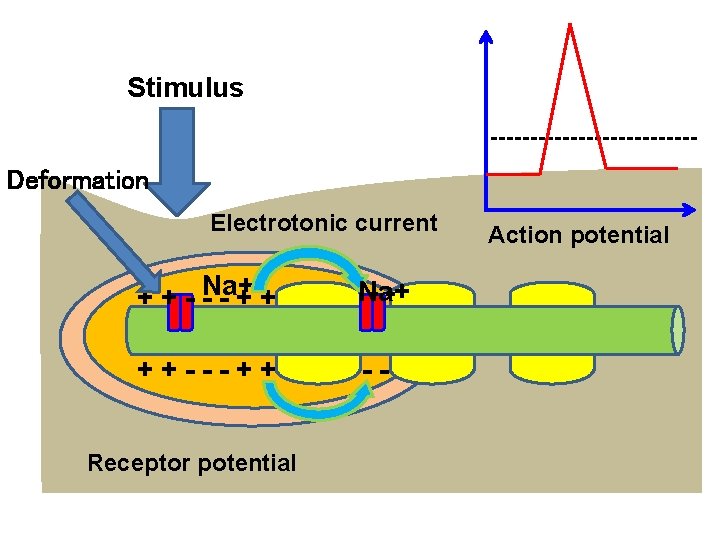
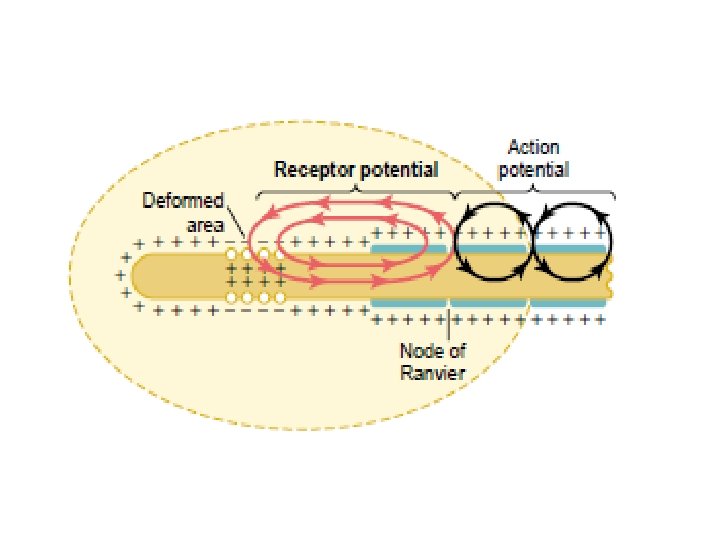
Receptor Potential Def: • Receptor or generator potential is a potential changes that occur in the receptors on adequate stimulation • Usually in the form of partial depolarization 13
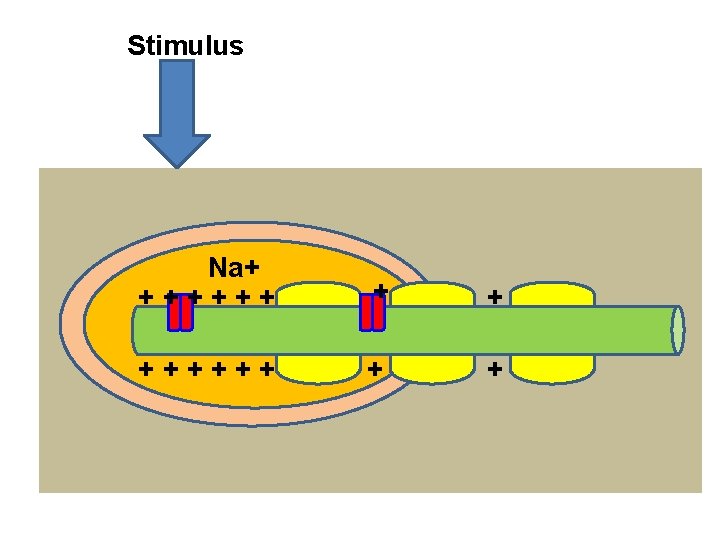
Receptor Potential Mechanism: • Differs according to type of receptor • In mechanoreceptors is caused by deformation of receptor → open ion channels • Better studied in Pacinian corpuscles due to; a. Easily stimulated by microglass rods b. Large in size and easily dissected. 14
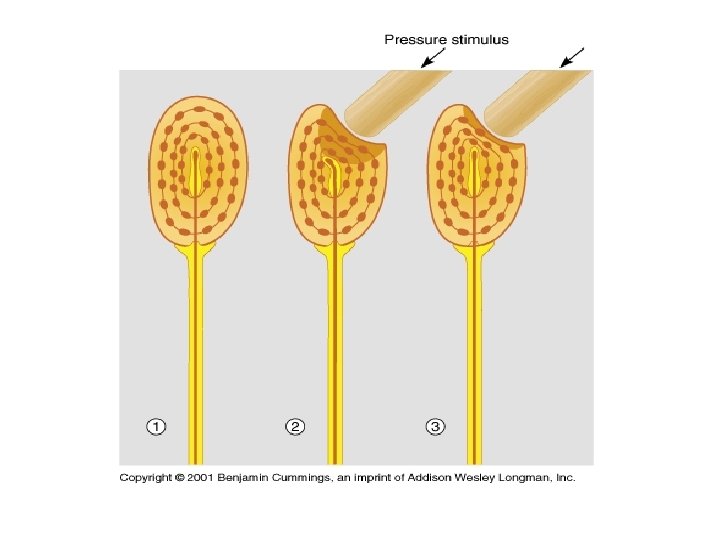

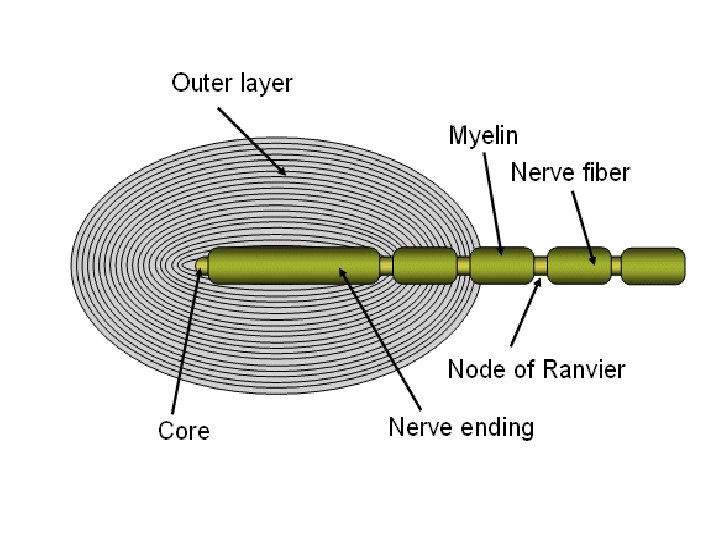
Receptor Potential Mechanism: • Pacinian corpuscles consists of 1) Central nerve terminal 2) Capsule of C. T. consists of several concentric layers (onion like) 16
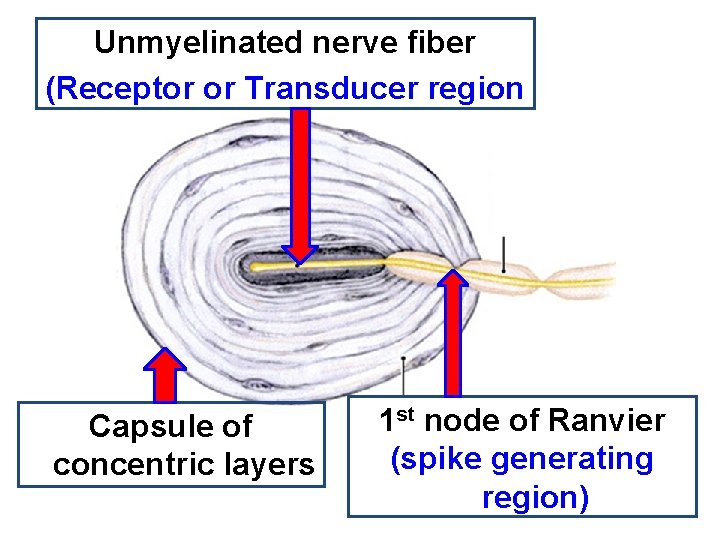
Unmyelinated nerve fiber (Receptor or Transducer region Capsule of concentric layers 1 st node of Ranvier (spike generating region)
Stimulus Na+ ++++++ + +
Stimulus Deformation Electrotonic current + + - Na+ --++ Na+ -- ++---++ -- Receptor potential Action potential
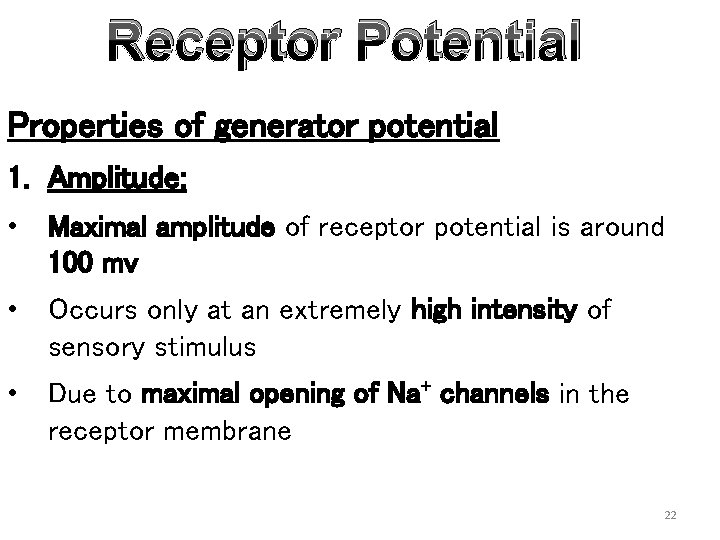
Receptor Potential Properties of generator potential 1. Amplitude: • Maximal amplitude of receptor potential is around 100 mv • Occurs only at an extremely high intensity of sensory stimulus • Due to maximal opening of Na+ channels in the receptor membrane 22
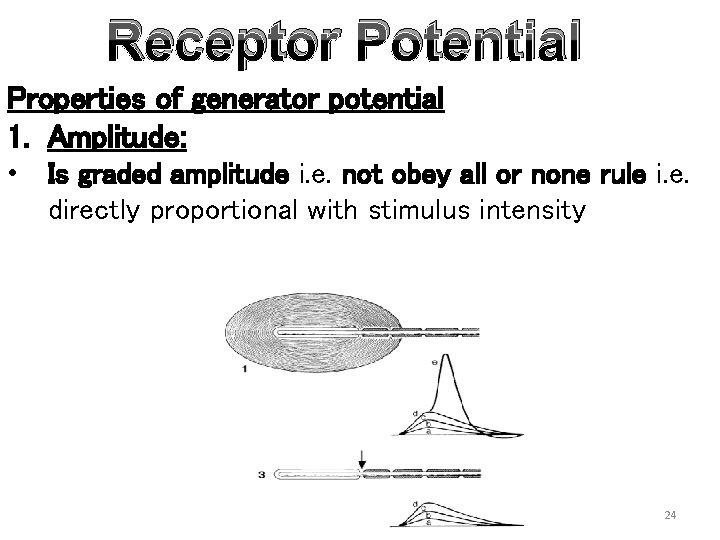
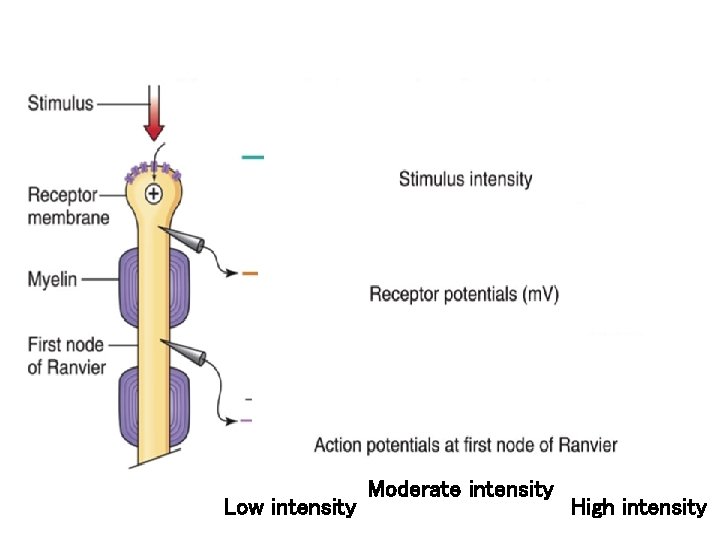
Receptor Potential Properties of generator potential 1. Amplitude: • Is graded amplitude i. e. not obey all or none rule i. e. directly proportional with stimulus intensity 24
Low intensity Moderate intensity High intensity
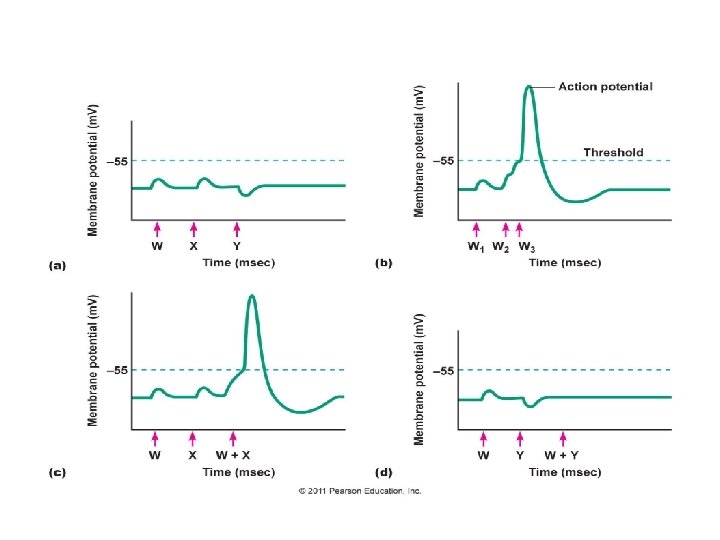
Receptor Potential Properties of generator potential 2. It is not followed by absolute refractory period 3. Can be summated by temporal and spatial summation 26
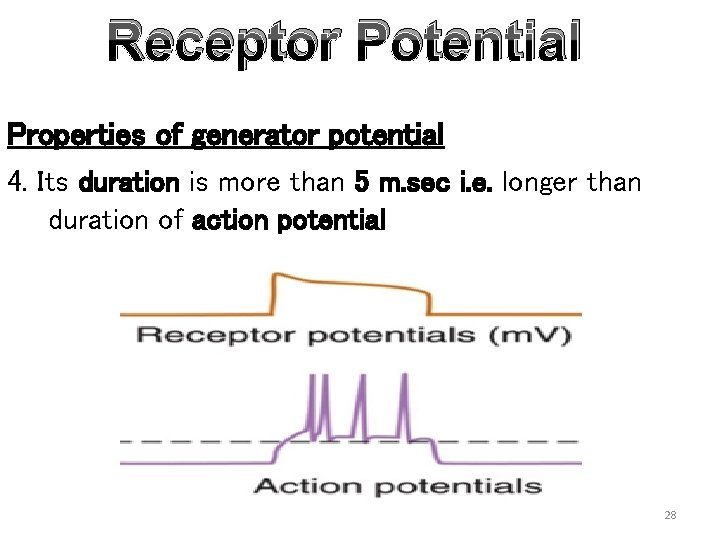
Receptor Potential Properties of generator potential 4. Its duration is more than 5 m. sec i. e. longer than duration of action potential 28
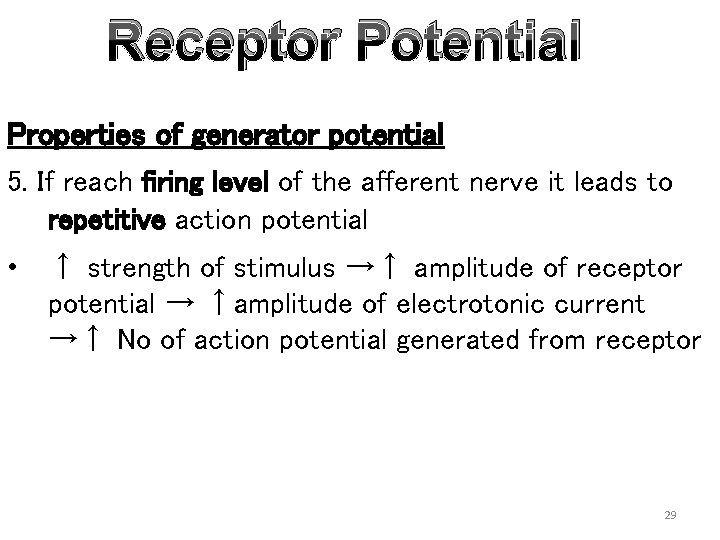
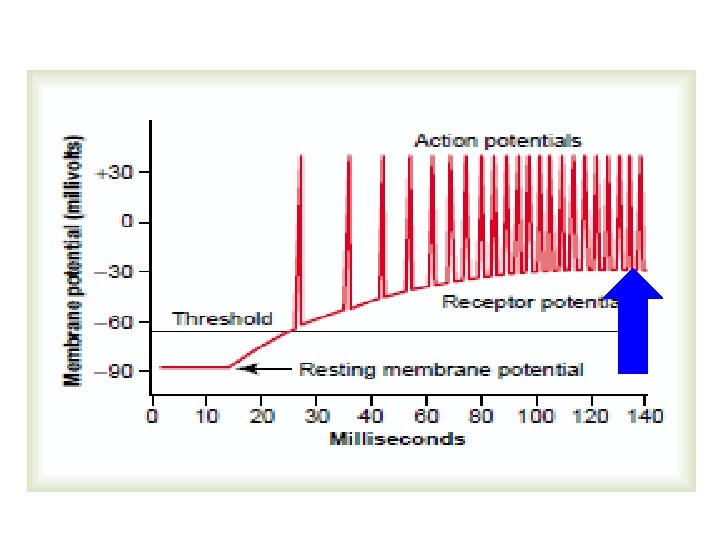
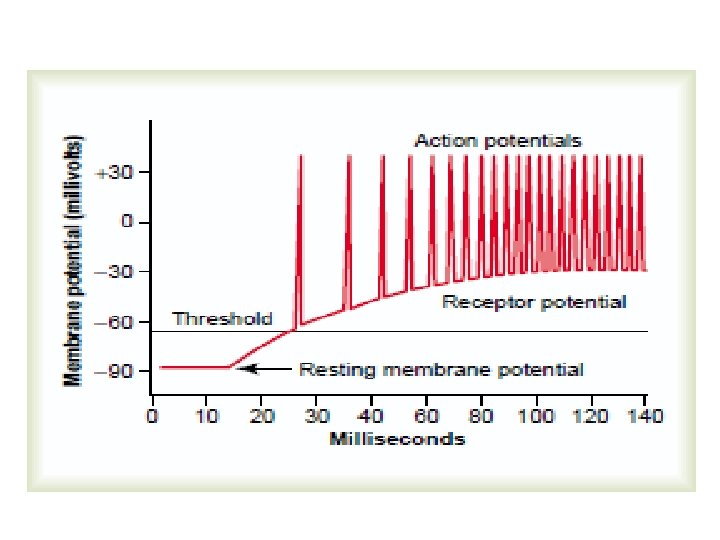
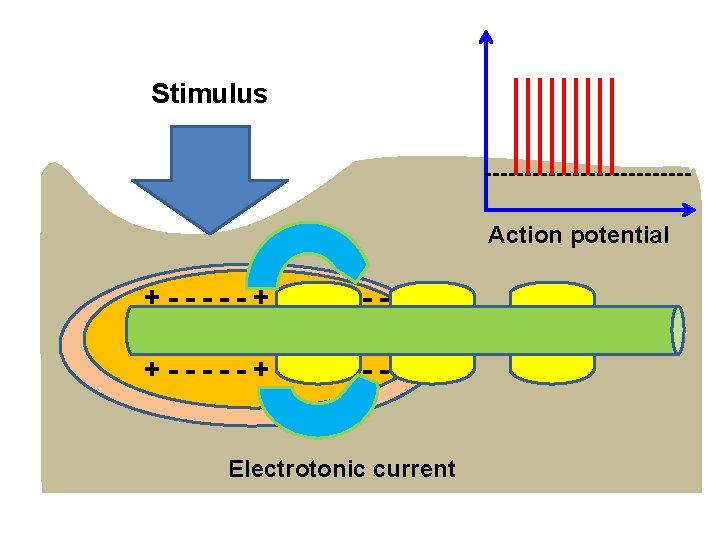
Receptor Potential Properties of generator potential 5. If reach firing level of the afferent nerve it leads to repetitive action potential • ↑ strength of stimulus →↑ amplitude of receptor potential → ↑amplitude of electrotonic current →↑ No of action potential generated from receptor 29

Receptor Potential Properties of generator potential 6. Conduction: passively conducted to the 1 st Node of Ranvier in the form of electrotonic current 7. Not blocked by local anesthetics 31
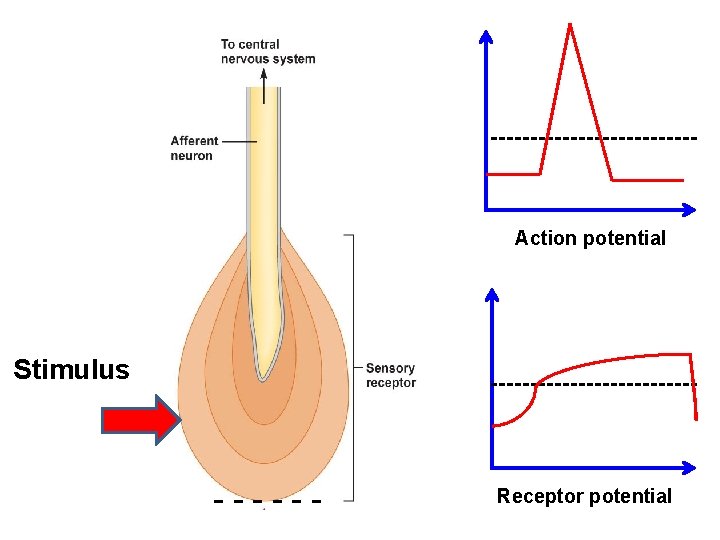
Action potential Stimulus -- ------ Receptor potential
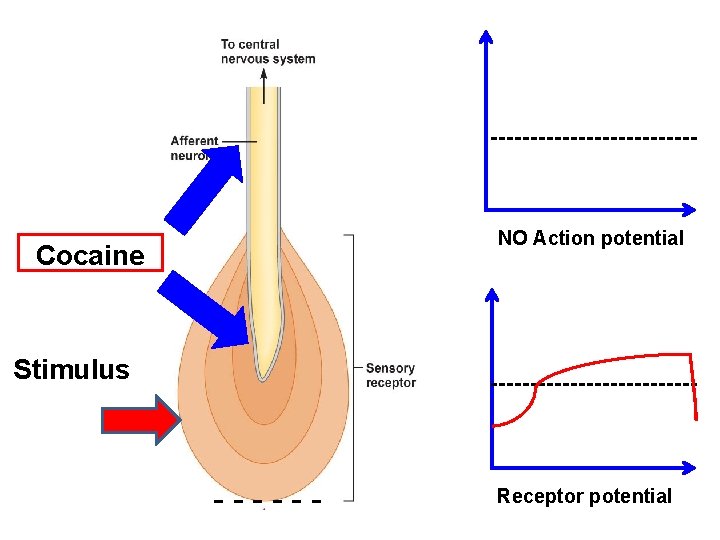
NO Action potential Cocaine Stimulus -- ------ Receptor potential



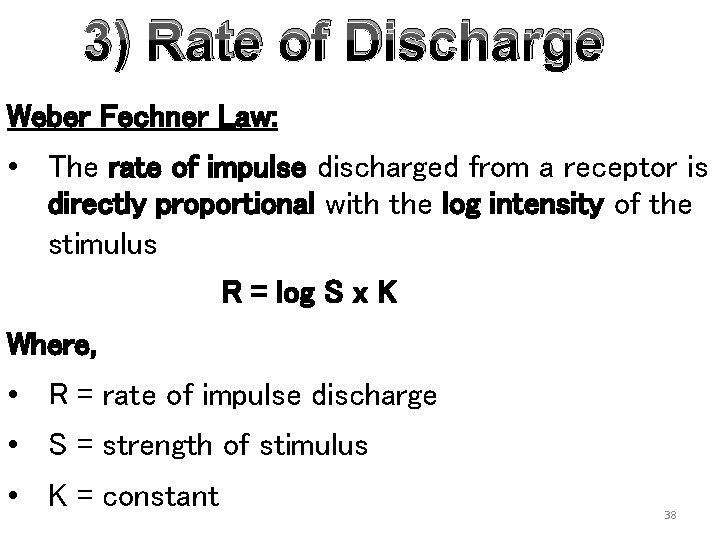
3) Rate of Discharge Weber Fechner Law: • The rate of impulse discharged from a receptor is directly proportional with the log intensity of the stimulus R = log S x K Where, • R = rate of impulse discharge • S = strength of stimulus • K = constant 38
3) Rate of Discharge • Weber Fechner law: • So, 100 fold increase in intensity leads to only 2 fold increase in frequency of impulses • So, receptors compress marked changes in stimulus intensity into smaller changes in frequency of action potential (Compression function of receptor) 39
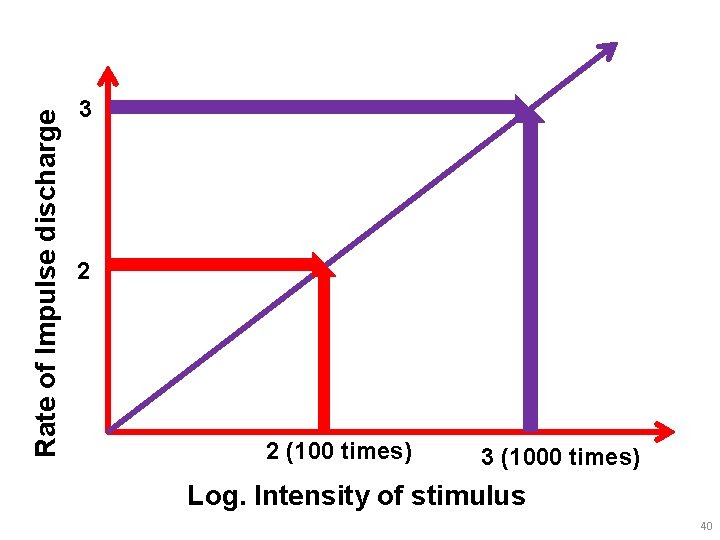
Rate of Impulse discharge 3 2 2 (100 times) 3 (1000 times) Log. Intensity of stimulus 40
3) Rate of Discharge • ↑ the intensity of the stimulus → ↑ the rate of discharge by 2 means: a. By increasing rate of discharge from each receptor b. By increasing the number of excited receptors (Recruitment of receptors) 41

Stimulus ++++++ + +

Stimulus Action potential ++---++ -- Electrotonic current
Stimulus Action potential +-----+ -- Electrotonic current
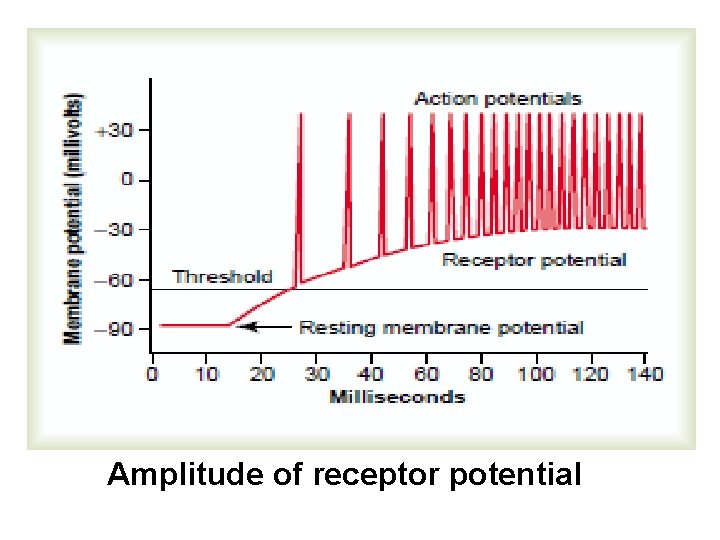
Amplitude of receptor potential
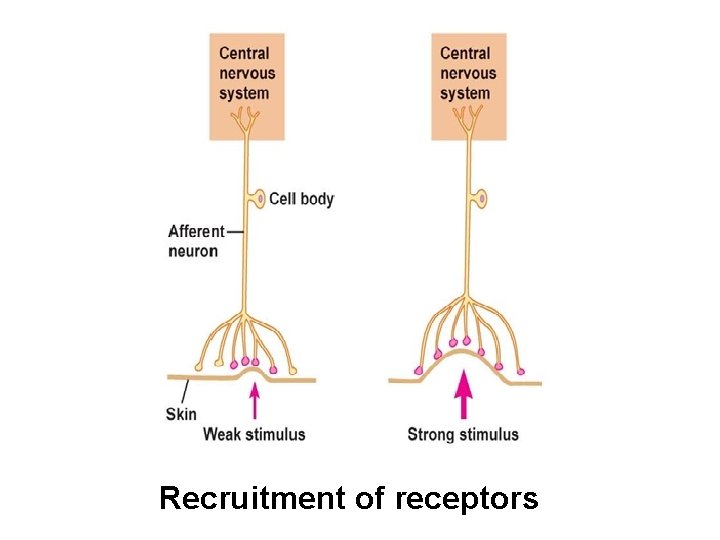
Recruitment of receptors
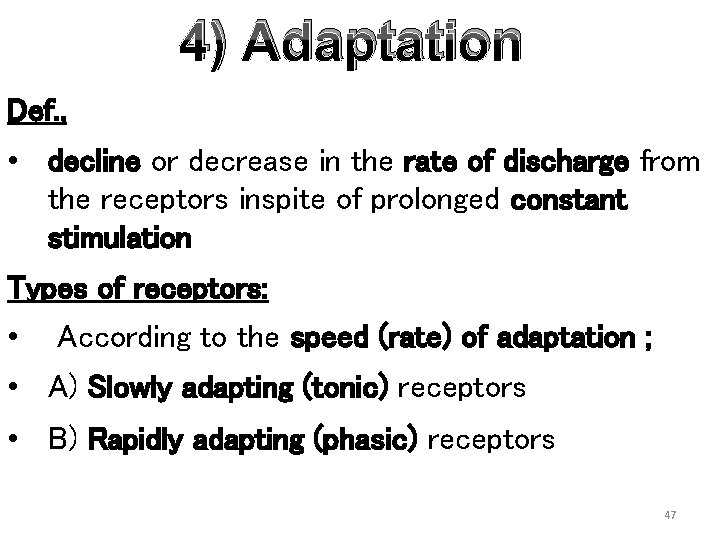
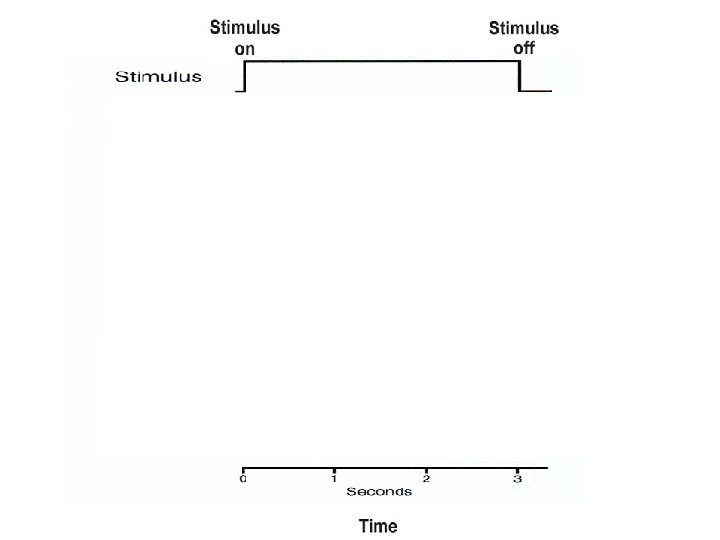
4) Adaptation Def. , • decline or decrease in the rate of discharge from the receptors inspite of prolonged constant stimulation Types of receptors: • According to the speed (rate) of adaptation ; • A) Slowly adapting (tonic) receptors • B) Rapidly adapting (phasic) receptors 47
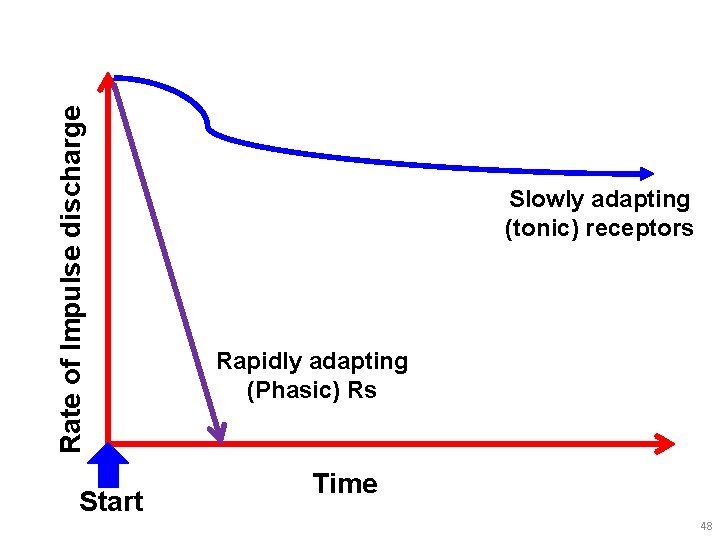
Rate of Impulse discharge Start Slowly adapting (tonic) receptors Rapidly adapting (Phasic) Rs Time 48
4) Adaptation Rapidly adapting (Phasic) Receptors: • start discharge at a high rate then discharge decreases rapidly and even stop within short period of time Examples 1. Tactile receptors as hair follicle, Meissner’s and Pacinian corpuscles in skin 2. Some mechanoreceptors in the joints Importance : • 1. 2. 3. They inform the CNS about ; Onset Termination of stimulation Change in intensity of the stimulus 50

4) Adaptation Slowly adapting (tonic) Rs • Receptors continue discharge of impulses even though at a lower rate as long as the stimulus is applied Examples: 1. Pain receptors 2. Mechanoreceptors e. g. ms spindle, Golgi tendon receptors 3. Arterial baroreceptors 4. Cold receptors 5. Chemoreceptors in aortic and carotid bodies 51
4) Adaptation Significance : • Maintain sensory information, so subserve vital functions e. g. : 1. Arterial baroreceptors : regulation of ABP& Heart rate 2. MS spindles and joint receptors : maintenance of the body posture and equilibrium. 3. Pain receptors : initiate protective mechanisms. 52

THANKS
- Slides: 53