
Physiology in Space WHATS DIFFERENT ABOUT SPACE Distance
Physiology in Space
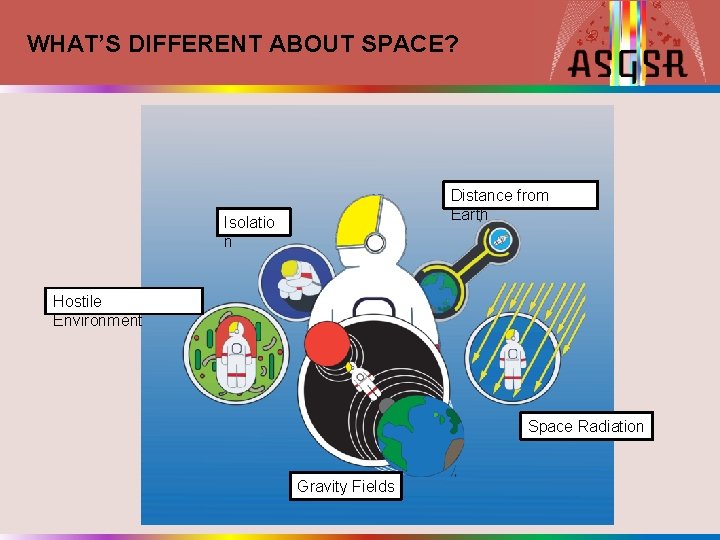
WHAT’S DIFFERENT ABOUT SPACE? Distance from Earth Isolatio n Hostile Environment Space Radiation Gravity Fields
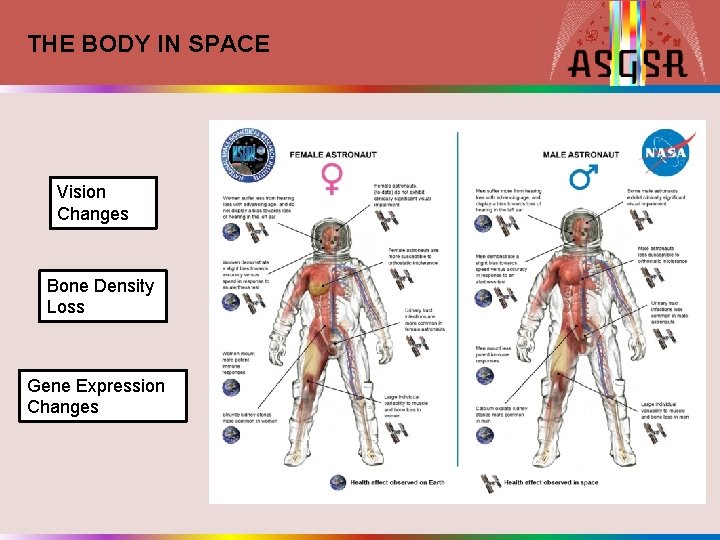
THE BODY IN SPACE Vision Changes Bone Density Loss Gene Expression Changes
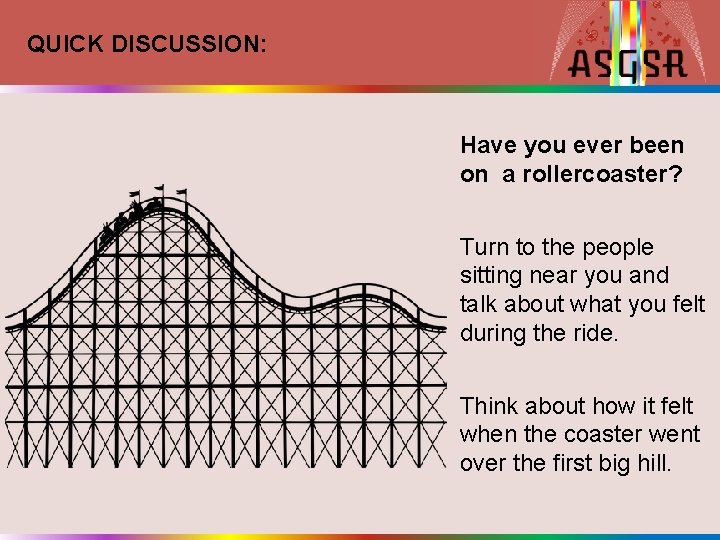
QUICK DISCUSSION: Have you ever been on a rollercoaster? Turn to the people sitting near you and talk about what you felt during the ride. Think about how it felt when the coaster went over the first big hill.
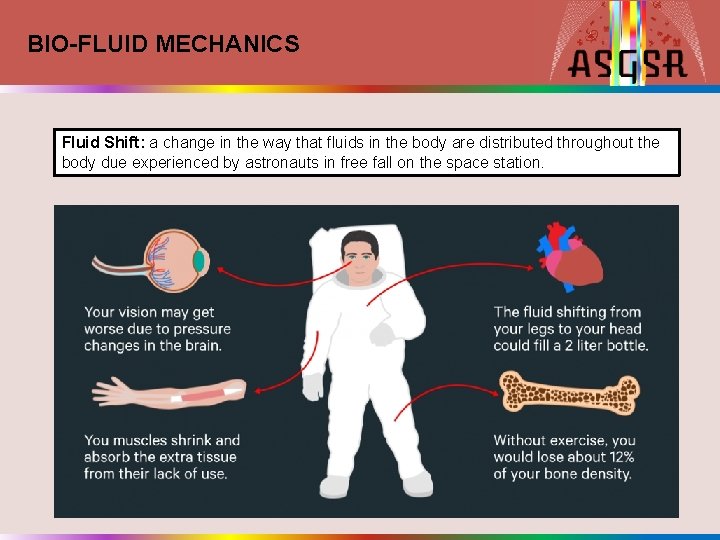
BIO-FLUID MECHANICS Fluid Shift: a change in the way that fluids in the body are distributed throughout the body due experienced by astronauts in free fall on the space station.
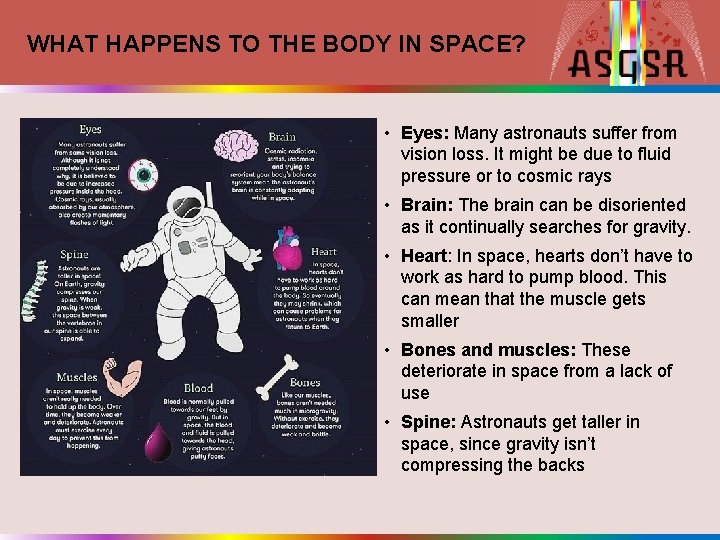
WHAT HAPPENS TO THE BODY IN SPACE? • Eyes: Many astronauts suffer from vision loss. It might be due to fluid pressure or to cosmic rays • Brain: The brain can be disoriented as it continually searches for gravity. • Heart: In space, hearts don’t have to work as hard to pump blood. This can mean that the muscle gets smaller • Bones and muscles: These deteriorate in space from a lack of use • Spine: Astronauts get taller in space, since gravity isn’t compressing the backs
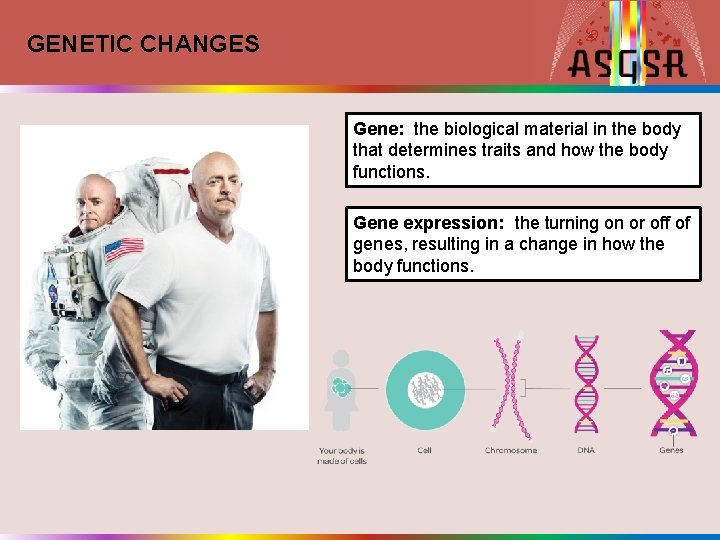
GENETIC CHANGES Gene: the biological material in the body that determines traits and how the body functions. Gene expression: the turning on or off of genes, resulting in a change in how the body functions.
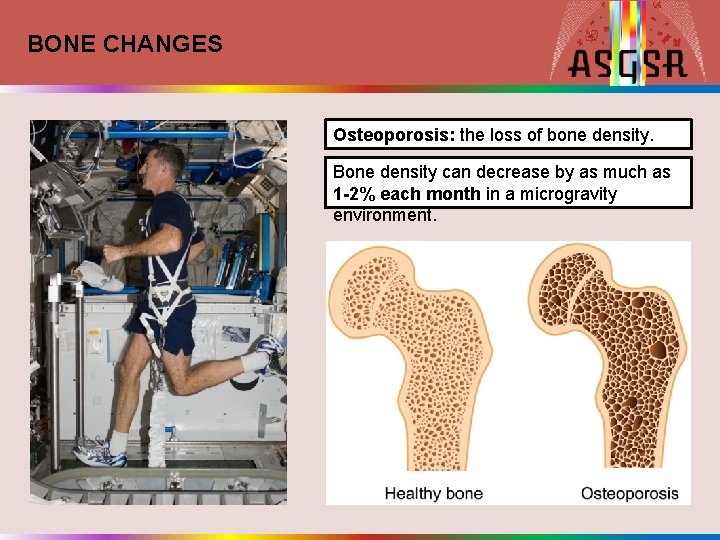
BONE CHANGES Osteoporosis: the loss of bone density. Bone density can decrease by as much as 1 -2% each month in a microgravity environment.

- Slides: 9