
Physiology Health Exercise Lesson 18 z Normal BGL
Physiology, Health & Exercise Lesson 18 z Normal BGL z. Pathology of diabetes mellitus (DM)
Normal BGL & Diabetes Includes: z Role of insulin & glucagon z Pancreas & changes in BGL z Non-insulin dependent diabetes mellitus (NIDDM) z Insulin dependent diabetes mellitus (IDDM) 2
Normal Blood Glucose levels z z z Glucose- source of energy for body Carbohydrates digested to glucose Absorbed by blood capillaries in villi Carried to liver by hepatic portal vein Then distributed to body cells 3
Normal Blood Glucose levels If too much glucose (hyperglycaemia) in blood: z Why does this happen? z How does the body respond? z BGL monitored by receptors in Islets of Langerhans (pancreas) z Respond by stimulating an enzyme that promotes production of insulin (by b-cells) z Excess glucose stored as glycogen by liver z BGL fall back to normal levels 4

5
Normal Blood Glucose levels If glucose levels in blood drop (hypoglycaemia): z Why does this happen? z How does the body respond? z BGL monitored by receptors in Islets of Langerhans (pancreas) z Respond by stimulating an enzyme that promotes production of glucagon (by a-cells) z Glycogen converted into glucose by liver z BGL increase back to normal levels 6
Normal Blood Glucose levels Example of homeostasis 1. What does this mean? 2. Why is it described as being negative feedback? 7
Normal Blood Glucose levels Insulin can affect a number of different cell types, principally: z Skeletal muscle cells z Liver cells z Fat cells 8
Normal Blood Glucose levels z Skeletal muscle cells & fat cells have very low permeability to glucose in absence of insulin z Insulin acts by stimulating the uptake of glucose into muscle cells z Liver cells are quite permeable to glucose, so glucose enters whether or not insulin is present z But insulin still increases uptake of glucose by liver cells & glycogen formation 9
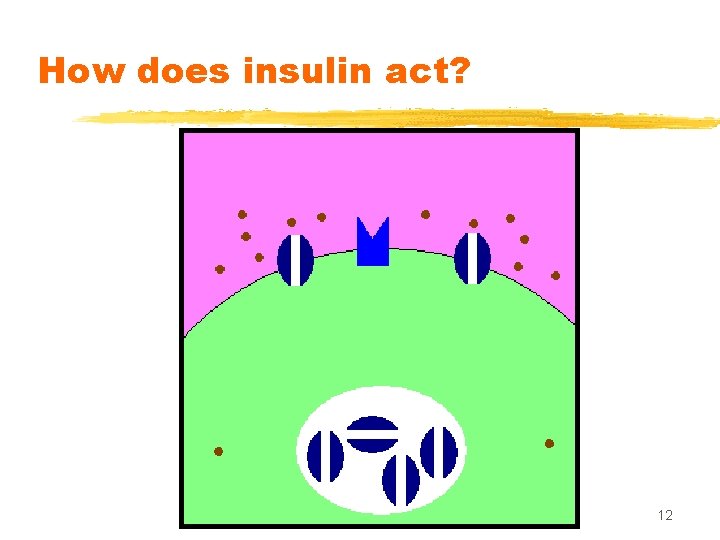
How does insulin act? z Insulin is a protein hormone z Extracellular hydrophilic 1. Binds to specific insulin receptors in cell membrane of target cell 2. Activated receptor promotes recruitment of glucose transporters from intracellular pool to cell membrane 3. glucose transporters increase insulinmediated uptake of glucose into cell 10
How does insulin act? 4. When insulin levels decrease, glucose transporters move from cell membrane to intracellular storage pool, where they can be recycled z Under certain circumstances e. g. obesity, number of insulin receptors decreases z Glucose uptake by cell decreases z Leads to insulin resistance 11
How does insulin act? 12
Types of diabetes mellitus (DM) z Two types: 1. Type 1 - Failure of pancreas to produce adequate quantities of insulin IDDM (insulin dependent DM) 2. Type 2 -Failure of tissues to respond to insulin (insulin resistance) NIDDM (noninsulin dependent DM) 13
Type 1 or IDDM z Accounts for 5 -10% of diabetes cases z Caused by destruction of some or all b- cells in Islets of Langerhans z Inadequate insulin production z Commonly occurs in childhood z Previously called early-onset or juvenile-onset diabetes 14
Type 2 or NIDDM z Much more common z Accounts for 90 -95% of diabetes cases z Previously called late-onset because more common in people over age of 40 z However becoming more common in younger people (and has been diagnosed in people as young as 13!) z More than 80% of people with NIDDM are overweight z Obesity is the greatest risk factor for NIDDM 15
Type 2 or NIDDM cont… z Can produce insulin z Have insulin levels in blood normal or higher than normal z But target cells (especially in liver & skeletal muscles) have become less sensitive to insulin z Insulin resistance z Deficiency of insulin receptors z Cells less able to take up glucose z BGL rise 16
Type 2 or NIDDM cont… z In this case most people develop Insulin resistance before they develop diabetes z Pancreas tries to compensate by producing more insulin z Eventually the b-cells become “worn out” z Insulin production decreases z Causes an increase in BGL 17
- Slides: 17