
Physiology Chapter 2 2 1 Molecules and Bonds
Physiology Chapter 2
2. 1 Molecules and Bonds • Only three—oxygen, carbon, and hydrogen— make up more than 90% of the body’s mass. • These three plus eight additional elements are considered major essential elements. • Some additional minor essential elements (trace elements) are required in minute amounts, but there is no universal agreement on which trace elements are essential for cell function in humans
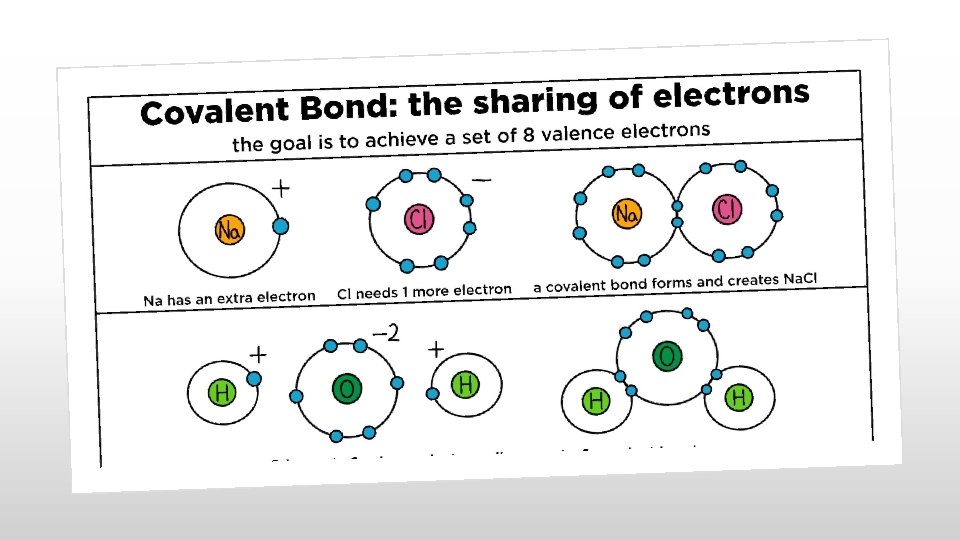
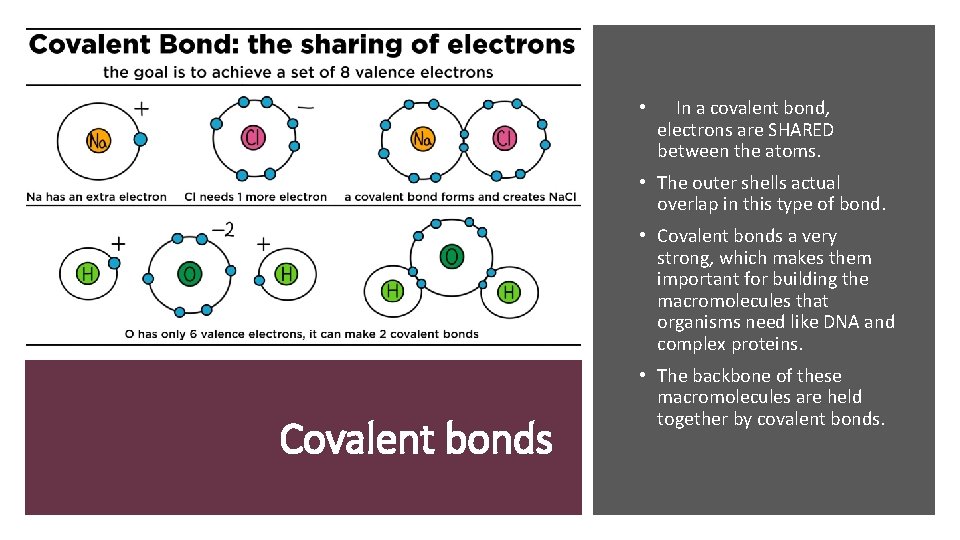
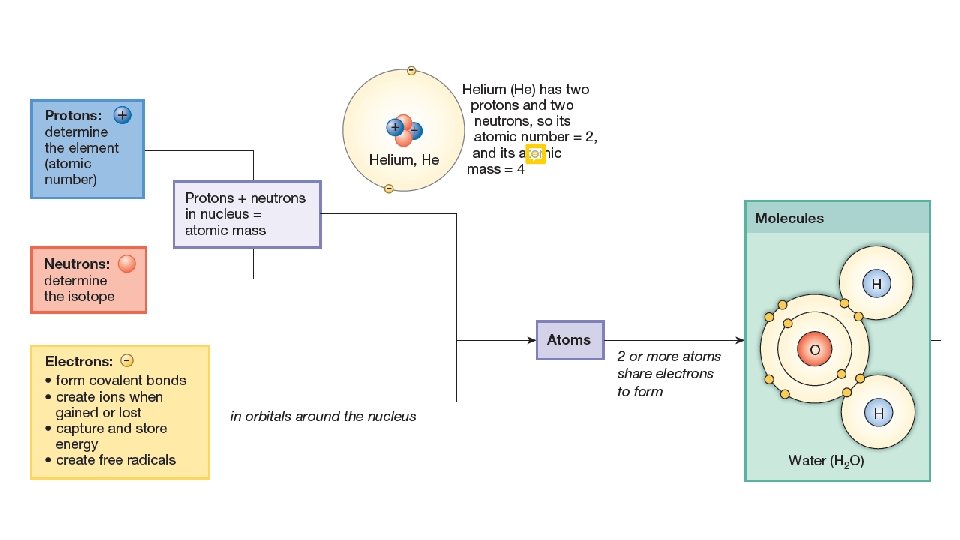
• In a covalent bond, electrons are SHARED between the atoms. • The outer shells actual overlap in this type of bond. • Covalent bonds a very strong, which makes them important for building the macromolecules that organisms need like DNA and complex proteins. Covalent bonds • The backbone of these macromolecules are held together by covalent bonds.
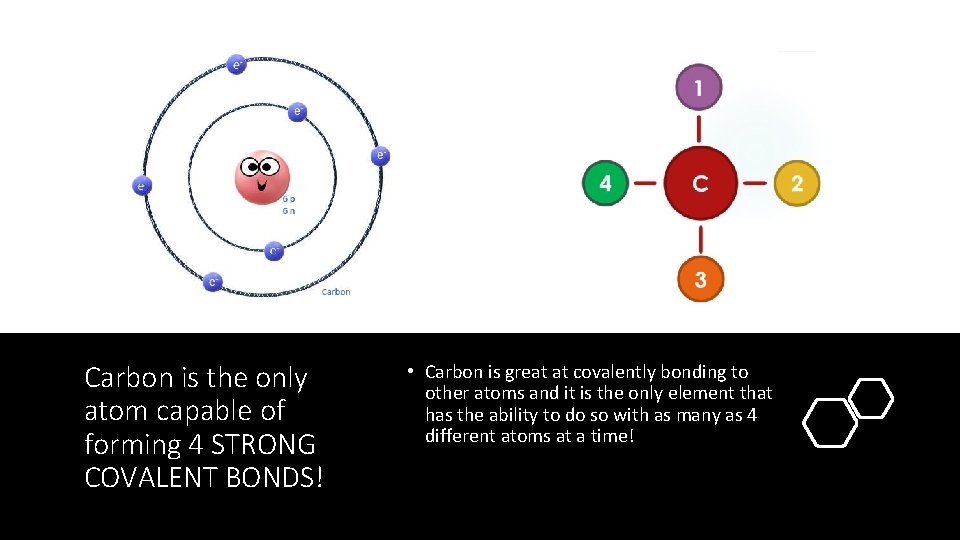
Carbon is the only atom capable of forming 4 STRONG COVALENT BONDS! • Carbon is great at covalently bonding to other atoms and it is the only element that has the ability to do so with as many as 4 different atoms at a time!
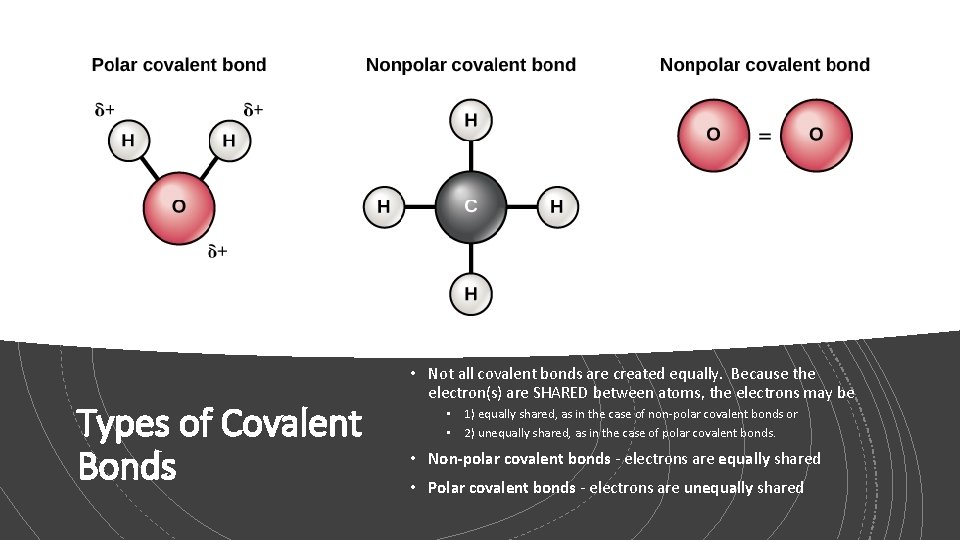
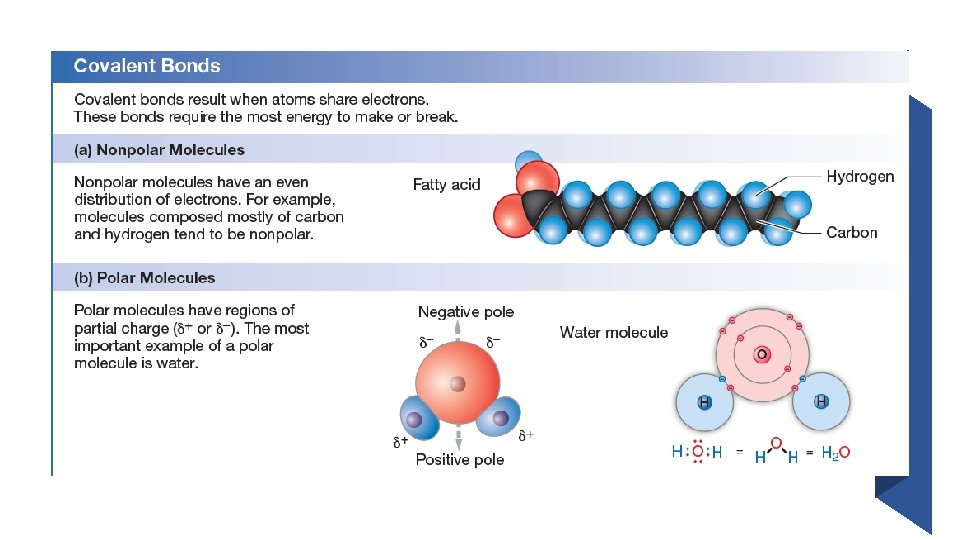
Types of Covalent Bonds • Not all covalent bonds are created equally. Because the electron(s) are SHARED between atoms, the electrons may be • 1) equally shared, as in the case of non-polar covalent bonds or • 2) unequally shared, as in the case of polar covalent bonds. • Non-polar covalent bonds - electrons are equally shared • Polar covalent bonds - electrons are unequally shared
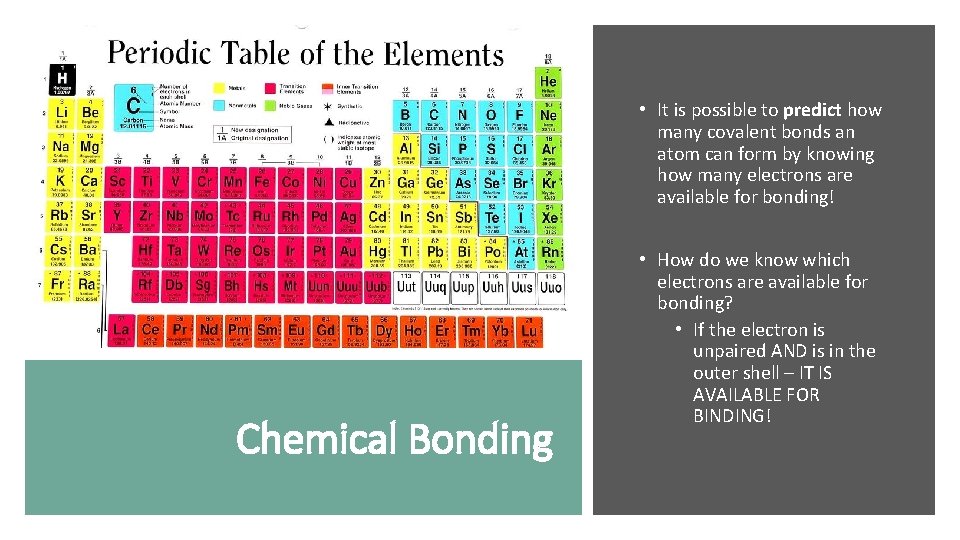
• It is possible to predict how many covalent bonds an atom can form by knowing how many electrons are available for bonding! Chemical Bonding • How do we know which electrons are available for bonding? • If the electron is unpaired AND is in the outer shell – IT IS AVAILABLE FOR BINDING!
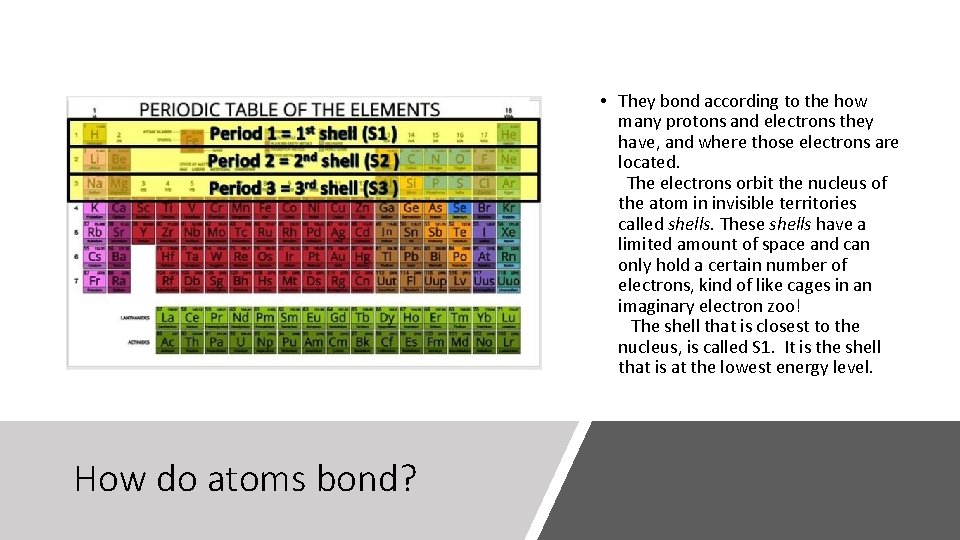
• They bond according to the how many protons and electrons they have, and where those electrons are located. The electrons orbit the nucleus of the atom in invisible territories called shells. These shells have a limited amount of space and can only hold a certain number of electrons, kind of like cages in an imaginary electron zoo! The shell that is closest to the nucleus, is called S 1. It is the shell that is at the lowest energy level. How do atoms bond?
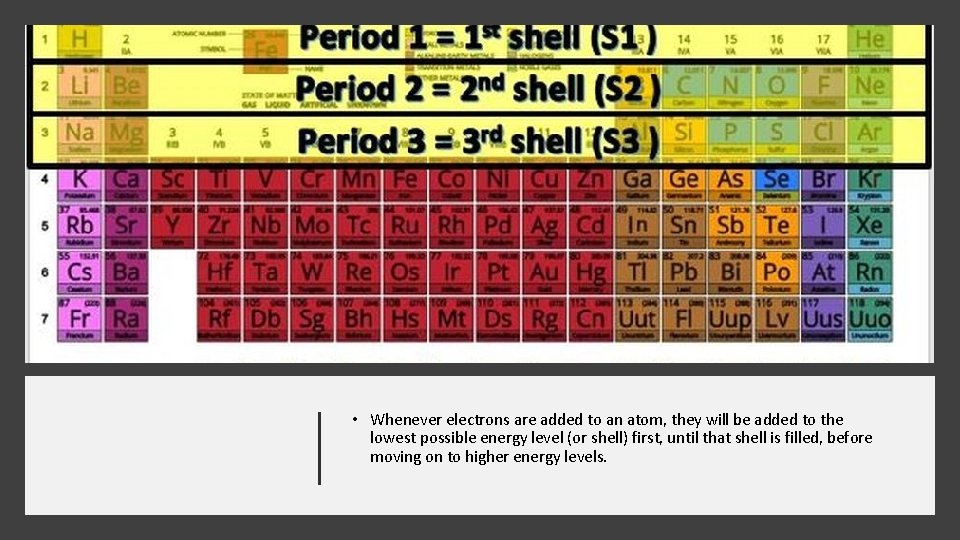
• Whenever electrons are added to an atom, they will be added to the lowest possible energy level (or shell) first, until that shell is filled, before moving on to higher energy levels.
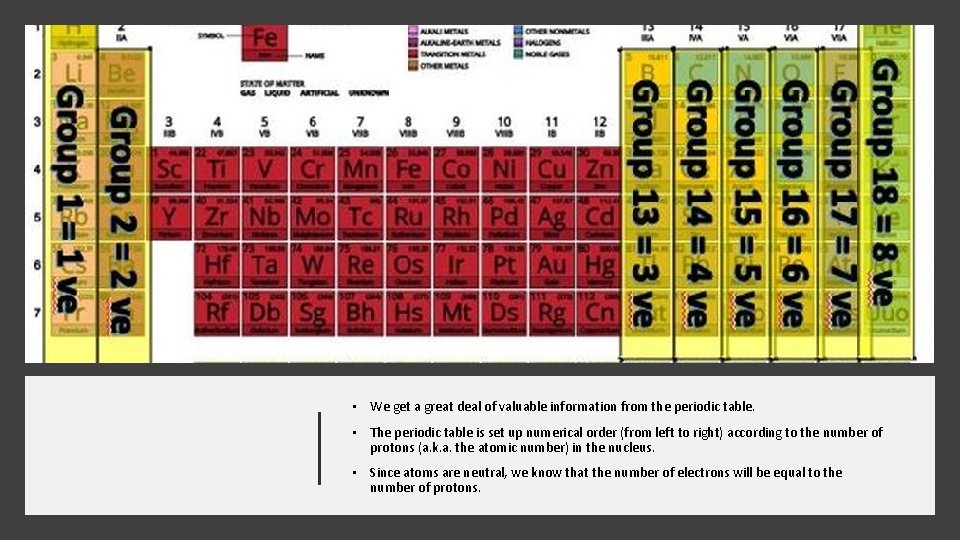
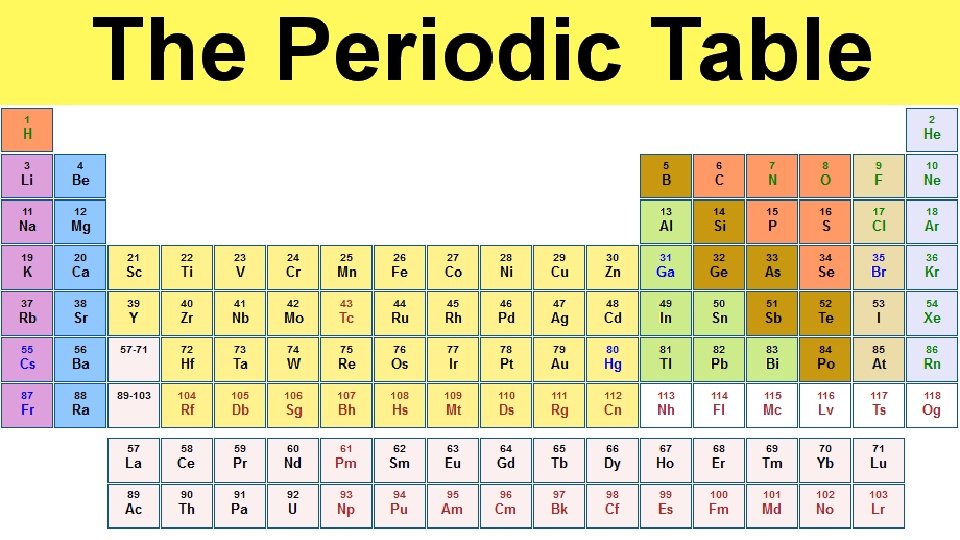
• We get a great deal of valuable information from the periodic table. • The periodic table is set up numerical order (from left to right) according to the number of protons (a. k. a. the atomic number) in the nucleus. • Since atoms are neutral, we know that the number of electrons will be equal to the number of protons.
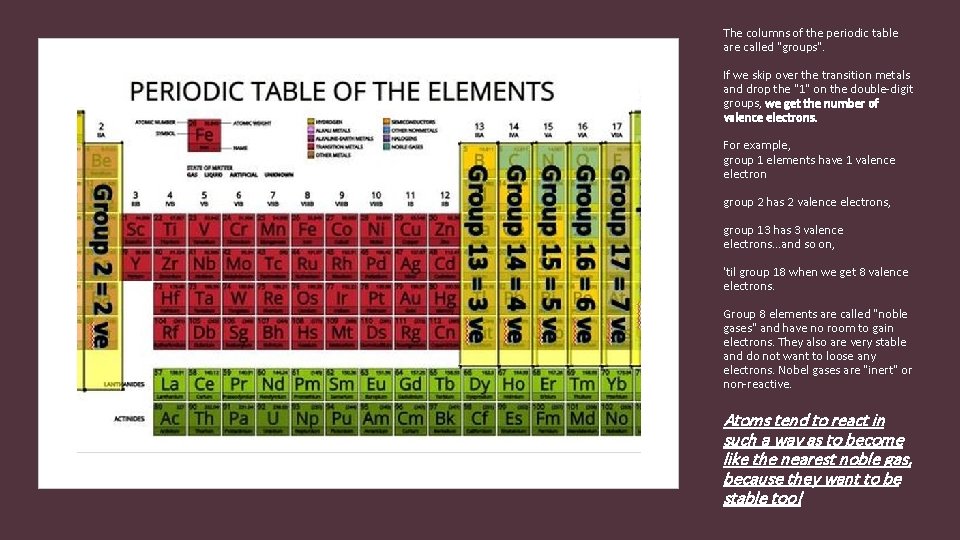
The columns of the periodic table are called "groups". If we skip over the transition metals and drop the "1" on the double-digit groups, we get the number of valence electrons. For example, group 1 elements have 1 valence electron group 2 has 2 valence electrons, group 13 has 3 valence electrons. . . and so on, 'til group 18 when we get 8 valence electrons. Group 8 elements are called "noble gases" and have no room to gain electrons. They also are very stable and do not want to loose any electrons. Nobel gases are "inert" or non-reactive. Atoms tend to react in such a way as to become like the nearest noble gas, because they want to be stable too!
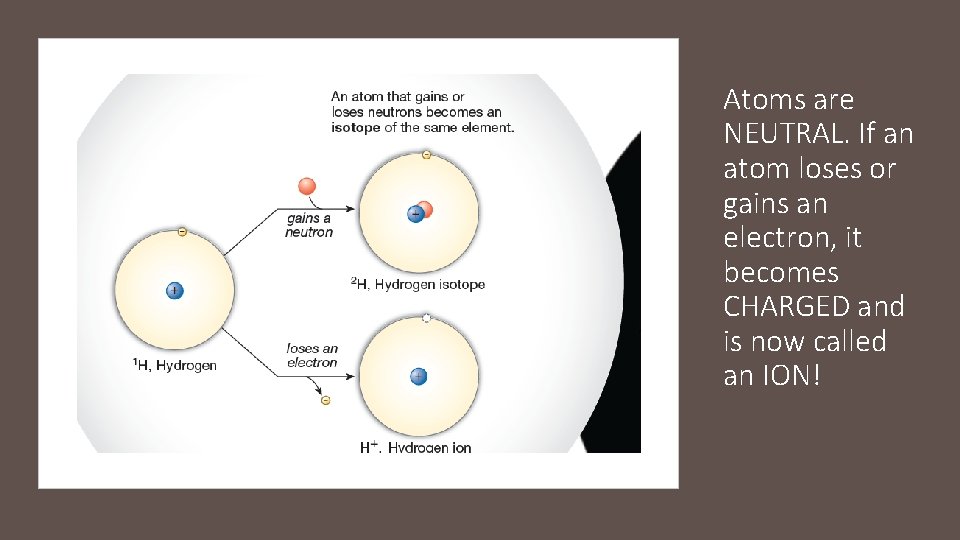
Atoms are NEUTRAL. If an atom loses or gains an electron, it becomes CHARGED and is now called an ION!
Organic Molecules • Most Biomolecules Contain Carbon, Hydrogen, and Oxygen • Molecules that contain large amounts of carbon are known as organic molecules, because it was once thought that they all existed in or were derived from plants and animals. Organic molecules essential for life are often called BIOMOLECULES.
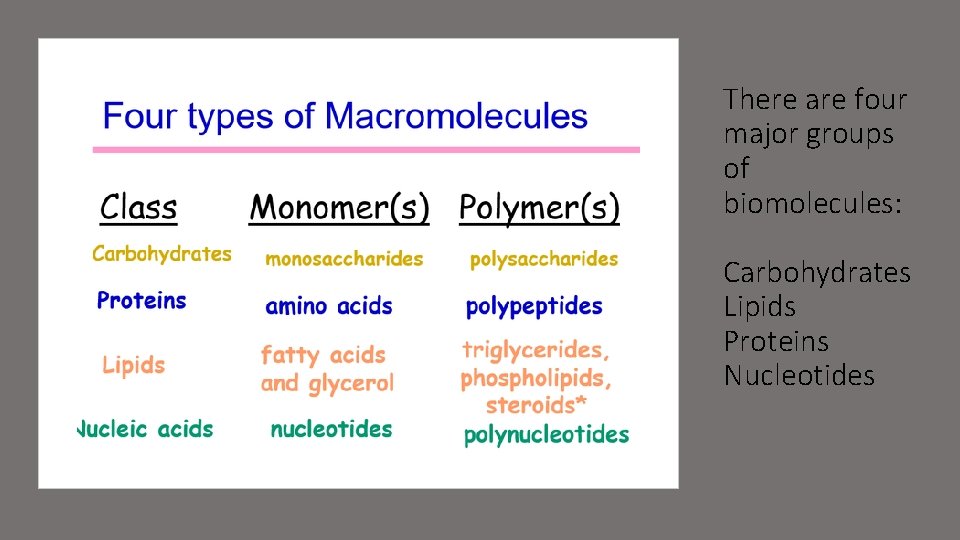
There are four major groups of biomolecules: Carbohydrates Lipids Proteins Nucleotides
Organic Molecules • The body uses carbohydrates, lipids, and proteins for energy and as the building blocks of cellular components.

Organic Molecules • The fourth group, the nucleotides, includes DNA, RNA, ATP, and cyclic AMP. • DNA and RNA are the structural components of genetic material • ATP (adenosine triphosphate) and related molecules carry energy • Cyclic AMP (adenosine monophosphate; c. AMP) and related compounds regulate metabolism
Organic Molecules • Each group of biomolecules has a characteristic composition and molecular structure. • Lipids are mostly carbon and hydrogen • Carbohydrates are primarily carbon, hydrogen, and oxygen, in the ratio CH 2 O • Proteins and nucleotides contain nitrogen in addition to carbon, hydrogen, and oxygen • Two amino acids, the building blocks of proteins, also contain sulfur.
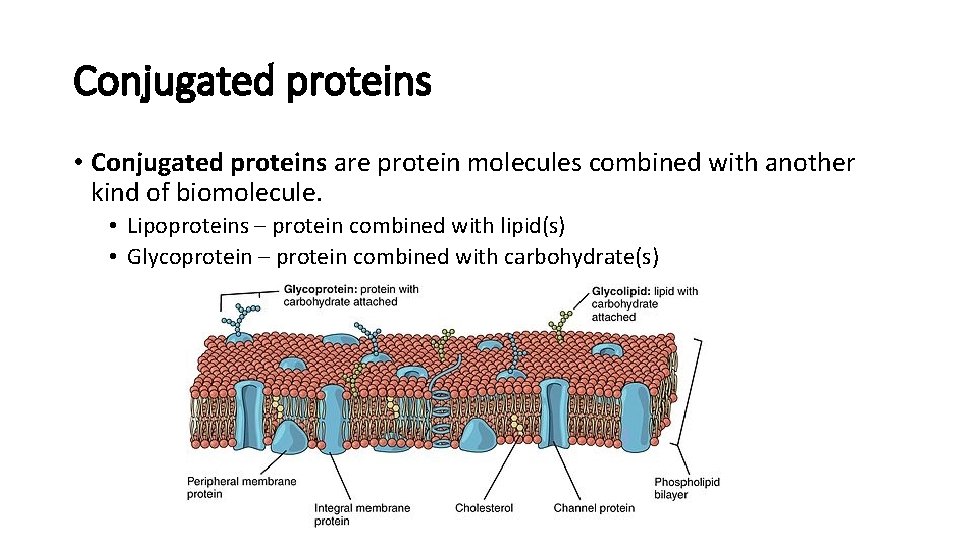
Conjugated proteins • Conjugated proteins are protein molecules combined with another kind of biomolecule. • Lipoproteins – protein combined with lipid(s) • Glycoprotein – protein combined with carbohydrate(s)
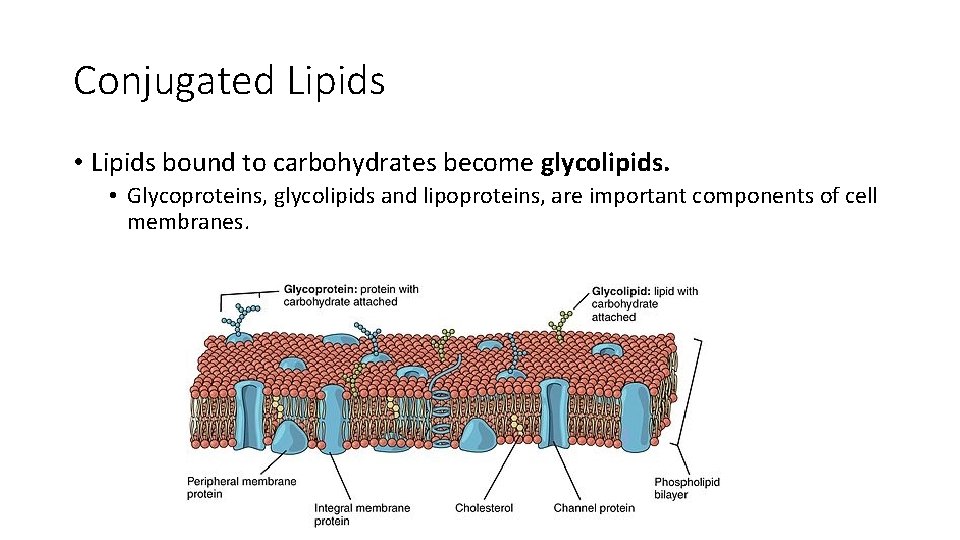
Conjugated Lipids • Lipids bound to carbohydrates become glycolipids. • Glycoproteins, glycolipids and lipoproteins, are important components of cell membranes.
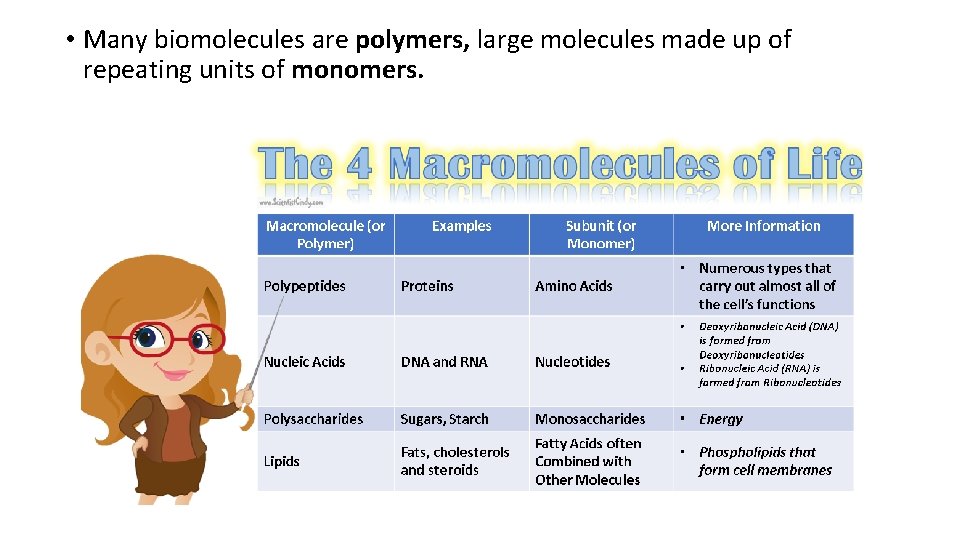
• Many biomolecules are polymers, large molecules made up of repeating units of monomers.
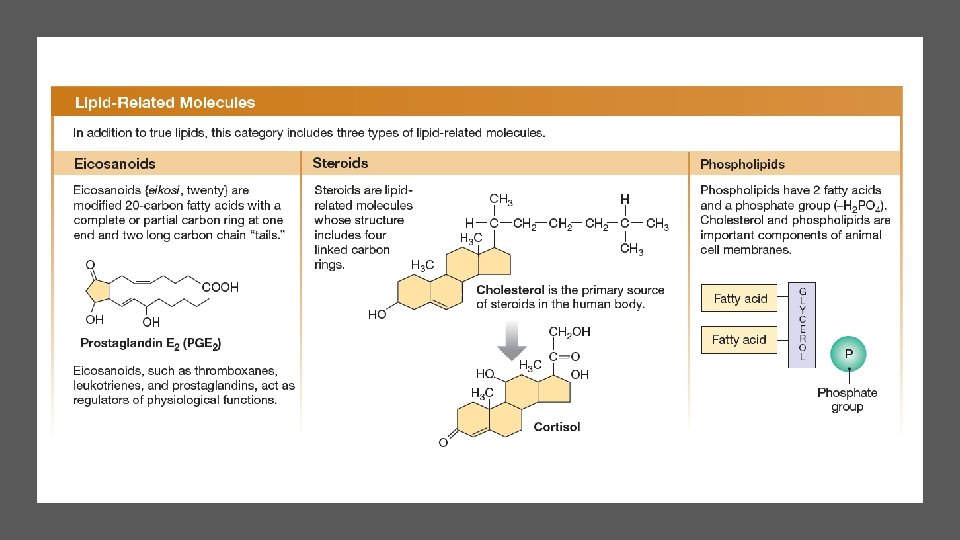
Lipids • Lipids are biomolecules made mostly of carbon and hydrogen. • Most lipids have a backbone of glycerol and 1– 3 fatty acids. • An important characteristic of lipids is that they are nonpolar (hydrophobic) and therefore not very soluble in water.
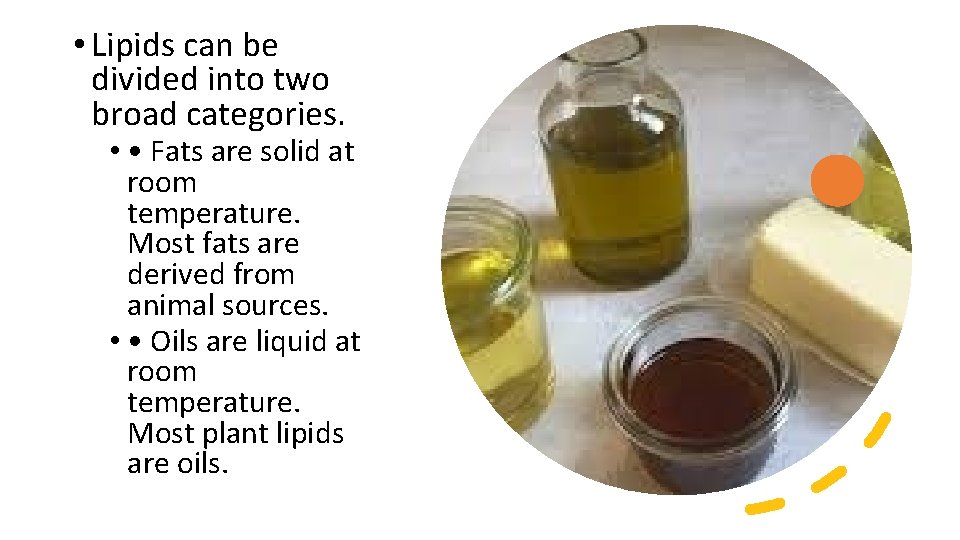
• Lipids can be divided into two broad categories. • • Fats are solid at room temperature. Most fats are derived from animal sources. • • Oils are liquid at room temperature. Most plant lipids are oils.
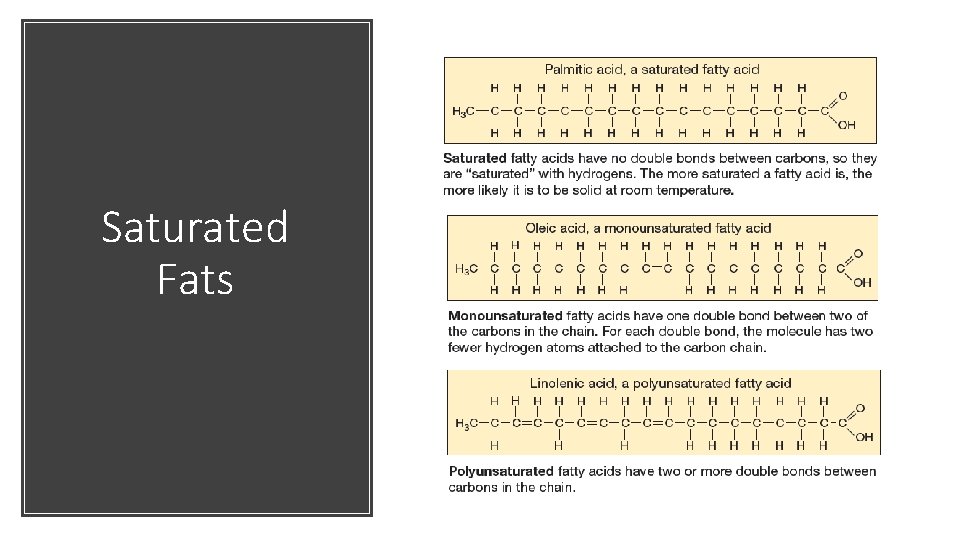
Saturated Fats
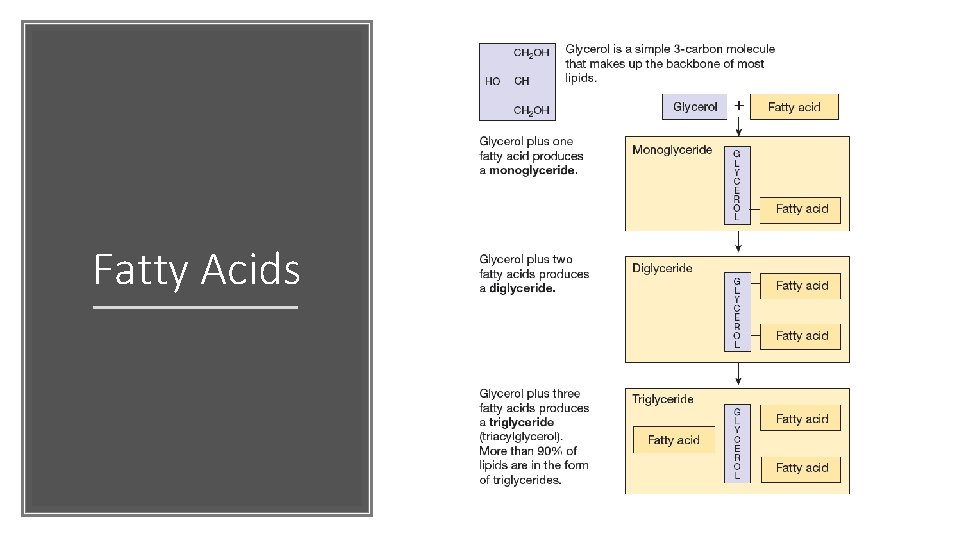
Fatty Acids
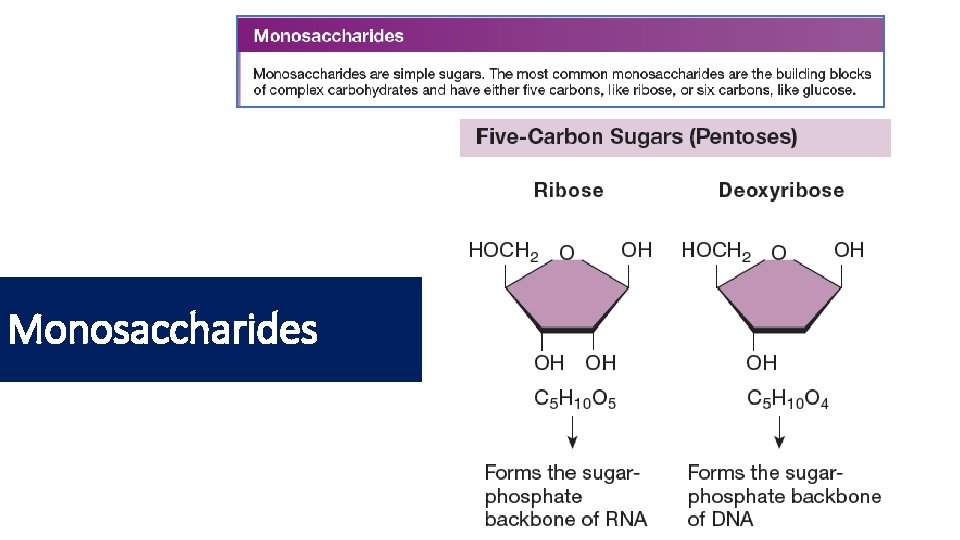
Monosaccharides
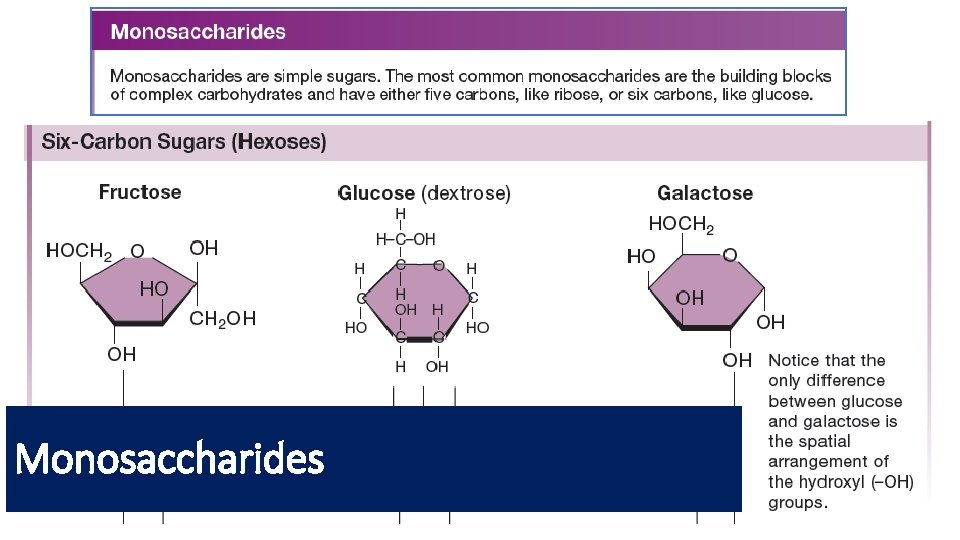
Monosaccharides
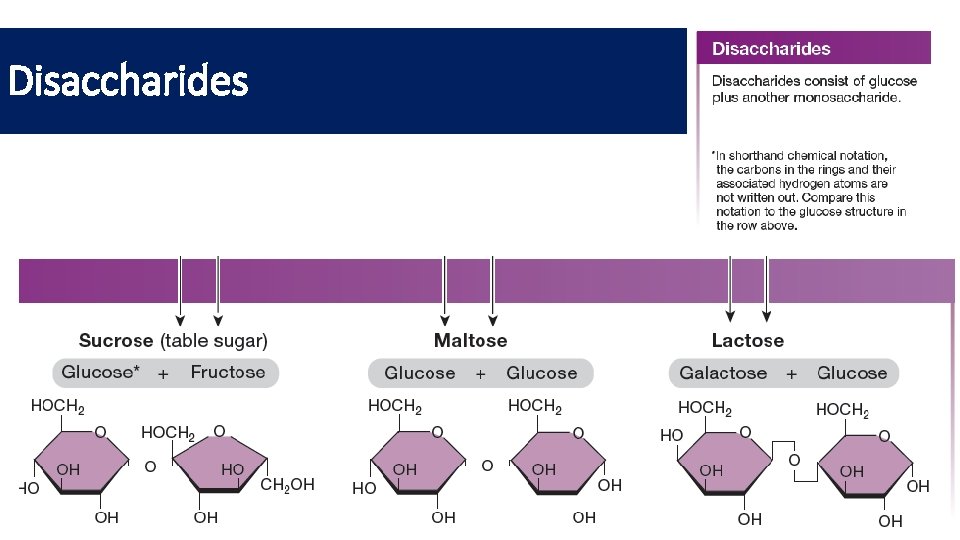
Disaccharides
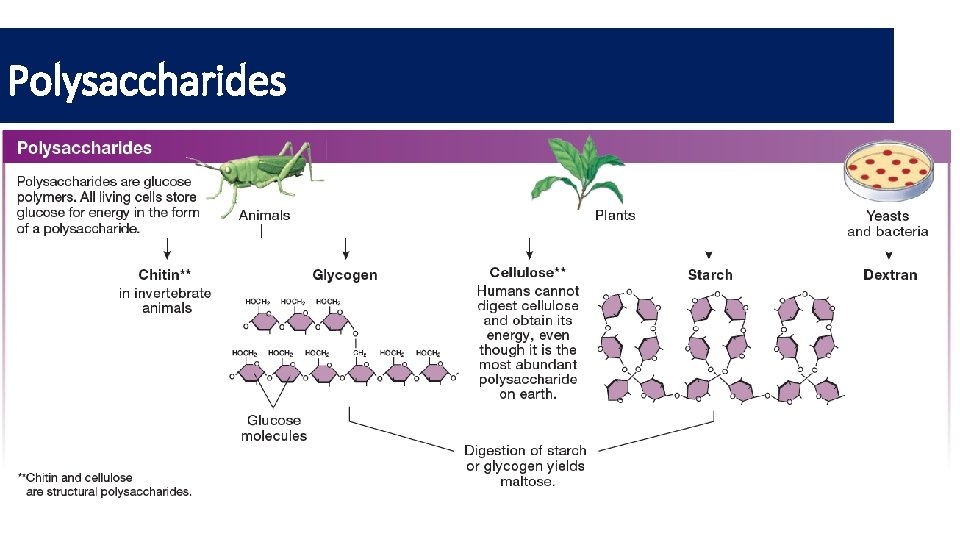
Polysaccharides
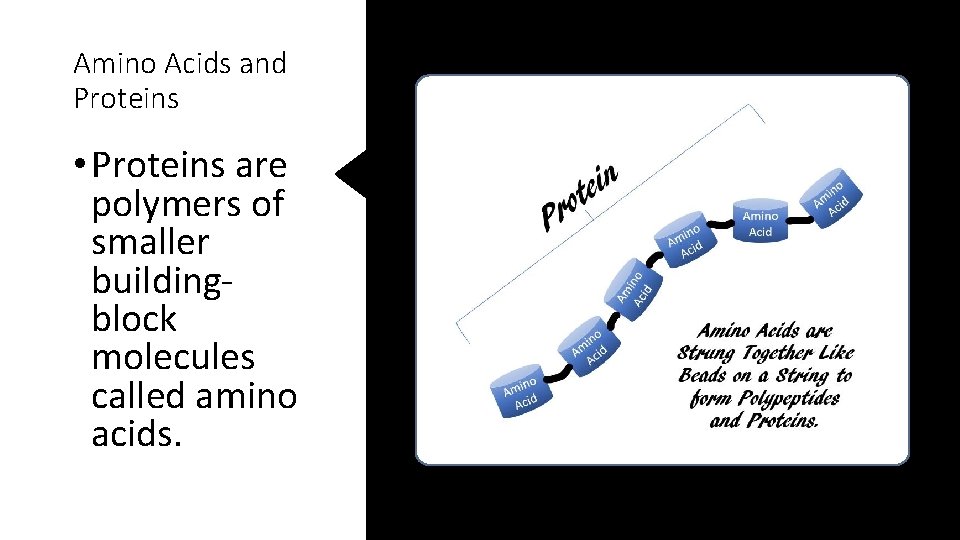
Amino Acids and Proteins • Proteins are polymers of smaller buildingblock molecules called amino acids.
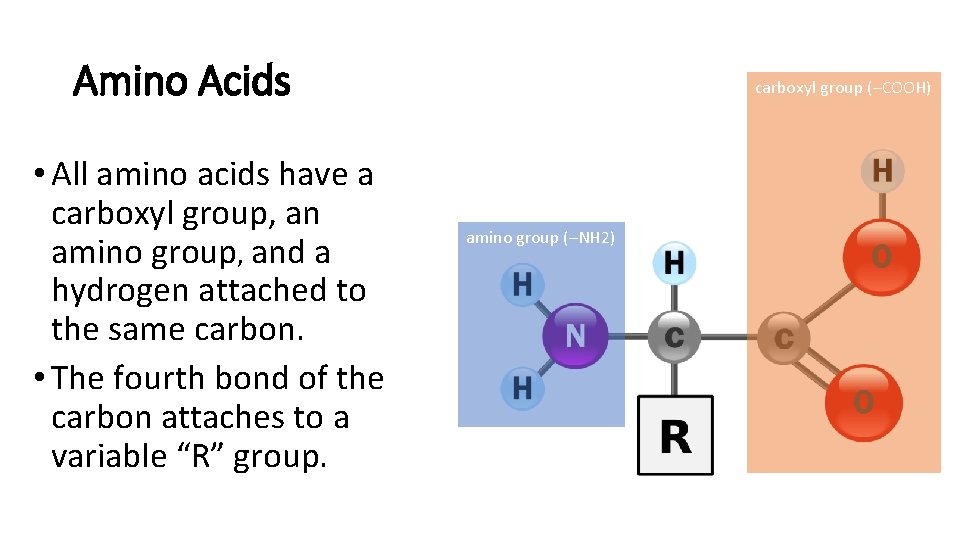
Amino Acids • All amino acids have a carboxyl group, an amino group, and a hydrogen attached to the same carbon. • The fourth bond of the carbon attaches to a variable “R” group. carboxyl group (–COOH) amino group (–NH 2)
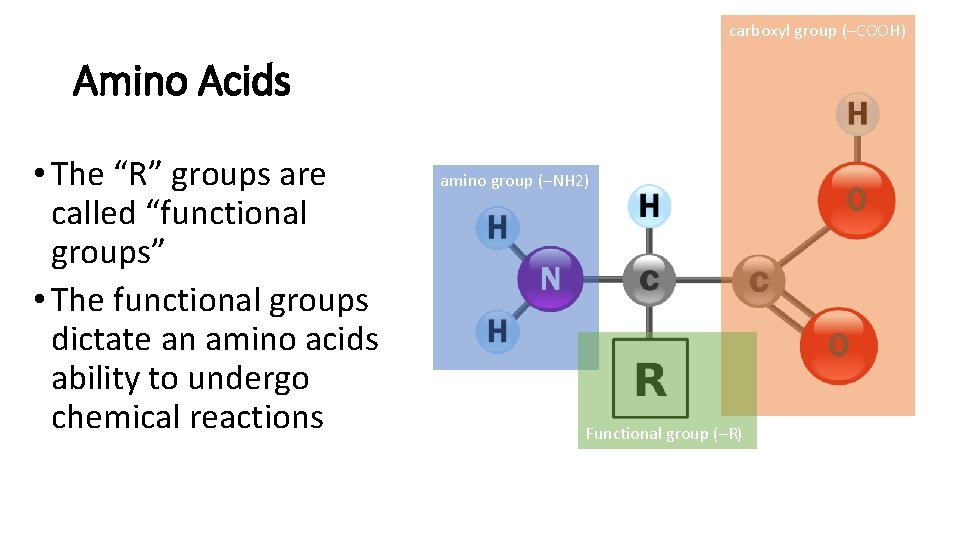
carboxyl group (–COOH) Amino Acids • The “R” groups are called “functional groups” • The functional groups dictate an amino acids ability to undergo chemical reactions amino group (–NH 2) Functional group (–R)
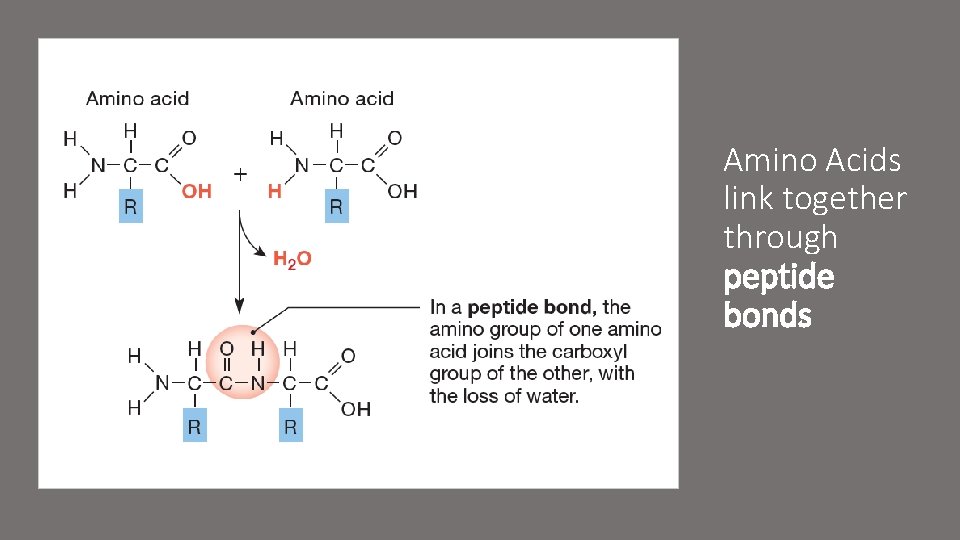
Amino Acids link together through peptide bonds
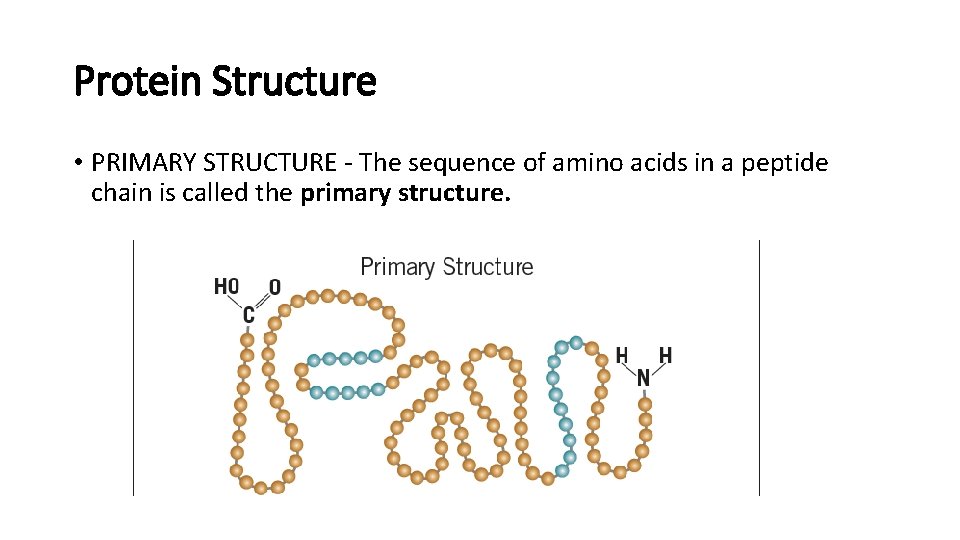
Protein Structure • PRIMARY STRUCTURE - The sequence of amino acids in a peptide chain is called the primary structure.
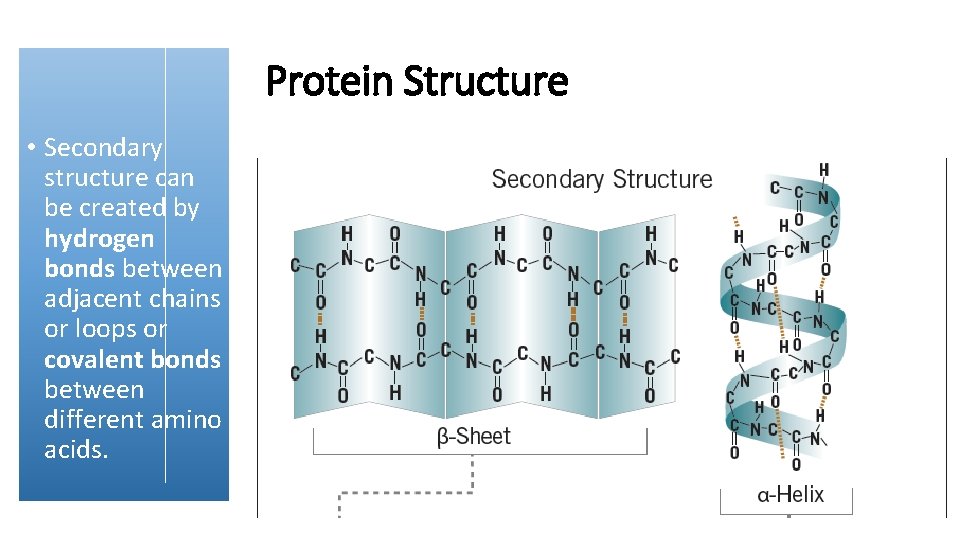
Protein Structure • Secondary structure can be created by hydrogen bonds between adjacent chains or loops or covalent bonds between different amino acids.
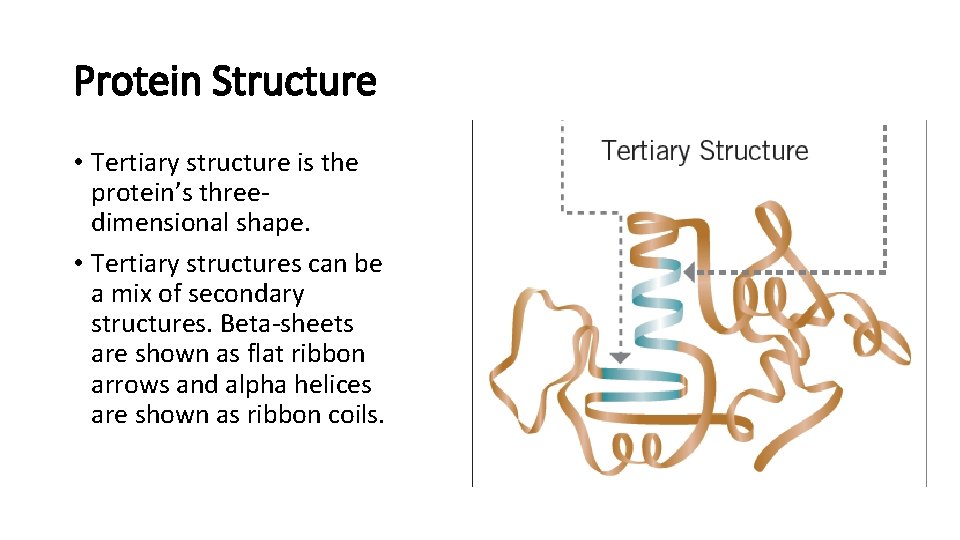
Protein Structure • Tertiary structure is the protein’s threedimensional shape. • Tertiary structures can be a mix of secondary structures. Beta-sheets are shown as flat ribbon arrows and alpha helices are shown as ribbon coils.
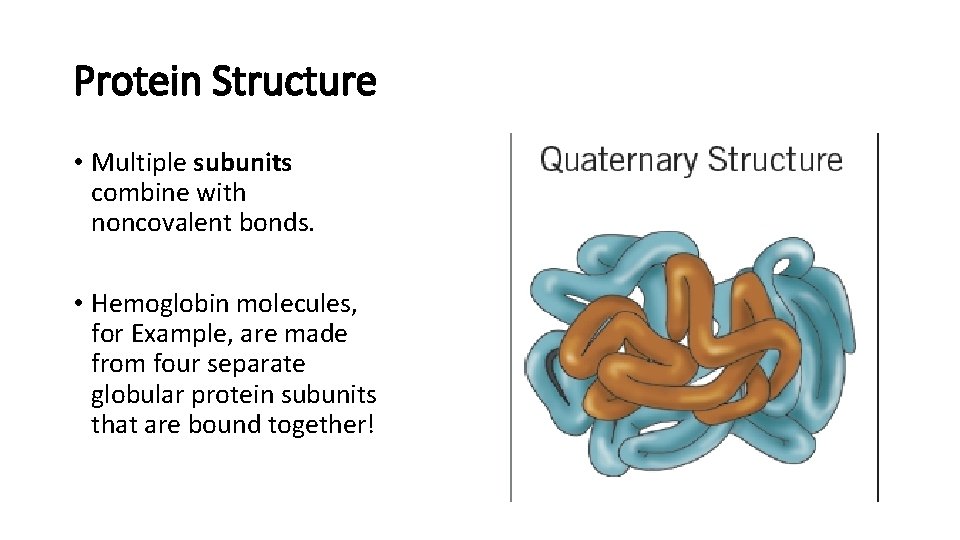
Protein Structure • Multiple subunits combine with noncovalent bonds. • Hemoglobin molecules, for Example, are made from four separate globular protein subunits that are bound together!
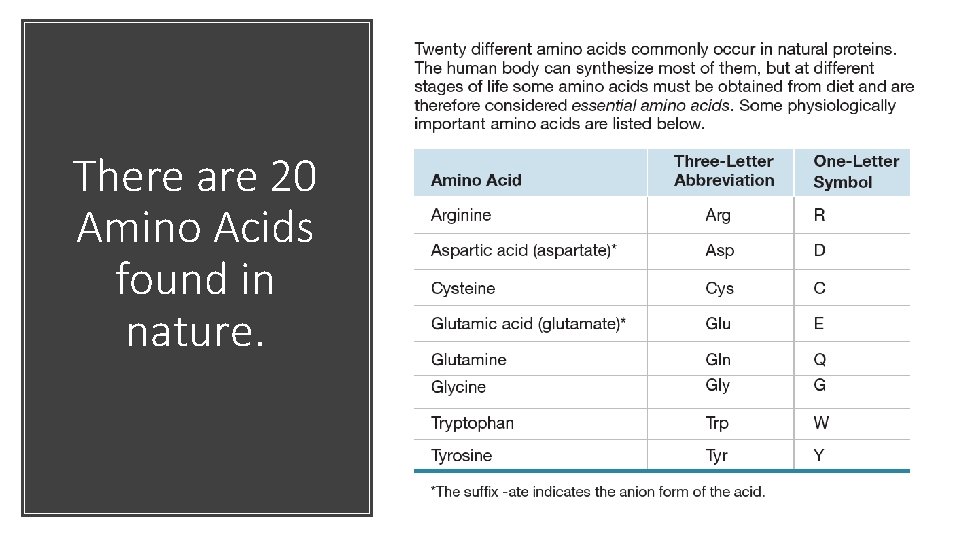
There are 20 Amino Acids found in nature.
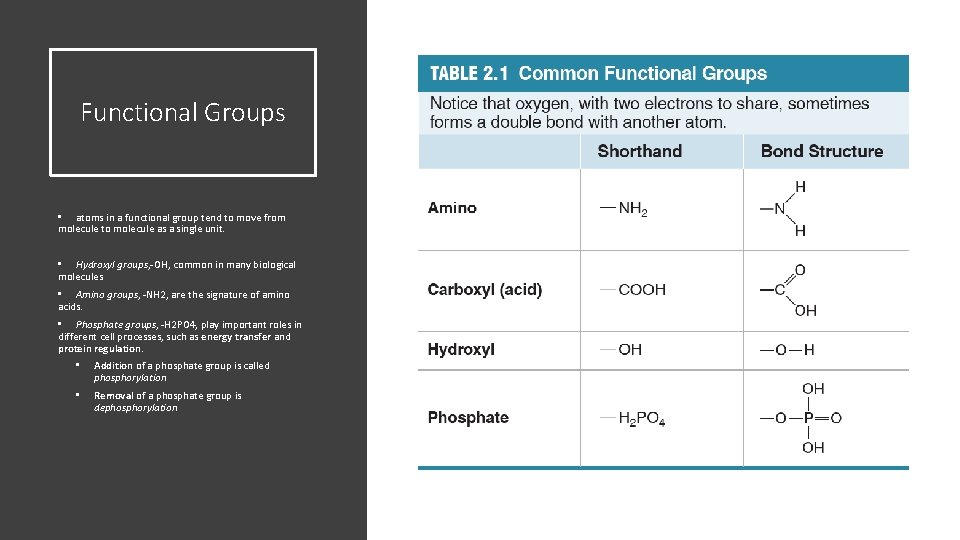
Functional Groups • atoms in a functional group tend to move from molecule to molecule as a single unit. • Hydroxyl groups, -OH, common in many biological molecules • Amino groups, -NH 2, are the signature of amino acids. • Phosphate groups, -H 2 PO 4, play important roles in different cell processes, such as energy transfer and protein regulation. • Addition of a phosphate group is called phosphorylation • Removal of a phosphate group is dephosphorylation
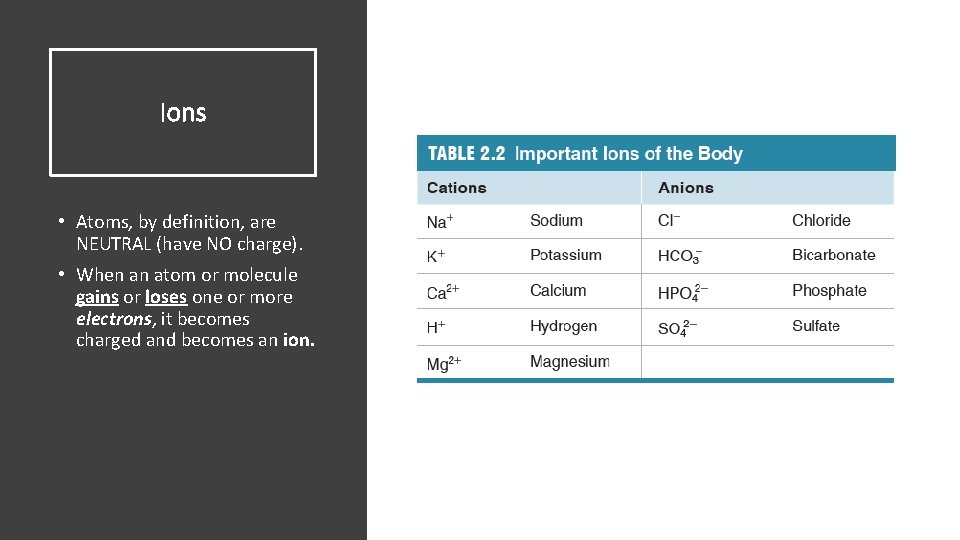
Ions • Atoms, by definition, are NEUTRAL (have NO charge). • When an atom or molecule gains or loses one or more electrons, it becomes charged and becomes an ion.
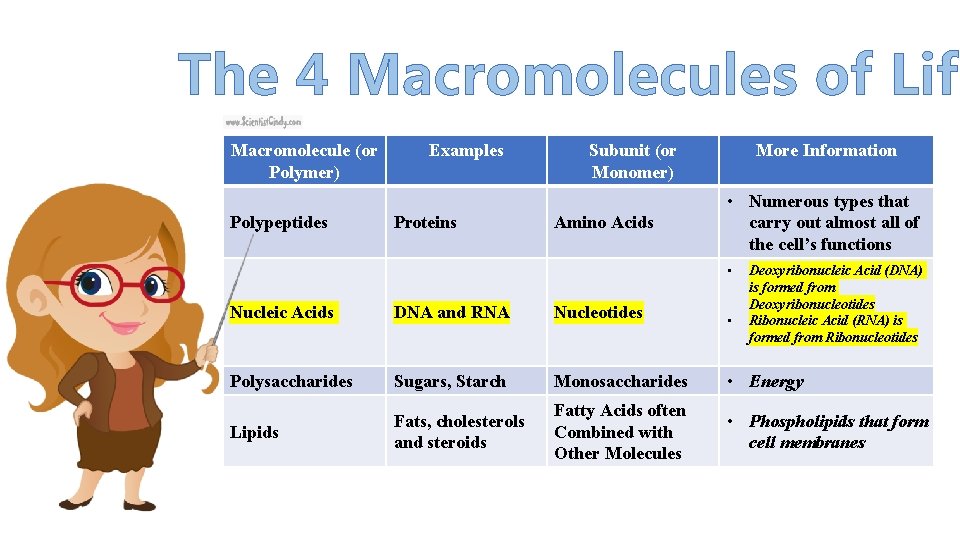
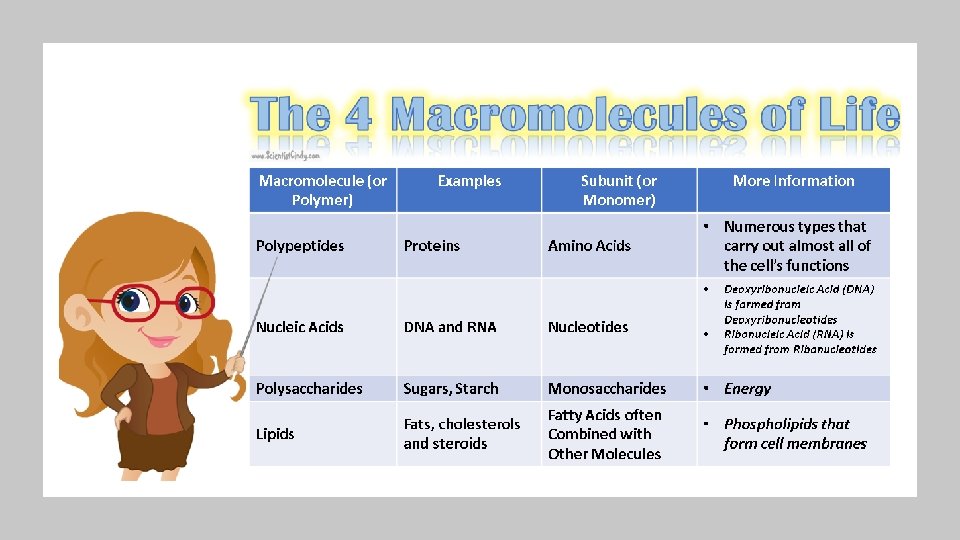
The 4 Macromolecules of Life Macromolecule (or Polymer) Polypeptides Examples Proteins Subunit (or Monomer) Amino Acids More Information • Numerous types that carry out almost all of the cell’s functions • Deoxyribonucleic Acid (DNA) is formed from Deoxyribonucleotides Ribonucleic Acid (RNA) is formed from Ribonucleotides Nucleic Acids DNA and RNA Nucleotides • Polysaccharides Sugars, Starch Monosaccharides • Energy Lipids Fats, cholesterols and steroids Fatty Acids often Combined with Other Molecules • Phospholipids that form cell membranes
STRUCTURE OF Nucleic Acids
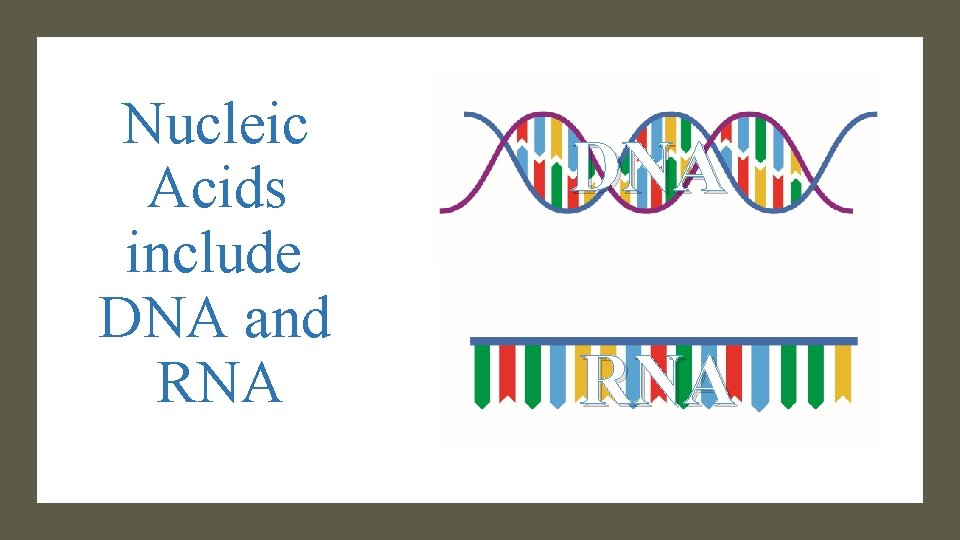
Nucleic Acids include DNA and RNA DNA RNA
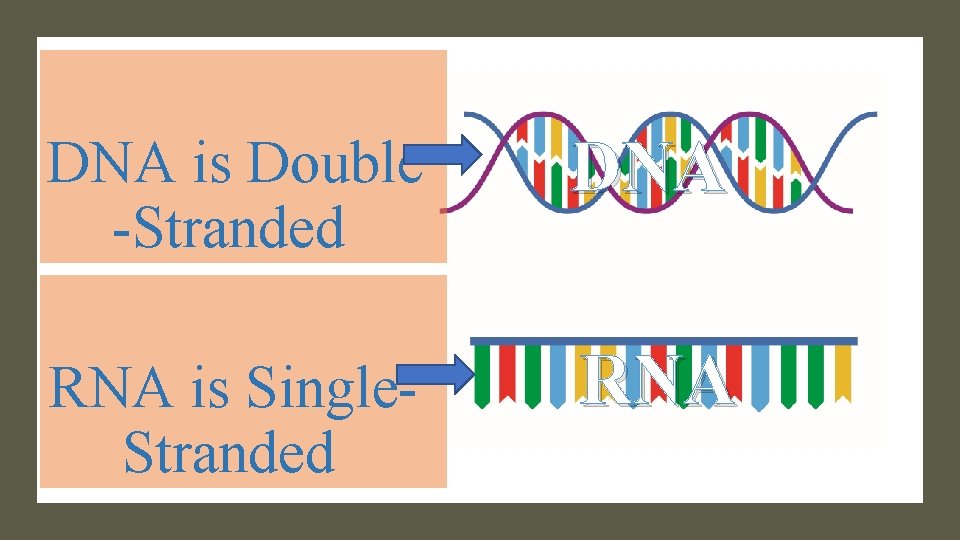
DNA is Double -Stranded DNA RNA is Single. Stranded RNA
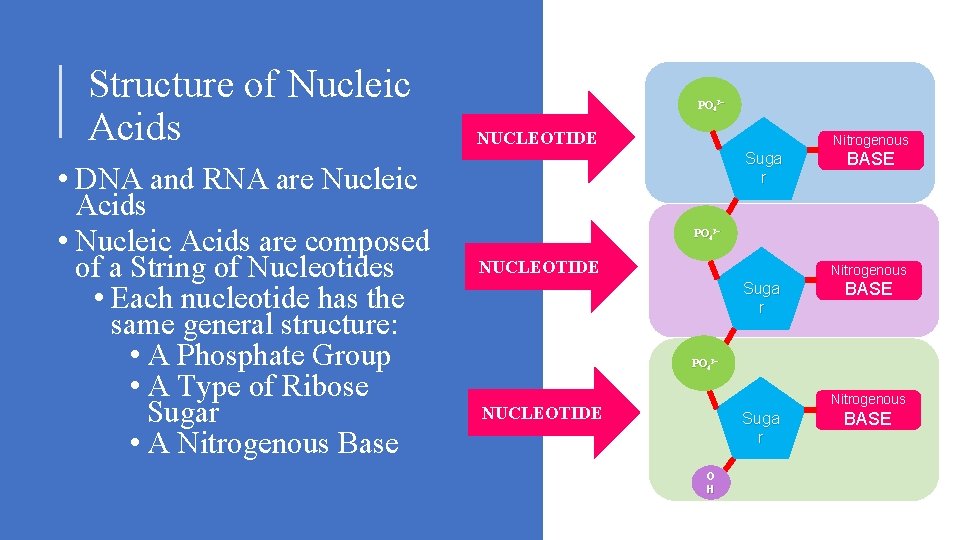
Structure of Nucleic Acids • DNA and RNA are Nucleic Acids • Nucleic Acids are composed of a String of Nucleotides • Each nucleotide has the same general structure: • A Phosphate Group • A Type of Ribose Sugar • A Nitrogenous Base PO 43− NUCLEOTIDE Nitrogenous Suga r BASE PO 43− Nitrogenous NUCLEOTIDE Suga r O H BASE
The Differences Between DNA Nucleotides and RNA Nucleotides

DNA Nucleotides vs RNA Nucleotides • RNA and DNA Nucleotides Both Contain a Phosphate Group
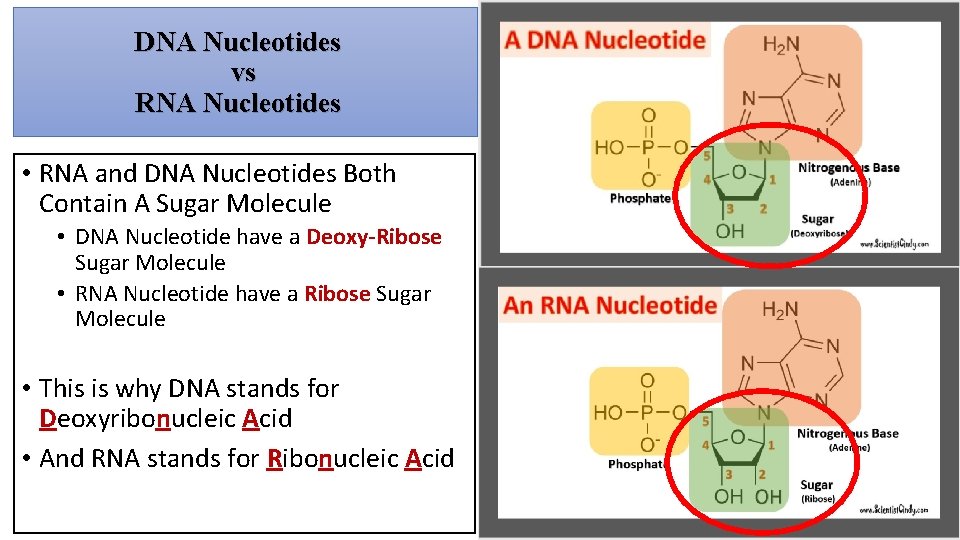
DNA Nucleotides vs RNA Nucleotides • RNA and DNA Nucleotides Both Contain A Sugar Molecule • DNA Nucleotide have a Deoxy-Ribose Sugar Molecule • RNA Nucleotide have a Ribose Sugar Molecule • This is why DNA stands for Deoxyribonucleic Acid • And RNA stands for Ribonucleic Acid
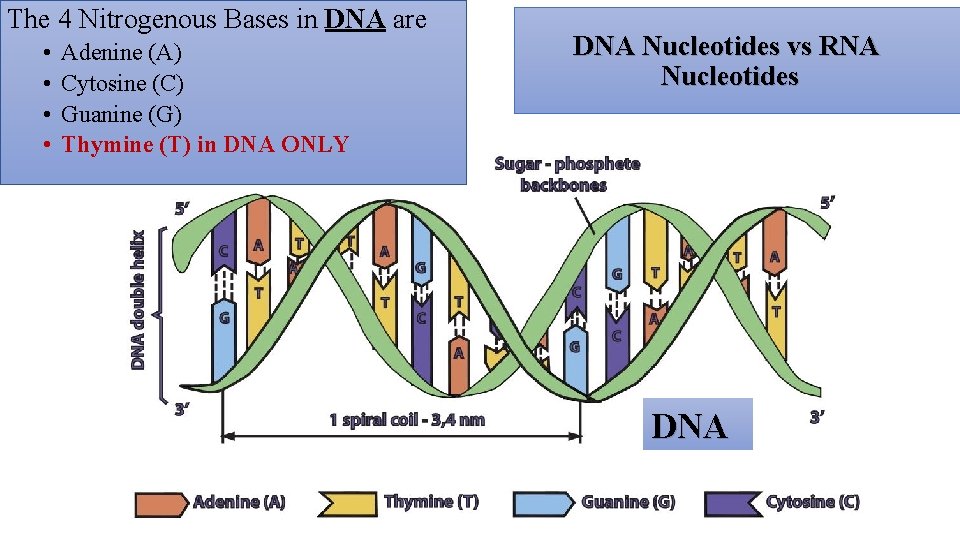
The 4 Nitrogenous Bases in DNA are • • Adenine (A) Cytosine (C) Guanine (G) Thymine (T) in DNA ONLY DNA Nucleotides vs RNA Nucleotides DNA
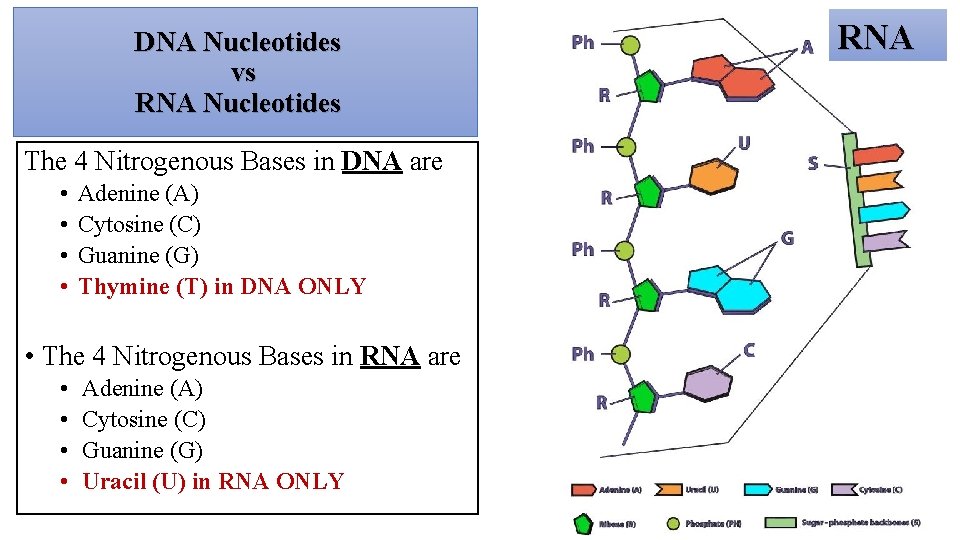
DNA Nucleotides vs RNA Nucleotides The 4 Nitrogenous Bases in DNA are • • Adenine (A) Cytosine (C) Guanine (G) Thymine (T) in DNA ONLY • The 4 Nitrogenous Bases in RNA are • • Adenine (A) Cytosine (C) Guanine (G) Uracil (U) in RNA ONLY RNA
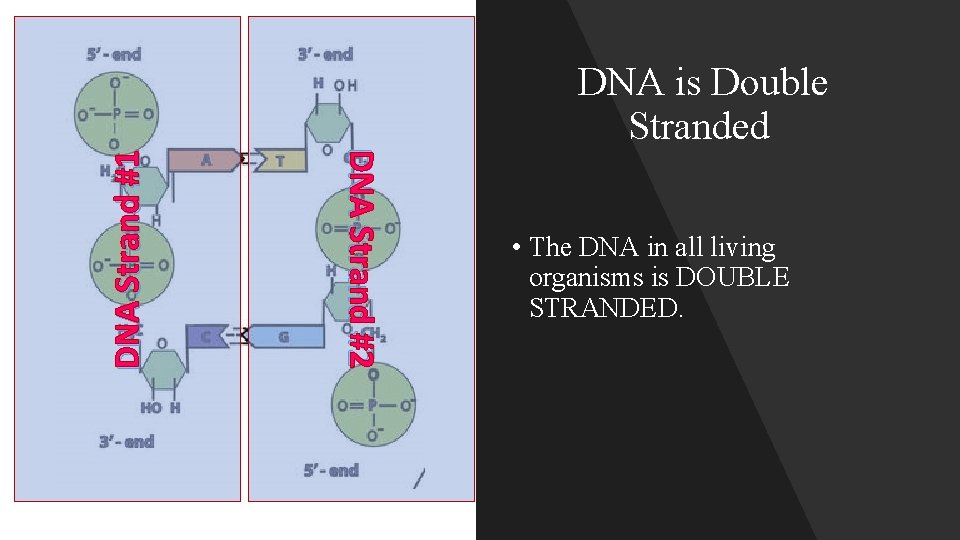
DNA Strand #1 DNA Strand #2 DNA is Double Stranded • The DNA in all living organisms is DOUBLE STRANDED.
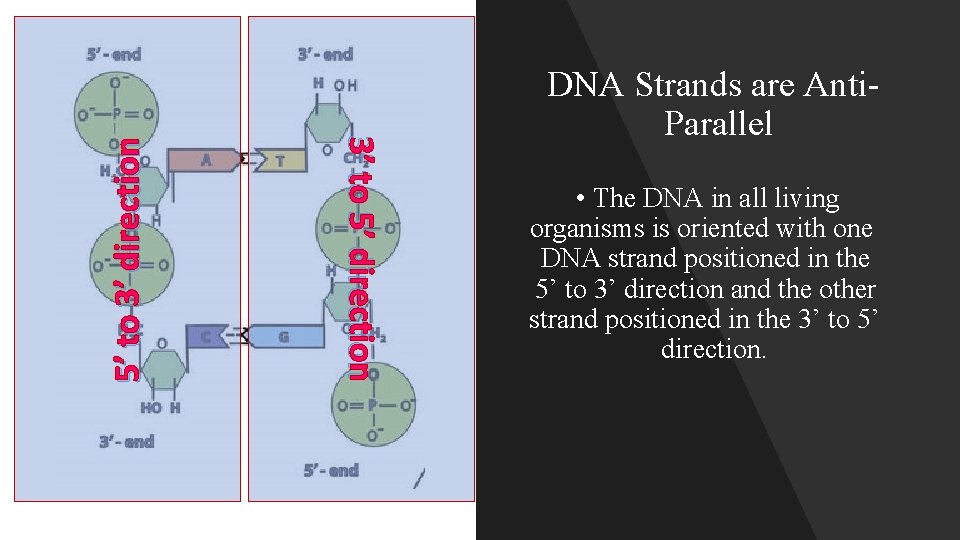
5’ to 3’ direction 3’ to 5’ direction DNA Strands are Anti. Parallel • The DNA in all living organisms is oriented with one DNA strand positioned in the 5’ to 3’ direction and the other strand positioned in the 3’ to 5’ direction.
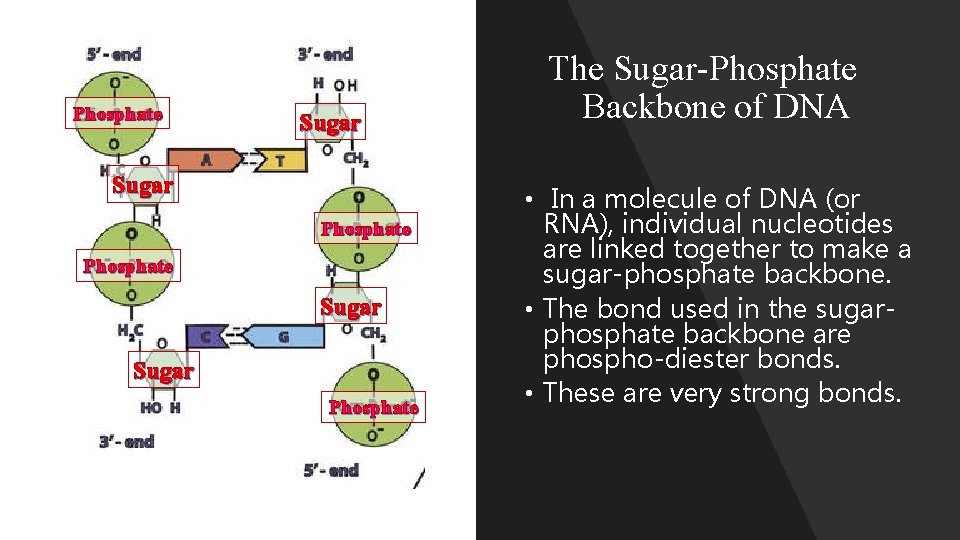
Phosphate Sugar Phosphate The Sugar-Phosphate Backbone of DNA • In a molecule of DNA (or RNA), individual nucleotides are linked together to make a sugar-phosphate backbone. • The bond used in the sugarphosphate backbone are phospho-diester bonds. • These are very strong bonds.
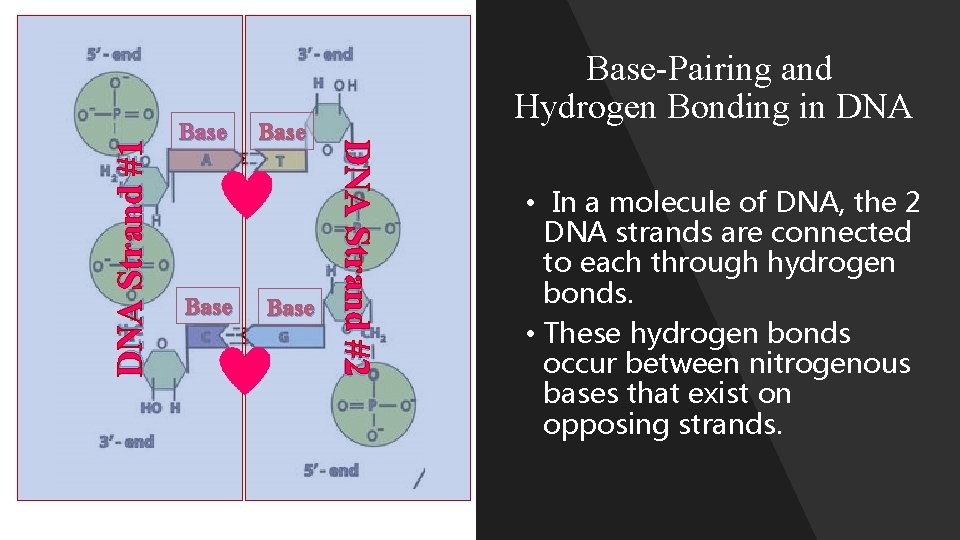
DNA Strand #1 Base DNA Strand #2 Base-Pairing and Hydrogen Bonding in DNA • In a molecule of DNA, the 2 DNA strands are connected to each through hydrogen bonds. • These hydrogen bonds occur between nitrogenous bases that exist on opposing strands.
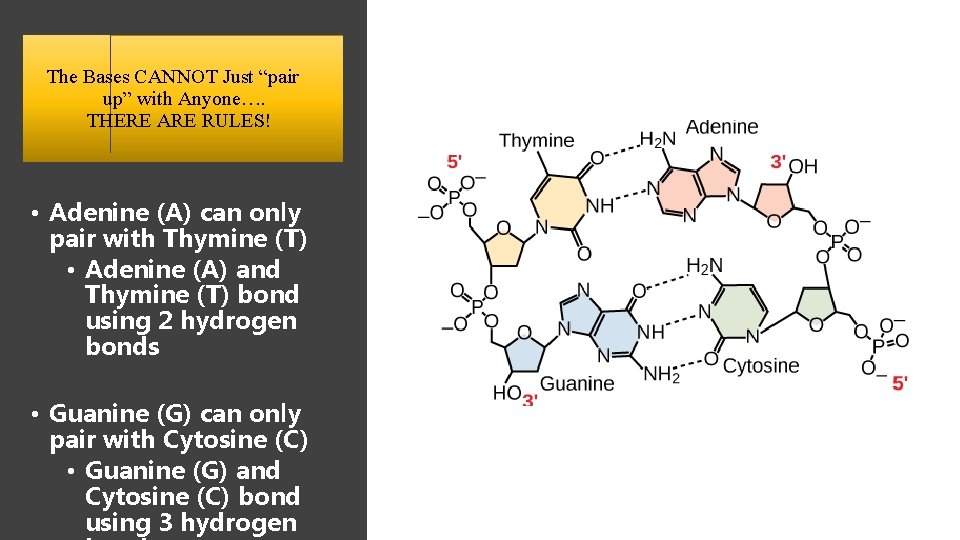
The Bases CANNOT Just “pair up” with Anyone…. THERE ARE RULES! • Adenine (A) can only pair with Thymine (T) • Adenine (A) and Thymine (T) bond using 2 hydrogen bonds • Guanine (G) can only pair with Cytosine (C) • Guanine (G) and Cytosine (C) bond using 3 hydrogen
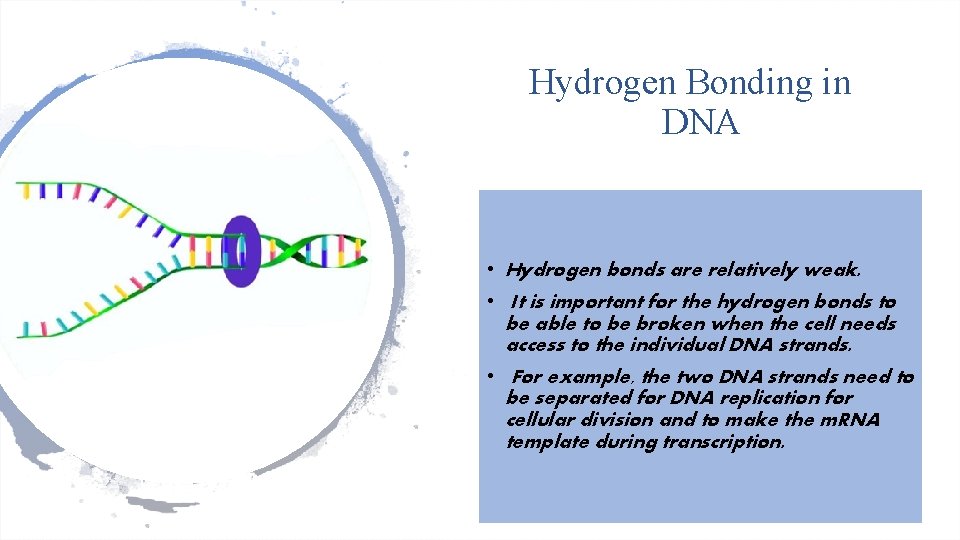
Hydrogen Bonding in DNA • Hydrogen bonds are relatively weak. • It is important for the hydrogen bonds to be able to be broken when the cell needs access to the individual DNA strands. • For example, the two DNA strands need to be separated for DNA replication for cellular division and to make the m. RNA template during transcription.
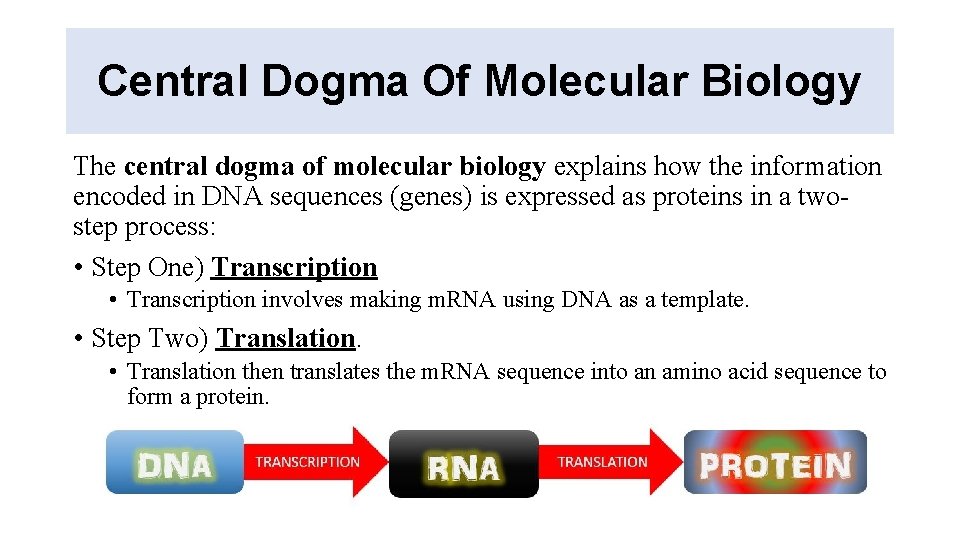
Central Dogma Of Molecular Biology The central dogma of molecular biology explains how the information encoded in DNA sequences (genes) is expressed as proteins in a twostep process: • Step One) Transcription • Transcription involves making m. RNA using DNA as a template. • Step Two) Translation. • Translation then translates the m. RNA sequence into an amino acid sequence to form a protein.
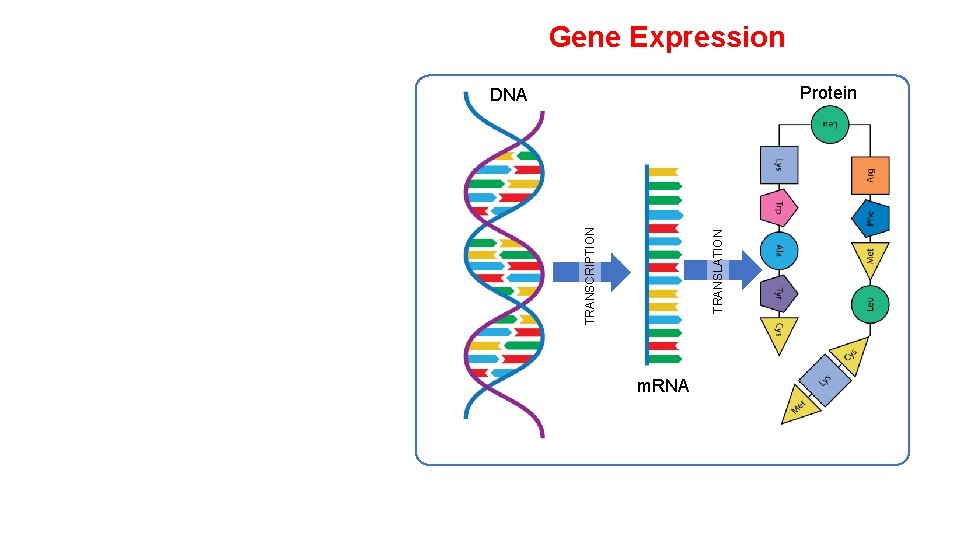
Gene Expression Protein TRANSLATION TRANSCRIPTION DNA m. RNA
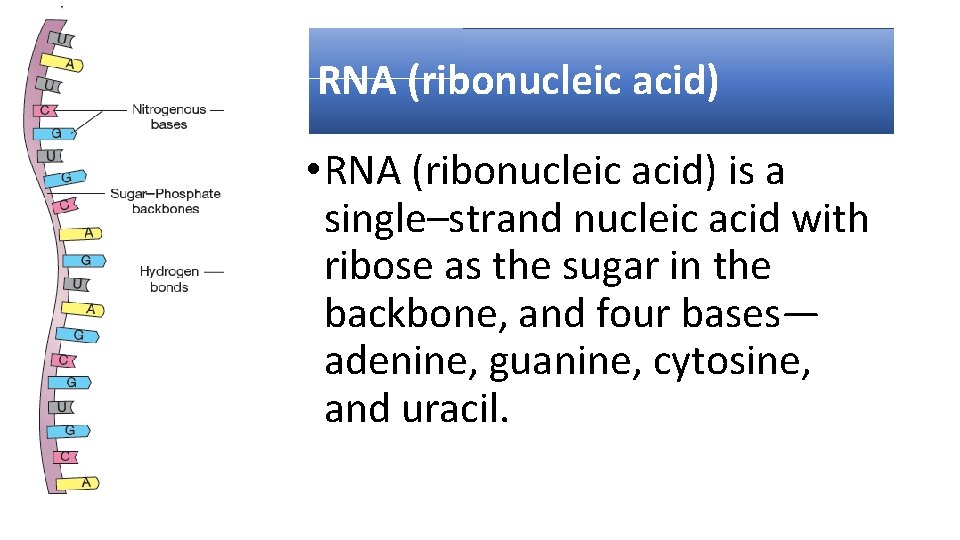
RNA (ribonucleic acid) • RNA (ribonucleic acid) is a single–strand nucleic acid with ribose as the sugar in the backbone, and four bases— adenine, guanine, cytosine, and uracil.
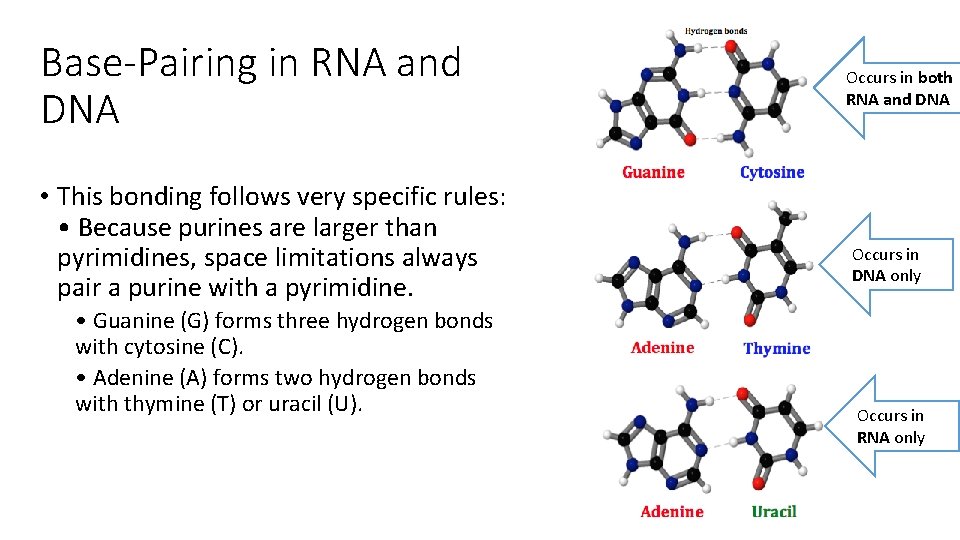
Base-Pairing in RNA and DNA • This bonding follows very specific rules: • Because purines are larger than pyrimidines, space limitations always pair a purine with a pyrimidine. • Guanine (G) forms three hydrogen bonds with cytosine (C). • Adenine (A) forms two hydrogen bonds with thymine (T) or uracil (U). Occurs in both RNA and DNA Occurs in DNA only Occurs in RNA only
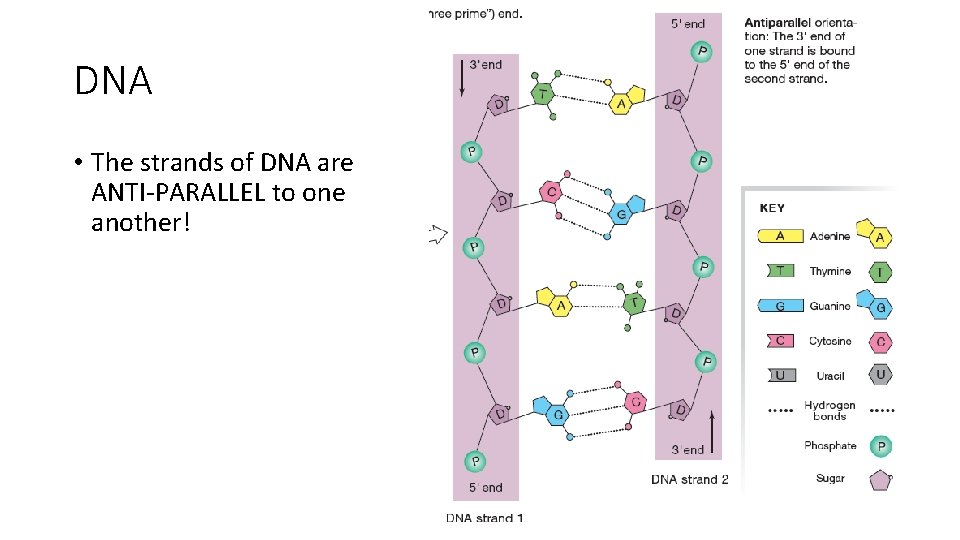
DNA • The strands of DNA are ANTI-PARALLEL to one another!
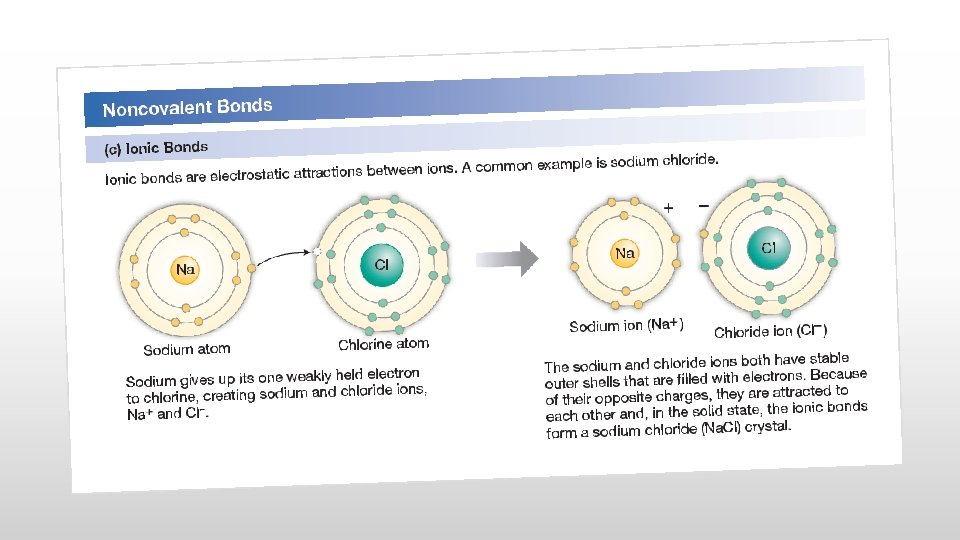
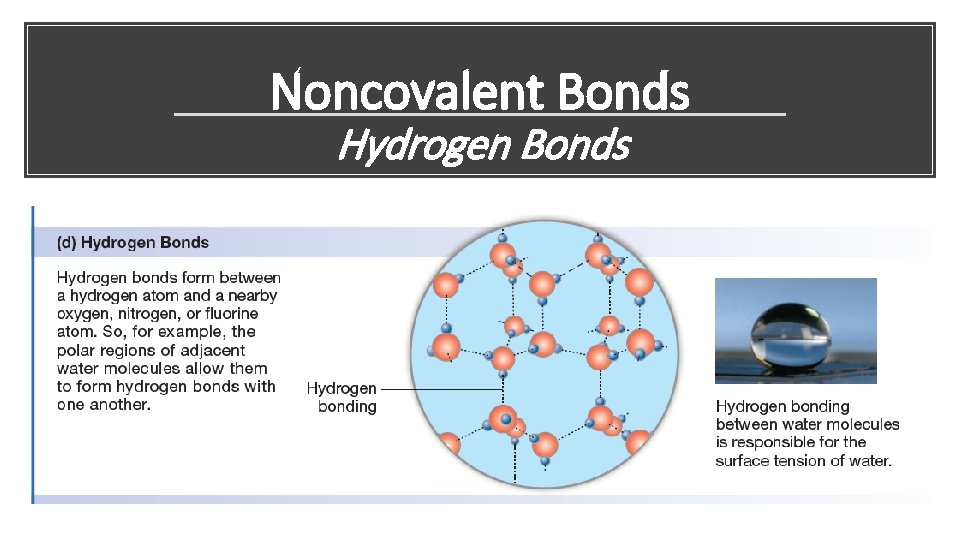
Noncovalent Bonds Hydrogen Bonds
• The degree to which a molecule is able to dissolve in a solvent is the molecule’s solubility: the more easily a molecule dissolves, the higher its solubility. Solubility • Water, the biological solvent, is polar, so molecules that dissolve readily in water are polar or ionic molecules whose positive and negative regions readily interact with water.
• Molecules that dissolve easily in water are said to be hydrophilic {-philic, loving}. Solubility • Molecules such as oils that do not dissolve well in water are said to be hydrophobic {-phobic, hating}. • Hydrophobic substances are usually nonpolar molecules that cannot form hydrogen bonds with water molecules. • The lipids (fats and oils) are the most hydrophobic group of biological molecules.
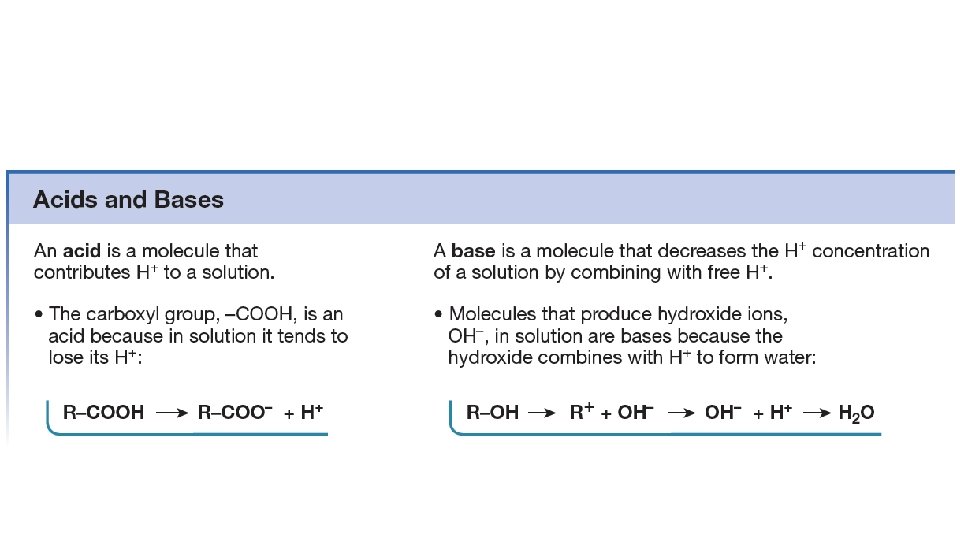
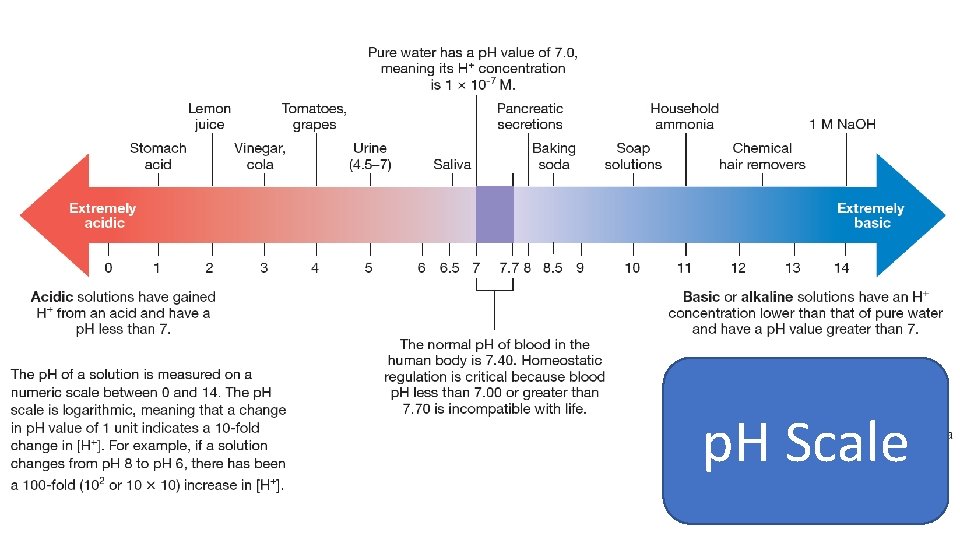
p. H Scale
Proteins – the workers of the cell! • Proteins play important roles in so many cell functions that we can consider them the “workhorses” of the body. • Most soluble proteins fall into seven broad categories.
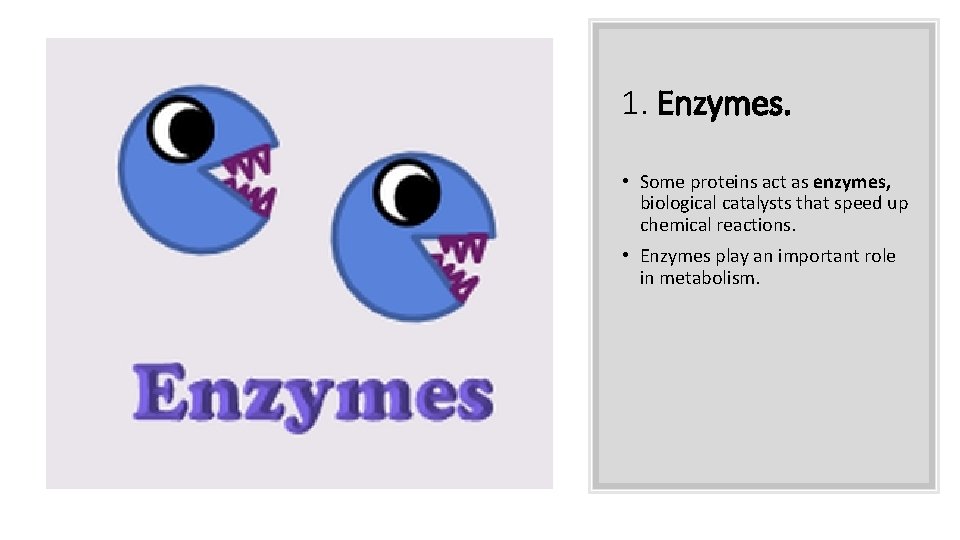
1. Enzymes. • Some proteins act as enzymes, biological catalysts that speed up chemical reactions. • Enzymes play an important role in metabolism.
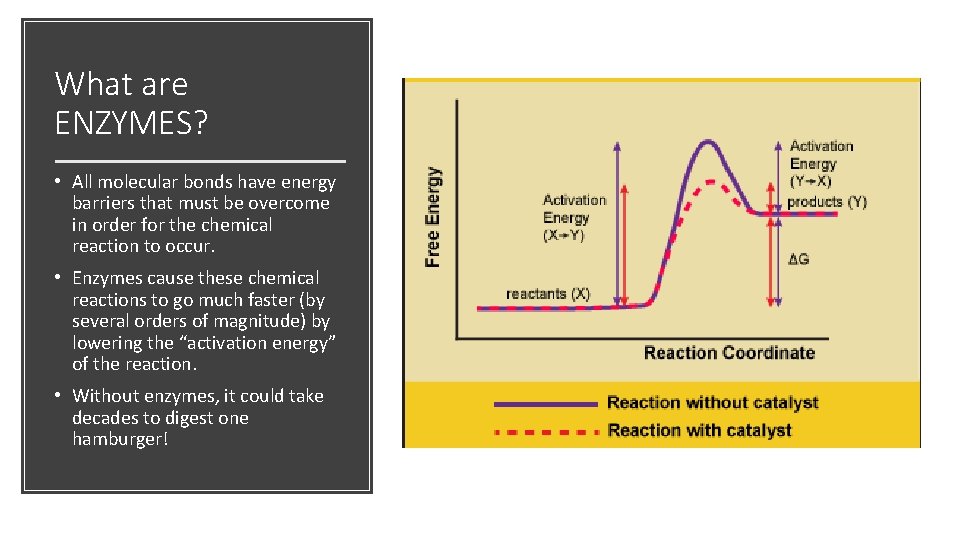
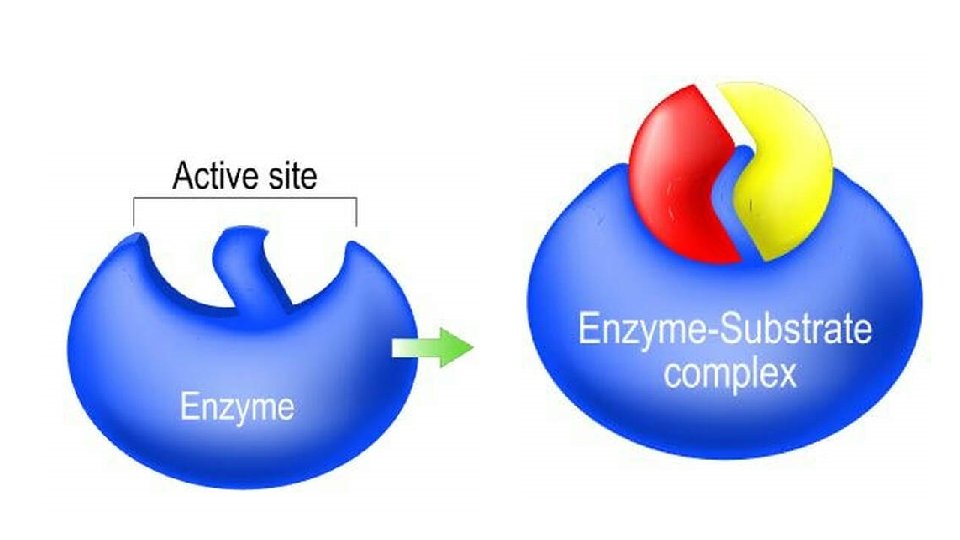
What are ENZYMES? • All molecular bonds have energy barriers that must be overcome in order for the chemical reaction to occur. • Enzymes cause these chemical reactions to go much faster (by several orders of magnitude) by lowering the “activation energy” of the reaction. • Without enzymes, it could take decades to digest one hamburger!
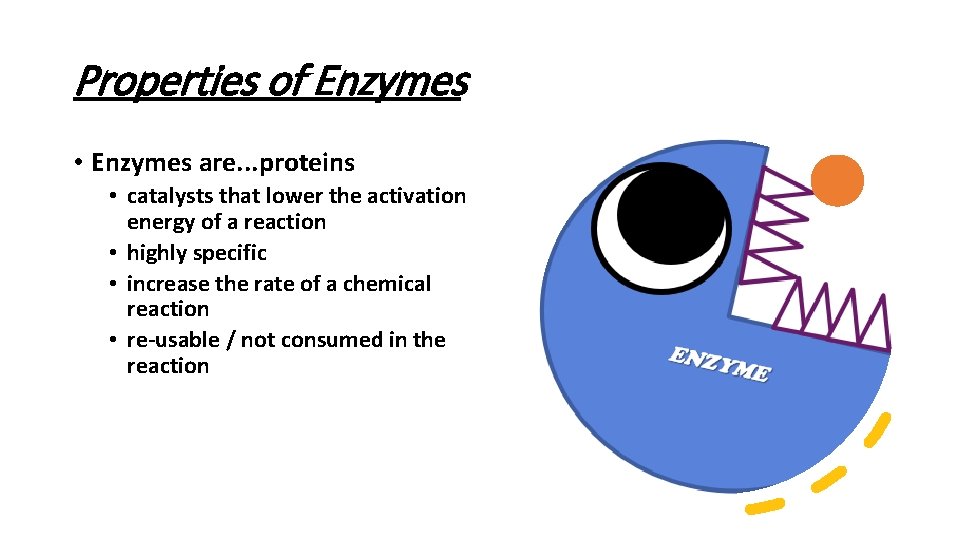
Properties of Enzymes • Enzymes are. . . proteins • catalysts that lower the activation energy of a reaction • highly specific • increase the rate of a chemical reaction • re-usable / not consumed in the reaction
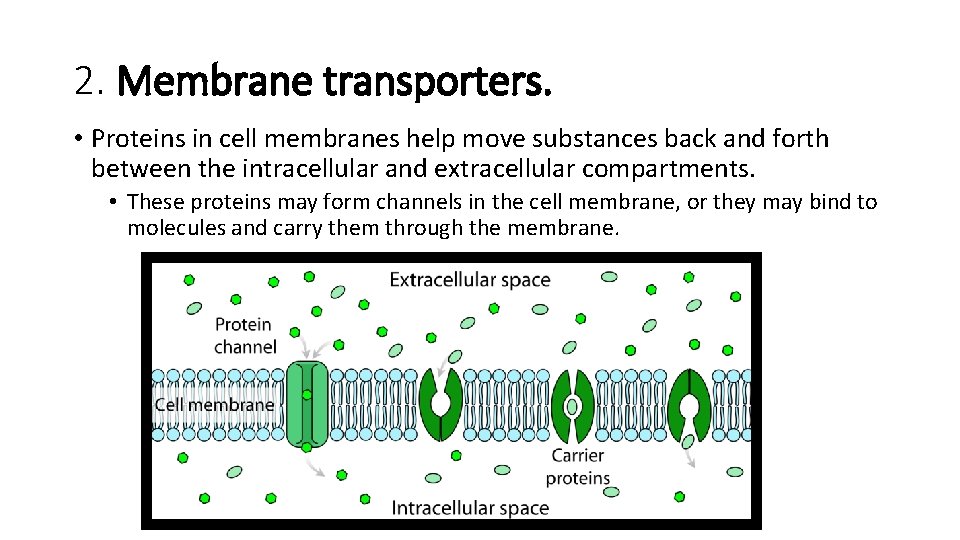
2. Membrane transporters. • Proteins in cell membranes help move substances back and forth between the intracellular and extracellular compartments. • These proteins may form channels in the cell membrane, or they may bind to molecules and carry them through the membrane.
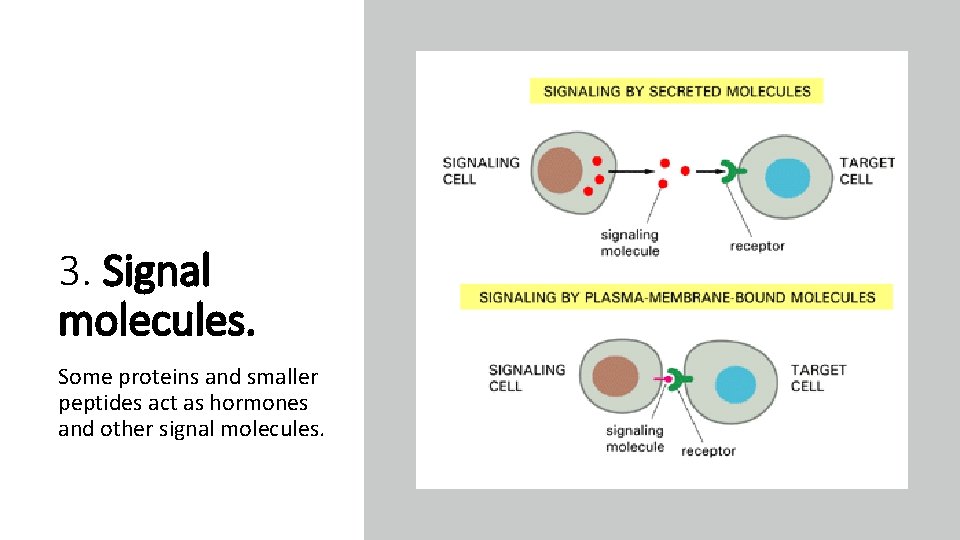
3. Signal molecules. Some proteins and smaller peptides act as hormones and other signal molecules.
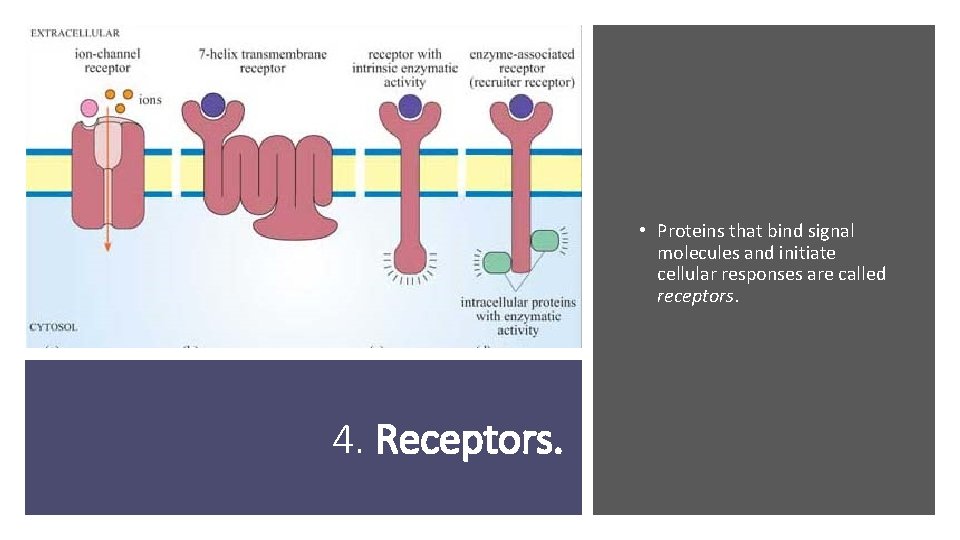
• Proteins that bind signal molecules and initiate cellular responses are called receptors. 4. Receptors.
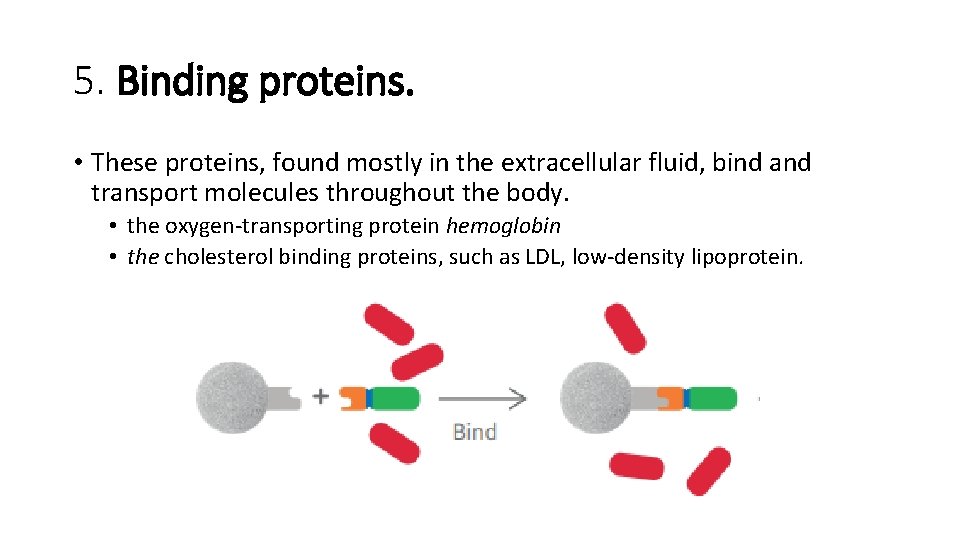
5. Binding proteins. • These proteins, found mostly in the extracellular fluid, bind and transport molecules throughout the body. • the oxygen-transporting protein hemoglobin • the cholesterol binding proteins, such as LDL, low-density lipoprotein.
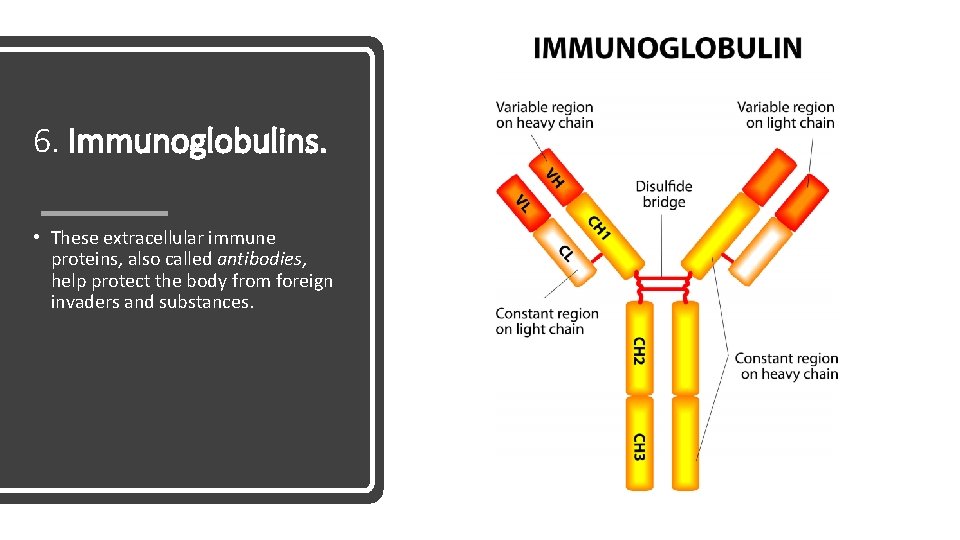
6. Immunoglobulins. • These extracellular immune proteins, also called antibodies, help protect the body from foreign invaders and substances.
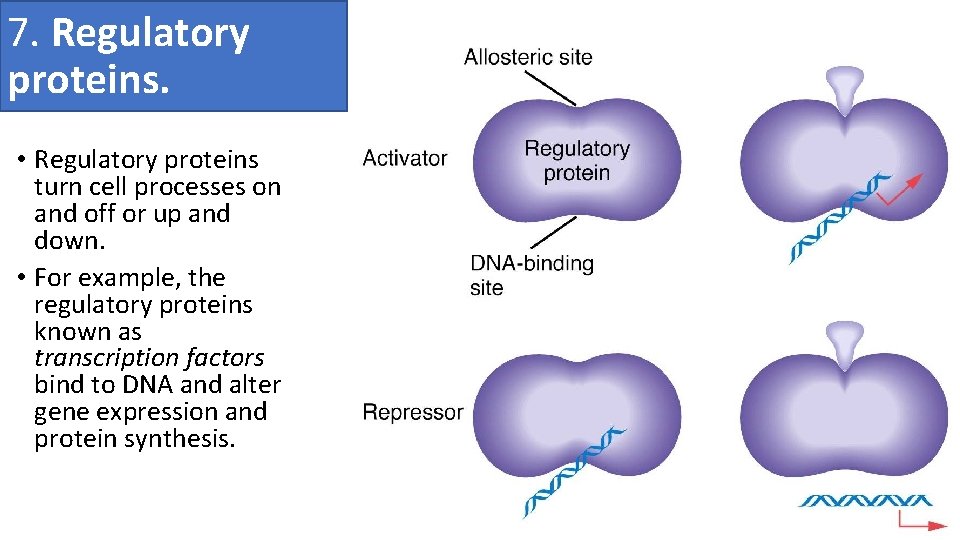
7. Regulatory proteins. • Regulatory proteins turn cell processes on and off or up and down. • For example, the regulatory proteins known as transcription factors bind to DNA and alter gene expression and protein synthesis.
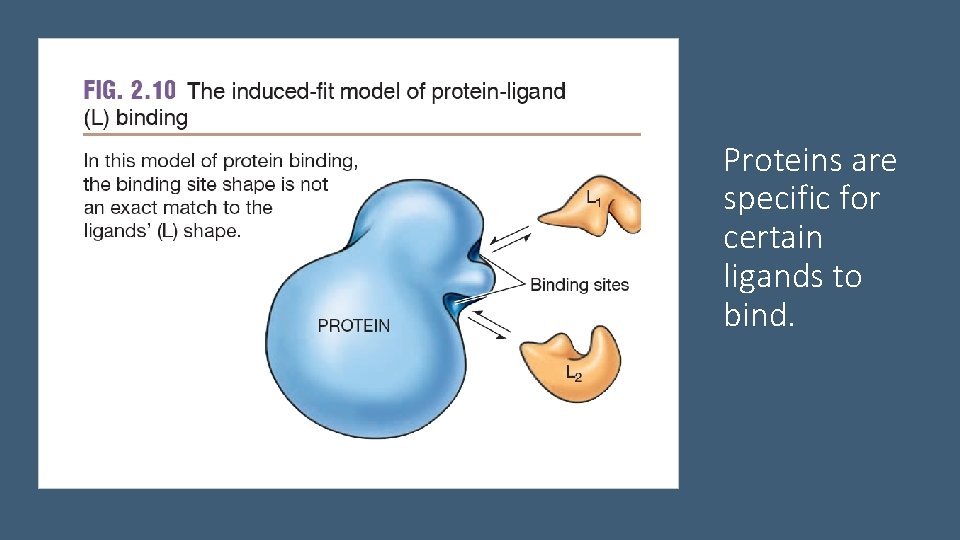
Proteins are specific for certain ligands to bind.
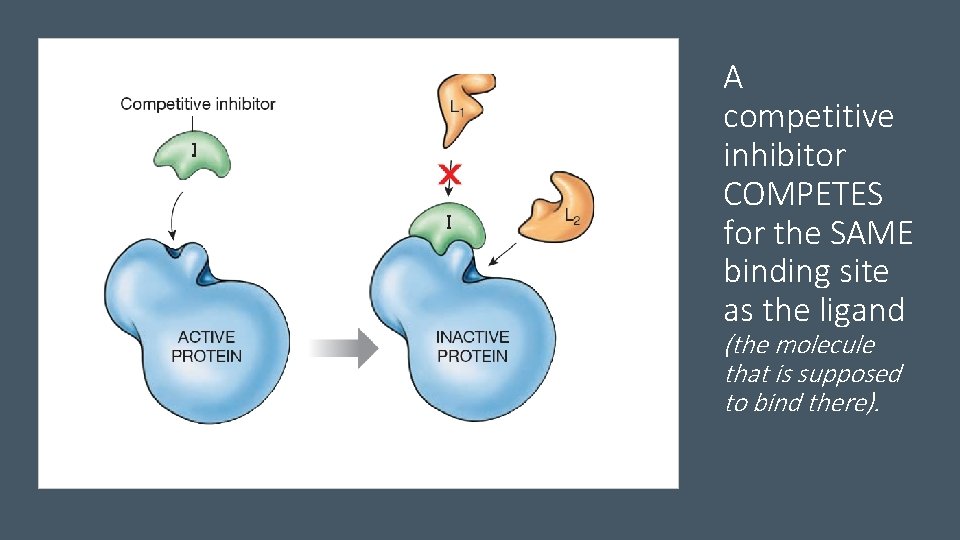
A competitive inhibitor COMPETES for the SAME binding site as the ligand (the molecule that is supposed to bind there).
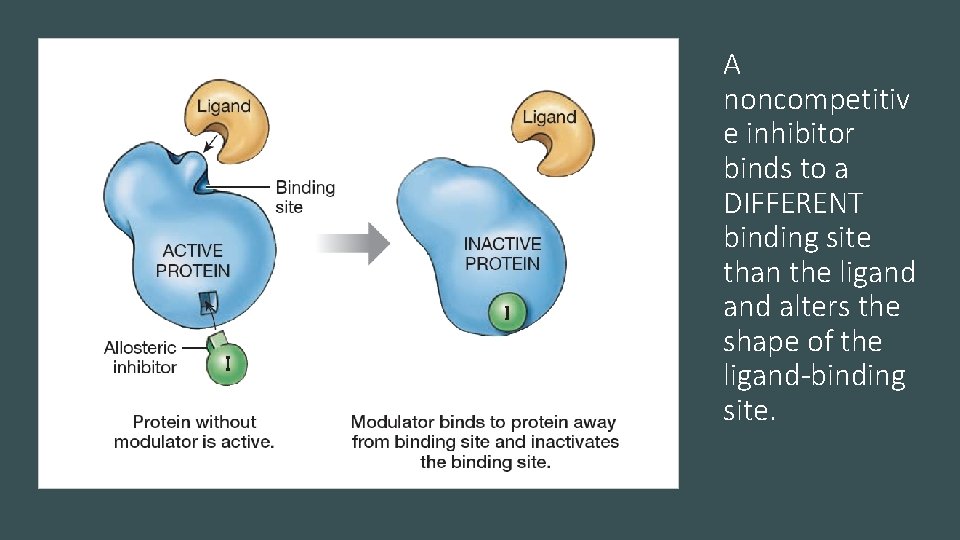
A noncompetitiv e inhibitor binds to a DIFFERENT binding site than the ligand alters the shape of the ligand-binding site.
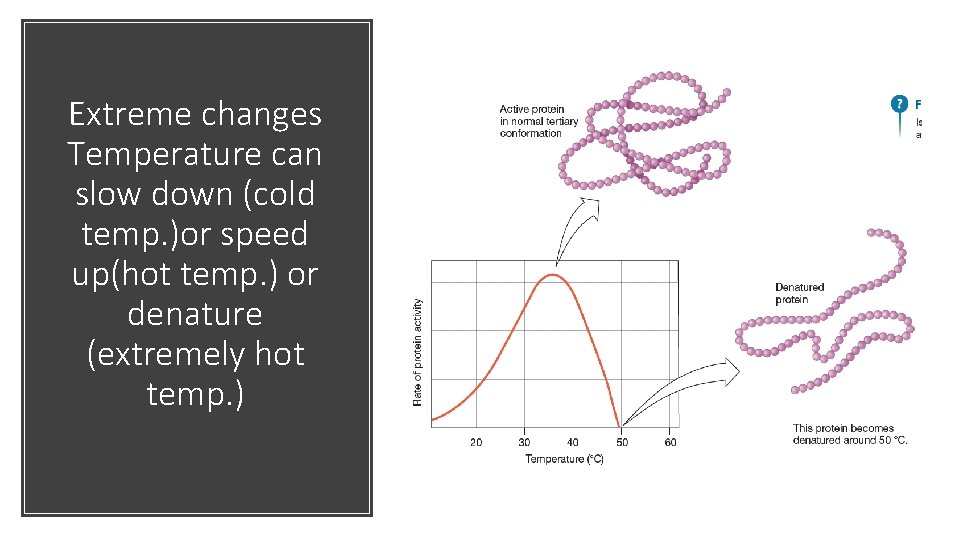
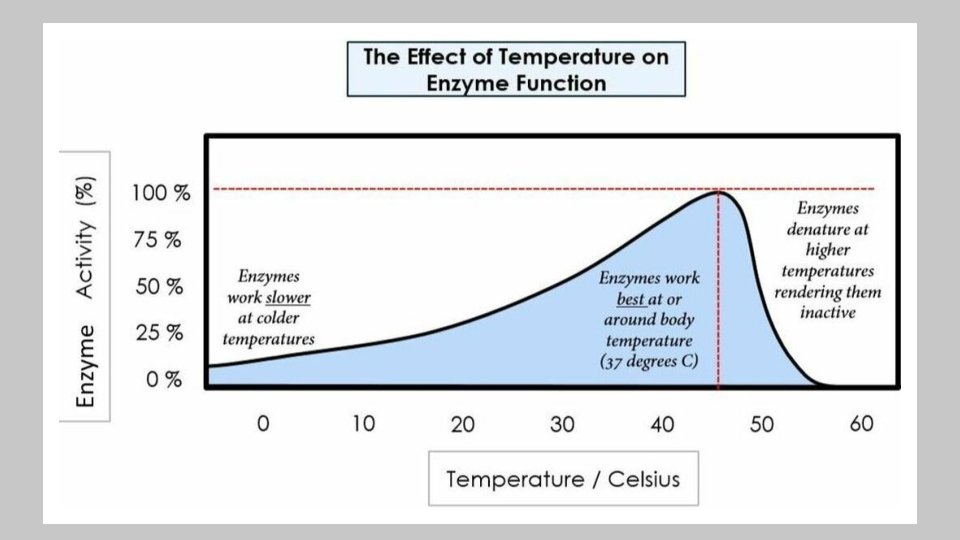
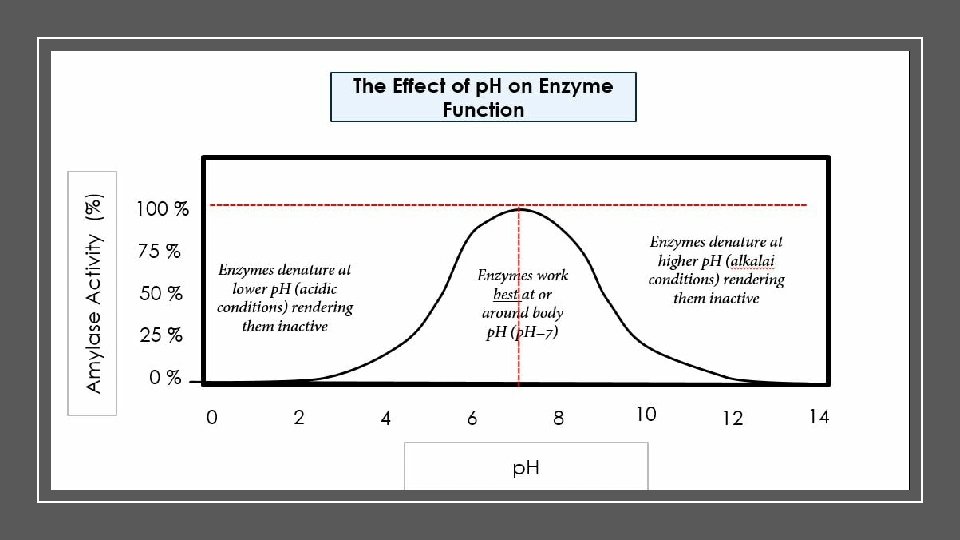
Extreme changes Temperature can slow down (cold temp. )or speed up(hot temp. ) or denature (extremely hot temp. )
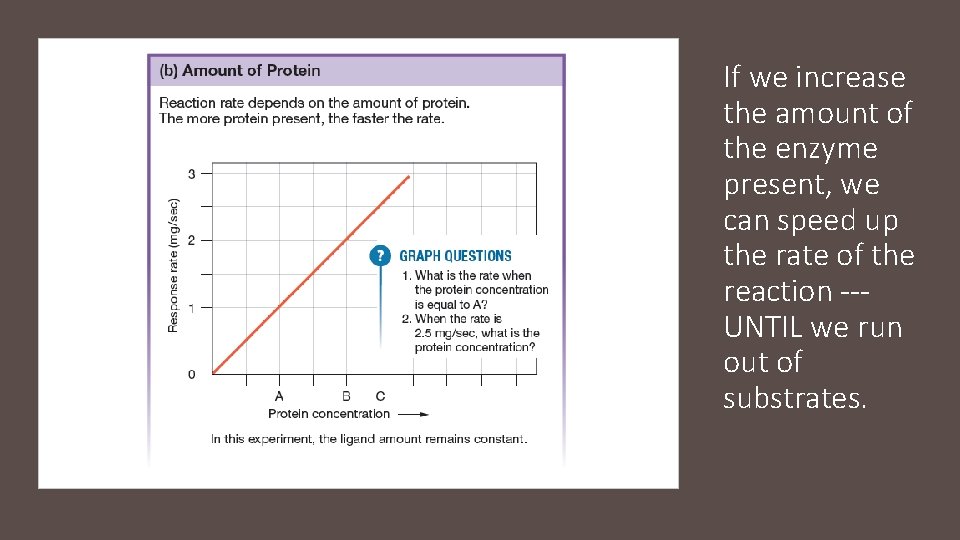
If we increase the amount of the enzyme present, we can speed up the rate of the reaction --- UNTIL we run out of substrates.
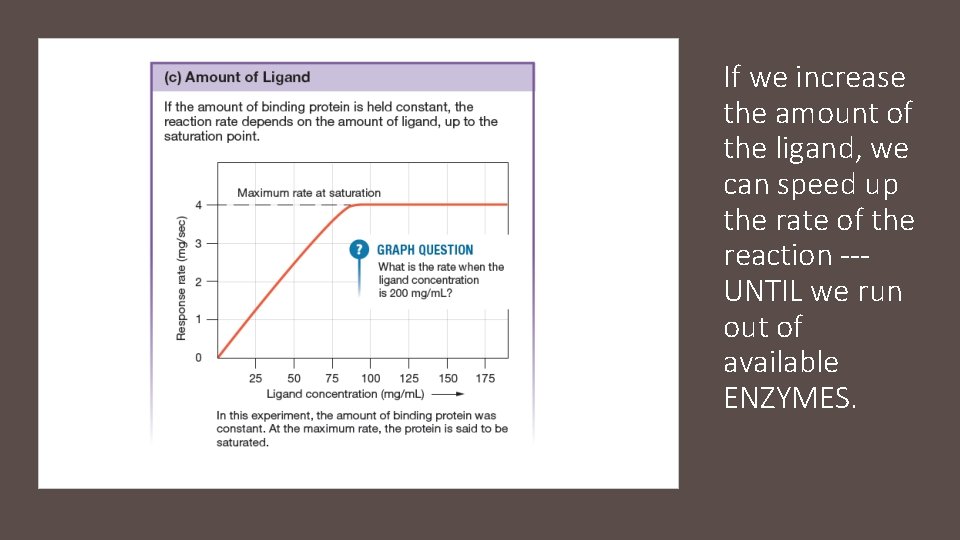
If we increase the amount of the ligand, we can speed up the rate of the reaction --- UNTIL we run out of available ENZYMES.

- Slides: 91