
Physiology Carla Thompson Talmage Harrold Lydia Mc Dore
- Slides: 17
Physiology Carla Thompson Talmage Harrold Lydia Mc. Dore
Introduction to Physiology • The study of processes and functions, incidental to, and characteristic of, life. • Physiology is an integrative science; examining body operation at all levels of organization, from cells to organs. • Homeostasis, flexibility, cell-to-cell communication, information transfer across cell membranes, energy flow in biological systems, and mass balance are six major themes in physiology. http: //cwx. prenhall. com/bookbind/pubbooks/silverthorn 2/ www. brainydictionary. com
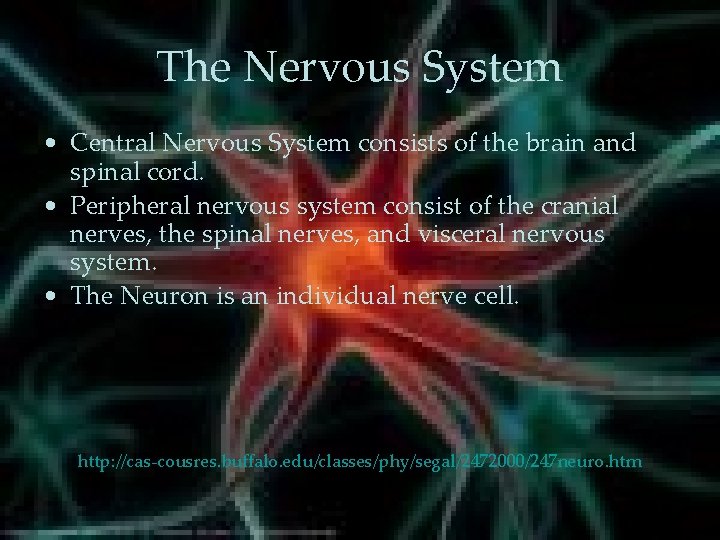
The Nervous System • Central Nervous System consists of the brain and spinal cord. • Peripheral nervous system consist of the cranial nerves, the spinal nerves, and visceral nervous system. • The Neuron is an individual nerve cell. http: //cas-cousres. buffalo. edu/classes/phy/segal/2472000/247 neuro. htm
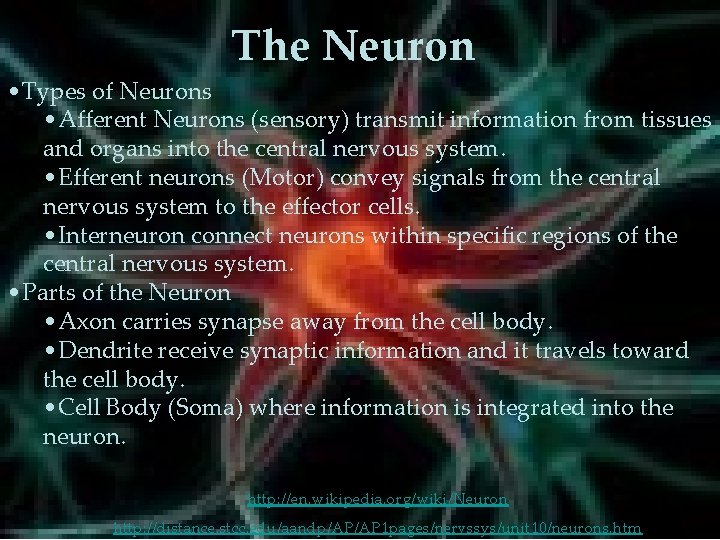
The Neuron • Types of Neurons • Afferent Neurons (sensory) transmit information from tissues and organs into the central nervous system. • Efferent neurons (Motor) convey signals from the central nervous system to the effector cells. • Interneuron connect neurons within specific regions of the central nervous system. • Parts of the Neuron • Axon carries synapse away from the cell body. • Dendrite receive synaptic information and it travels toward the cell body. • Cell Body (Soma) where information is integrated into the neuron. http: //en. wikipedia. org/wiki/Neuron http: //distance. stcc. edu/aandp/AP/AP 1 pages/nervssys/unit 10/neurons. htm
Nerve Conduction • Neurons are specifically designed to transmit information. • Presynaptic neurons send the neuron. • Postsynaptic neurons receive the neuron. • Active neurons (excitatory) produce an action potential which travels down the neuron. • A synapse releases neurotransmitters that change the electrical potential of the next neuron. • Inactive neurons (inhibitory) simply do not react. http: //cas-cousres. buffalo. edu/classes/phy/segal/2472000/247 neuro. htm
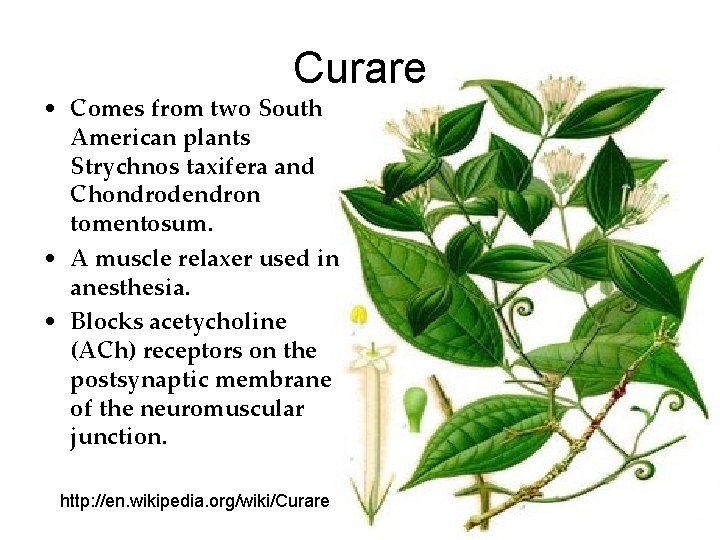
Curare • Comes from two South American plants Strychnos taxifera and Chondrodendron tomentosum. • A muscle relaxer used in anesthesia. • Blocks acetycholine (ACh) receptors on the postsynaptic membrane of the neuromuscular junction. http: //en. wikipedia. org/wiki/Curare
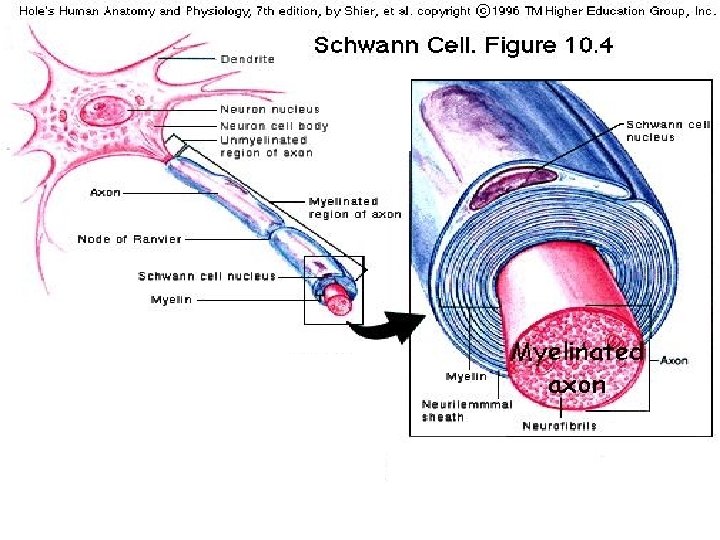
Myelination • The process in which reserve cells are covered by and insulated with a layer of fat cells. • Increases the speed of information which travels through the peripheral nervous system. www. mc. maricopa. edu/dept/d 46/psy/dev/fall 99/prenatal/brain. html
All-or-None Principle • Action potentials are approximately equal in size and shape (amplitude) under normal circumstances. • The size and shape of the action potential are independent of the intensity of the stimulus that initiated it. • Temporal summation is the process whereby a stimulus that is below threshold will elicit a reflex if the stimulus occurs repeatedly. • Spatial summation is the process whereby two or more stimuli that are individually below threshold will elicit a reflex if they occur simultaneously at different points on the body. http: //www. miracosta. cc. ca. us/home/sfoster/neurons/glossary. htm http: //www. wwnorton. com/college/pysh/gman 5/glossary/T. htm
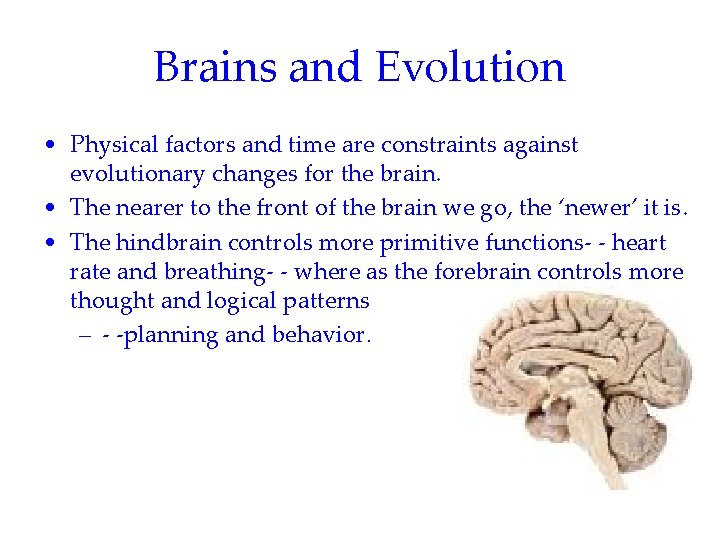
Brains and Evolution • Physical factors and time are constraints against evolutionary changes for the brain. • The nearer to the front of the brain we go, the ‘newer’ it is. • The hindbrain controls more primitive functions- - heart rate and breathing- - where as the forebrain controls more thought and logical patterns – - -planning and behavior.
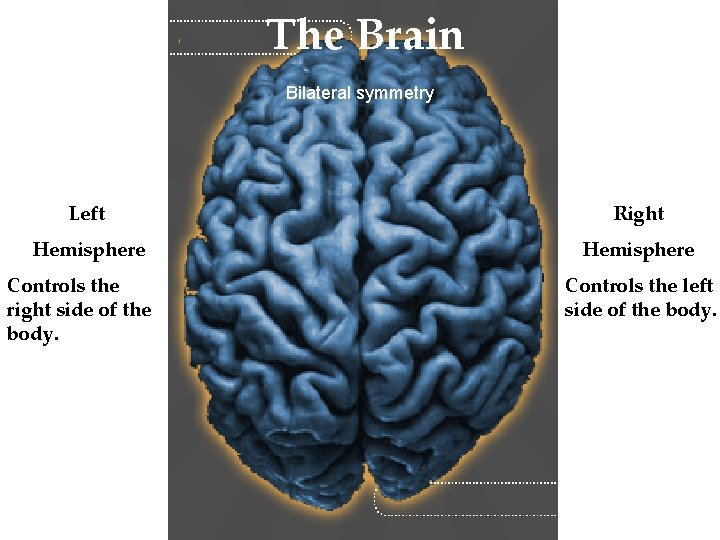
The Brain Bilateral symmetry Left Right Hemisphere Controls the right side of the body. Controls the left side of the body.
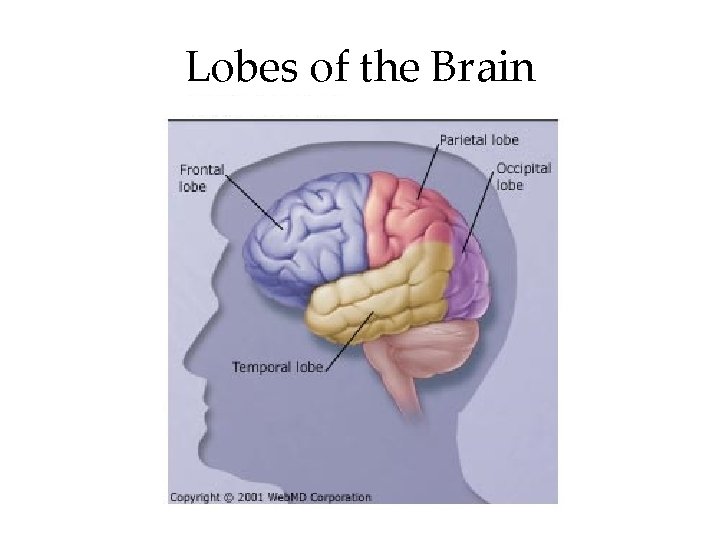
Lobes of the Brain
Brain Organization n n n Medulla oblongata- breathing and heart rate Pons- Sleep and arousal Cerebellum- voluntary muscle control and motor coordination Hypothalamus- links autonomic nervous system to endocrine system, growth, living, and emotions. Thalamus- relays input from senses to higher structures Hippocampus- processes memories Cerebral cortex (Neocortex)- organizes information and initiates responses.
Colliculi Superior colliculus- handeye coordination rapid eye movement Inferior colliculusreceives input from auditory stimulus, controls your response to loud noises http: //en. wikipedia. org/wiki/Supe rior. Colliculi
Endocrine System § Secretes hormones § Hormones are chemicals secreted by endocrine glands that are carried through the bloodstream to affect various body parts.
Endocrine System Con’t § Pituitary gland- master gland, in brain, which secretes releasing hormones that “turn on” other endocrine glands. § Thyroids- in neck, produce thyroxin which regulates growth, activity levels and metabolism. § Adrenals- near kidney, produce ACTH outside the gland, produce adrenaline/ noradrenalin inside the gland. § Pancreas- near stomach, produces insulin and glucogen. § Insulin- glucose absorbtion mechanism § Glucogen- hypoglycemia § Sex glands- ovaries and testes § Ovaries-produce estrogen and progesterone § Testes- produce testerone
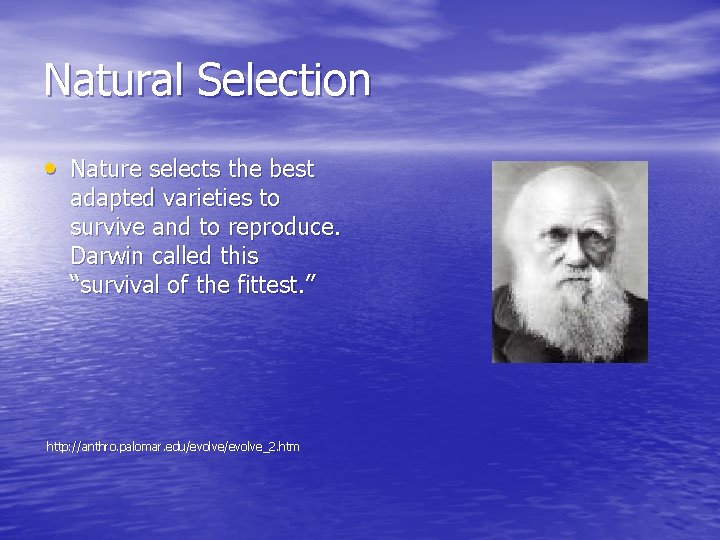
Natural Selection • Nature selects the best adapted varieties to survive and to reproduce. Darwin called this “survival of the fittest. ” http: //anthro. palomar. edu/evolve_2. htm