
Physiology BIO 240 Lecture No 15 Digestive System
Physiology BIO 240 Lecture No. 15 Digestive System – Motility and Digestion Summer II 2011 Dr. Ana M Jimenez
Gastrointestinal Tract Overview • Mouth: – Bite, chew, swallow – Chemical digestion • Pharynx & Esophagus: – Food transport • Stomach: – Chemical digestion – Mechanical disruption formation of chyme • Small intestine: – Chemical & mechanical digestion – Absorption of most nutrients • Large intestine: • Absorb electrolytes, vitamins (B, K), . • Absorbs remaining water • Rectum and anus: • Defecation • Accessory Organs • teeth, • tongue, • liver, gallbladder, pancreas, • salivary glands

Layers of GI Tract Deep to Surface 1. Mucosa 2. Submucosa 3. Muscularis 4. Serosa
Food is mixed with Saliva • p. H of 6. 8 to 7. 0, 99. 5% water and • Salivary Amylase: Begins starch digestion in the mouth (inactivated by low p. H of stomach). • Lingual Lipase: Activated by stomach acid, digests fats (in stomach). • Mucous: Binds and lubricates food for swallowing. • Lysozyme: Enzyme that kills bacteria. • Immunoglobulin A: Antibody that inhibits bacterial growth. • Electrolytes: Na+, K+, Cl-, phosphate and bicarbonate ions.
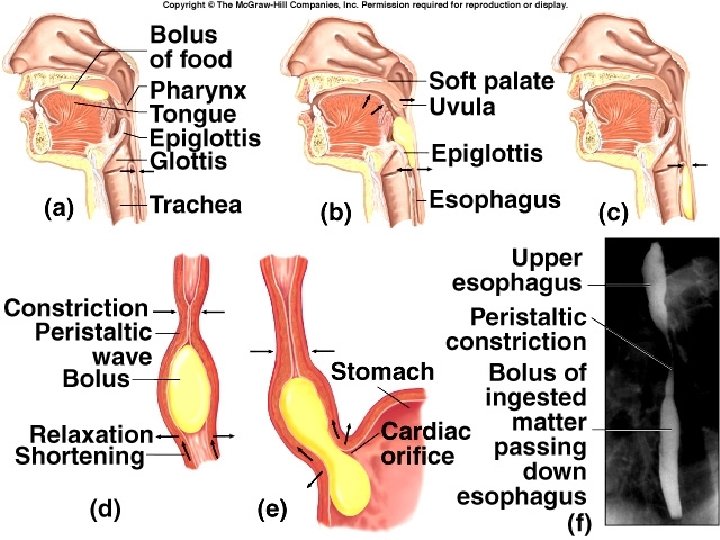
Swallowing (Deglutition) • Swallowing center (in medulla oblongata) coordinates muscle movements to push food bolus into esophagus (voluntary), • Once bolus passes to oropharynx parasympathetic system ‘takes over’ • Bolus moves through peristalsis; a wave of longitudinal muscular contractions than continue until materials reach colon, • In esophagus - gravity moves food into stomach faster than peristalsis.
Food is mixed with Stomach secretions • Protein and fat digestion begins in stomach, bolus is now called chyme (white fluid substance), • Innervation and Circulation of Stomach – Receives parasympathetic and sympathetic innervation, – All blood draining from stomach and intestines passes through the liver before the heart, • Stomach Wall: – Composed of same 4 layers of tissue as rest of GI tract, – Gastric mucosa has depressions called gastric pits into which gastric tubular glands empty, – Smooth muscle of muscularis externa layer contracts to mix and churn chyme.
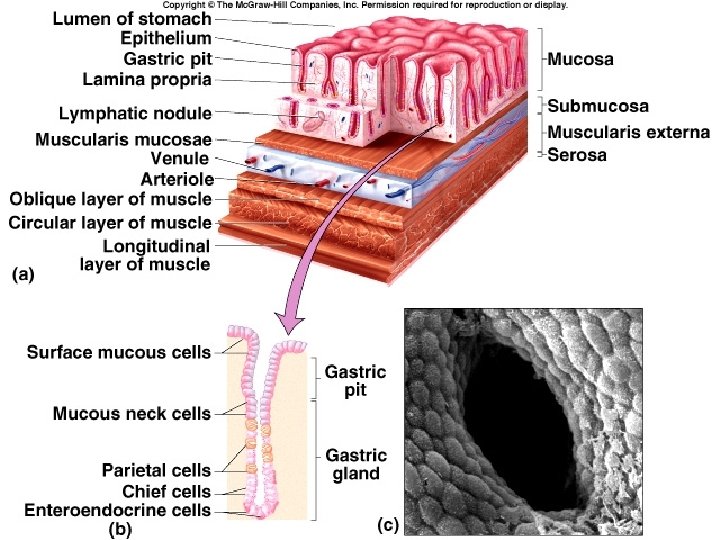
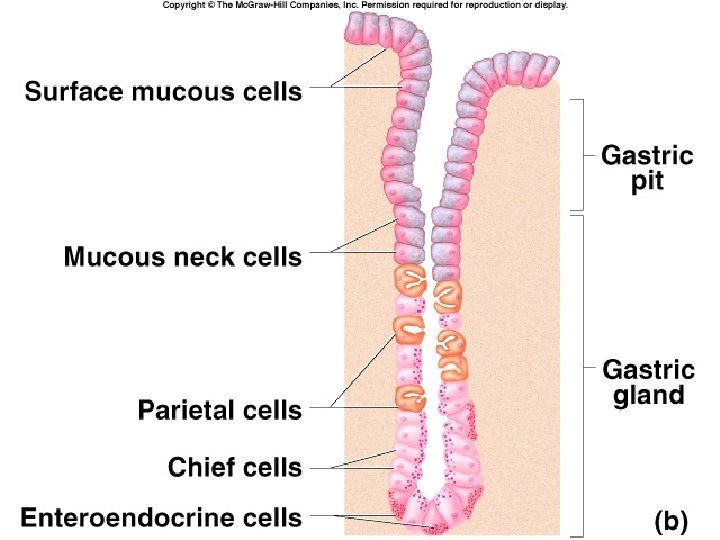
Gastric Pit Cells • Mucous Cells: Secrete mucous for lubrication and gastric mucosa protection from HCl, • Regenerative Cells: Duplicate fast to replace cells of gastric mucosa that die. • Parietal Cells: Secrete HCl, and intrinsic factor. • Chief Cells: Most numerous, secrete – In infants - rennin and gastric lipase to curl and digest milk, – In adults pepsinogen (inactive) which is converted to pepsin (active) by HCl acid. • Enteroendocrine Cells: Secrete hormones and paracrine messages that regulate digestion.
Gastric Secretions • 2 -3 Liters of gastric juice/day, mostly water, HCl and pepsin. • Hydrochloric Acid (HCl): p. H of 0. 8, secreted by Parietal cells that have carbonic anhydrase (CAH) enzymes, • Pepsin: secreted by Chief cells as pepsinogen to digest proteins, • Intrinsic Factor: Secreted by parietal cells, essential for absorption of B 12 in the intestine. • Chemical Massagers: ~ 20 known molecules that act as hormones or neurotransmitters.
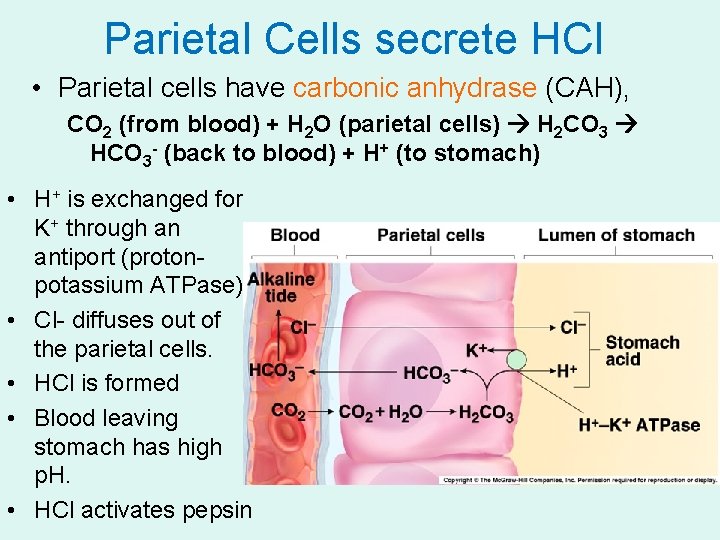
Parietal Cells secrete HCl • Parietal cells have carbonic anhydrase (CAH), CO 2 (from blood) + H 2 O (parietal cells) H 2 CO 3 HCO 3 - (back to blood) + H+ (to stomach) • H+ is exchanged for K+ through an antiport (protonpotassium ATPase) • Cl- diffuses out of the parietal cells. • HCl is formed • Blood leaving stomach has high p. H. • HCl activates pepsin
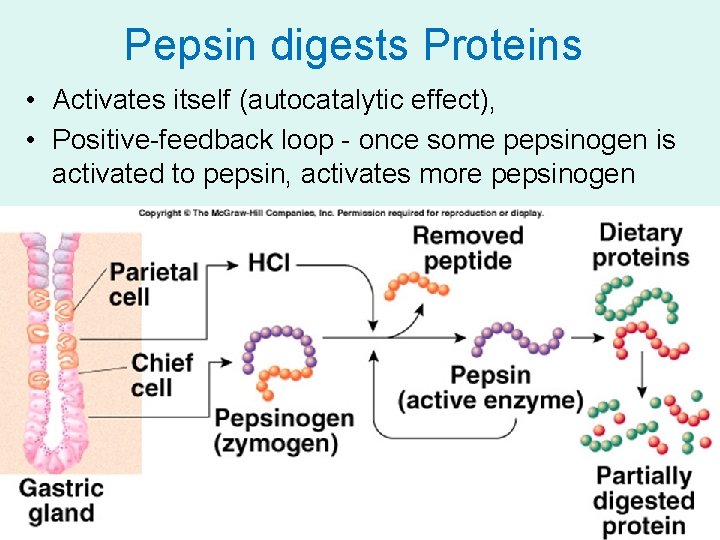
Pepsin digests Proteins • Activates itself (autocatalytic effect), • Positive-feedback loop - once some pepsinogen is activated to pepsin, activates more pepsinogen
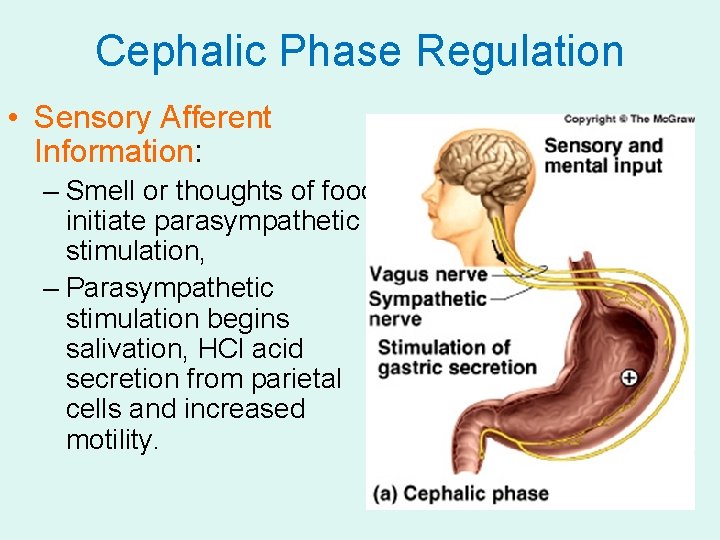
Cephalic Phase Regulation • Sensory Afferent Information: – Smell or thoughts of food initiate parasympathetic stimulation, – Parasympathetic stimulation begins salivation, HCl acid secretion from parietal cells and increased motility.
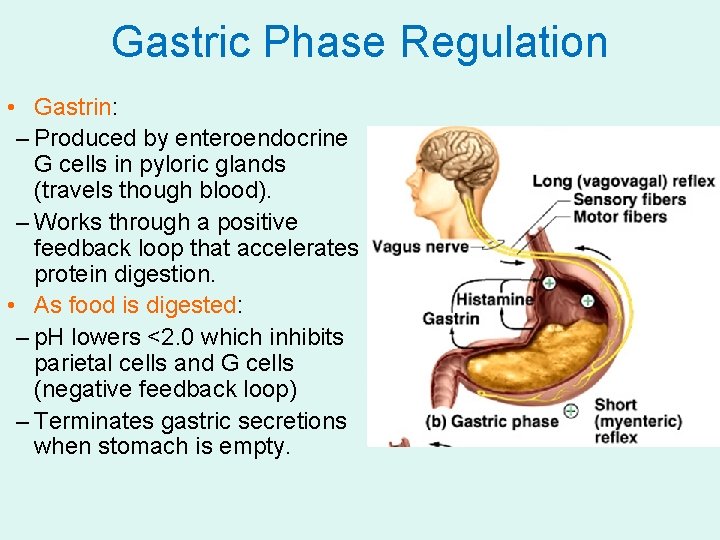
Gastric Phase Regulation • Gastrin: – Produced by enteroendocrine G cells in pyloric glands (travels though blood). – Works through a positive feedback loop that accelerates protein digestion. • As food is digested: – p. H lowers <2. 0 which inhibits parietal cells and G cells (negative feedback loop) – Terminates gastric secretions when stomach is empty.
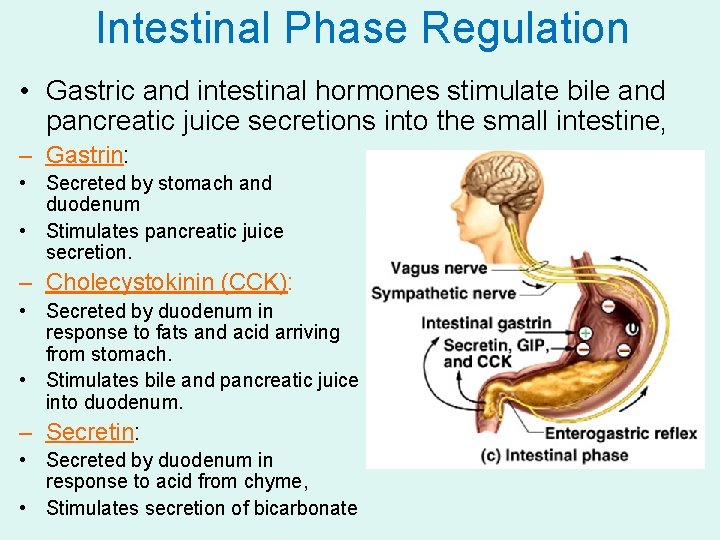
Intestinal Phase Regulation • Gastric and intestinal hormones stimulate bile and pancreatic juice secretions into the small intestine, – Gastrin: • Secreted by stomach and duodenum • Stimulates pancreatic juice secretion. – Cholecystokinin (CCK): • Secreted by duodenum in response to fats and acid arriving from stomach. • Stimulates bile and pancreatic juice into duodenum. – Secretin: • Secreted by duodenum in response to acid from chyme, • Stimulates secretion of bicarbonate
Accessory Glands Secrete Exocrine Fluids and Enzymes into GI tract
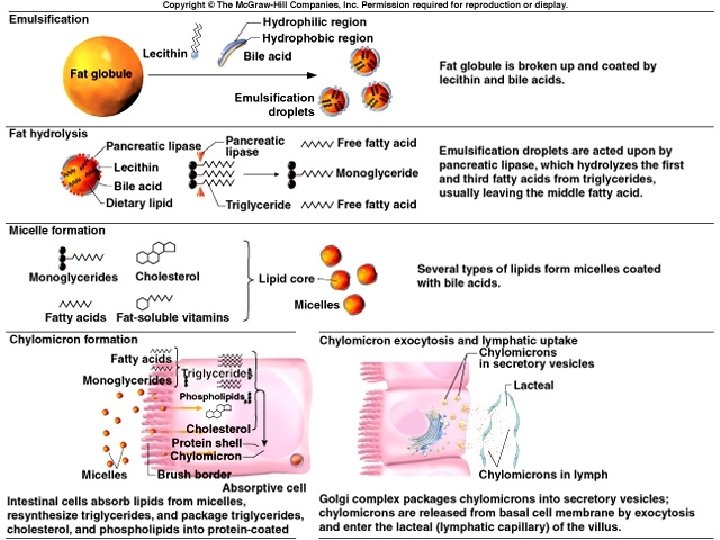
The Liver and Gallbladder • Liver - manufactures bile, – Gallbladder stores bile to be secreted into duodenum (first portion of small intestine). – Yellowish-green fluid containing minerals, cholesterol, neutral fats, phospholipids, pigments (bilirubin-hemoglobin decomposition), bile acids, – Functions to emulsify fats (physical breakdown), 80% is reabsorbed in ileum, 20% lost in feces. • Liver - filters blood to detoxify toxins in blood coming from small intestine, – Hepatocytes (cells of liver) contain cytochromes that chemically breakdown toxins.
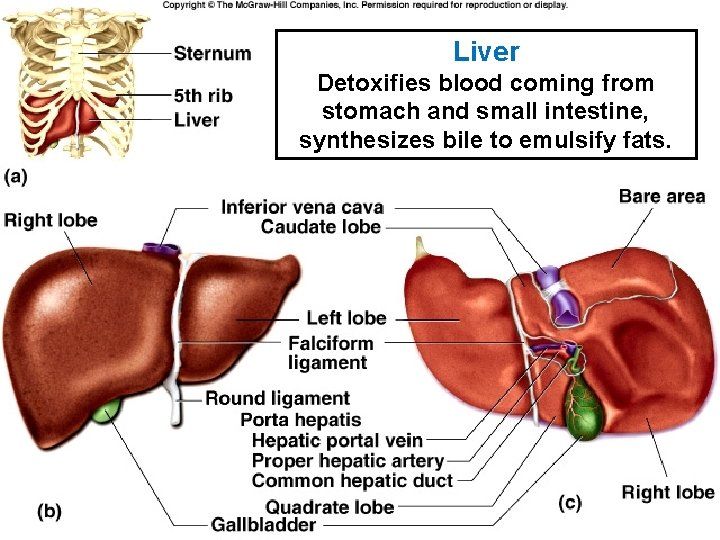
Liver Detoxifies blood coming from stomach and small intestine, synthesizes bile to emulsify fats.
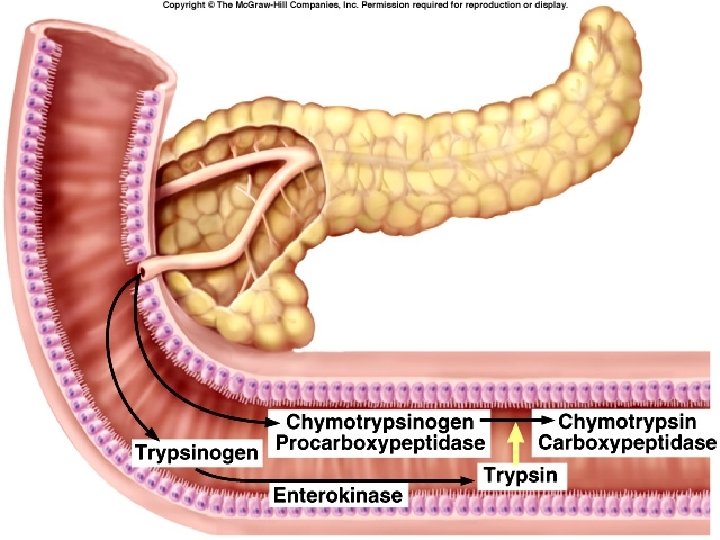
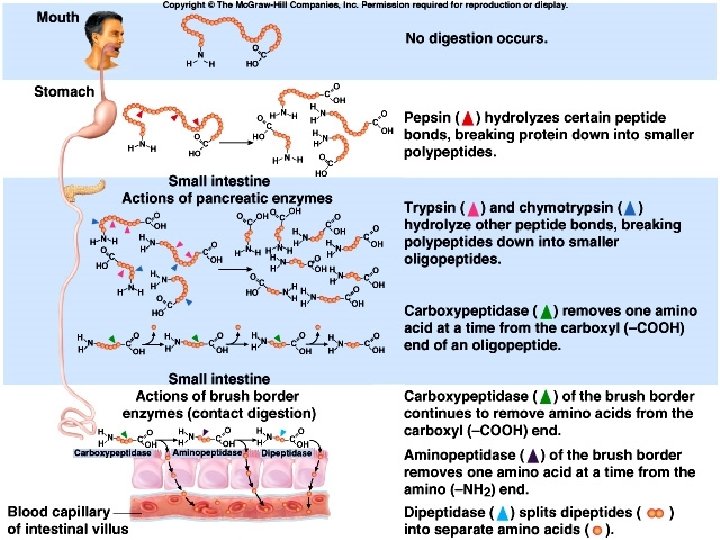
Pancreas • Exocrine - Acini part of pancreas - secretes zymogens: – Trypsionogen: Activated by enterokinase trypsin (digests proteins) by activating other enzymes: • • – – Chymotrypsinogen chemotrypsin (digest proteins) Procarboxypeptidase (digest proteins) Pancreatic Amylase: Digests starch. Pacreatic Lipase: Digests lipids • Exocrine - Pancreatic ducts: secrete sodium bicarbonate, alkaline fluid that neutralizes acid in chyme. • Endocrine - Islets of Langerhan’s cells secrete insulin and glucagon (discussed with endocrines)
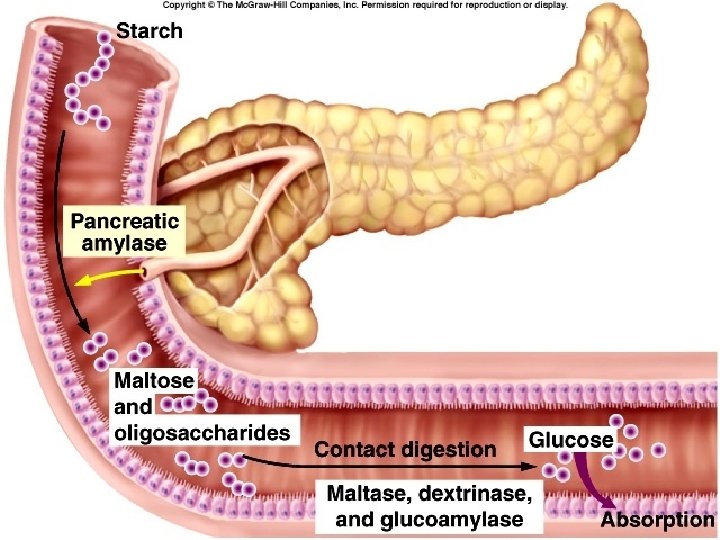
Small Intestine Secretion and Motility • Nutrient absorption takes place throughout the small intestine. • Secretion: Intestinal juice (1 -2 L/day), contains mostly water, mucus, sodium bicarbonate (p. H=7. 4 -7. 8). – Secreted in response to intestinal distension, hypertonic and acidic content of chyme arriving from stomach. • Intestinal Motility: – Peristaltic movements continue and work to move chyme toward large intestine. – Segmentation: ring-like contractions and relaxations that churn and mix food with digestive enzymes only in small intestine.
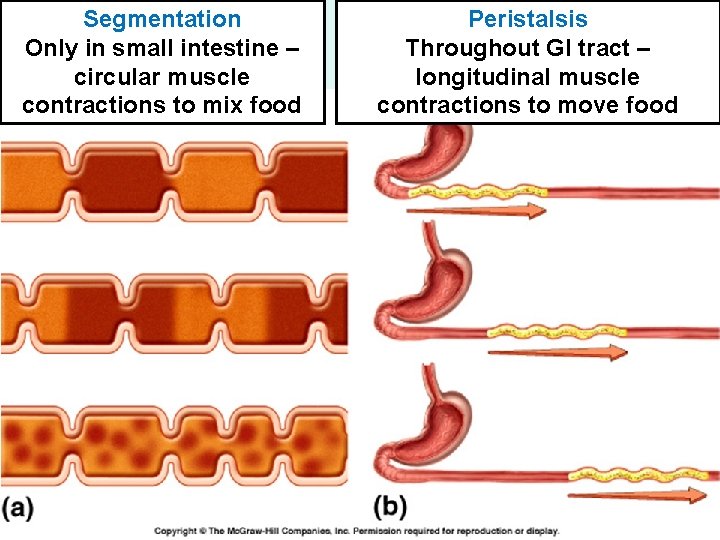
Segmentation Only in small intestine – circular muscle contractions to mix food Peristalsis Throughout GI tract – longitudinal muscle contractions to move food
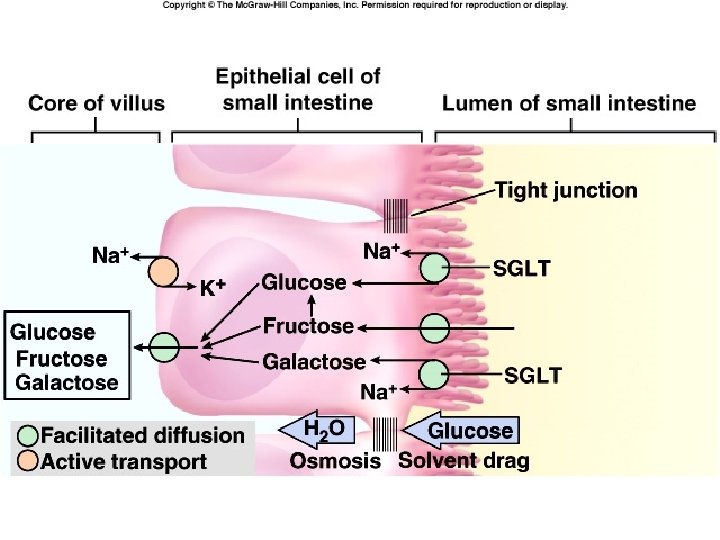
Nutrient Absorption in Small Intestine • Nutrients are absorbed as monomers of each macromolecule, – Carbohydrates as monosaccharides, – Proteins as amino acids, – Fats as fatty acids and monoglycerides – Nucleic acids as nucleotides • Hydrophilic nutrients are absorbed into small intestine and into the blood stream, • Lipids are absorbed into the lymphatic system and routed to the liver,
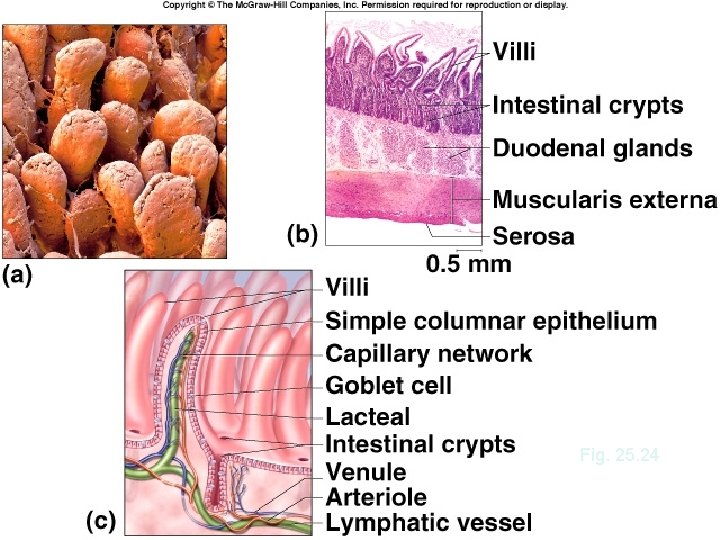
Fig. 25. 24
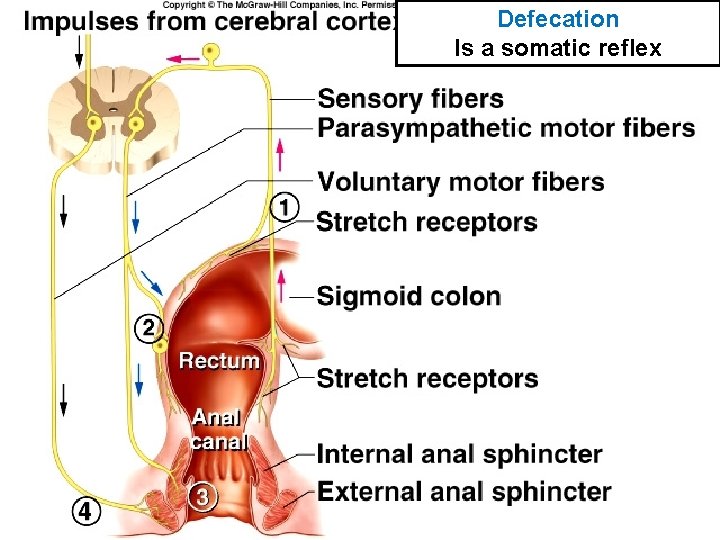
Defecation Is a somatic reflex
- Slides: 30