
Physiology and Behavior Neurotransmission Using one or more
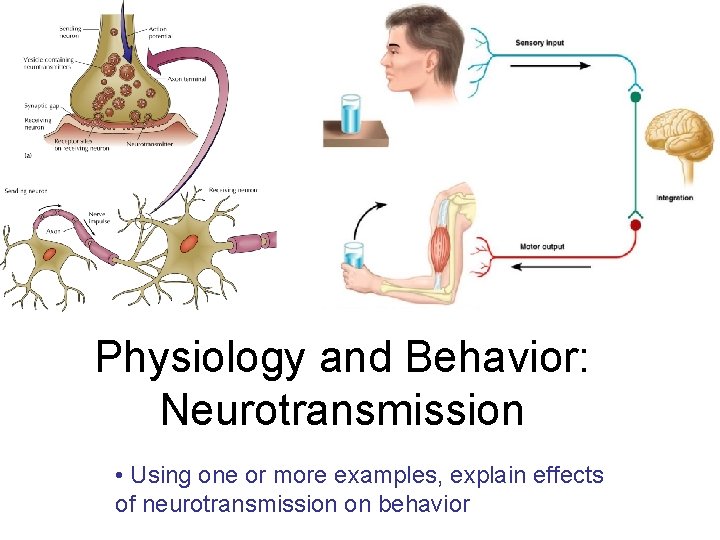
Physiology and Behavior: Neurotransmission • Using one or more examples, explain effects of neurotransmission on behavior
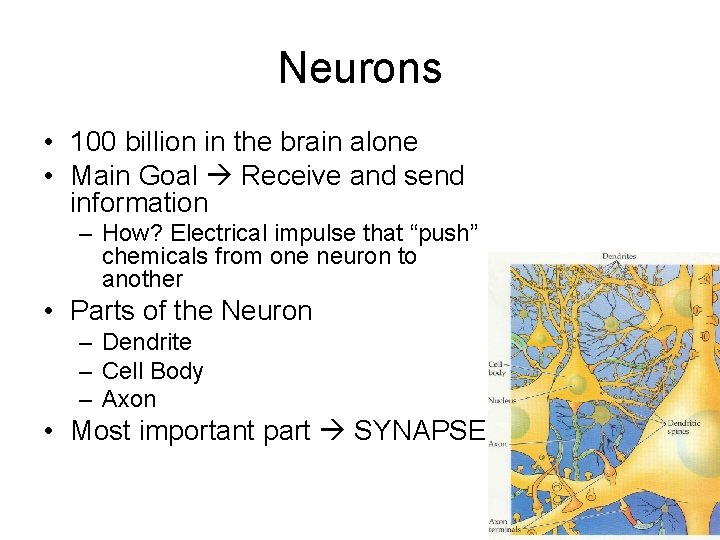
Neurons • 100 billion in the brain alone • Main Goal Receive and send information – How? Electrical impulse that “push” chemicals from one neuron to another • Parts of the Neuron – Dendrite – Cell Body – Axon • Most important part SYNAPSE
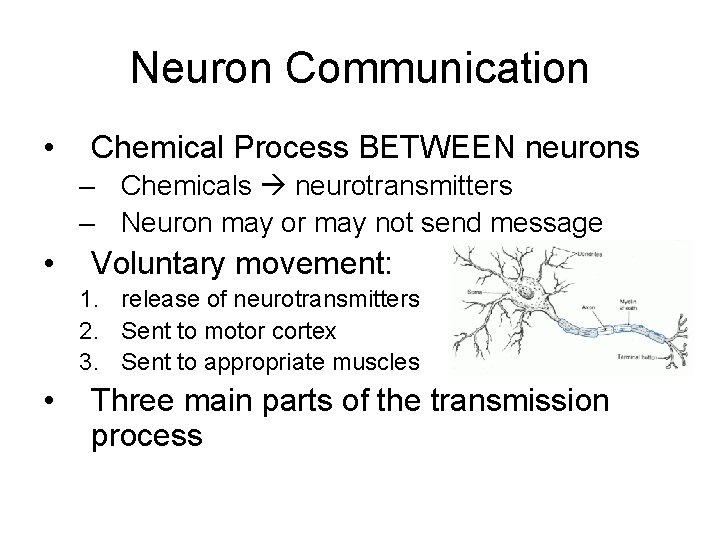
Neuron Communication • Chemical Process BETWEEN neurons – Chemicals neurotransmitters – Neuron may or may not send message • Voluntary movement: 1. release of neurotransmitters 2. Sent to motor cortex 3. Sent to appropriate muscles • Three main parts of the transmission process
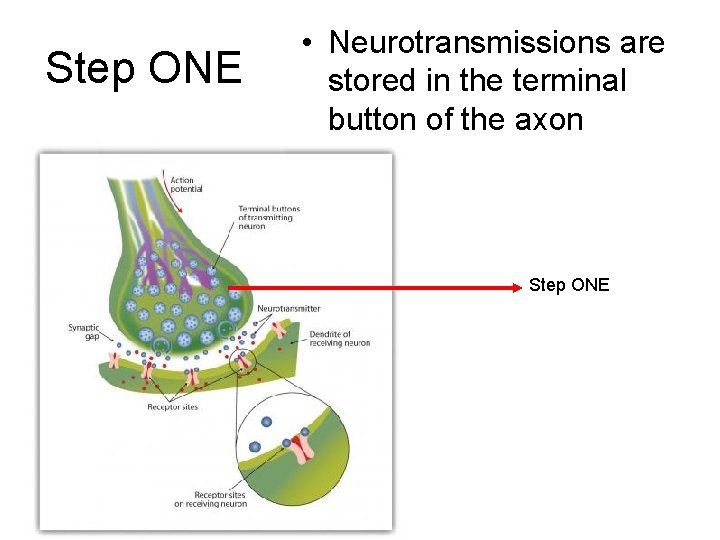
Step ONE • Neurotransmissions are stored in the terminal button of the axon Step ONE
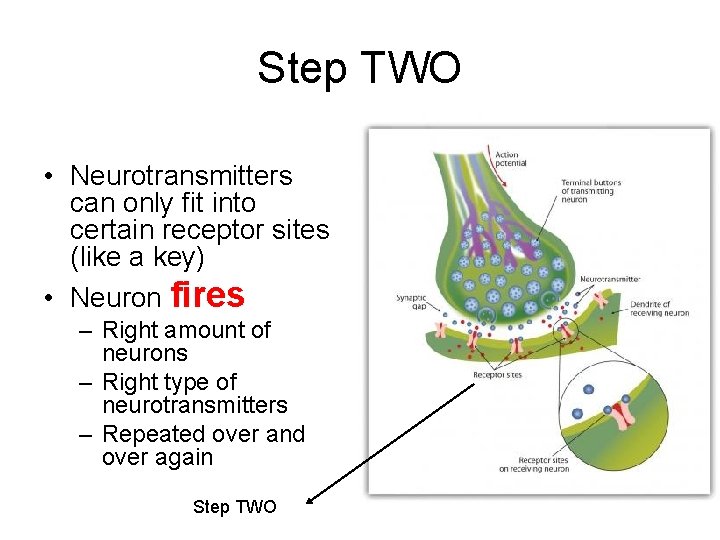
Step TWO • Neurotransmitters can only fit into certain receptor sites (like a key) • Neuron fires – Right amount of neurons – Right type of neurotransmitters – Repeated over and over again Step TWO
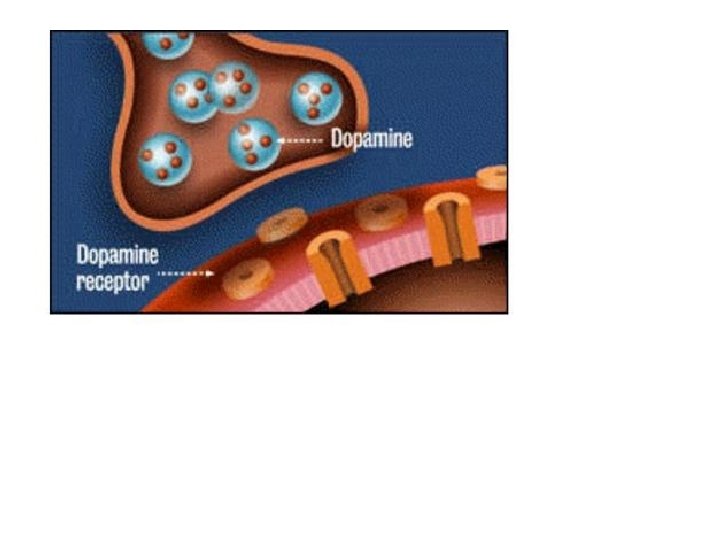
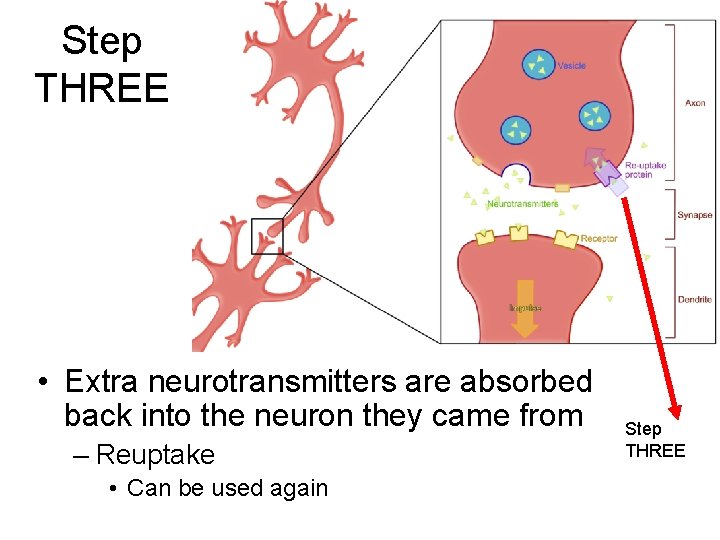
Step THREE • Extra neurotransmitters are absorbed back into the neuron they came from – Reuptake • Can be used again Step THREE
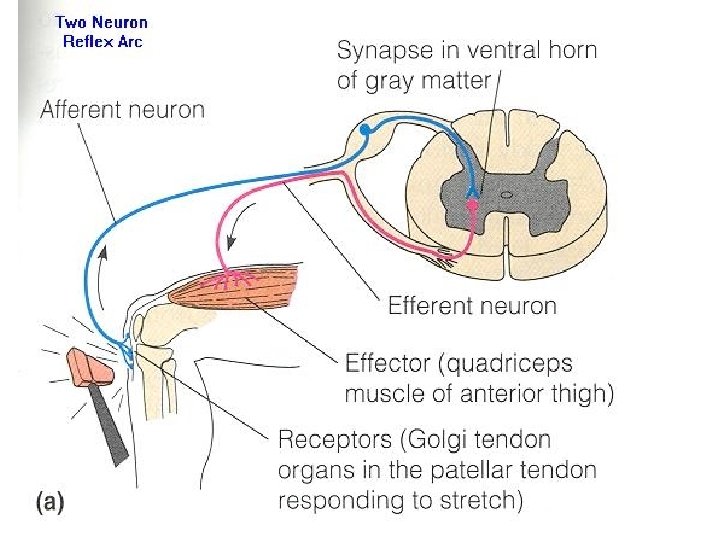
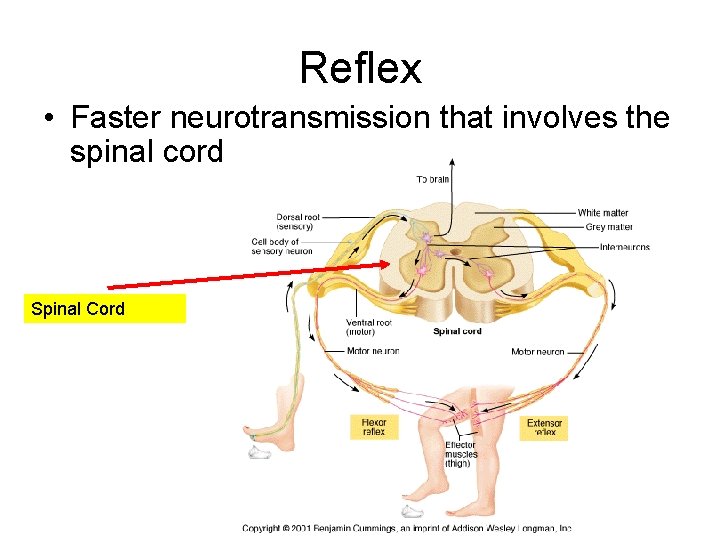
Reflex • Faster neurotransmission that involves the spinal cord Spinal Cord
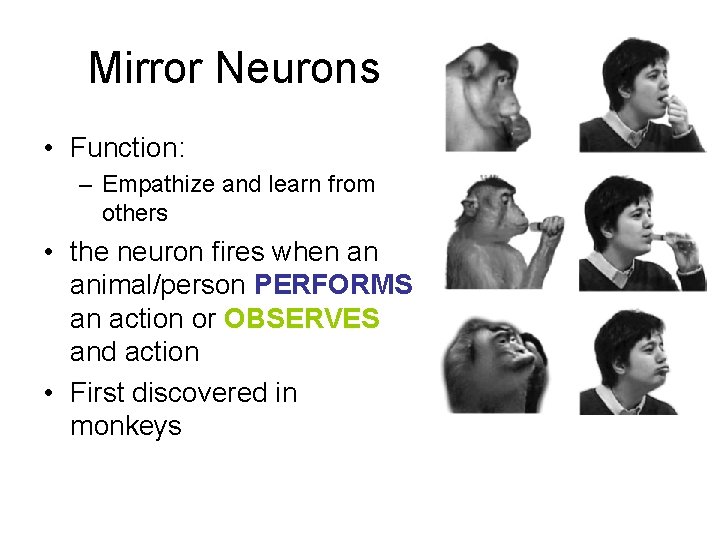
Mirror Neurons • Function: – Empathize and learn from others • the neuron fires when an animal/person PERFORMS an action or OBSERVES and action • First discovered in monkeys
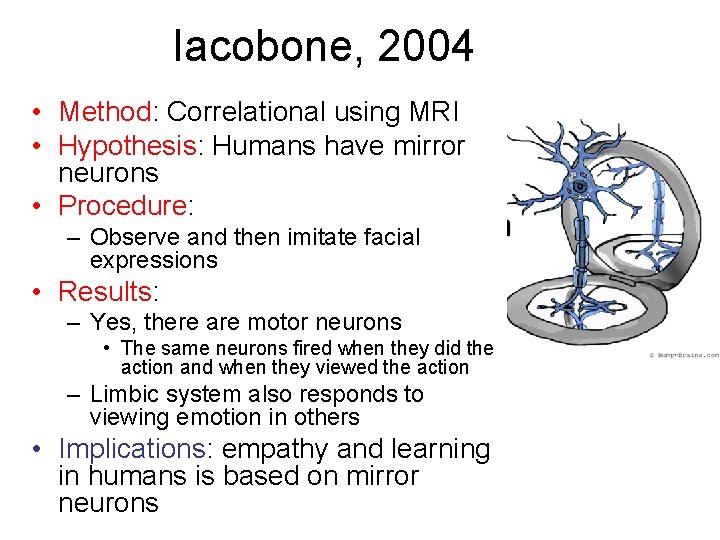
Iacobone, 2004 • Method: Correlational using MRI • Hypothesis: Humans have mirror neurons • Procedure: – Observe and then imitate facial expressions • Results: – Yes, there are motor neurons • The same neurons fired when they did the action and when they viewed the action – Limbic system also responds to viewing emotion in others • Implications: empathy and learning in humans is based on mirror neurons
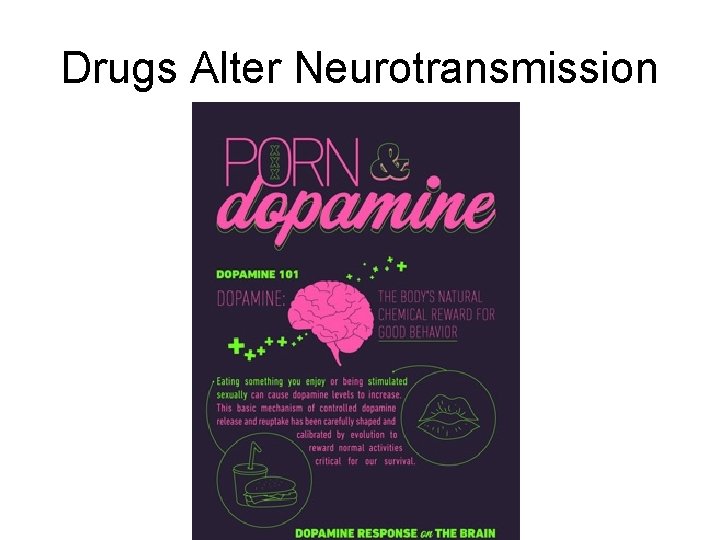
Drugs Alter Neurotransmission
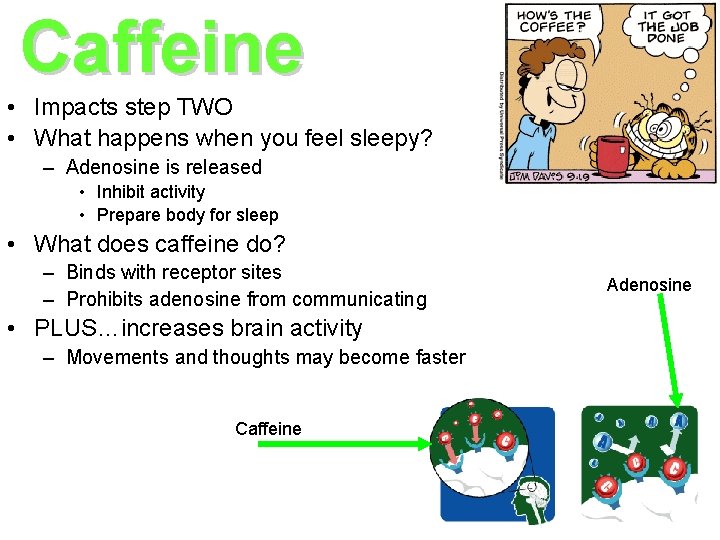
Caffeine • Impacts step TWO • What happens when you feel sleepy? – Adenosine is released • Inhibit activity • Prepare body for sleep • What does caffeine do? – Binds with receptor sites – Prohibits adenosine from communicating • PLUS…increases brain activity – Movements and thoughts may become faster Caffeine Adenosine
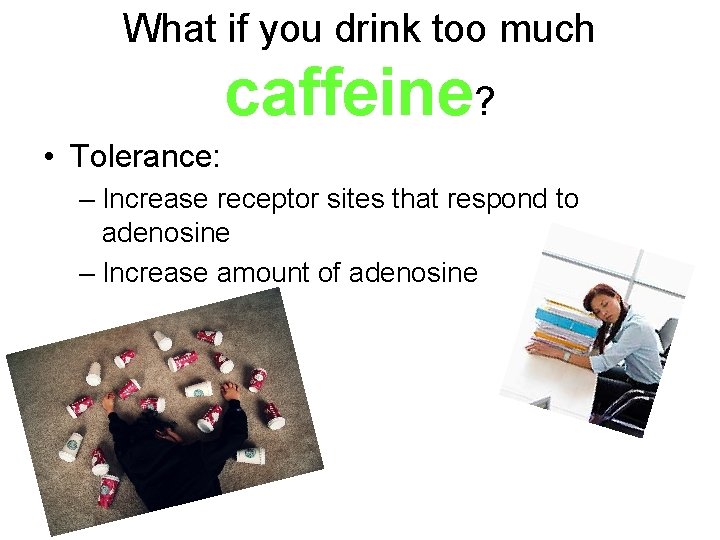
What if you drink too much caffeine? • Tolerance: – Increase receptor sites that respond to adenosine – Increase amount of adenosine
Dopamine • How does it impact behavior? – Voluntary Movement – Goal-directed behavior (motivation) • Reward system • Pleasure seeking • Addictive behavior – Disorders/Disease • Parkinson’s disease • Schizophrenia
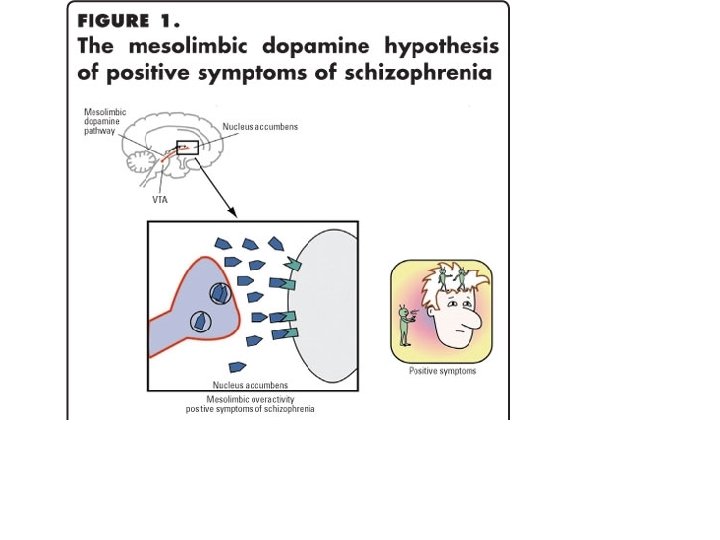
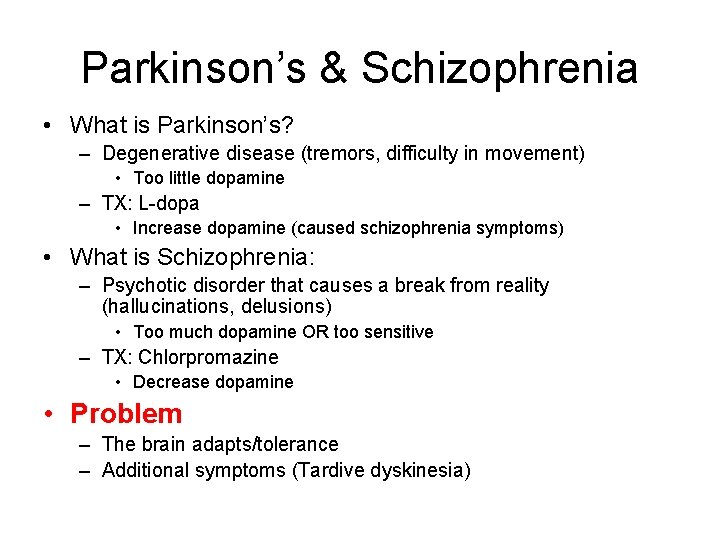
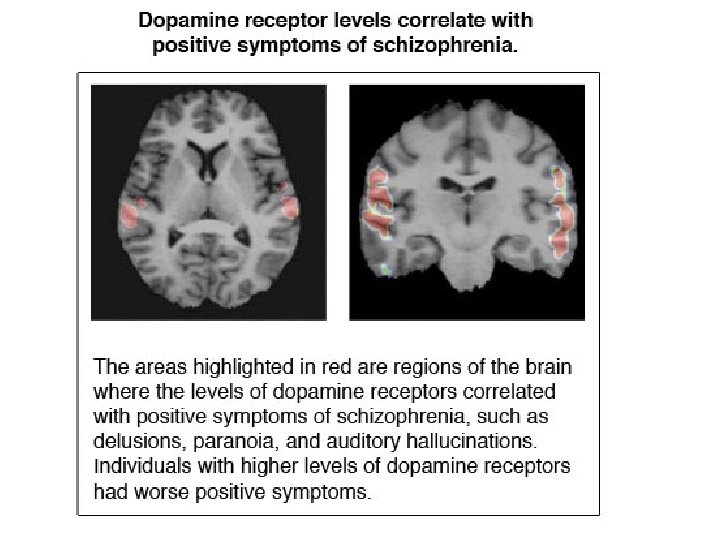
Parkinson’s & Schizophrenia • What is Parkinson’s? – Degenerative disease (tremors, difficulty in movement) • Too little dopamine – TX: L-dopa • Increase dopamine (caused schizophrenia symptoms) • What is Schizophrenia: – Psychotic disorder that causes a break from reality (hallucinations, delusions) • Too much dopamine OR too sensitive – TX: Chlorpromazine • Decrease dopamine • Problem – The brain adapts/tolerance – Additional symptoms (Tardive dyskinesia)
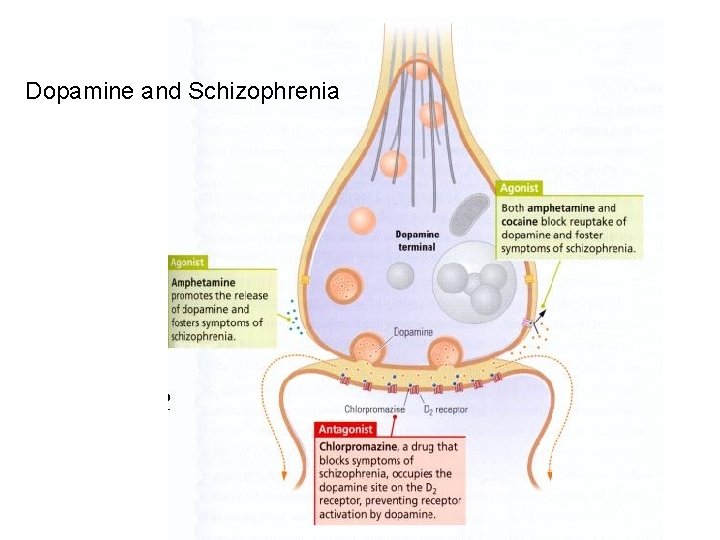
Dopamine and Schizophrenia
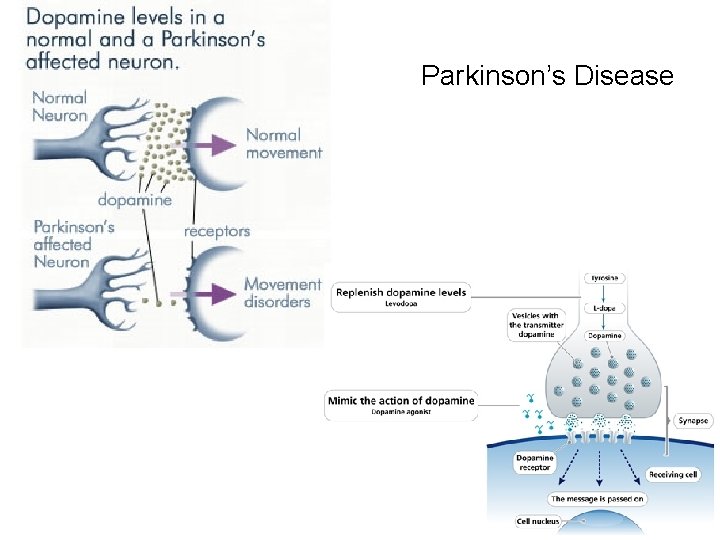
Parkinson’s Disease
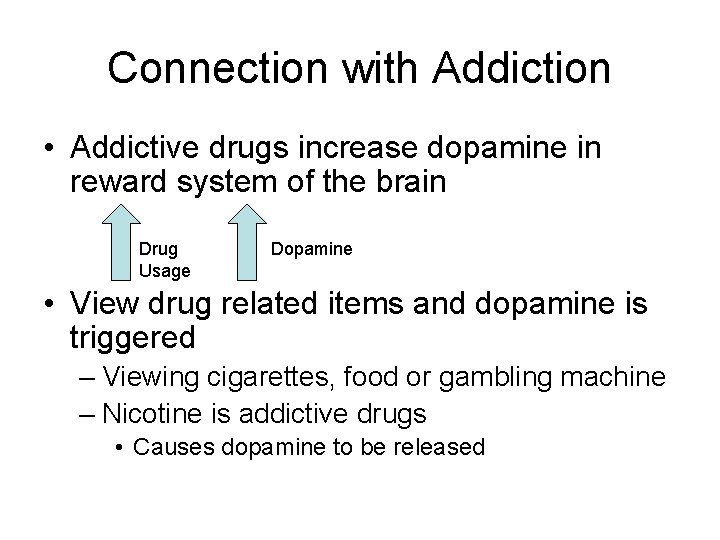
Connection with Addiction • Addictive drugs increase dopamine in reward system of the brain Drug Usage Dopamine • View drug related items and dopamine is triggered – Viewing cigarettes, food or gambling machine – Nicotine is addictive drugs • Causes dopamine to be released
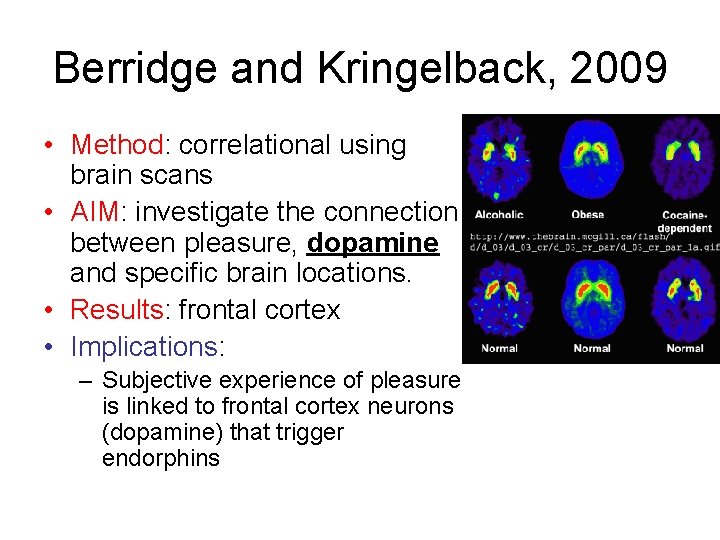
Berridge and Kringelback, 2009 • Method: correlational using brain scans • AIM: investigate the connection between pleasure, dopamine and specific brain locations. • Results: frontal cortex • Implications: – Subjective experience of pleasure is linked to frontal cortex neurons (dopamine) that trigger endorphins
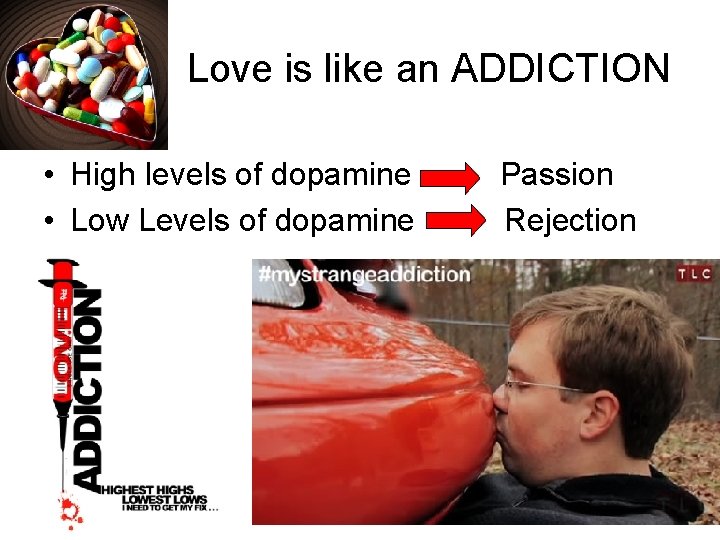
Love is like an ADDICTION • High levels of dopamine • Low Levels of dopamine Passion Rejection
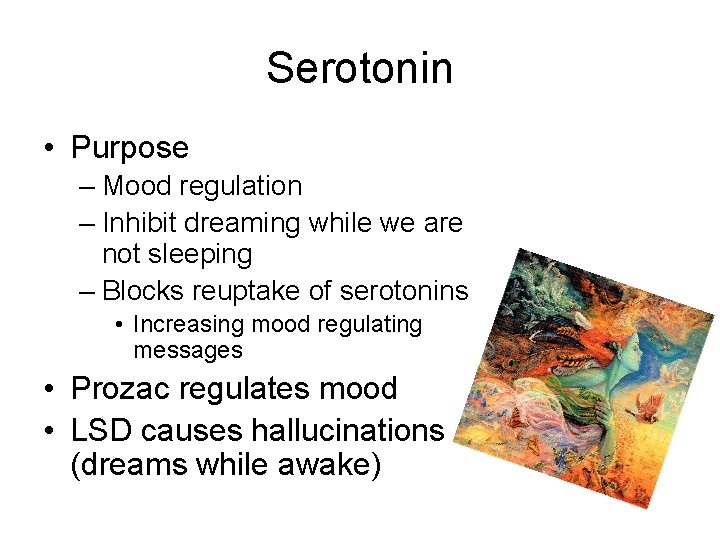
Serotonin • Purpose – Mood regulation – Inhibit dreaming while we are not sleeping – Blocks reuptake of serotonins • Increasing mood regulating messages • Prozac regulates mood • LSD causes hallucinations (dreams while awake)
Bonson et al, 1996 • Method: Survey – Major limitations • AIM: to see the impact on behavior when individual was on Prozac for depression and took LSD • Results: – Prozac decreased symptoms of depression – BUT LSD never gave the same effect
Acetylcholine (ACh) • Function – Synaptic plasticity in hippocampus – Learning and short term memory
Martinez and Kesner, 1991 • Aim: investigate the role of ACh in memory formation • Method: Experiment (rats) • Procedure: – Memory task (maze) – Group 1: received injection to block ACh – Group 2: received injection that cleans out the synapse allowing more ACh availability – Group 3: Control Group • Results: – Group 1 had difficulty with maze – Group 2 made few mistakes, quicker than control group • Implications: – ACh is important to the neurobiology of memory • But it is very complex
SAQ Discussion • Create an outline for – Explain, using one or more examples, the effects of neurotransmission on human behavior
- Slides: 28