
PHYSIOLOGY 1 LECTURE 26 Body Temperature Regulation and
PHYSIOLOGY 1 LECTURE 26 Body Temperature Regulation and Fever
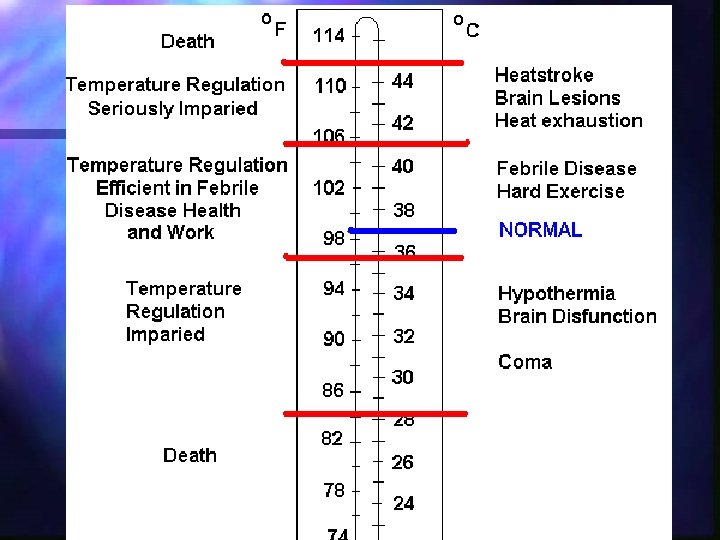
Body Temperature Regulation n I. Normal Body Temperature – A. Core Temperature n 1. Deep tissues - central trunk areas of the body n 2. Remains almost exactly constant (Exception fever, exercise, prolonged exposure to extreme temperatures) n 3. Avg. . Temperature = 98 o F to 98. 6 o F orally, 1 o F more for rectal 0 r 37 o C.
Body Temperature Regulation –B. Skin Temperature n 1. Varies with environmental temperature n 2. Varies with body metabolism, exercise or febrile conditions
Body Temperature Regulation n II. Heat production – A. BMR - Basal metabolic rate – B. Muscle activity 1. Exercise n 2. Shivering - inappropriate muscle contraction - small motor units n – C. Hormones - increased BMR 1. n 2. n 3. n Thyroxine Growth hormone Testosterone
Body Temperature Regulation – D. Neurotransmitters n 1. Epinephrine n 2. Norepinephrine n 3. Sympathetic stimulation
Body Temperature Regulation n III. Heat Loss – A. Heat transfer from core to skin – B. Heat transfer from skin to environment – C. Insulators n 1. Skin n 2. Subcutaneous tissues n 3. Fat - conducts heat at 1/3 the rate of other tissue
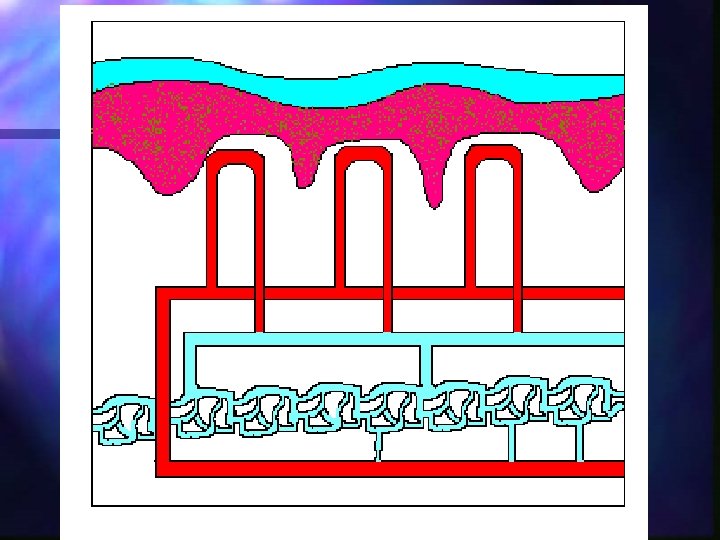
Body Temperature Regulation – D. Blood flow - skin n 1. Arteriovenous anastomoses n 2. Rate varies from nearly 0 to 30% of cardiac output n 3. Vasoconstriction - determined by level of sympathetic output
Body Temperature Regulation – E. Mechanism of heat loss n 1. Radiation n 2. Conduction n 3. Convection - wind and water n 4. Evaporation
Body Temperature Regulation n 4. Evaporation – a. 0. 58 calorie for each gram of water evaporated from the skin - 0 for each gram which drips off – b. Water loss n 1. Insensible n a. 450 to 600 ml. Per day n b. Lungs, skin n 2. Sensible - sweating, urine, feces
Body Temperature Regulation n IV. Control of Sweating – A. Preoptic area of the hypothalamus – 1. Controls sweating n 2. Sympathetic – Sweat glands – a. Cholinergic receptors – b. Neurotransmitter = acetylcholine n 3. Skin and deep body temperature receptors n 4. Central and peripheral temperature sensory signals
Body Temperature Regulation – B. Temperature - decreasing mechanism – 1. Vasodilation of skin arteries - increases the rate of heat transfer by 8 X – 2. Sweat Removes heat 10 X faster than body heat production – a. Rate varies with blood flow – b. Precursor secretion is similar to blood plasma – c. Aldosterone effects constituents – 3. Decreased heat production - inhibition of shivering and chemical thermogenesis
Body Temperature Regulation n C. Temperature - increasing mechanisms – 1. Skin vasoconstriction - limit heat loss to the environment – 2. Piloerection - goose bumps – 3. Increase heat production n a. Shivering n b. Sympathetic excitation n c. Thyroxin - T 3 ans T 4
Body Temperature Regulation n D. Acclimatization – 1. Thermoregulatory responses during exercise – a. Core temperature rises during exercise, triggering a heat loss response – b. Exercise in the heat can threaten cardiovascular homeostasis – 1. Impairment of cardiac filling during exercise – 2. Compensatory responses during exercise in heat - more efficient sweating, blood vol. expansion, etc.
Body Temperature Regulation – 2. Heat acclimatization n a. includes adjustments in heart rate, temperature, and sweat rate n b. Produced by exposure to heat during regular strenuous exercise - takes 2 to 3 weeks – 3. Responses to cold - human really does not adapt to cold n a. Blood vessels in the shell constrict to conserve heat - A-V shunt, Countercurrent heat exchange
Body Temperature Regulation n – b. Human cold acclimatization confers a modest advantage n 1. Metabolic changes in cold acclimatization n 2. Increased tissue insulation n 3. Cold - induced vasodilation - escape mechanism n 4. Lewis hunting response - keeps extremities warm E. Temperature control without intact spinal cord
Abnormalities of Body Temperature Regulation n n A. Fever enhances defense mechanisms – 1. Bacterial diseases – 2. Brain tumors – 3. Environmental conditions B. Many factors, including physical fitness, age, drugs, and diseases, affect thermoregulatory responses and tolerance to heat and cold.
Body Temperature Regulation – 1. Resetting of hypothalamic temperature regulating center in febrile diseases – 2. Pyrogens - pyro = heat, gen = genesis n a. Proteins n b. Breakdown products of proteins n c. Lipopolysaccharide toxins n d. Endotoxins; Gram neg. bacteria – 3. Interleukin-1 (AKA - leukocyte pyrogen, or endogenous pyrogen - produced by leukocytes, tissue macrophages, and killer lymphocytes
Body Temperature Regulation n b. Causes hypothalamus to elevate body temperature n c. Induces formation of Prostaglandin E 2 – 1. Formed from arachidonic acid – 2. Blocked by aspirin C. Febrile conditions – 1. Chills – 2. Crisis or flush
Body Temperature Regulation n D. Heat stress causes or aggravates a number of disorders – 1. Heat syncope - circulatory failure due to pooling of blood in the peripheral veins, thereby reducing venous return – 2. Water and salt depletion due to heat exposure – 3. Heat stroke – 4. Aggravation of disease states due to heat exposure
Body Temperature Regulation n E. Extreme cold - hypothermia occurs when the body’s defenses against cold are disabled or overwhelmed – 1. Frostbite – 2. Cold induced vasodilation – 3. Artificial hypothermia - lower metabolism therefore may deprive the brain of oxygen for longer periods of time (heart transplant, most heart surgeries, most transplants, etc. )
SUMMARY 1. What are the differences between core and skin temperature? n 2. What is maximum and minimum body temperature that is compatible with life? n 3. What are the mechanisms for increasing or decreasing heat production? n 4. How does the body loose heat? n 5. How does training effect sweat production? n
SUMMARY 6. How does the human body adapt to heat, cold? n 7. What is fever and how does it effect temperature regulation? n 8. What are the symptoms of heat stress, stroke, or hypothermia? n
- Slides: 24