
Physiological Responses Each experience of an emotion has


- Slides: 28
Physiological Responses
Each experience of an emotion has an associated physiological component. The physiological responses associated with an emotion refer to the changes in our bodies that occur when we experience an emotion.
Not all physiological changes which accompany an emotion are noticeable. e. g. when fear is experienced, our body undergoes a number of changes (we are only aware of a few): - body’s metabolism speeds up > glucose in the bloodstream and fats in the tissues are burned off at a faster rate > liver produces extra glucose > released into blood stream > breathing increases to supply necessary oxygen > …. .
Galvanic Skin Response (GSR) Refers to electrical conductivity of the skin. - The increase in activity of sweat glands produces ‘clammy hands’, ‘cold sweat’ - Muscles beneath the skin contract – causing hairs to stand up – ‘goose bumps’
The physiological changes which take place when we experience fear are part of our body’s preparation to act in a threatening situation. Without awareness or conscious control, our body responds to perceived threat by automatically activating the fight-or-flight response.
Fight-or-flight Response The fight-or-flight response is a state of physiological arousal which prepares the body to deal with sudden threats by either confronting them (fight) or running away to safety (flight). - Believed to be an adaptive response which occurs automatically to maximise our chances of survival
Physiological Response Questions
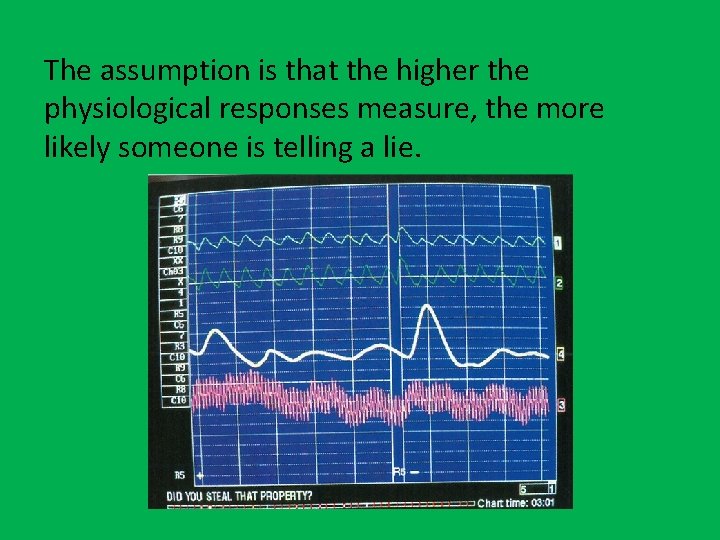
Polygraph Tests A polygraph test is a device used to measure physiological changes associated with arousal. • It measures heart rate, blood pressure, breathing rate and galvanic skin response. • It is used mainly in the US for testing suspected criminals but has occasionally been used in Australia.
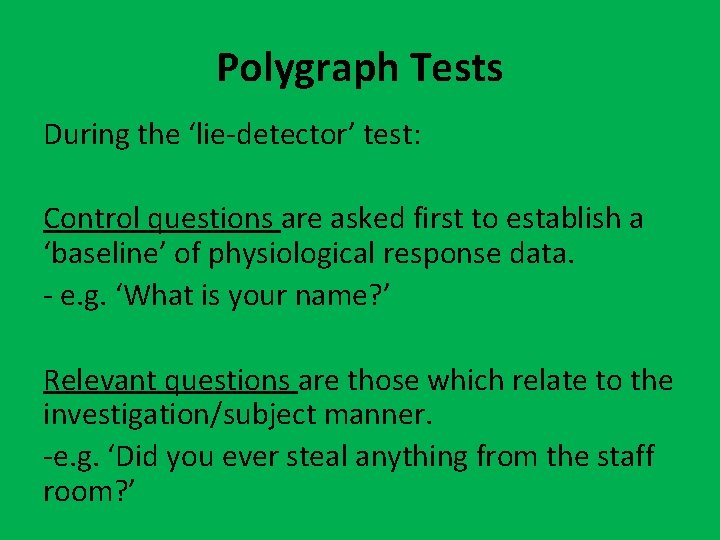
Polygraph Tests During the ‘lie-detector’ test: Control questions are asked first to establish a ‘baseline’ of physiological response data. - e. g. ‘What is your name? ’ Relevant questions are those which relate to the investigation/subject manner. -e. g. ‘Did you ever steal anything from the staff room? ’
The assumption is that the higher the physiological responses measure, the more likely someone is telling a lie.
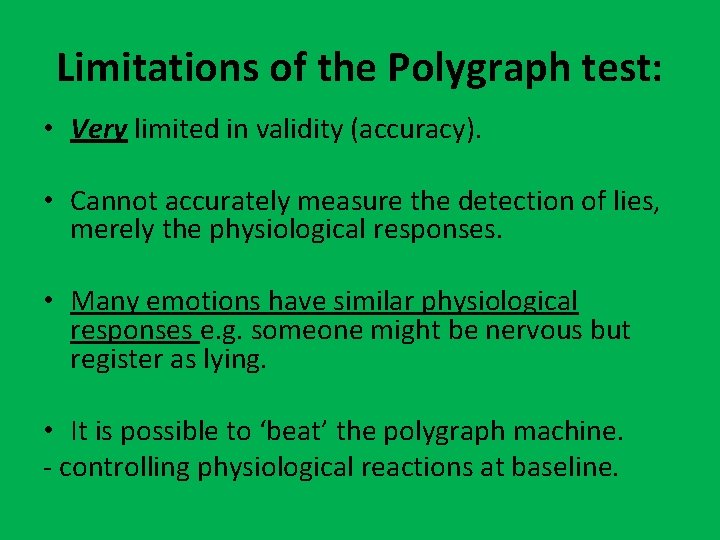
Limitations of the Polygraph test: • Very limited in validity (accuracy). • Cannot accurately measure the detection of lies, merely the physiological responses. • Many emotions have similar physiological responses e. g. someone might be nervous but register as lying. • It is possible to ‘beat’ the polygraph machine. - controlling physiological reactions at baseline.
Video https: //www. youtube. com/watch? v=GLL 3 wtg. Bi FA - part 1 https: //www. youtube. com/watch? v=t. JXMr. JJMN Z 4 - part 2
Activity Textbook: - Learning Activity 11. 20
Autonomic, Sympathetic and Parasympathetic Nervous Systems
Autonomic Nervous System The ANS connects the brain with internal organs and glands, such as: - heart, lungs, kidneys, sweat glands, salivary glands and adrenal glands. It plays a major role in regulating the activities of the body’s organs. It is called autonomic because many of the functions under its control occur autonomically (independent of the brain)
Autonomic Nervous System Due to the autonomic nature of the system, its activation occurs without us being aware that it is happening. The ANS is made up of two parts that work together: - Sympathetic nervous system - Parasympathetic nervous system
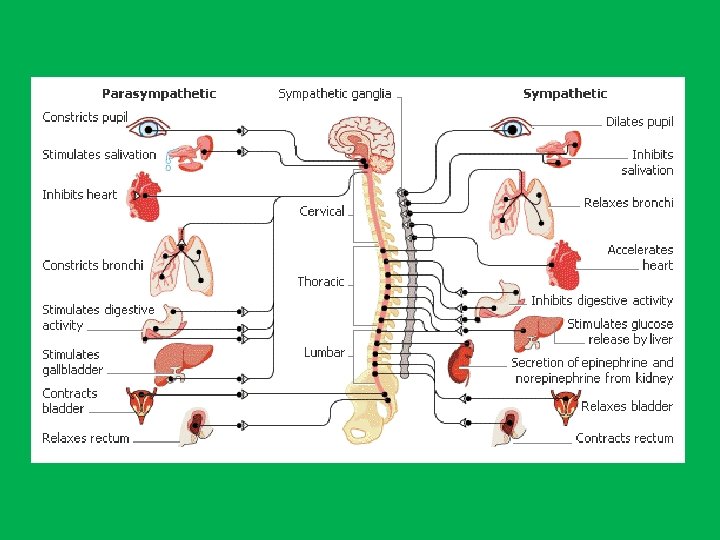
Autonomic Nervous System The sympathetic nervous system: - Activates nerves, glands and visceral muscles to prepare the body for fight-or-flight - Heightens some functions (e. g. heart rate), but lowers others (such as digestion)
Autonomic Nervous System The parasympathetic nervous system: - Works the opposite way to the sympathetic - Relaxes the body and returns it to a calm and unemotional state once threat has passed
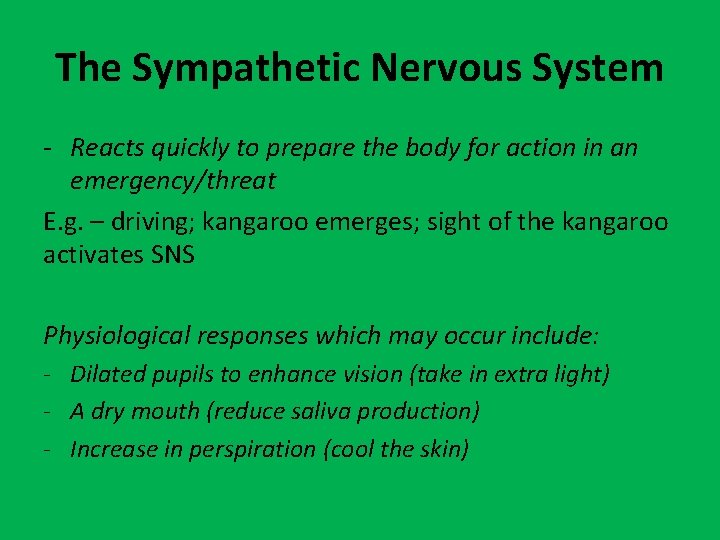
The Sympathetic Nervous System - Reacts quickly to prepare the body for action in an emergency/threat E. g. – driving; kangaroo emerges; sight of the kangaroo activates SNS Physiological responses which may occur include: - Dilated pupils to enhance vision (take in extra light) - A dry mouth (reduce saliva production) - Increase in perspiration (cool the skin)
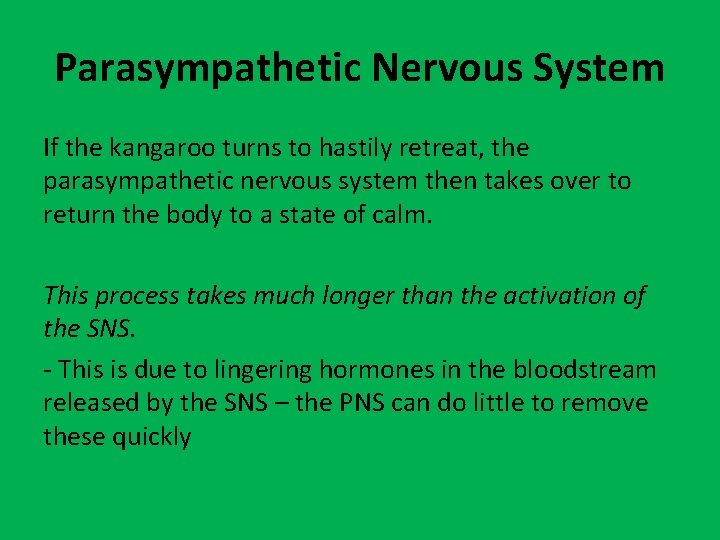
Parasympathetic Nervous System If the kangaroo turns to hastily retreat, the parasympathetic nervous system then takes over to return the body to a state of calm. This process takes much longer than the activation of the SNS. - This is due to lingering hormones in the bloodstream released by the SNS – the PNS can do little to remove these quickly
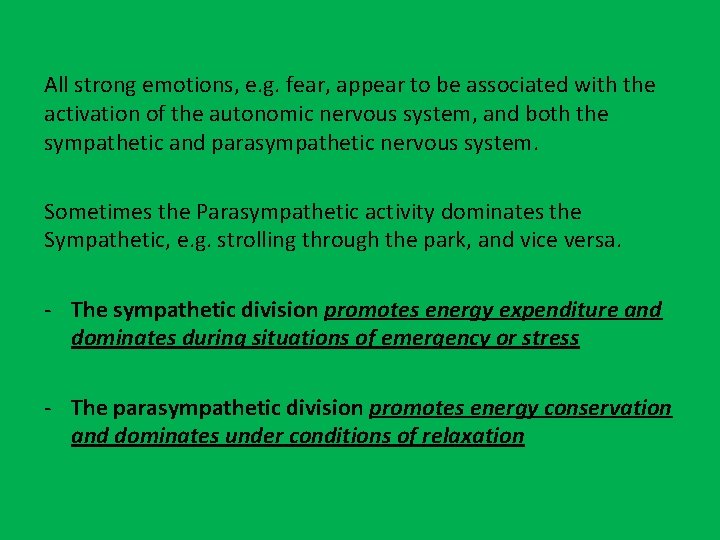
All strong emotions, e. g. fear, appear to be associated with the activation of the autonomic nervous system, and both the sympathetic and parasympathetic nervous system. Sometimes the Parasympathetic activity dominates the Sympathetic, e. g. strolling through the park, and vice versa. - The sympathetic division promotes energy expenditure and dominates during situations of emergency or stress - The parasympathetic division promotes energy conservation and dominates under conditions of relaxation
Most physiological changes that accompany emotions such as fear or anger are associated with the action of the sympathetic division. However, the same pattern of physiological response can also be triggered in less fearful situations, e. g. daydreaming you cross a road, and the sudden blast of a car horn startles you
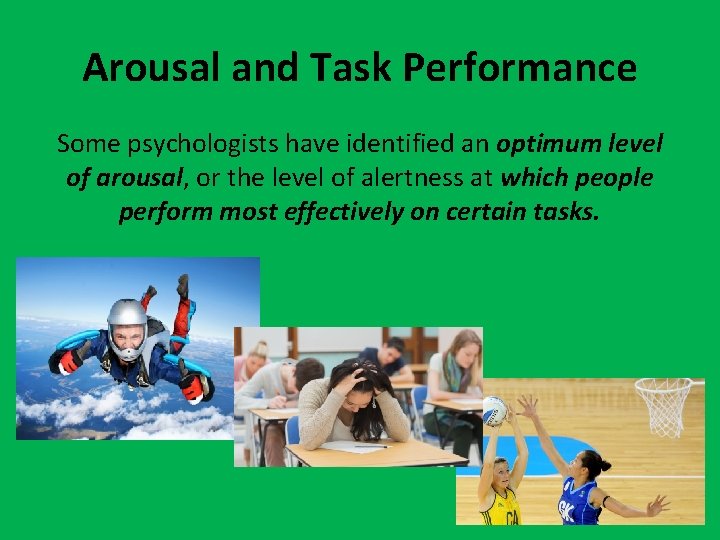
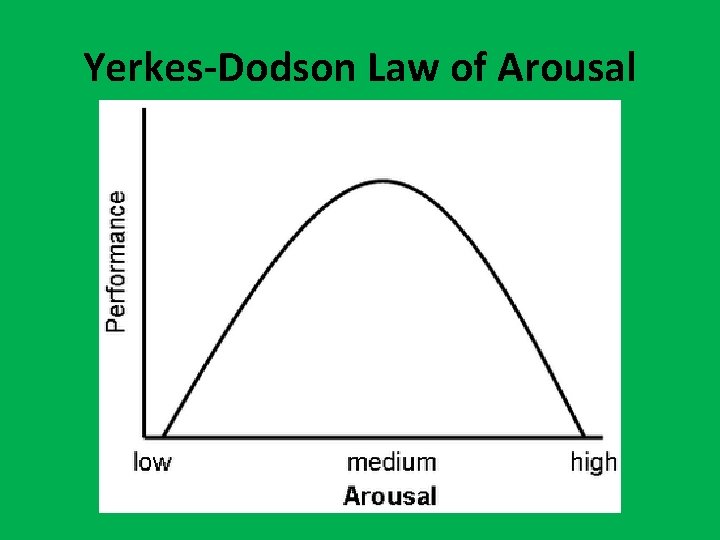
Arousal and Task Performance Some psychologists have identified an optimum level of arousal, or the level of alertness at which people perform most effectively on certain tasks.
Arousal and Task Performance It has been found that the optimum level of arousal varies according to the difficulty or complexity of the task. A Simple cognitive task is a task which does not require a high level of mental concentration/cognition. �Examples? A Complex/difficult cognitive task is a task which does require a high level of mental concentration/cognition. �Examples?
Arousal and Task Performance The level of arousal is closely related to task performance. The Yerkes-Dodson Law states that humans need: - a low level of arousal for a difficult cognitive task - a high level of arousal for a simple cognitive task - and that often the best level is in the middle The goal is to achieve an optimum level of arousal, meaning we will perform the task at the best level of physiological arousal. Particularly relevant in sport.
Yerkes-Dodson Law of Arousal
Arousal and Task Performance If you have: - Too little arousal – bored, tired: may not perform the task at the optimum level. - Too much arousal – stress, nervous, hyperactive: may not perform the task at optimum level. The optimum level of arousal (OLA) depends on - the familiarity and/or difficulty of the task. Individual differences also influence OLA, with certain people being natural ‘thrill seekers’.