
Physiological factors in football Physiological factors At this

Physiological factors in football

Physiological factors. At this point, We will show different data in response to internal indicators of the athlete, that is, those parameters are not visible from the outside that allow us to evaluate the physiological load, the participation rate of metabolic pathways and organic effects that occur in consequence of the load to which they are subjected during the competition.
Heart Rate. From the perspective of football, in a study by Dellal et al (2012), the average FC in a football match in competition is between 165 and 175 beats / minute, without large remarkable differences between the first and second part. Obviously, we can find different peaks FC, we both maximum and minimum, depending on the context of game in which we find ourselves.
VO 2 max. We mean by maximum oxygen uptake, a determined effort in which a time that despite increasing speed or power comes, no oxygen consumption increases. However, we must be clear that, despite to increase and improve levels of maximum oxygen consumption through reduced training way, has a strong genetic dependence.

VO 2 max. A study by Bangsbo, Mohr, Krustrup (2006) shows that the average consumption in the players in competition is around 70% VO 2 max. However, depending on the position of the player on the field we have different percentages for the physiological demands and efforts being higher this consumer players through the field because their efforts are more aerobic and higher distances.
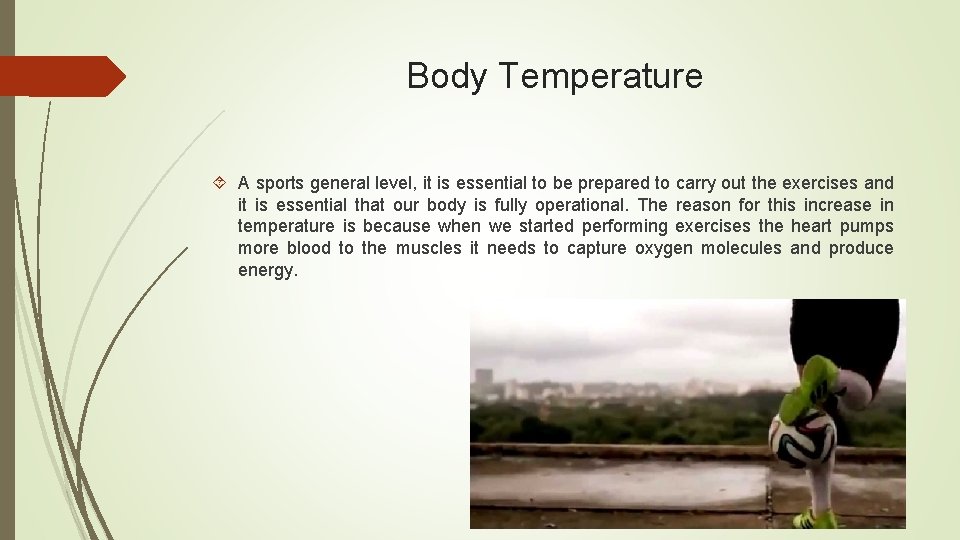
Body Temperature A sports general level, it is essential to be prepared to carry out the exercises and it is essential that our body is fully operational. The reason for this increase in temperature is because when we started performing exercises the heart pumps more blood to the muscles it needs to capture oxygen molecules and produce energy.
- Slides: 6