
Physiological effects of transfer Key points Acceleration deceleration
- Slides: 12
Physiological effects of transfer
Key points • Acceleration / deceleration • Noise / vibration / temperature • Effects of altitude. – Oxygen – Pressure
Acceleration / deceleration Newton’s first law of motion • ‘An object either remains at rest or continues to move at a constant velocity, unless acted upon by a net force. ’ • This will have multiple effects
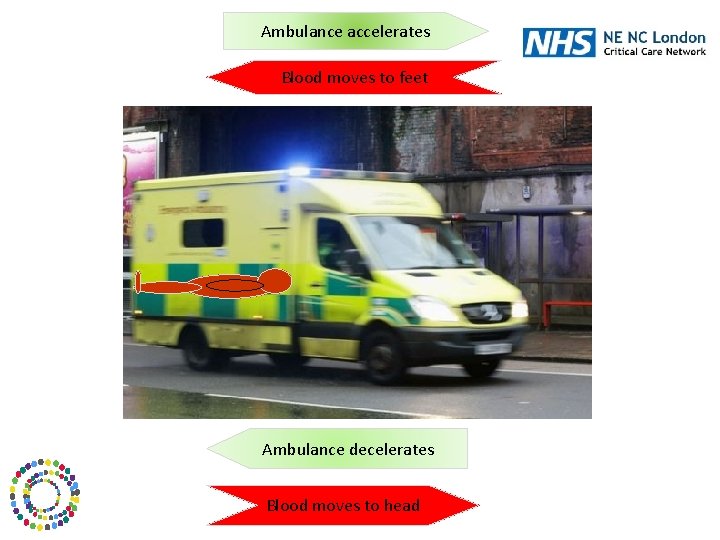
Cardiovascular effects • Veins are floppy, changes in velocity will cause shifts of blood within the vascular system. • For a standard ambulance layout: – When the ambulance accelerates then there will be a tendency for the patient's blood to move towards their feet. – When the ambulance decelerates there will be a tendency for the patient's blood to move towards their head.
Ambulance accelerates Blood moves to feet Ambulance decelerates Blood moves to head
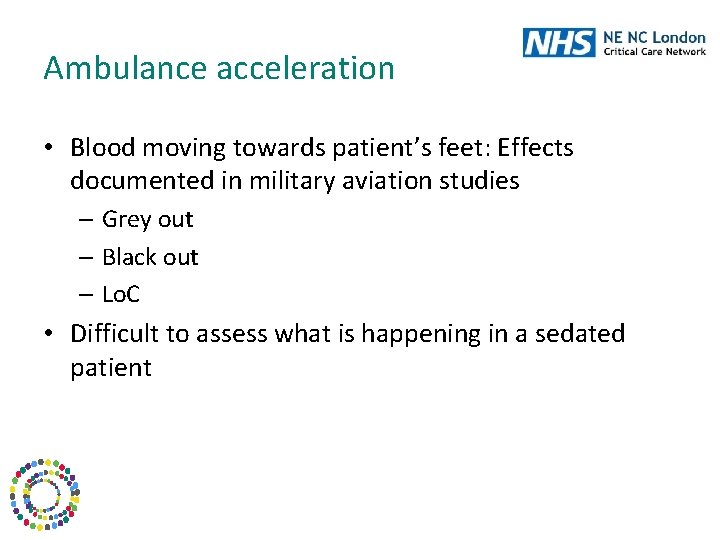
Ambulance acceleration • Blood moving towards patient’s feet: Effects documented in military aviation studies – Grey out – Black out – Lo. C • Difficult to assess what is happening in a sedated patient
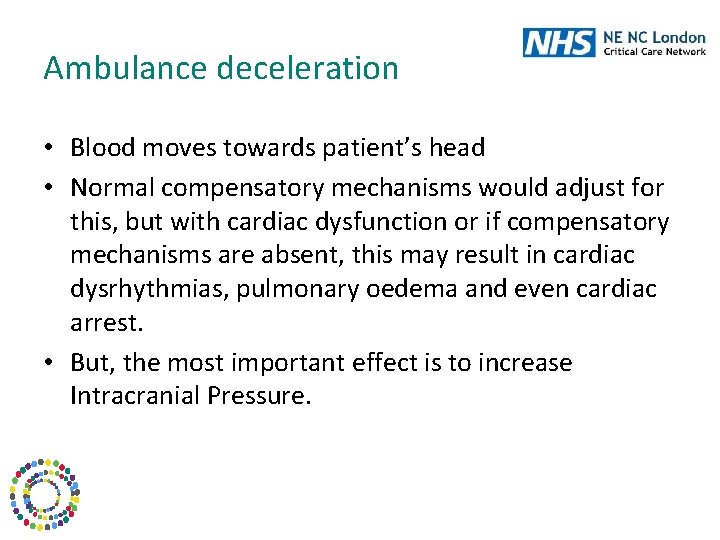
Ambulance deceleration • Blood moves towards patient’s head • Normal compensatory mechanisms would adjust for this, but with cardiac dysfunction or if compensatory mechanisms are absent, this may result in cardiac dysrhythmias, pulmonary oedema and even cardiac arrest. • But, the most important effect is to increase Intracranial Pressure.
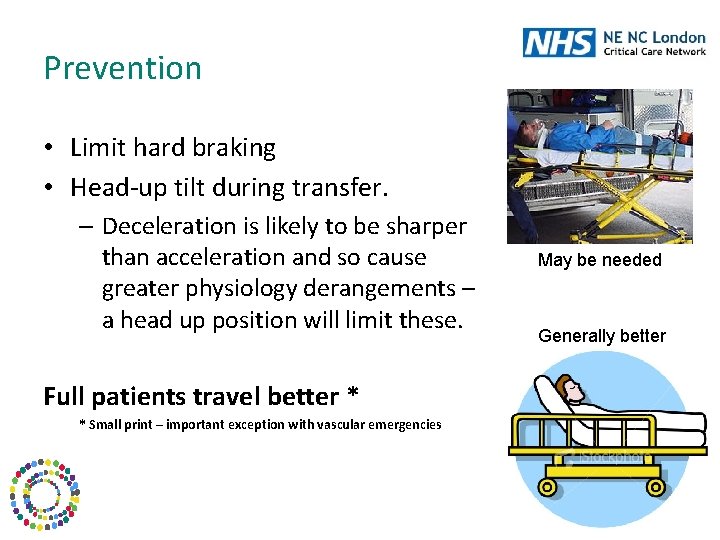
Prevention • Limit hard braking • Head-up tilt during transfer. – Deceleration is likely to be sharper than acceleration and so cause greater physiology derangements – a head up position will limit these. Full patients travel better * * Small print – important exception with vascular emergencies May be needed Generally better
Also, • Ambulance deceleration will cause stomach contents to move towards patient’s head with increased risk of gastro-oesophageal reflux and aspiration – Aspirate NG / free drainage • Acceleration / deceleration potentially have an axial loading effect on the vertebrae – Again, smooth transfers are generally best
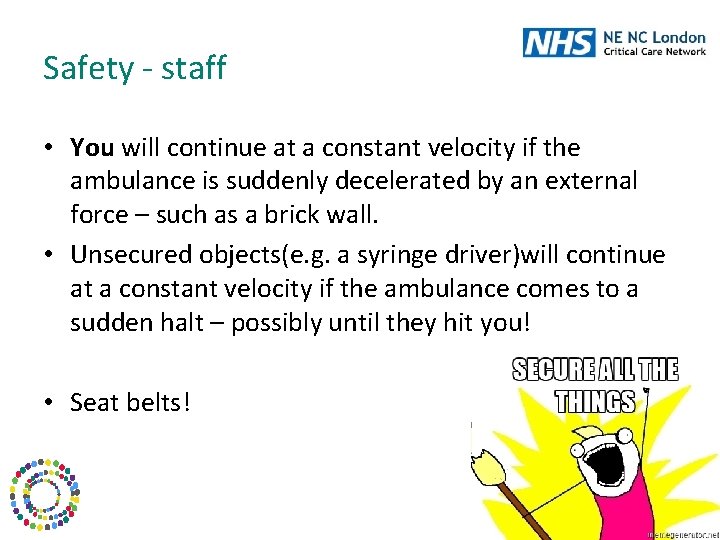
Safety - staff • You will continue at a constant velocity if the ambulance is suddenly decelerated by an external force – such as a brick wall. • Unsecured objects(e. g. a syringe driver)will continue at a constant velocity if the ambulance comes to a sudden halt – possibly until they hit you! • Seat belts!
Other factors with physiological effects • • Noise Vibration Temperature Dehydration? – HMEs
Summary • Acceleration and deceleration have physiological effects • Also consider vibration and temperature • Aero-medical transfers have complex effects and proper training is essential