
Physiological Disorders Pomegranate ALAA S AMIREH Optimum Storage

- Slides: 13
Physiological Disorders Pomegranate ALA'A S. AMIREH
Optimum Storage Condition Optimum Temperature • 5°C (41°F) for up to 2 months; longer Responses to Ethylene • Exposure to ethylene at 1 ppm or higher stimulates respiration and ethylene production rates, but it does not affect their quality attributes storage should be at 7. 2°C (45°F) to avoid chilling injury.
Physiological Disorders • Is the damage that appear on the fruit either before or after storage may increase and be in the form of malformations or abnormal growth appears on the fruit and causes of unsatisfactory or non-pathogenic Insecticides may be causes of environmental conditions or the lack of balance in nutrients
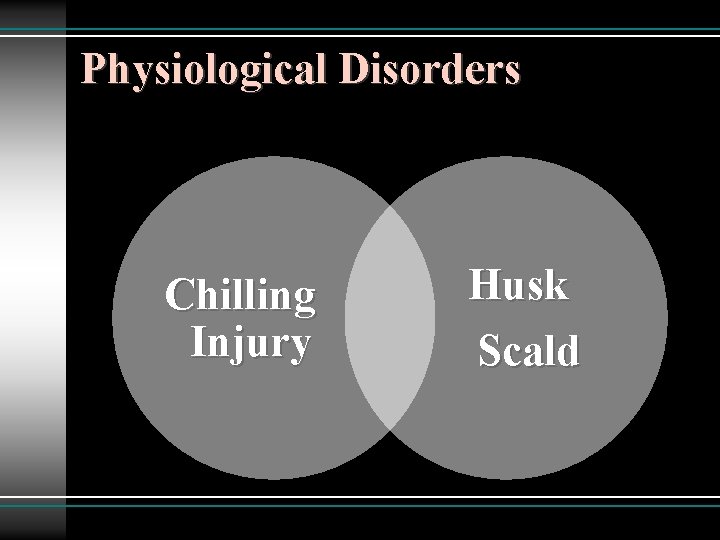
Physiological Disorders Chilling Injury Husk Scald
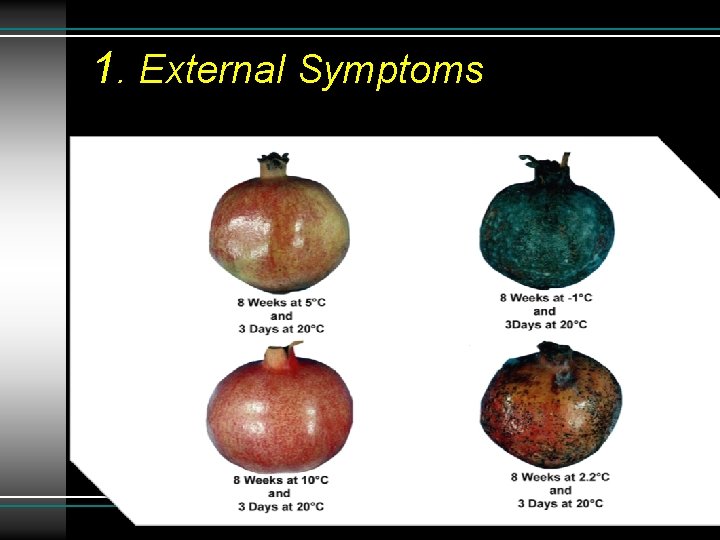
Chilling Injury 1. External Symptoms • Brown discoloration of the skin. • Increased susceptibility to decay.
1. External Symptoms
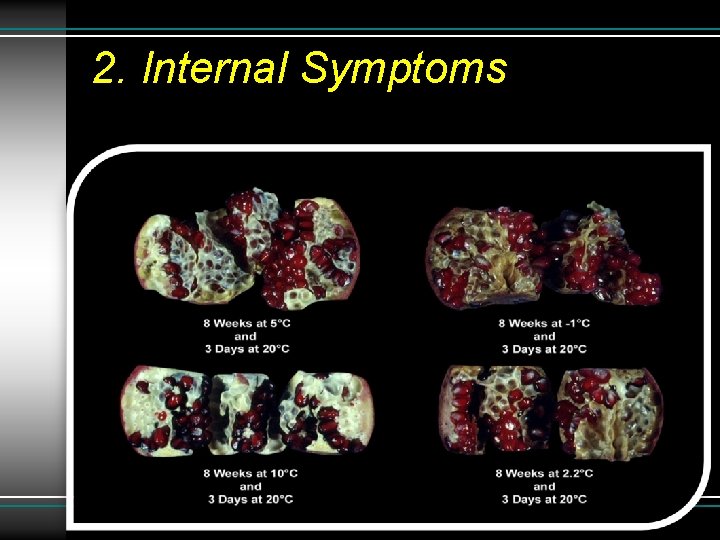
Chilling Injury 2. Internal Symptoms • A pale color of the arils • Brown discoloration of the white segments separating the arils.
2. Internal Symptoms
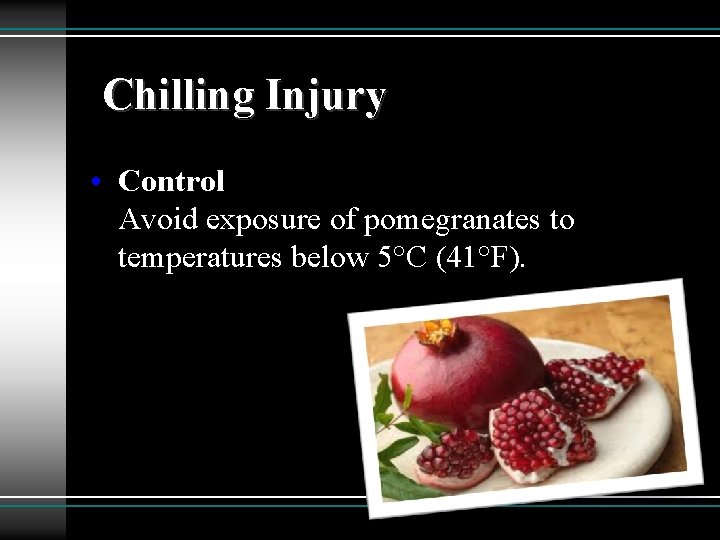
Chilling Injury • Control Avoid exposure of pomegranates to temperatures below 5°C (41°F).
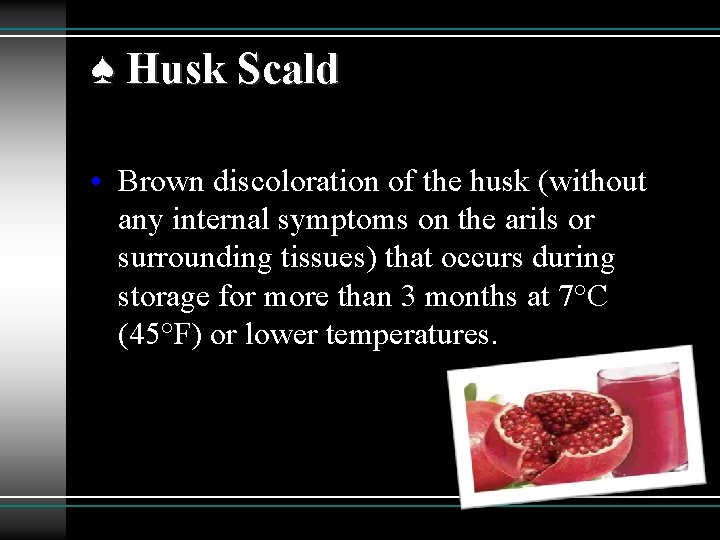
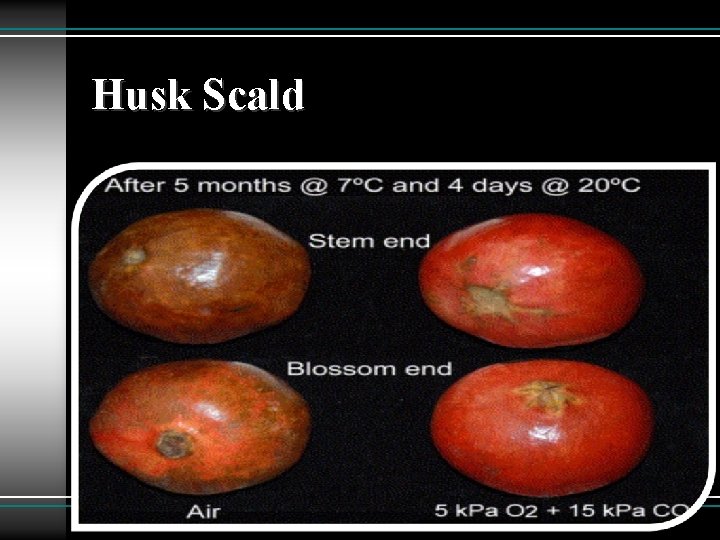
♠ Husk Scald • Brown discoloration of the husk (without any internal symptoms on the arils or surrounding tissues) that occurs during storage for more than 3 months at 7°C (45°F) or lower temperatures.
Husk Scald
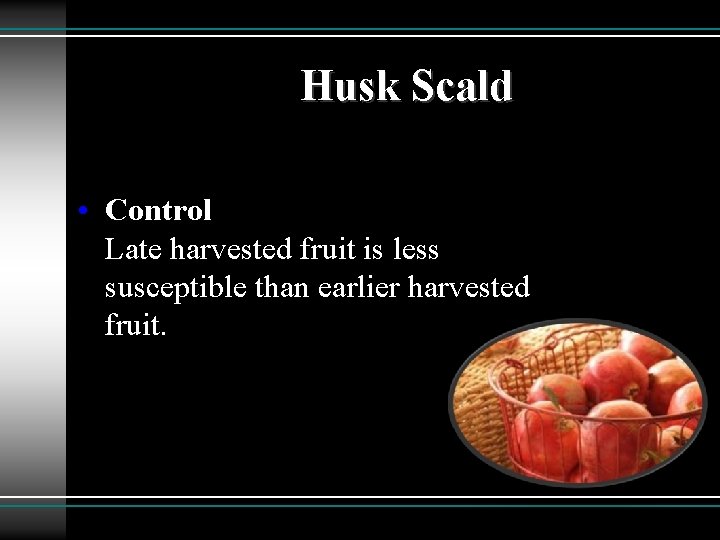
Husk Scald • Control Late harvested fruit is less susceptible than earlier harvested fruit.