
Physiological basis for Metabolic Obesity Hedonic Obesity YiHao

Physiological basis for “Metabolic Obesity” & “Hedonic Obesity” Yi-Hao Yu, MD, Ph. D Greenwich Hospital & Northeast Medical Group Yale-New Haven Health System 12/08/15 Atlanta
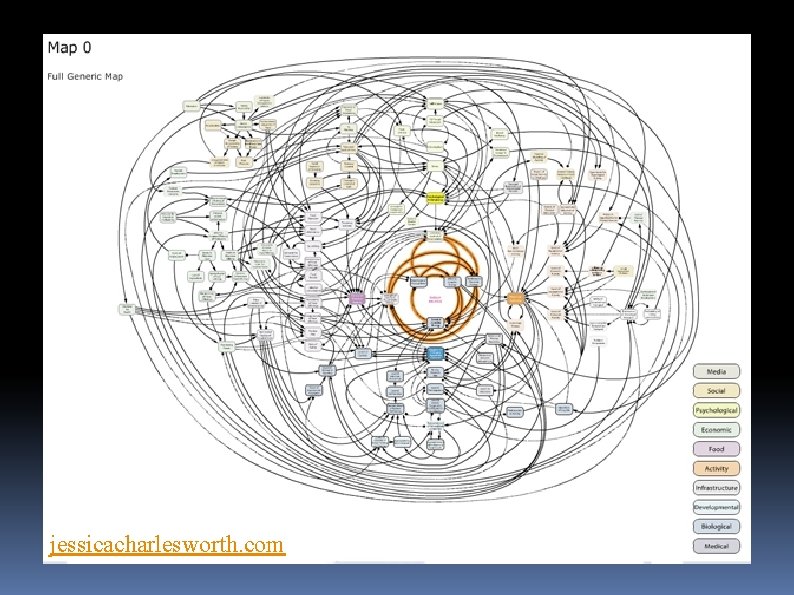
jessicacharlesworth. com
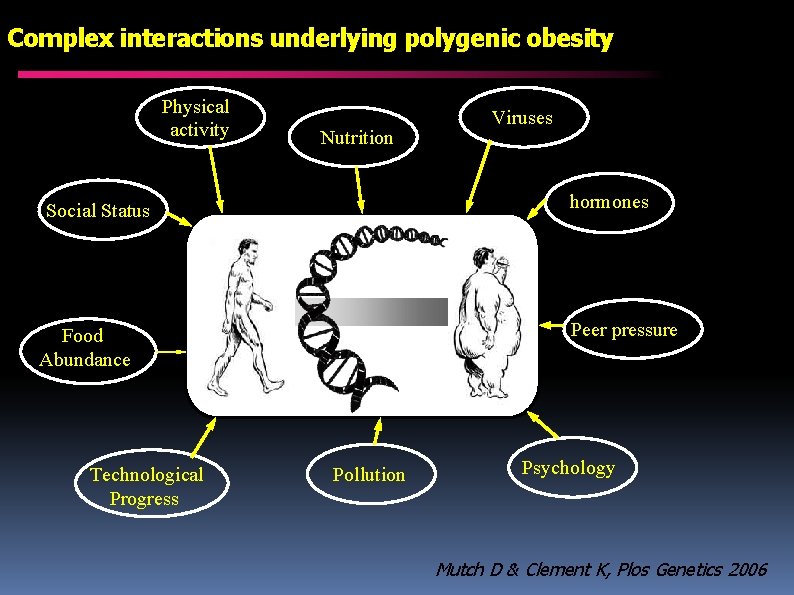
Complex interactions underlying polygenic obesity Physical activity Nutrition hormones Social Status Peer pressure Food Abundance Technological Progress Viruses Pollution Psychology Mutch D & Clement K, Plos Genetics 2006
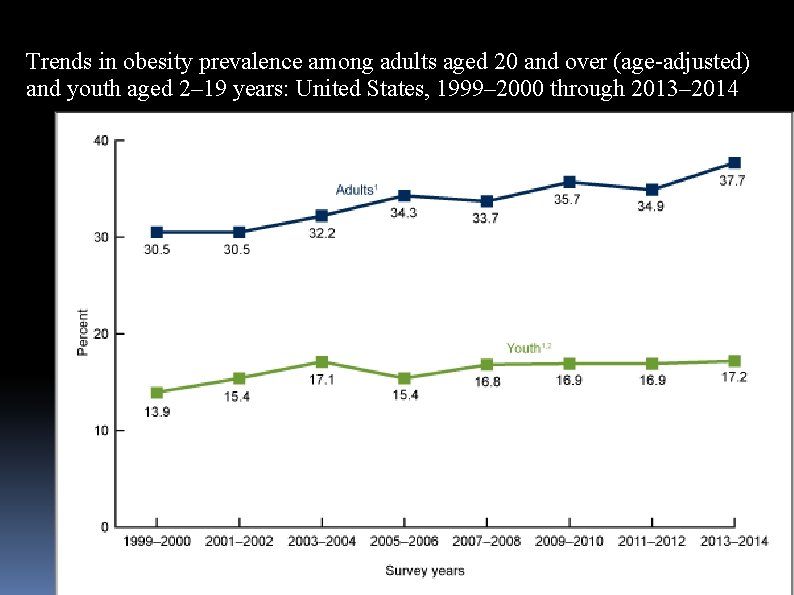
Trends in obesity prevalence among adults aged 20 and over (age-adjusted) and youth aged 2– 19 years: United States, 1999– 2000 through 2013– 2014
Is obesity a reversible condition? -What’s the pathophysiological basis? How is obesity developed? -How should it be treated?

- Metabolic obesity - Hedonic obesity
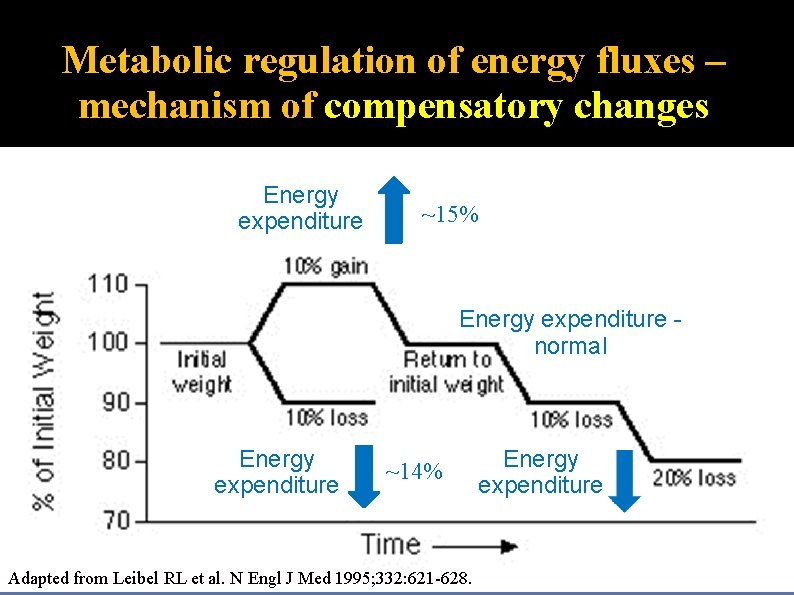
Metabolic regulation of energy fluxes – mechanism of compensatory changes Energy expenditure ~15% Energy expenditure normal Energy expenditure ~14% Adapted from Leibel RL et al. N Engl J Med 1995; 332: 621 -628. Energy expenditure
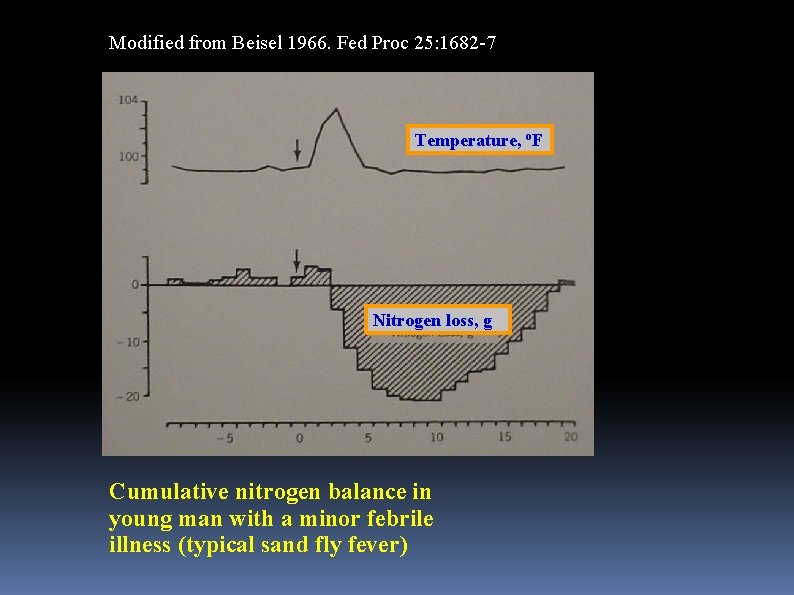
Modified from Beisel 1966. Fed Proc 25: 1682 -7 Temperature, o. F Nitrogen loss, g Cumulative nitrogen balance in young man with a minor febrile illness (typical sand fly fever)
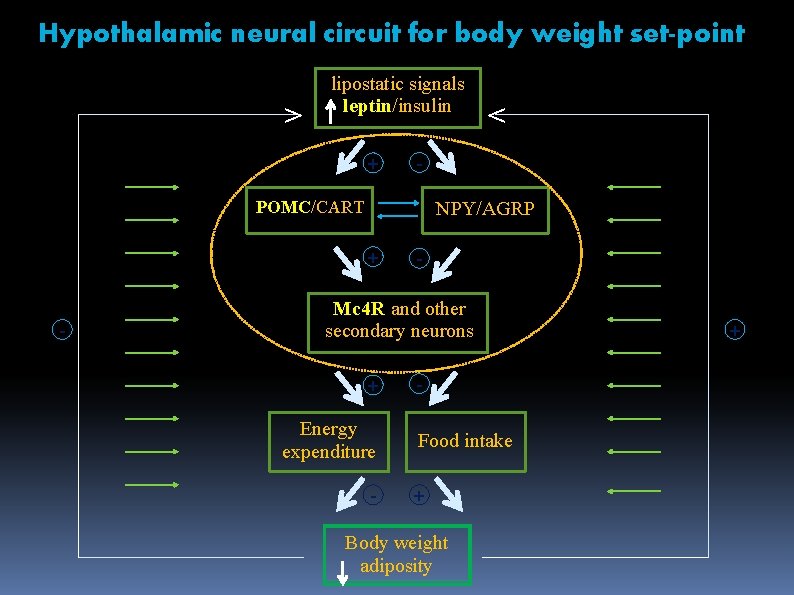
Hypothalamic neural circuit for body weight set-point > lipostatic signals leptin/insulin + - POMC/CART NPY/AGRP + - < - Mc 4 R and other secondary neurons + Energy expenditure - Food intake + Body weight adiposity +
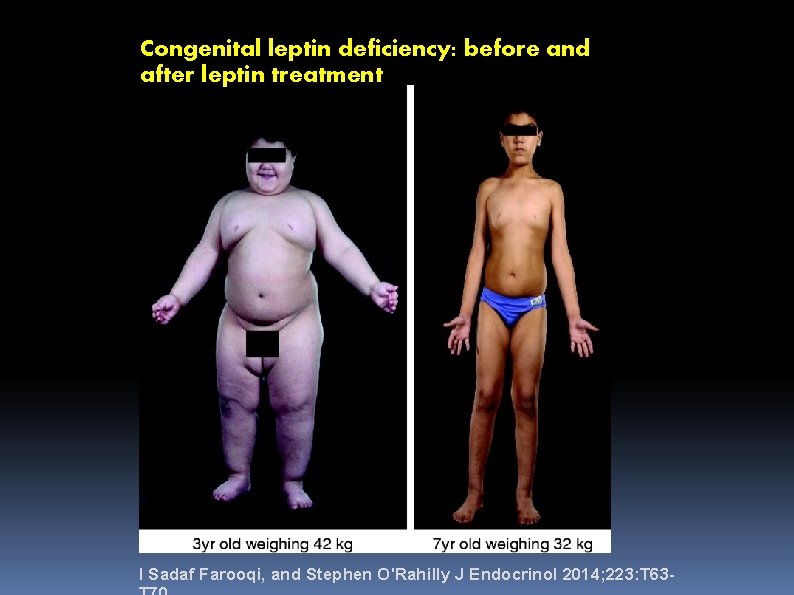
Congenital leptin deficiency: before and after leptin treatment I Sadaf Farooqi, and Stephen O'Rahilly J Endocrinol 2014; 223: T 63 -

Congenital POMC deficiency: phenotypic triad of red hair, hypocortisolism, and childhood obesity Krude H et al Nat Genet. 1998; 19(2): 155 -7

The culprit of the obesity epidemic is our obesigenic environment www. newsmax. com

Common forms of obesity is polygenic in etiology…in humans and in animals candidrd. com www. takepart. com/article/2015/11/13/cdc-obesity-rate-report www. atheistnexus. org
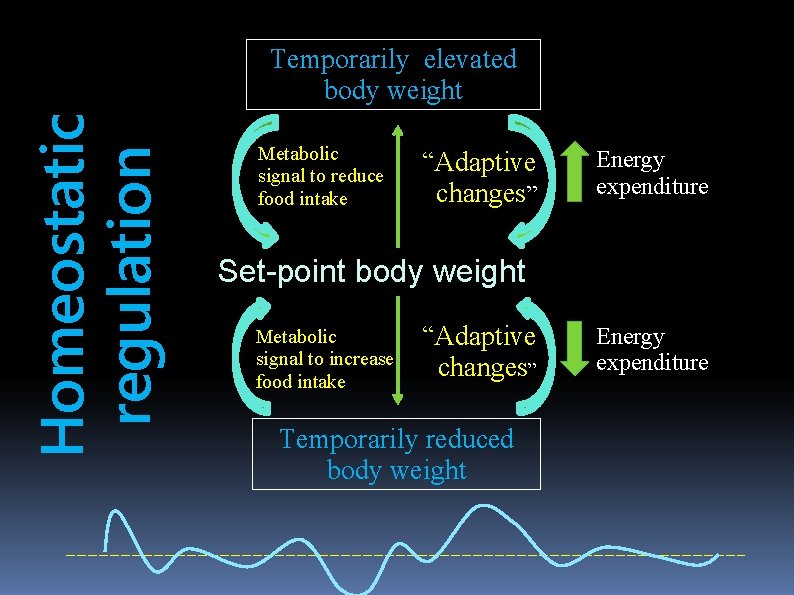
Homeostatic regulation Temporarily elevated body weight Metabolic signal to reduce food intake “Adaptive changes” Energy expenditure Set-point body weight Metabolic signal to increase food intake “Adaptive changes” Temporarily reduced body weight Energy expenditure
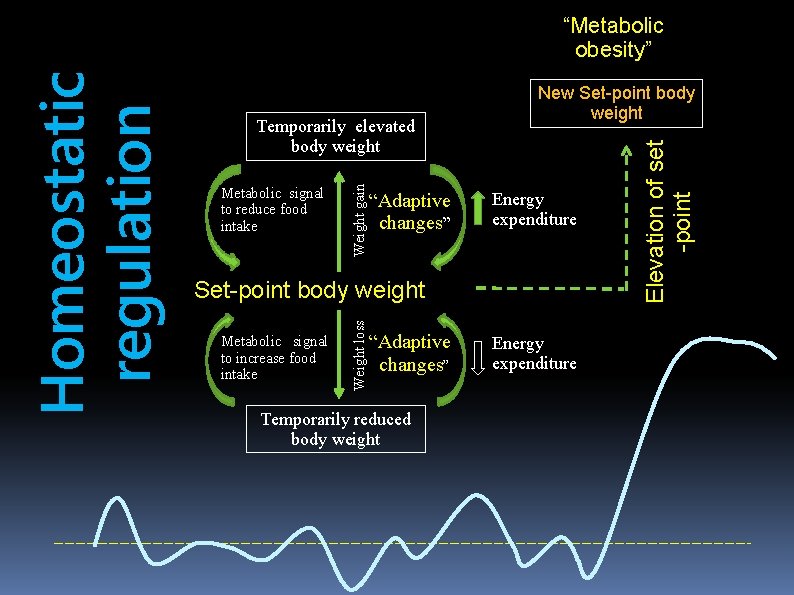
“Adaptive changes” New Set-point body weight Energy expenditure Set-point body weight Metabolic signal to increase food intake “Adaptive changes” Temporarily reduced body weight Energy expenditure Elevation of set -point Metabolic signal to reduce food intake Weight gain Temporarily elevated body weight Weight loss Homeostatic regulation “Metabolic obesity”
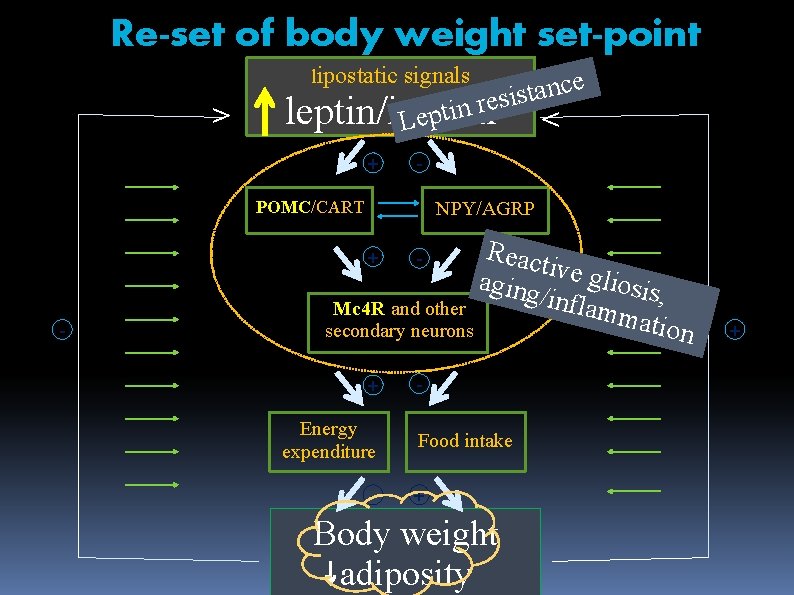
Re-set of body weight set-point lipostatic > signals e c n a t s in resi leptin/insulin Lept + - POMC/CART NPY/AGRP React ive gl aging iosis, /infla Mc 4 R and other mmat ion secondary neurons + - < + Energy expenditure - - Food intake + Body weight adiposity +

Now… -Hedonic obesity -
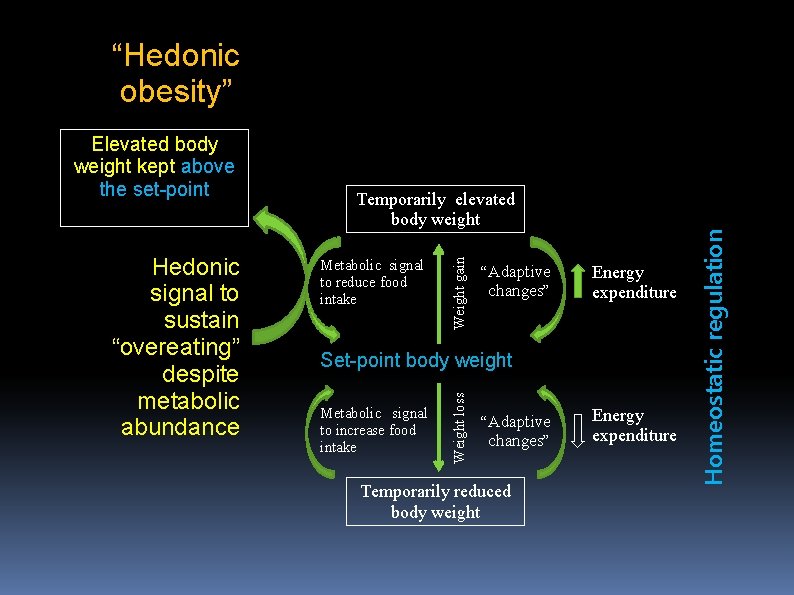
“Hedonic obesity” “Adaptive changes” Energy expenditure Set-point body weight Metabolic signal to increase food intake “Adaptive changes” Temporarily reduced body weight Energy expenditure Homeostatic regulation Metabolic signal to reduce food intake Weight gain Hedonic signal to sustain “overeating” despite metabolic abundance Temporarily elevated body weight Weight loss Elevated body weight kept above the set-point

Overeating Food addiction?
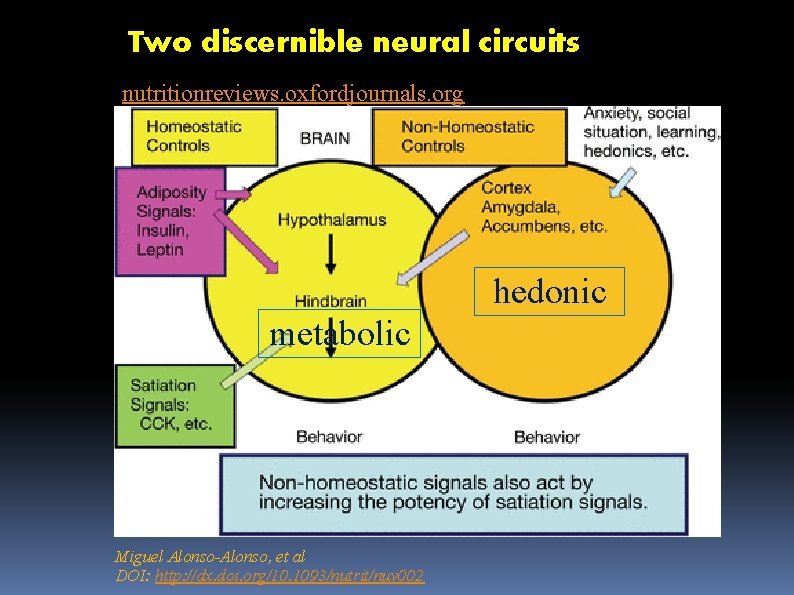
Two discernible neural circuits nutritionreviews. oxfordjournals. org hedonic metabolic Miguel Alonso-Alonso, et al DOI: http: //dx. doi. org/10. 1093/nutrit/nuv 002
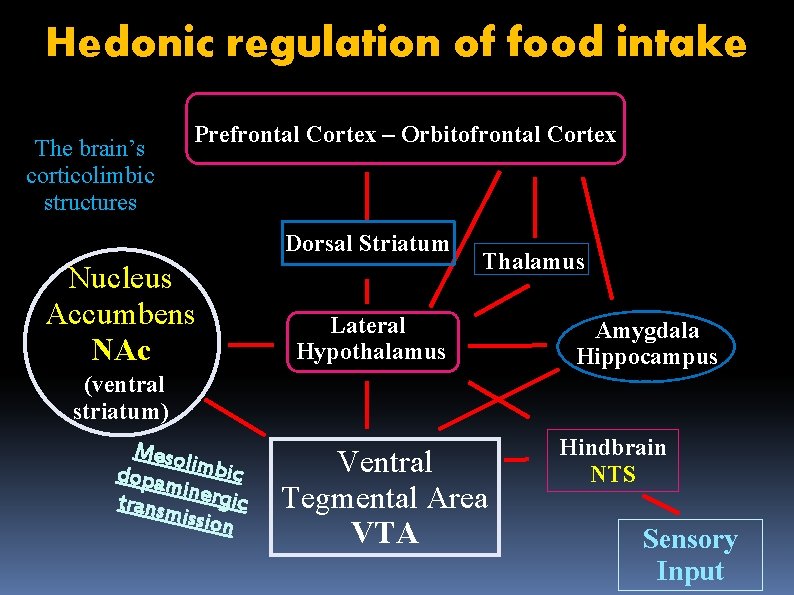
Hedonic regulation of food intake The brain’s corticolimbic structures Prefrontal Cortex – Orbitofrontal Cortex Dorsal Striatum Nucleus Accumbens NAc Thalamus Lateral Hypothalamus Amygdala Hippocampus (ventral striatum) Mesol dopam imbic i transm nergic ission Ventral Tegmental Area VTA Hindbrain NTS Sensory Input
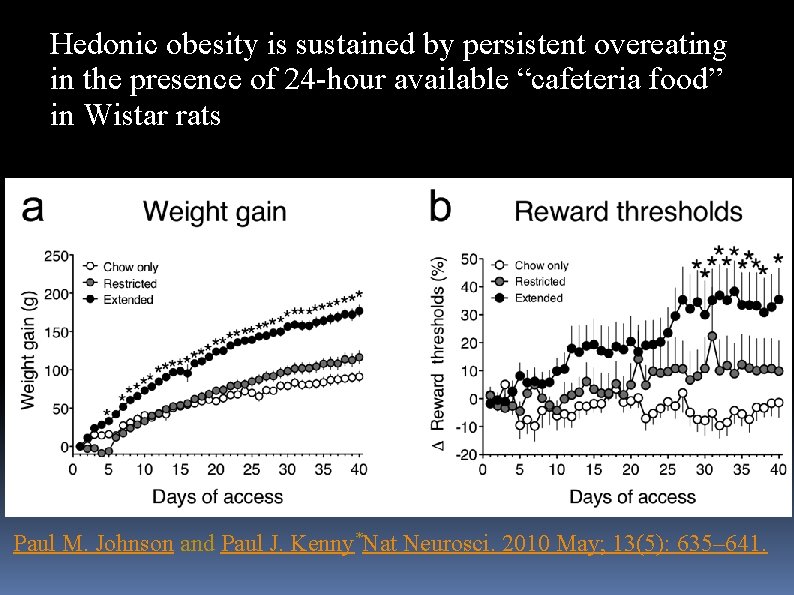
Hedonic obesity is sustained by persistent overeating in the presence of 24 -hour available “cafeteria food” in Wistar rats Paul M. Johnson and Paul J. Kenny*Nat Neurosci. 2010 May; 13(5): 635– 641.
PLo. S ONE 8(9): e 74832. doi: 10. 1371/journal. pone. 0074832, published Aug 10, 2013 Food Addiction: Its Prevalence and Significant Association with Obesity in the General Population Pardis Pedram 1, Danny Wadden 1, Peyvand Amini 1, Wayne Gulliver 1, Edward Randell 2, Farrell Cahill 1, Sudesh Vasdev 1, Alan Goodridge 1, Jacqueline C. Carter 3, Guangju Zhai 4, Yunqi Ji 1, Guang Sun 1* 1 Discipline of Medicine, Faculty of Medicine, Memorial University of Newfoundland, St. John’s, Canada, 2 Discipline of Laboratory Medicine, Memorial University of Newfoundland, St. John’s, Canada, 3 Department of Psychology, Faculty of Science, Memorial University of Newfoundland, St. John’s, Canada, 4 Discipline of Genetics, Faculty of Medicine, Memorial University of Newfoundland, St. John’s, Canada
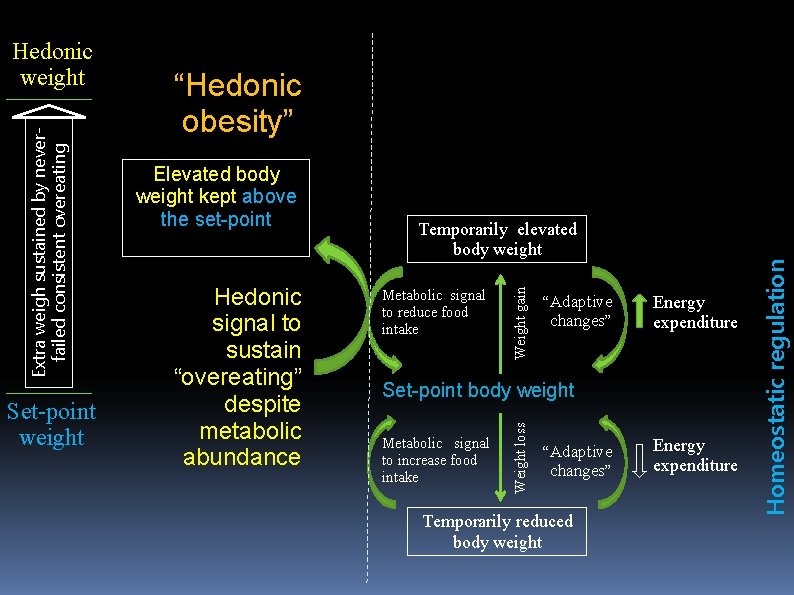
Hedonic signal to sustain “overeating” despite metabolic abundance Temporarily elevated body weight Metabolic signal to reduce food intake Weight gain Elevated body weight kept above the set-point “Adaptive changes” Energy expenditure Set-point body weight Metabolic signal to increase food intake “Adaptive changes” Temporarily reduced body weight Energy expenditure Homeostatic regulation Set-point weight “Hedonic obesity” Weight loss Extra weigh sustained by neverfailed consistent overeating Hedonic weight

How to Distinguish Metabolic Obesity and Hedonic Obesity
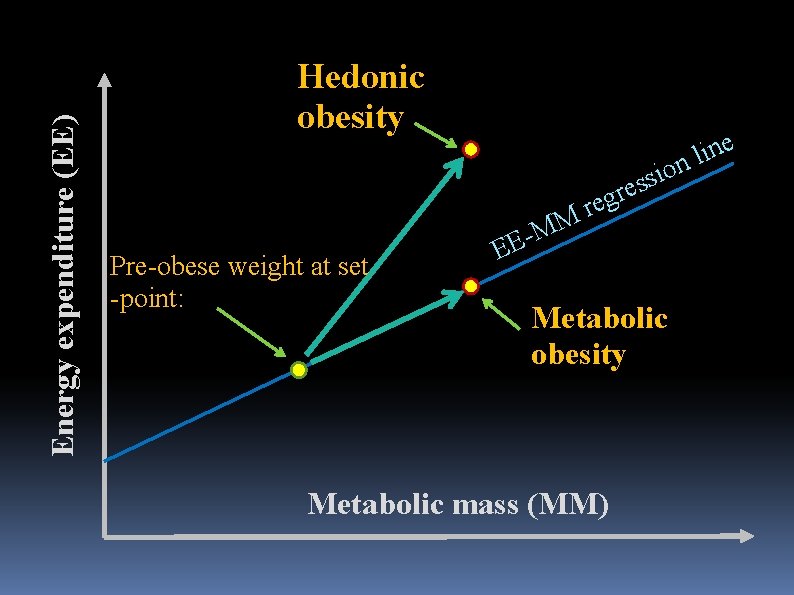
Energy expenditure (EE) Hedonic obesity ne i l n io s s re eg r M Pre-obese weight at set -point: -M E E Metabolic obesity Metabolic mass (MM)
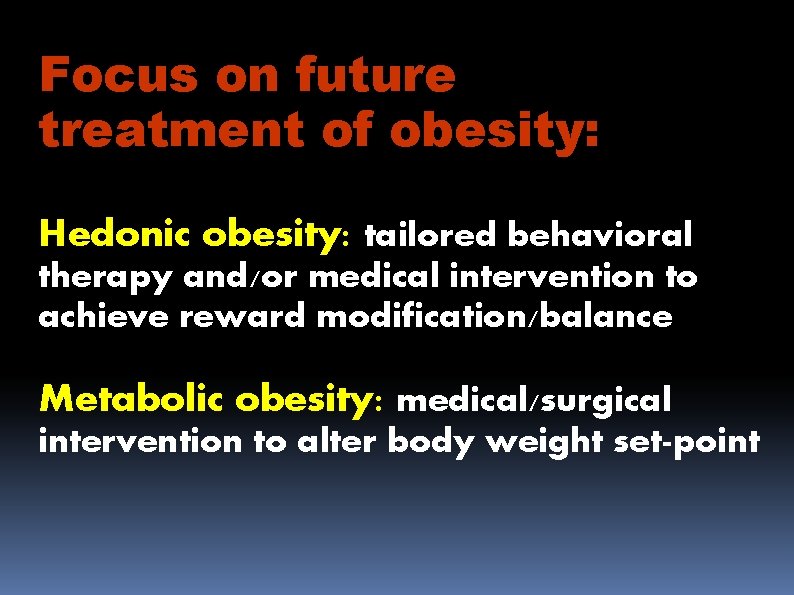
Focus on future treatment of obesity: Hedonic obesity: tailored behavioral therapy and/or medical intervention to achieve reward modification/balance Metabolic obesity: medical/surgical intervention to alter body weight set-point
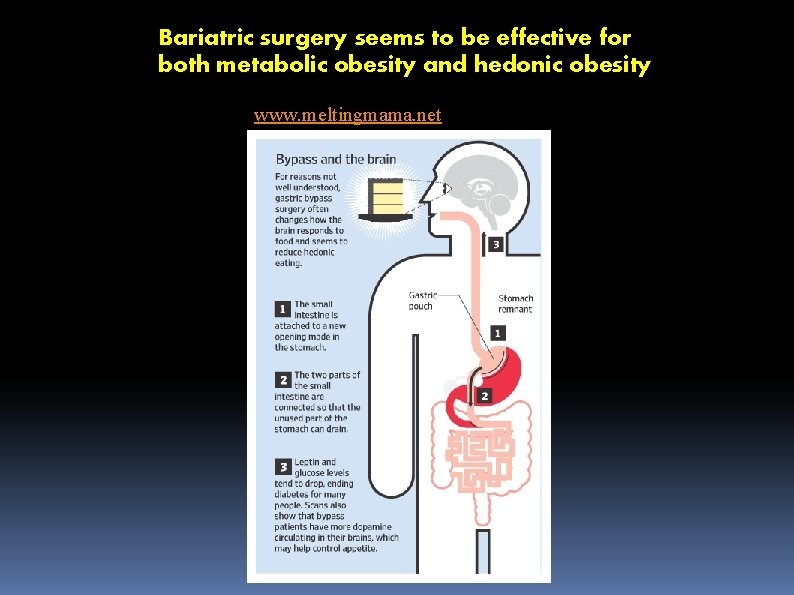
Bariatric surgery seems to be effective for both metabolic obesity and hedonic obesity www. meltingmama. net
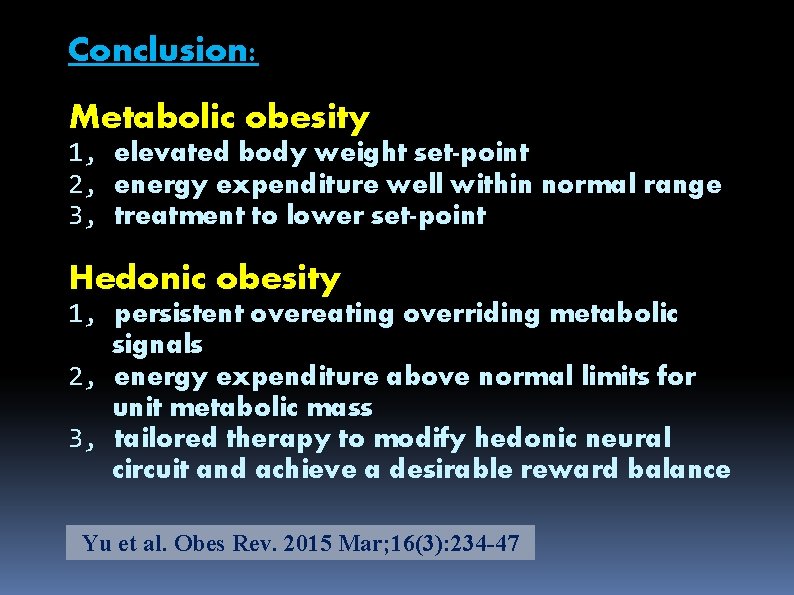
Conclusion: Metabolic obesity 1, elevated body weight set-point 2, energy expenditure well within normal range 3, treatment to lower set-point Hedonic obesity 1, persistent overeating overriding metabolic signals 2, energy expenditure above normal limits for unit metabolic mass 3, tailored therapy to modify hedonic neural circuit and achieve a desirable reward balance Yu et al. Obes Rev. 2015 Mar; 16(3): 234 -47

Acknowledgement Joseph. R. Vasselli - Columbia University, USA Yiying Zhang - Columbia University, USA Jeffrey I. Mechanick – Icahn School of Med at Mount Sinai, USA Judith Korner – Columbia University, USA Ralph Peterli - University of Basel, Switzerland
- Slides: 30