
PHYSIOGICAL PROPERTIES OF CARDIAC MUSCLE 3 rd year



















- Slides: 35
PHYSIOGICAL PROPERTIES OF CARDIAC MUSCLE 3 rd year MBBS 2011
HEART Your heart beats about 100, 000 times in one day and about 35 million times in a year. During an average lifetime, the human heart will beat more than 2. 5 billion times.
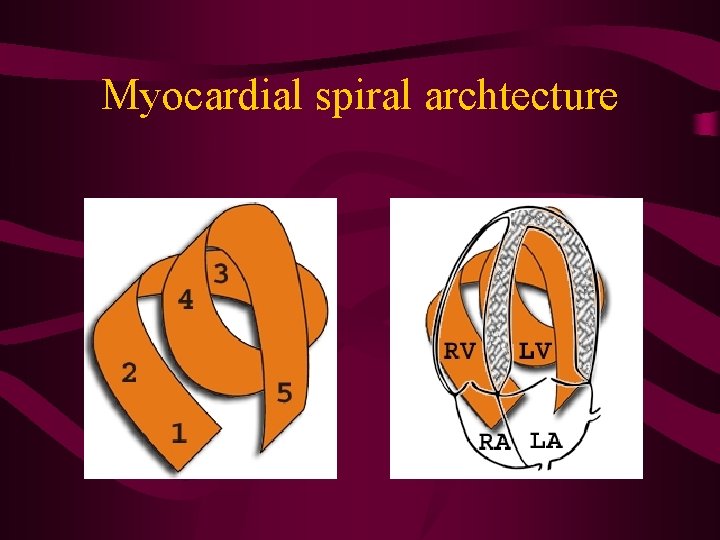
Myocardial spiral archtecture
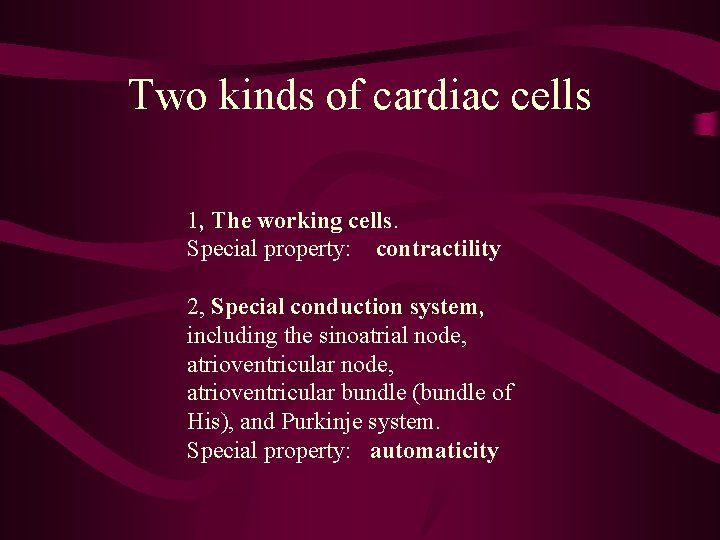
Two kinds of cardiac cells 1, The working cells. Special property: contractility 2, Special conduction system, including the sinoatrial node, atrioventricular bundle (bundle of His), and Purkinje system. Special property: automaticity
PROPERTIES
PROPERTIES
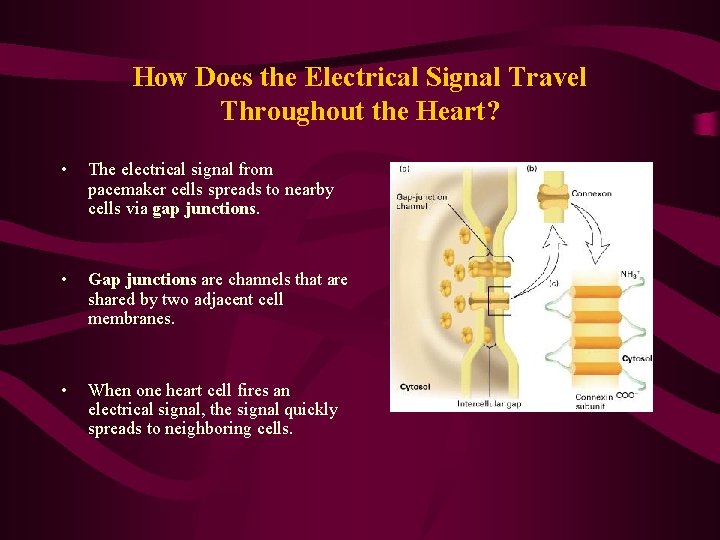
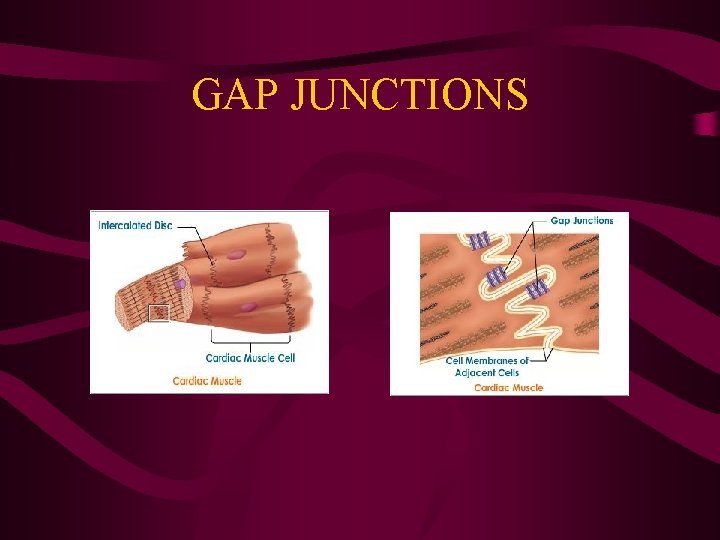
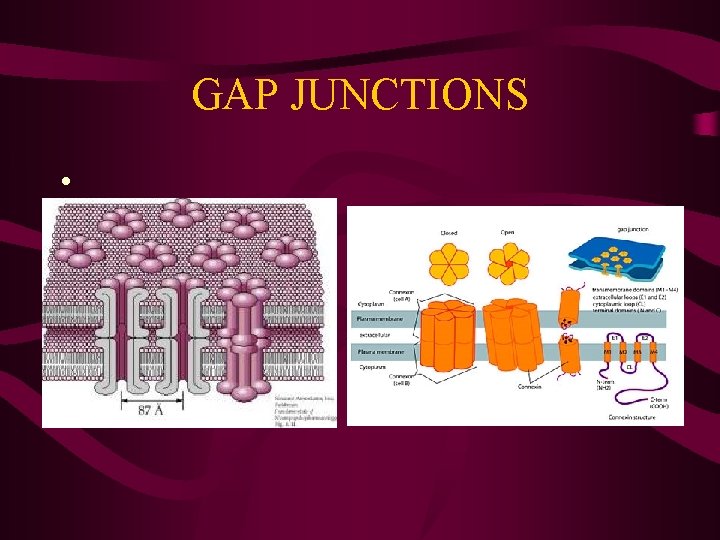
How Does the Electrical Signal Travel Throughout the Heart? • The electrical signal from pacemaker cells spreads to nearby cells via gap junctions. • Gap junctions are channels that are shared by two adjacent cell membranes. • When one heart cell fires an electrical signal, the signal quickly spreads to neighboring cells.
GAP JUNCTIONS
GAP JUNCTIONS • •
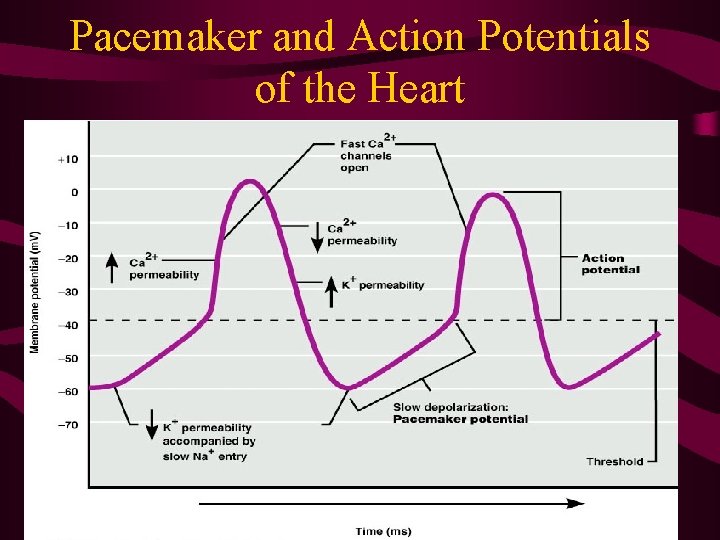
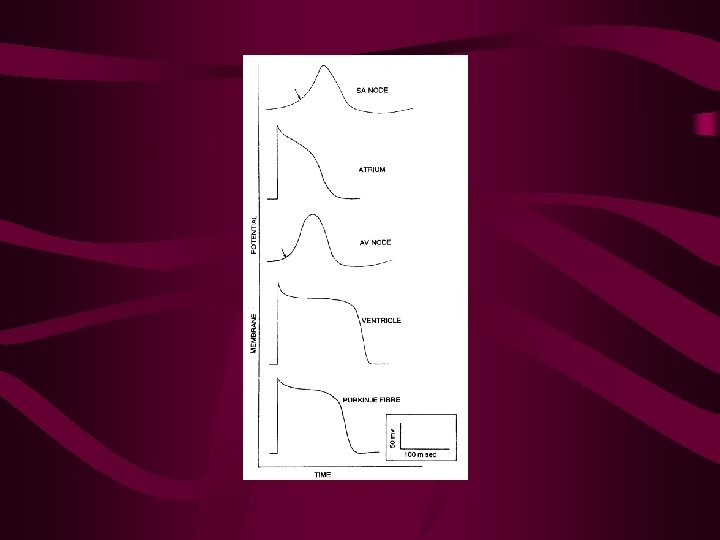
Pacemaker and Action Potentials of the Heart
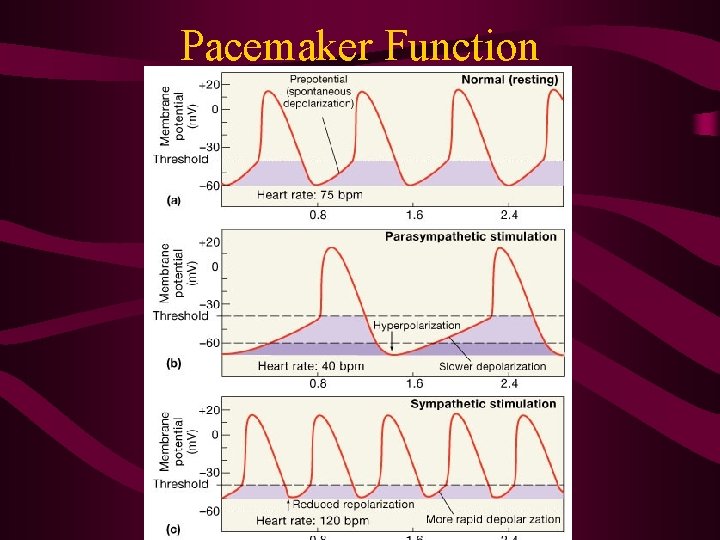
Pacemaker Function
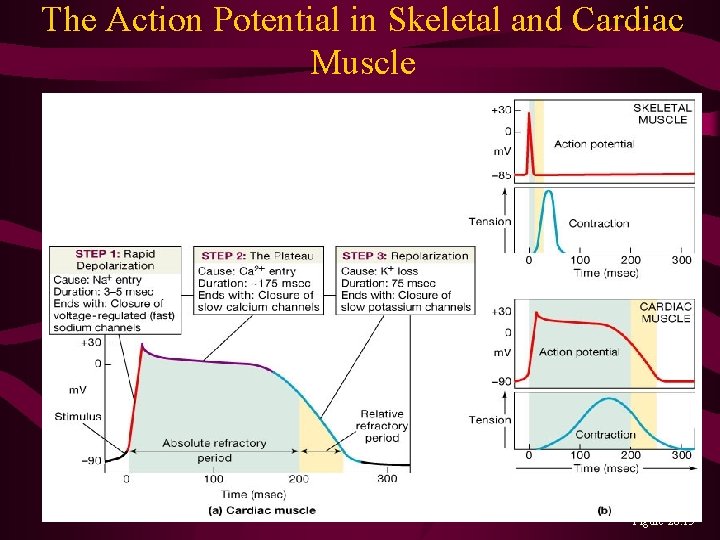
The Action Potential in Skeletal and Cardiac Muscle Figure 20. 15
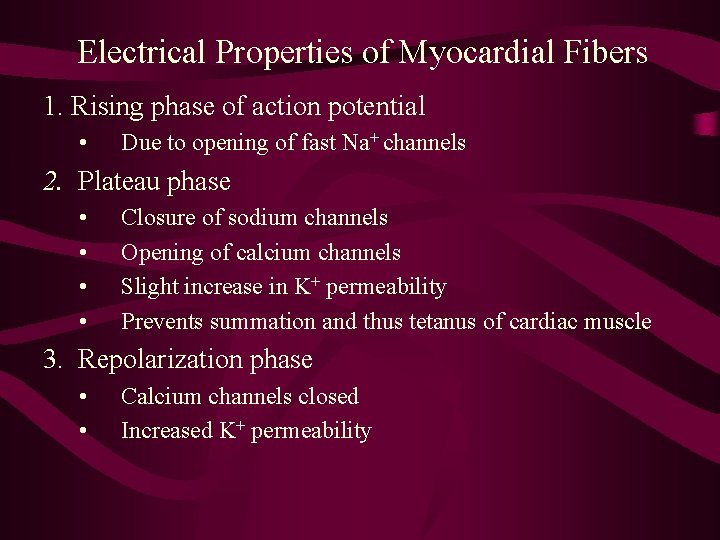
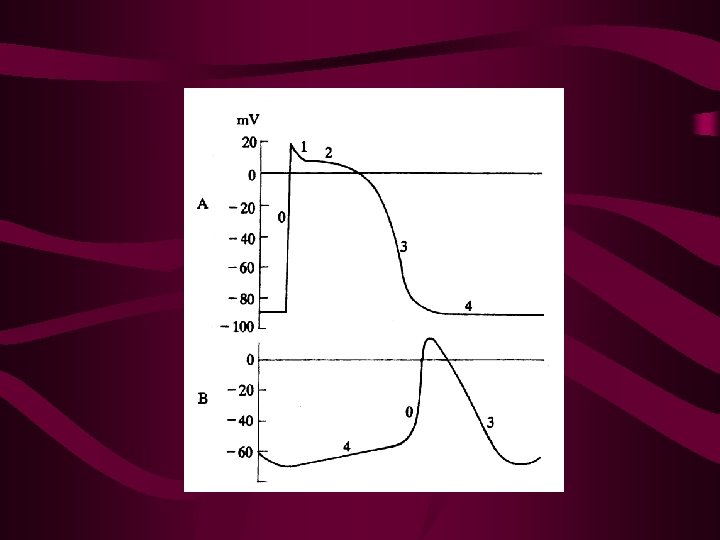
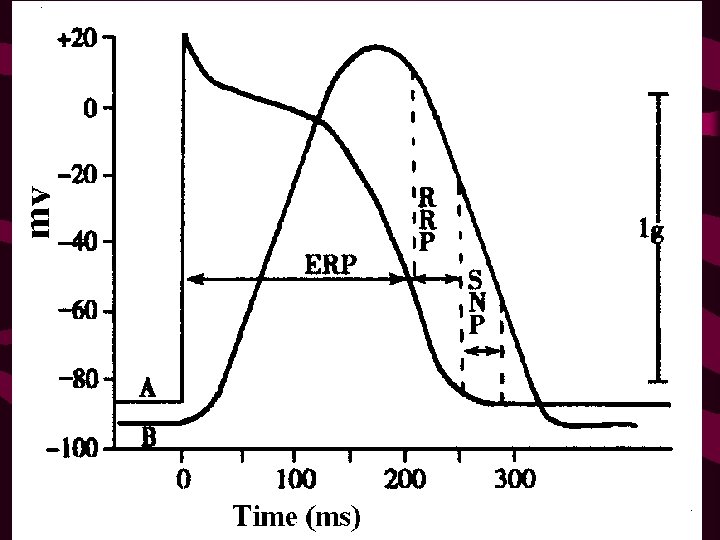
Electrical Properties of Myocardial Fibers 1. Rising phase of action potential • Due to opening of fast Na+ channels 2. Plateau phase • • Closure of sodium channels Opening of calcium channels Slight increase in K+ permeability Prevents summation and thus tetanus of cardiac muscle 3. Repolarization phase • • Calcium channels closed Increased K+ permeability
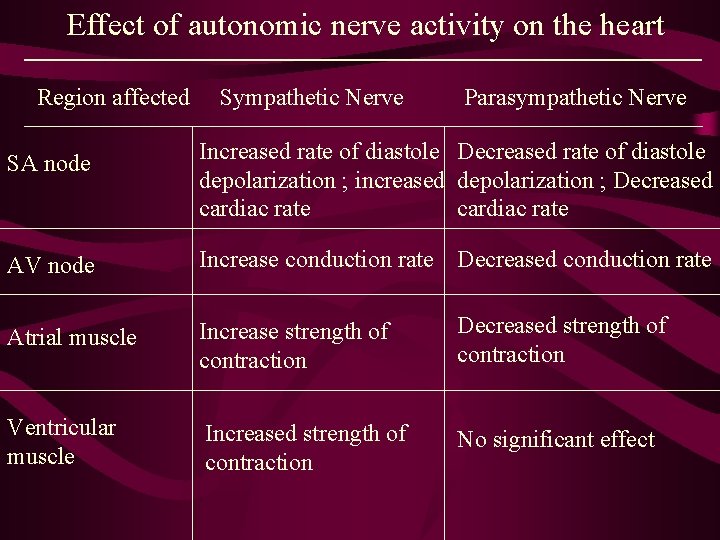
Effect of autonomic nerve activity on the heart Region affected Sympathetic Nerve Parasympathetic Nerve SA node Increased rate of diastole Decreased rate of diastole depolarization ; increased depolarization ; Decreased cardiac rate AV node Increase conduction rate Decreased conduction rate Atrial muscle Increase strength of contraction Decreased strength of contraction Ventricular muscle Increased strength of contraction No significant effect