
Physio Net Research Resource for Complex Physiologic Signals

- Slides: 16
Physio. Net Research Resource for Complex Physiologic Signals Physio. Net offers free access via the Web to large collections of recorded physiologic signals and related open-source software. Physio. Net provides free and password-protected data archiving services to NIH-funded investigators, with the option for later public release to meet NIH data sharing mandates. Physio. Net is a public service, funded by the NIH. www. physionet. org
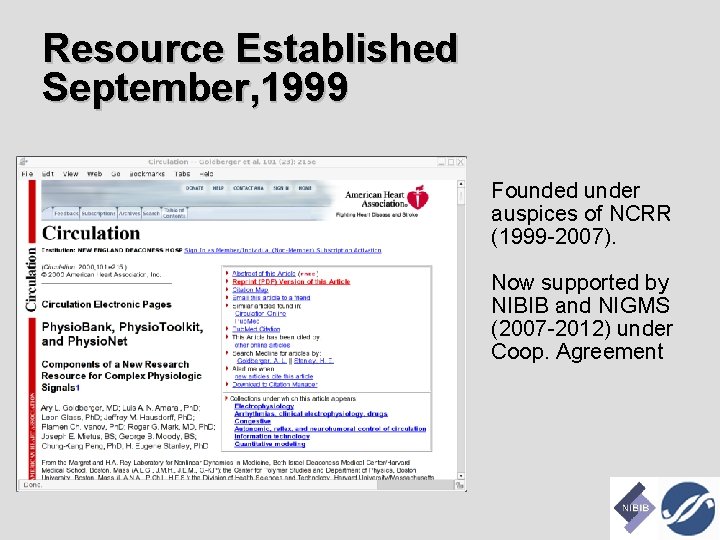
Resource Established September, 1999 Founded under auspices of NCRR (1999 -2007). Now supported by NIBIB and NIGMS (2007 -2012) under Coop. Agreement
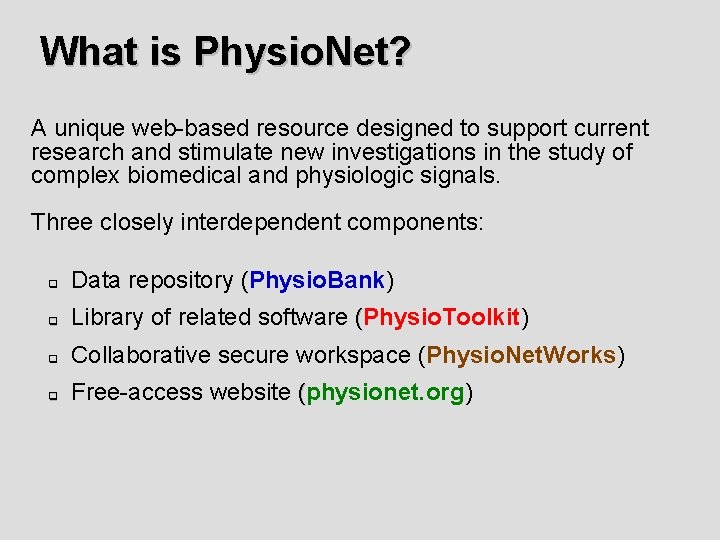
What is Physio. Net? A unique web-based resource designed to support current research and stimulate new investigations in the study of complex biomedical and physiologic signals. Three closely interdependent components: Data repository (Physio. Bank) ( Library of related software (Physio. Toolkit) ( Collaborative secure workspace (Physio. Net. Works) Free-access website (physionet. org) (
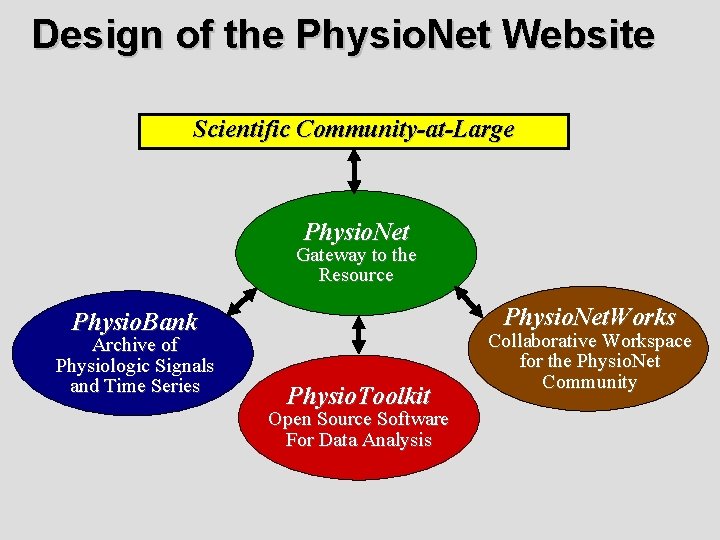
Design of the Physio. Net Website Scientific Community-at-Large Physio. Net Gateway to the Resource Physio. Net. Works Physio. Bank Archive of Physiologic Signals and Time Series Physio. Toolkit Open Source Software For Data Analysis Collaborative Workspace for the Physio. Net Community
Physio. Bank Currently includes: > 50 collections of neural, cardiopulmonary, and other biomedical signals from healthy subjects and patients with a variety of conditions with major public health implications, including sudden cardiac death, congestive heart failure, epilepsy, gait disorders, sleep apnea, aging, and critical illness. ~ 1. 1 TB
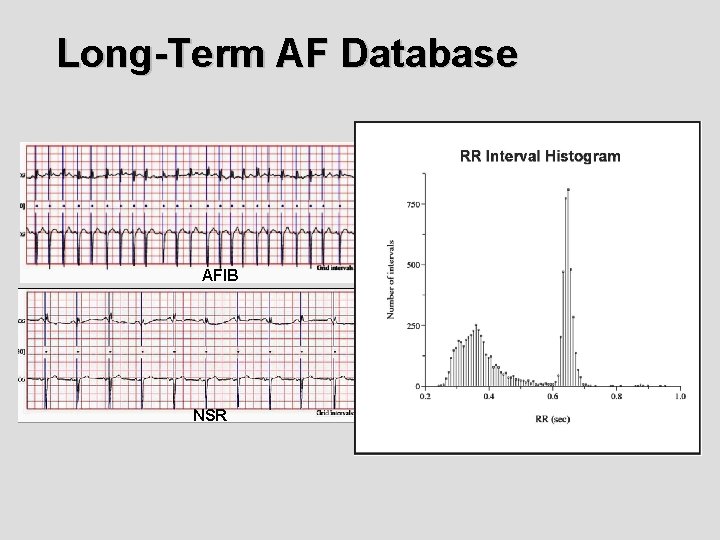
Long-Term AF Database AFIB NSR
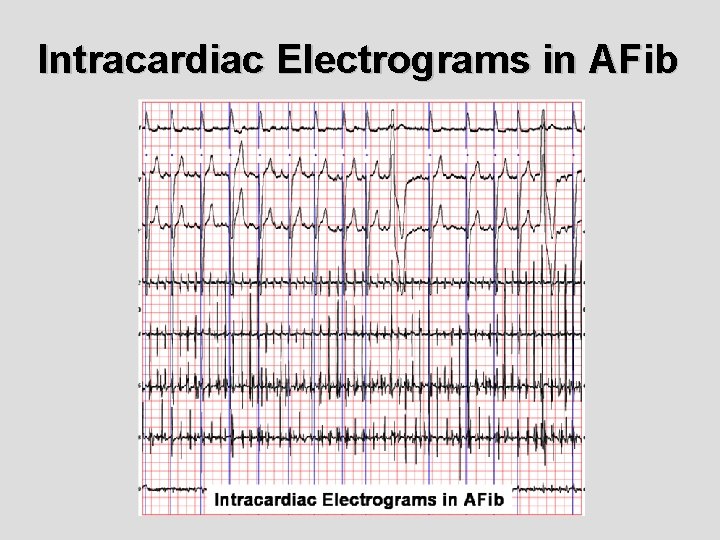
Intracardiac Electrograms in AFib
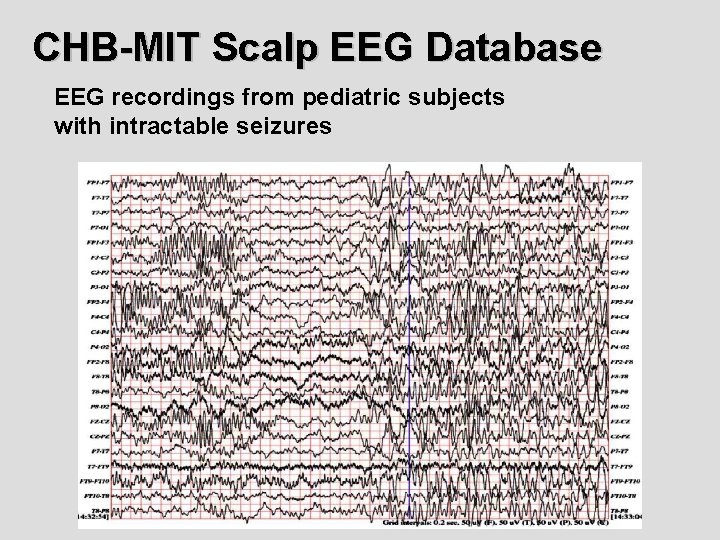
CHB-MIT Scalp EEG Database EEG recordings from pediatric subjects with intractable seizures
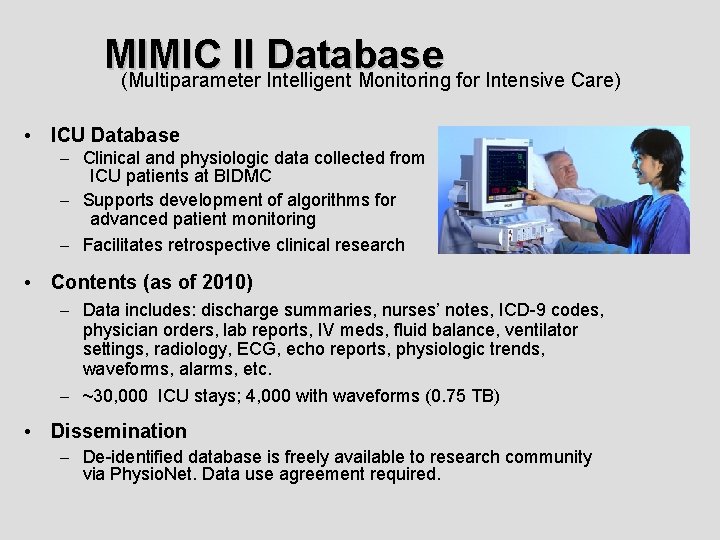
MIMIC II Database (Multiparameter Intelligent Monitoring for Intensive Care) • ICU Database – Clinical and physiologic data collected from ICU patients at BIDMC – Supports development of algorithms for advanced patient monitoring – Facilitates retrospective clinical research • Contents (as of 2010) – Data includes: discharge summaries, nurses’ notes, ICD-9 codes, physician orders, lab reports, IV meds, fluid balance, ventilator settings, radiology, ECG, echo reports, physiologic trends, waveforms, alarms, etc. – ~30, 000 ICU stays; 4, 000 with waveforms (0. 75 TB) • Dissemination – De-identified database is freely available to research community via Physio. Net. Data use agreement required.
What Can You Do with Physio. Bank Data? Download for exploration and research Develop new signal processing algorithms Evaluate algorithms using ‘standard’ data Test physiologic models Develop/test/refine new biomarkers Create “real-world” classroom challenges at undergraduate, graduate and post-graduate levels
Physio. Toolkit Open-source software for physiologic signal processing and analysis: Detection of physiologically significant events using both classical techniques and novel methods Interactive display & characterization of signals; creation of new databases Physiologic signal modeling and for quantitative evaluation and comparison of analysis methods
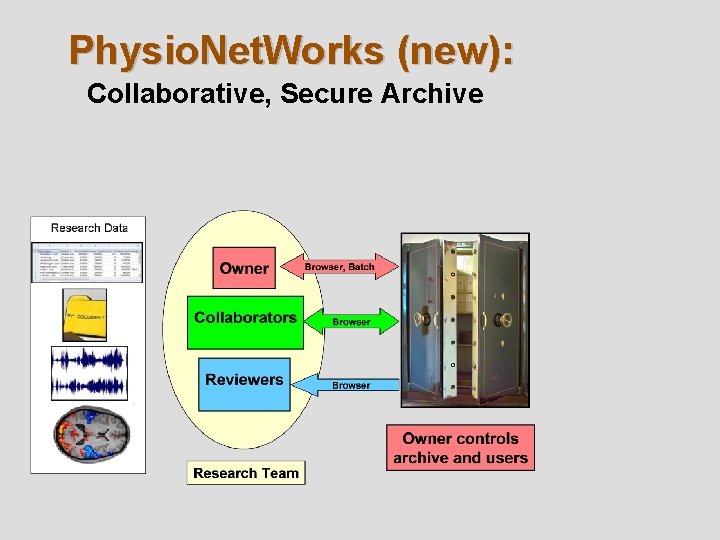
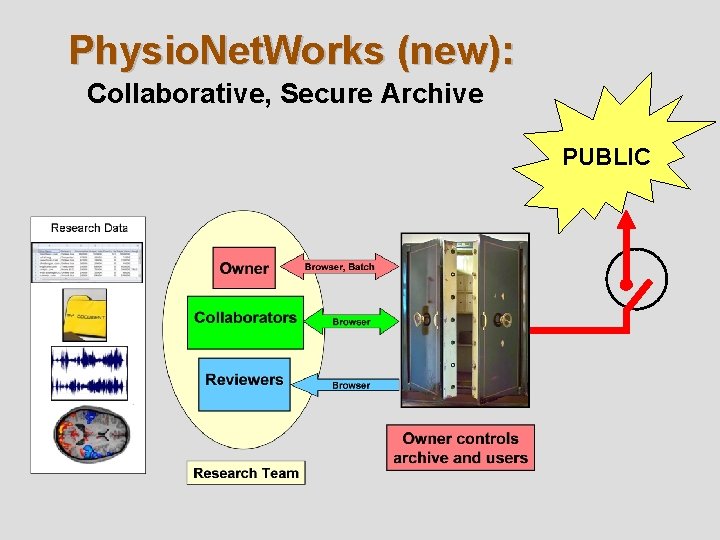
Data Sharing NIH mandates sharing of research data Collaborative research also requires data sharing Attempting to organize and disseminate research data after publication is unlikely There is a need for archiving infrastructure during data gathering and data analysis Physio. Net Works attempts to meet this need
Physio. Net. Works (new): Collaborative, Secure Archive
Physio. Net. Works (new): Collaborative, Secure Archive PUBLIC
Physio. Net and Multi-scale Modeling: Possibilities? Use existing data archives to test models Contribute new data to establish reference standards for modeling user communities Take advantage of Physio. Net. Works to support ongoing collaborative research and eventually satisfy NIH’s data sharing requirement