
Physics Tensile strength of a material is the
- Slides: 25
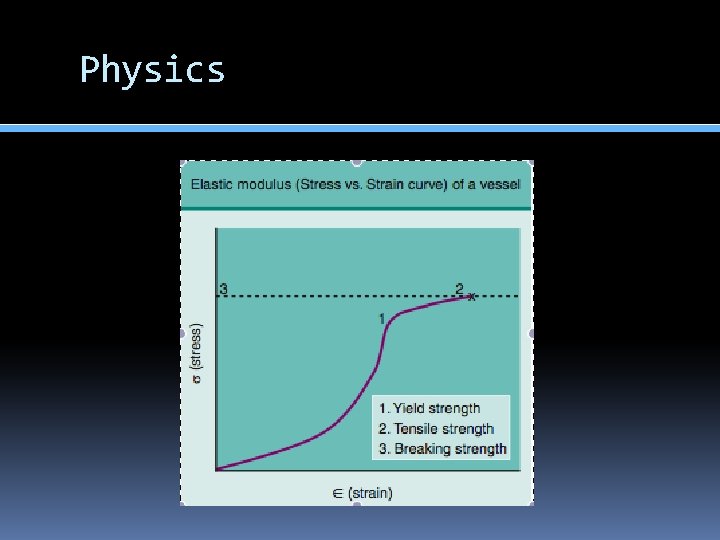
Physics Tensile strength of a material is the maximum amount of stress that the material can be subjected to before failure Yield strength represents the stress at which material strain changes from elastic deformation to plastic deformation, causing it to deform permanently Breaking strength is the stress coordinate on the stress–strain curve at the point of rupture
Physics
Physics Below a certain stress known as the elastic limit, or the yield strength, the blood vessel demonstrates elastic recoil As transmural pressure exceeds the elastic limit, the vessel demonstrates irreversible deformation Elastic limit is a function of the lesion Typically calcified lesions have low elastic limits as the brittle calcifications yield to moderate angioplasty pressures Collagen-rich areas of myointimal hyperplasia have high elastic limits and require large transmural pressures to overcome the elastic limit.
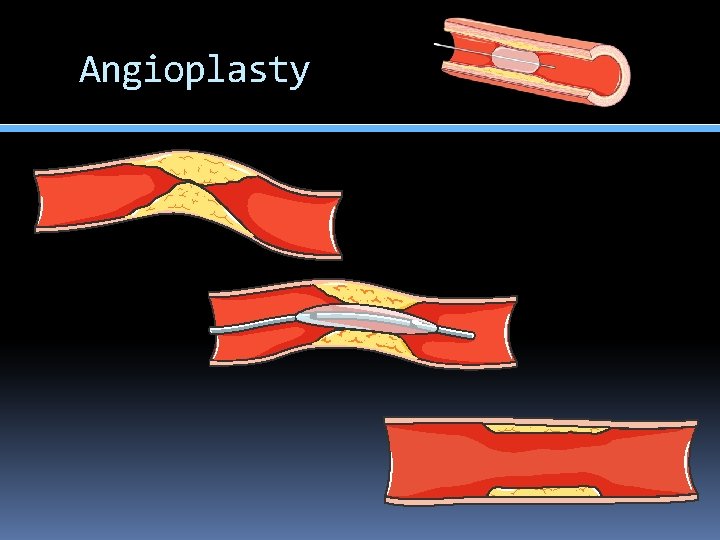
Angioplasty involves the dilatation of a vascular stenosis or occlusion with a balloon catheter
Angioplasty
Biological response to balloon angioplasty Initially thought to be the result of compression of atherosclerotic lesion followed by remodeling of the plaque Predominant effect of balloon angioplasty is stretching the elastic components of the arterial wall Inelastic portion of the plaque fracture or tear results in a definite but discrete arterial wall dissection Histologically evident arterial dissection is nearly present in all diseased vessels following balloon angioplasty procedures
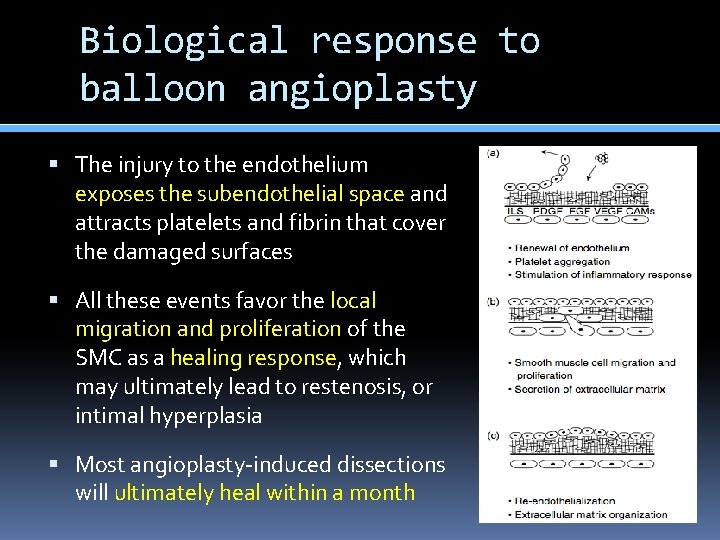
Biological response to balloon angioplasty The injury to the endothelium exposes the subendothelial space and attracts platelets and fibrin that cover the damaged surfaces All these events favor the local migration and proliferation of the SMC as a healing response, which may ultimately lead to restenosis, or intimal hyperplasia Most angioplasty-induced dissections will ultimately heal within a month
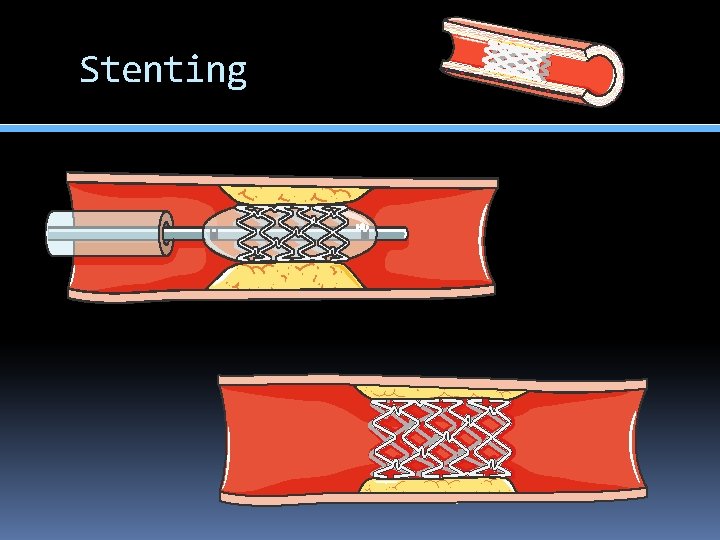
Stenting
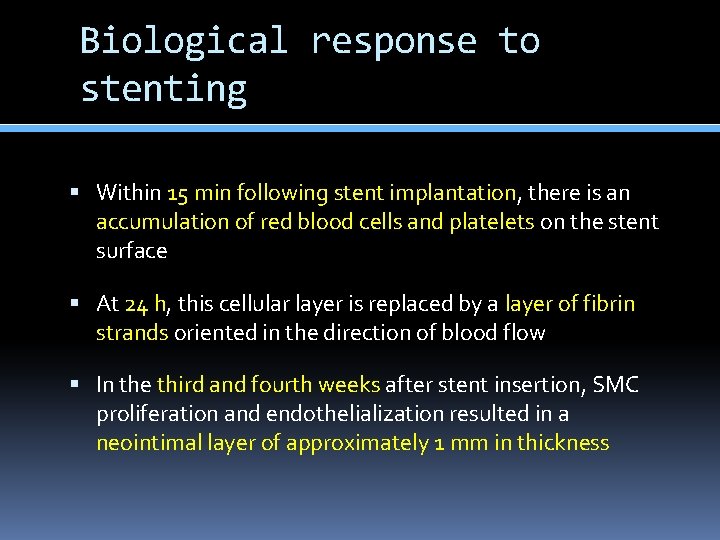
Biological response to stenting Within 15 min following stent implantation, there is an accumulation of red blood cells and platelets on the stent surface At 24 h, this cellular layer is replaced by a layer of fibrin strands oriented in the direction of blood flow In the third and fourth weeks after stent insertion, SMC proliferation and endothelialization resulted in a neointimal layer of approximately 1 mm in thickness
Biological response to stenting Finally, several months after stent placement, the formation of the neointimal vessel begins At 3– 6 years, the fibromuscular tissue layer covering the stent surface is almost completely replaced by collagen
Biological response to stenting The electrical charge of most metals and alloys used for intravascular devices is electropositive in electrolytic solutions, whereas all biologic intravascular substances are negatively charged The positive electrical potential of the metallic struts attracts the negatively charged circulating proteins to form a thin layer of fibrinogen strands on the stent surface The proteins neutralize the stent surface and decrease thrombogenicity
Biological response to stenting Surface tension is another property that influences biological stent interaction The initial layer of proteins that cover the metal within seconds of implantation helps reduce surface tension and thrombogenicity
Biological response to stenting The technique of stent implantation itself may affect thrombogenicity and the rate of endothelialization Stents should be deployed in such a way that the metal struts are embedded deep enough into the vessel wall to produce troughs where the struts are embedded surrounded by intima If the struts are not properly embedded, the entire stented surface becomes covered with thrombus, preventing early endothelialization and thus predisposing to complete thrombosis and restenosis
Biological response to stenting Cellular events analogous to a foreign body reaction are also seen, which include thrombus formation organized around the stent Following stent-graft implantation, the media of the underlying artery wall is partially replaced by collagen, perhaps due to the pressure from the stent-graft
Mode of action Fracture of the arterial plaque and a localized tear or dissection of the arterial wall The tear may extend circumferentially or longitudinally in the vessel wall and may extend into the internal elastic lamina or into the media The adventitial layer remains intact Balloon dilatation also causes stretching of the medial layer if the balloon diameter is adequately oversized
Mode of action Microscopic plaque material may become separated and embolize distally This is usually asymptomatic in the peripheral circulation In carotid artery angioplasty, this phenomenon has potentially more severe consequences
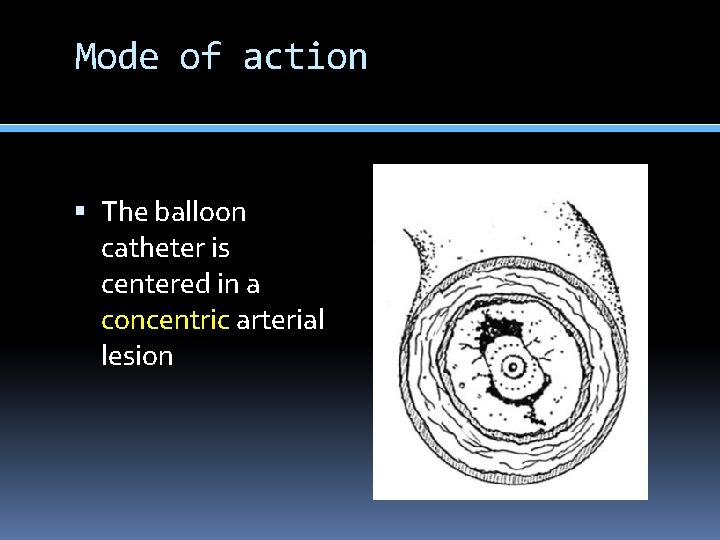
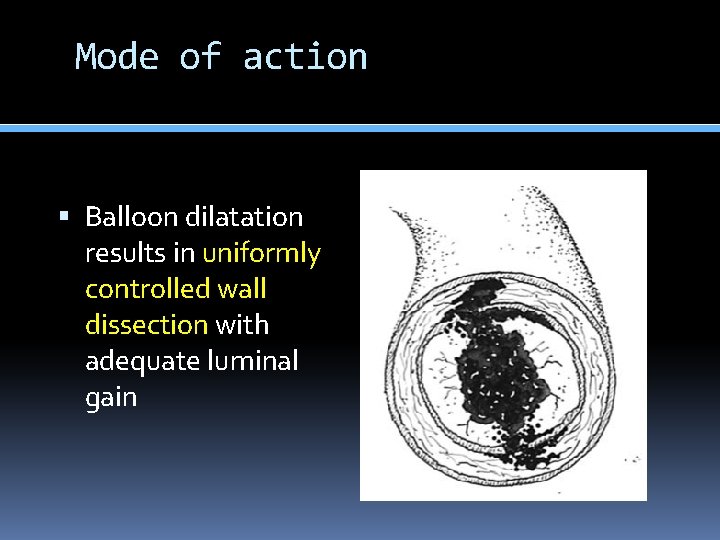
Mode of action Concentric arterial lesions respond well to PTA, because the arterial plaque and the arterial wall layers are dissected in a uniform fashion, which improves the increase in the luminal diameter
Mode of action The balloon catheter is centered in a concentric arterial lesion
Mode of action Balloon dilatation results in uniformly controlled wall dissection with adequate luminal gain
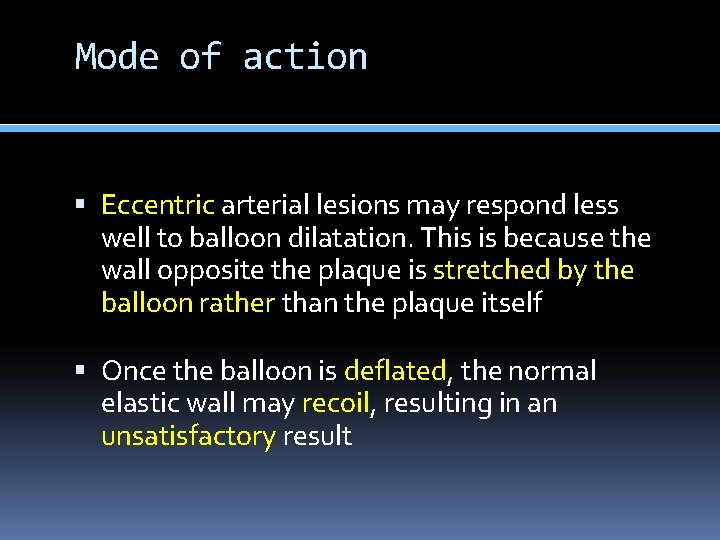
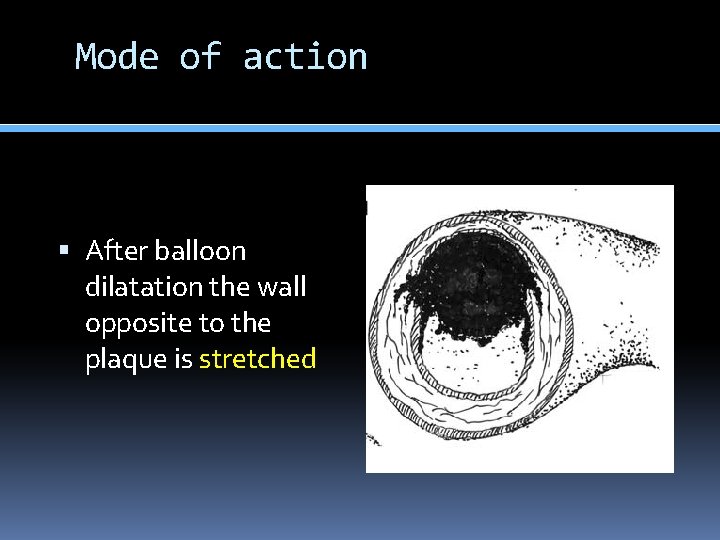
Mode of action Eccentric arterial lesions may respond less well to balloon dilatation. This is because the wall opposite the plaque is stretched by the balloon rather than the plaque itself Once the balloon is deflated, the normal elastic wall may recoil, resulting in an unsatisfactory result
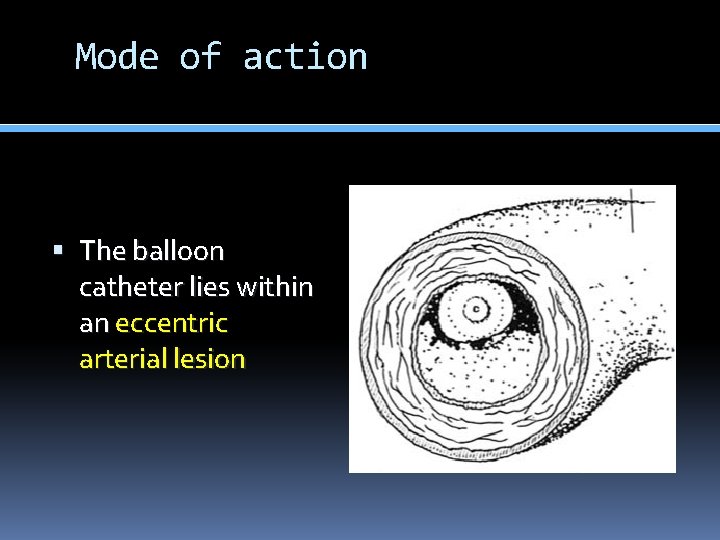
Mode of action The balloon catheter lies within an eccentric arterial lesion
Mode of action After balloon dilatation the wall opposite to the plaque is stretched
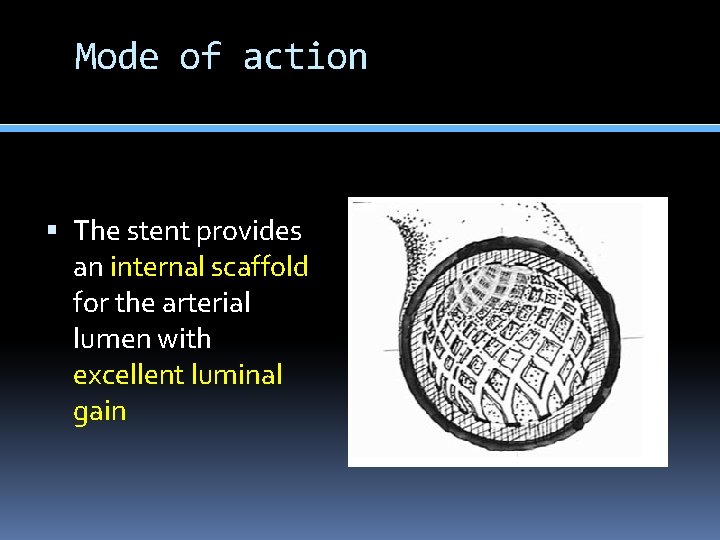
Mode of action The stent provides an internal scaffold for the arterial lumen with excellent luminal gain
Advantages of stenting Rapid, reliable and sustained increase in the luminal diameter Entrapment of vulnerable plaque material that may cause embolization Elimination of elastic recoil