
Physics Review for Test 3 Work Energy Conservation


- Slides: 62
Physics Review for Test #3 Work, Energy, Conservation of momentum, Center of Mass
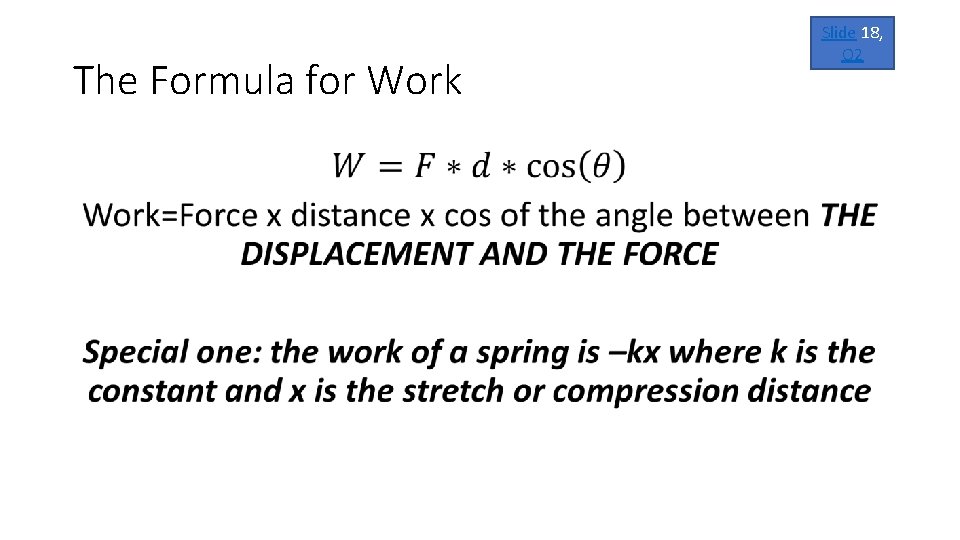
The Formula for Work • Slide 18, Q 2
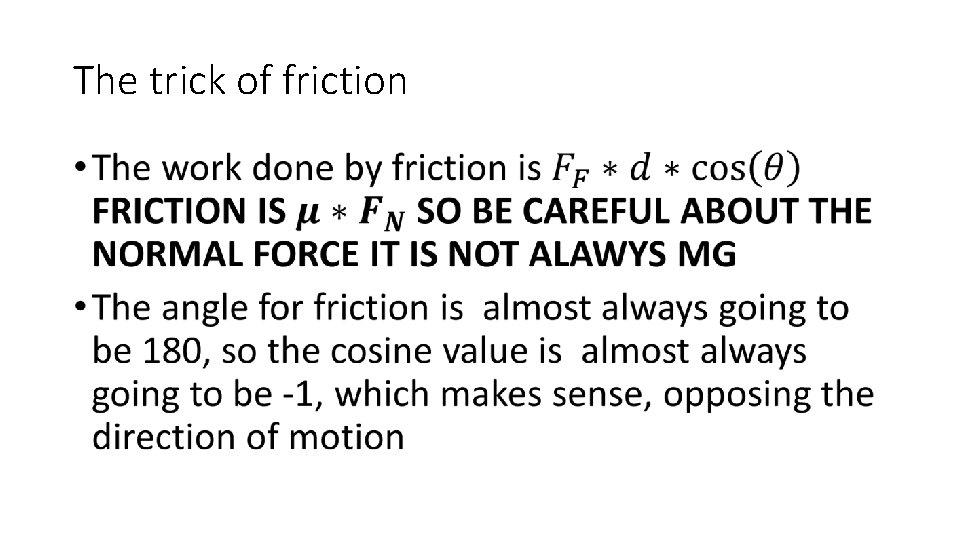
The trick of friction •
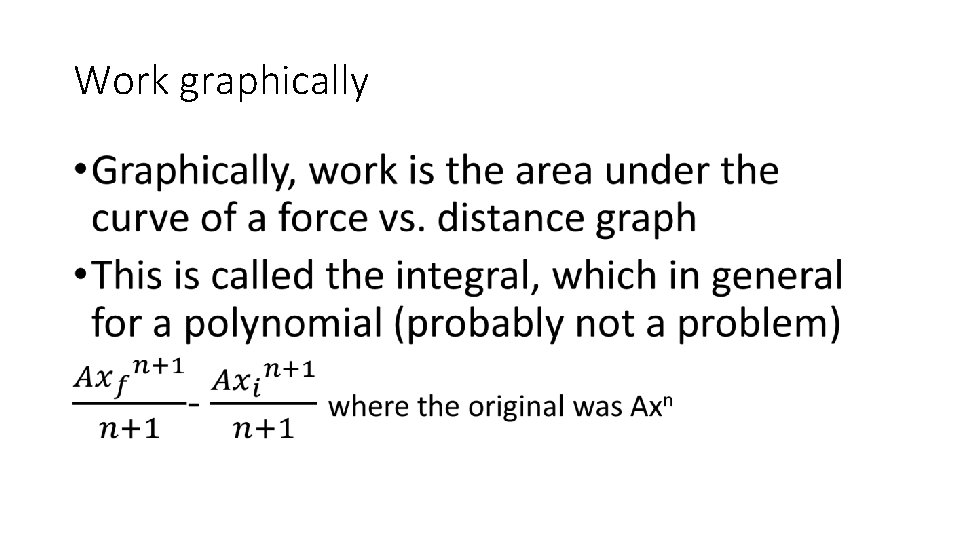
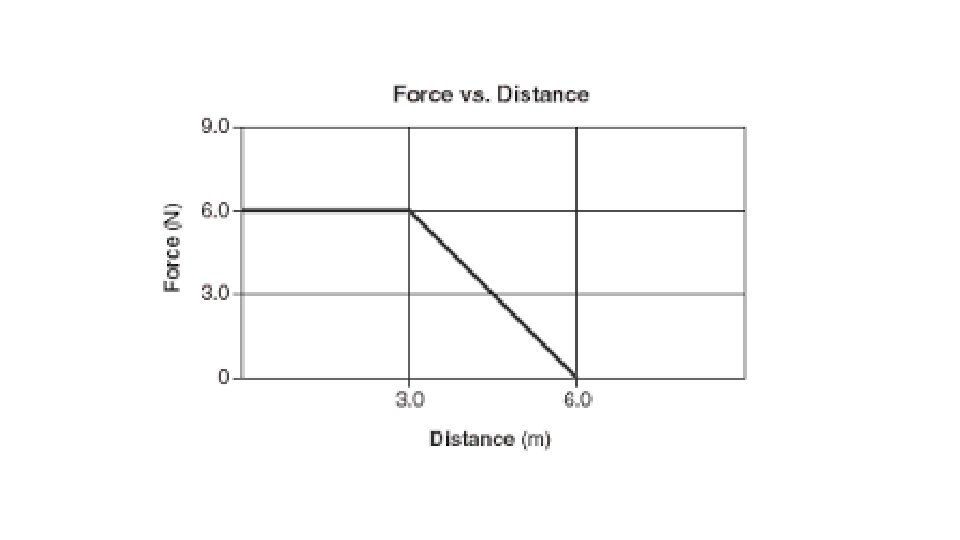
Work graphically •
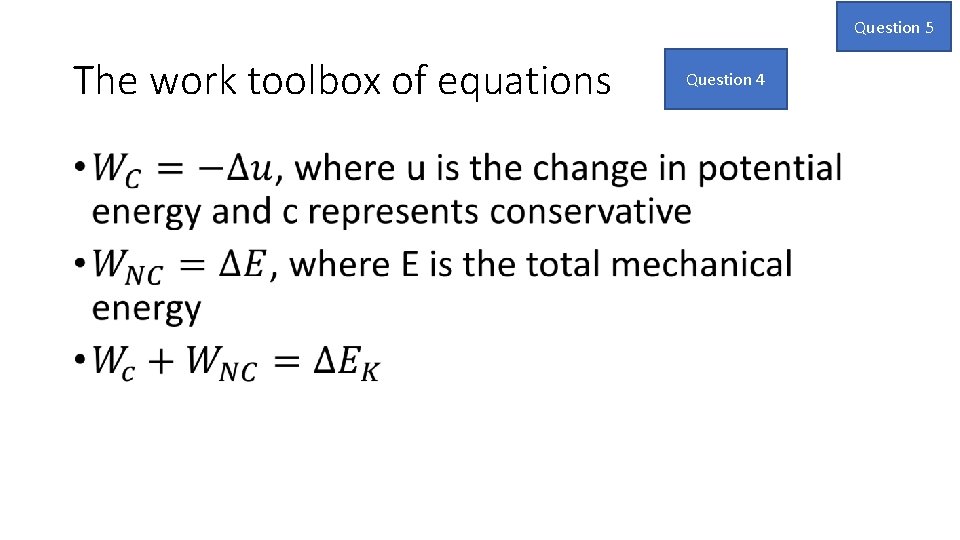
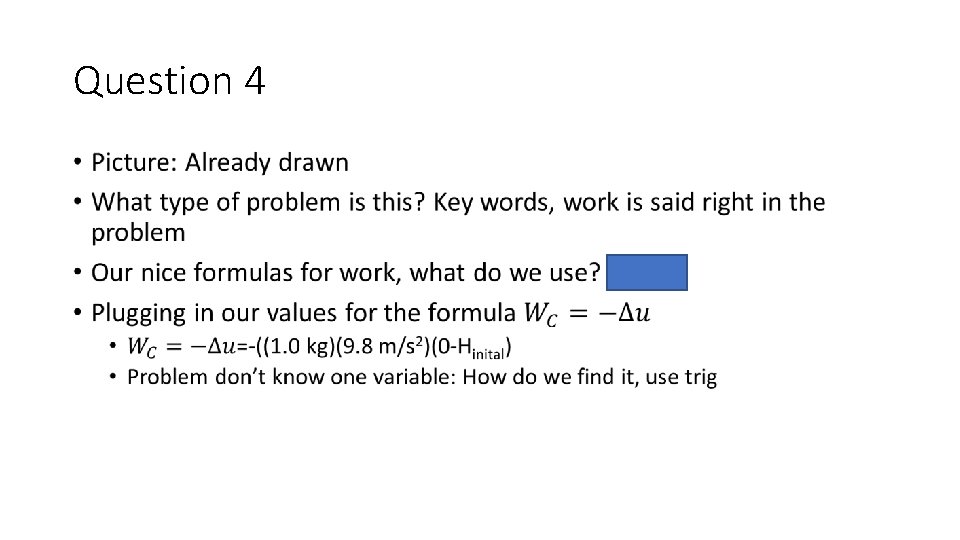
Question 5 The work toolbox of equations • Question 4
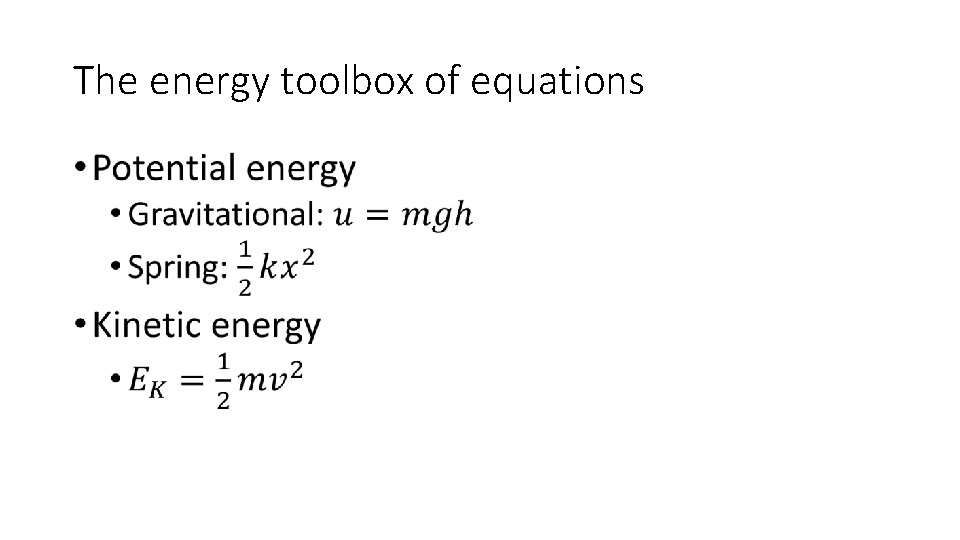
The energy toolbox of equations •
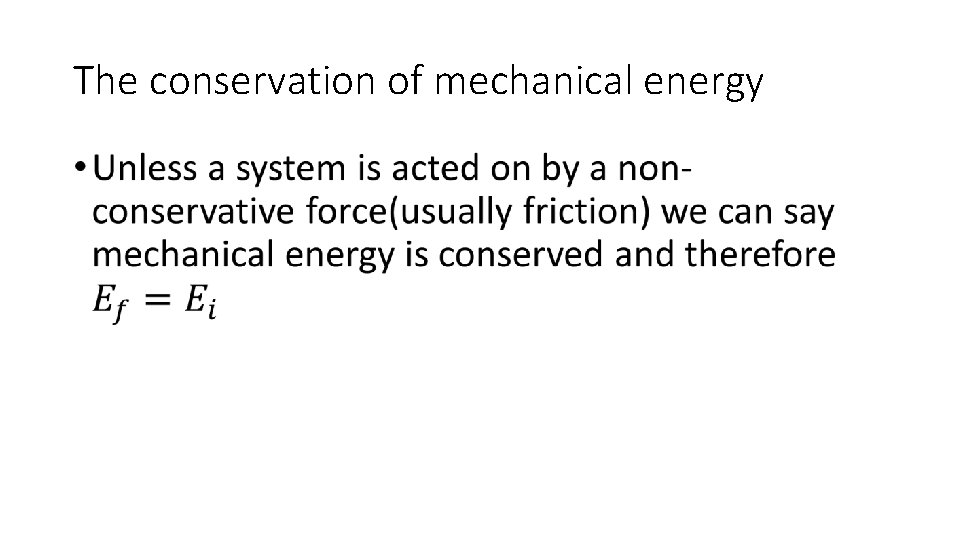
The conservation of mechanical energy •
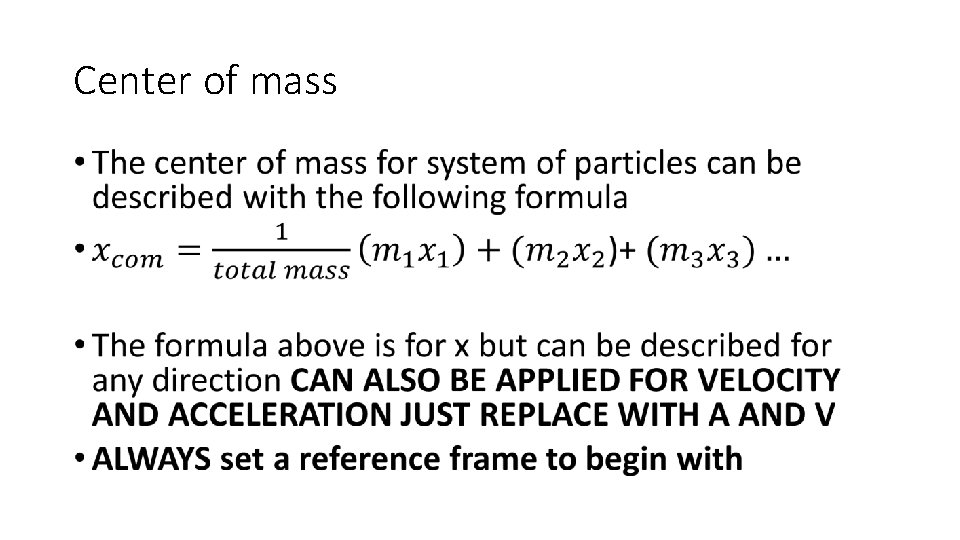
Center of mass •
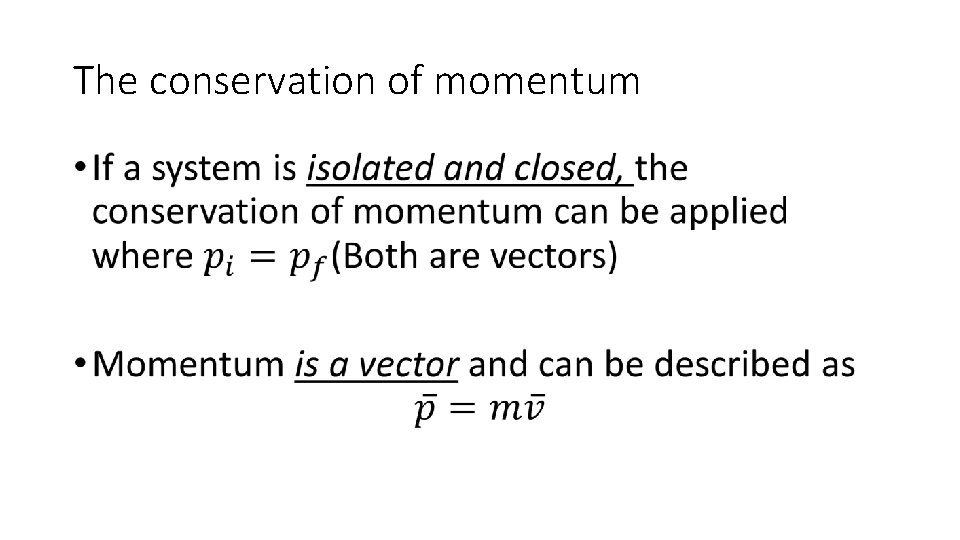
The conservation of momentum •
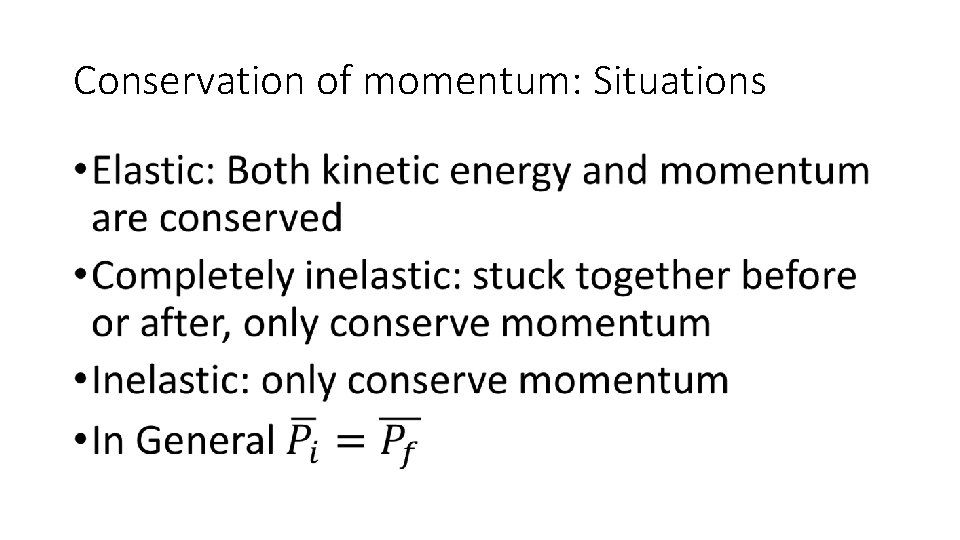
Conservation of momentum: Situations •
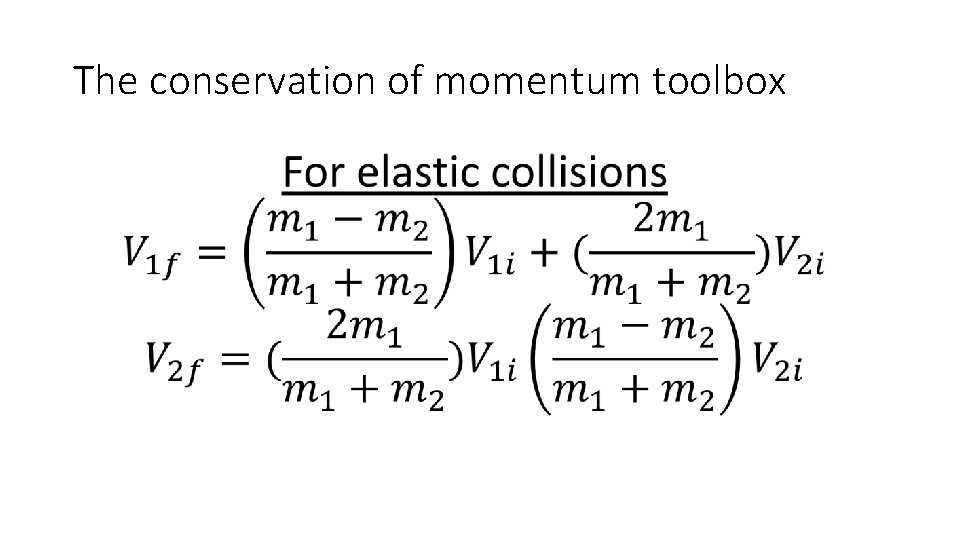
The conservation of momentum toolbox •
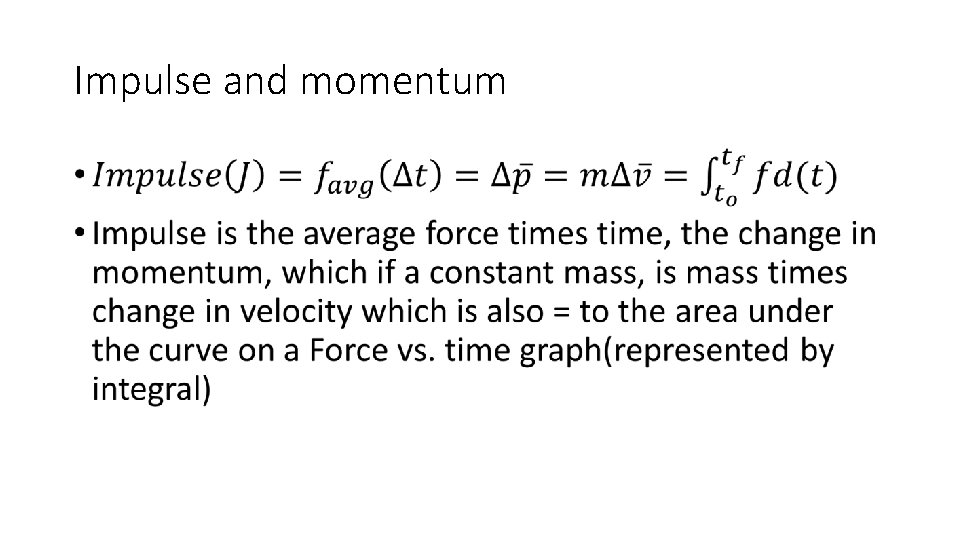
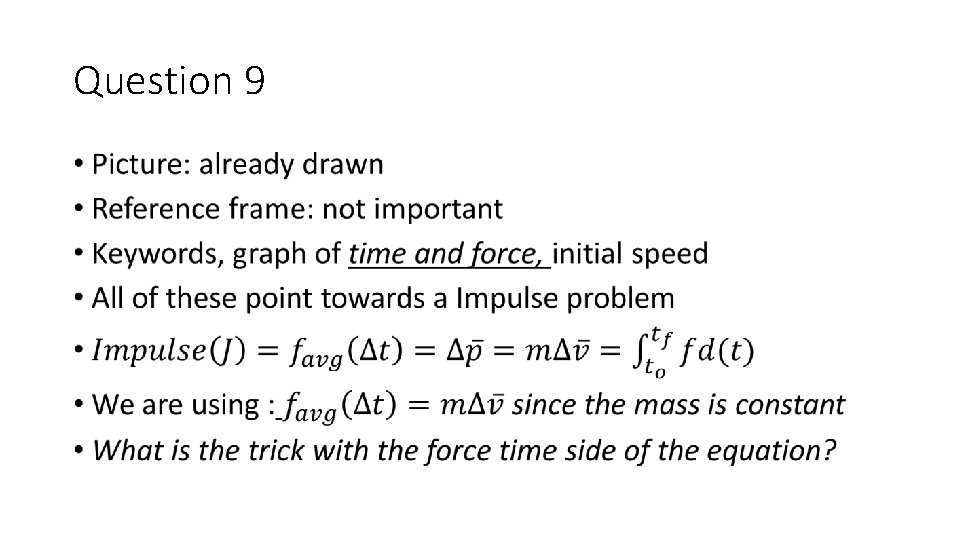
Impulse and momentum •
The general problem solving idea
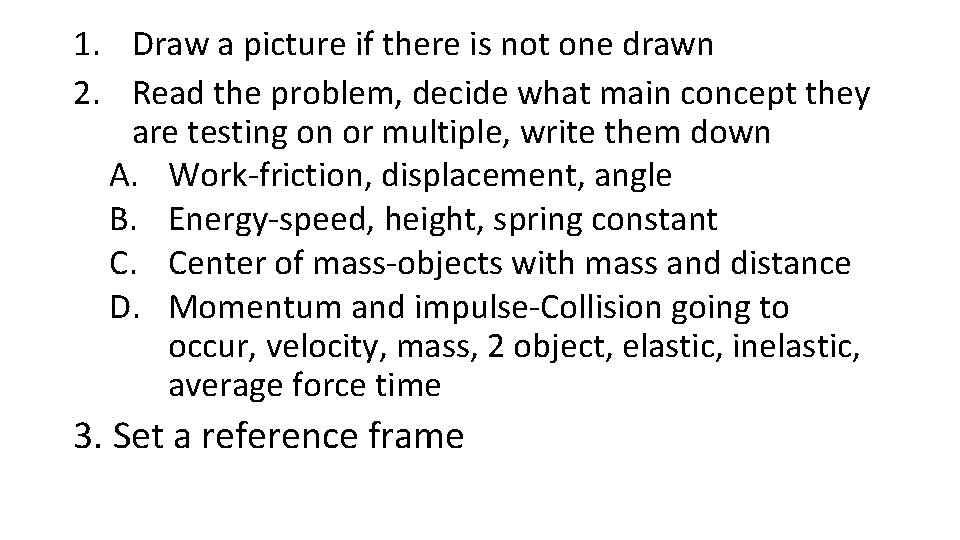
1. Draw a picture if there is not one drawn 2. Read the problem, decide what main concept they are testing on or multiple, write them down A. Work-friction, displacement, angle B. Energy-speed, height, spring constant C. Center of mass-objects with mass and distance D. Momentum and impulse-Collision going to occur, velocity, mass, 2 object, elastic, inelastic, average force time 3. Set a reference frame
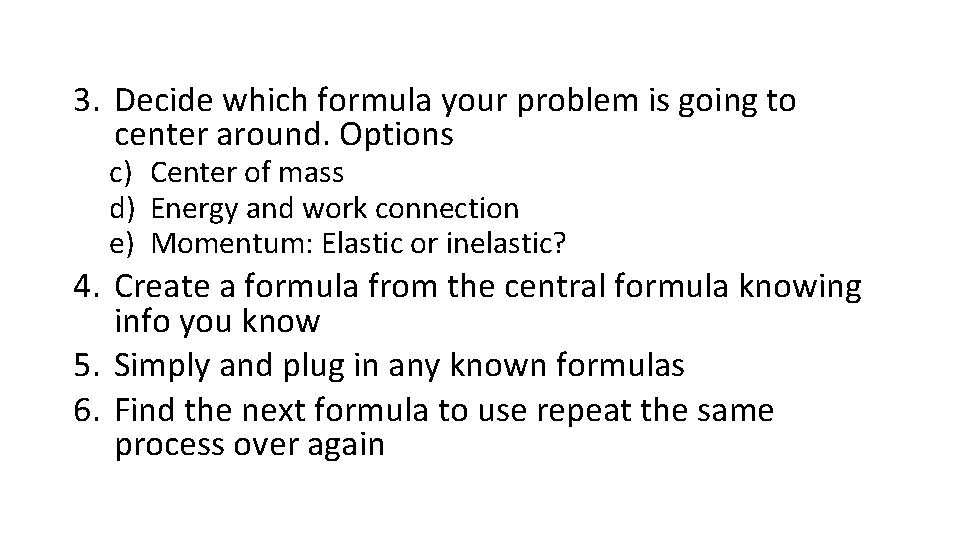
3. Decide which formula your problem is going to center around. Options c) Center of mass d) Energy and work connection e) Momentum: Elastic or inelastic? 4. Create a formula from the central formula knowing info you know 5. Simply and plug in any known formulas 6. Find the next formula to use repeat the same process over again
Practice Test Discussion
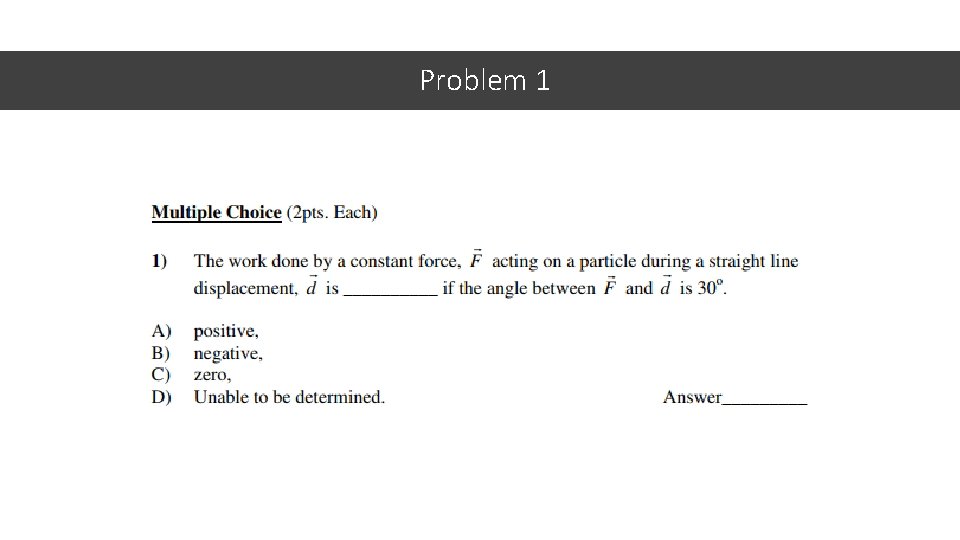
Problem 1
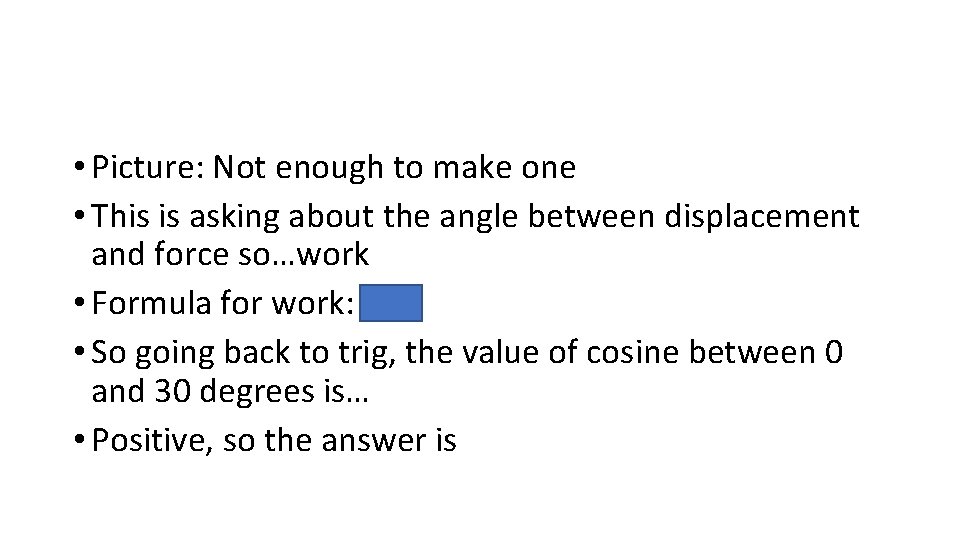
• Picture: Not enough to make one • This is asking about the angle between displacement and force so…work • Formula for work: • So going back to trig, the value of cosine between 0 and 30 degrees is… • Positive, so the answer is
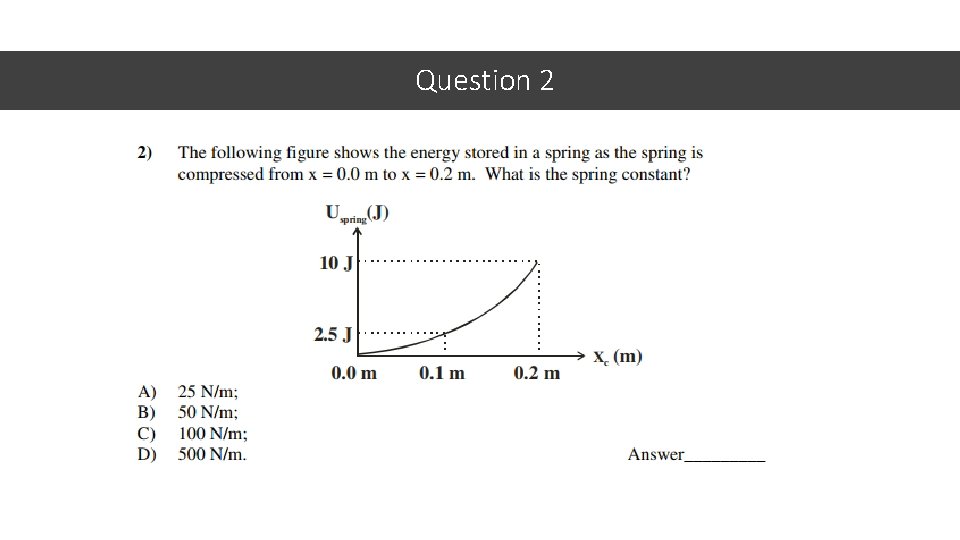
Question 2
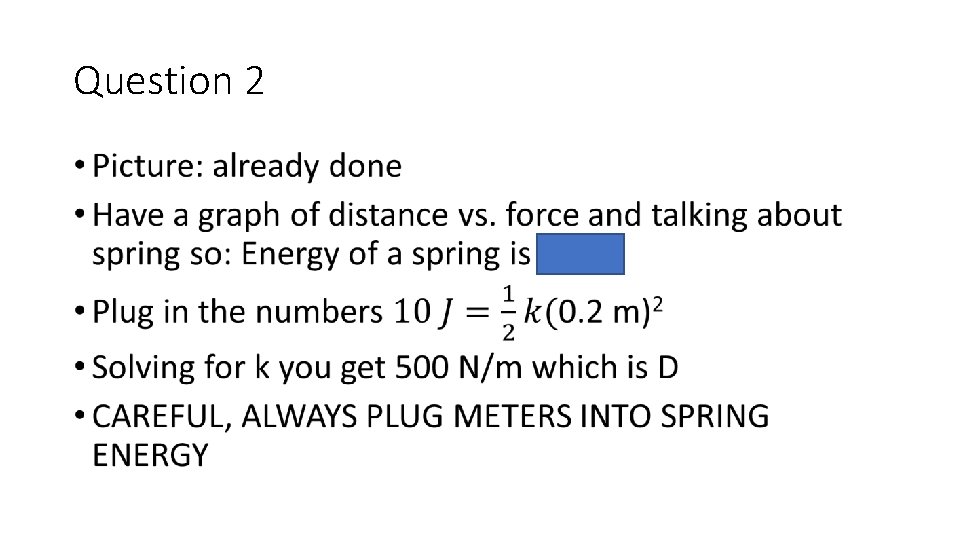
Question 2 •
Question 3
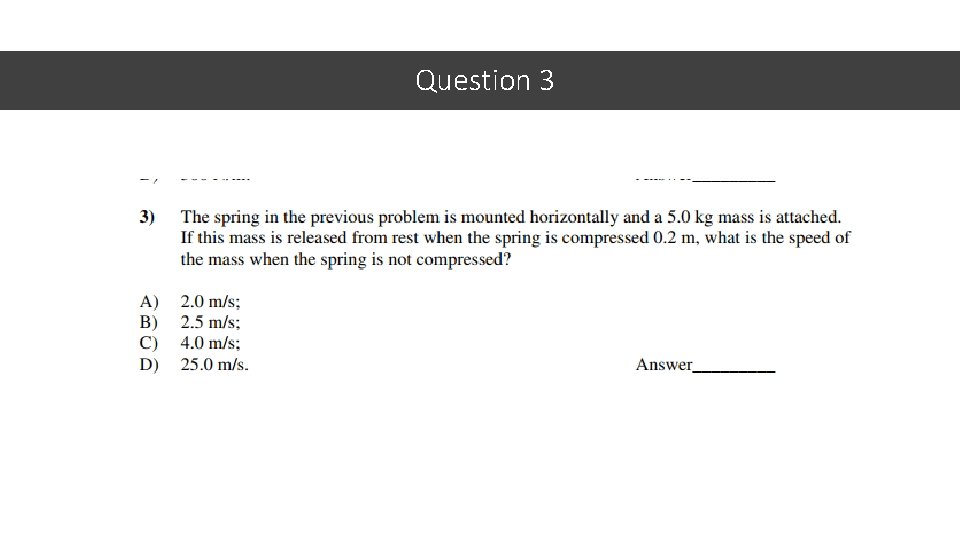
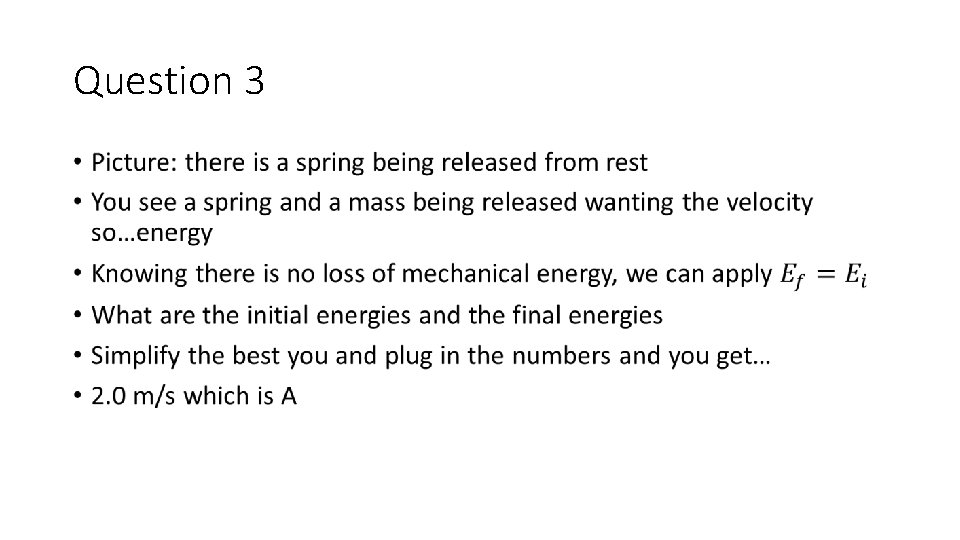
Question 3 •
Question 4
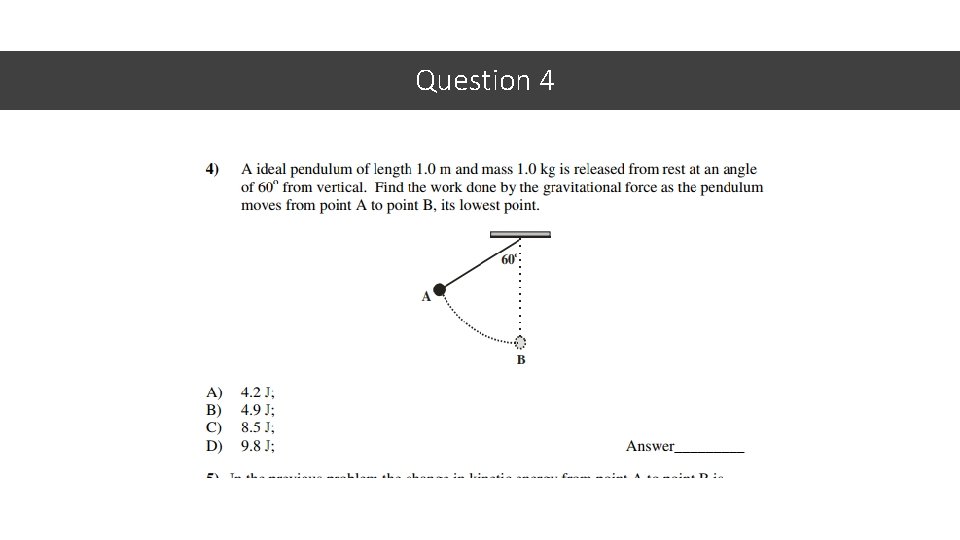
Question 4 •
Question 5
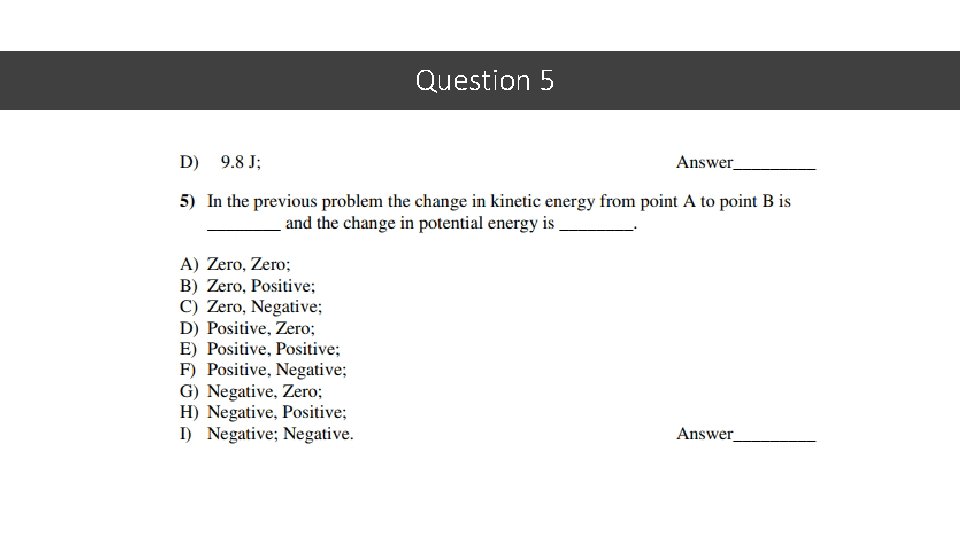
Question 5 • Picture: Already drawn • Type of problem cues: kinetic energy, potential energy, change • Going to out energy formulas and thinking about each one, the one for potential and the one for kinetic • Analyzing what happens in a pendulum… • Kinetic energy increases while potential energy decreases
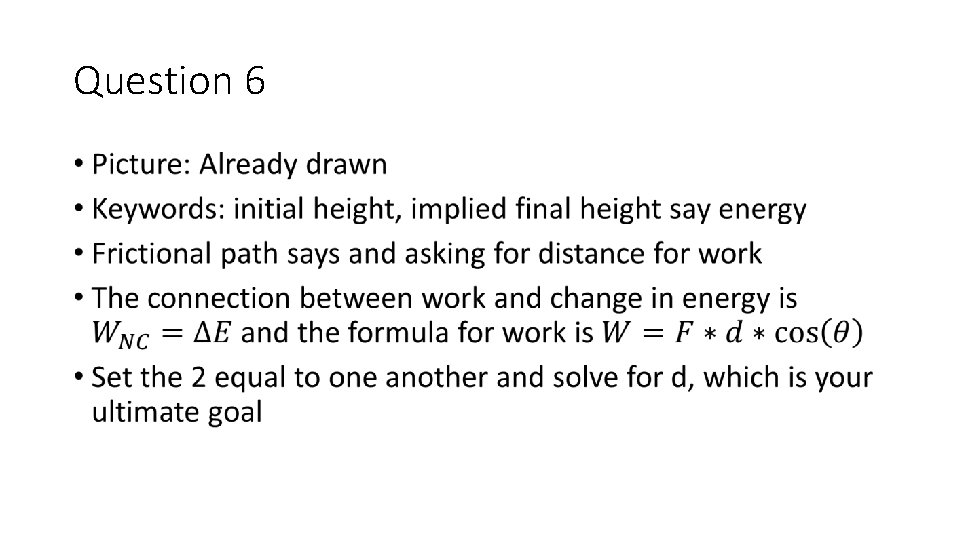
Question 6
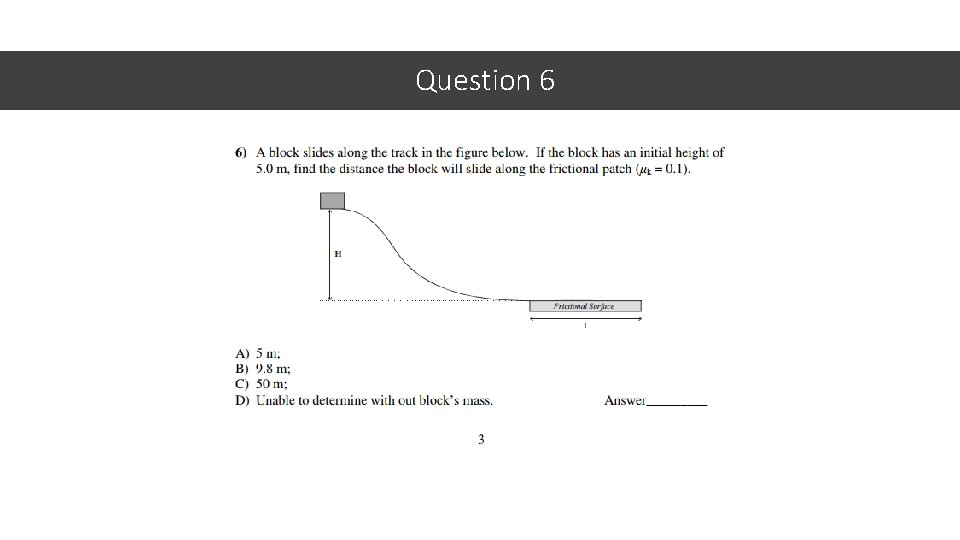
Question 6 •
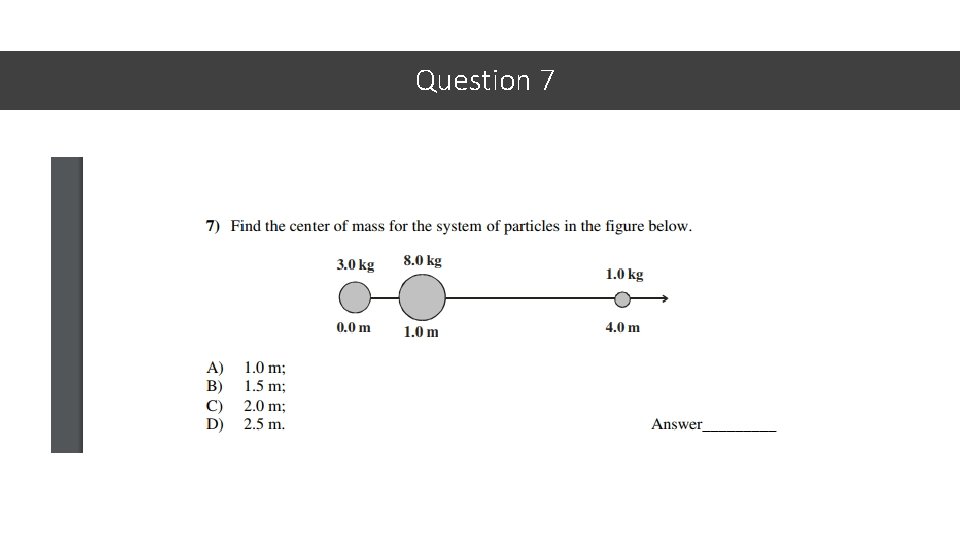
Question 7
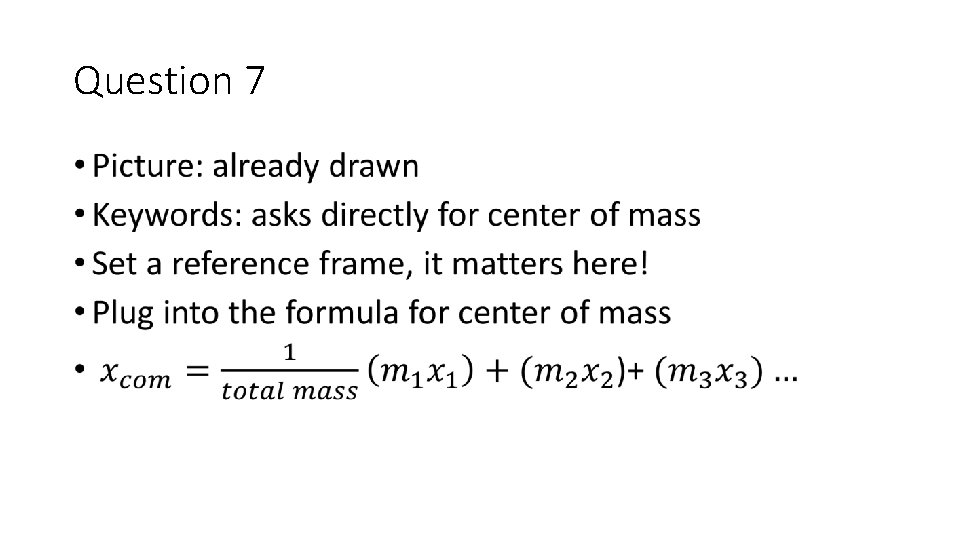
Question 7 •
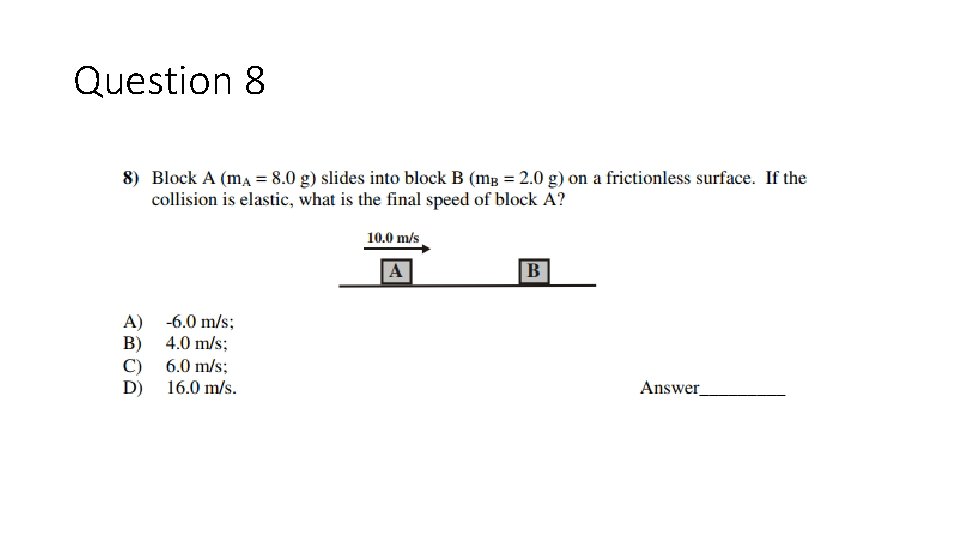
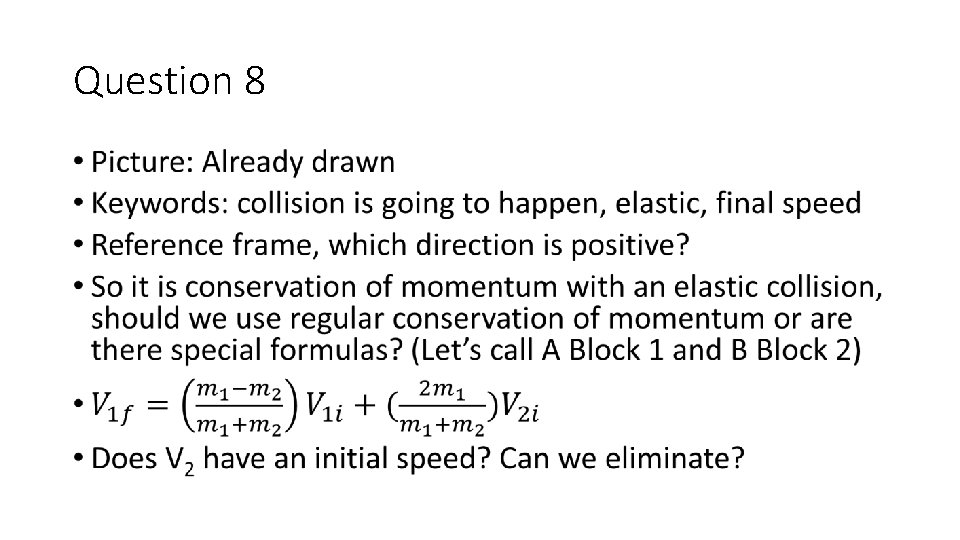
Question 8
Question 8 •
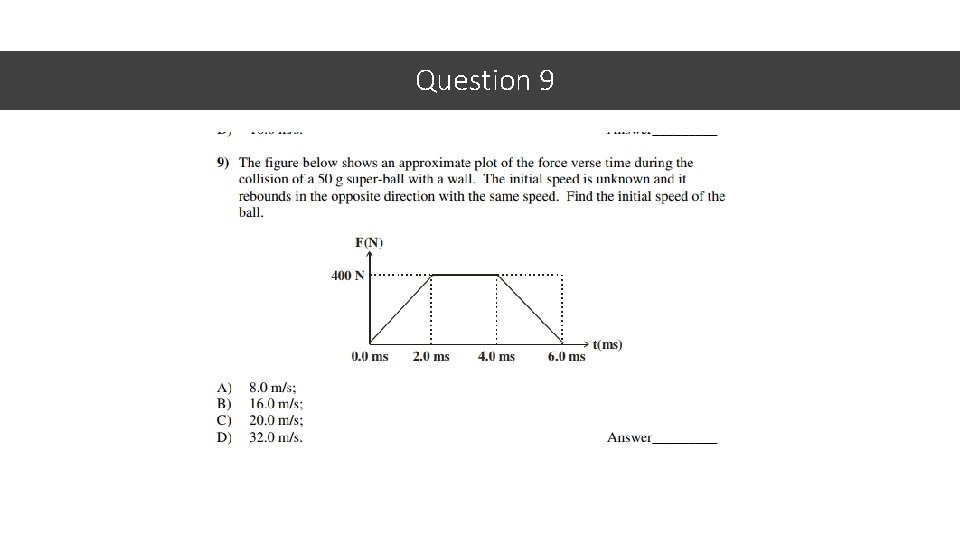
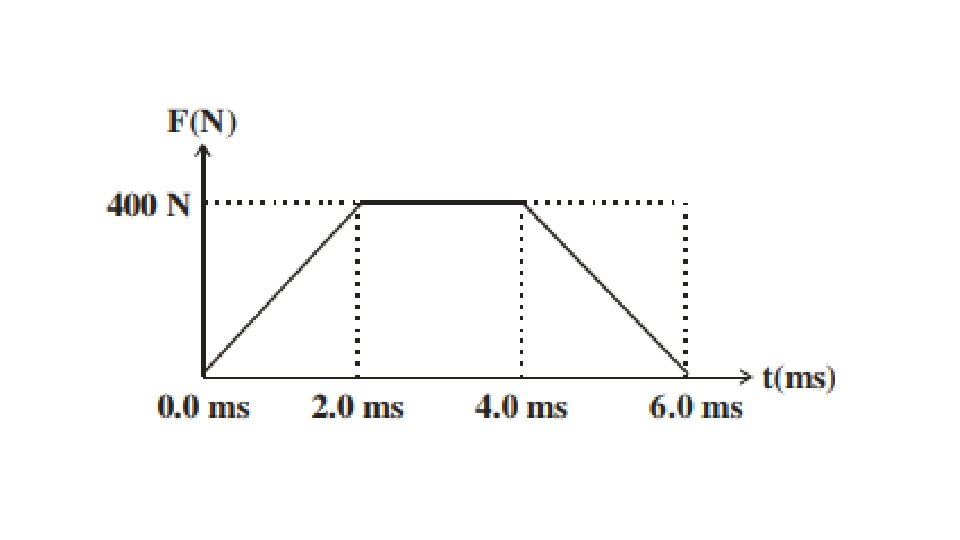
Question 9
Question 9 •
Question 10
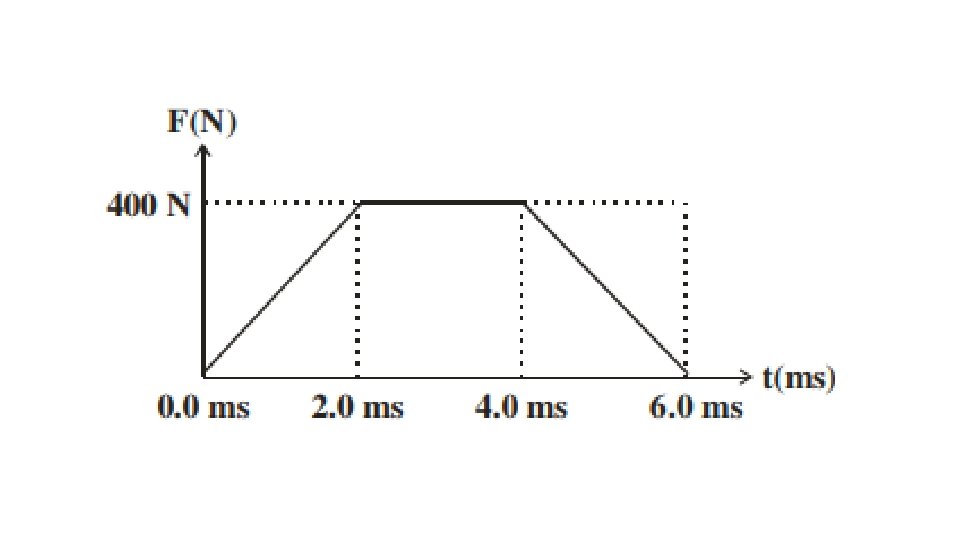
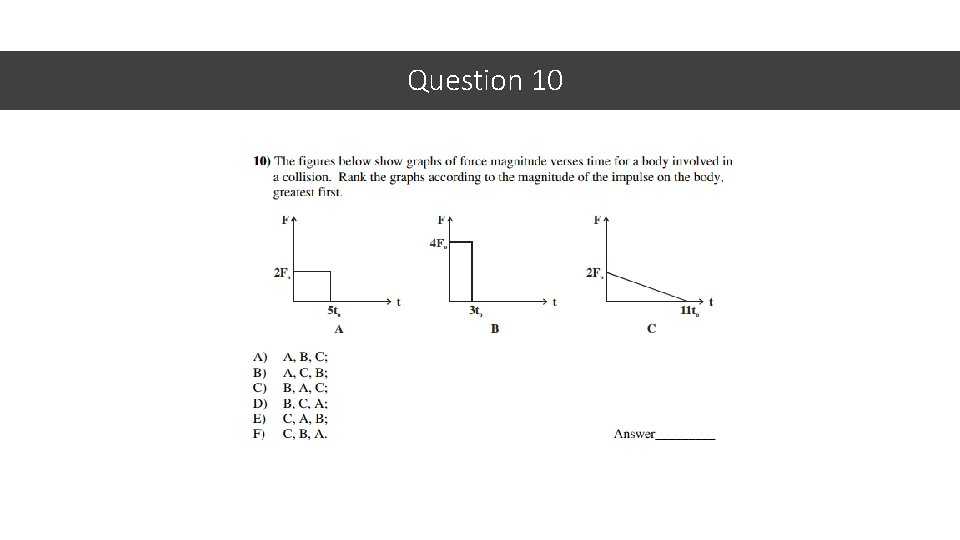
Question 10 • Picture: Already drawn • Reference frame: Not important • Keywords: Graphs, time, force, impulse • Impulse is area under the curve, so rank the graphs according to the area under the curve(Area of a rectangle and triangle)
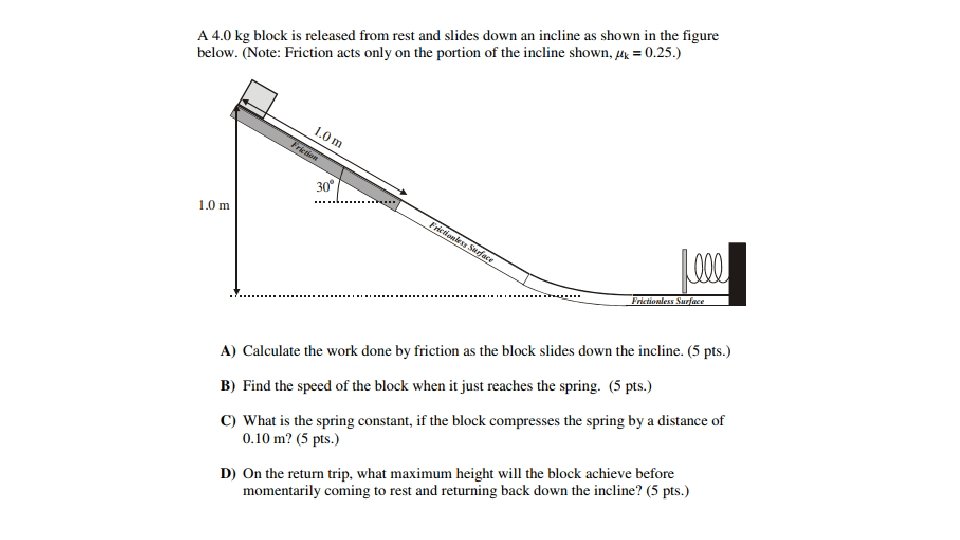
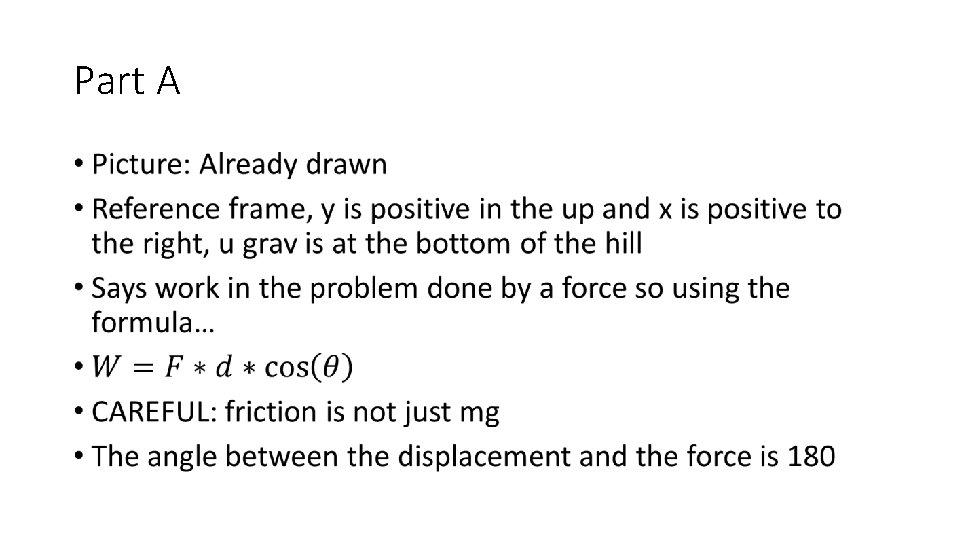
Part A •
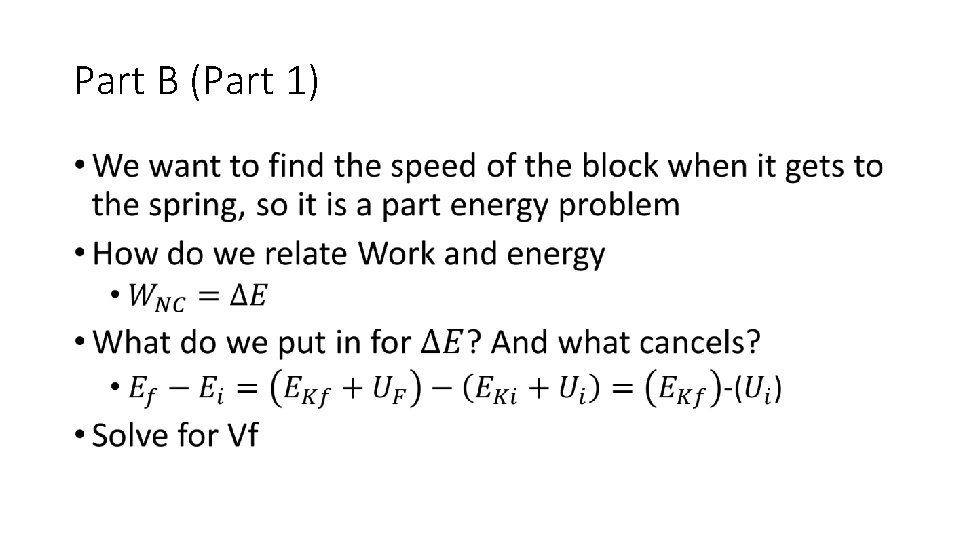
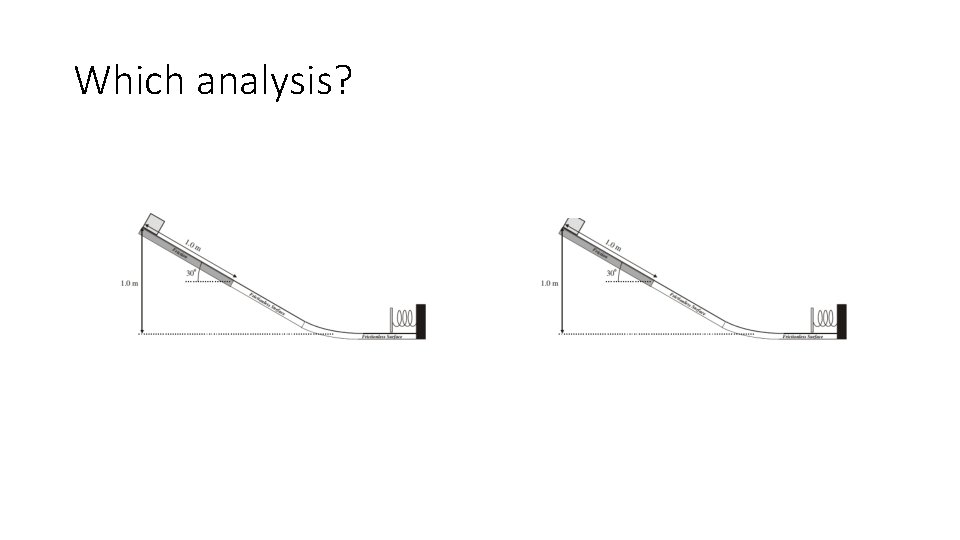
Part B (Part 1) •
Which analysis?
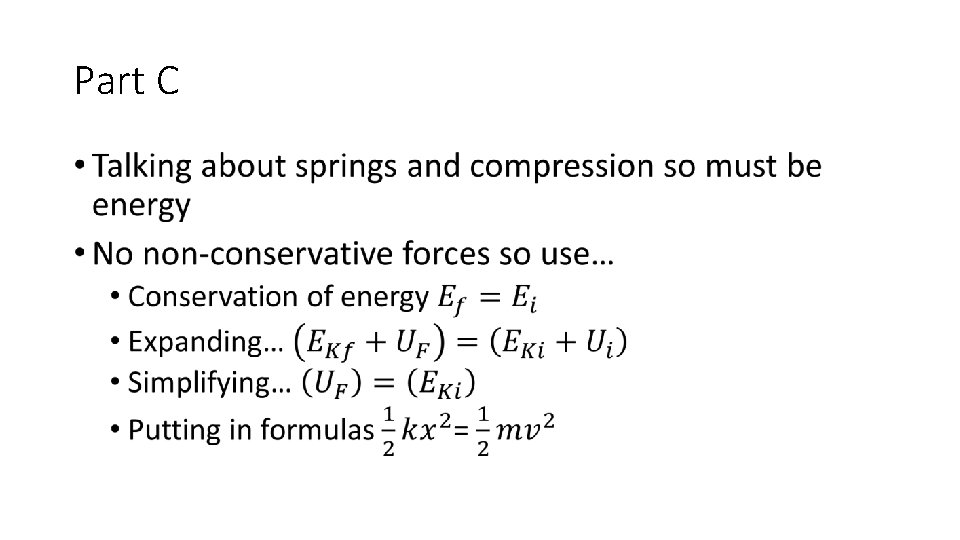
Part C •
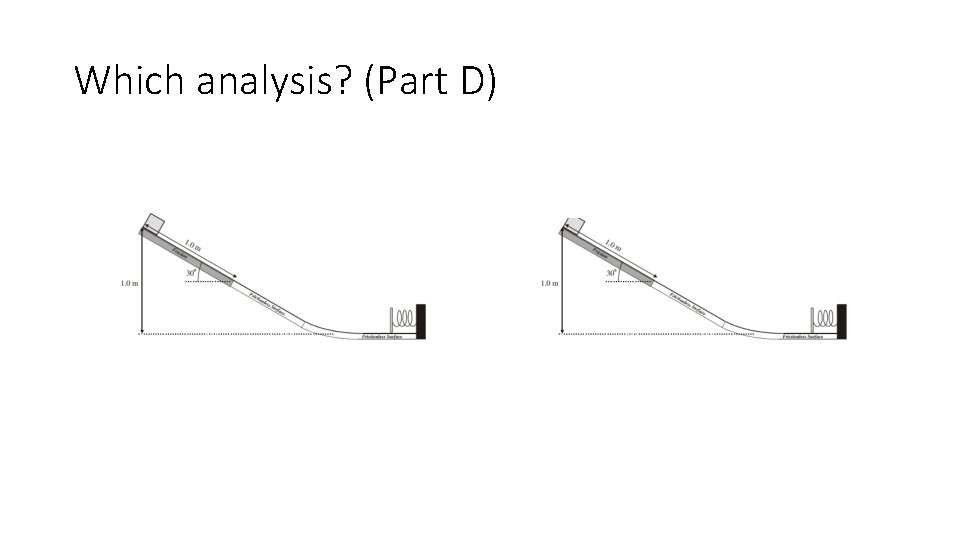
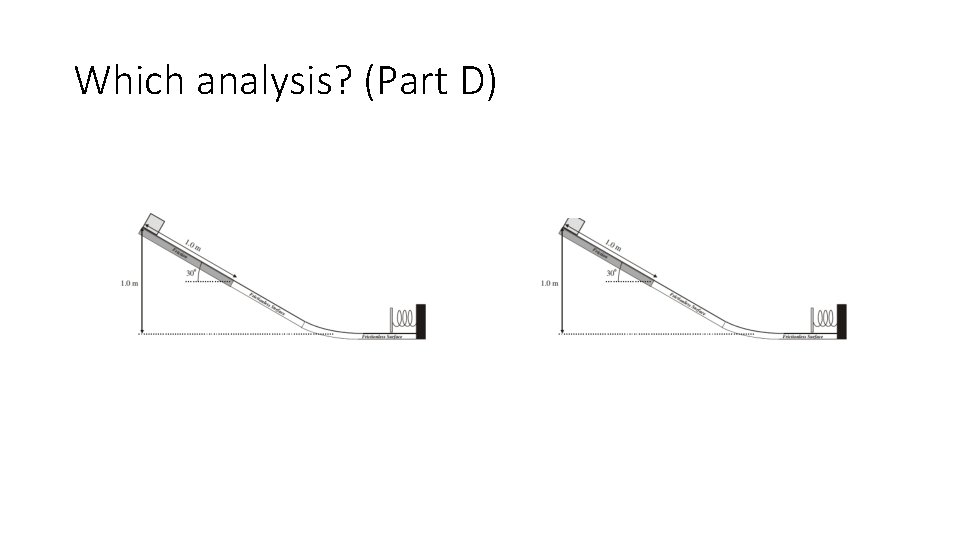
Which analysis? (Part D)
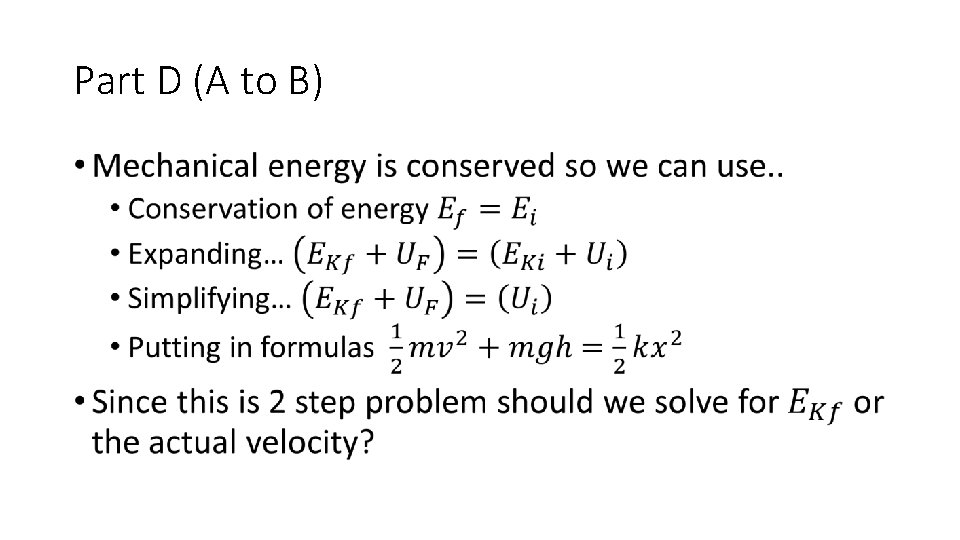
Part D (A to B) •
Which analysis? (Part D)
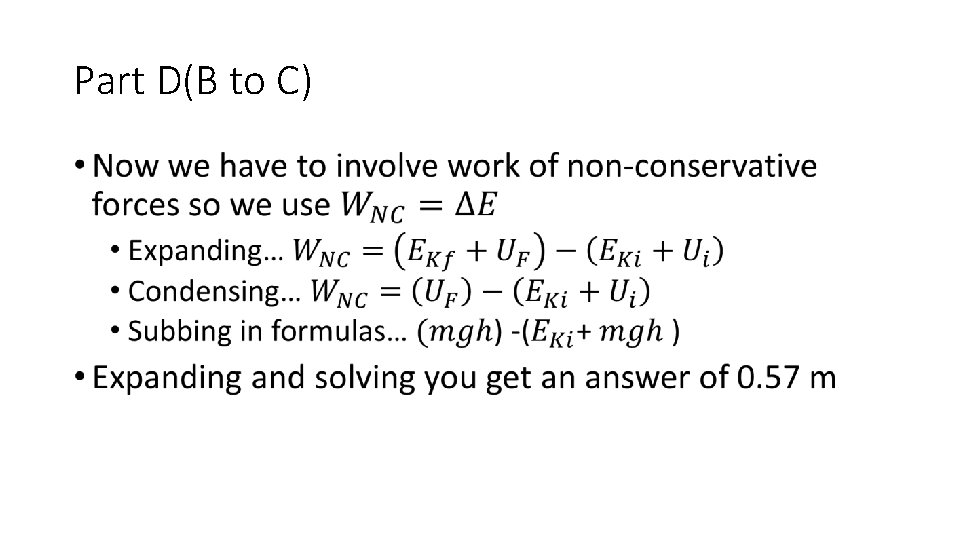
Part D(B to C) •
Predicted problems he might give
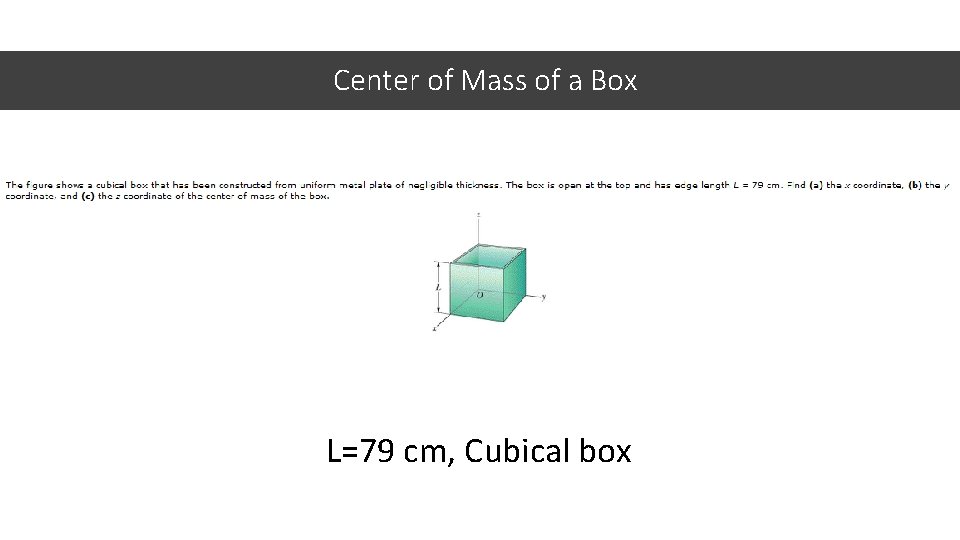
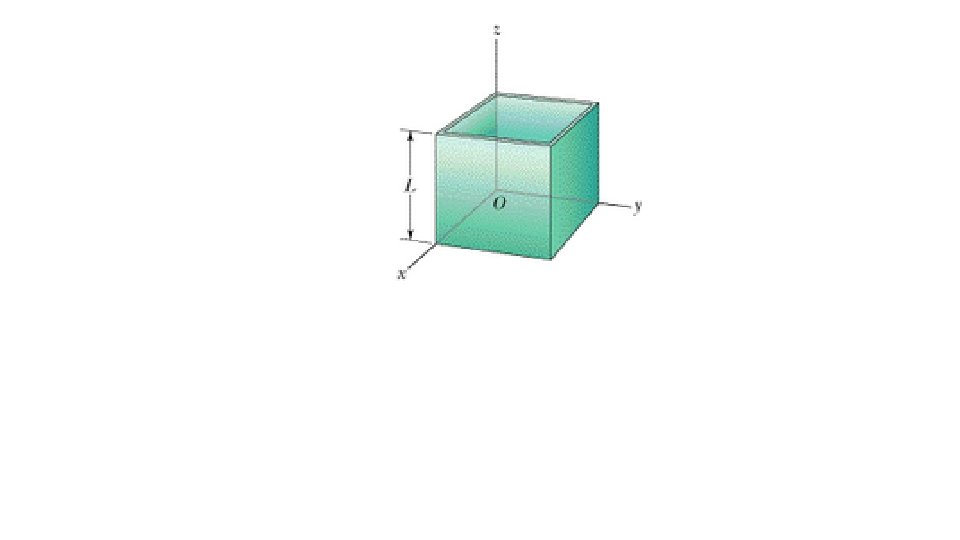
Center of Mass of a Box L=79 cm, Cubical box
Center of Mass of a Box • Picture: Already drawn • The key word is said right in the problem, center of mass • Analyzing 3 dimensions so 3 center of mass formulas • To analyze this discretely in the z you have to find the center of mass for the 5 sides( ONE IS NOT SOLID), and than find the center of mass for z by applying this to the regular formula
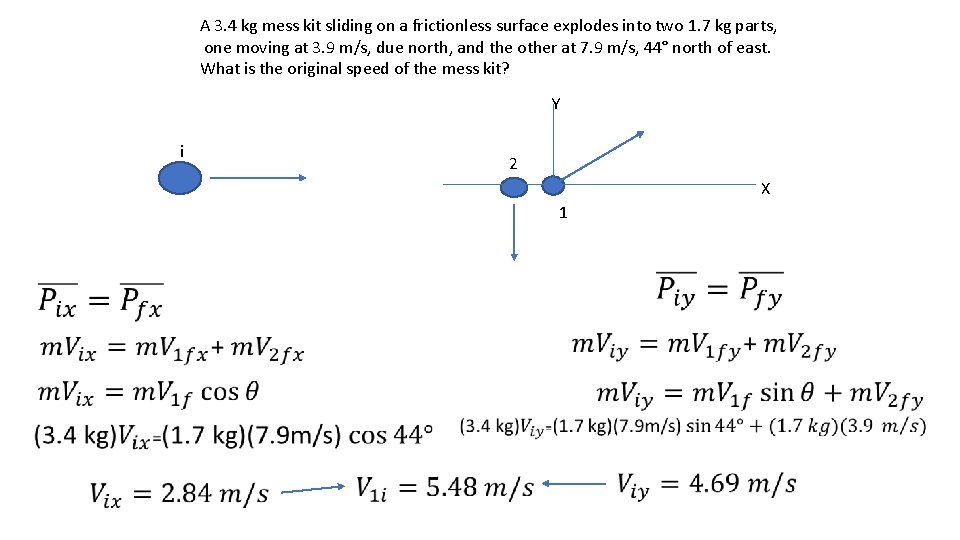
A 3. 4 kg mess kit sliding on a frictionless surface explodes into two 1. 7 kg parts, one moving at 3. 9 m/s, due north, and the other at 7. 9 m/s, 44° north of east. What is the original speed of the mess kit? Y i 2 X 1
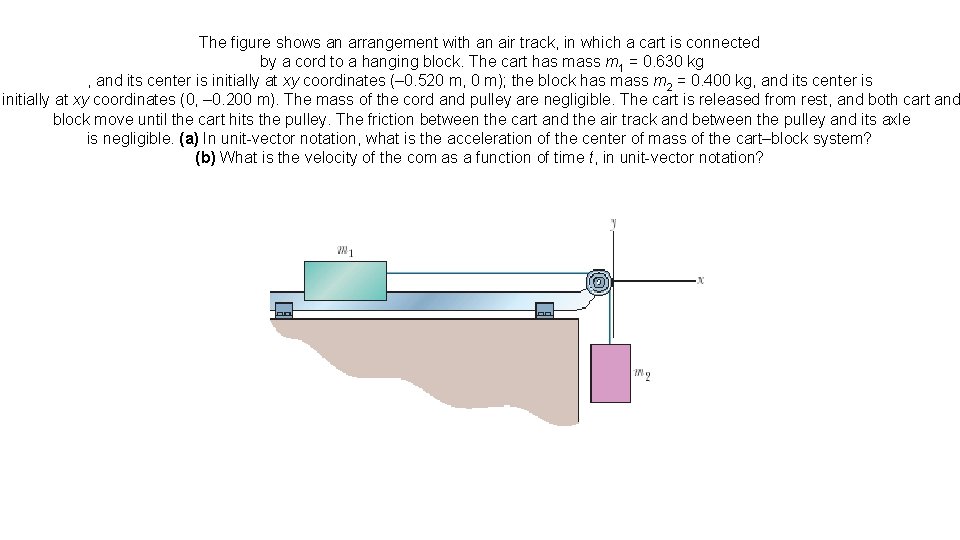
The figure shows an arrangement with an air track, in which a cart is connected by a cord to a hanging block. The cart has mass m 1 = 0. 630 kg , and its center is initially at xy coordinates (– 0. 520 m, 0 m); the block has mass m 2 = 0. 400 kg, and its center is initially at xy coordinates (0, – 0. 200 m). The mass of the cord and pulley are negligible. The cart is released from rest, and both cart and block move until the cart hits the pulley. The friction between the cart and the air track and between the pulley and its axle is negligible. (a) In unit-vector notation, what is the acceleration of the center of mass of the cart–block system? (b) What is the velocity of the com as a function of time t, in unit-vector notation?
Extra Question #3 • Picture: already drawn • Reference frame: Given to you in the problem • Coordinates and center of mass indicate COM • Formula
Some concepts questions
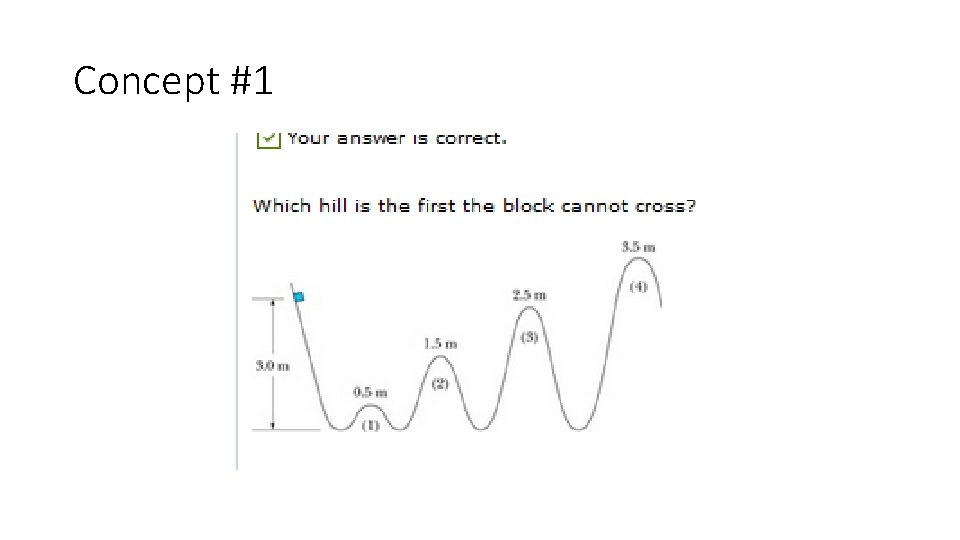
Concept #1
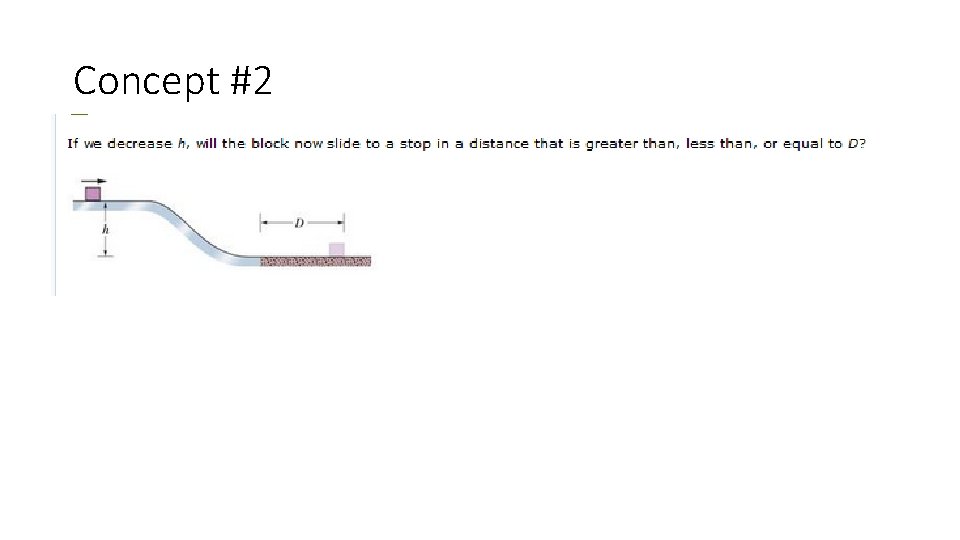
Concept #2
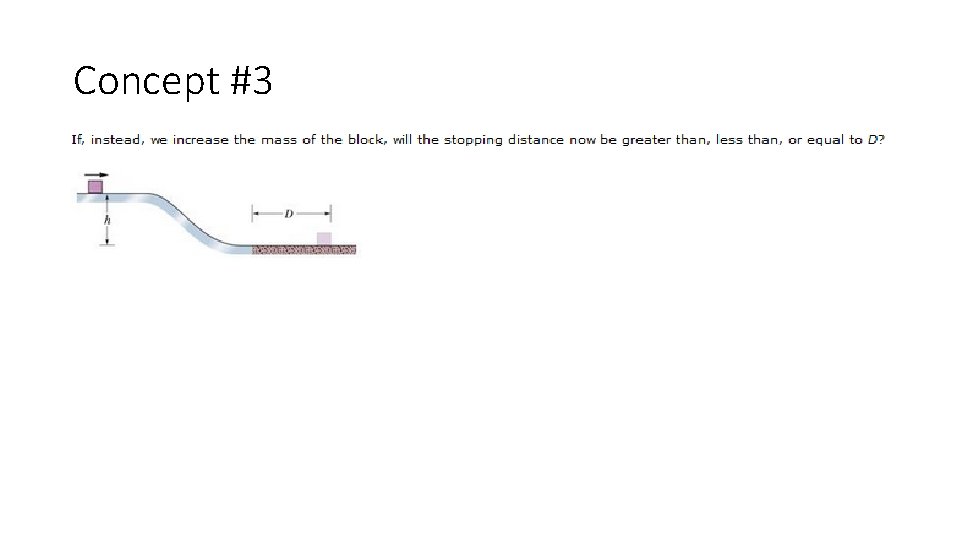
Concept #3
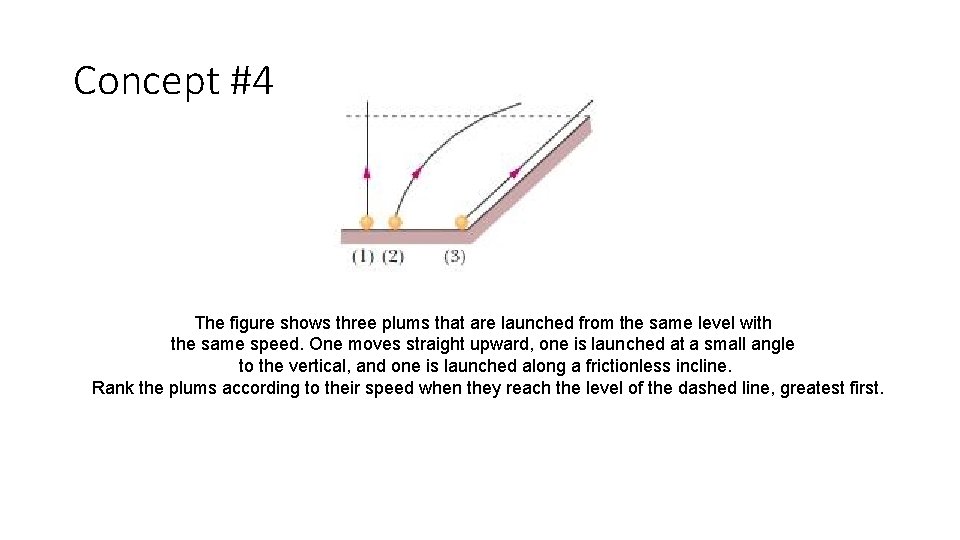
Concept #4 The figure shows three plums that are launched from the same level with the same speed. One moves straight upward, one is launched at a small angle to the vertical, and one is launched along a frictionless incline. Rank the plums according to their speed when they reach the level of the dashed line, greatest first.
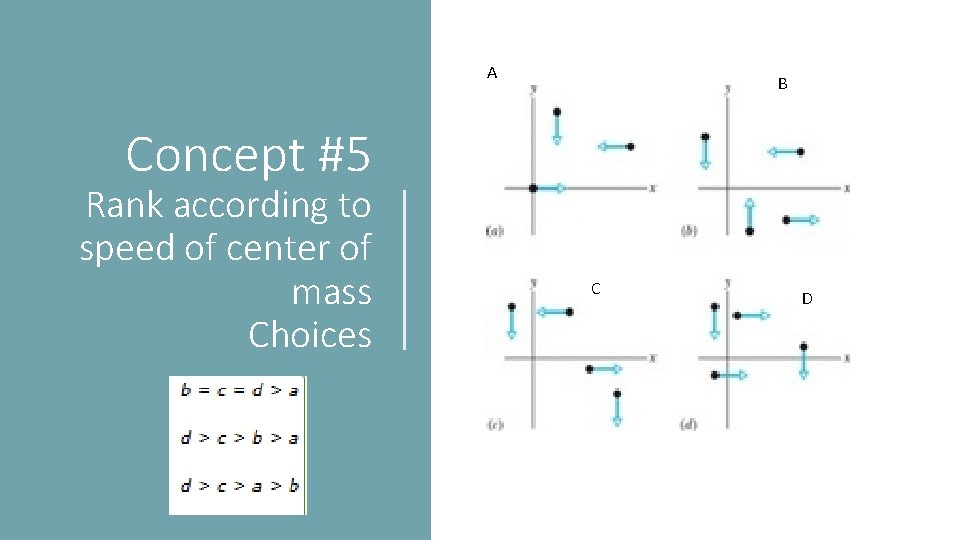
A B Concept #5 Rank according to speed of center of mass Choices C D