
Physics Review for Final Test 4 Oscillatory Motion

- Slides: 31
Physics Review for Final/ Test #4
Oscillatory Motion
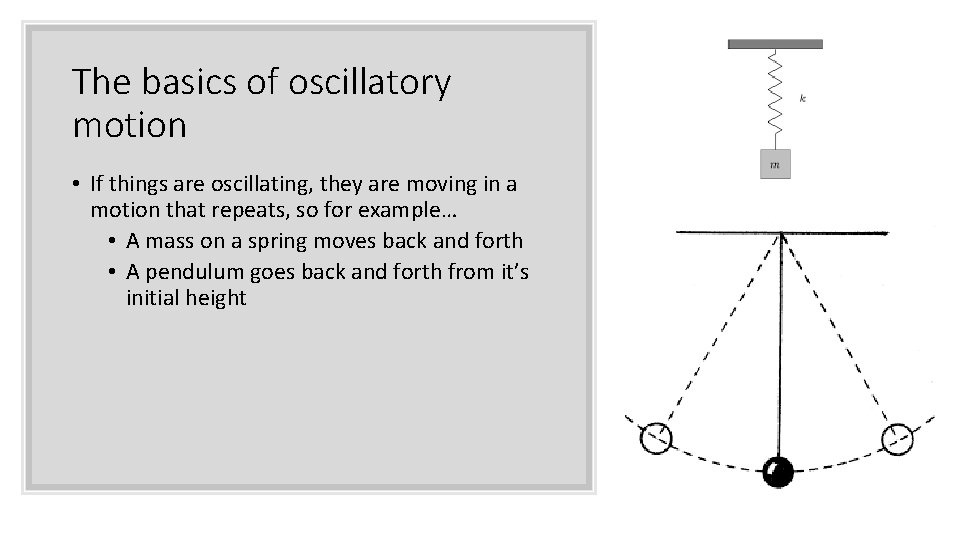
The basics of oscillatory motion • If things are oscillating, they are moving in a motion that repeats, so for example… • A mass on a spring moves back and forth • A pendulum goes back and forth from it’s initial height
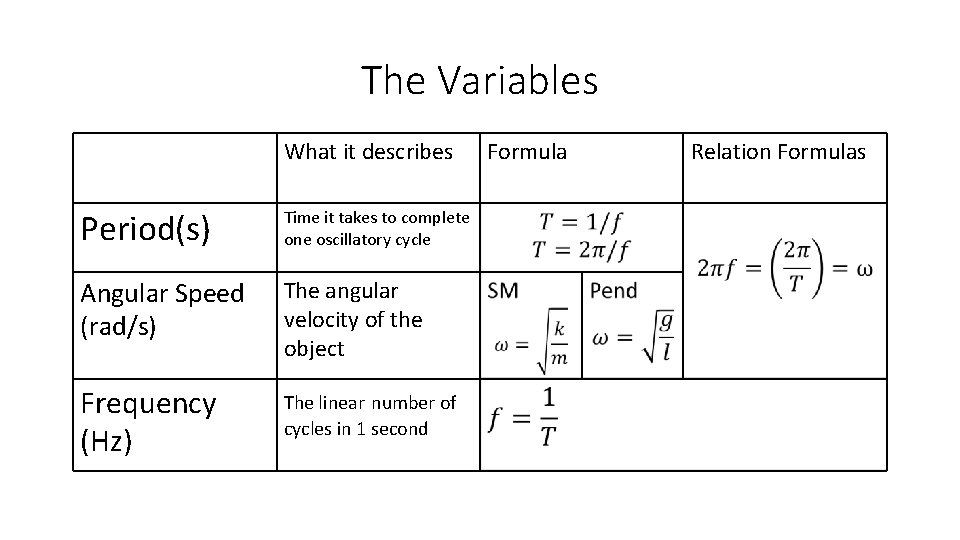
The Variables What it describes Period(s) Time it takes to complete one oscillatory cycle Angular Speed (rad/s) The angular velocity of the object Frequency (Hz) The linear number of cycles in 1 second Formula Relation Formulas
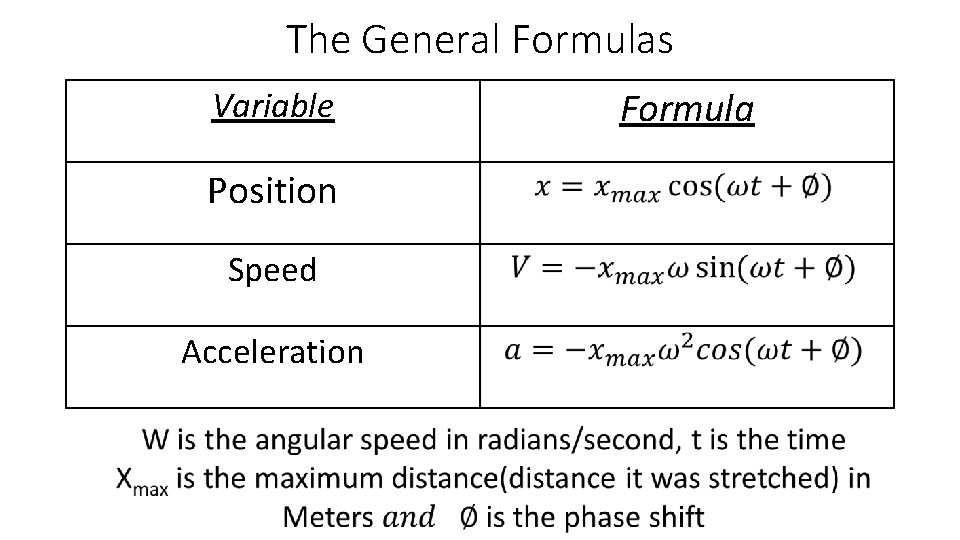
The General Formulas Variable Position Speed Acceleration Formula
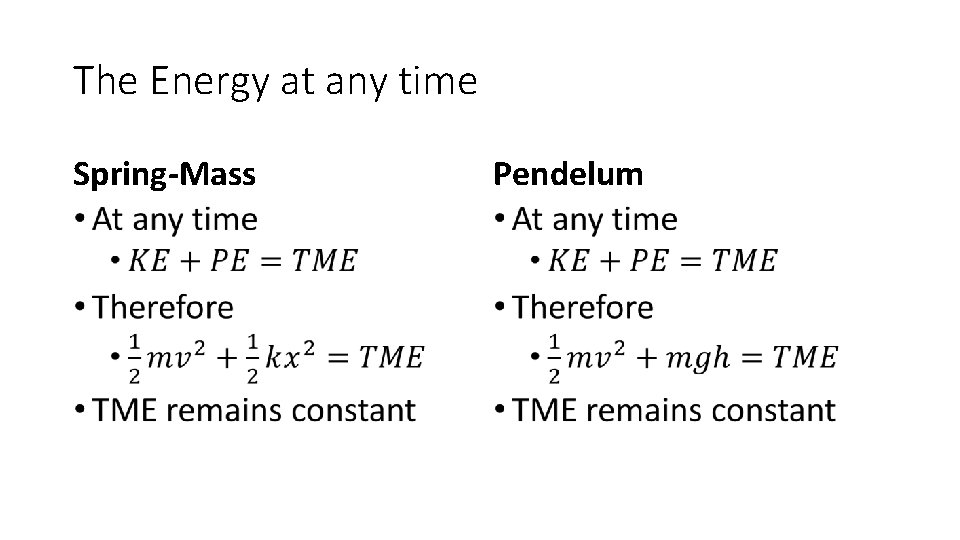
The Energy at any time Spring-Mass Pendelum • •
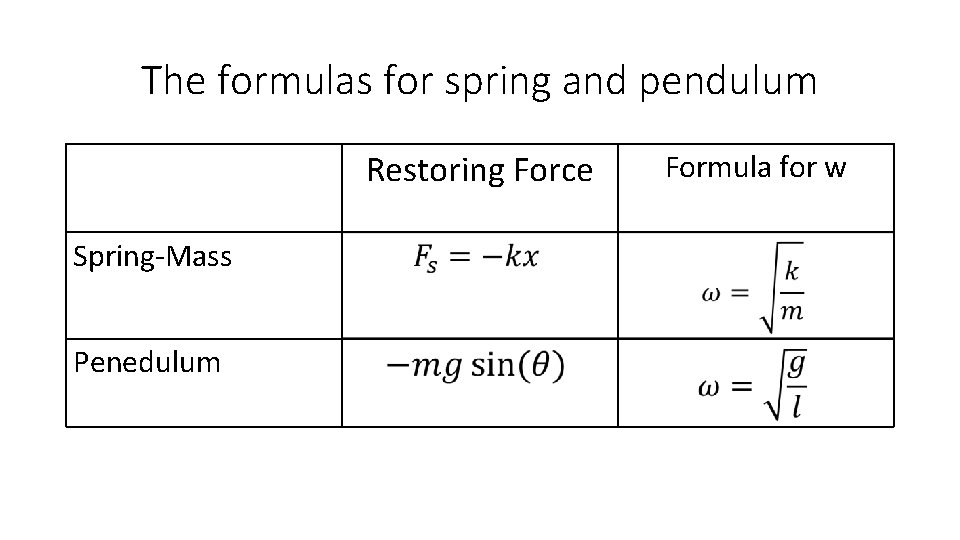
The formulas for spring and pendulum Restoring Force Spring-Mass Penedulum Formula for w
Torque and Rotational Motion
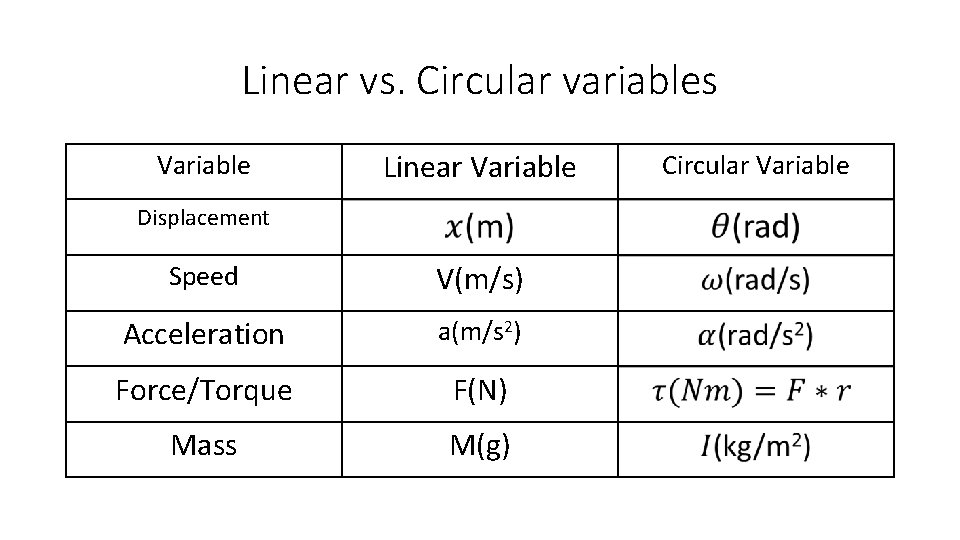
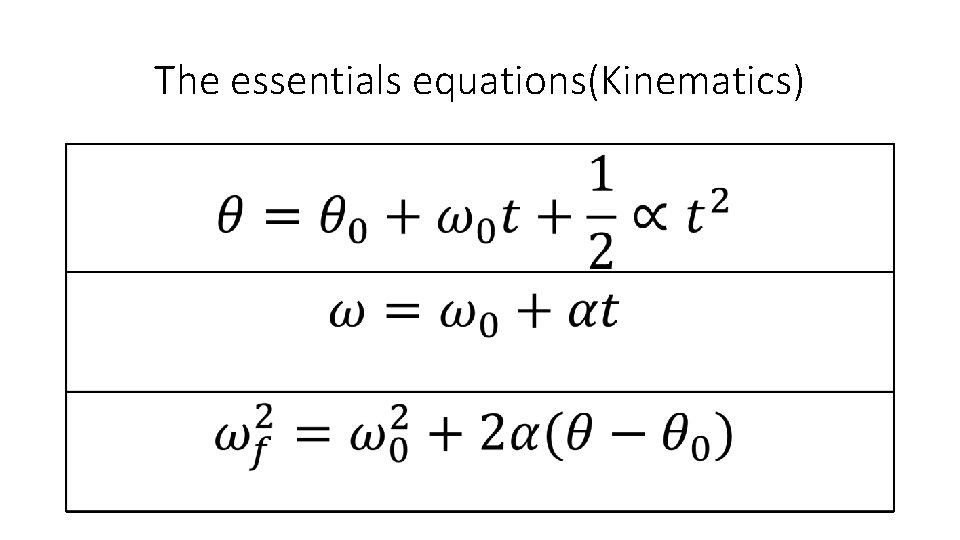
Linear vs. Circular equations • Up to this point, everything has been translational, or linear. Now we are switching to rotation, however the same concepts apply. • Most of the equations and concepts we have already learned, however they are being transferred to rotational variables
Linear vs. Circular variables Variable Linear Variable Displacement Speed V(m/s) Acceleration a(m/s 2) Force/Torque F(N) Mass M(g) Circular Variable
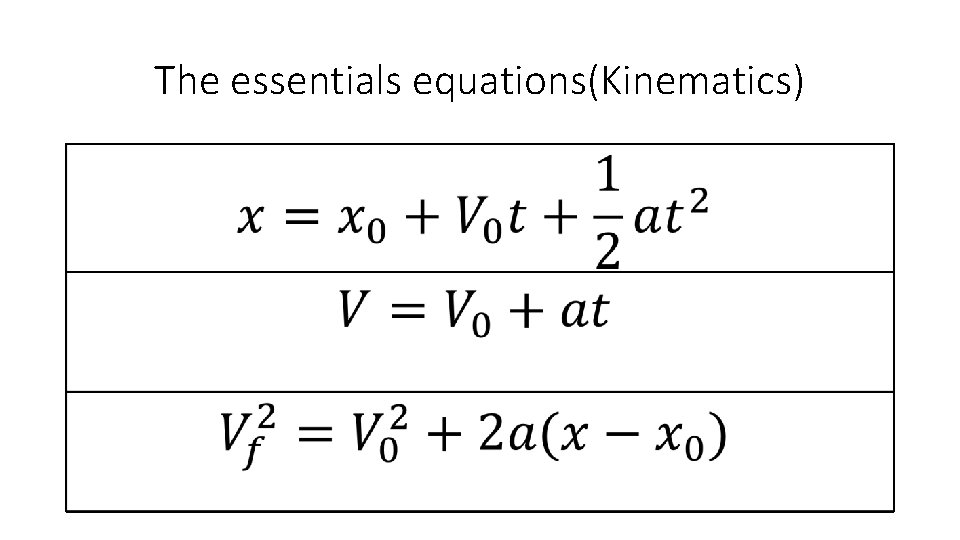
The essentials equations(Kinematics)
The essentials equations(Kinematics)
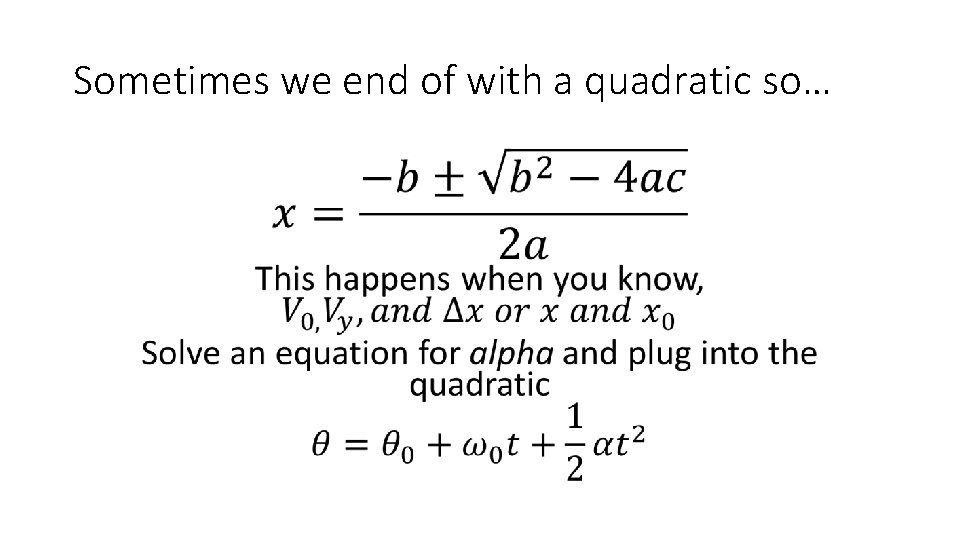
Sometimes we end of with a quadratic so… •
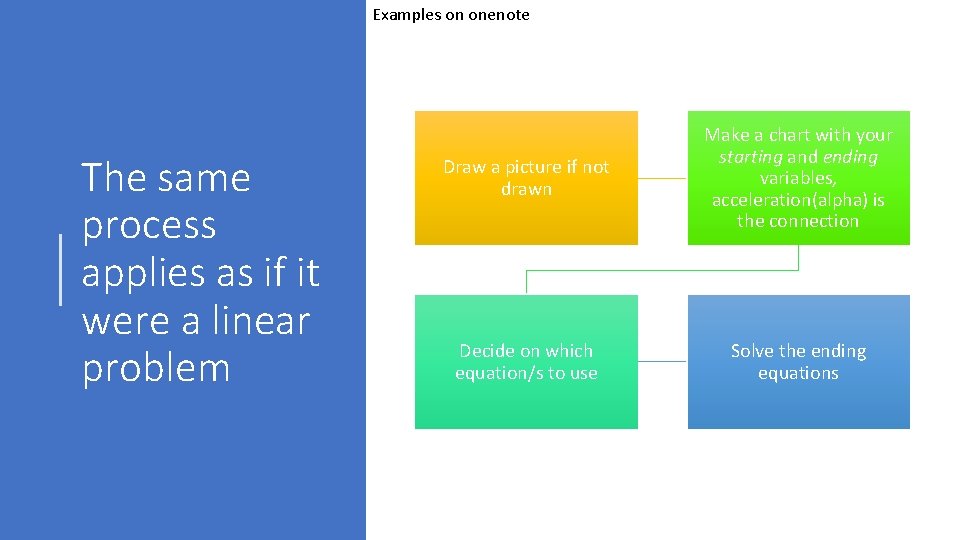
Examples on onenote The same process applies as if it were a linear problem Draw a picture if not drawn Make a chart with your starting and ending variables, acceleration(alpha) is the connection Decide on which equation/s to use Solve the ending equations
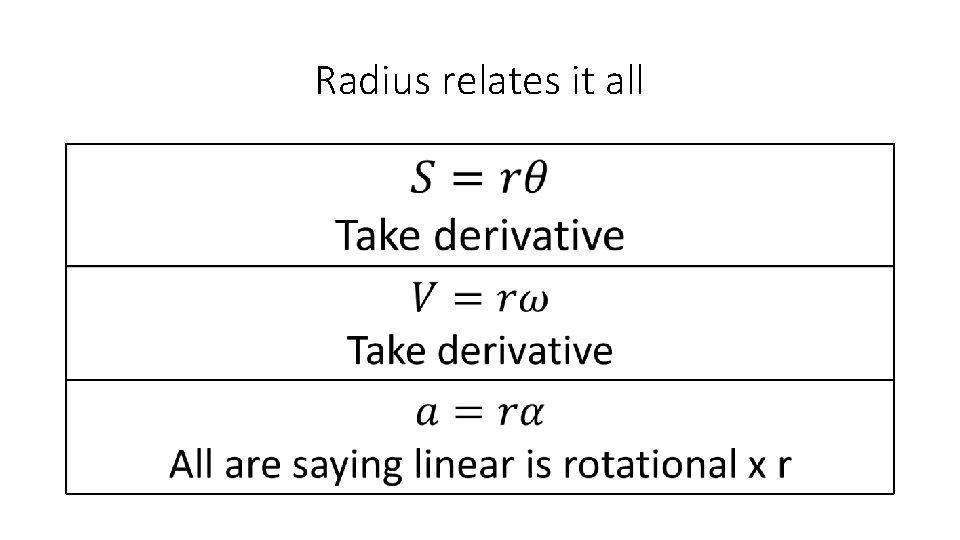
Radius relates it all
The importance of derivative • Remember for translational motion how if we took the derivative of a polynomial in terms of t for position, we would get velocity, and if took the derivative of that we would get acceleration
What is torque? • Torque is a force created by applying a force causing an object to rotate around a point • Therefore, torque can be thought of as similar to straight line (translational) motion • Therefore equations for linear motion can be turned into equations for circular (torque) motion
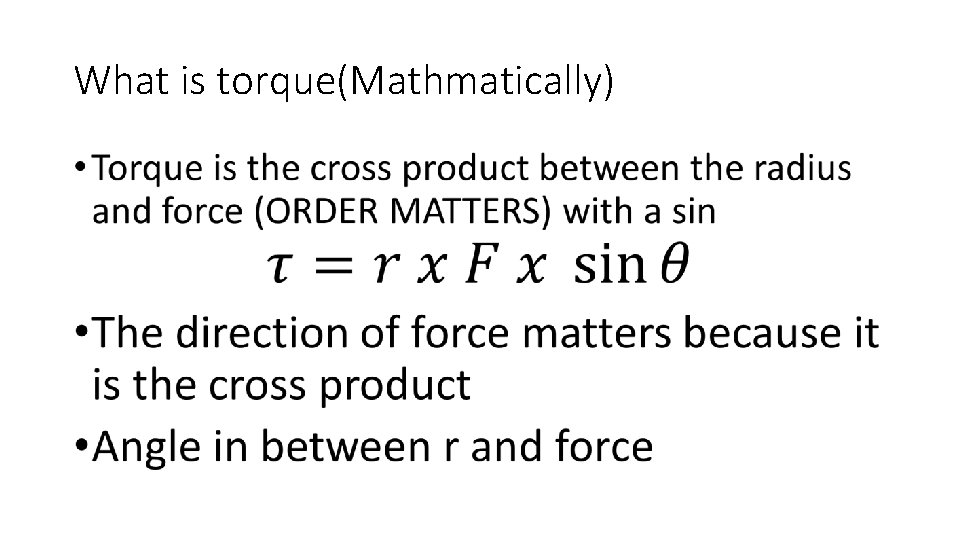
What is torque(Mathmatically) •
The right-hand rule • Start by putting your arm in the direction of the r, or distance from AOS (Axis of rotation) to the force applied • Than put your fingers in the direction of the force • The direction of the thumb is direction of torque • A dot is into the page, cross out of the page
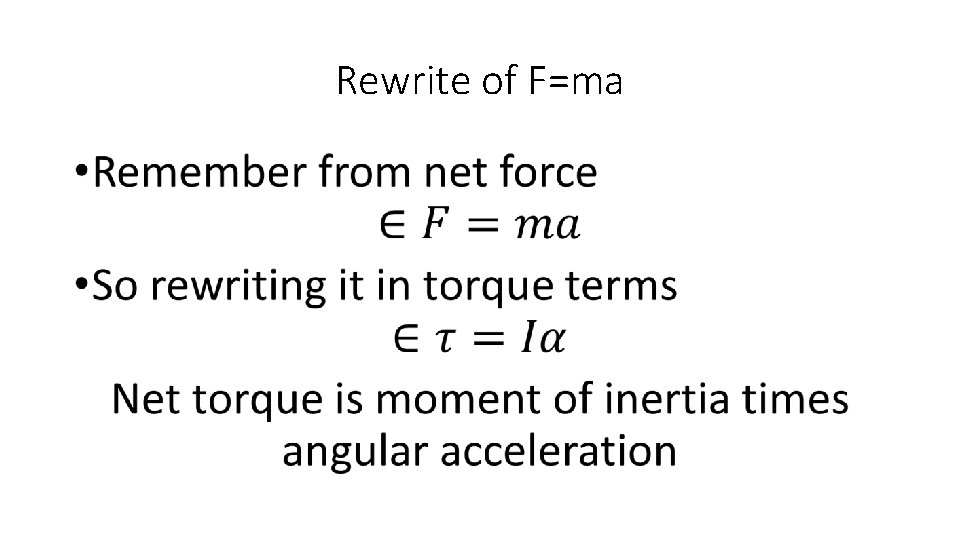
Rewrite of F=ma •
What I is • I is the rotational inertia of a system and is the sum of all the rotational inertias added together • The only one you have to know is a point-mass • I=MR 2, where r is the distance from AOS to where the particle is • All others needed will be given to you
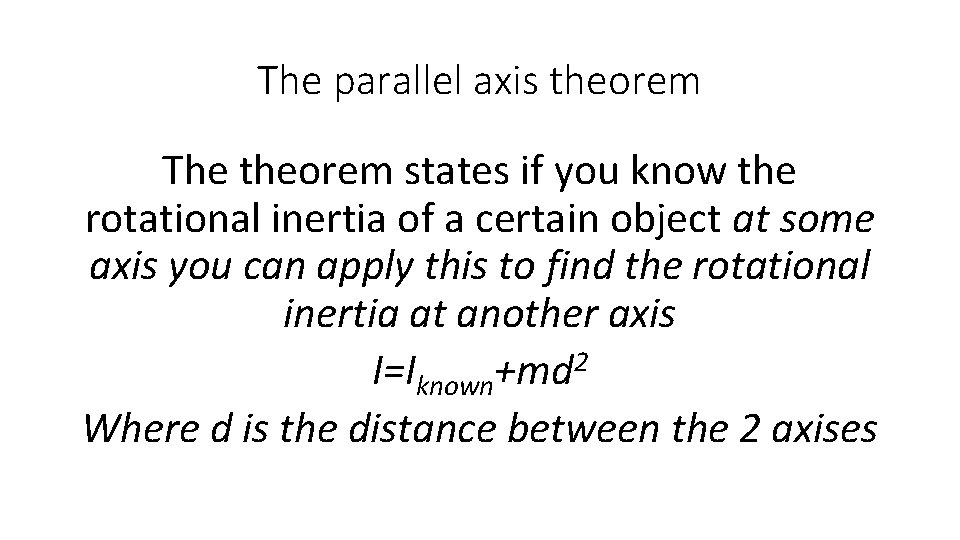
The parallel axis theorem The theorem states if you know the rotational inertia of a certain object at some axis you can apply this to find the rotational inertia at another axis 2 I=Iknown+md Where d is the distance between the 2 axises
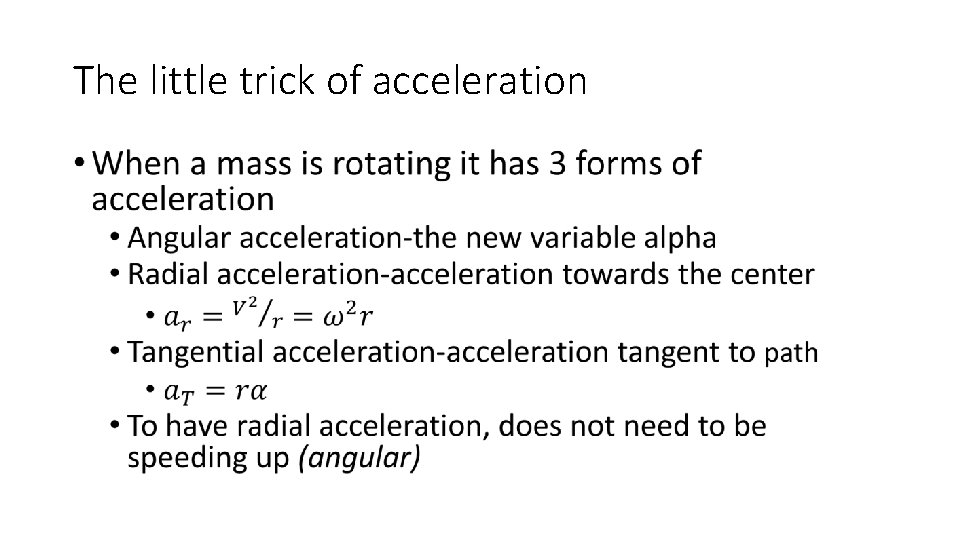
The little trick of acceleration •
Solving torques is like the process for Net force, just some new variables • Draw a picture of the situation • Label all, forces, radii, accelerations (angular and linear) • Decide on a positive direction for rotation (in the direction of acceleration) • Set up your net torque statement and use connecting equations if needed
Work and Energy Application of Rotation and relating linear
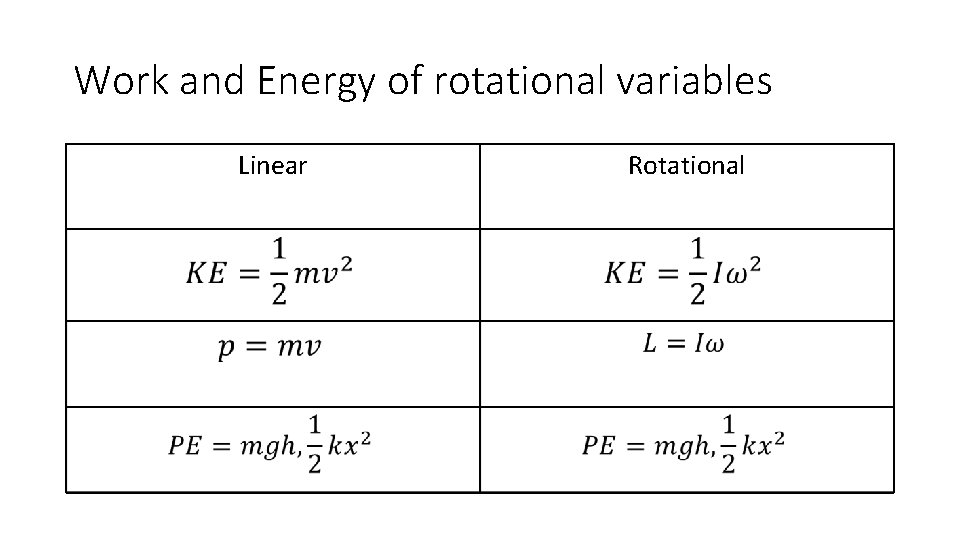
Work and Energy of rotational variables Linear Rotational
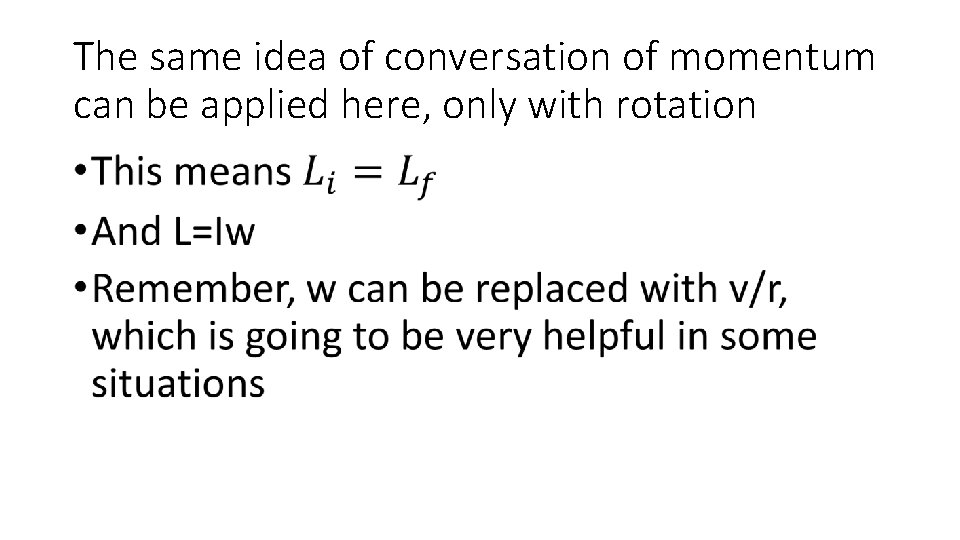
The same idea of conversation of momentum can be applied here, only with rotation •
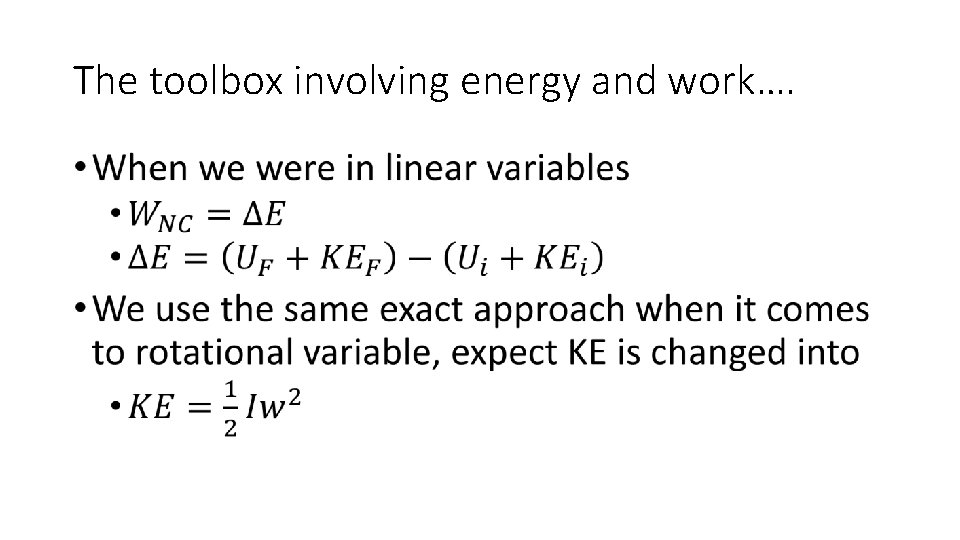
The toolbox involving energy and work…. •
Review of Unit 1
The importance of the reference frame st 1 • For Unit 1 problems, remember to set a reference frame for your positive y and x directions • Velocity is always going to be a vector, so direction is going to be important!
A handy dandy little chart