
Physics of Brownian Motors Swimming in Molasses and
Physics of Brownian Motors: Swimming in Molasses and Walking in a Hurricane R. Dean Astumian Department of Physics and Astronomy University of Maine

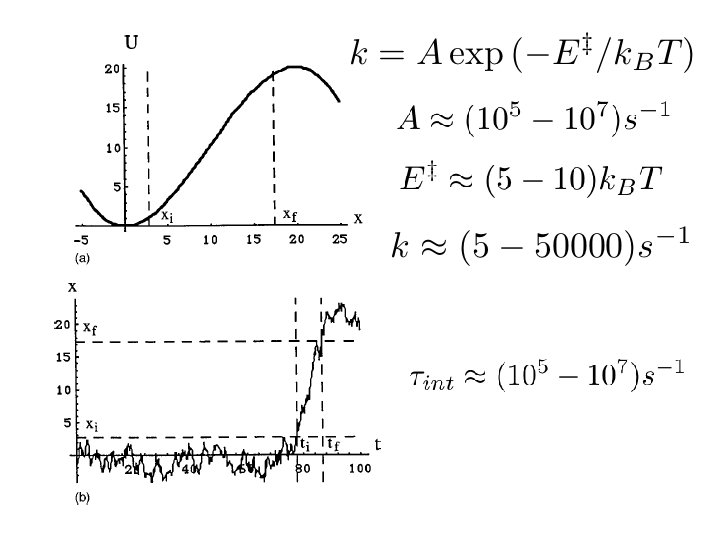
Principles of directed motion of molecular motors and pumps Molecular motors operate in an environment where viscosity dominates Inertia, and hence where velocity if proportional to force. Analogies With electric circuits and chemical networks are much more appropriate Than models based on cars, turbines, judo throws, and the like. Directed motion and pumping arises by a cycling through parameter space The role of chemical free energy is to assure that the order of breaking and making bonds when “substrate” binds is not the microscopic reverse of the order of breaking and making bonds when product is released Strong coupling and effective motion in the face of thermal noise Is attained by reduction of dimensionality. Time scales are determined by depth of energy wells and height of Barriers. Moving between wells occurs by thermal activation over Barriers.

where for


Bivalves, bacteria, and biomotors Scallop Theorem - swimming in molasses 10 -2 m/s Reynolds number Inertial force/viscous force Purcell, AJP 1977
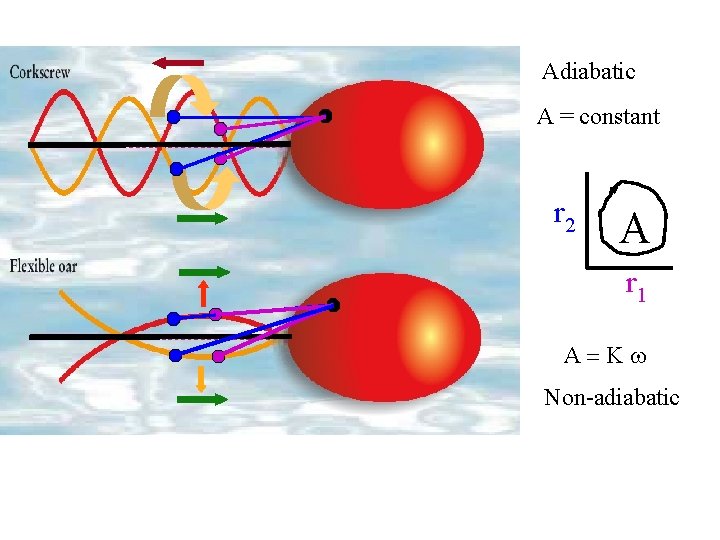
Adiabatic A = constant r 2 A r 1 A=Kw Non-adiabatic

Nano-patio furniture

q 1 q 2

Energetics - Stability vs. Lability First formed last broken; thermodynamic control First formed first broken; kinetic control
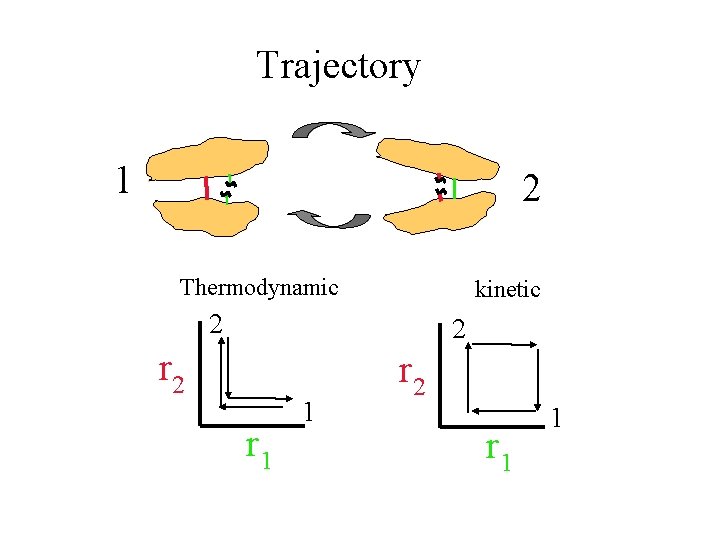
Trajectory 1 2 Thermodynamic kinetic 2 2 r 1 1 r 2 r 1 1

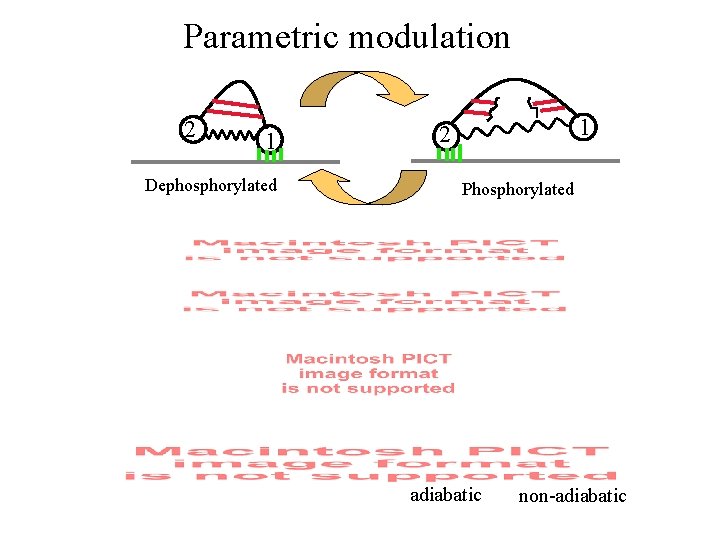
Parametric modulation 2 1 Dephosphorylated 1 2 Phosphorylated adiabatic non-adiabatic
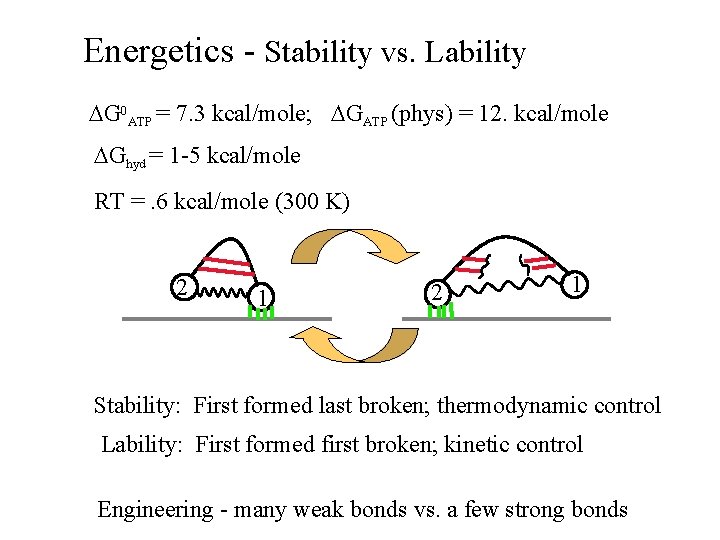
Energetics - Stability vs. Lability DG 0 ATP = 7. 3 kcal/mole; DGATP (phys) = 12. kcal/mole DGhyd = 1 -5 kcal/mole RT =. 6 kcal/mole (300 K) 2 1 Stability: First formed last broken; thermodynamic control Lability: First formed first broken; kinetic control Engineering - many weak bonds vs. a few strong bonds
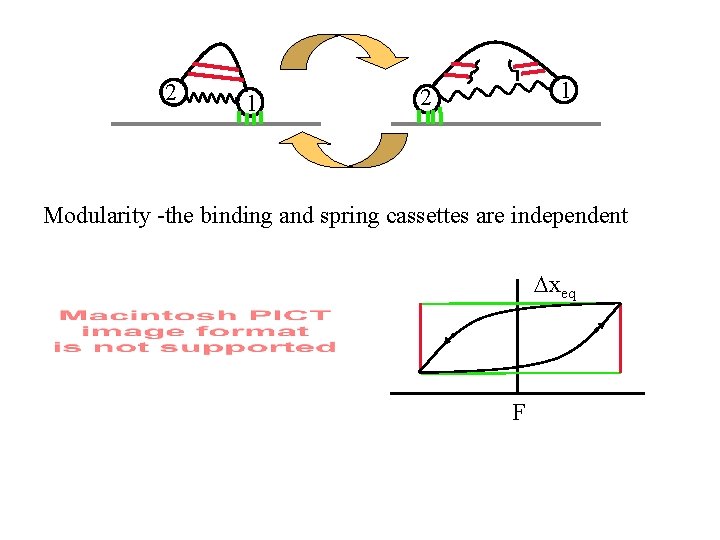
2 1 1 2 Modularity -the binding and spring cassettes are independent Dxeq F
Reduce dimensionality and then use thermal noise to assist motion In one direction but not another by a brownian ratchet. What is a Brownian ratchet? Ultimately energy comes from chemical reaction, but the momentum Is borrowed from thermal bath


Three Key Features of Brownian Motor Mechanisms: • spatial or temporal asymmetry • external energy source • thermal noise

Brownian Motor




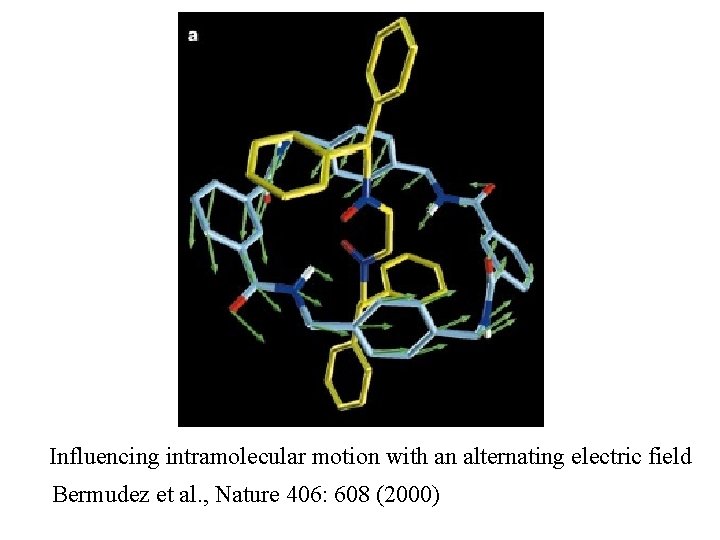
Influencing intramolecular motion with an alternating electric field Bermudez et al. , Nature 406: 608 (2000)

Unidirectional rotation in a mechanically interlocked molecular rotor Leigh et al. , Nature 424: 174 (2003)

Unidirectional rotation in a mechanically interlocked molecular rotor Leigh et al. , Nature 424: 174 (2003)
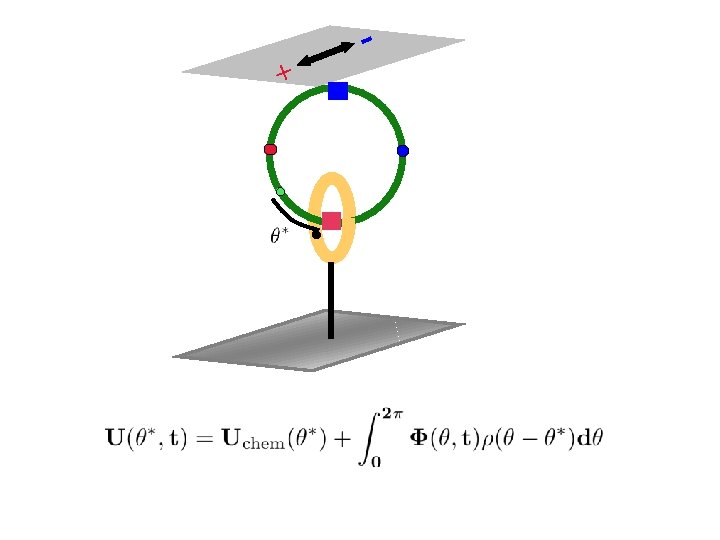

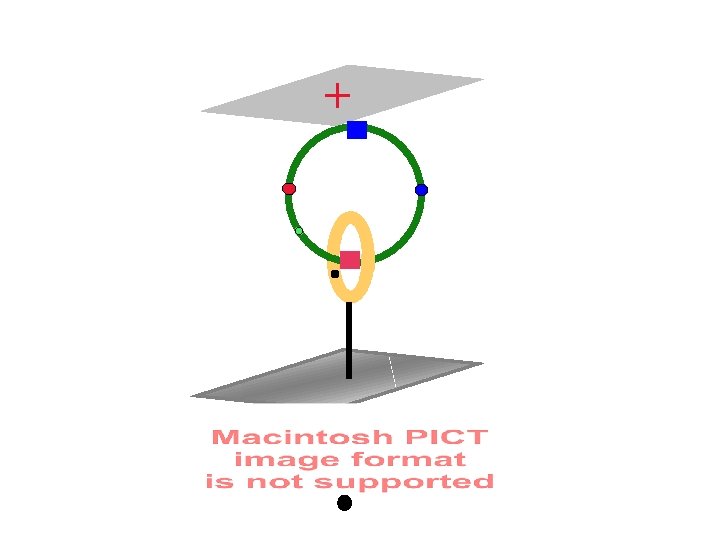
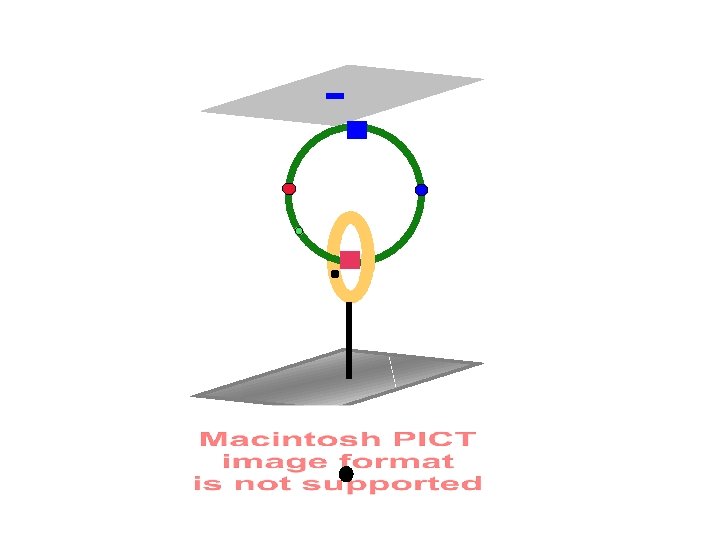
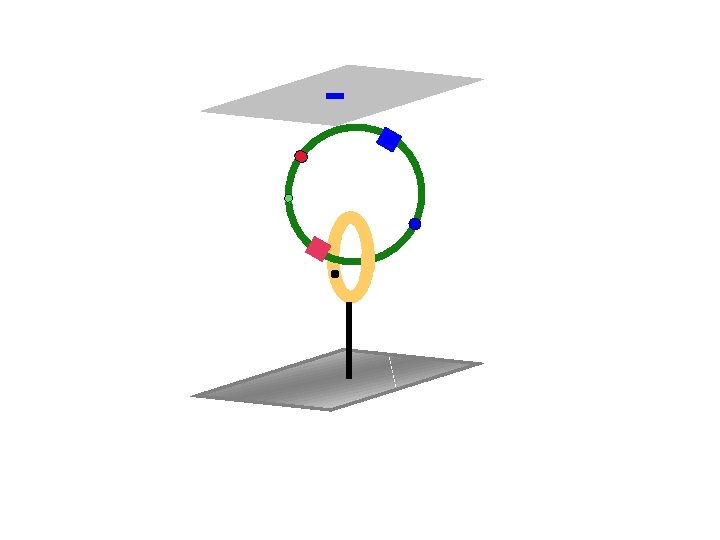
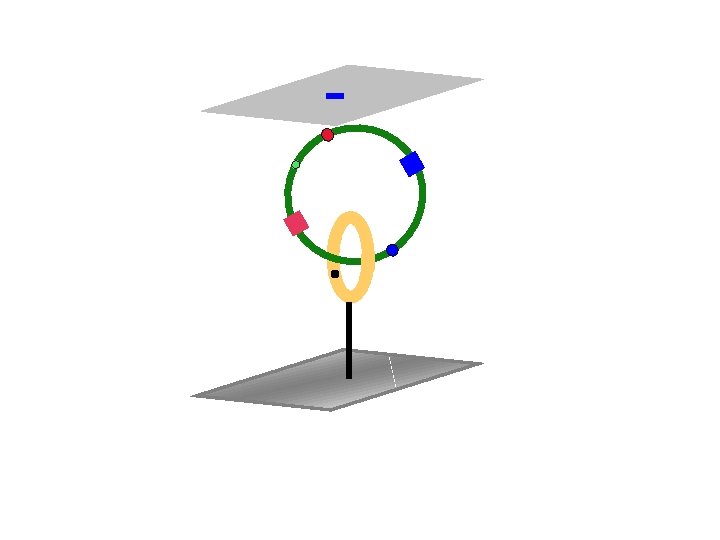
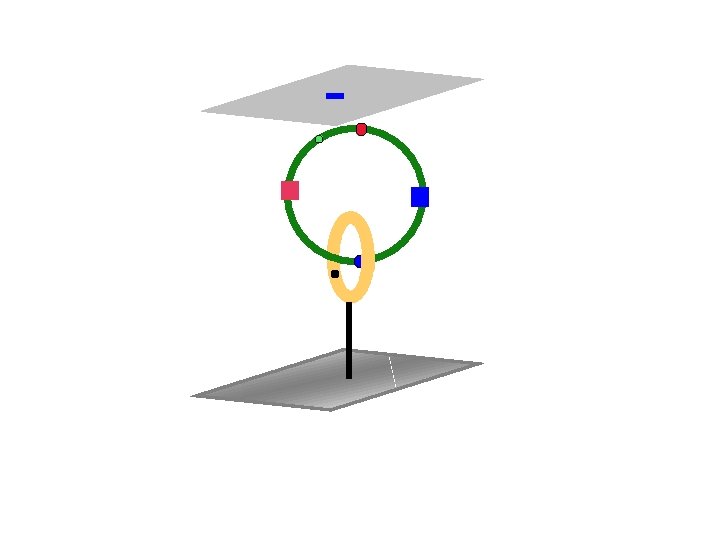
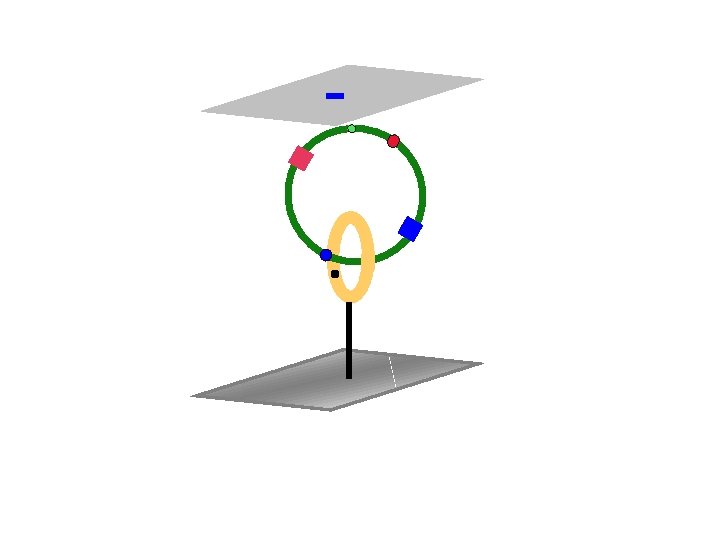
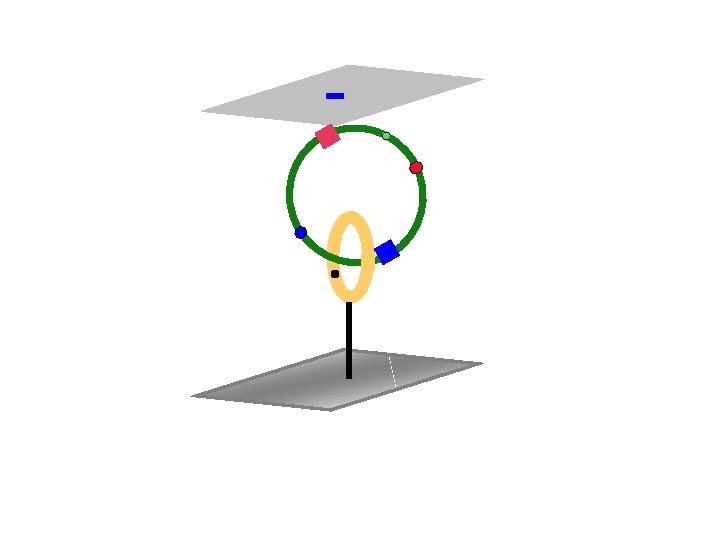
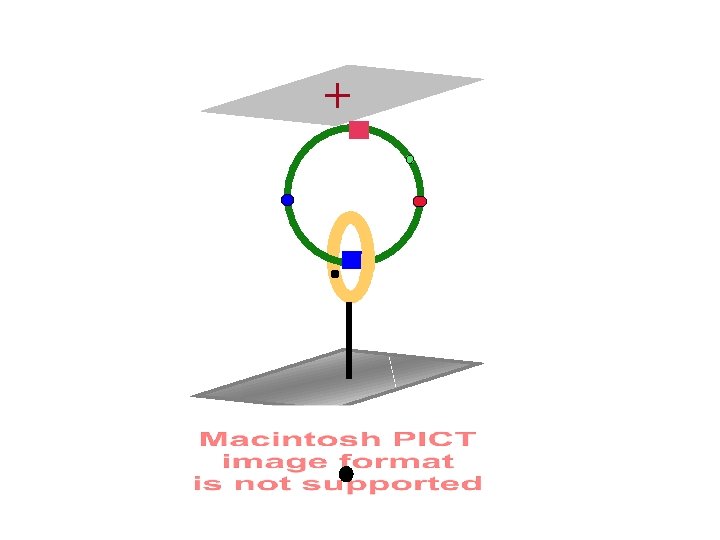
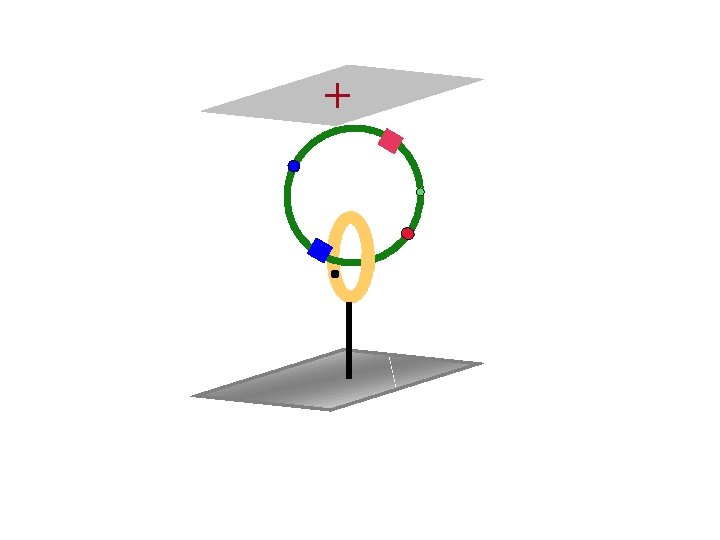
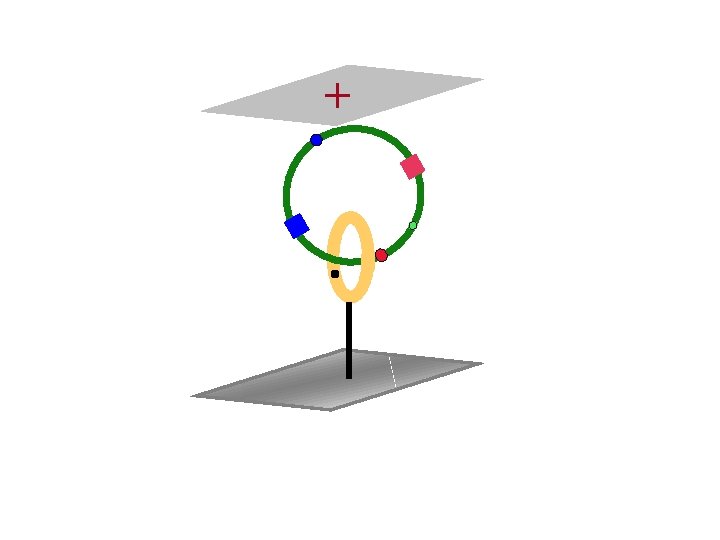
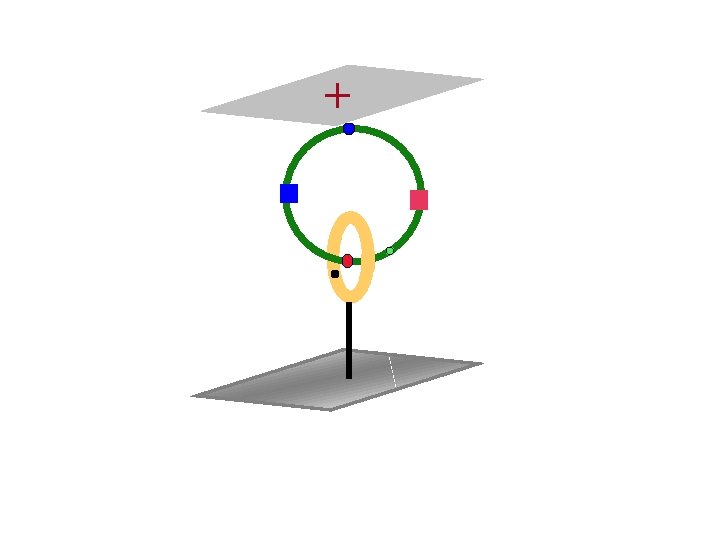
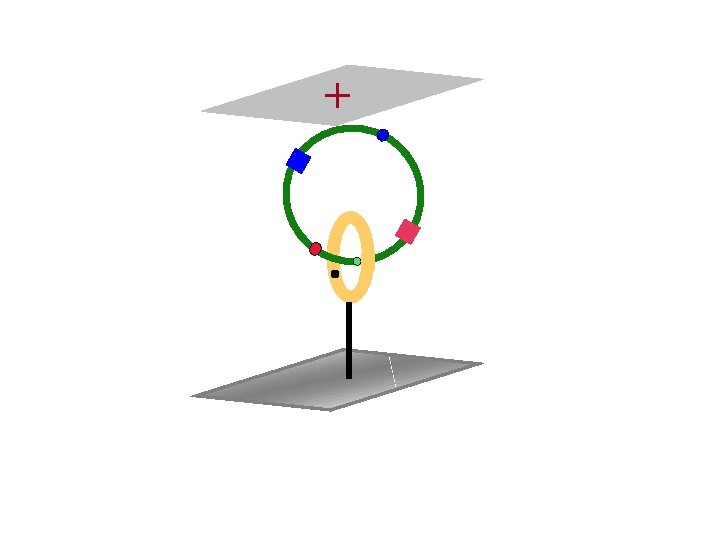
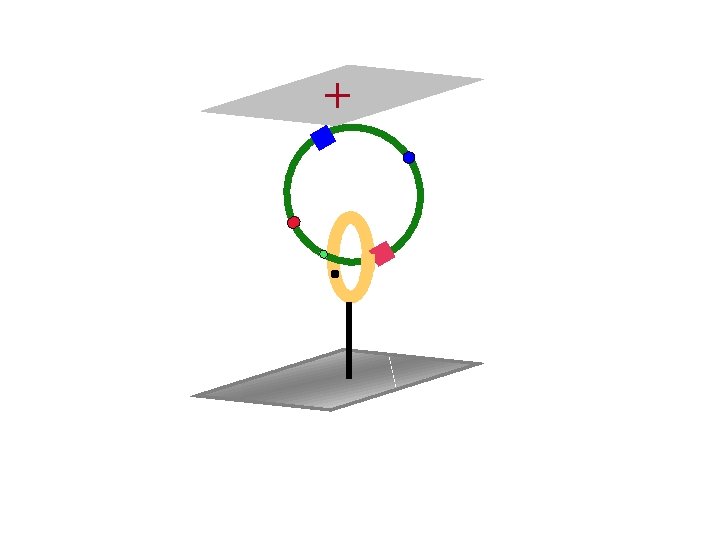
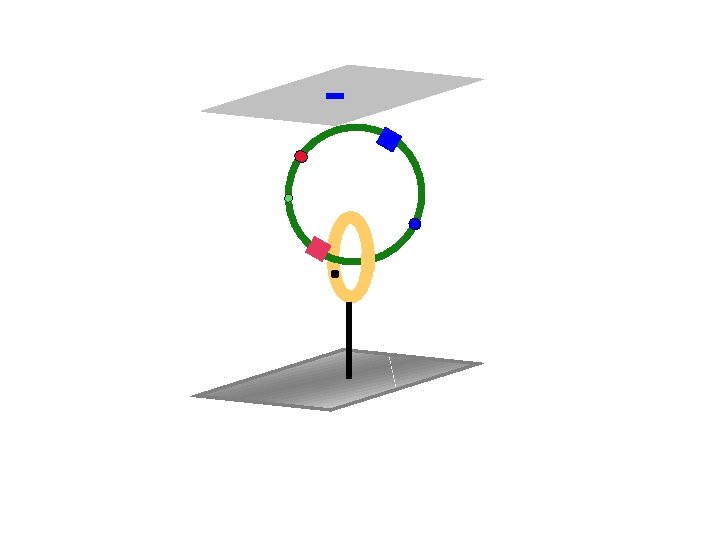
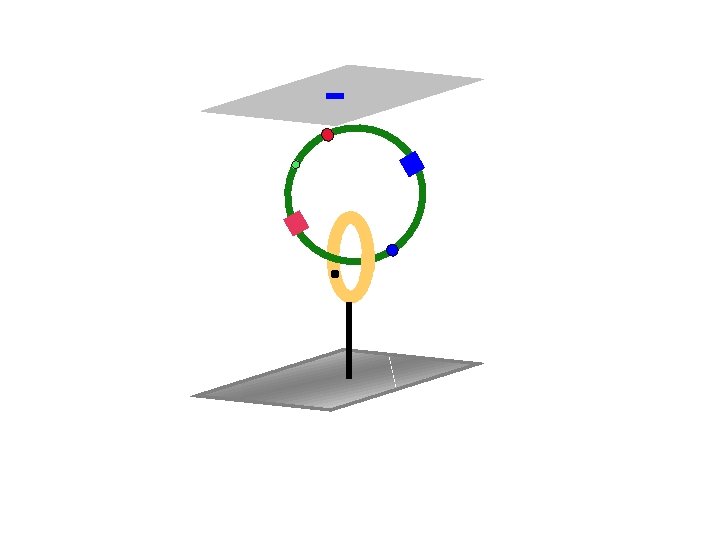
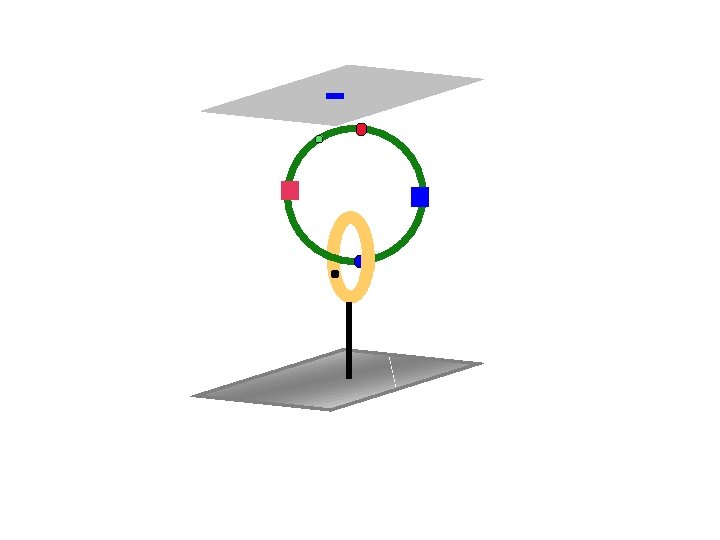
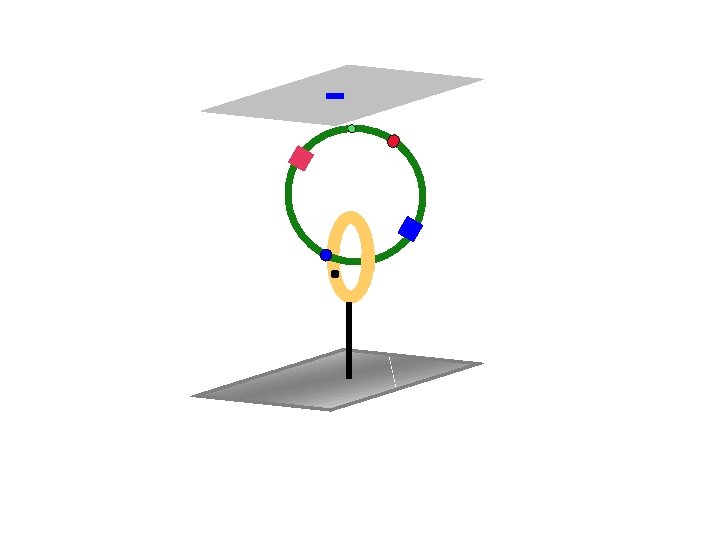
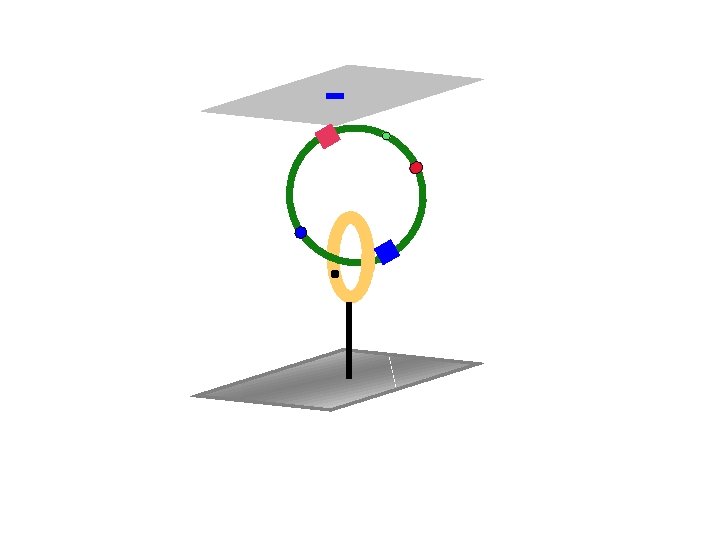
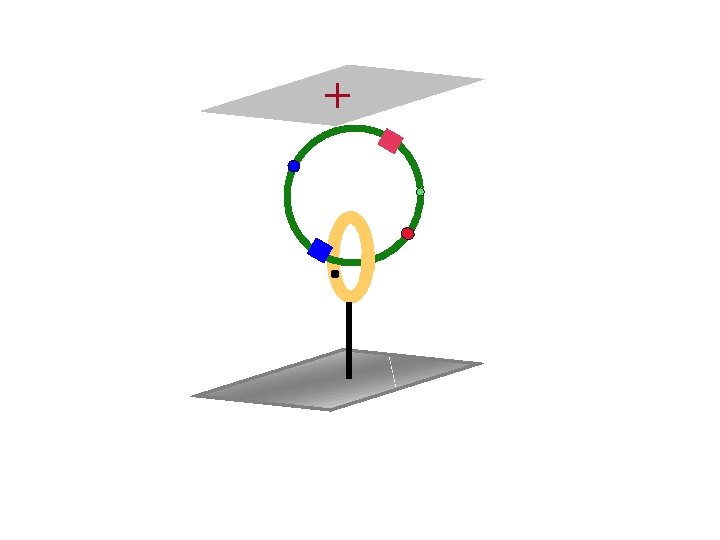
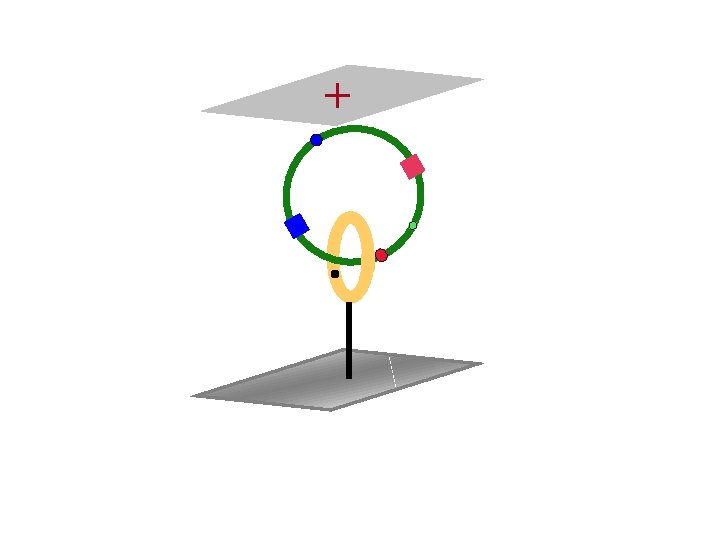
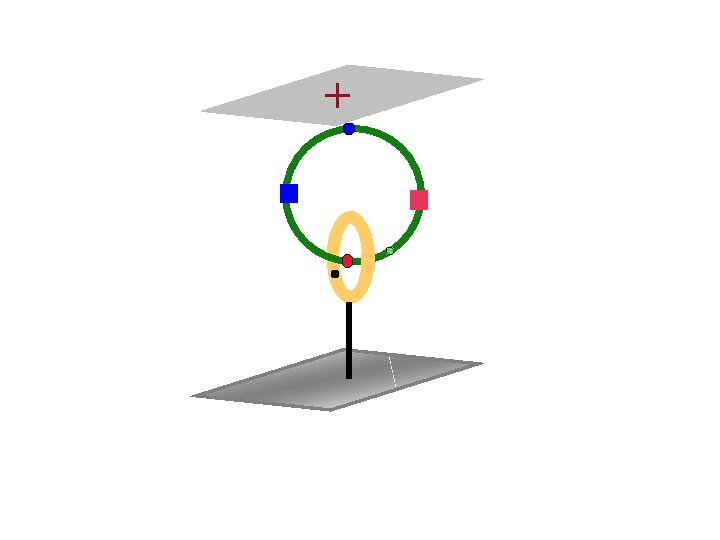
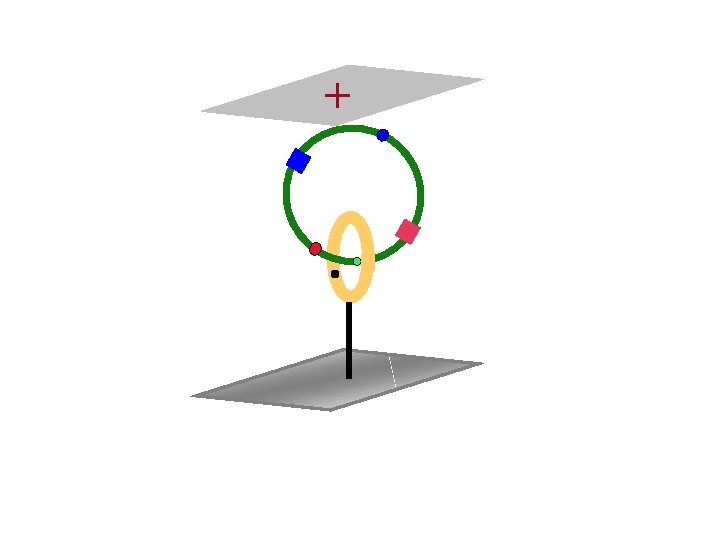
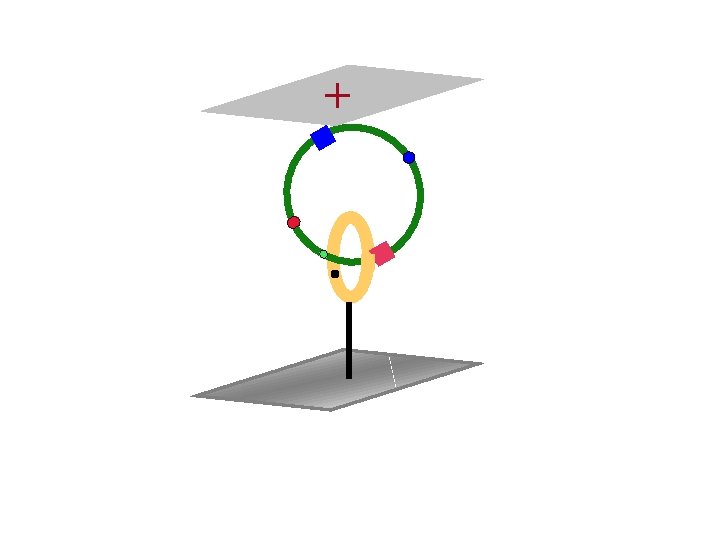
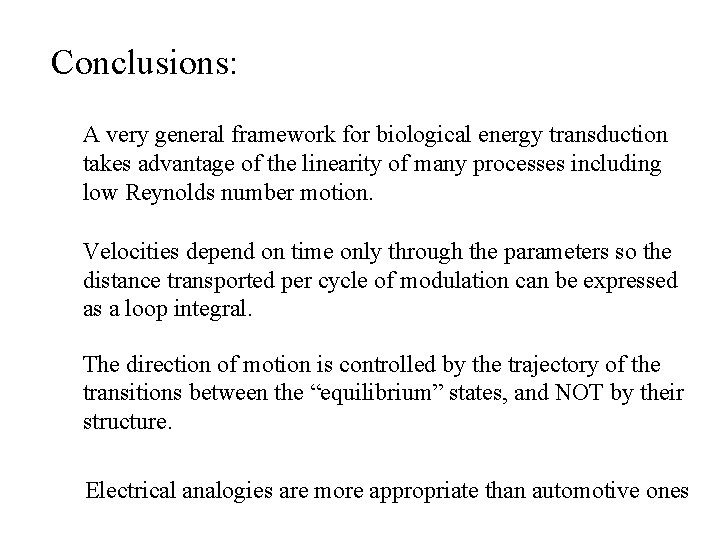
Conclusions: A very general framework for biological energy transduction takes advantage of the linearity of many processes including low Reynolds number motion. Velocities depend on time only through the parameters so the distance transported per cycle of modulation can be expressed as a loop integral. The direction of motion is controlled by the trajectory of the transitions between the “equilibrium” states, and NOT by their structure. Electrical analogies are more appropriate than automotive ones

Acknowledgements • Marcin Kostur, • • University of Silesia and University of Maine Martin Bier, Univ. of Chicago, East Carolina University Imre Derenyi, Curie Institute, Paris Baldwin Robertson, NIST Tian Tsong, University of Minnesota • NIH, NSF MRSEC, MMF
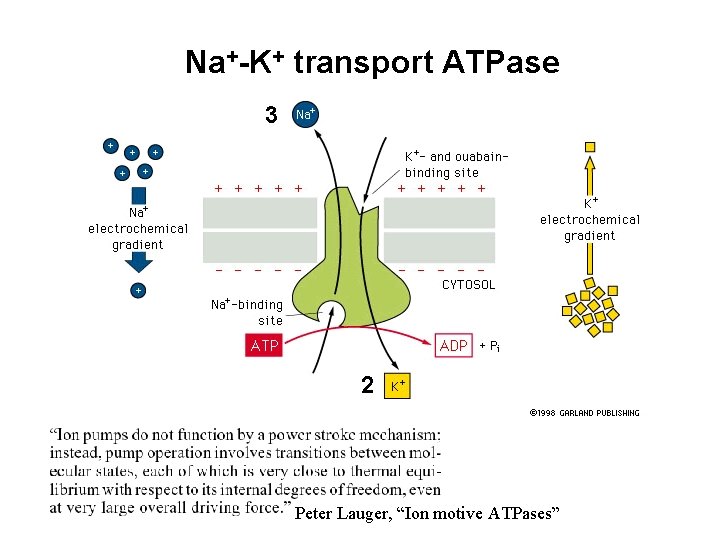
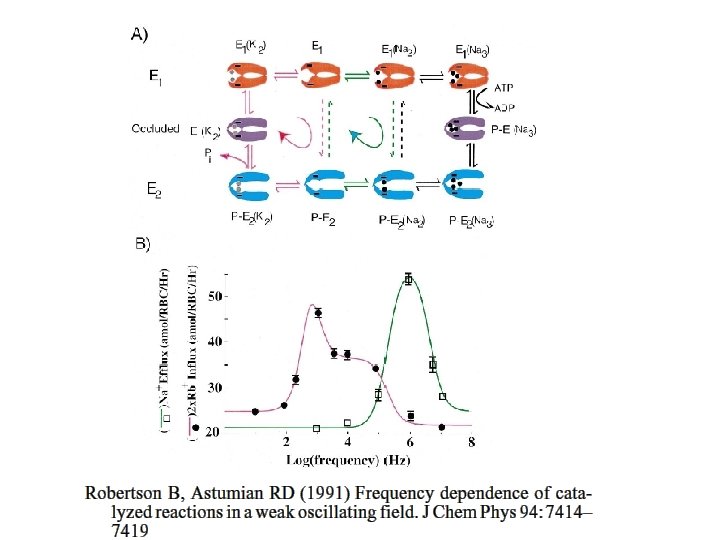
Na+-K+ transport ATPase 3 2 Peter Lauger, “Ion motive ATPases”

Serpersu and Tsong, (1984) JBC 259, 7155; Liu, Astumian, and Tsong, (1990) JBC 265, 7260
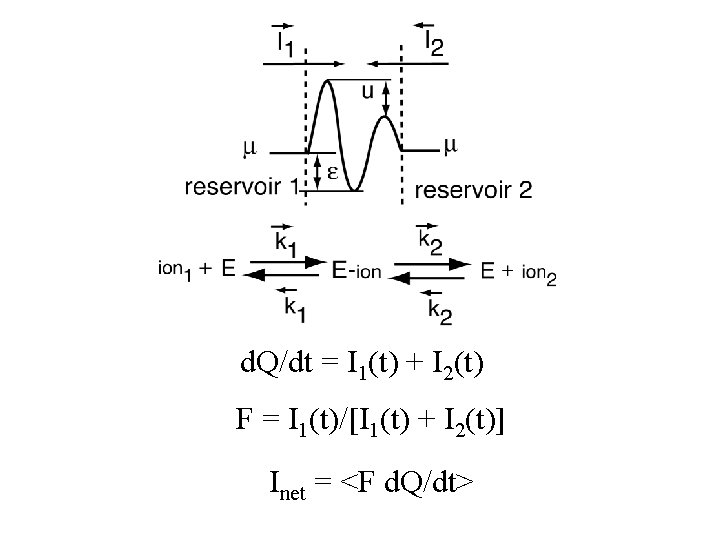
d. Q/dt = I 1(t) + I 2(t) F = I 1(t)/[I 1(t) + I 2(t)] Inet = <F d. Q/dt>
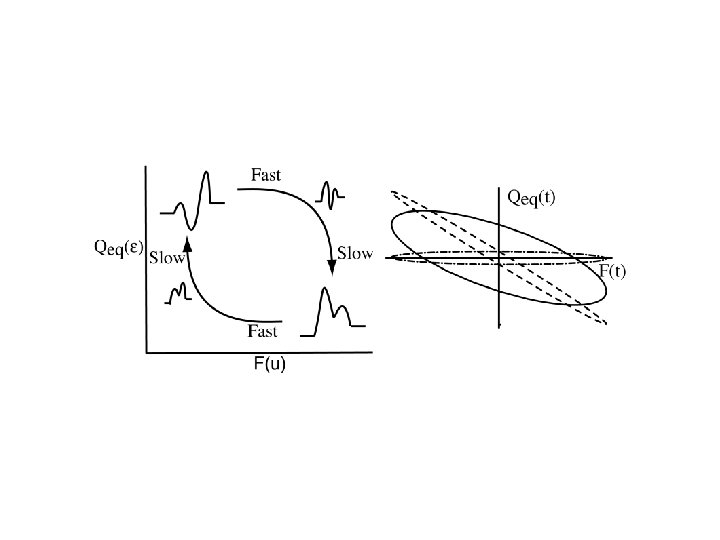


Causality vs. Linkage

~ ~ 2 cos(f) w sin(f) + w Inet = kesc u e --------~2 1 +w
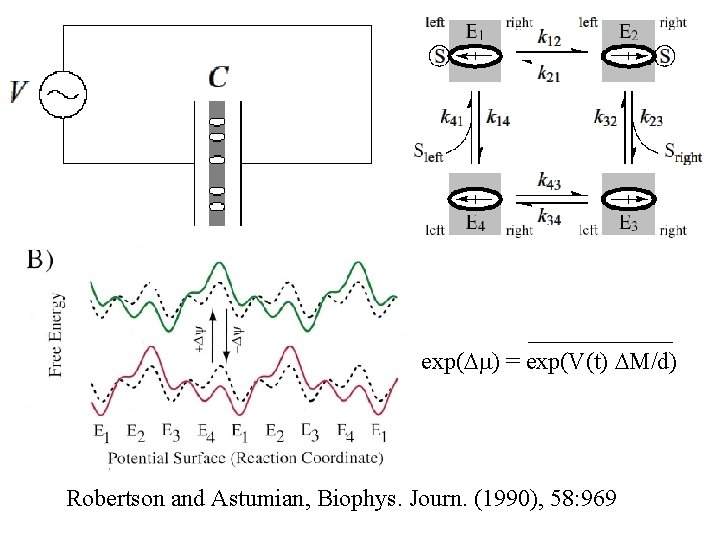
exp(Dm) = exp(V(t) DM/d) Robertson and Astumian, Biophys. Journ. (1990), 58: 969
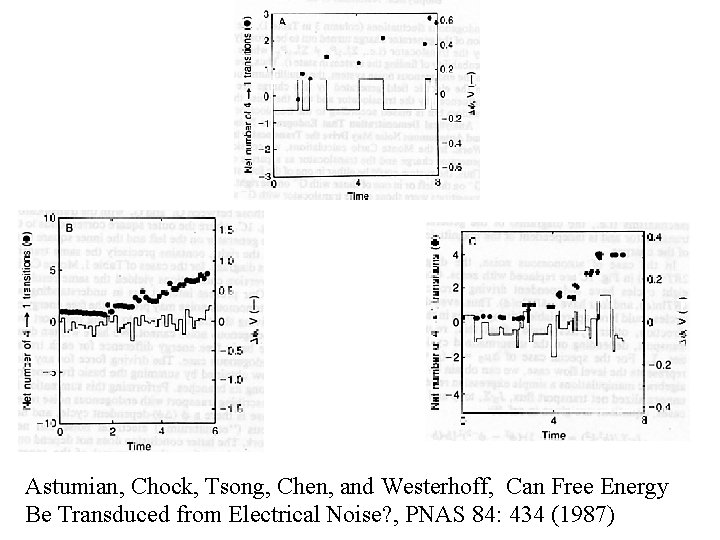
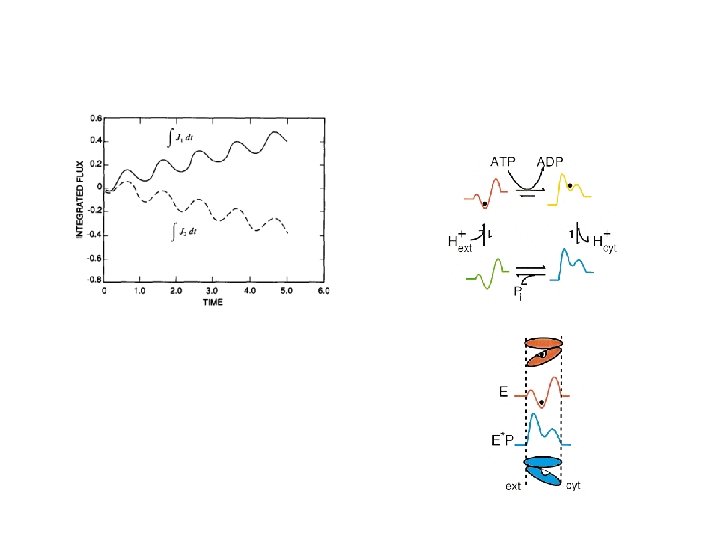
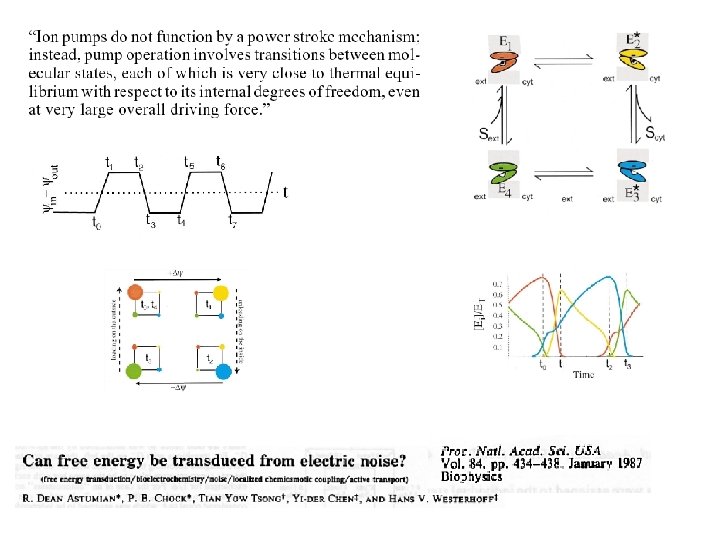
Astumian, Chock, Tsong, Chen, and Westerhoff, Can Free Energy Be Transduced from Electrical Noise? , PNAS 84: 434 (1987)
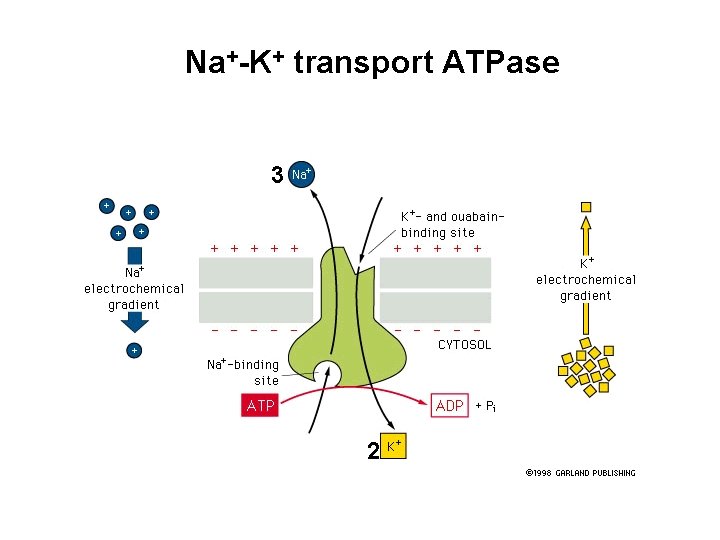
Na+-K+ transport ATPase 3 2
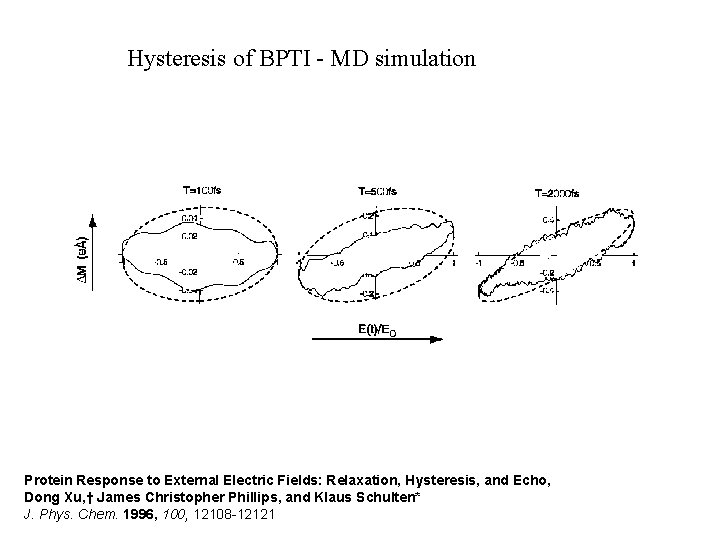
Hysteresis of BPTI - MD simulation Protein Response to External Electric Fields: Relaxation, Hysteresis, and Echo, Dong Xu, † James Christopher Phillips, and Klaus Schulten* J. Phys. Chem. 1996, 100, 12108 -12121
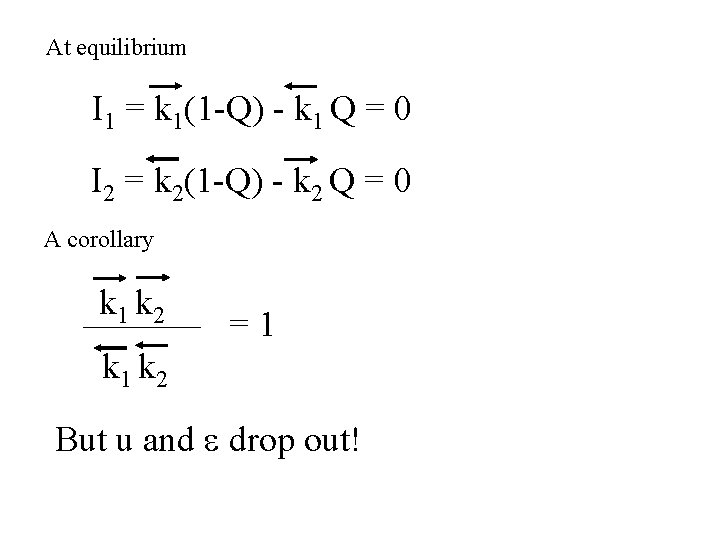
At equilibrium I 1 = k 1(1 -Q) - k 1 Q = 0 I 2 = k 2(1 -Q) - k 2 Q = 0 A corollary k 1 k 2 =1 k 2 But u and e drop out!
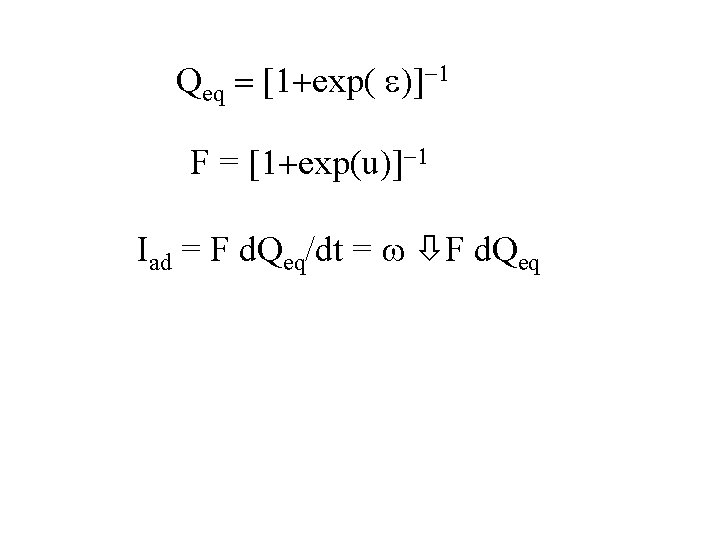
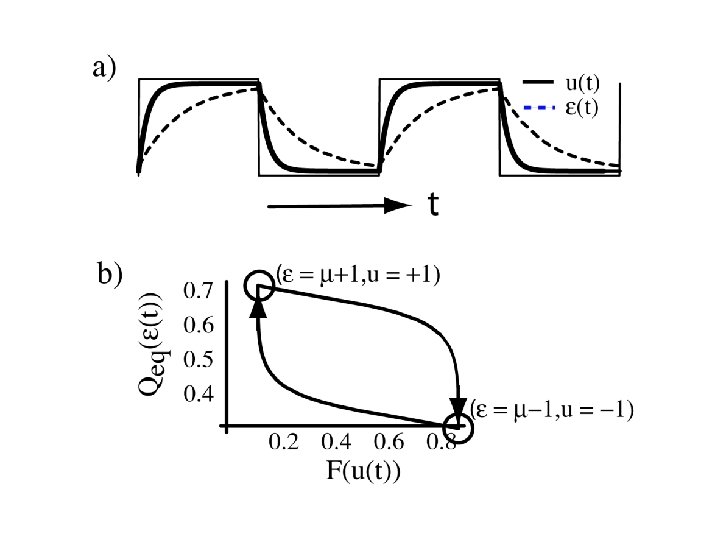
Qeq = [1+exp( e)]-1 F = [1+exp(u)]-1 Iad = F d. Qeq/dt = w F d. Qeq
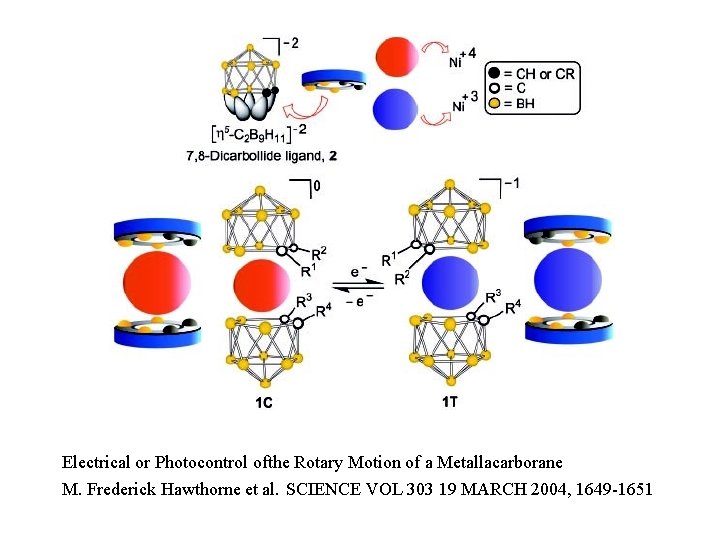
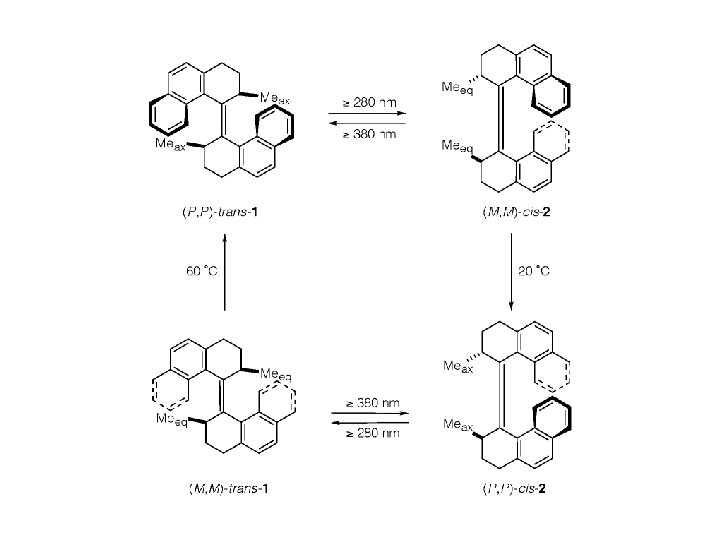
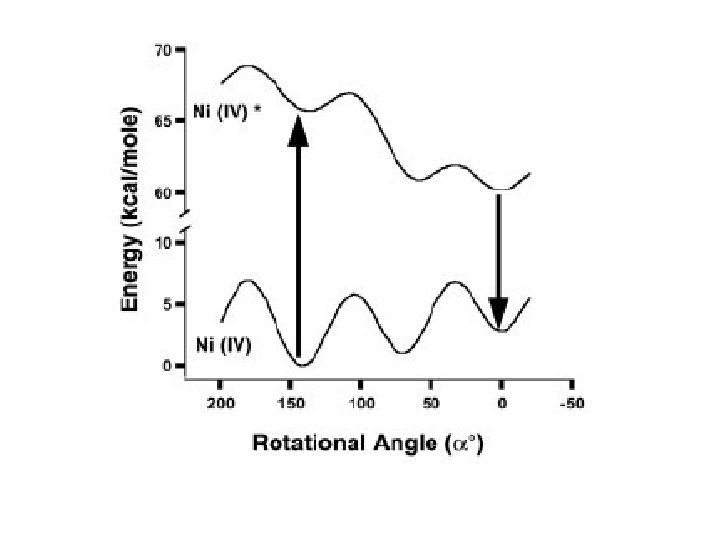
Electrical or Photocontrol ofthe Rotary Motion of a Metallacarborane M. Frederick Hawthorne et al. SCIENCE VOL 303 19 MARCH 2004, 1649 -1651


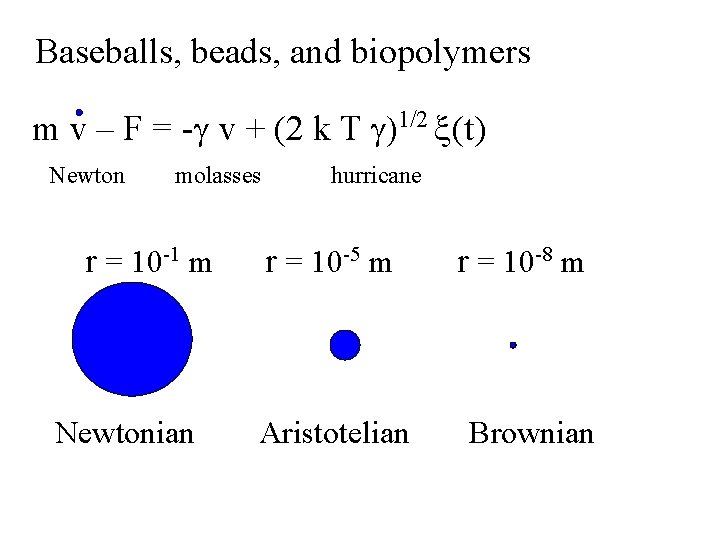
Baseballs, beads, and biopolymers m v – F = -g v + (2 k T g) Newton molasses r = 10 -1 m Newtonian 1/2 x(t) hurricane r = 10 -5 m Aristotelian r = 10 -8 m Brownian
- Slides: 87