
PHYSICS II 1 STATIC ELECTRICITY 2 THE LAW

- Slides: 16
PHYSICS II 1. STATIC ELECTRICITY 2. THE LAW OF ELECTRIC CHARGE
IF YOU WERE CAUGHT IN A LIGHTENING STORM, WHICH OF THE FOLLOWING UNIFORMS WOULD KEEP YOU SAFE? 1. A wetsuit 2. A superman costume 3. A medieval coat of armour 4. A birthday suit
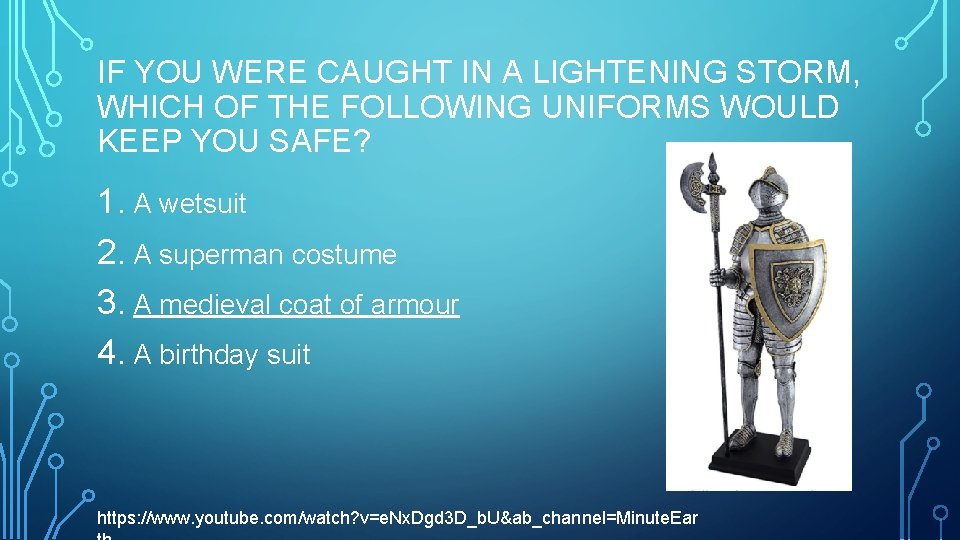
IF YOU WERE CAUGHT IN A LIGHTENING STORM, WHICH OF THE FOLLOWING UNIFORMS WOULD KEEP YOU SAFE? 1. A wetsuit 2. A superman costume 3. A medieval coat of armour 4. A birthday suit https: //www. youtube. com/watch? v=e. Nx. Dgd 3 D_b. U&ab_channel=Minute. Ear
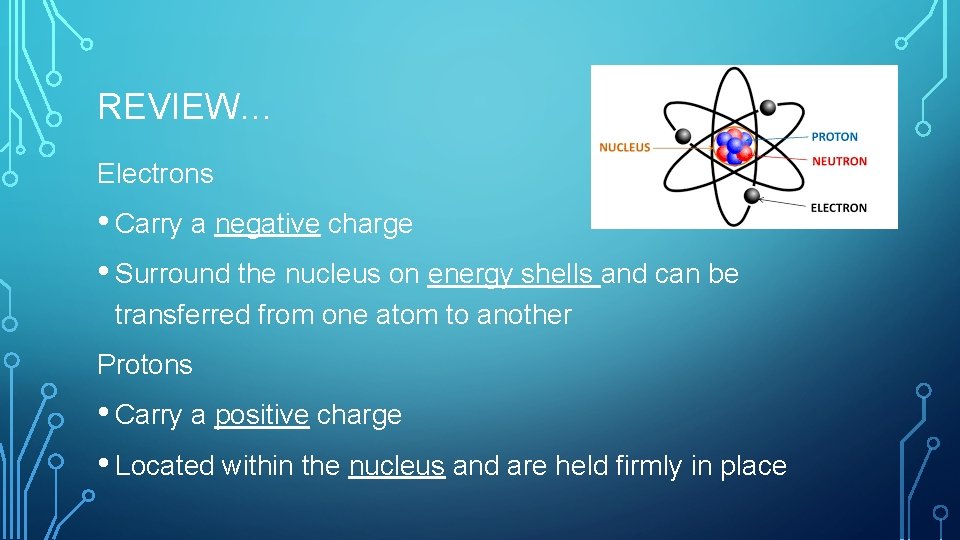
REVIEW… Electrons • Carry a negative charge • Surround the nucleus on energy shells and can be transferred from one atom to another Protons • Carry a positive charge • Located within the nucleus and are held firmly in place
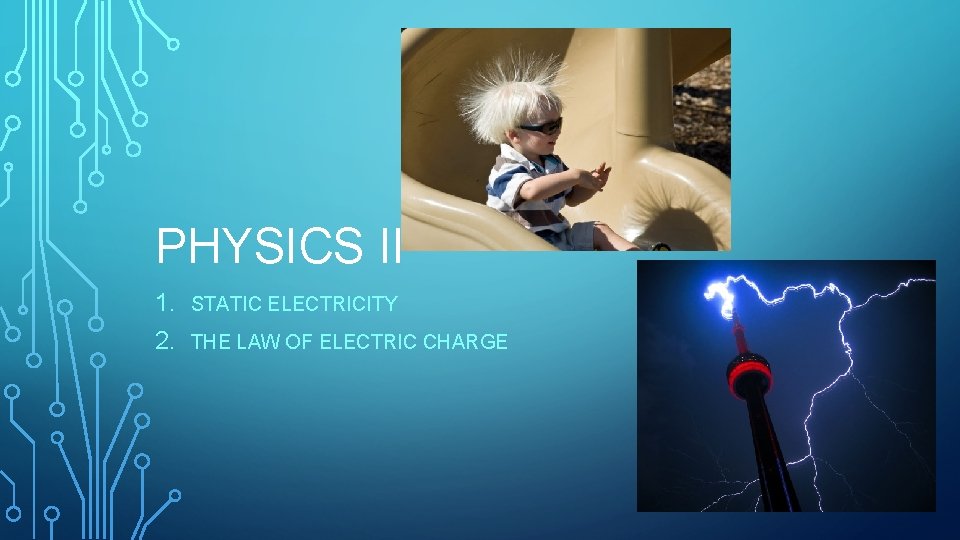
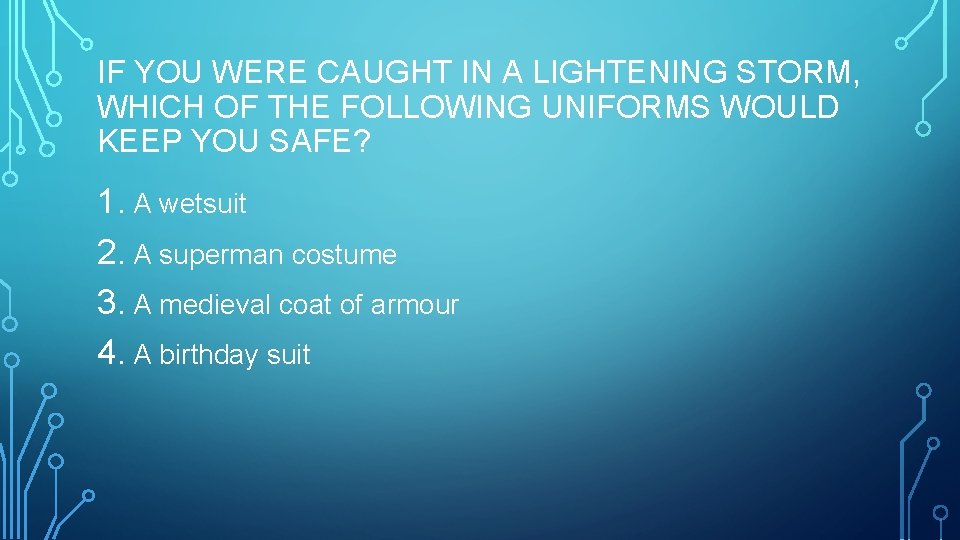
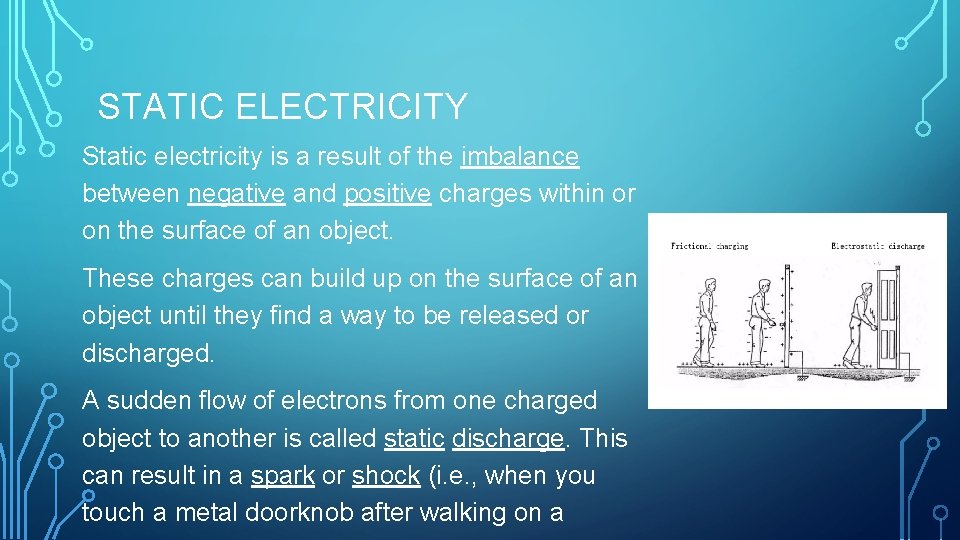
STATIC ELECTRICITY Static electricity is a result of the imbalance between negative and positive charges within or on the surface of an object. These charges can build up on the surface of an object until they find a way to be released or discharged. A sudden flow of electrons from one charged object to another is called static discharge. This can result in a spark or shock (i. e. , when you touch a metal doorknob after walking on a
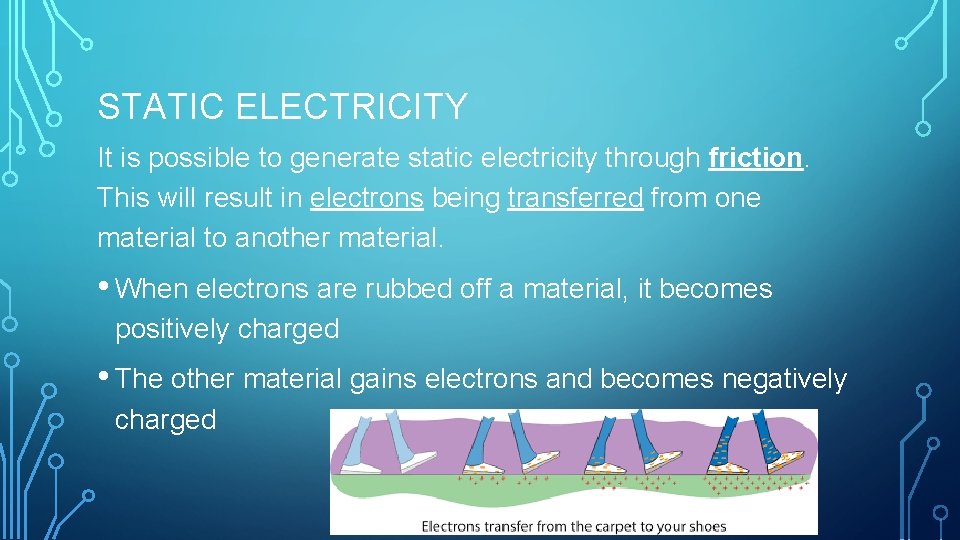
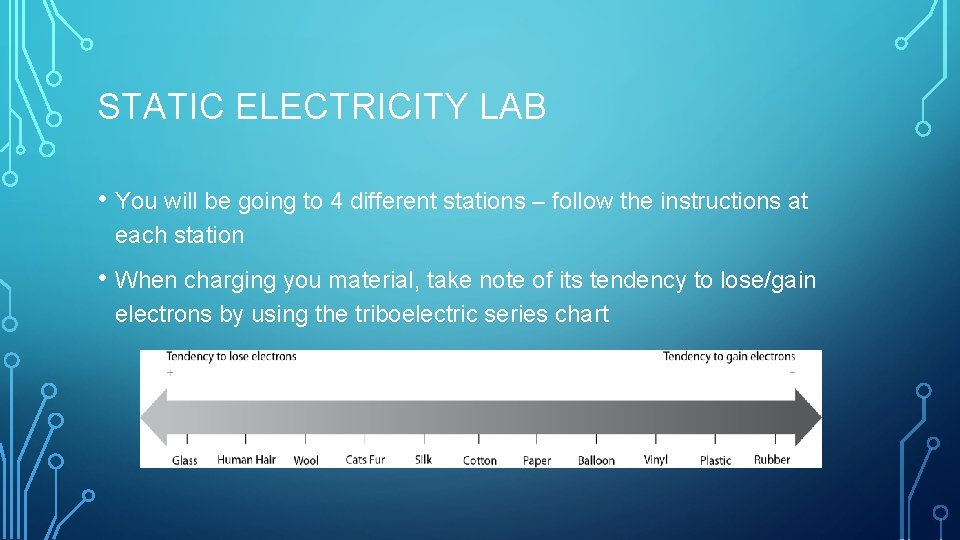
STATIC ELECTRICITY It is possible to generate static electricity through friction. This will result in electrons being transferred from one material to another material. • When electrons are rubbed off a material, it becomes positively charged • The other material gains electrons and becomes negatively charged
VIDEO: https: //www. youtube. com/watch? v=yc 2 -363 MIQs&ab_channel=TED-Ed
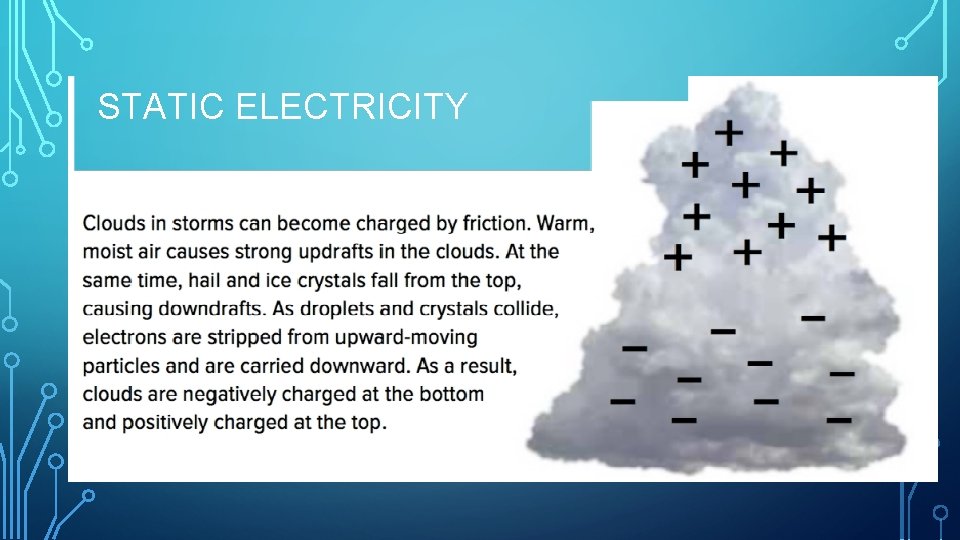
STATIC ELECTRICITY
PRACTICE QUESTIONS 1. Explain the relationship among negative charges, positive charges, electrons, and protons. - Everything is made up of atoms. Within the atom are protons and electrons - Protons carry a positive charge - Electrons carry a negative charge 2. What action causes electrons to be moved from one material to another? - Friction!
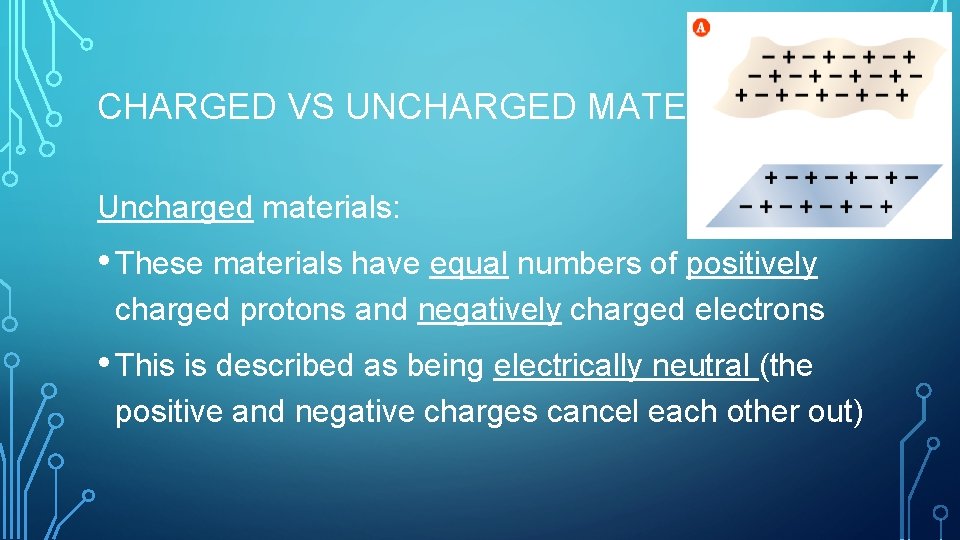
CHARGED VS UNCHARGED MATERIALS Uncharged materials: • These materials have equal numbers of positively charged protons and negatively charged electrons • This is described as being electrically neutral (the positive and negative charges cancel each other out)
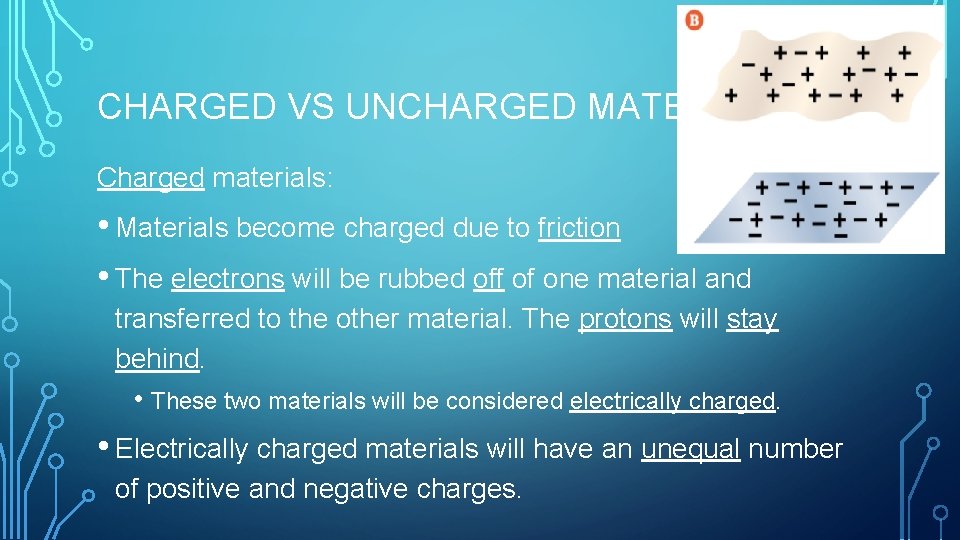
CHARGED VS UNCHARGED MATERIALS Charged materials: • Materials become charged due to friction • The electrons will be rubbed off of one material and transferred to the other material. The protons will stay behind. • These two materials will be considered electrically charged. • Electrically charged materials will have an unequal number of positive and negative charges.
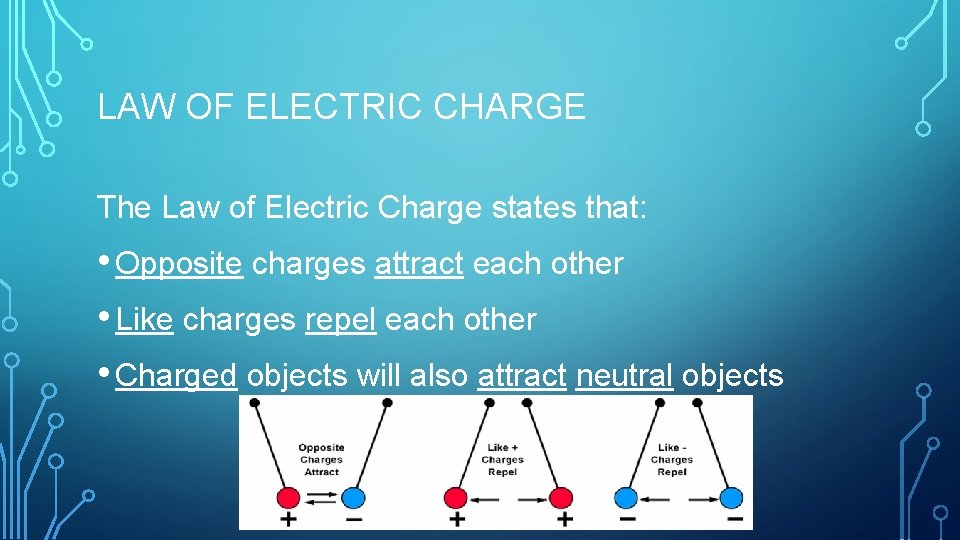
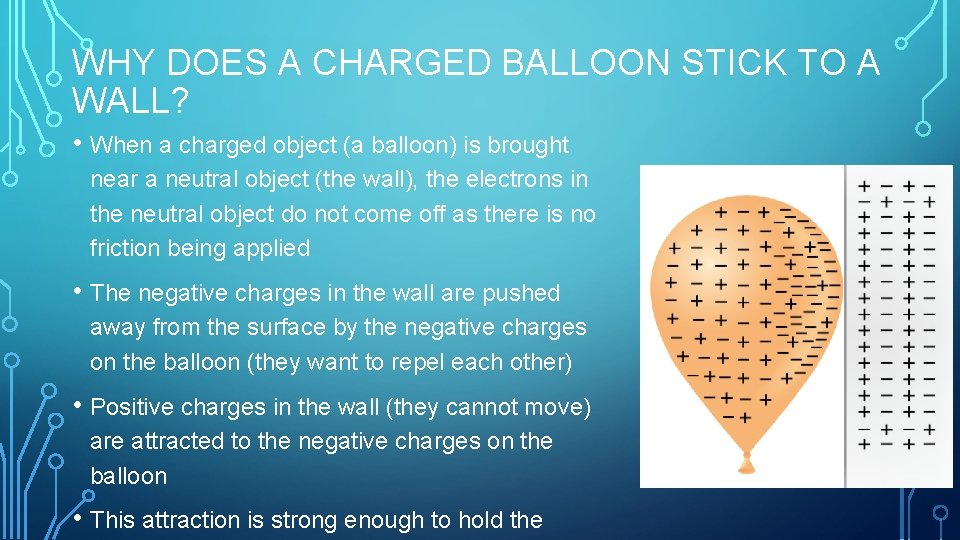
LAW OF ELECTRIC CHARGE The Law of Electric Charge states that: • Opposite charges attract each other • Like charges repel each other • Charged objects will also attract neutral objects
LAW OF ELECTRIC CHARGE Demo: https: //phet. colorado. edu/en/simulation/balloons-and-static-electricity
WHY DOES A CHARGED BALLOON STICK TO A WALL? • When a charged object (a balloon) is brought near a neutral object (the wall), the electrons in the neutral object do not come off as there is no friction being applied • The negative charges in the wall are pushed away from the surface by the negative charges on the balloon (they want to repel each other) • Positive charges in the wall (they cannot move) are attracted to the negative charges on the balloon • This attraction is strong enough to hold the
STATIC ELECTRICITY LAB • You will be going to 4 different stations – follow the instructions at each station • When charging you material, take note of its tendency to lose/gain electrons by using the triboelectric series chart
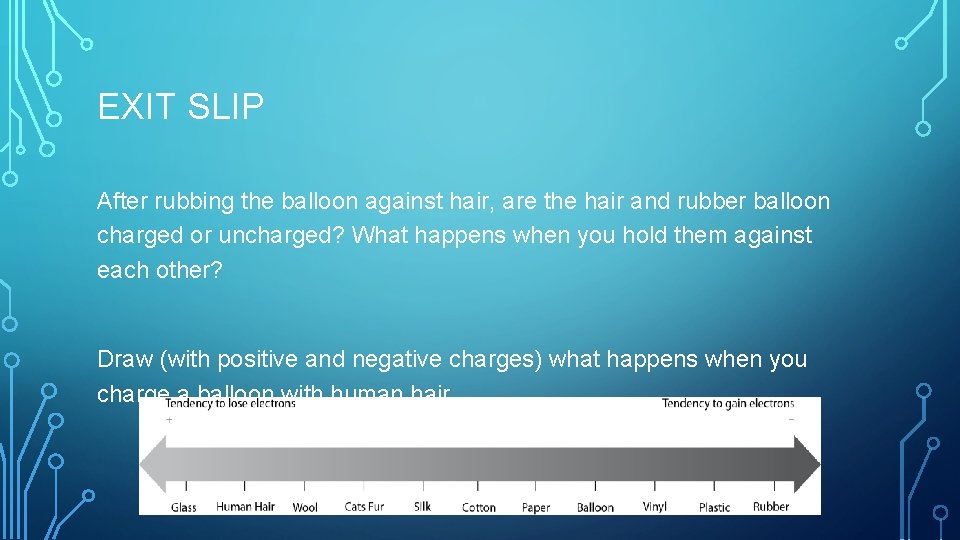
EXIT SLIP After rubbing the balloon against hair, are the hair and rubber balloon charged or uncharged? What happens when you hold them against each other? Draw (with positive and negative charges) what happens when you charge a balloon with human hair