
Physics Eleventh Edition Cutnell Johnson Chapter 18 Electric
- Slides: 53
Physics Eleventh Edition Cutnell & Johnson Chapter 18 Electric Forces and Electric Fields
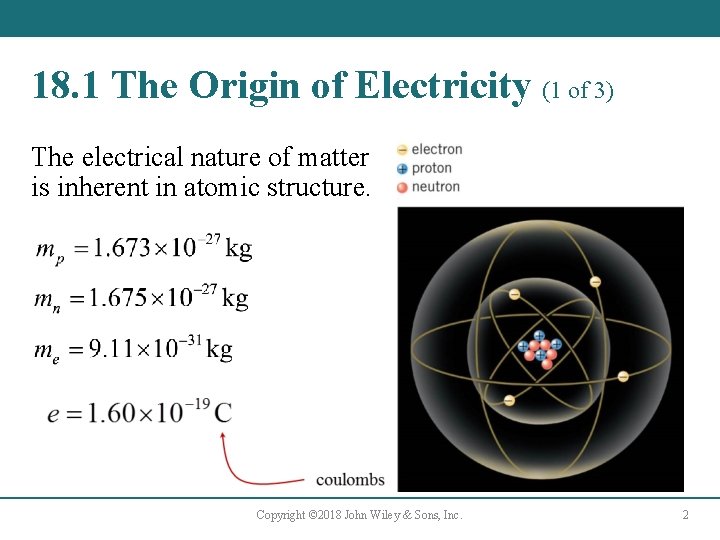
18. 1 The Origin of Electricity (1 of 3) The electrical nature of matter is inherent in atomic structure. Copyright © 2018 John Wiley & Sons, Inc. 2
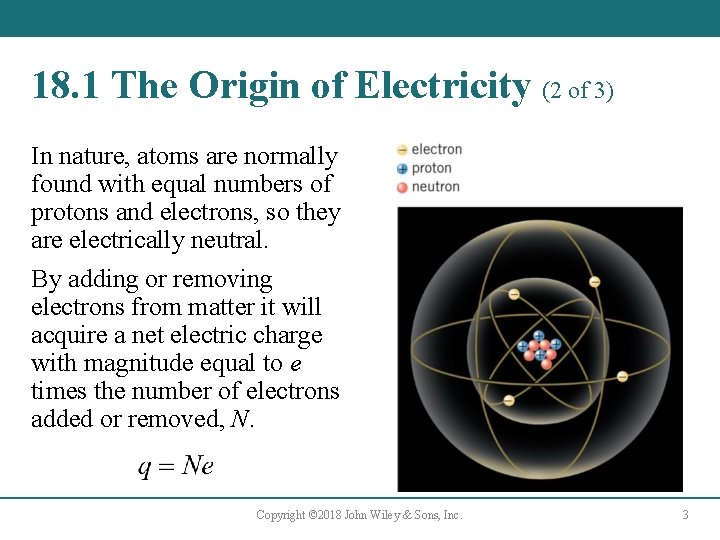
18. 1 The Origin of Electricity (2 of 3) In nature, atoms are normally found with equal numbers of protons and electrons, so they are electrically neutral. By adding or removing electrons from matter it will acquire a net electric charge with magnitude equal to e times the number of electrons added or removed, N. Copyright © 2018 John Wiley & Sons, Inc. 3
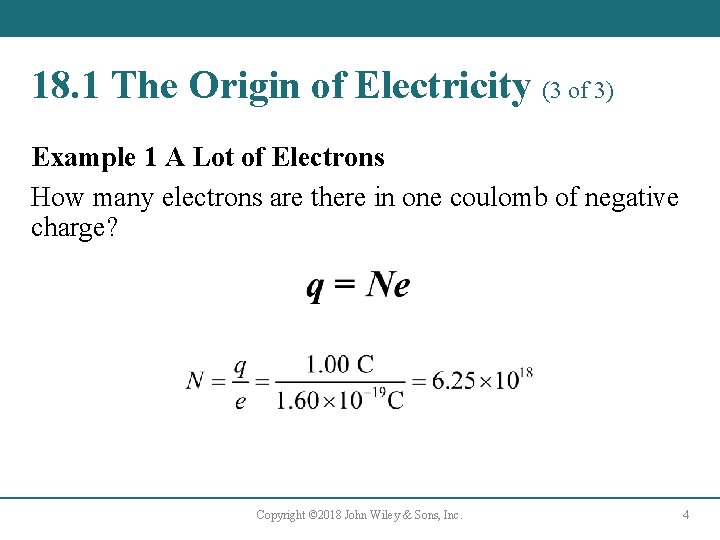
18. 1 The Origin of Electricity (3 of 3) Example 1 A Lot of Electrons How many electrons are there in one coulomb of negative charge? Copyright © 2018 John Wiley & Sons, Inc. 4
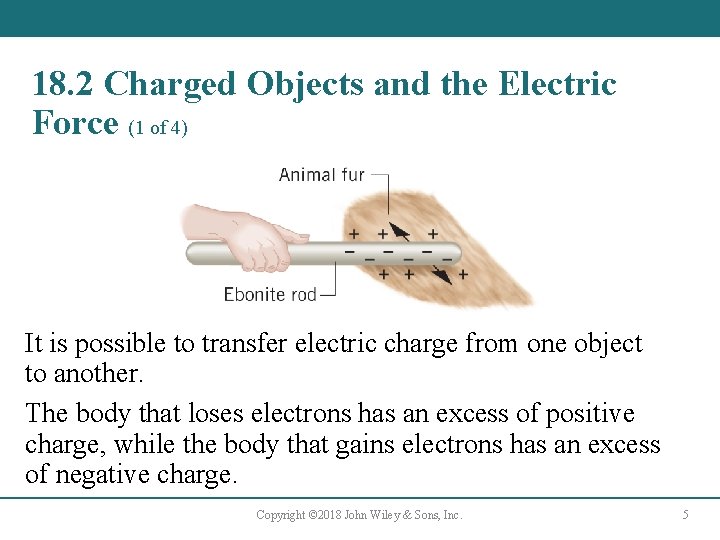
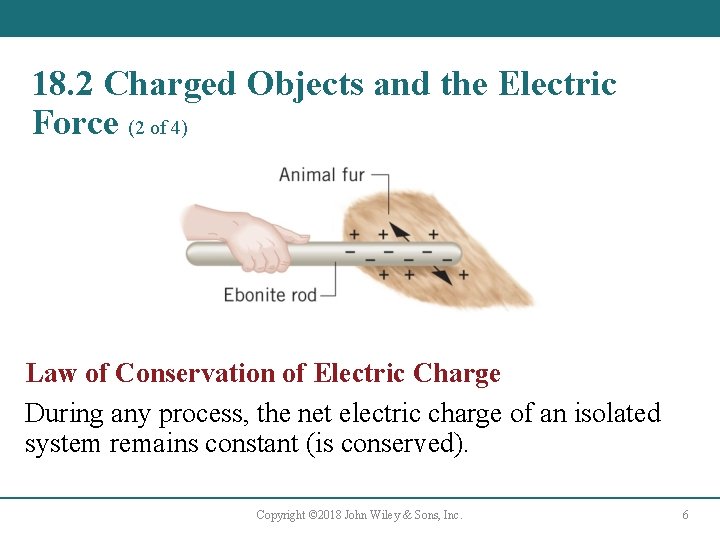
18. 2 Charged Objects and the Electric Force (1 of 4) It is possible to transfer electric charge from one object to another. The body that loses electrons has an excess of positive charge, while the body that gains electrons has an excess of negative charge. Copyright © 2018 John Wiley & Sons, Inc. 5
18. 2 Charged Objects and the Electric Force (2 of 4) Law of Conservation of Electric Charge During any process, the net electric charge of an isolated system remains constant (is conserved). Copyright © 2018 John Wiley & Sons, Inc. 6
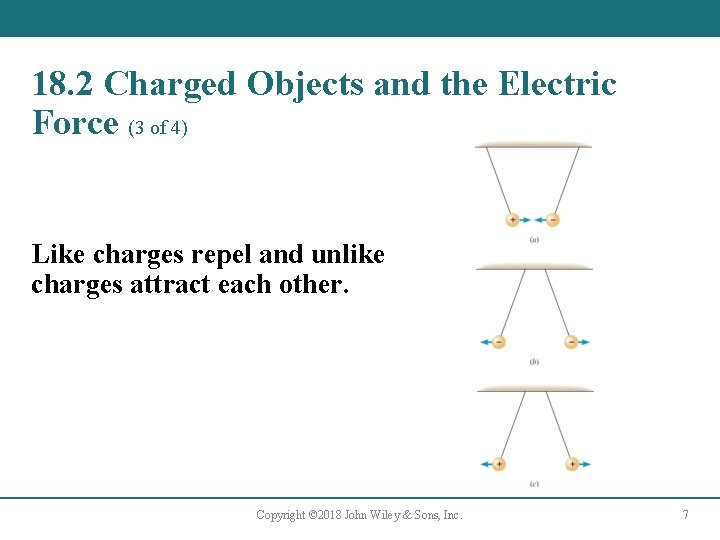
18. 2 Charged Objects and the Electric Force (3 of 4) Like charges repel and unlike charges attract each other. Copyright © 2018 John Wiley & Sons, Inc. 7
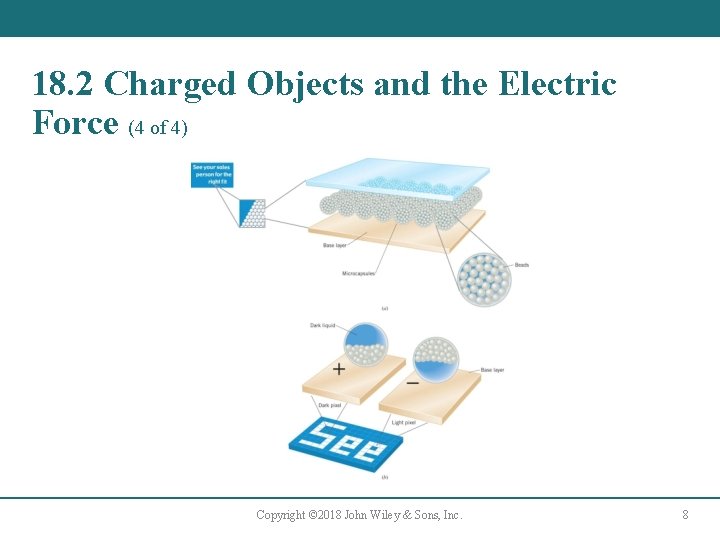
18. 2 Charged Objects and the Electric Force (4 of 4) Copyright © 2018 John Wiley & Sons, Inc. 8
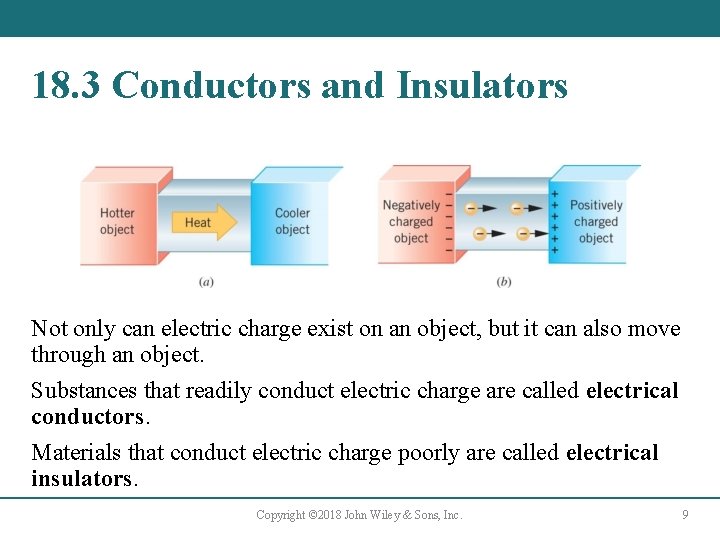
18. 3 Conductors and Insulators Not only can electric charge exist on an object, but it can also move through an object. Substances that readily conduct electric charge are called electrical conductors. Materials that conduct electric charge poorly are called electrical insulators. Copyright © 2018 John Wiley & Sons, Inc. 9
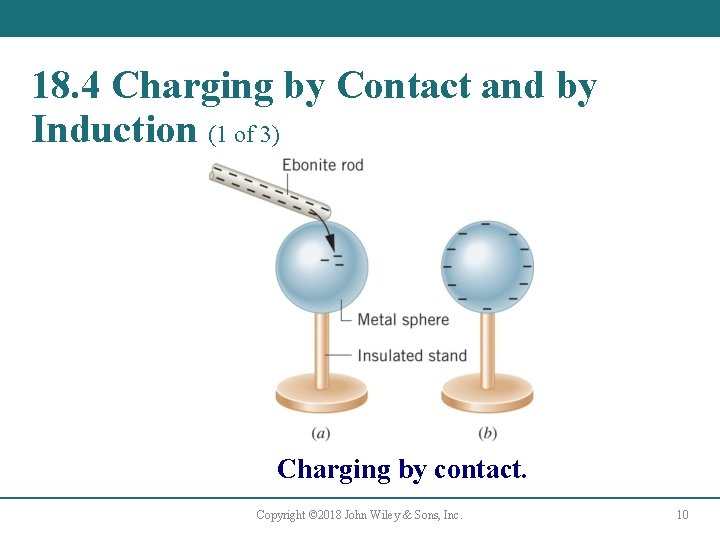
18. 4 Charging by Contact and by Induction (1 of 3) Charging by contact. Copyright © 2018 John Wiley & Sons, Inc. 10
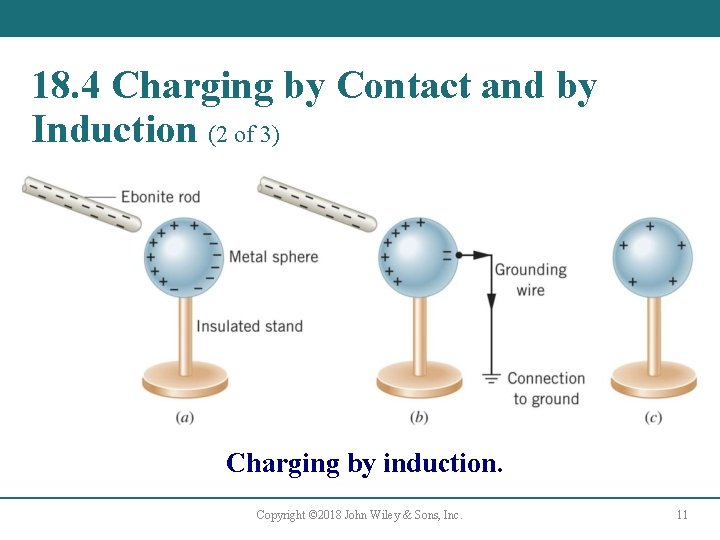
18. 4 Charging by Contact and by Induction (2 of 3) Charging by induction. Copyright © 2018 John Wiley & Sons, Inc. 11
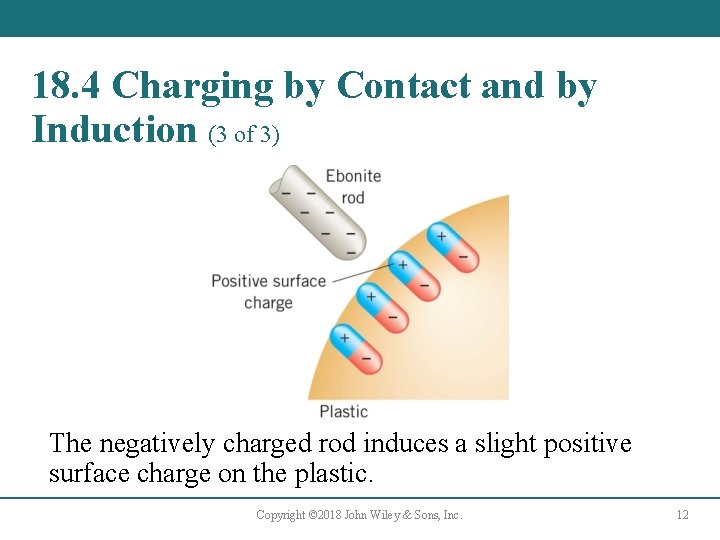
18. 4 Charging by Contact and by Induction (3 of 3) The negatively charged rod induces a slight positive surface charge on the plastic. Copyright © 2018 John Wiley & Sons, Inc. 12
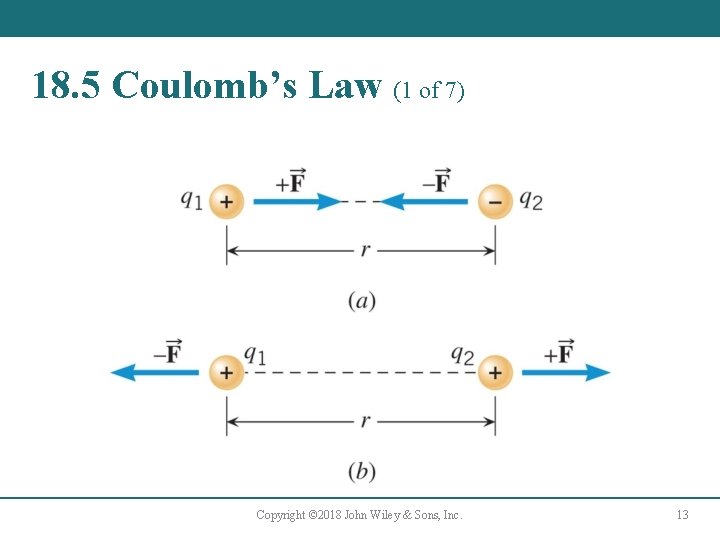
18. 5 Coulomb’s Law (1 of 7) Copyright © 2018 John Wiley & Sons, Inc. 13
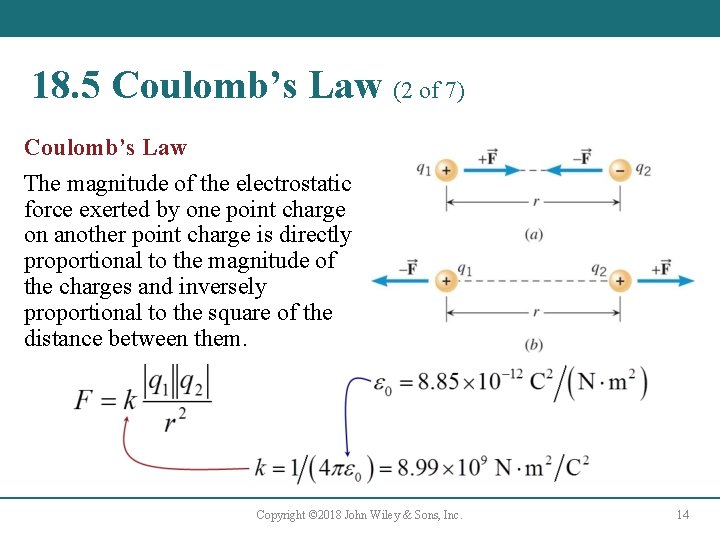
18. 5 Coulomb’s Law (2 of 7) Coulomb’s Law The magnitude of the electrostatic force exerted by one point charge on another point charge is directly proportional to the magnitude of the charges and inversely proportional to the square of the distance between them. Copyright © 2018 John Wiley & Sons, Inc. 14
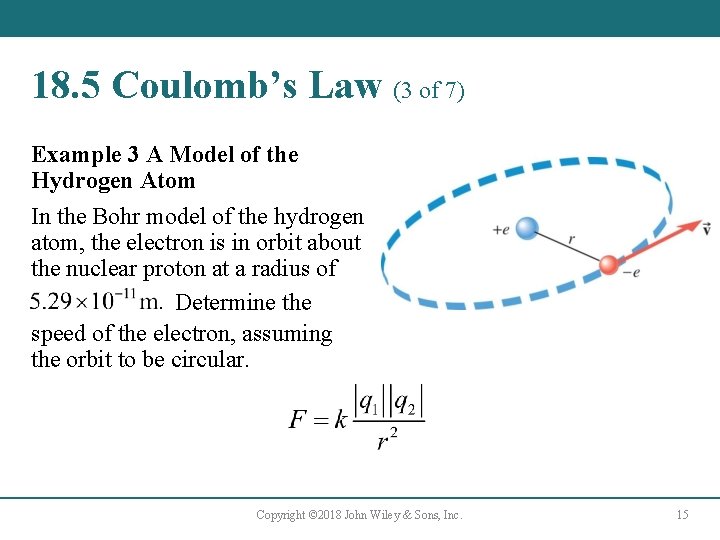
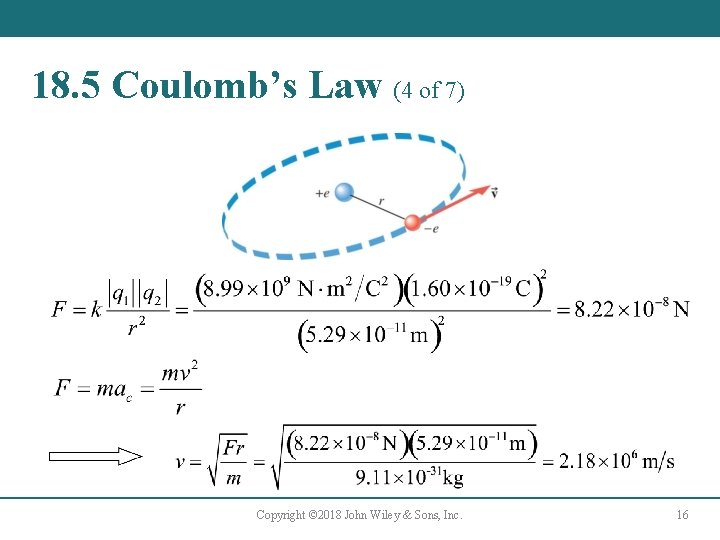
18. 5 Coulomb’s Law (3 of 7) Example 3 A Model of the Hydrogen Atom In the Bohr model of the hydrogen atom, the electron is in orbit about the nuclear proton at a radius of Determine the speed of the electron, assuming the orbit to be circular. Copyright © 2018 John Wiley & Sons, Inc. 15
18. 5 Coulomb’s Law (4 of 7) Copyright © 2018 John Wiley & Sons, Inc. 16
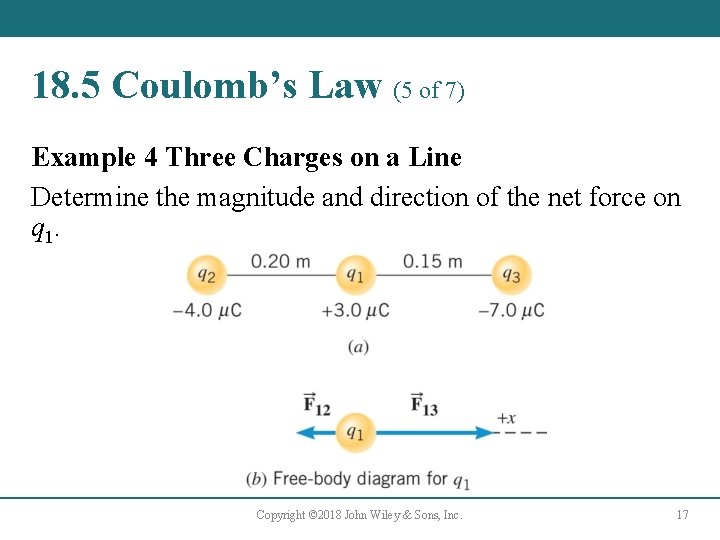
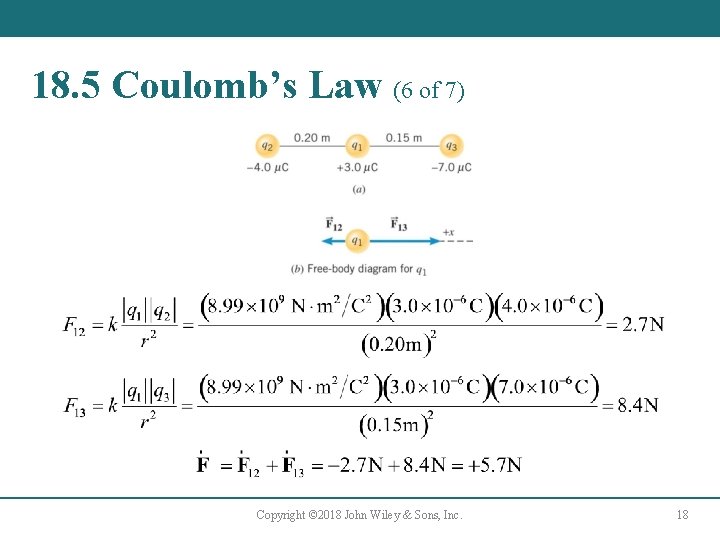
18. 5 Coulomb’s Law (5 of 7) Example 4 Three Charges on a Line Determine the magnitude and direction of the net force on q 1. Copyright © 2018 John Wiley & Sons, Inc. 17
18. 5 Coulomb’s Law (6 of 7) Copyright © 2018 John Wiley & Sons, Inc. 18
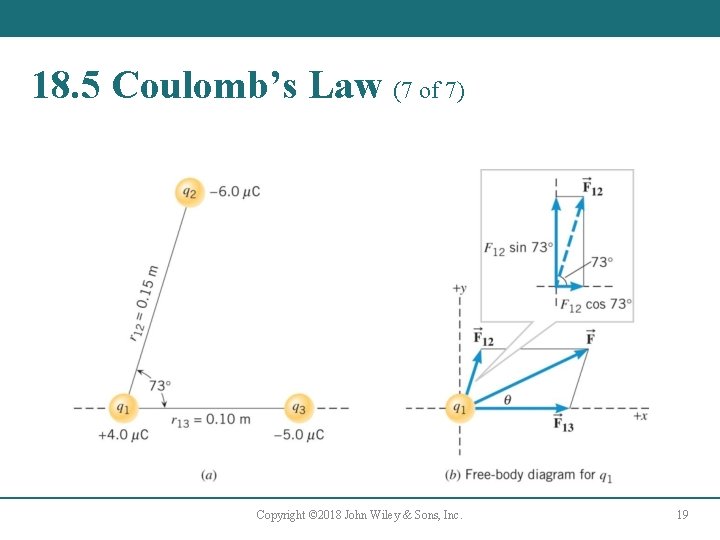
18. 5 Coulomb’s Law (7 of 7) Copyright © 2018 John Wiley & Sons, Inc. 19
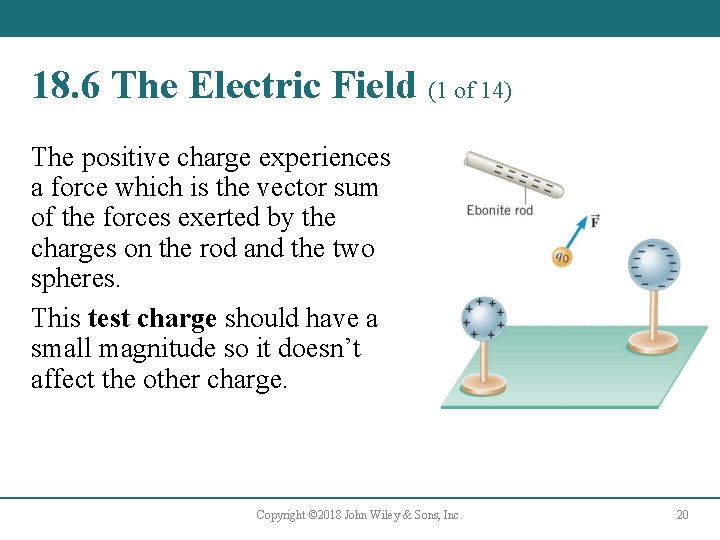
18. 6 The Electric Field (1 of 14) The positive charge experiences a force which is the vector sum of the forces exerted by the charges on the rod and the two spheres. This test charge should have a small magnitude so it doesn’t affect the other charge. Copyright © 2018 John Wiley & Sons, Inc. 20
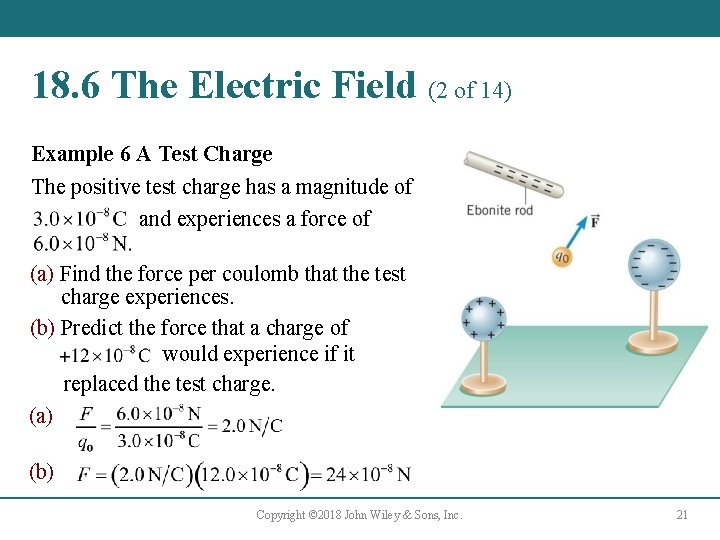
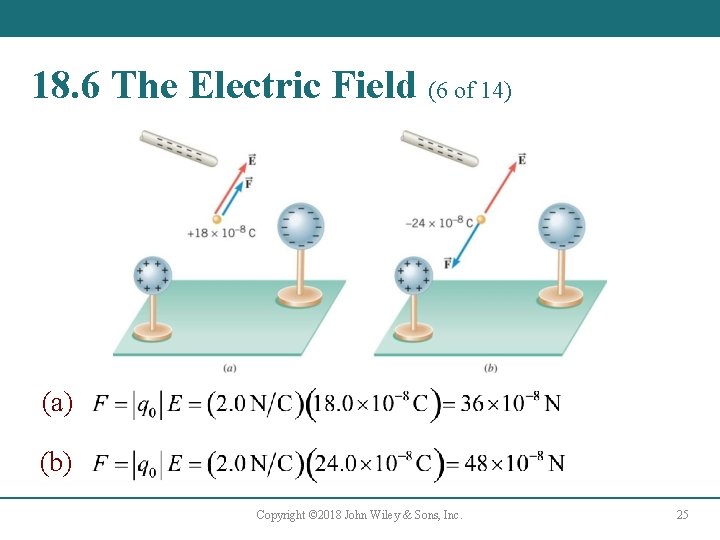
18. 6 The Electric Field (2 of 14) Example 6 A Test Charge The positive test charge has a magnitude of and experiences a force of (a) Find the force per coulomb that the test charge experiences. (b) Predict the force that a charge of would experience if it replaced the test charge. (a) (b) Copyright © 2018 John Wiley & Sons, Inc. 21
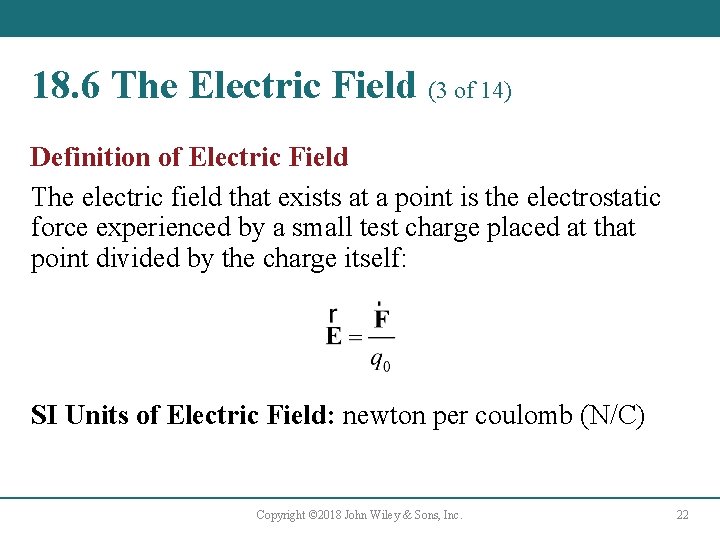
18. 6 The Electric Field (3 of 14) Definition of Electric Field The electric field that exists at a point is the electrostatic force experienced by a small test charge placed at that point divided by the charge itself: SI Units of Electric Field: newton per coulomb (N/C) Copyright © 2018 John Wiley & Sons, Inc. 22
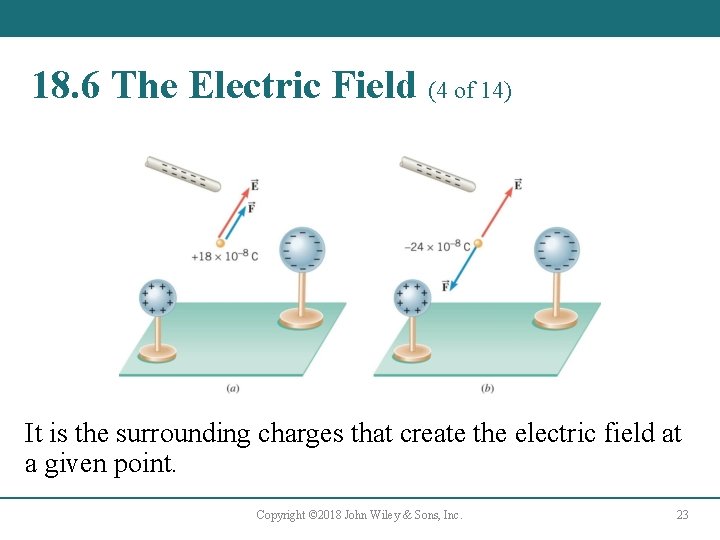
18. 6 The Electric Field (4 of 14) It is the surrounding charges that create the electric field at a given point. Copyright © 2018 John Wiley & Sons, Inc. 23
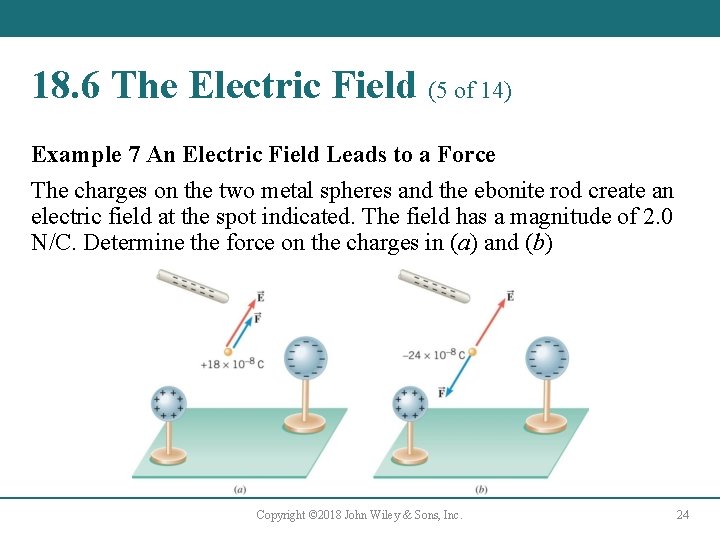
18. 6 The Electric Field (5 of 14) Example 7 An Electric Field Leads to a Force The charges on the two metal spheres and the ebonite rod create an electric field at the spot indicated. The field has a magnitude of 2. 0 N/C. Determine the force on the charges in (a) and (b) Copyright © 2018 John Wiley & Sons, Inc. 24
18. 6 The Electric Field (6 of 14) (a) (b) Copyright © 2018 John Wiley & Sons, Inc. 25
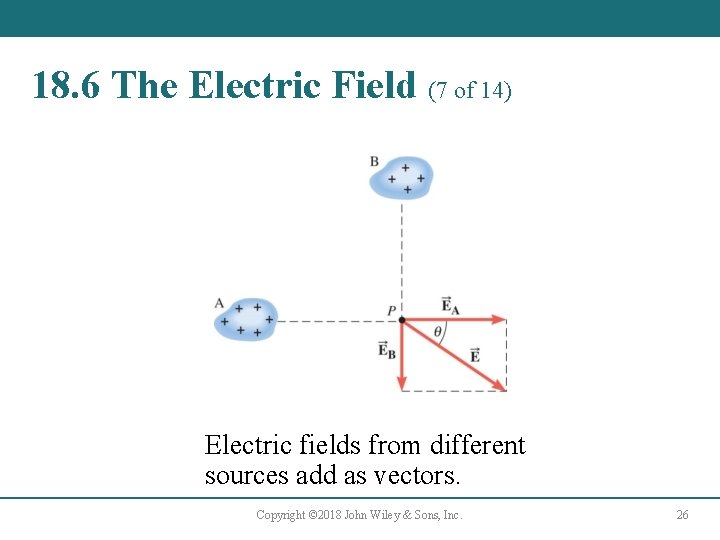
18. 6 The Electric Field (7 of 14) Electric fields from different sources add as vectors. Copyright © 2018 John Wiley & Sons, Inc. 26
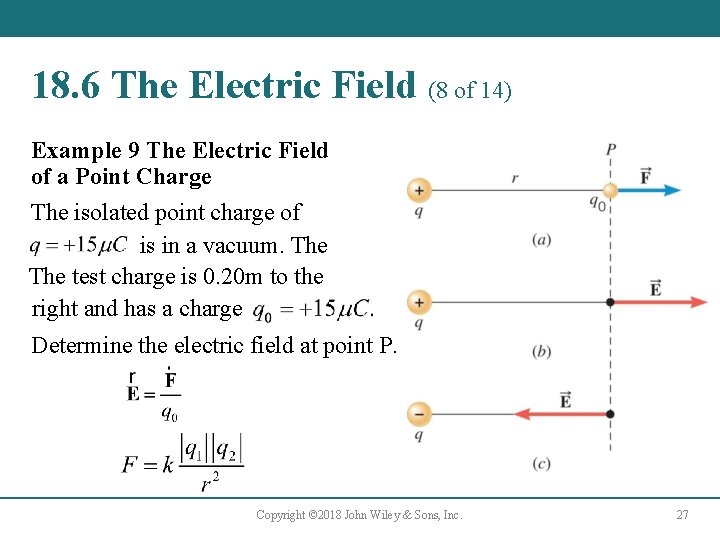
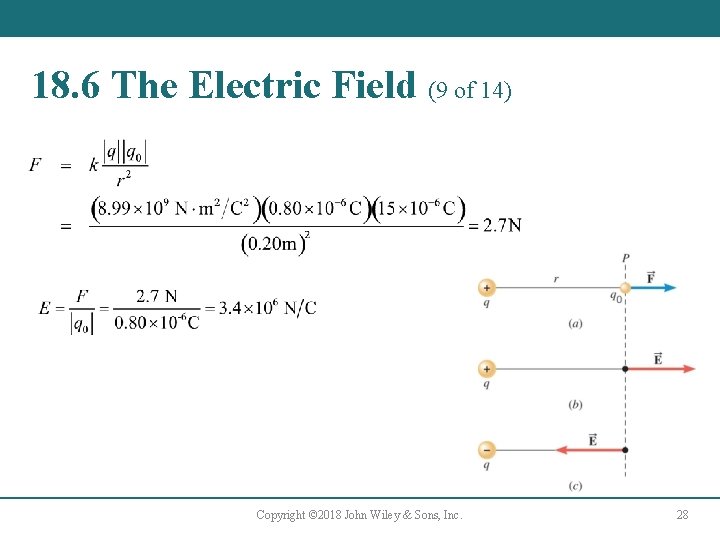
18. 6 The Electric Field (8 of 14) Example 9 The Electric Field of a Point Charge The isolated point charge of is in a vacuum. The test charge is 0. 20 m to the right and has a charge Determine the electric field at point P. Copyright © 2018 John Wiley & Sons, Inc. 27
18. 6 The Electric Field (9 of 14) Copyright © 2018 John Wiley & Sons, Inc. 28
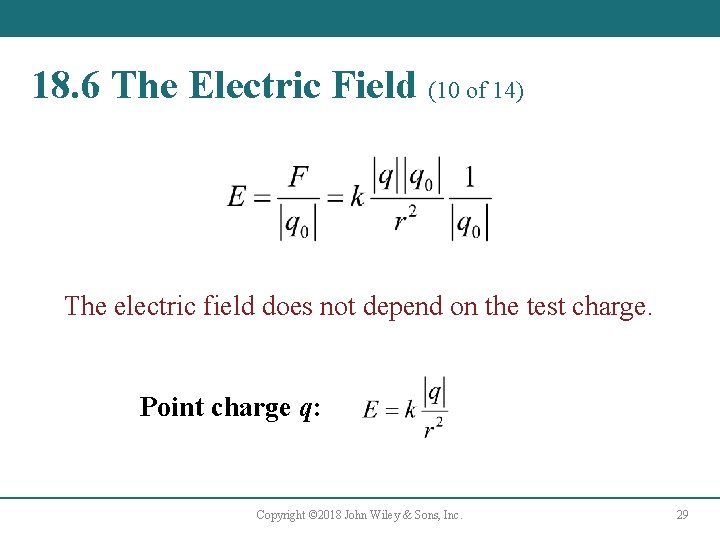
18. 6 The Electric Field (10 of 14) The electric field does not depend on the test charge. Point charge q: Copyright © 2018 John Wiley & Sons, Inc. 29
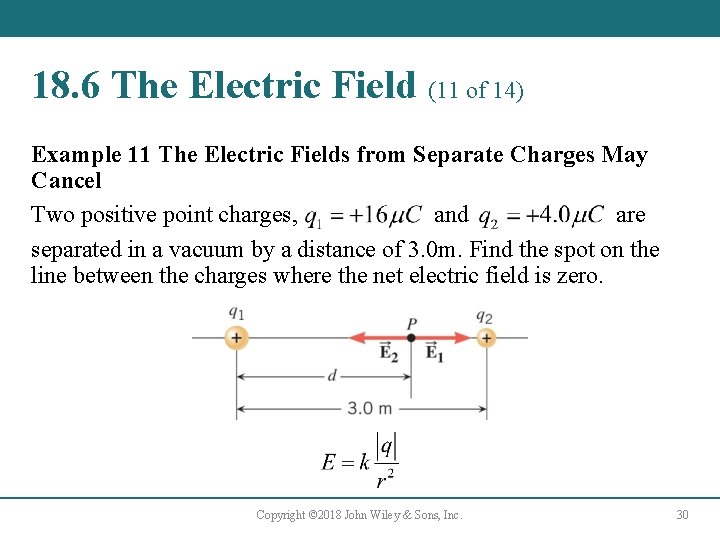
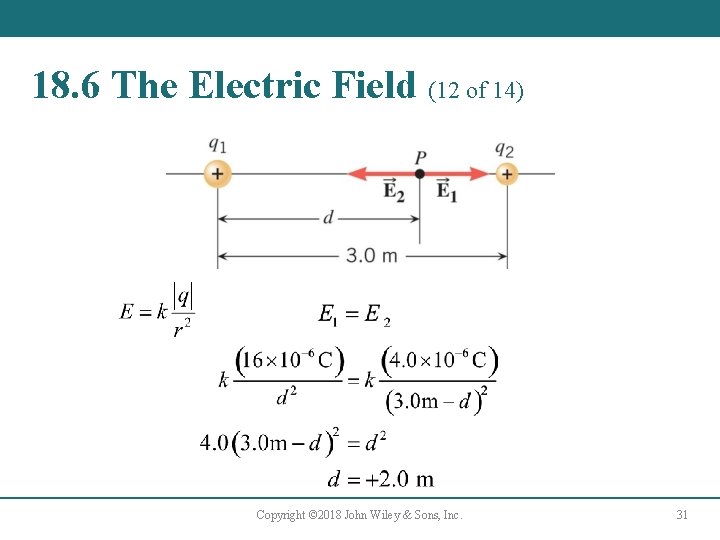
18. 6 The Electric Field (11 of 14) Example 11 The Electric Fields from Separate Charges May Cancel Two positive point charges, and are separated in a vacuum by a distance of 3. 0 m. Find the spot on the line between the charges where the net electric field is zero. Copyright © 2018 John Wiley & Sons, Inc. 30
18. 6 The Electric Field (12 of 14) Copyright © 2018 John Wiley & Sons, Inc. 31
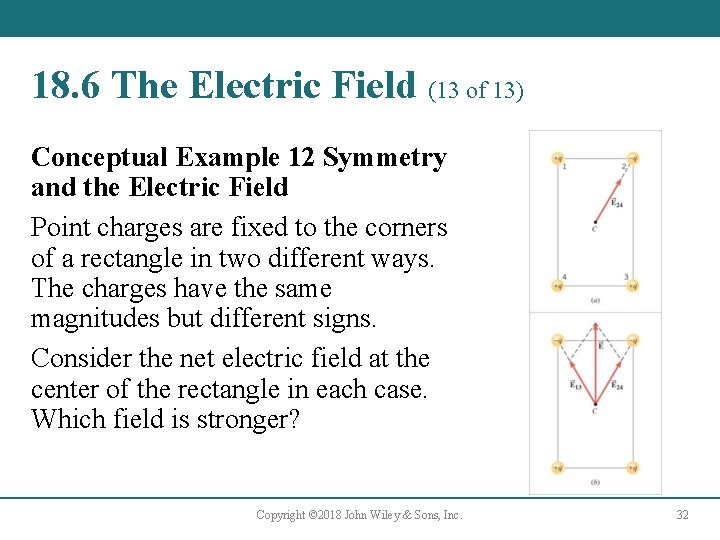
18. 6 The Electric Field (13 of 13) Conceptual Example 12 Symmetry and the Electric Field Point charges are fixed to the corners of a rectangle in two different ways. The charges have the same magnitudes but different signs. Consider the net electric field at the center of the rectangle in each case. Which field is stronger? Copyright © 2018 John Wiley & Sons, Inc. 32
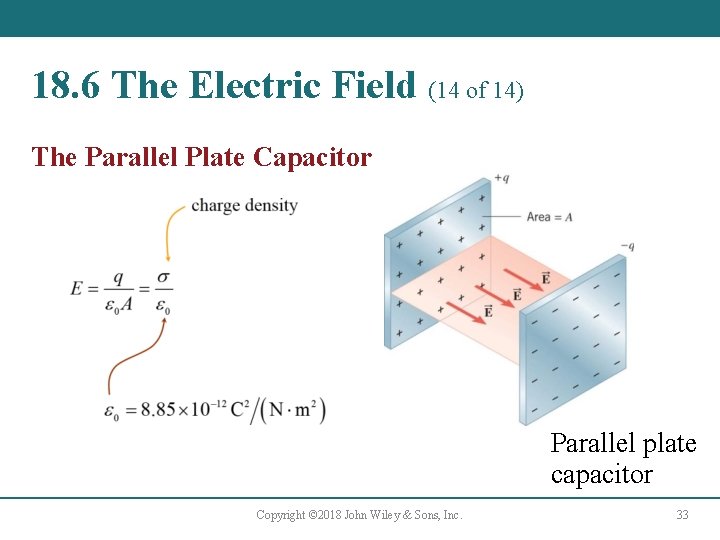
18. 6 The Electric Field (14 of 14) The Parallel Plate Capacitor Parallel plate capacitor Copyright © 2018 John Wiley & Sons, Inc. 33
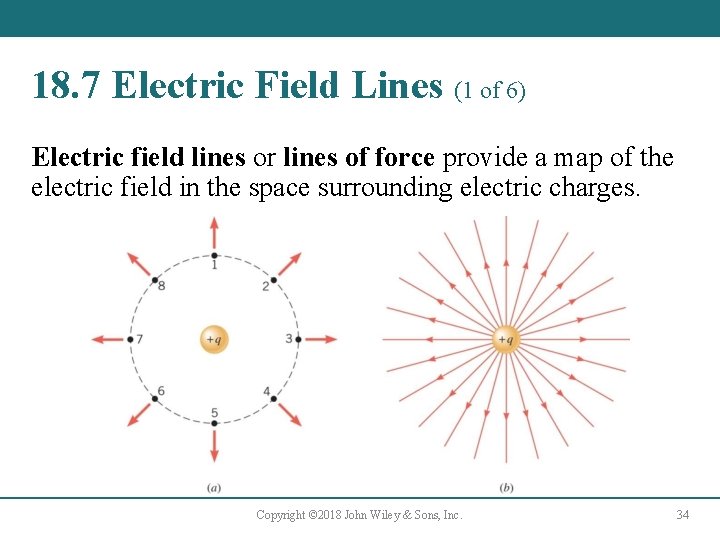
18. 7 Electric Field Lines (1 of 6) Electric field lines or lines of force provide a map of the electric field in the space surrounding electric charges. Copyright © 2018 John Wiley & Sons, Inc. 34
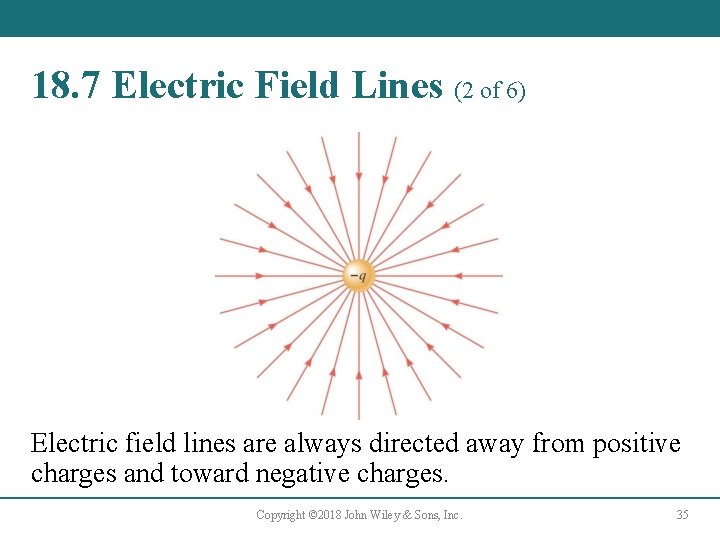
18. 7 Electric Field Lines (2 of 6) Electric field lines are always directed away from positive charges and toward negative charges. Copyright © 2018 John Wiley & Sons, Inc. 35
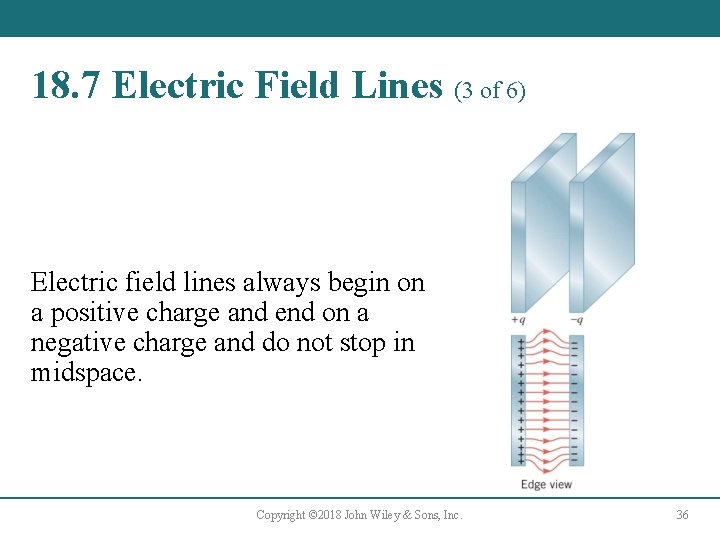
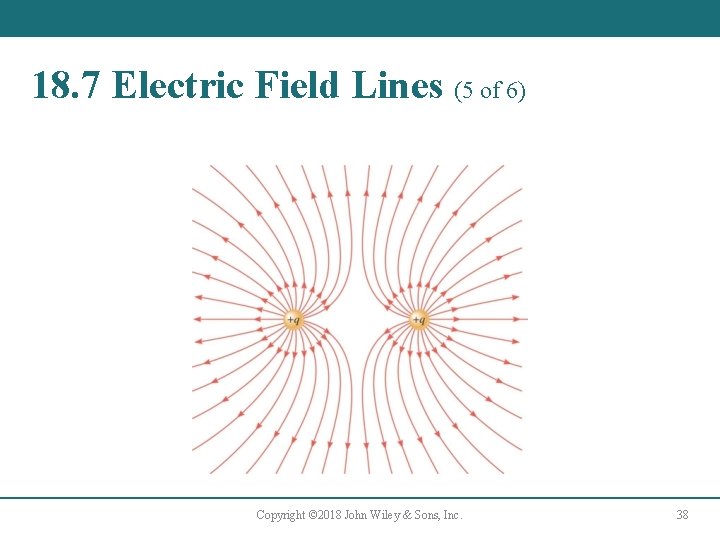
18. 7 Electric Field Lines (3 of 6) Electric field lines always begin on a positive charge and end on a negative charge and do not stop in midspace. Copyright © 2018 John Wiley & Sons, Inc. 36
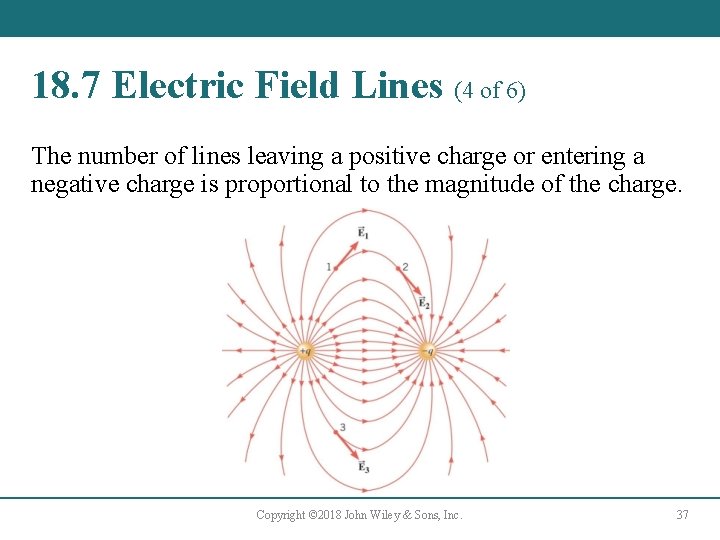
18. 7 Electric Field Lines (4 of 6) The number of lines leaving a positive charge or entering a negative charge is proportional to the magnitude of the charge. Copyright © 2018 John Wiley & Sons, Inc. 37
18. 7 Electric Field Lines (5 of 6) Copyright © 2018 John Wiley & Sons, Inc. 38
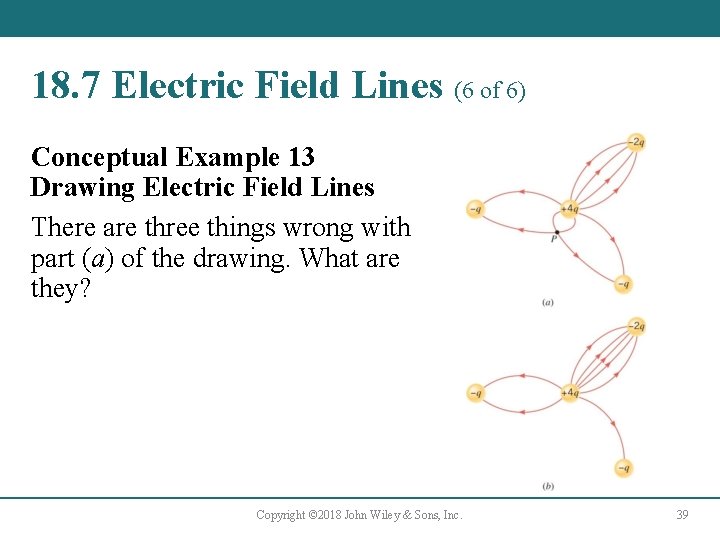
18. 7 Electric Field Lines (6 of 6) Conceptual Example 13 Drawing Electric Field Lines There are three things wrong with part (a) of the drawing. What are they? Copyright © 2018 John Wiley & Sons, Inc. 39
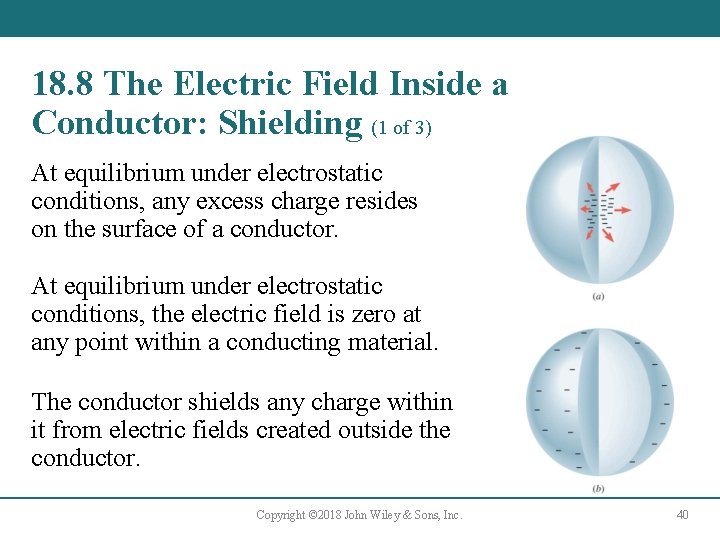
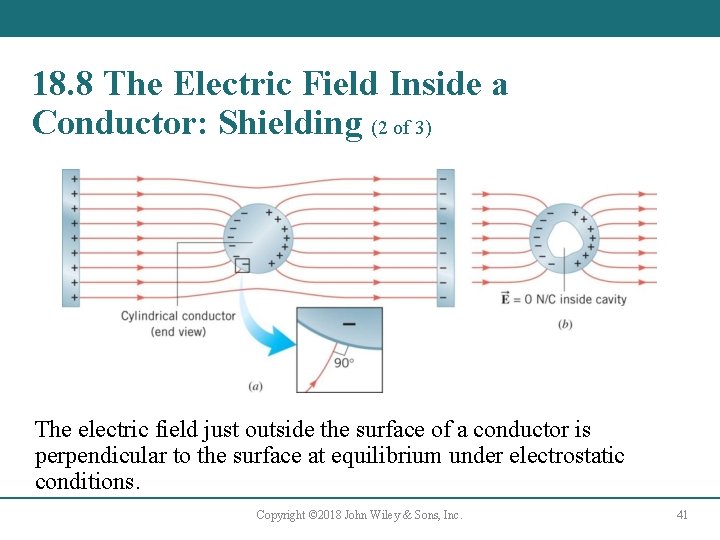
18. 8 The Electric Field Inside a Conductor: Shielding (1 of 3) At equilibrium under electrostatic conditions, any excess charge resides on the surface of a conductor. At equilibrium under electrostatic conditions, the electric field is zero at any point within a conducting material. The conductor shields any charge within it from electric fields created outside the conductor. Copyright © 2018 John Wiley & Sons, Inc. 40
18. 8 The Electric Field Inside a Conductor: Shielding (2 of 3) The electric field just outside the surface of a conductor is perpendicular to the surface at equilibrium under electrostatic conditions. Copyright © 2018 John Wiley & Sons, Inc. 41
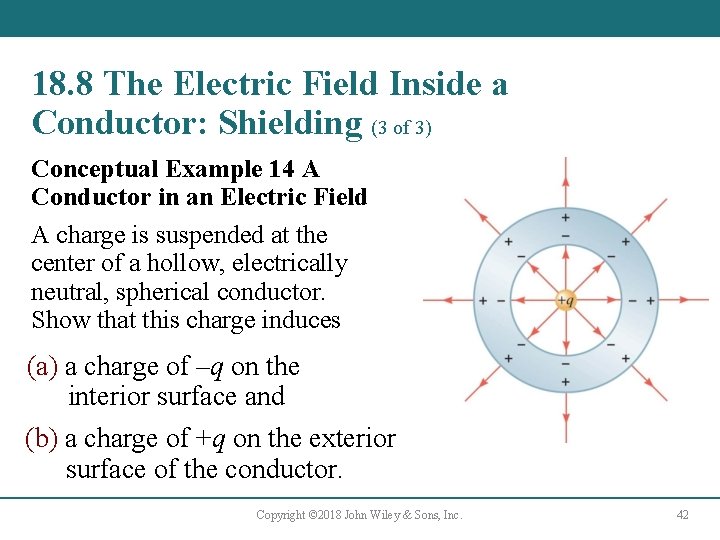
18. 8 The Electric Field Inside a Conductor: Shielding (3 of 3) Conceptual Example 14 A Conductor in an Electric Field A charge is suspended at the center of a hollow, electrically neutral, spherical conductor. Show that this charge induces (a) a charge of –q on the interior surface and (b) a charge of +q on the exterior surface of the conductor. Copyright © 2018 John Wiley & Sons, Inc. 42
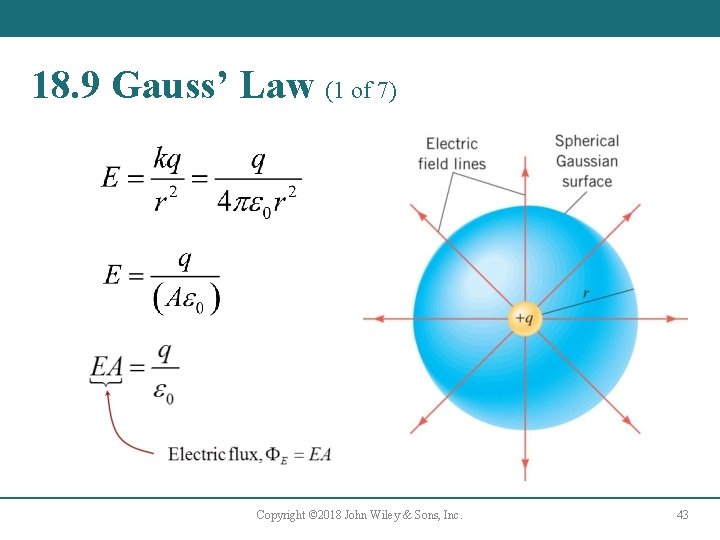
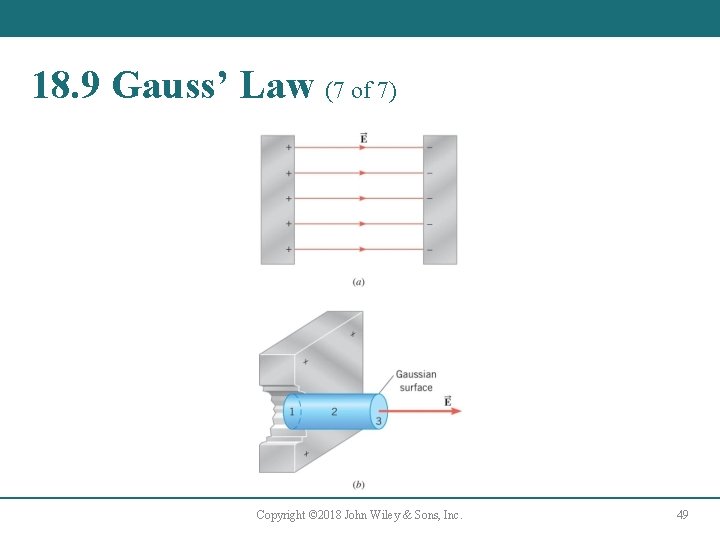
18. 9 Gauss’ Law (1 of 7) Copyright © 2018 John Wiley & Sons, Inc. 43
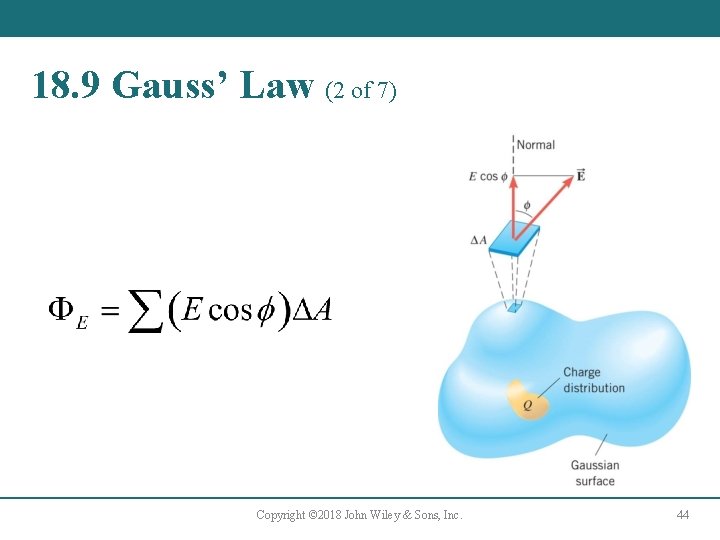
18. 9 Gauss’ Law (2 of 7) Copyright © 2018 John Wiley & Sons, Inc. 44
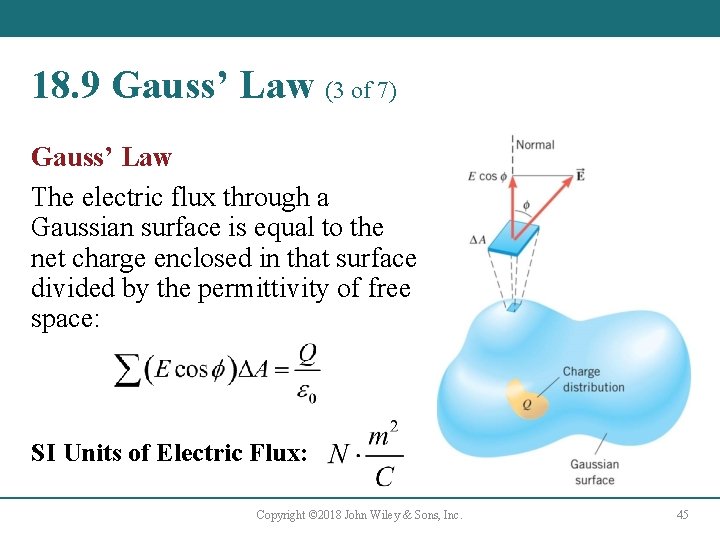
18. 9 Gauss’ Law (3 of 7) Gauss’ Law The electric flux through a Gaussian surface is equal to the net charge enclosed in that surface divided by the permittivity of free space: SI Units of Electric Flux: Copyright © 2018 John Wiley & Sons, Inc. 45
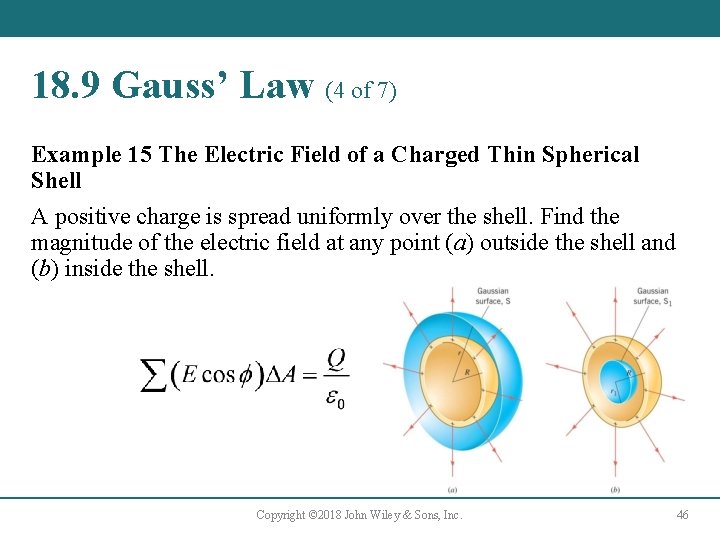
18. 9 Gauss’ Law (4 of 7) Example 15 The Electric Field of a Charged Thin Spherical Shell A positive charge is spread uniformly over the shell. Find the magnitude of the electric field at any point (a) outside the shell and (b) inside the shell. Copyright © 2018 John Wiley & Sons, Inc. 46
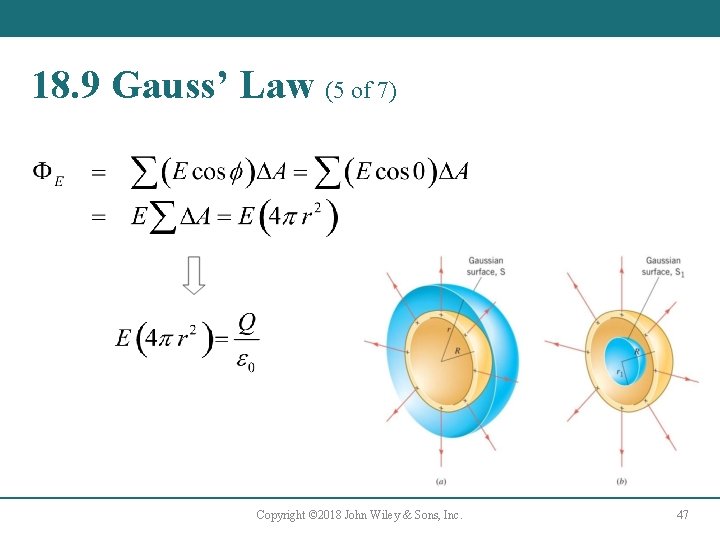
18. 9 Gauss’ Law (5 of 7) Copyright © 2018 John Wiley & Sons, Inc. 47
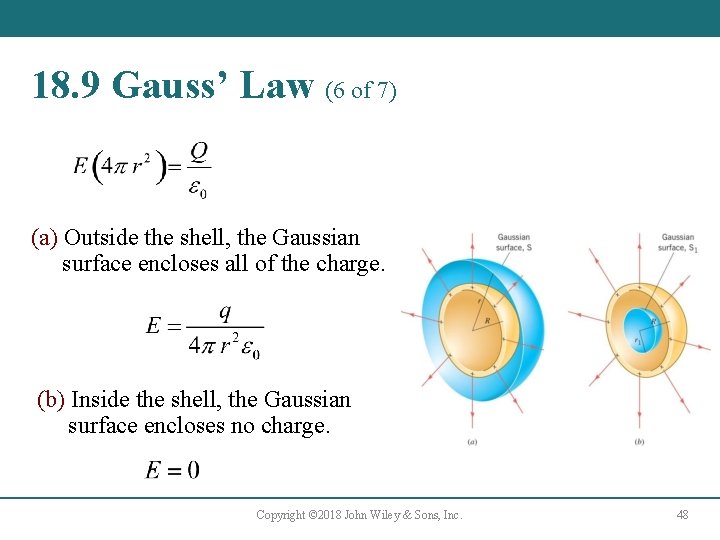
18. 9 Gauss’ Law (6 of 7) (a) Outside the shell, the Gaussian surface encloses all of the charge. (b) Inside the shell, the Gaussian surface encloses no charge. Copyright © 2018 John Wiley & Sons, Inc. 48
18. 9 Gauss’ Law (7 of 7) Copyright © 2018 John Wiley & Sons, Inc. 49
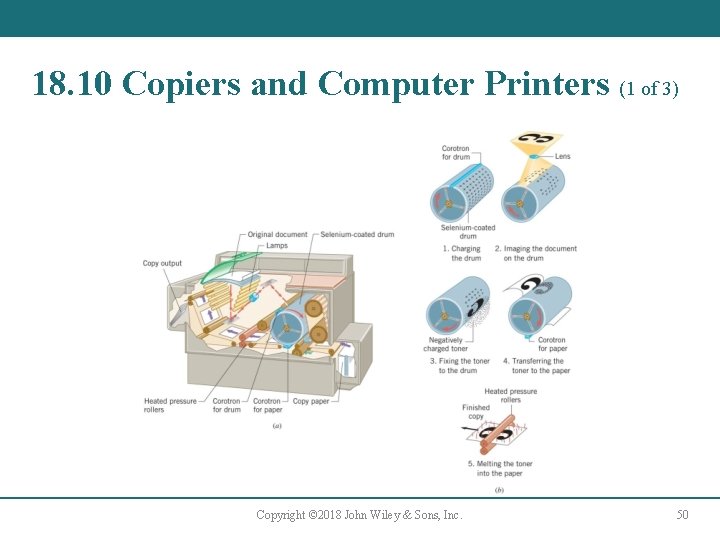
18. 10 Copiers and Computer Printers (1 of 3) Copyright © 2018 John Wiley & Sons, Inc. 50
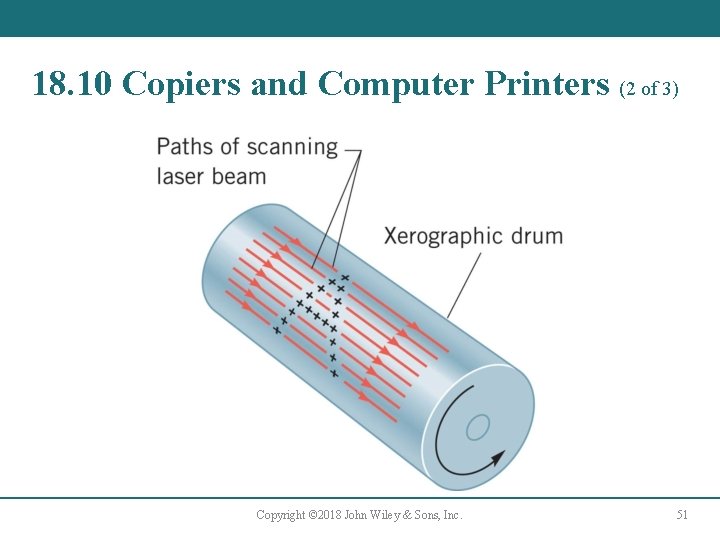
18. 10 Copiers and Computer Printers (2 of 3) Copyright © 2018 John Wiley & Sons, Inc. 51
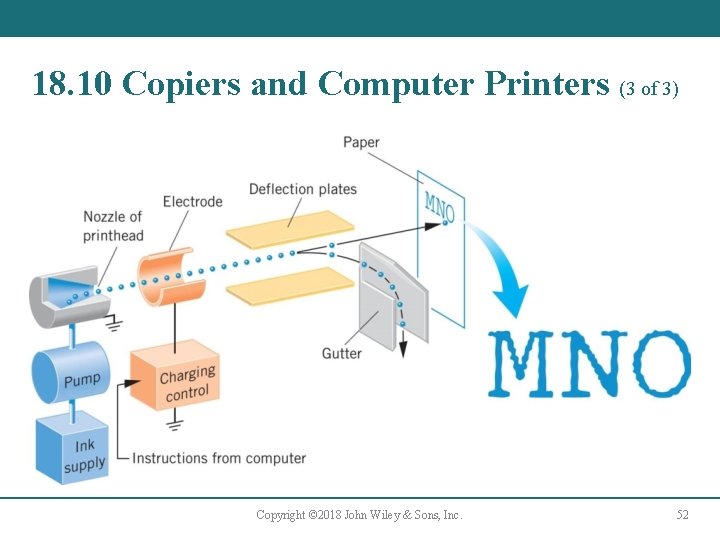
18. 10 Copiers and Computer Printers (3 of 3) Copyright © 2018 John Wiley & Sons, Inc. 52
Copyright © 2018 John Wiley & Sons, Inc. All rights reserved. Reproduction or translation of this work beyond that permitted in Section 117 of the 1976 United States Act without the express written permission of the copyright owner is unlawful. Request for further information should be addressed to the Permissions Department, John Wiley & Sons, Inc. The purchaser may make back-up copies for his/her own use only and not for distribution or resale. The Publisher assumes no responsibility for errors, omissions, or damages, caused by the use of these programs or from the use of the information contained herein. Copyright © 2018 John Wiley & Sons, Inc 53