
PHYSICS Chapter 8 Light and Optics Section 8
- Slides: 31
PHYSICS Chapter 8: Light and Optics Section 8 A: Light and Refraction
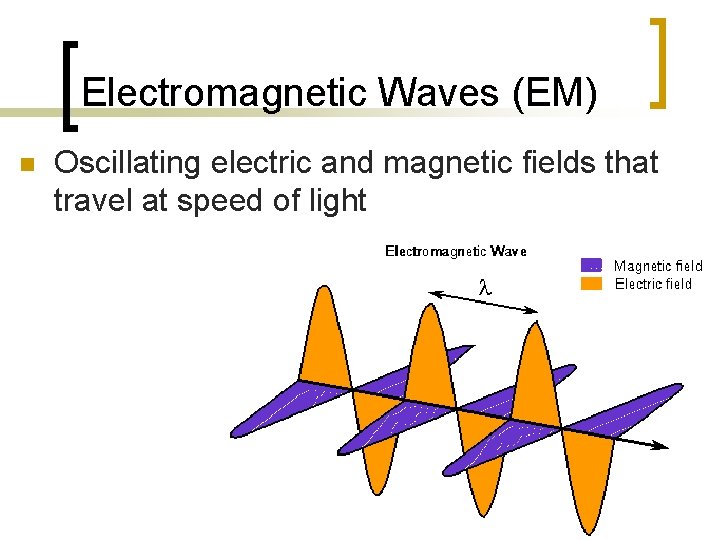
Electromagnetic Waves (EM) n Oscillating electric and magnetic fields that travel at speed of light
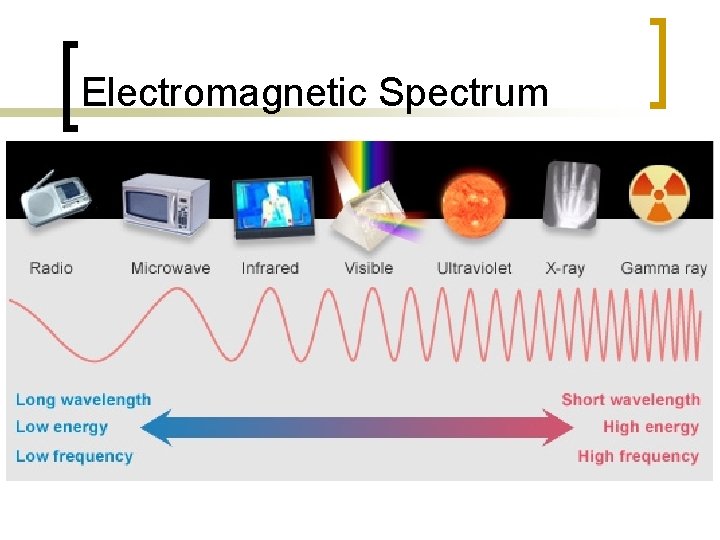
Electromagnetic Spectrum
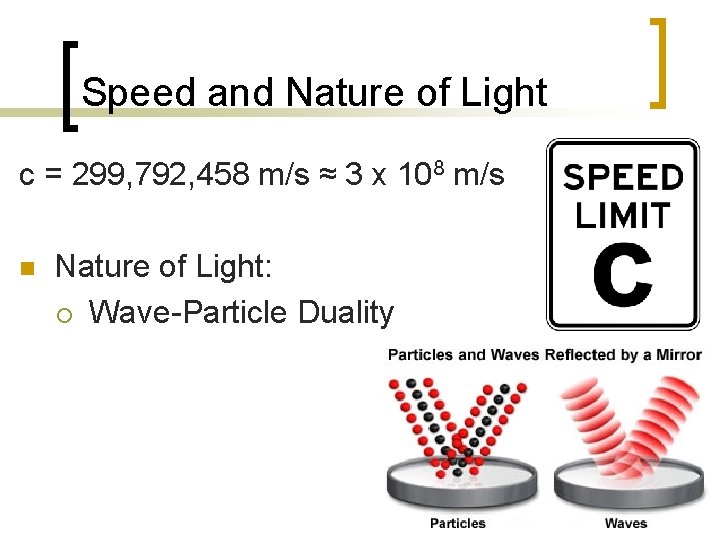
Speed and Nature of Light c = 299, 792, 458 m/s ≈ 3 x 10⁸ m/s n Nature of Light: ¡ Wave-Particle Duality
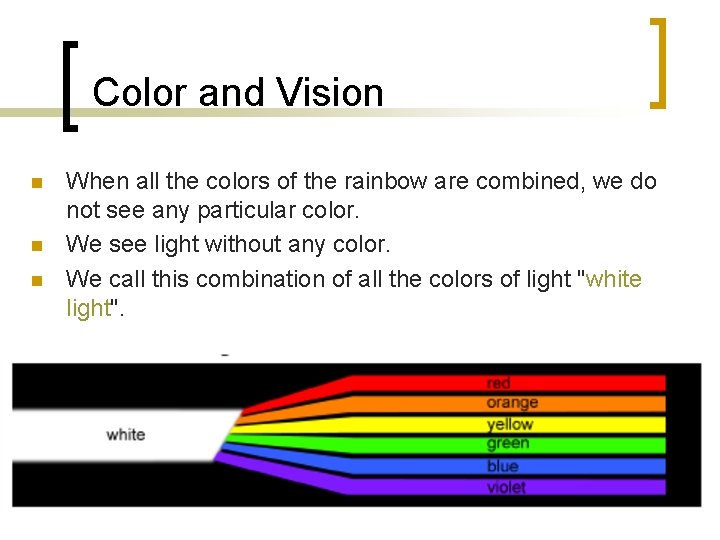
Color and Vision n When all the colors of the rainbow are combined, we do not see any particular color. We see light without any color. We call this combination of all the colors of light "white light".
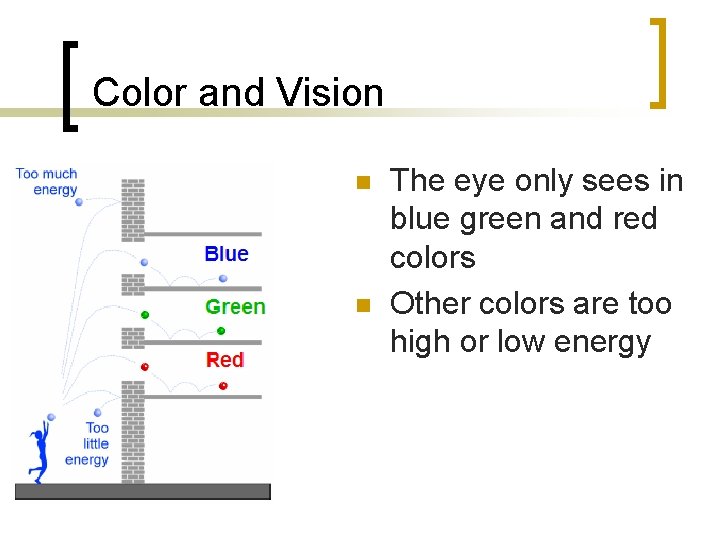
Color and Vision n n The eye only sees in blue green and red colors Other colors are too high or low energy
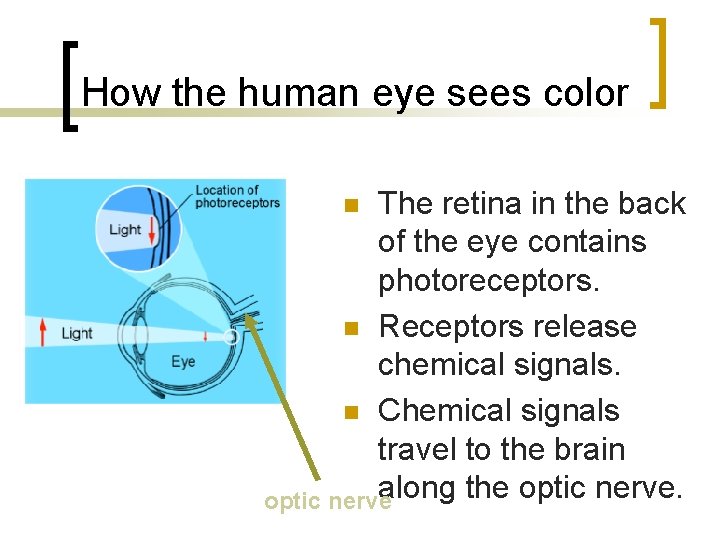
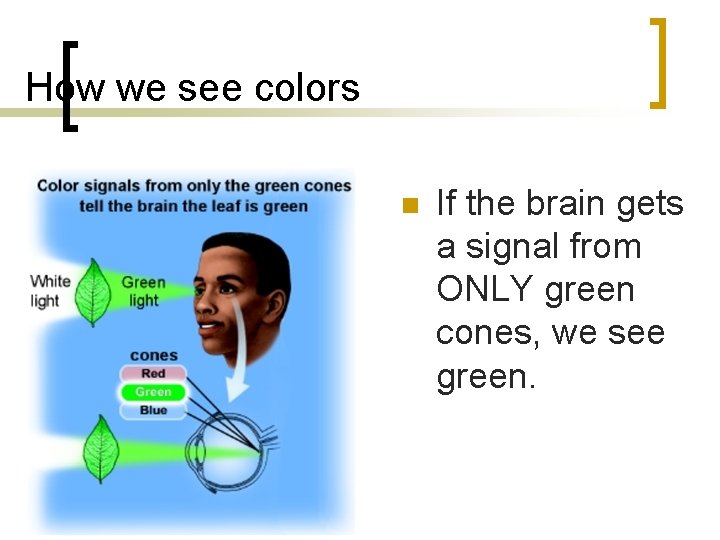
How the human eye sees color The retina in the back of the eye contains photoreceptors. n Receptors release chemical signals. n Chemical signals travel to the brain along the optic nerve n
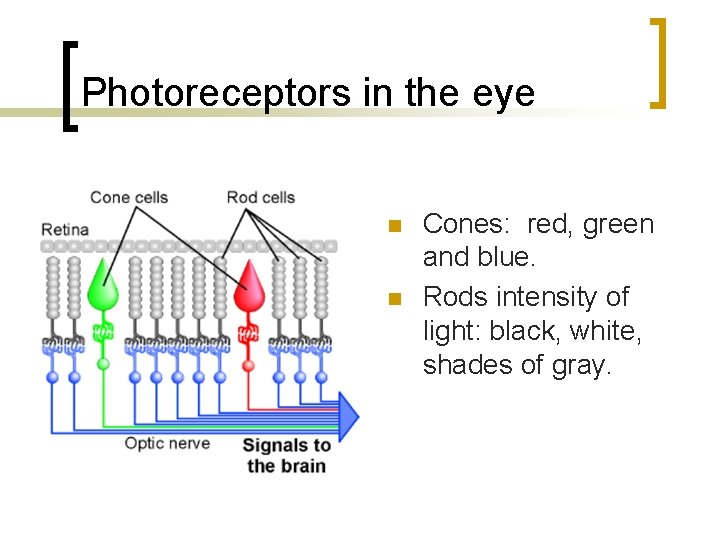
Photoreceptors in the eye n n Cones: red, green and blue. Rods intensity of light: black, white, shades of gray.
How we see colors n If the brain gets a signal from ONLY green cones, we see green.
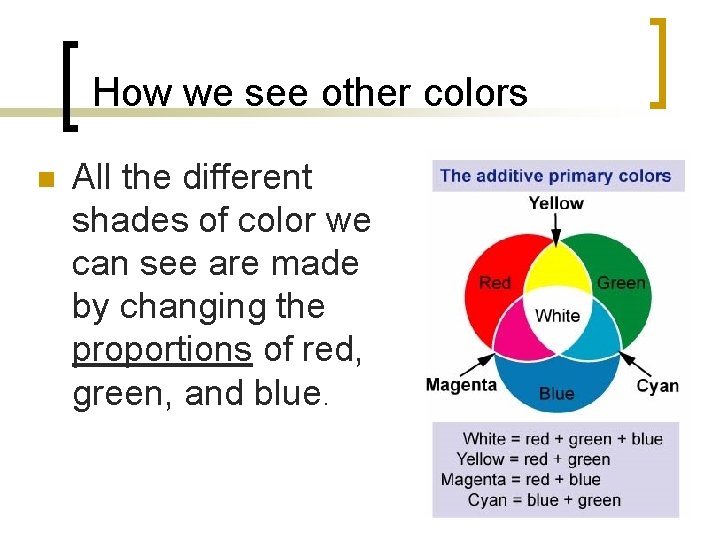
How we see other colors n All the different shades of color we can see are made by changing the proportions of red, green, and blue.
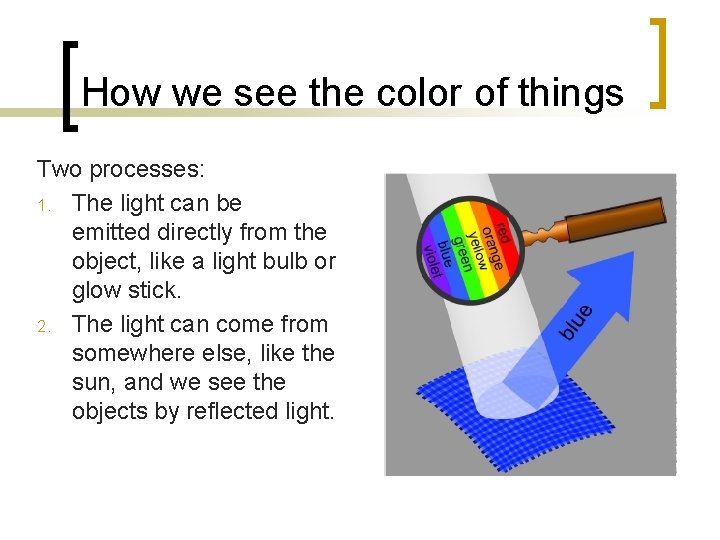
How we see the color of things Two processes: 1. The light can be emitted directly from the object, like a light bulb or glow stick. 2. The light can come from somewhere else, like the sun, and we see the objects by reflected light.
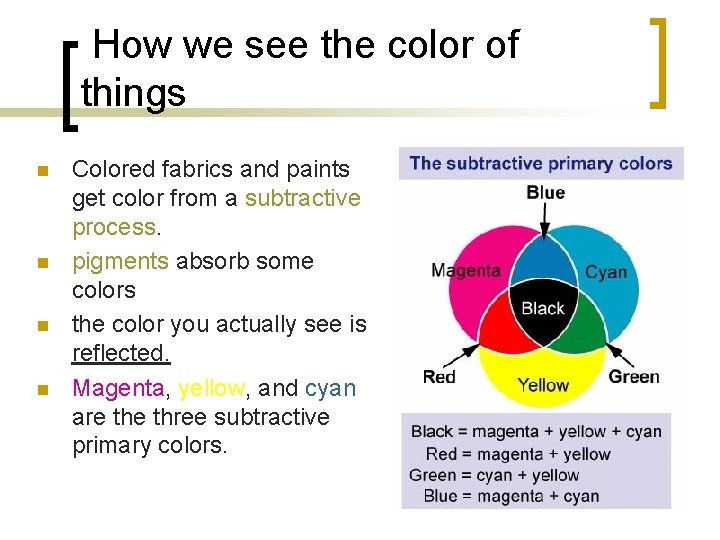
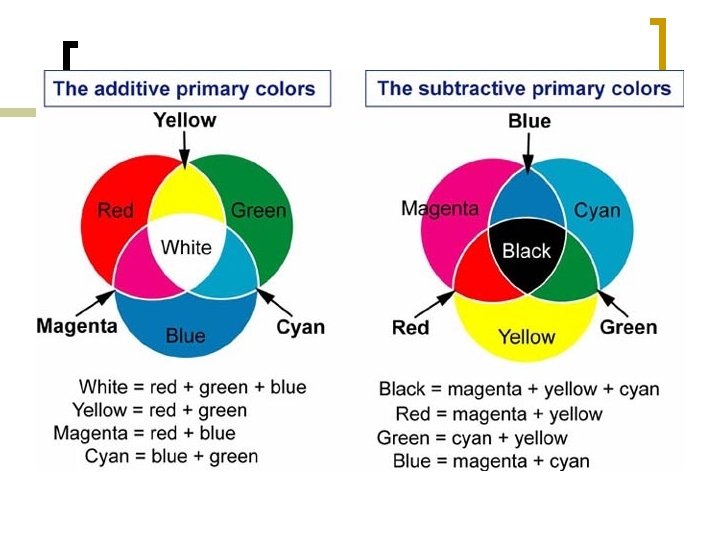
How we see the color of things n n Colored fabrics and paints get color from a subtractive process. pigments absorb some colors the color you actually see is reflected. Magenta, yellow, and cyan are three subtractive primary colors.
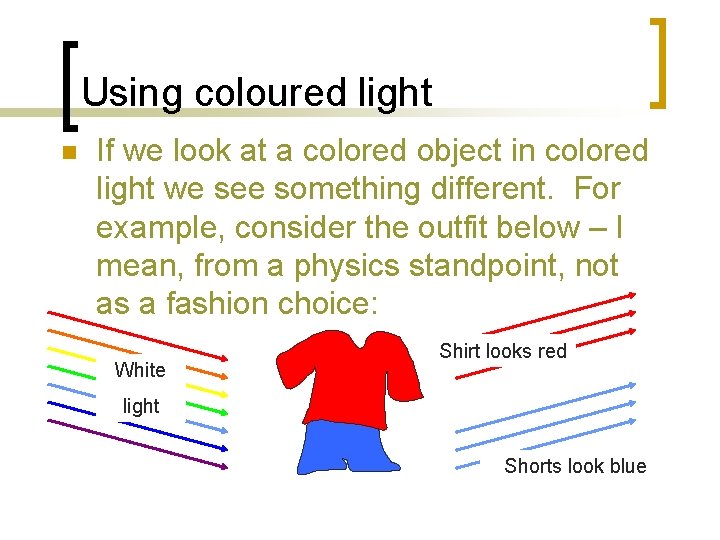
Using coloured light n If we look at a colored object in colored light we see something different. For example, consider the outfit below – I mean, from a physics standpoint, not as a fashion choice: White Shirt looks red light Shorts look blue
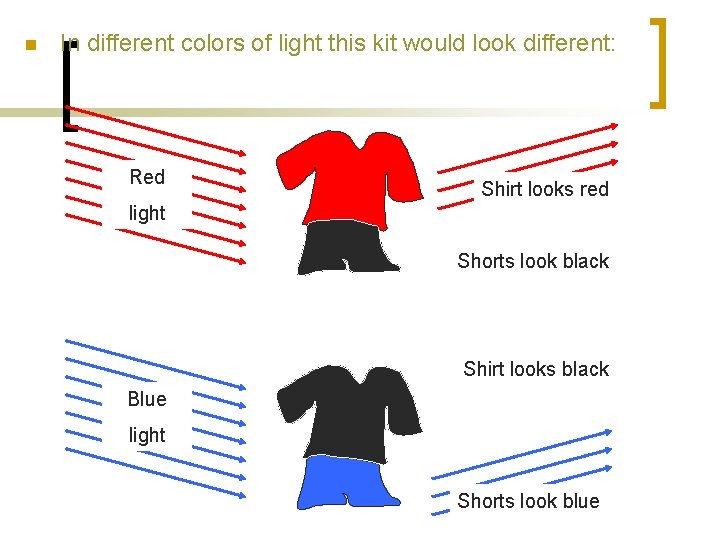
n In different colors of light this kit would look different: Red Shirt looks red light Shorts look black Shirt looks black Blue light Shorts look blue
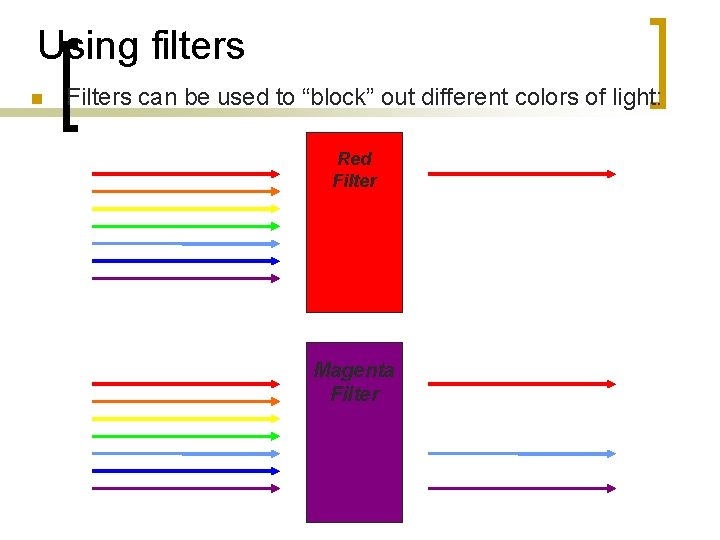
Using filters n Filters can be used to “block” out different colors of light: Red Filter Magenta Filter
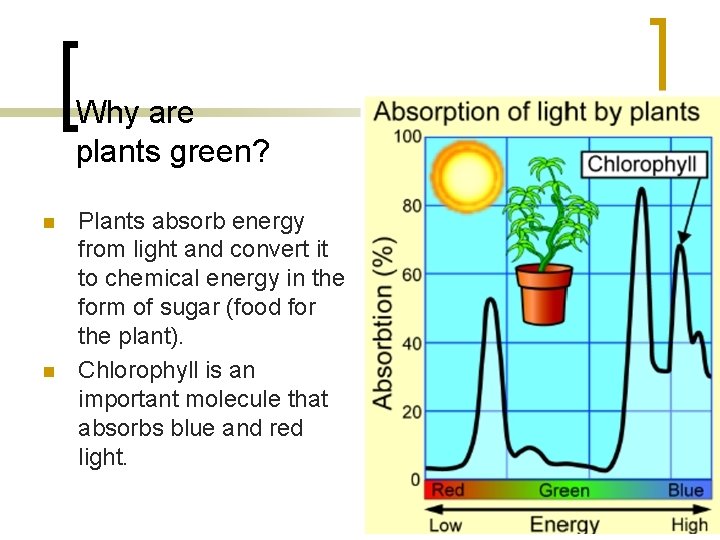
Why are plants green? n n Plants absorb energy from light and convert it to chemical energy in the form of sugar (food for the plant). Chlorophyll is an important molecule that absorbs blue and red light.
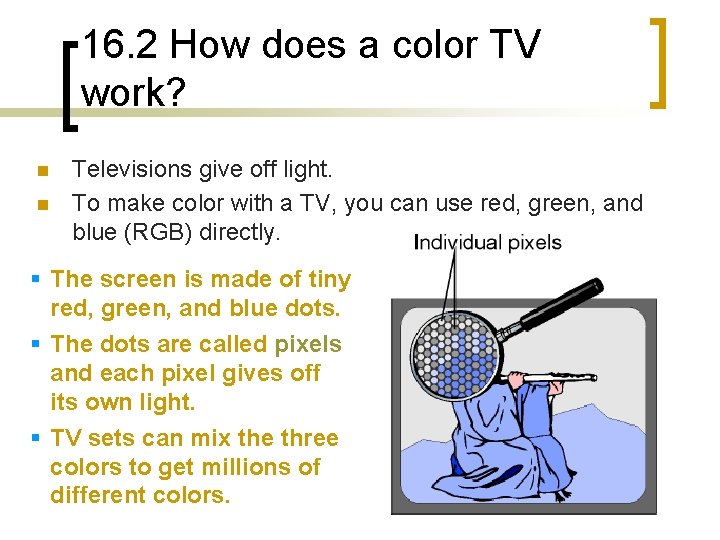
16. 2 How does a color TV work? n n Televisions give off light. To make color with a TV, you can use red, green, and blue (RGB) directly. § The screen is made of tiny red, green, and blue dots. § The dots are called pixels and each pixel gives off its own light. § TV sets can mix the three colors to get millions of different colors.
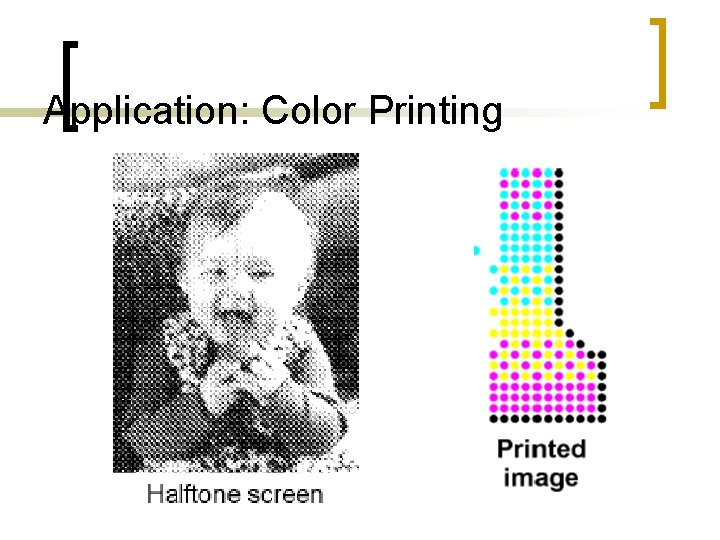
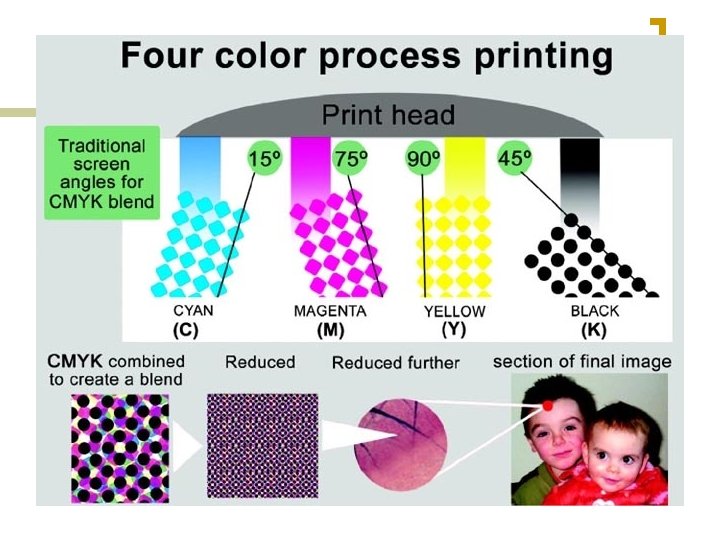
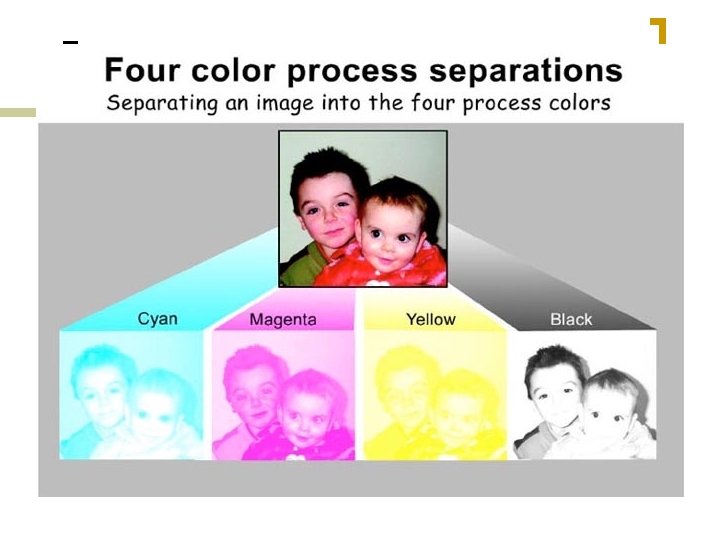
Application: Color Printing
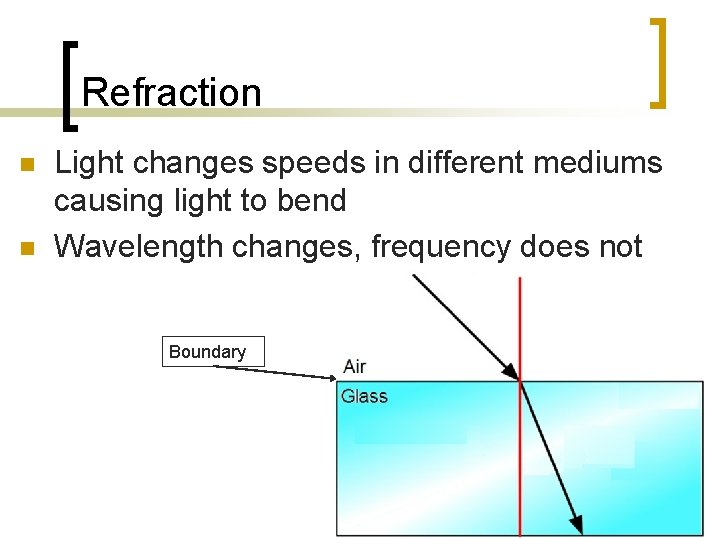
Refraction n n Light changes speeds in different mediums causing light to bend Wavelength changes, frequency does not Boundary
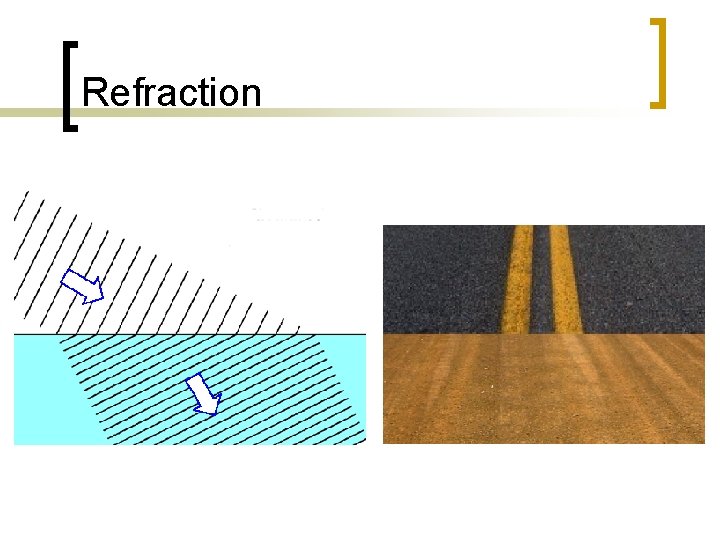
Refraction
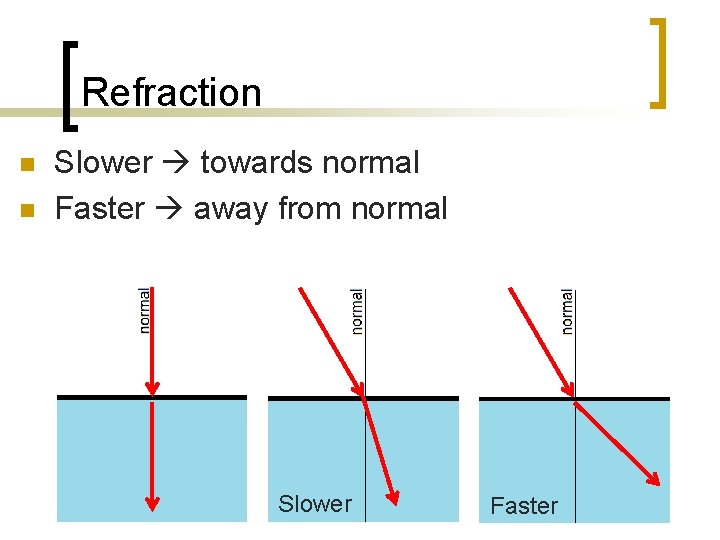
Refraction n n Slower towards normal Faster away from normal Slower Faster
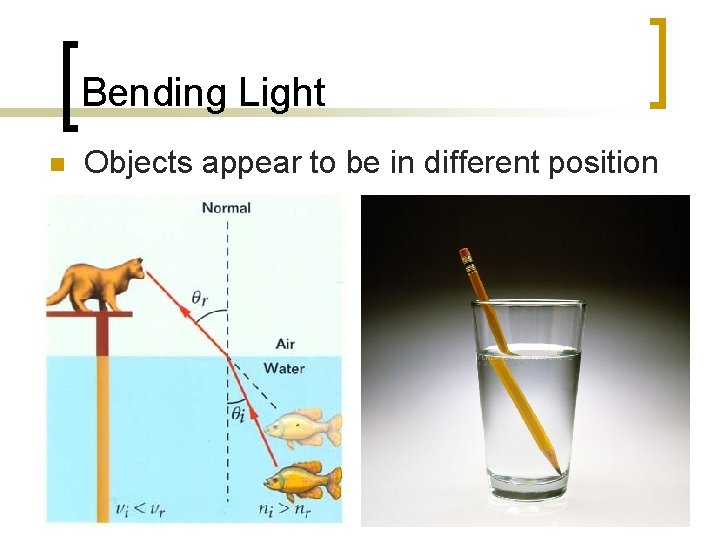
Bending Light n Objects appear to be in different position
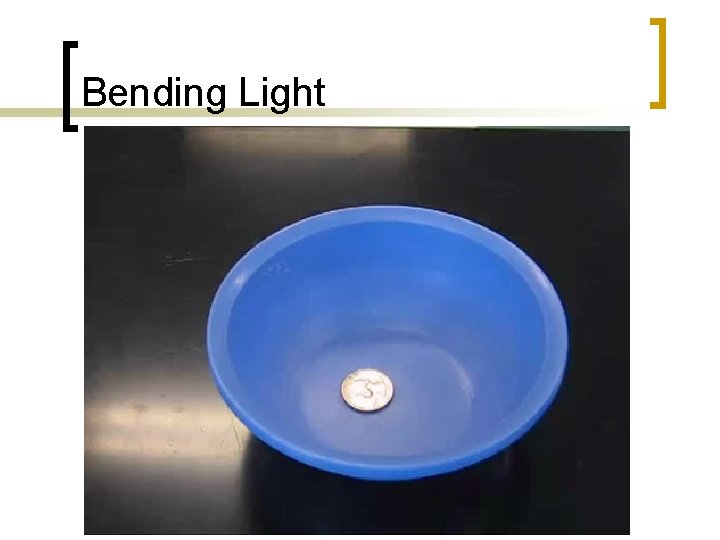
Bending Light
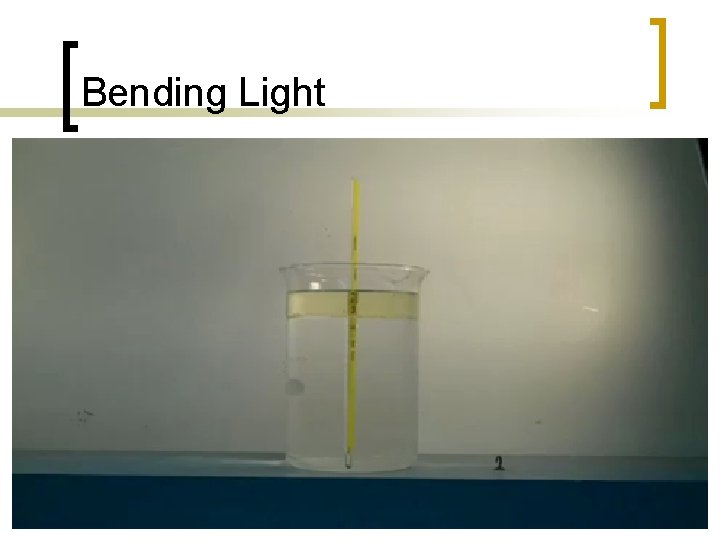
Bending Light
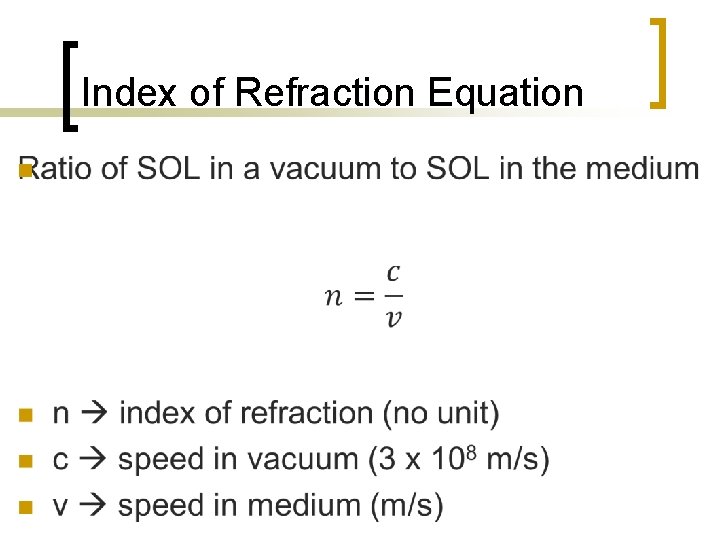
Index of Refraction Equation n
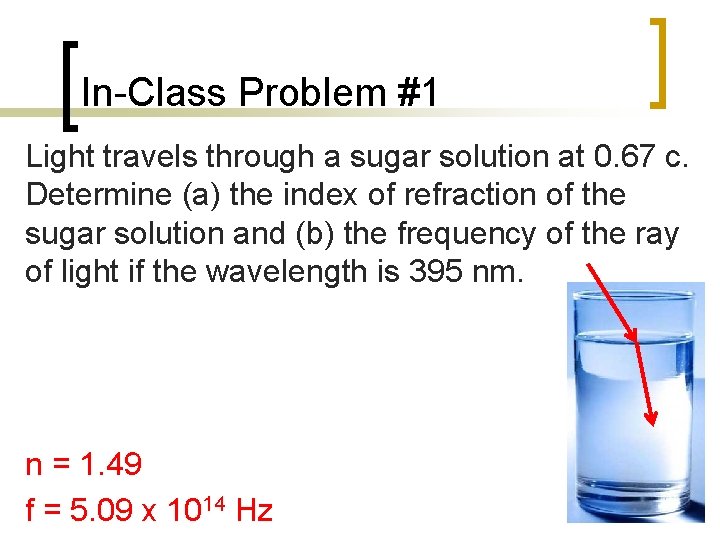
In-Class Problem #1 Light travels through a sugar solution at 0. 67 c. Determine (a) the index of refraction of the sugar solution and (b) the frequency of the ray of light if the wavelength is 395 nm. n = 1. 49 f = 5. 09 x 1014 Hz
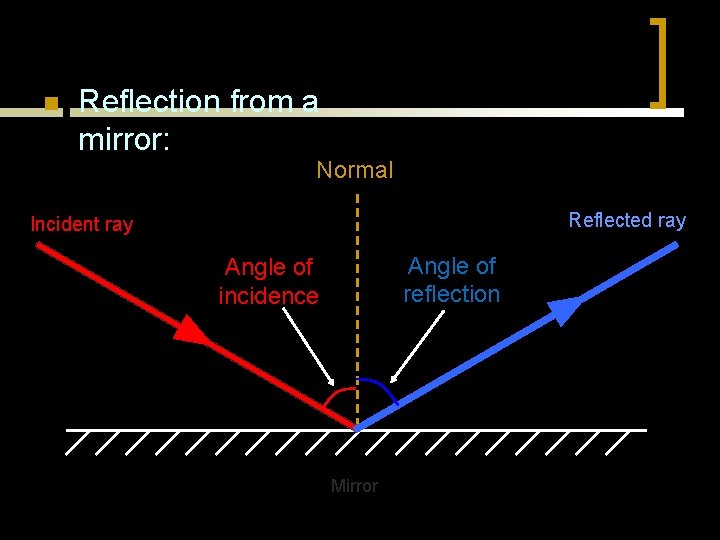
Part 2 - Reflection n Reflection from a mirror: Normal Reflected ray Incident ray Angle of reflection Angle of incidence Mirror
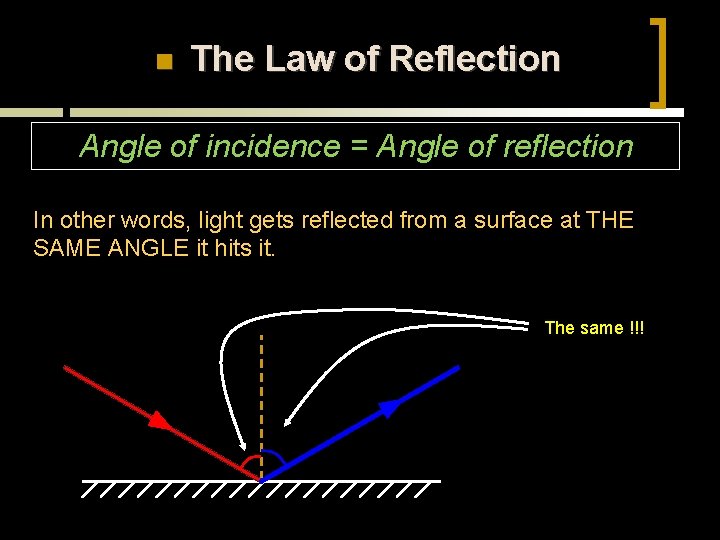
n The Law of Reflection Angle of incidence = Angle of reflection In other words, light gets reflected from a surface at THE SAME ANGLE it hits it. The same !!!