
Physics Chapter 20 Circuits and Circuit Elements Circuits
- Slides: 39
Physics Chapter 20: Circuits and Circuit Elements
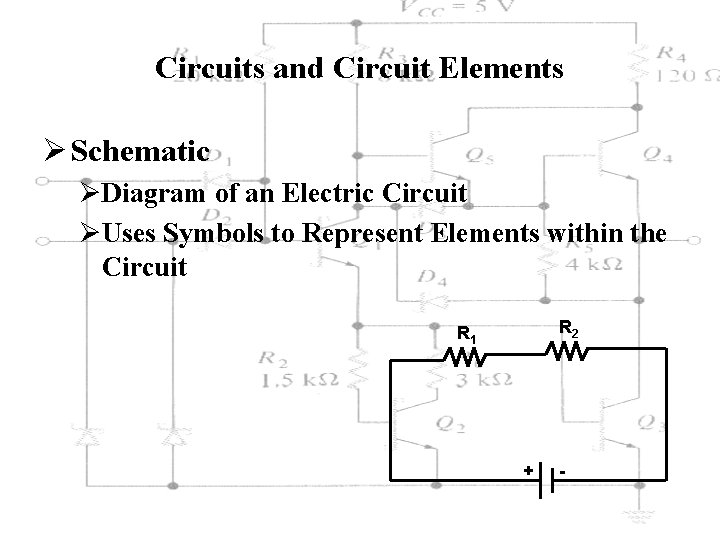
Circuits and Circuit Elements Ø Schematic ØDiagram of an Electric Circuit ØUses Symbols to Represent Elements within the Circuit R 2 R 1 + -
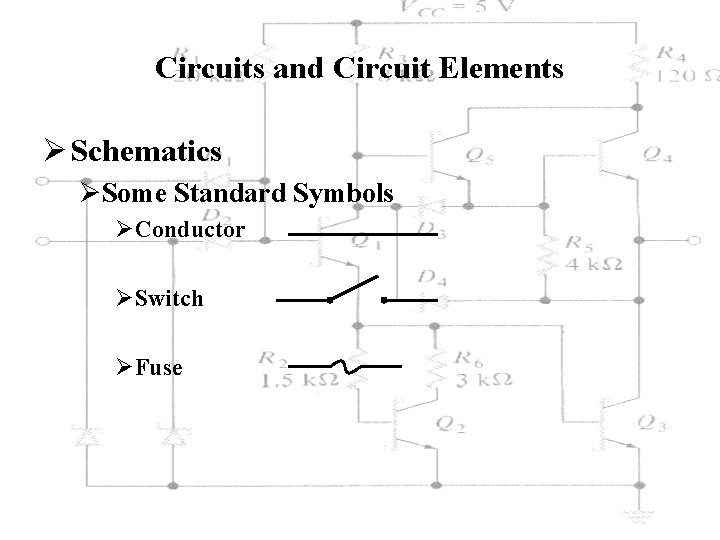
Circuits and Circuit Elements Ø Schematics ØSome Standard Symbols ØConductor ØSwitch ØFuse
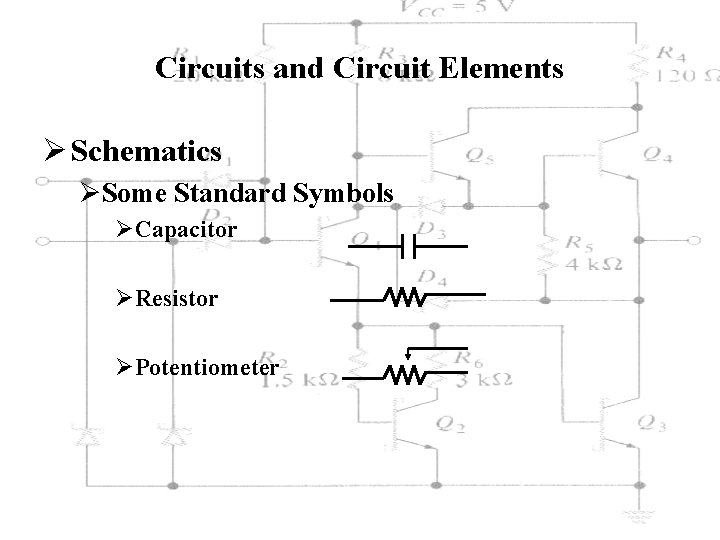
Circuits and Circuit Elements Ø Schematics ØSome Standard Symbols ØCapacitor ØResistor ØPotentiometer
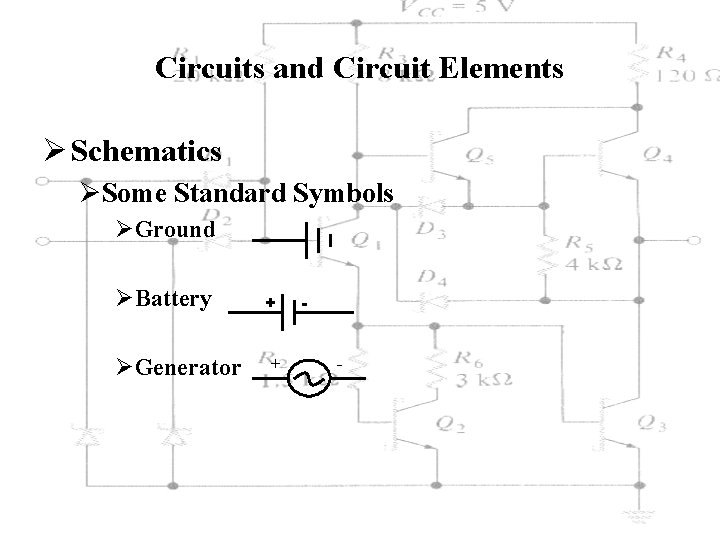
Circuits and Circuit Elements Ø Schematics ØSome Standard Symbols ØGround ØBattery ØGenerator + + -
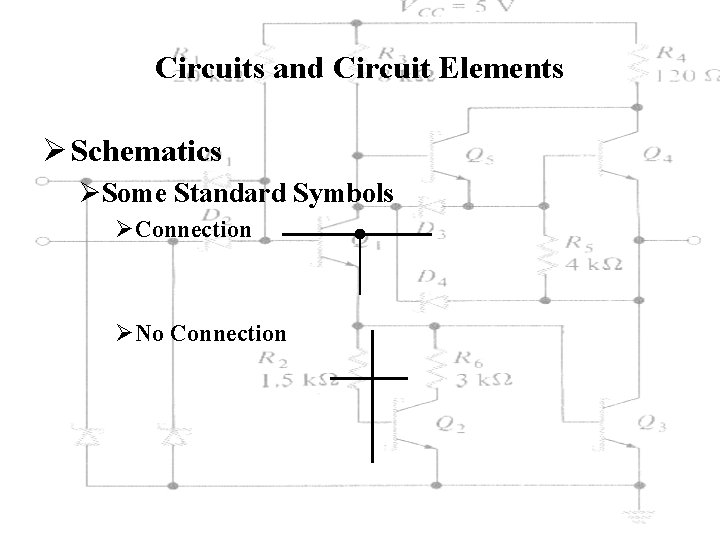
Circuits and Circuit Elements Ø Schematics ØSome Standard Symbols ØConnection ØNo Connection
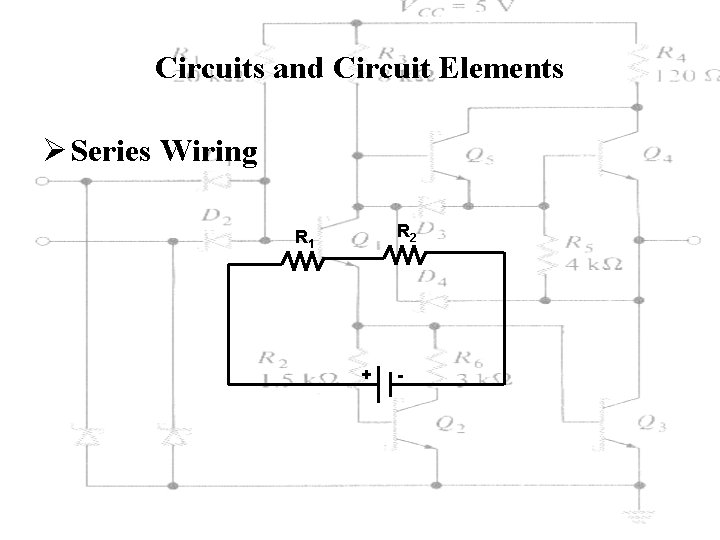
Circuits and Circuit Elements Ø Series Wiring R 2 R 1 + -
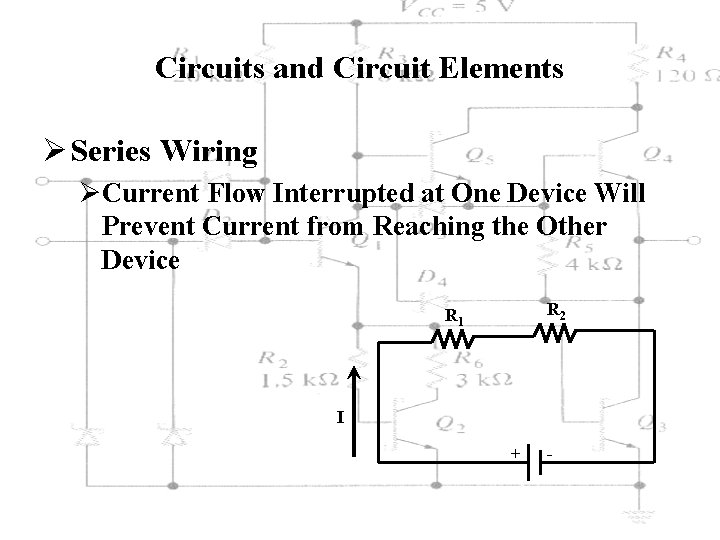
Circuits and Circuit Elements Ø Series Wiring ØMore than One Device Connected to a Voltage Source ØProvides the Same Electric Current Through Each Device
Circuits and Circuit Elements Ø Series Wiring ØCurrent Flow Interrupted at One Device Will Prevent Current from Reaching the Other Device R 2 R 1 I + -
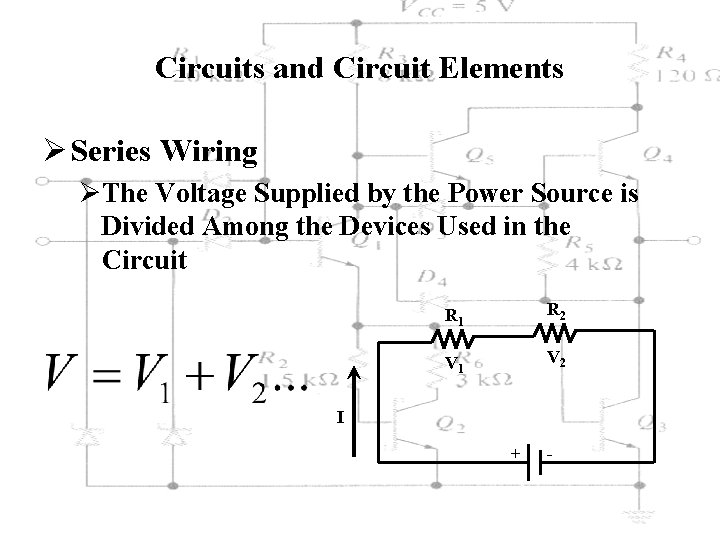
Circuits and Circuit Elements Ø Series Wiring ØThe Voltage Supplied by the Power Source is Divided Among the Devices Used in the Circuit R 1 R 2 V 1 V 2 I + -
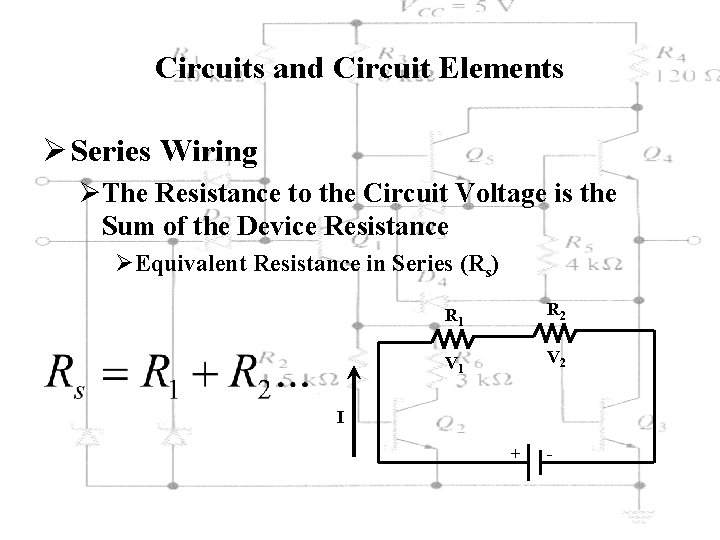
Circuits and Circuit Elements Ø Series Wiring ØThe Resistance to the Circuit Voltage is the Sum of the Device Resistance ØEquivalent Resistance in Series (Rs) R 1 R 2 V 1 V 2 I + -
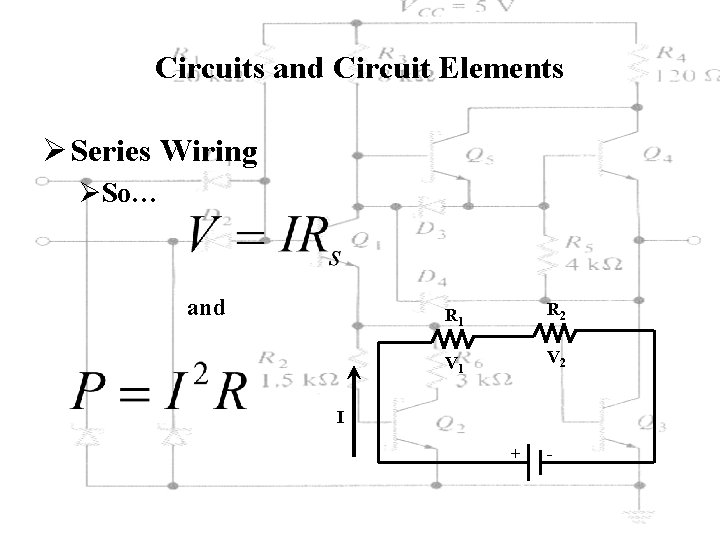
Circuits and Circuit Elements Ø Series Wiring ØSo… and R 1 R 2 V 1 V 2 I + -
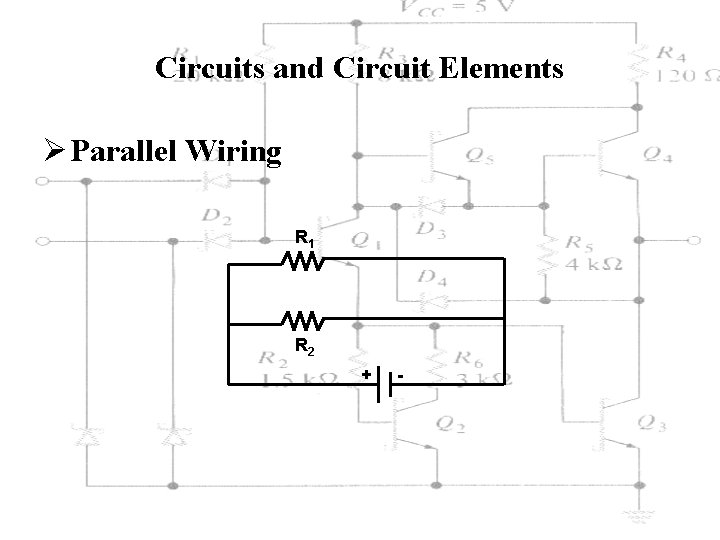
Circuits and Circuit Elements Ø Parallel Wiring R 1 R 2 + -
Circuits and Circuit Elements Ø Parallel Wiring ØMore than One Device Connected to a Voltage Source ØProvides the Same Electric Voltage Through Each Device
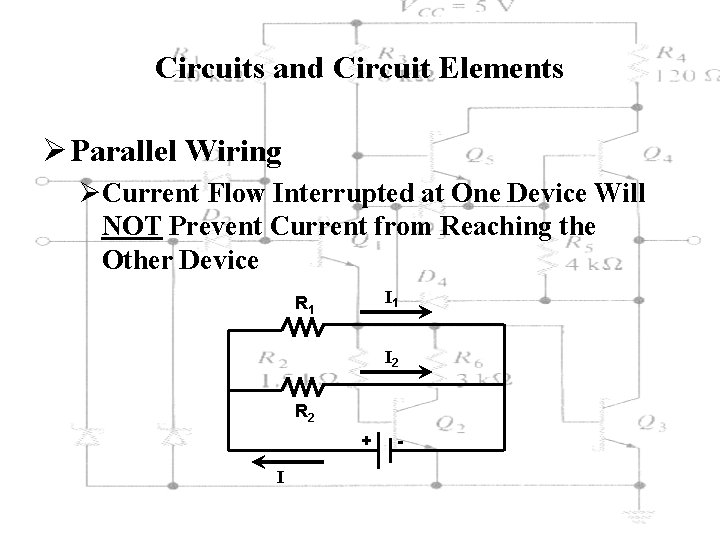
Circuits and Circuit Elements Ø Parallel Wiring ØCurrent Flow Interrupted at One Device Will NOT Prevent Current from Reaching the Other Device I 1 R 1 I 2 R 2 + I -
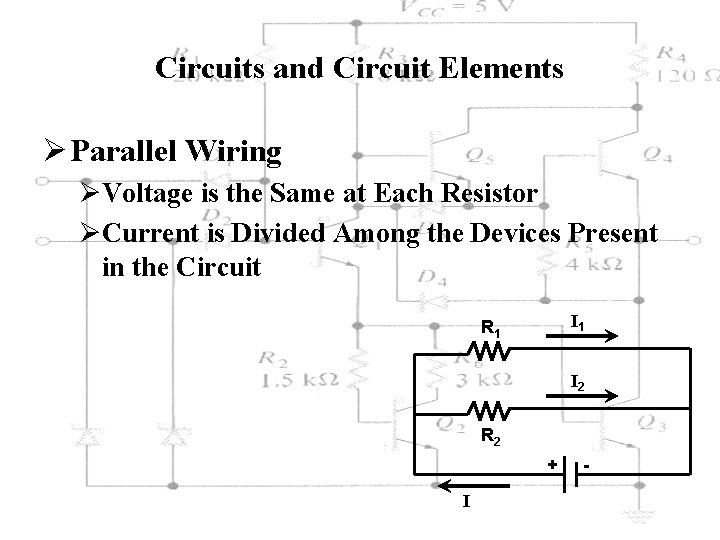
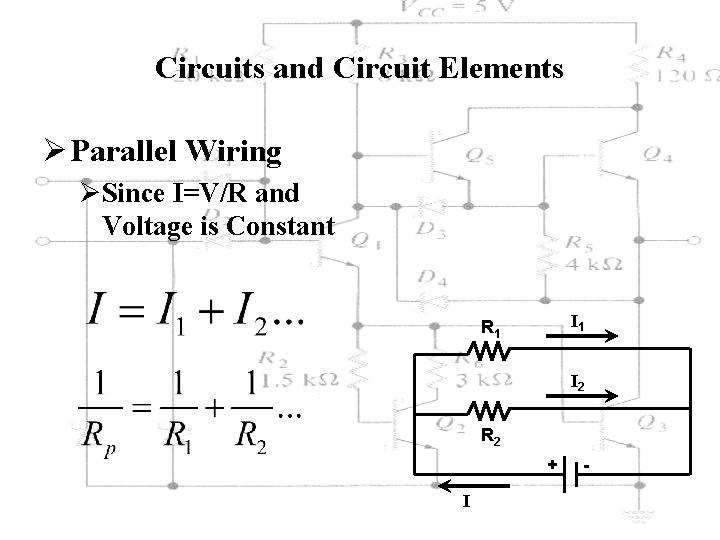
Circuits and Circuit Elements Ø Parallel Wiring ØVoltage is the Same at Each Resistor ØCurrent is Divided Among the Devices Present in the Circuit I 1 R 1 I 2 R 2 + I -
Circuits and Circuit Elements Ø Parallel Wiring ØSince I=V/R and Voltage is Constant I 1 R 1 I 2 R 2 + I -
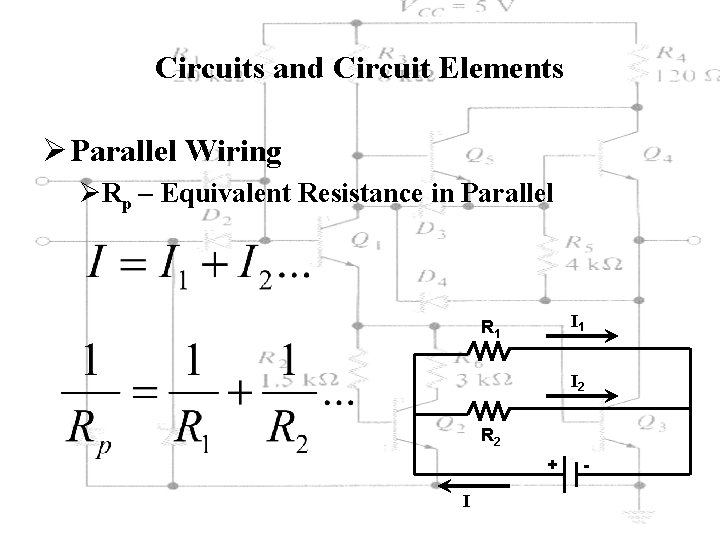
Circuits and Circuit Elements Ø Parallel Wiring ØRp – Equivalent Resistance in Parallel I 1 R 1 I 2 R 2 + I -
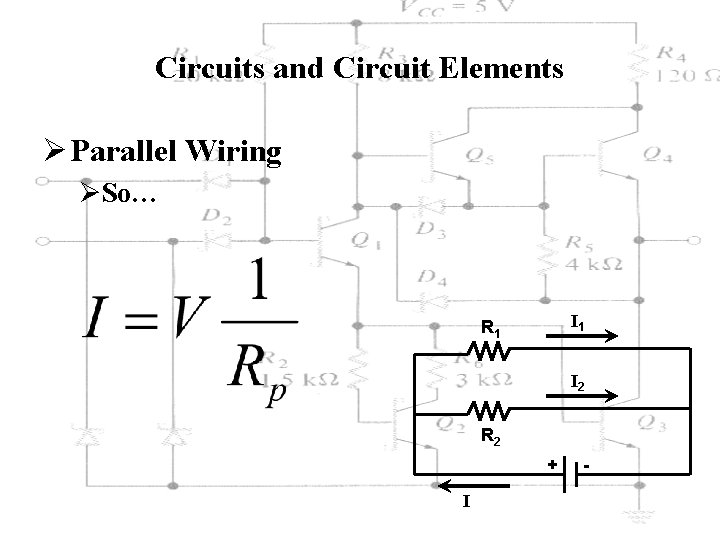
Circuits and Circuit Elements Ø Parallel Wiring ØSo… I 1 R 1 I 2 R 2 + I -
Circuits and Circuit Elements Ø Problem: ØA current of 1. 2 A is measured through a light bulb when it is connected across a 120 V source. What power is dissipated by the bulb?
Circuits and Circuit Elements Ø Solution: FV = 120 V FI = 1. 2 A FP = ?
Circuits and Circuit Elements Ø Problem: ØA 12 V automobile battery is connected to an electric starter motor. The current through the motor is 210 A. How many joules of energy does the battery deliver to the motor each second, and what power, in watts, does the motor use?
Circuits and Circuit Elements Ø Solution: FV = 12 V FI = 210 A FP = ?
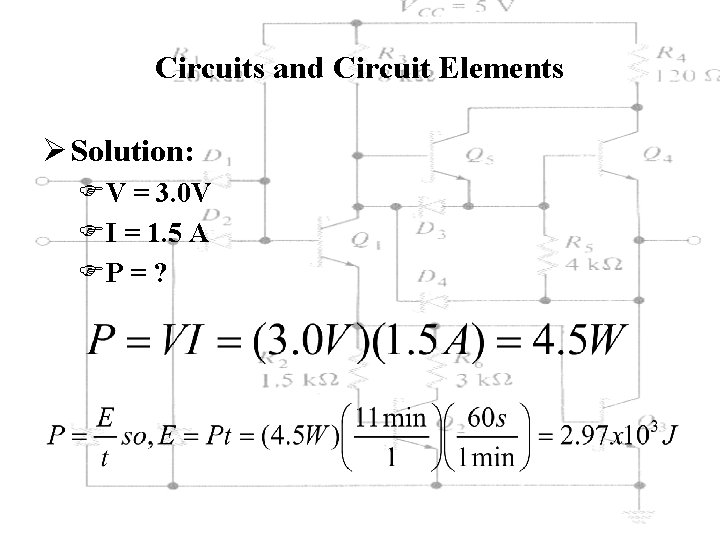
Circuits and Circuit Elements Ø Problem: ØA flashlight bulb is connected across a 3. 0 V potential difference. The current through the lamp is 1. 5 A. What is the power rating of the lamp, and how much electric energy does the lamp use in 11 minutes?
Circuits and Circuit Elements Ø Solution: FV = 3. 0 V FI = 1. 5 A FP = ?
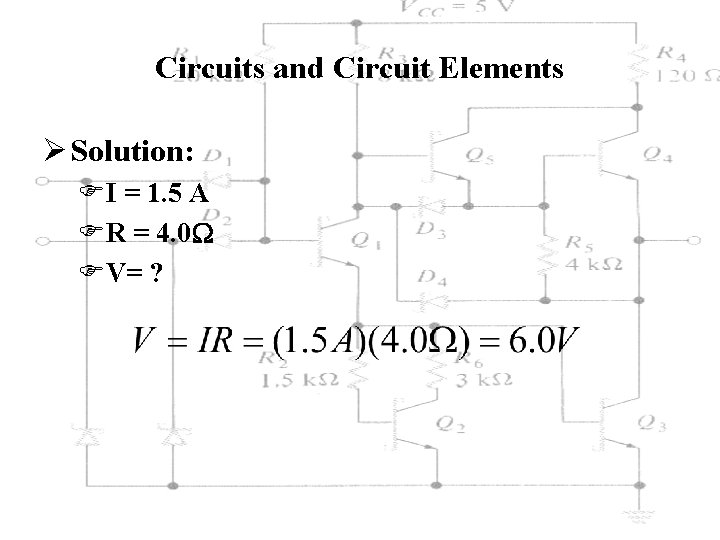
Circuits and Circuit Elements Ø Problem: ØWhat voltage is applied to a 4. 0 W resistor if the current is 1. 5 A?
Circuits and Circuit Elements Ø Solution: FI = 1. 5 A FR = 4. 0 W FV= ?
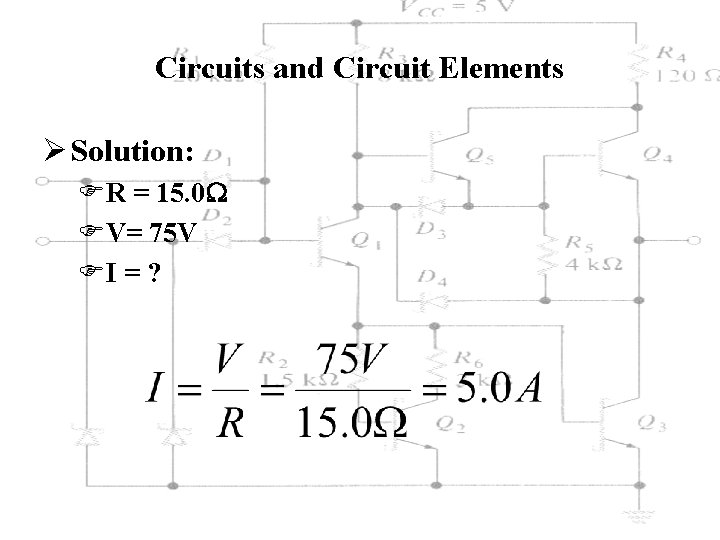
Circuits and Circuit Elements Ø Problem: ØA voltage of 75 V is placed across a 15 W resistor. What is the current through the resistor?
Circuits and Circuit Elements Ø Solution: FR = 15. 0 W FV= 75 V FI = ?
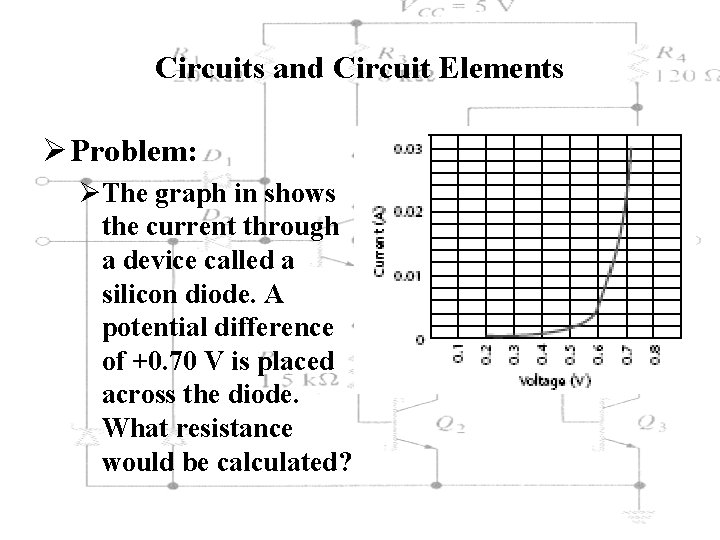
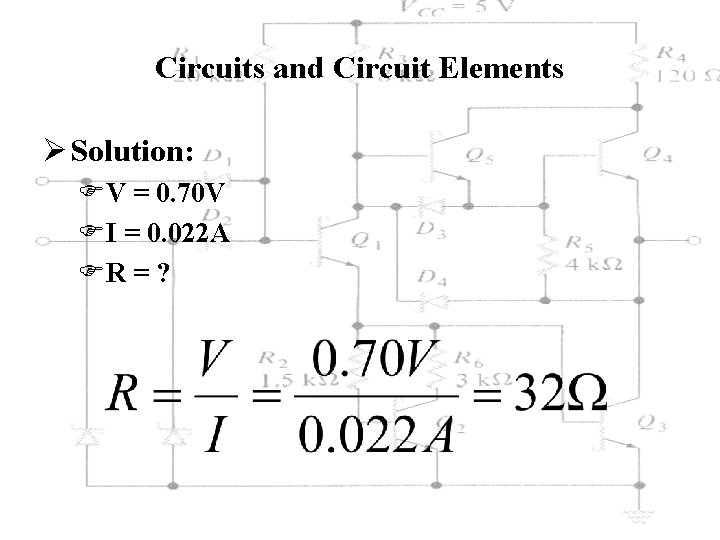
Circuits and Circuit Elements Ø Problem: ØThe graph in shows the current through a device called a silicon diode. A potential difference of +0. 70 V is placed across the diode. What resistance would be calculated?
Circuits and Circuit Elements Ø Solution: FV = 0. 70 V FI = 0. 022 A FR = ?
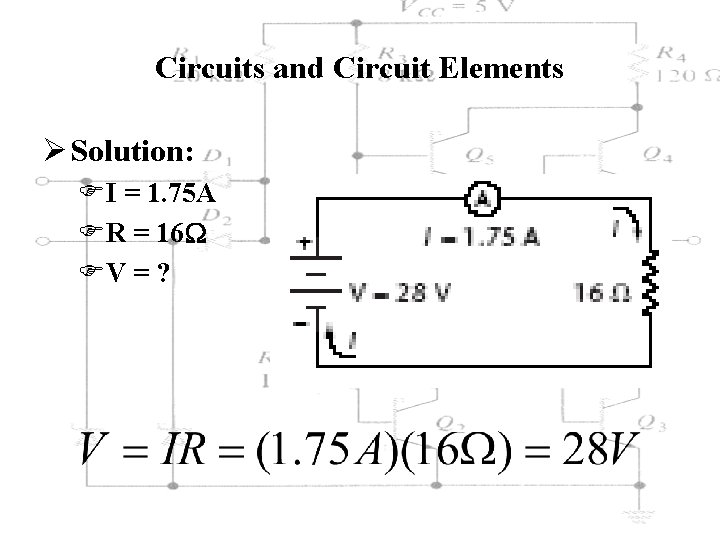
Circuits and Circuit Elements Ø Problem: ØDraw a series circuit diagram to include a 16 W resistor, a battery, and an ammeter that reads 1. 75 A. Conventional current is measured through the meter from left to right. Indicate the positive terminal and the voltage of the battery.
Circuits and Circuit Elements Ø Solution: FI = 1. 75 A FR = 16 W FV = ?
Circuits and Circuit Elements Ø Problem: ØThe wire in a house circuit is rated at 15. 0 A and has a resistance of 0. 15 W. What is its power rating?
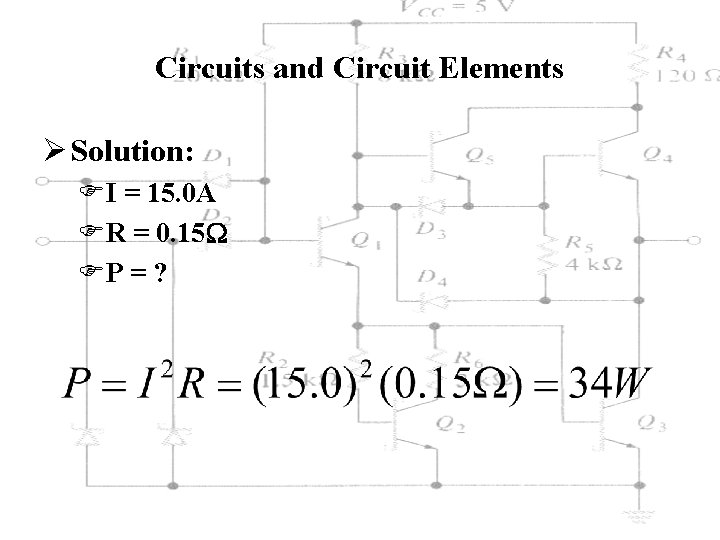
Circuits and Circuit Elements Ø Solution: FI = 15. 0 A FR = 0. 15 W FP = ?
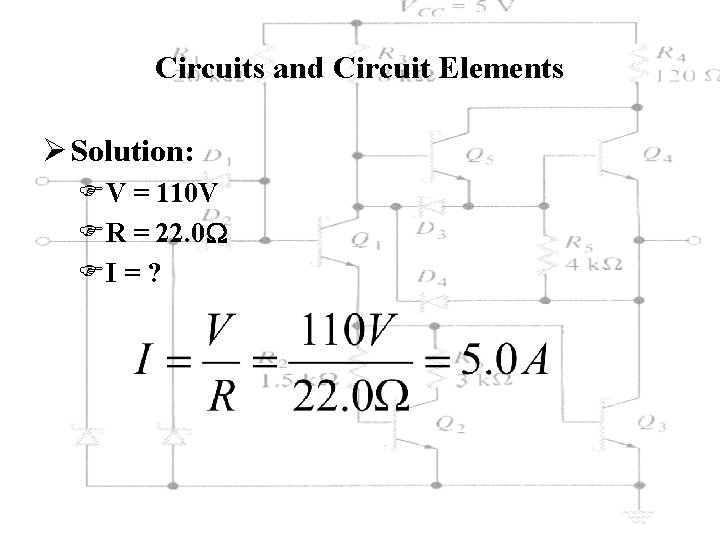
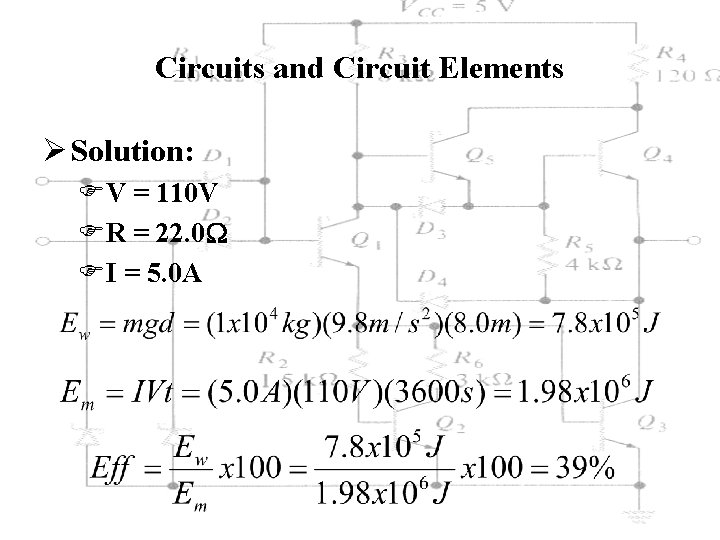
Circuits and Circuit Elements Ø Problem: ØAn electric motor operates a pump that irrigates a farmer’s crop by pumping 10, 000 L of water a vertical distance of 8. 0 m into a field each hour. The motor has an operating resistance of 22. 0 W and is connected across a 110 V source. What current does it draw, and how efficient is the motor?
Circuits and Circuit Elements Ø Solution: FV = 110 V FR = 22. 0 W FI = ?
Circuits and Circuit Elements Ø Solution: FV = 110 V FR = 22. 0 W FI = 5. 0 A
Circuits and Circuit Elements ØHomework ØPages 755 -756 ØProblems: Ø 17 (a, 24 W b, 1. 0 A) Ø 19 (a, 2. 99 W b, 4. 0 A) Ø 26 (a, 1. 7 A b, 3. 4 V c, 5. 1 V d, 0. 42 A)