
Physics bridging task 2 Introduction to forces Continuing
Physics bridging task 2: Introduction to forces Continuing theme of consolidating material that you have already covered in Y 11, (so that you have a really firm foundation in GCSE physics when you start the A-level course), the following is the introductory lesson on forces, which features as its main theme 'Interaction pairs' , a concept that is often not as well understood as it needs to be, in A-level physics. Work through the Powerpoint presentation, completing the included exercises, which are all capable of being self-marked. Because of this, you may work at your own pace, and set your own deadline, appropriate to your own circumstances.
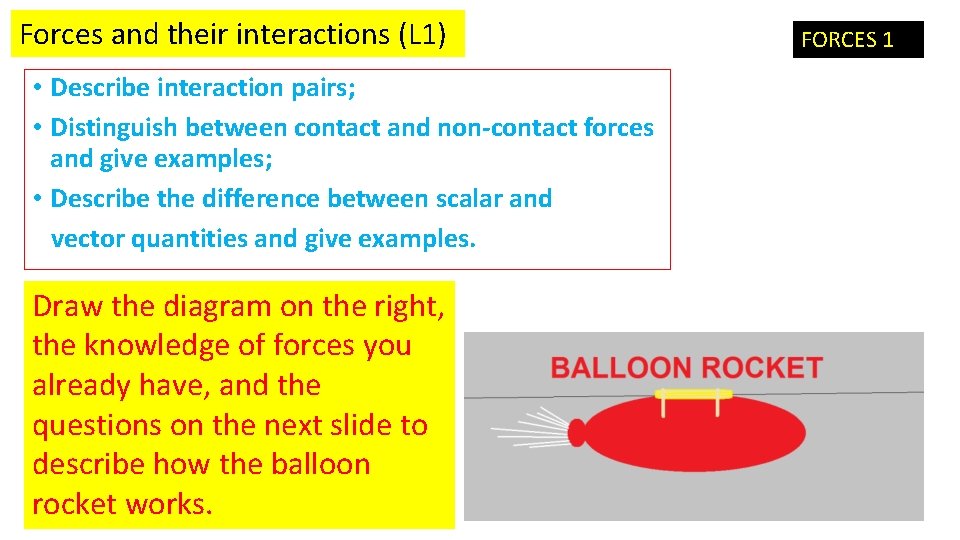
Forces and their interactions (L 1) • Describe interaction pairs; • Distinguish between contact and non-contact forces and give examples; • Describe the difference between scalar and vector quantities and give examples. Draw the diagram on the right, the knowledge of forces you already have, and the questions on the next slide to describe how the balloon rocket works. FORCES 1
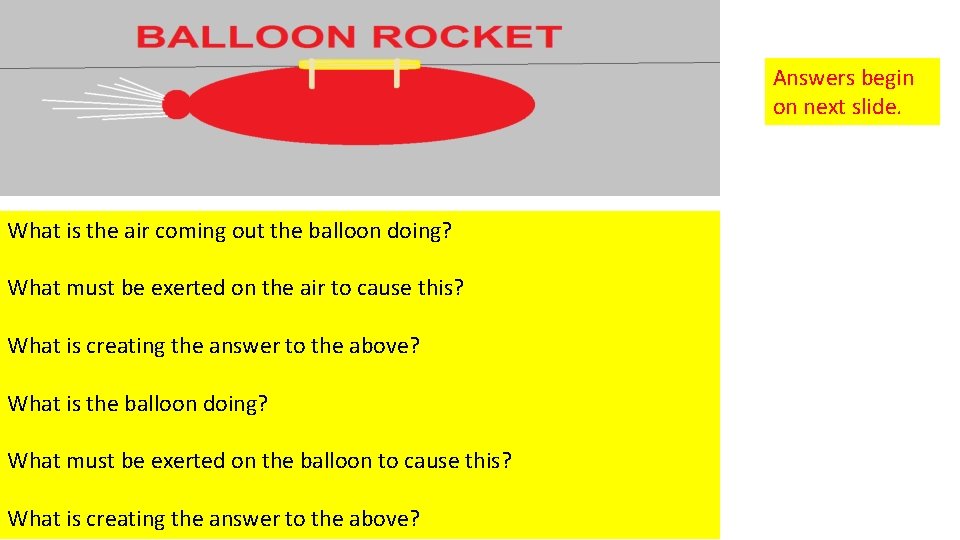
Answers begin on next slide. What is the air coming out the balloon doing? What must be exerted on the air to cause this? What is creating the answer to the above? What is the balloon doing? What must be exerted on the balloon to cause this? What is creating the answer to the above?
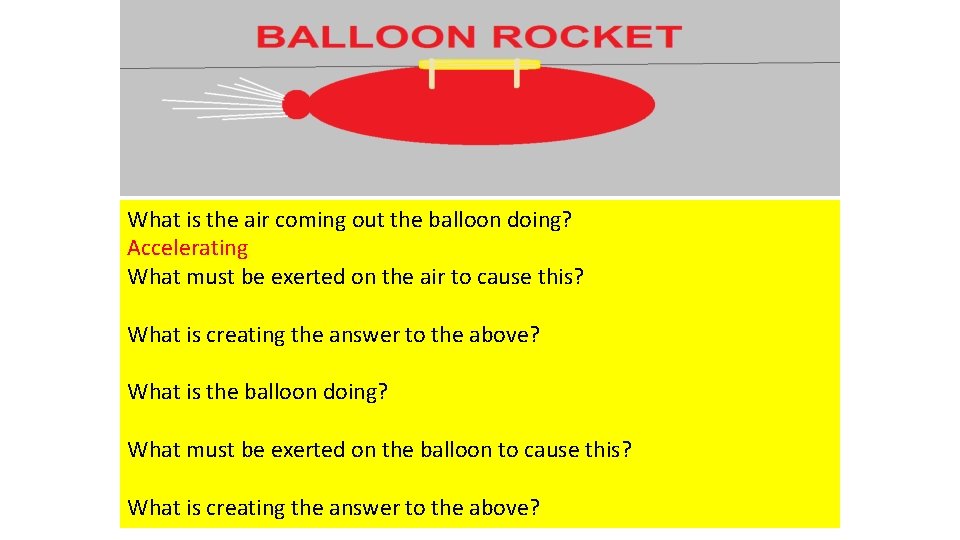
What is the air coming out the balloon doing? Accelerating What must be exerted on the air to cause this? What is creating the answer to the above? What is the balloon doing? What must be exerted on the balloon to cause this? What is creating the answer to the above?
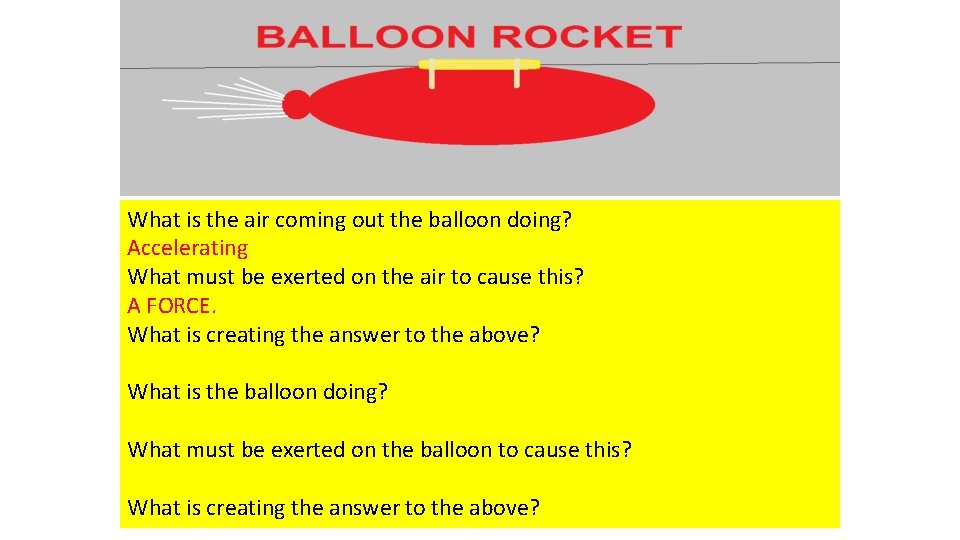
What is the air coming out the balloon doing? Accelerating What must be exerted on the air to cause this? A FORCE. What is creating the answer to the above? What is the balloon doing? What must be exerted on the balloon to cause this? What is creating the answer to the above?
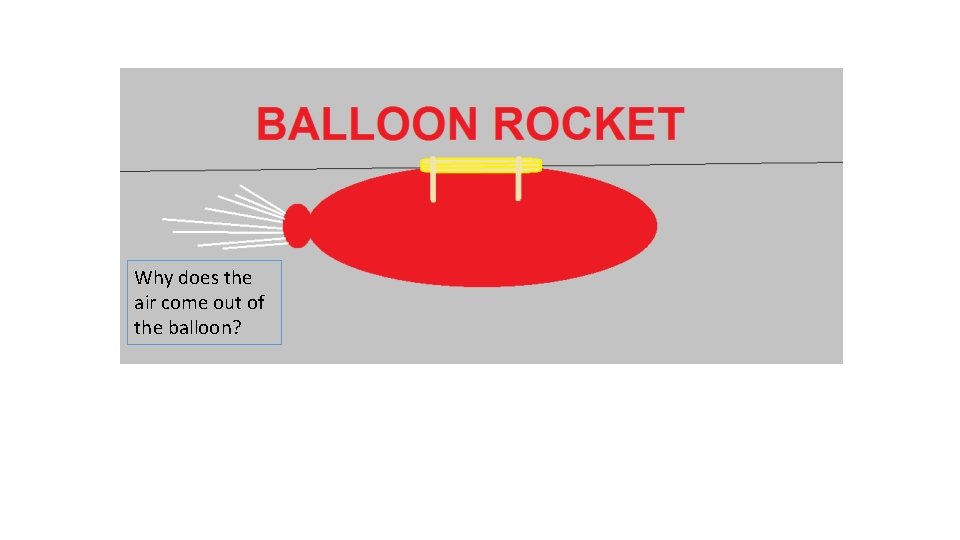
Why does the air come out of the balloon?
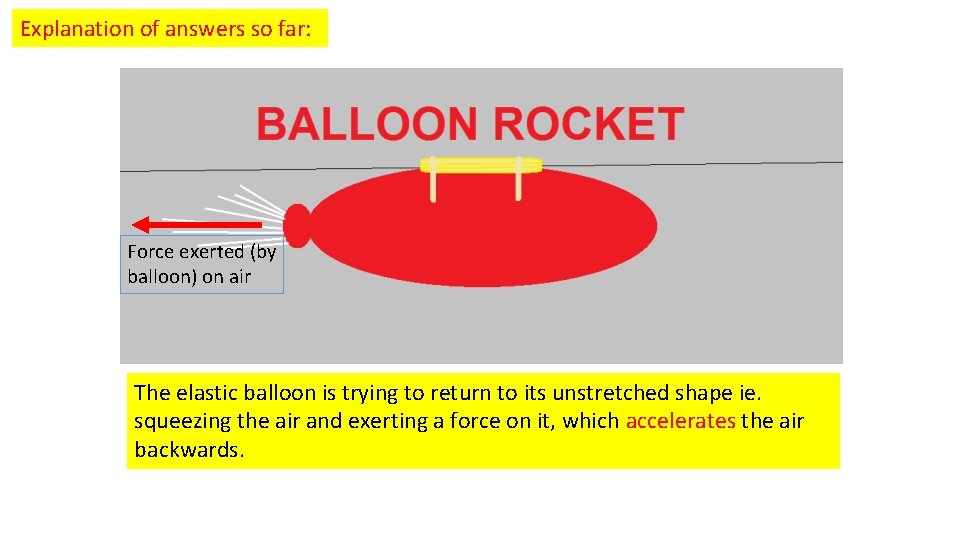
Explanation of answers so far: Force exerted (by balloon) on air The elastic balloon is trying to return to its unstretched shape ie. squeezing the air and exerting a force on it, which accelerates the air backwards.
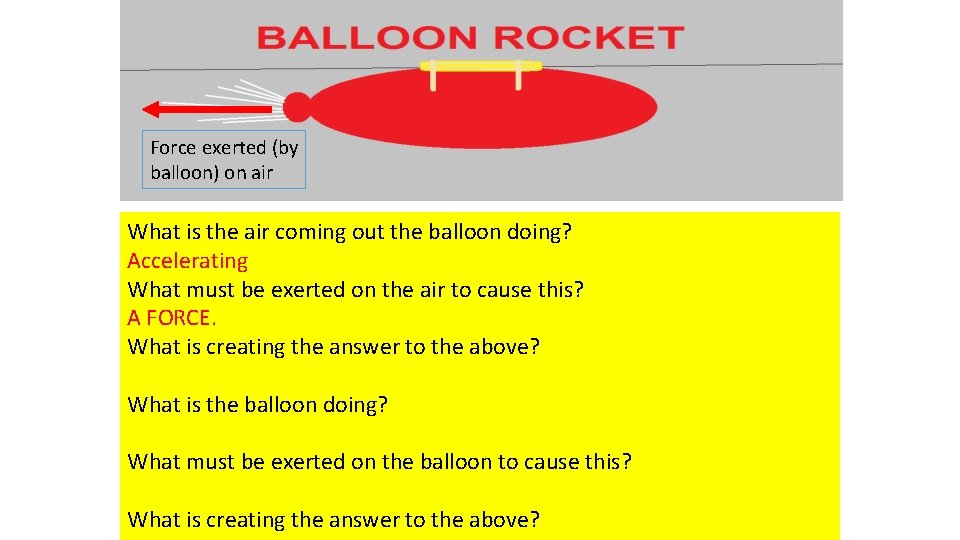
Force exerted (by balloon) on air What is the air coming out the balloon doing? Accelerating What must be exerted on the air to cause this? A FORCE. What is creating the answer to the above? What is the balloon doing? What must be exerted on the balloon to cause this? What is creating the answer to the above?
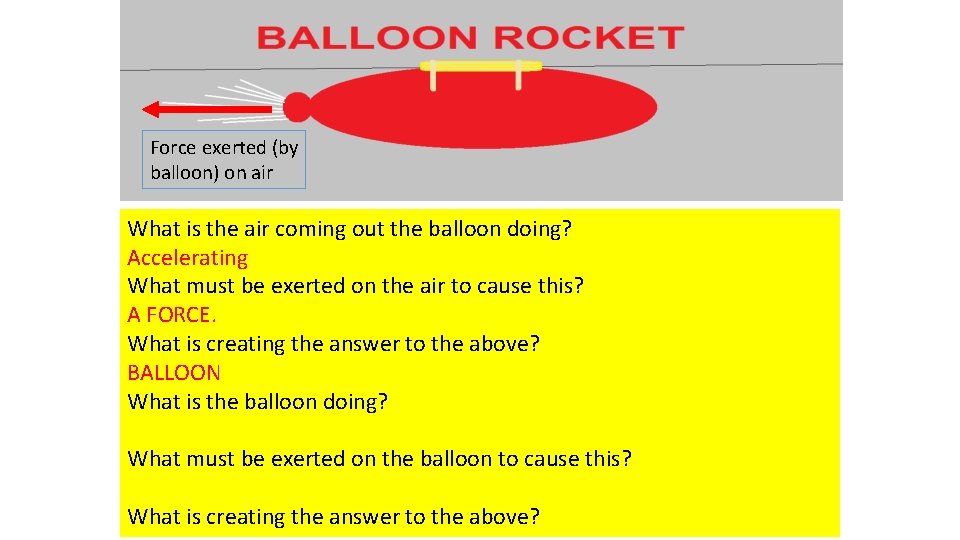
Force exerted (by balloon) on air What is the air coming out the balloon doing? Accelerating What must be exerted on the air to cause this? A FORCE. What is creating the answer to the above? BALLOON What is the balloon doing? What must be exerted on the balloon to cause this? What is creating the answer to the above?
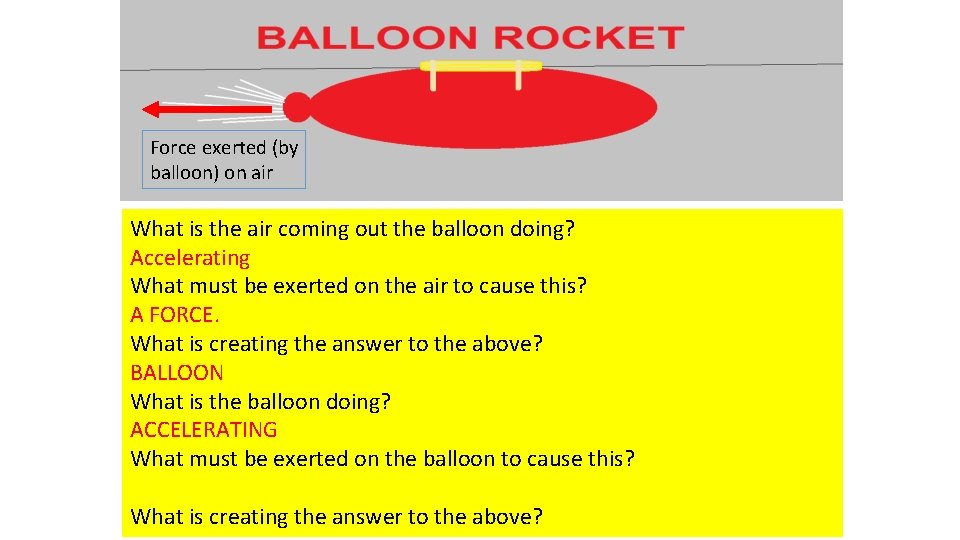
Force exerted (by balloon) on air What is the air coming out the balloon doing? Accelerating What must be exerted on the air to cause this? A FORCE. What is creating the answer to the above? BALLOON What is the balloon doing? ACCELERATING What must be exerted on the balloon to cause this? What is creating the answer to the above?
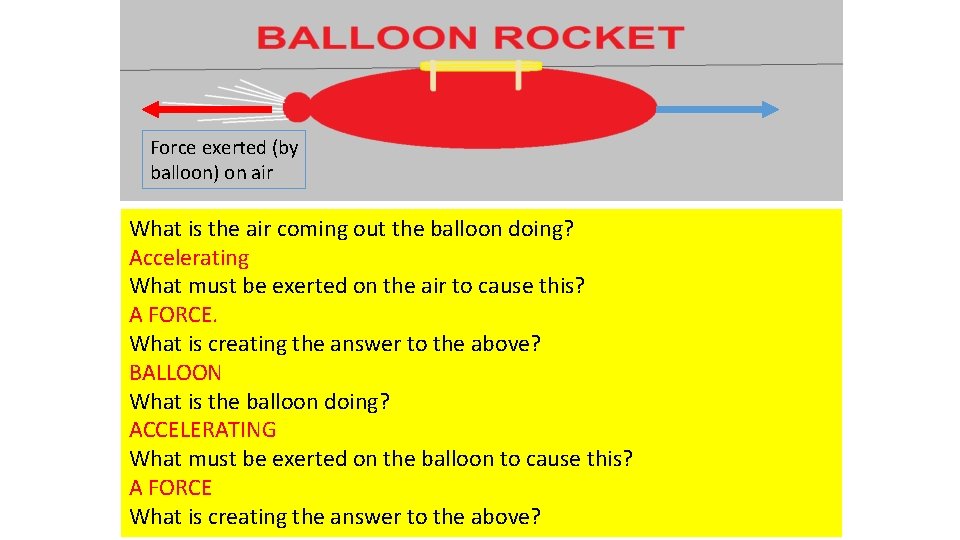
Force exerted (by balloon) on air What is the air coming out the balloon doing? Accelerating What must be exerted on the air to cause this? A FORCE. What is creating the answer to the above? BALLOON What is the balloon doing? ACCELERATING What must be exerted on the balloon to cause this? A FORCE What is creating the answer to the above?
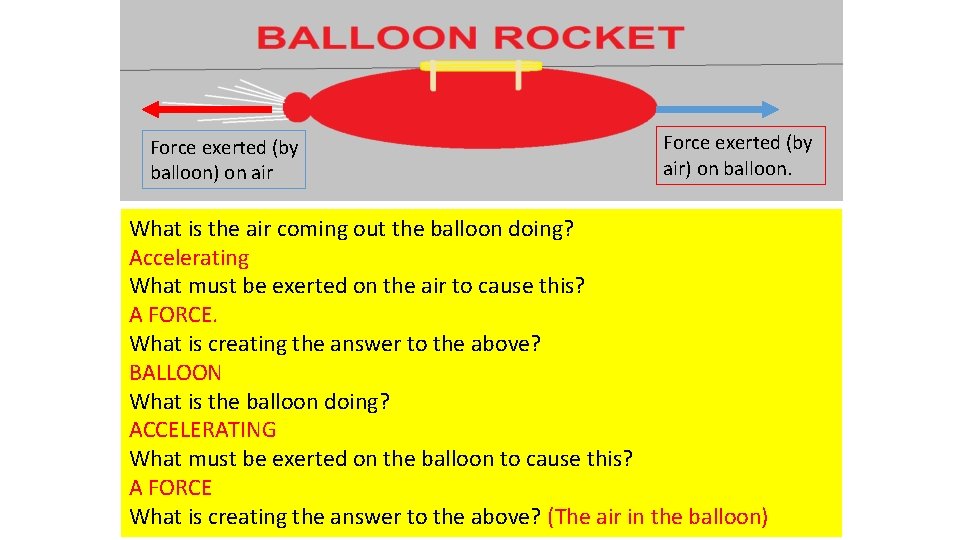
Force exerted (by balloon) on air Force exerted (by air) on balloon. What is the air coming out the balloon doing? Accelerating What must be exerted on the air to cause this? A FORCE. What is creating the answer to the above? BALLOON What is the balloon doing? ACCELERATING What must be exerted on the balloon to cause this? A FORCE What is creating the answer to the above? (The air in the balloon)

Explanation of answers so far: Force exerted (by balloon) on air. Force exerted (by air) on balloon. Forces come in pairs (interaction pairs) so if the balloon exerts a backwards force on the air, the air exerts a forward force on the balloon.
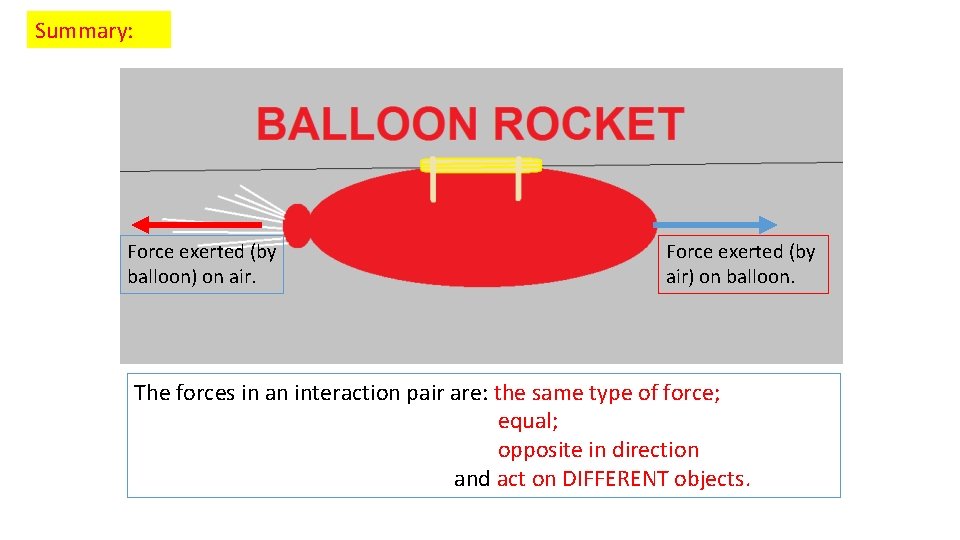
Summary: Force exerted (by balloon) on air. Force exerted (by air) on balloon. The forces in an interaction pair are: the same type of force; equal; opposite in direction and act on DIFFERENT objects.
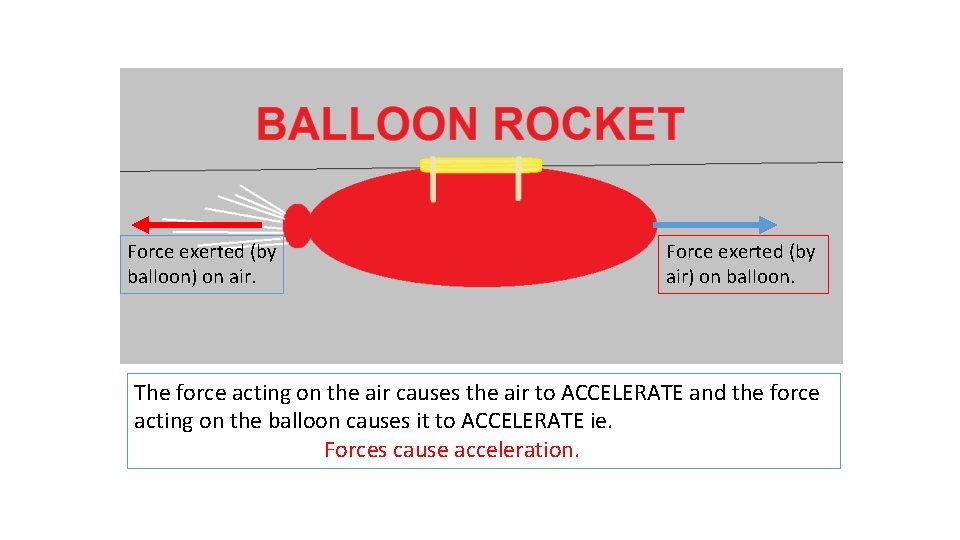
Force exerted (by balloon) on air. Force exerted (by air) on balloon. The force acting on the air causes the air to ACCELERATE and the force acting on the balloon causes it to ACCELERATE ie. Forces cause acceleration.
Interaction pairs
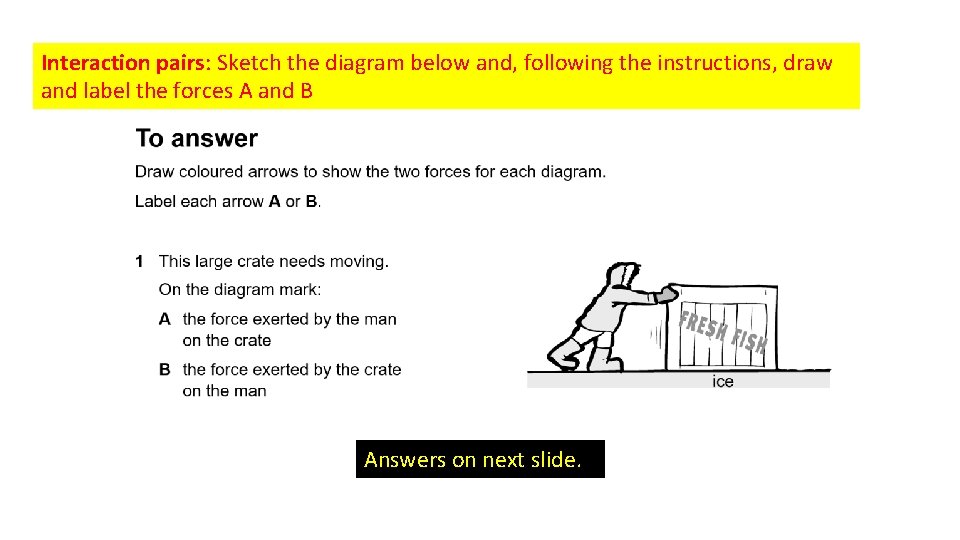
Interaction pairs: Sketch the diagram below and, following the instructions, draw and label the forces A and B Answers on next slide.
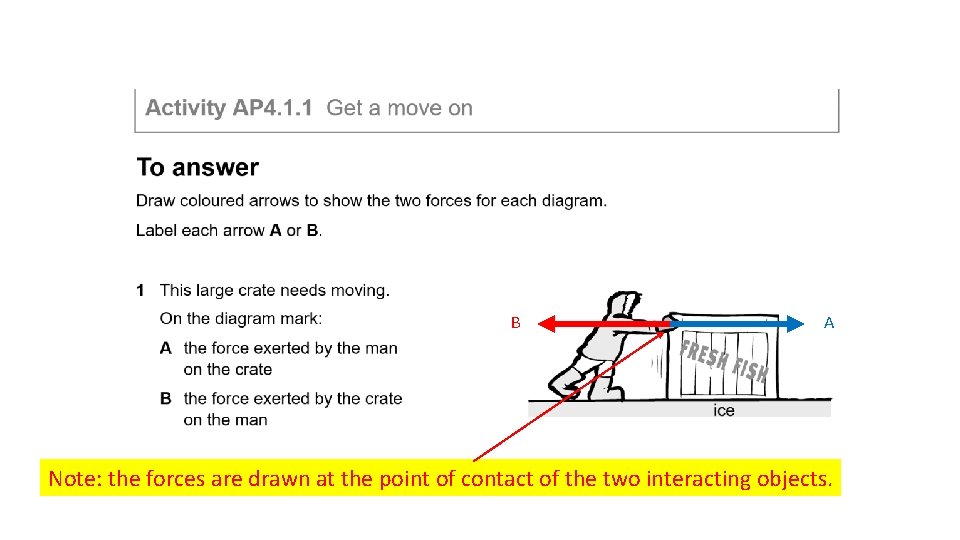
B A Note: the forces are drawn at the point of contact of the two interacting objects.
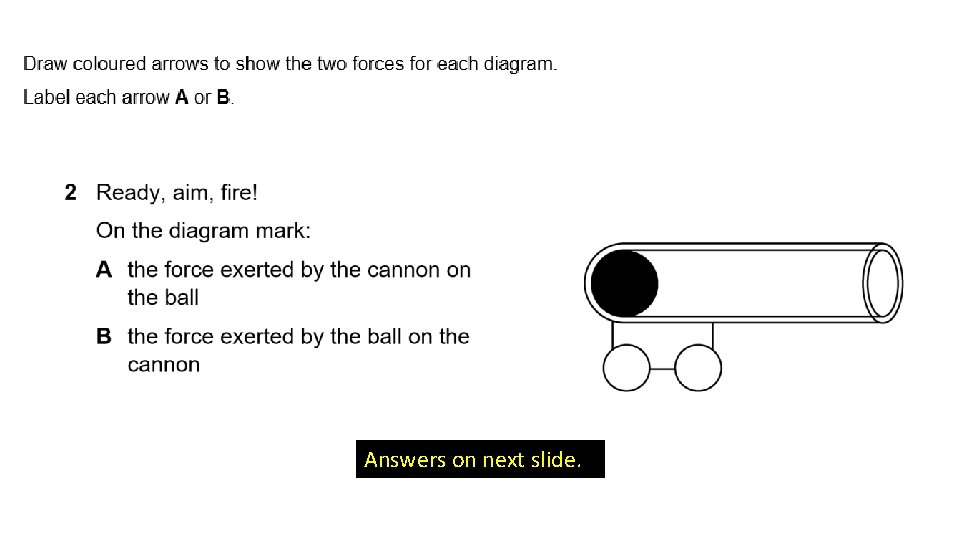
Answers on next slide.
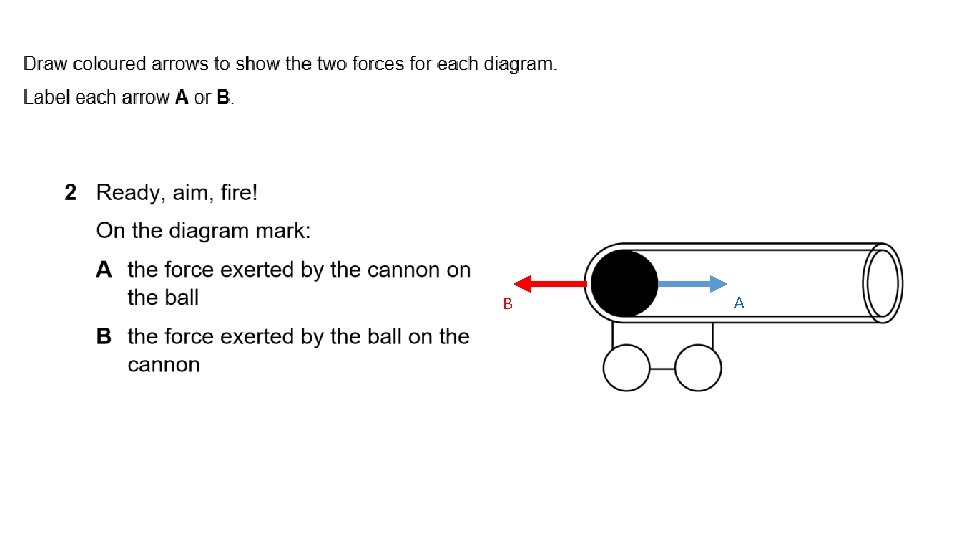
B A
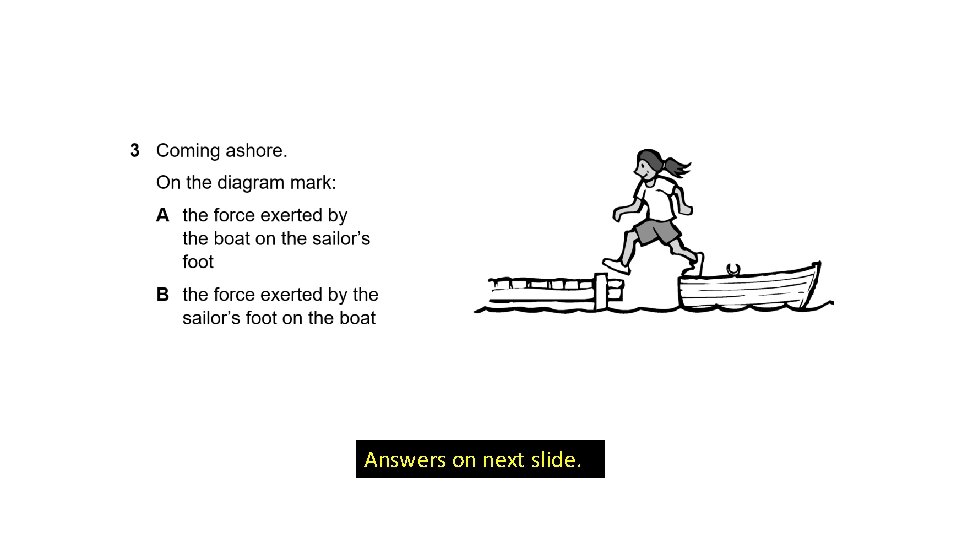
Answers on next slide.
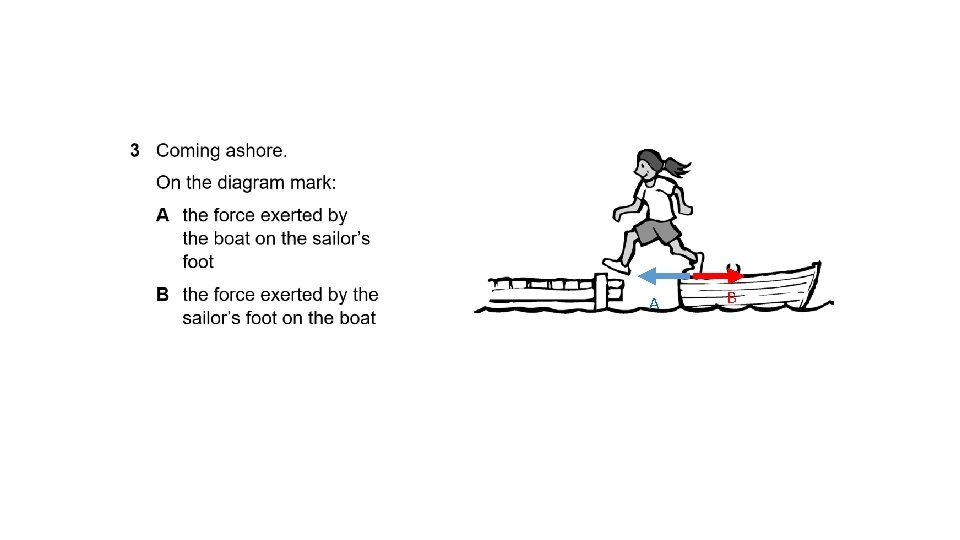
A B
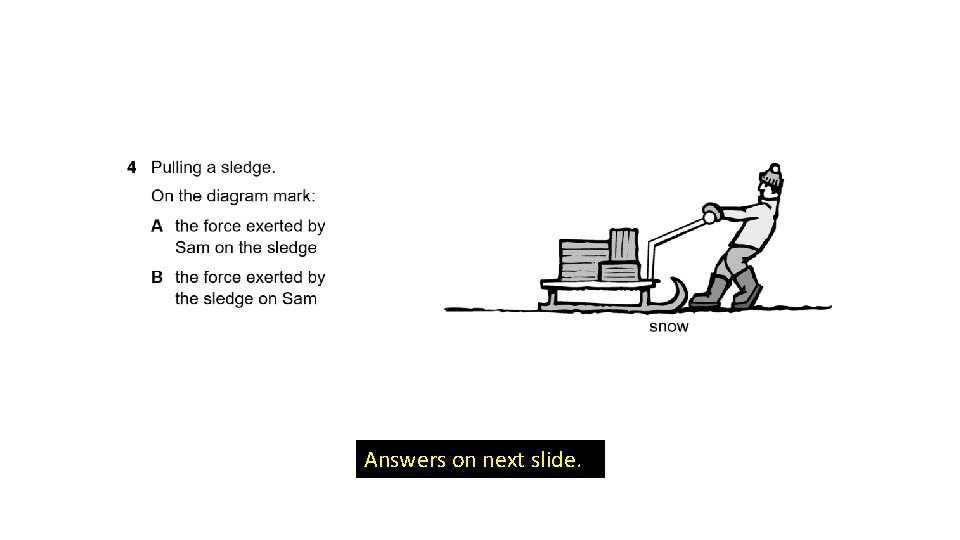
Answers on next slide.
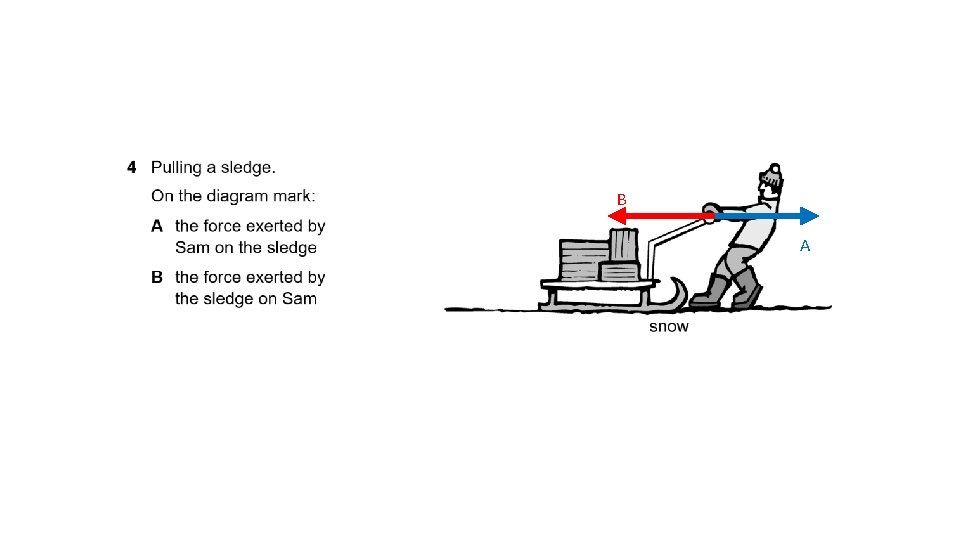
B A
Free body diagrams (Higher only)
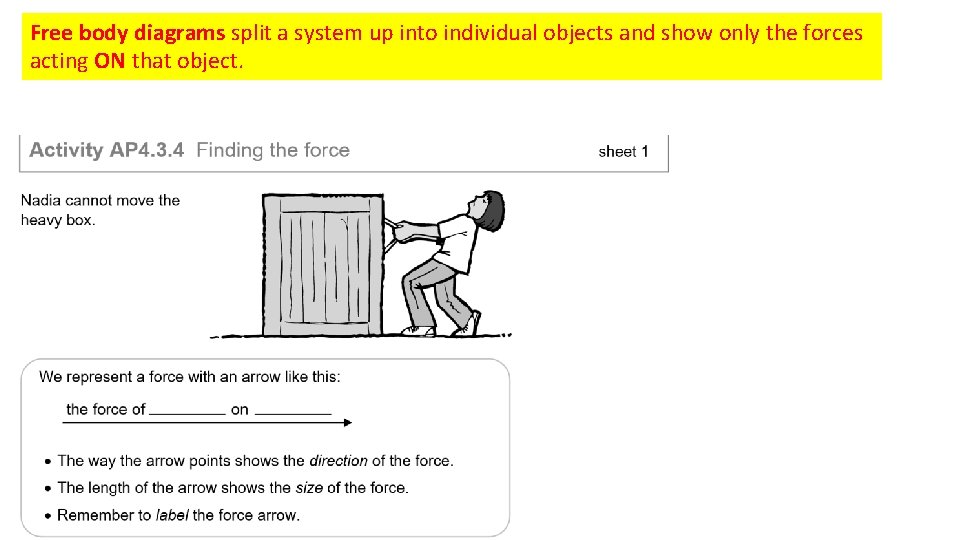
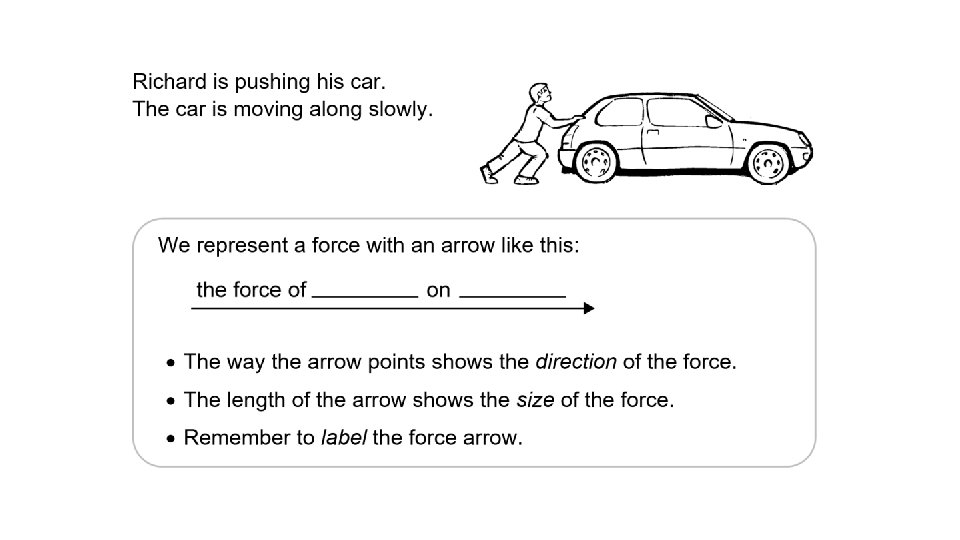
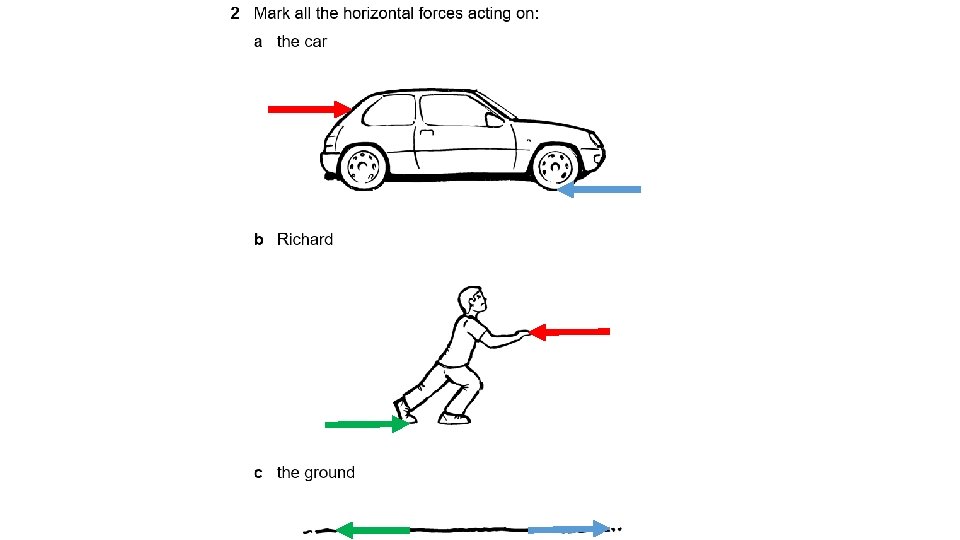
Free body diagrams split a system up into individual objects and show only the forces acting ON that object.
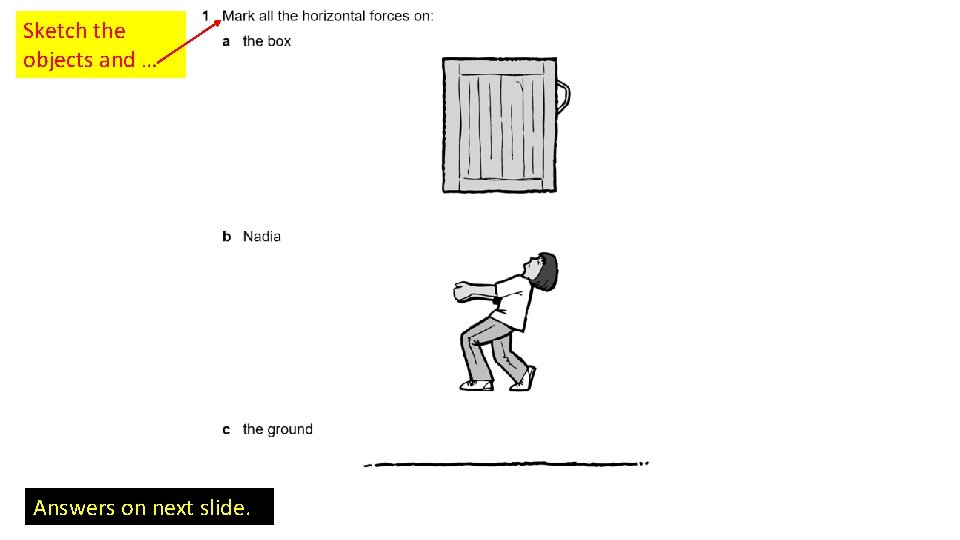
Sketch the objects and … Answers on next slide.
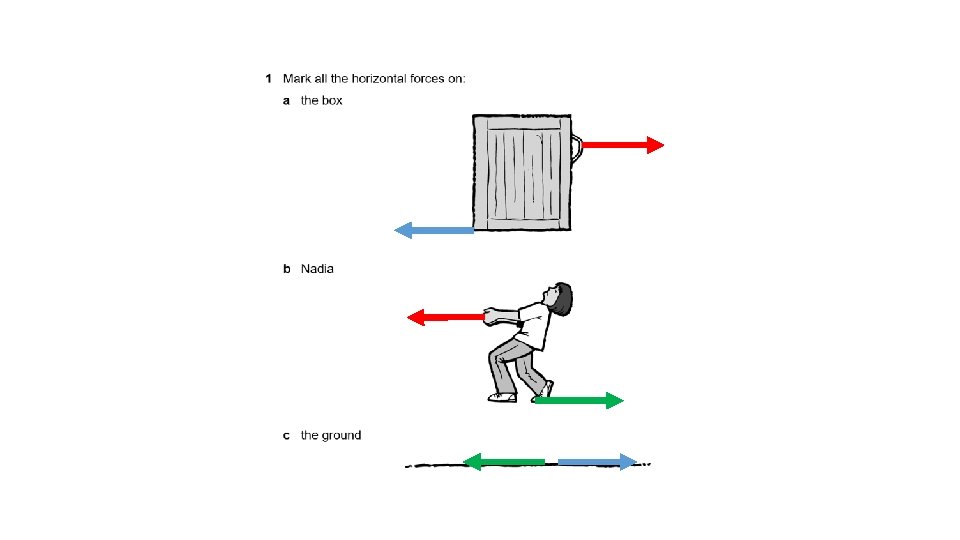
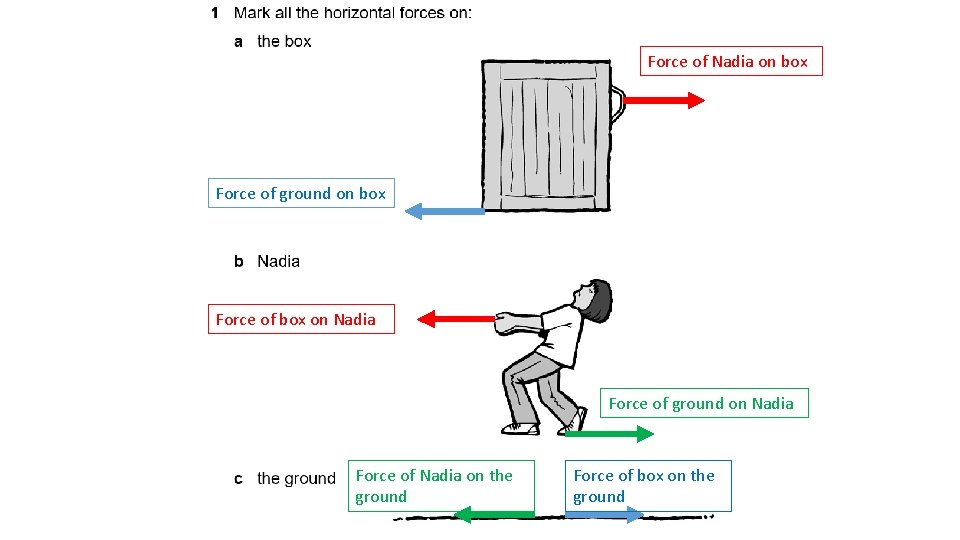
Force of Nadia on box Force of ground on box Force of box on Nadia Force of ground on Nadia Force of Nadia on the ground Force of box on the ground
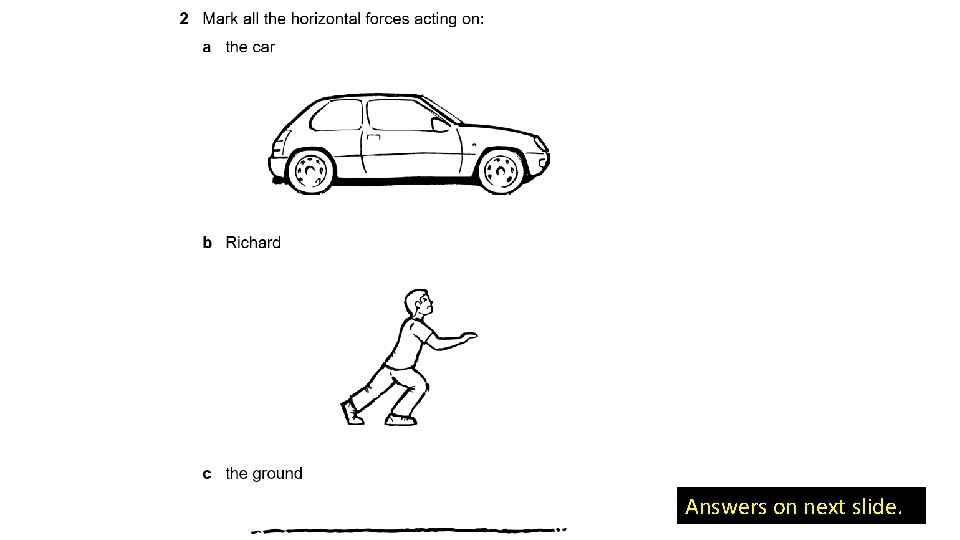
Answers on next slide.
Contact & non-contact forces
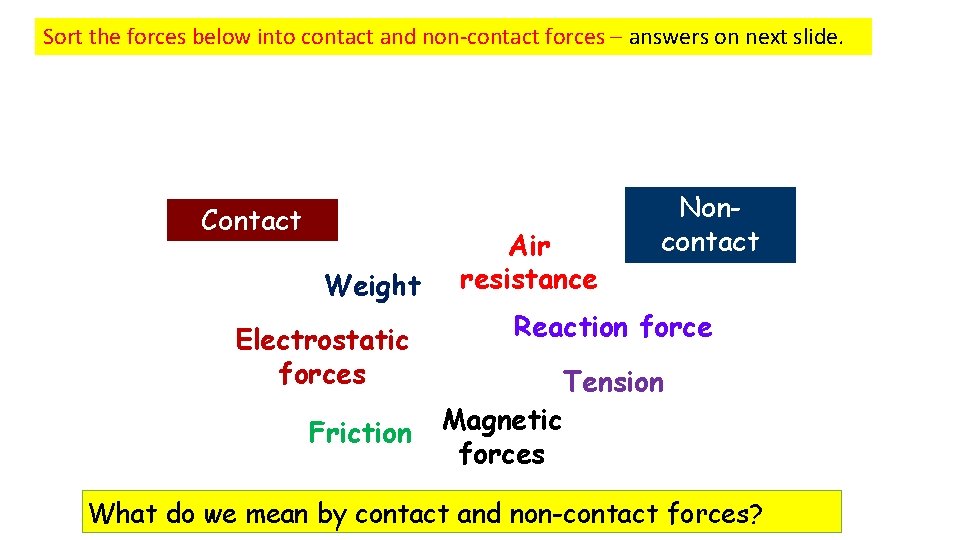
Sort the forces below into contact and non-contact forces – answers on next slide. Contact Weight Electrostatic forces Friction Air resistance Noncontact Reaction force Magnetic forces Tension What do we mean by contact and non-contact forces?
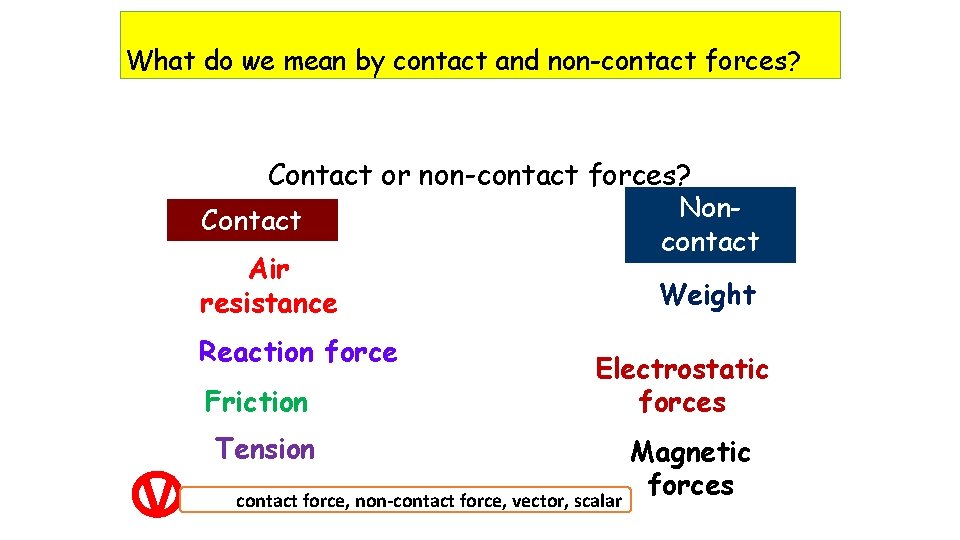
What do we mean by contact and non-contact forces? Contact or non-contact forces? Non. Contact contact Air Weight resistance Reaction force Friction V Tension Electrostatic forces Magnetic forces contact force, non-contact force, vector, scalar
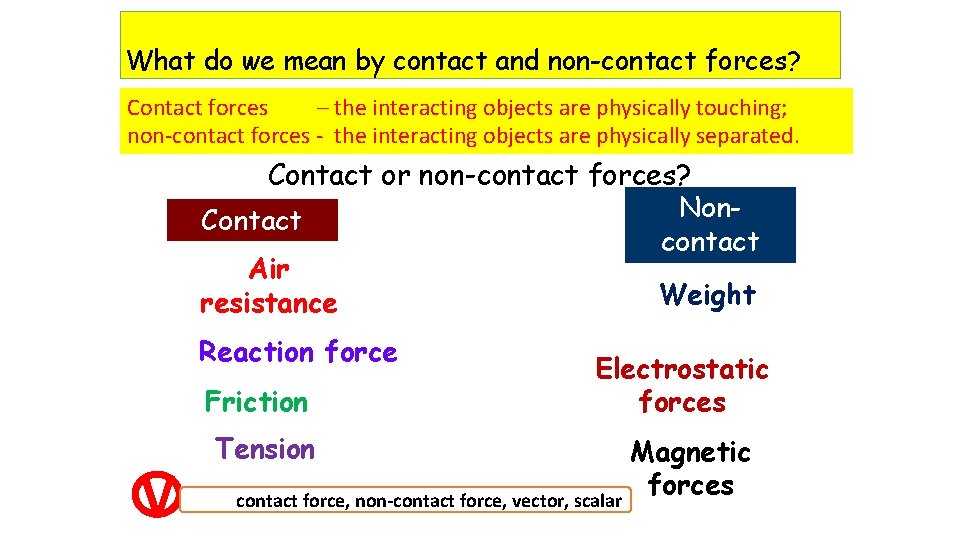
What do we mean by contact and non-contact forces? Contact forces – the interacting objects are physically touching; non-contact forces - the interacting objects are physically separated. Contact or non-contact forces? Non. Contact contact Air Weight resistance Reaction force Friction V Tension Electrostatic forces Magnetic forces contact force, non-contact force, vector, scalar
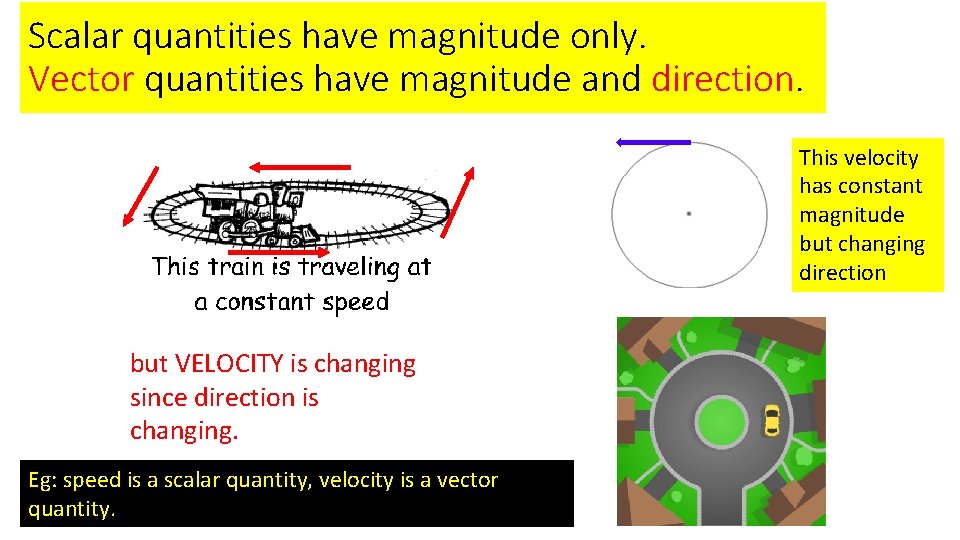
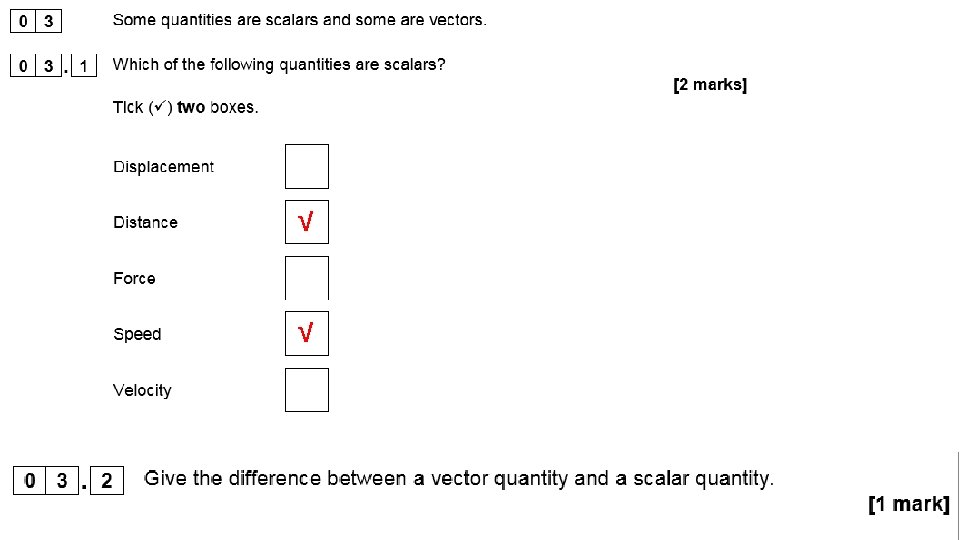
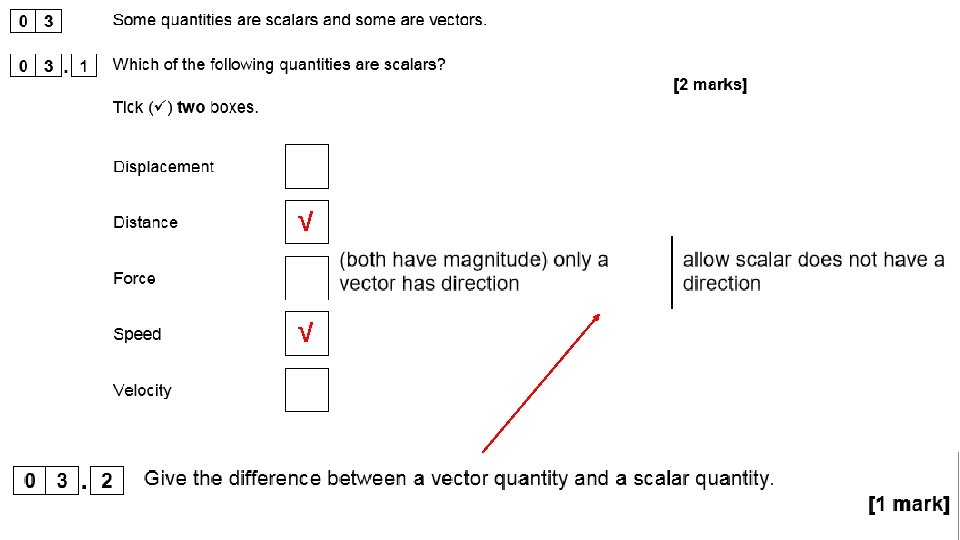
Scalar quantities have magnitude only. Vector quantities have magnitude and direction. This velocity has constant magnitude but changing direction but VELOCITY is changing since direction is changing. Eg: speed is a scalar quantity, velocity is a vector quantity.
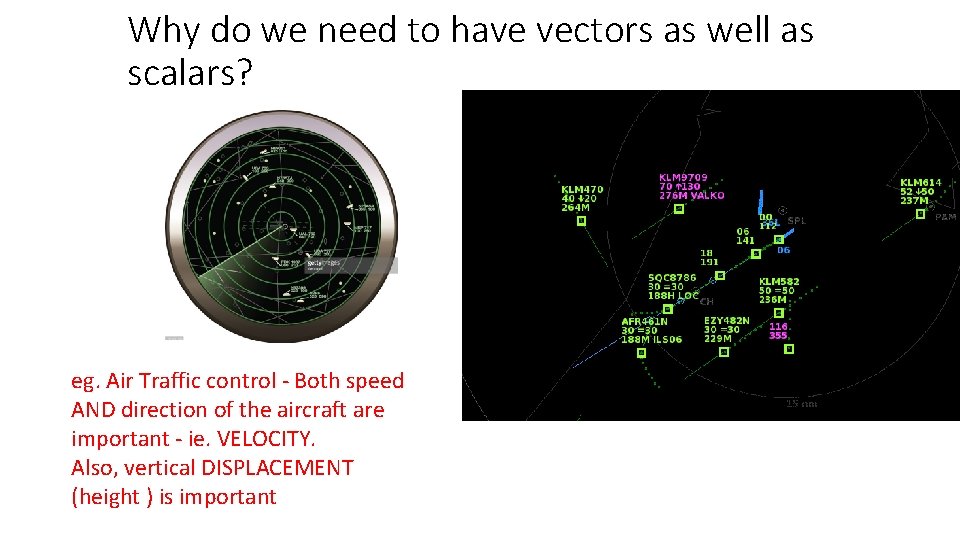
Why do we need to have vectors as well as scalars? eg. Air Traffic control - Both speed AND direction of the aircraft are important - ie. VELOCITY. Also, vertical DISPLACEMENT (height ) is important
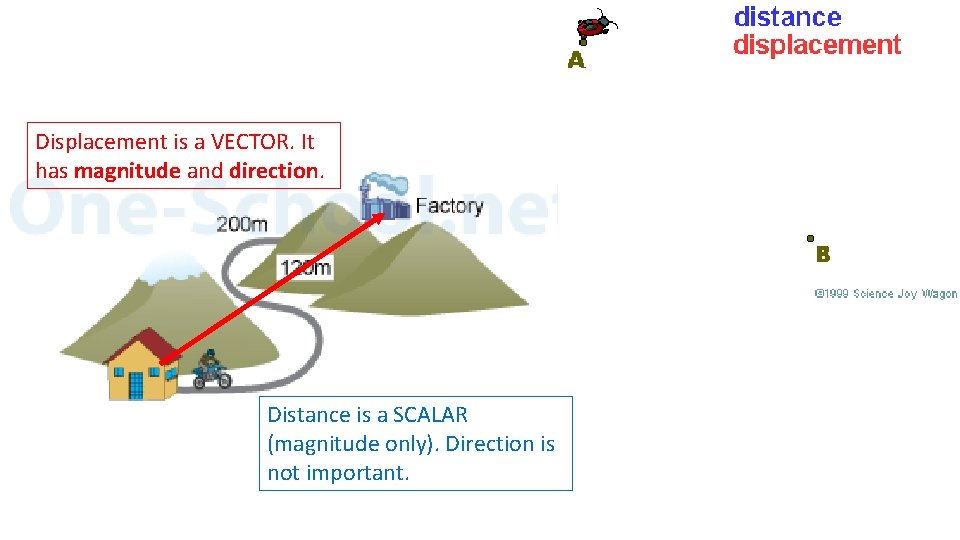
Displacement is a VECTOR. It has magnitude and direction. Distance is a SCALAR (magnitude only). Direction is not important.
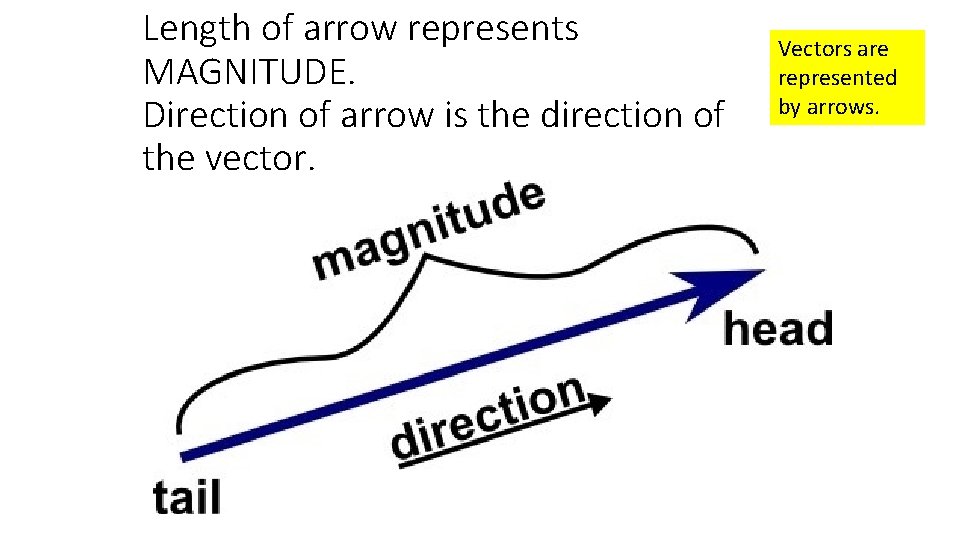
Length of arrow represents MAGNITUDE. Direction of arrow is the direction of the vector. Vectors are represented by arrows.
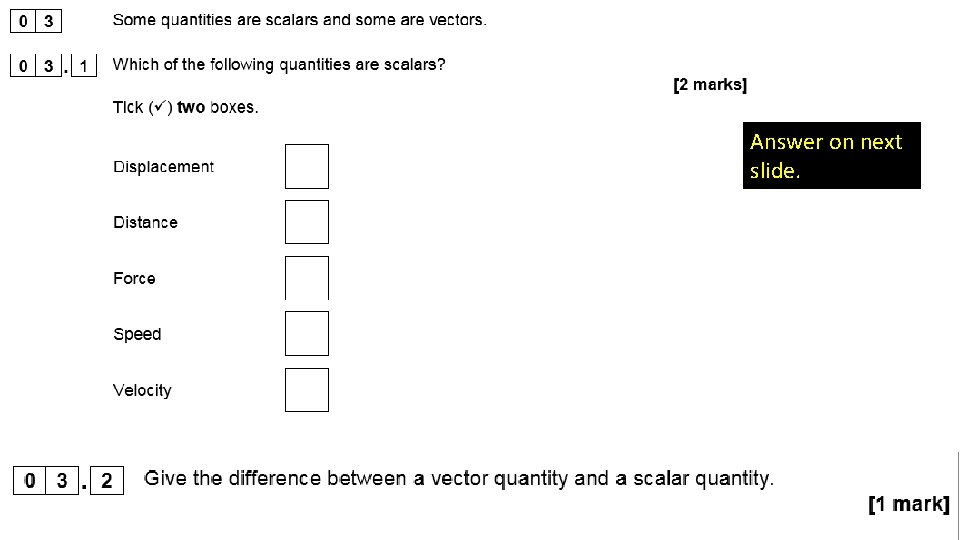
Answer on next slide.
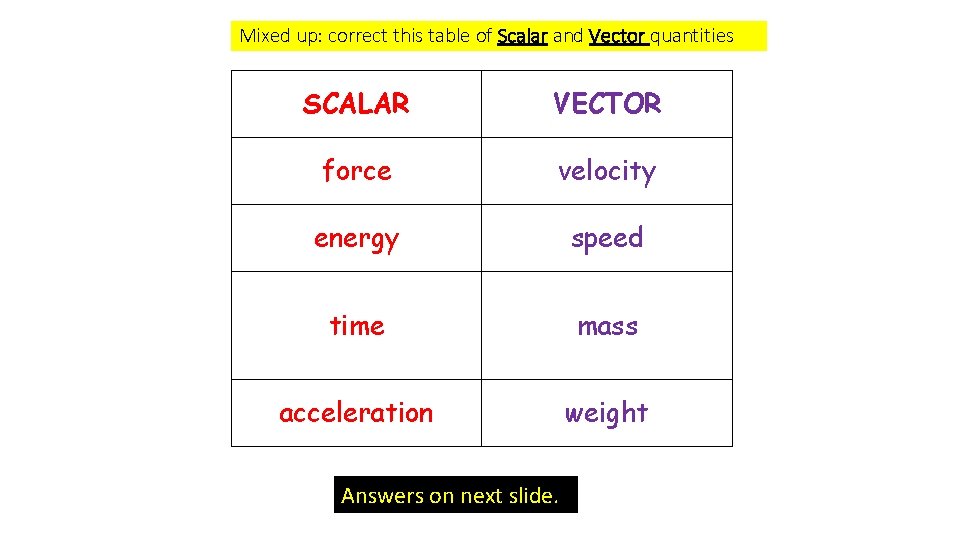
Mixed up: correct this table of Scalar and Vector quantities SCALAR VECTOR force velocity energy speed time mass acceleration weight Answers on next slide.
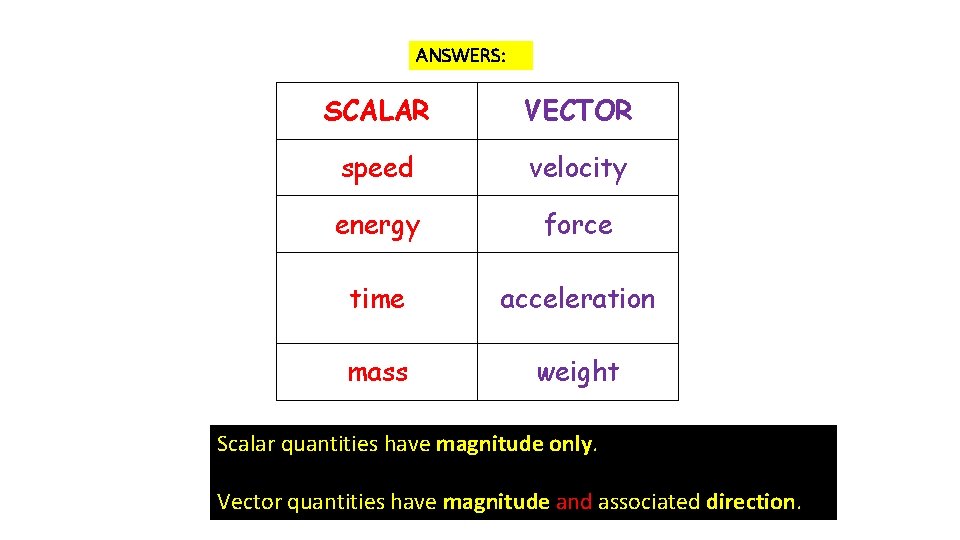
ANSWERS: SCALAR VECTOR speed velocity energy force time acceleration mass weight Scalar quantities have magnitude only. Vector quantities have magnitude and associated direction.
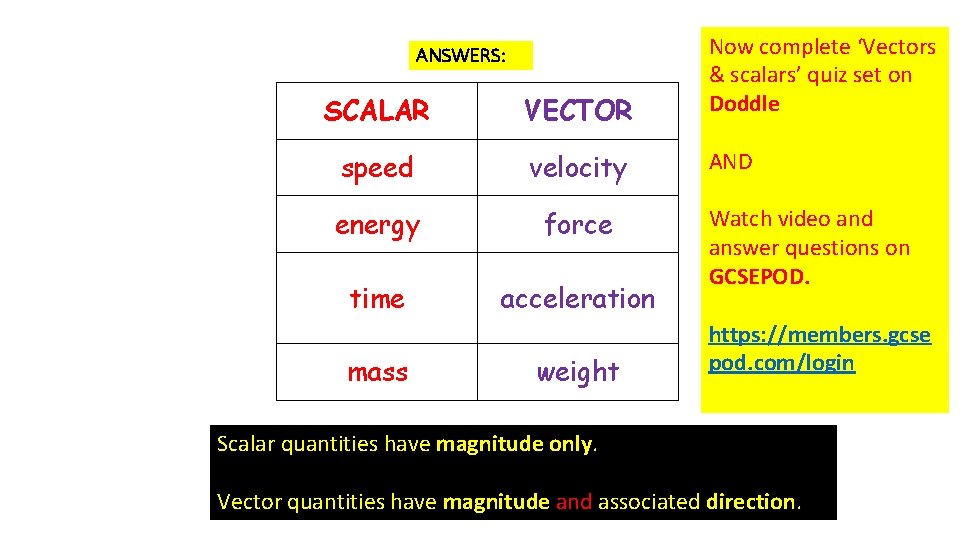
SCALAR VECTOR Now complete ‘Vectors & scalars’ quiz set on Doddle speed velocity AND energy force time acceleration ANSWERS: mass weight Watch video and answer questions on GCSEPOD. https: //members. gcse pod. com/login Scalar quantities have magnitude only. Vector quantities have magnitude and associated direction.
- Slides: 46