
Physics 7 C SS 1 Lecture 9 Field


- Slides: 27
Physics 7 C SS 1, Lecture 9: Field Model & EM Waves Magnetic Field Electromagnetic Waves Polarization 1
Final Exam Review Sessions n Definitely some on Monday. Which other day would you like most? a) b) c) d) Thursday Friday Saturday Sunday 2
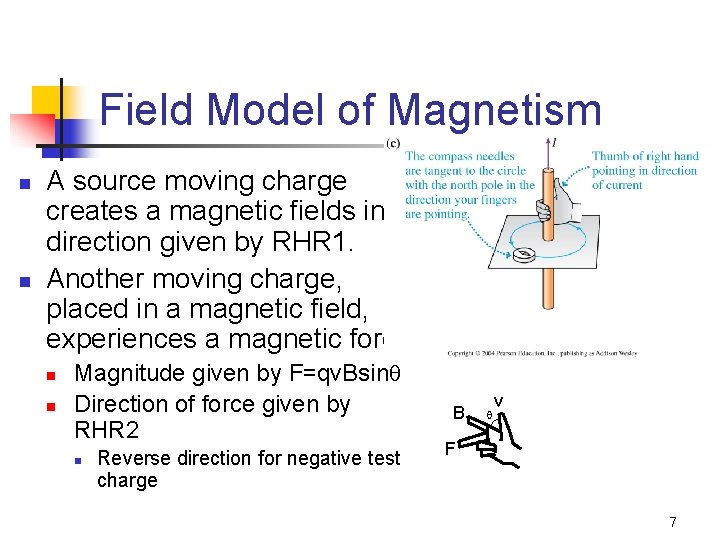
Magnetic Force F out of the screen v RHR 2 (for positive charge): your thumb points in the direction of the moving charge, B is along your B index finger, and F is the middle F finger. B v Very Bad Finger F = qv. Bsin , where is the angle between B and v 3
Magnetic Force n Suppose a large magnetic field points downward at every point in the room. What direction is the force on a positive particle traveling along the chalkboards, to your left? 1) Into the board 2) Out of the board 3) Left (along particle path) 4) Right (opposite path) 5) Down 6) Up 7) No Force 4
Magnetic Force n Suppose a large magnetic field points downward at every point in the room. Which direction should the particle be traveling in to experience a force to the left? 1) Into the board 2) Out of the board 3) Left 4) Right 5) Down 6) Up 7) No Force 5
Magnetic Force n Suppose a large magnetic field points downward at every point in the room. What direction is the force on a positive particle traveling upwards, toward the ceiling? 1) Into the board 2) Out of the board 3) Left (along particle path) 4) Right (opposite path) 5) Down 6) Up 7) No Force 6
Field Model of Magnetism n n A source moving charge creates a magnetic fields in a direction given by RHR 1. Another moving charge, placed in a magnetic field, experiences a magnetic force n n Magnitude given by F=qv. Bsin Direction of force given by RHR 2 n Reverse direction for negative test charge B v F 7
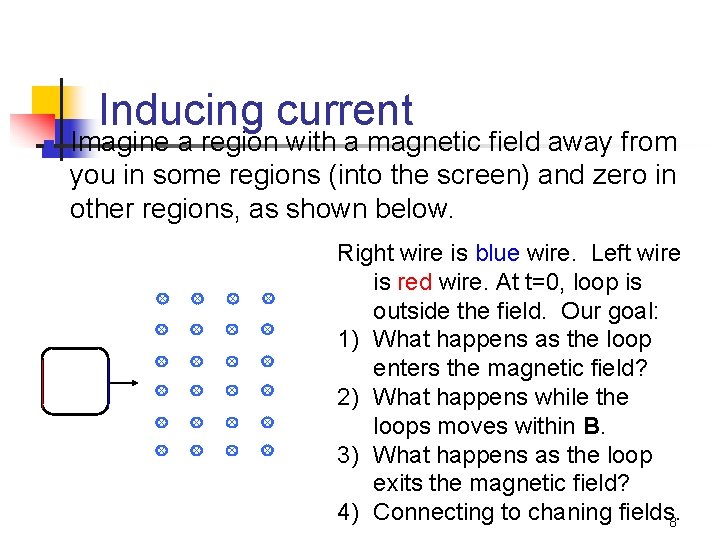
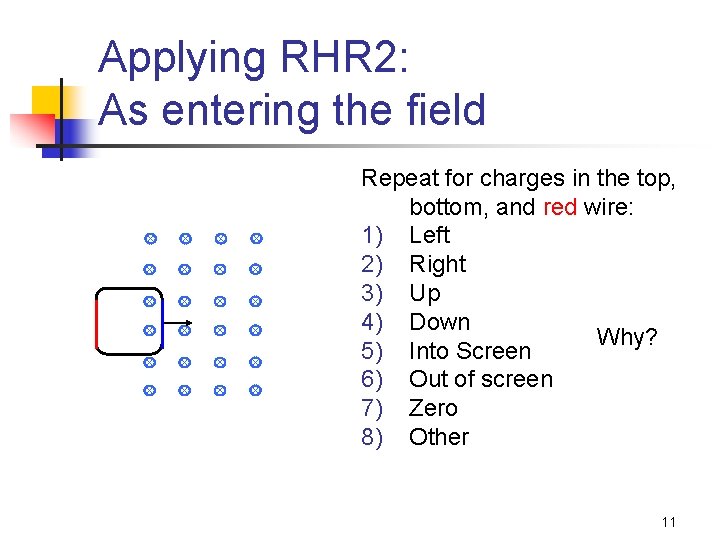
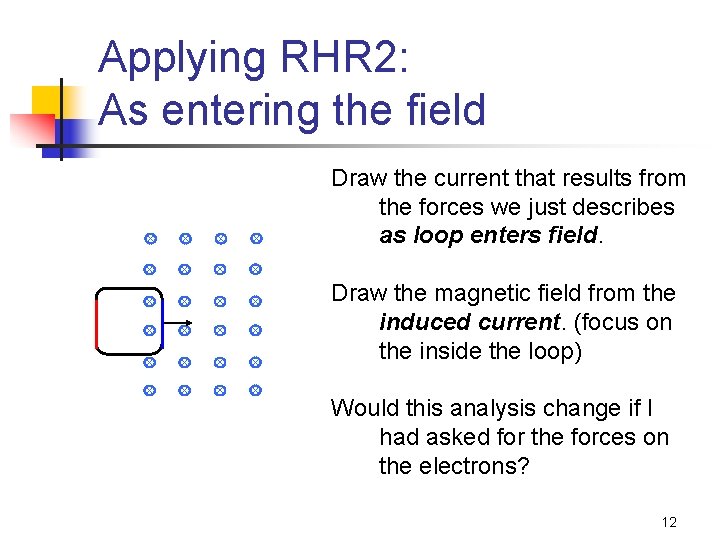
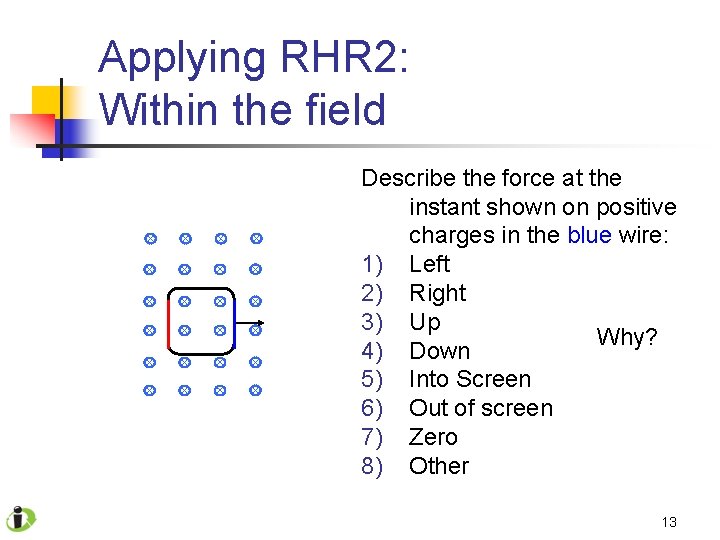
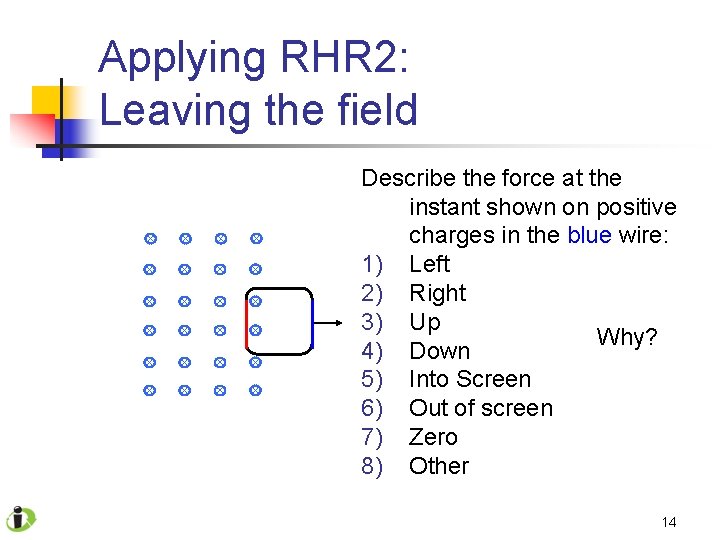
Inducing current n Imagine a region with a magnetic field away from you in some regions (into the screen) and zero in other regions, as shown below. Right wire is blue wire. Left wire is red wire. At t=0, loop is outside the field. Our goal: 1) What happens as the loop enters the magnetic field? 2) What happens while the loops moves within B. 3) What happens as the loop exits the magnetic field? 4) Connecting to chaning fields. 8
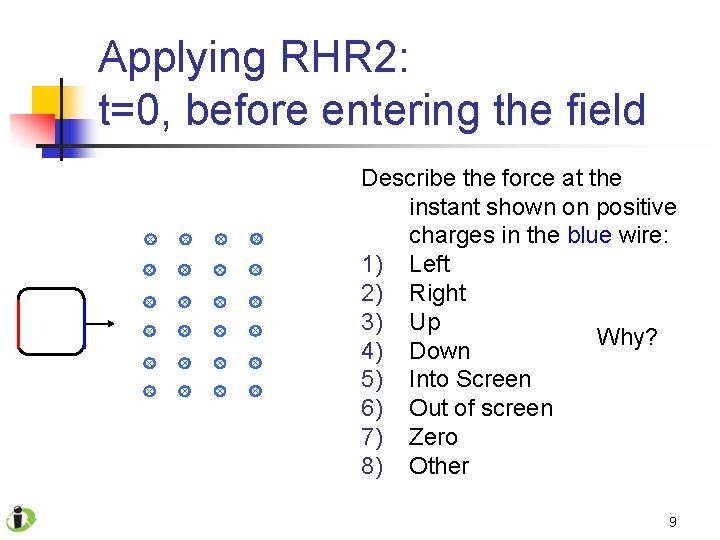
Applying RHR 2: t=0, before entering the field Describe the force at the instant shown on positive charges in the blue wire: 1) Left 2) Right 3) Up Why? 4) Down 5) Into Screen 6) Out of screen 7) Zero 8) Other 9
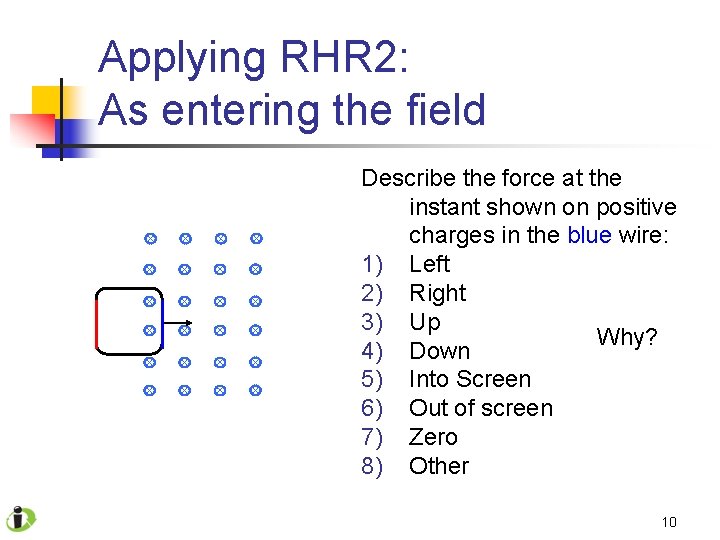
Applying RHR 2: As entering the field Describe the force at the instant shown on positive charges in the blue wire: 1) Left 2) Right 3) Up Why? 4) Down 5) Into Screen 6) Out of screen 7) Zero 8) Other 10
Applying RHR 2: As entering the field Repeat for charges in the top, bottom, and red wire: 1) Left 2) Right 3) Up 4) Down Why? 5) Into Screen 6) Out of screen 7) Zero 8) Other 11
Applying RHR 2: As entering the field Draw the current that results from the forces we just describes as loop enters field. Draw the magnetic field from the induced current. (focus on the inside the loop) Would this analysis change if I had asked for the forces on the electrons? 12
Applying RHR 2: Within the field Describe the force at the instant shown on positive charges in the blue wire: 1) Left 2) Right 3) Up Why? 4) Down 5) Into Screen 6) Out of screen 7) Zero 8) Other 13
Applying RHR 2: Leaving the field Describe the force at the instant shown on positive charges in the blue wire: 1) Left 2) Right 3) Up Why? 4) Down 5) Into Screen 6) Out of screen 7) Zero 8) Other 14
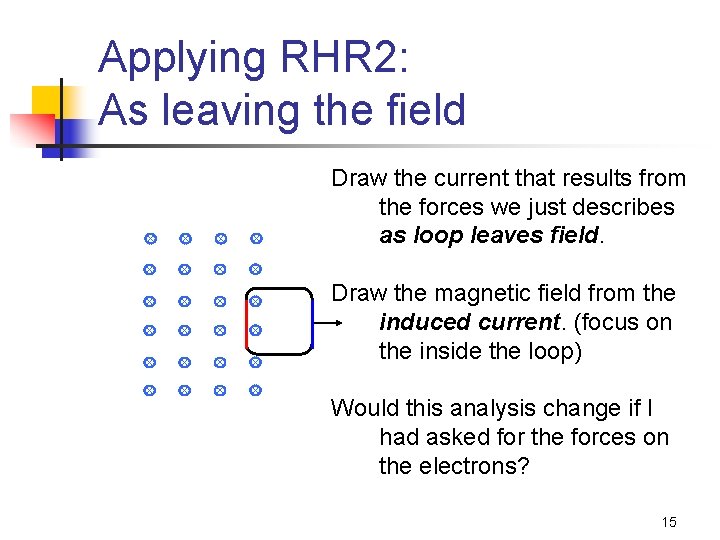
Applying RHR 2: As leaving the field Draw the current that results from the forces we just describes as loop leaves field. Draw the magnetic field from the induced current. (focus on the inside the loop) Would this analysis change if I had asked for the forces on the electrons? 15
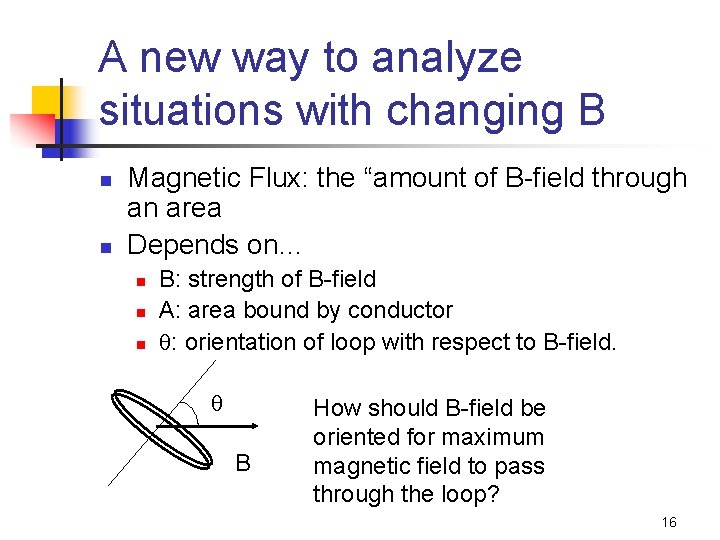
A new way to analyze situations with changing B n n Magnetic Flux: the “amount of B-field through an area Depends on… n n n B: strength of B-field A: area bound by conductor : orientation of loop with respect to B-field. B How should B-field be oriented for maximum magnetic field to pass through the loop? 16
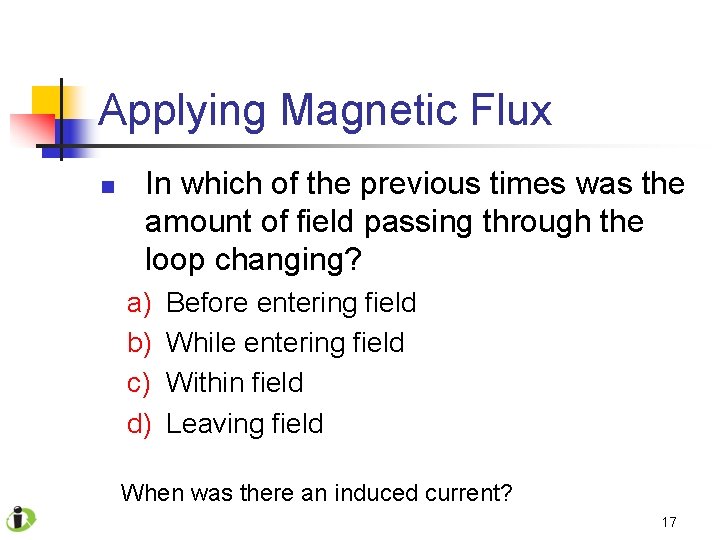
Applying Magnetic Flux n In which of the previous times was the amount of field passing through the loop changing? a) b) c) d) Before entering field While entering field Within field Leaving field When was there an induced current? 17
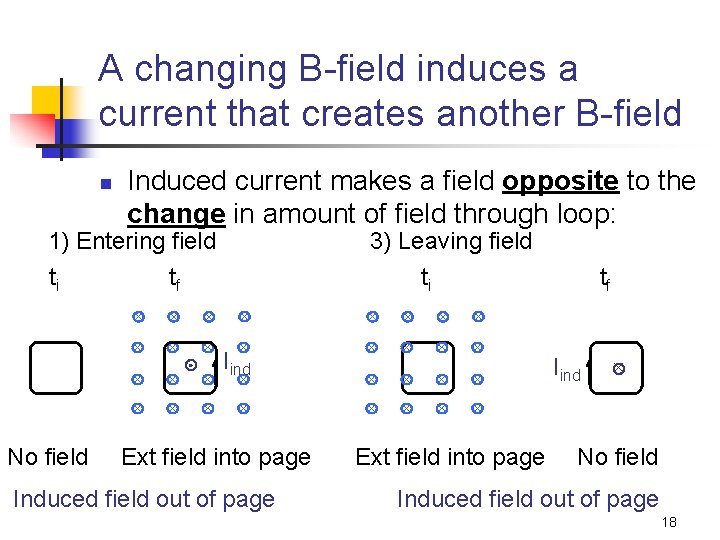
A changing B-field induces a current that creates another B-field n Induced current makes a field opposite to the change in amount of field through loop: 1) Entering field ti tf 3) Leaving field ti Iind No field Ext field into page Induced field out of page tf Iind Ext field into page No field Induced field out of page 18
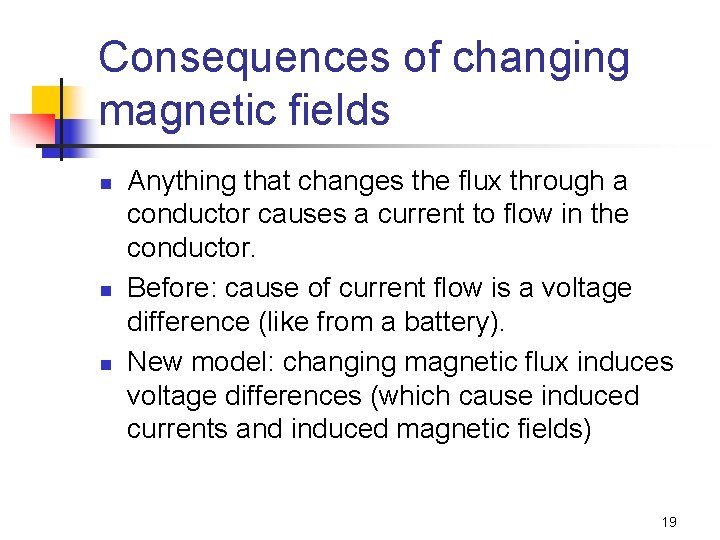
Consequences of changing magnetic fields n n n Anything that changes the flux through a conductor causes a current to flow in the conductor. Before: cause of current flow is a voltage difference (like from a battery). New model: changing magnetic flux induces voltage differences (which cause induced currents and induced magnetic fields) 19
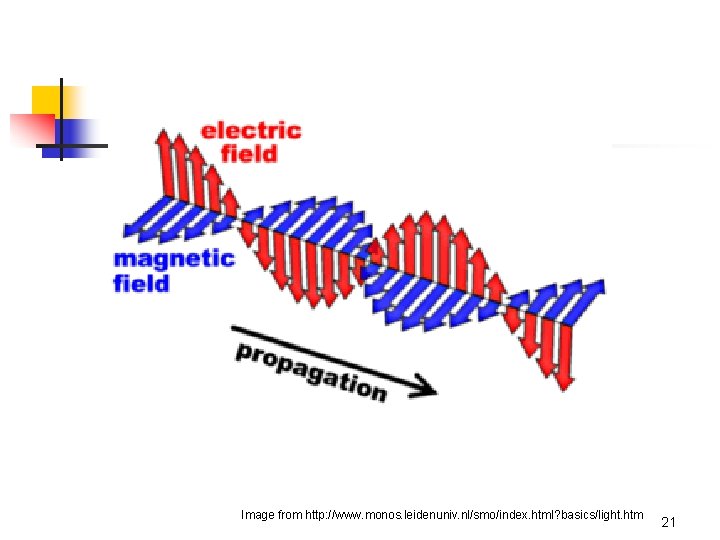
Switching Gears: Rethinking Light n What “waves” in light? n What propagates? 20
Image from http: //www. monos. leidenuniv. nl/smo/index. html? basics/light. htm 21
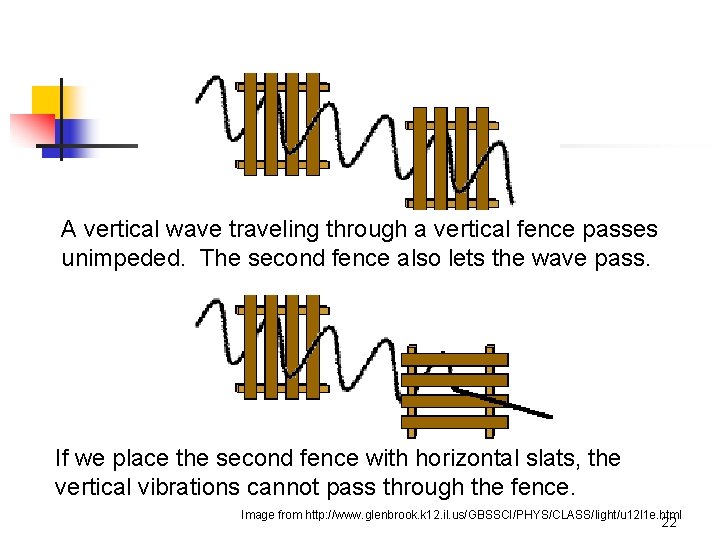
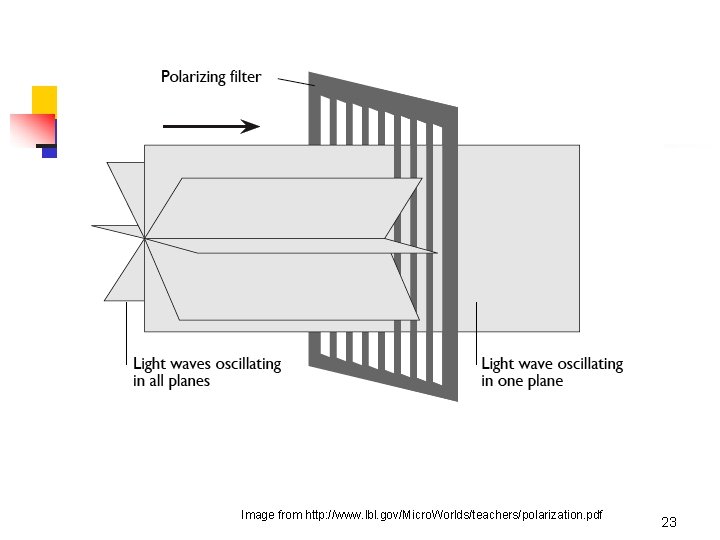
A vertical wave traveling through a vertical fence passes unimpeded. The second fence also lets the wave pass. If we place the second fence with horizontal slats, the vertical vibrations cannot pass through the fence. Image from http: //www. glenbrook. k 12. il. us/GBSSCI/PHYS/CLASS/light/u 12 l 1 e. html 22
Image from http: //www. lbl. gov/Micro. Worlds/teachers/polarization. pdf 23
24
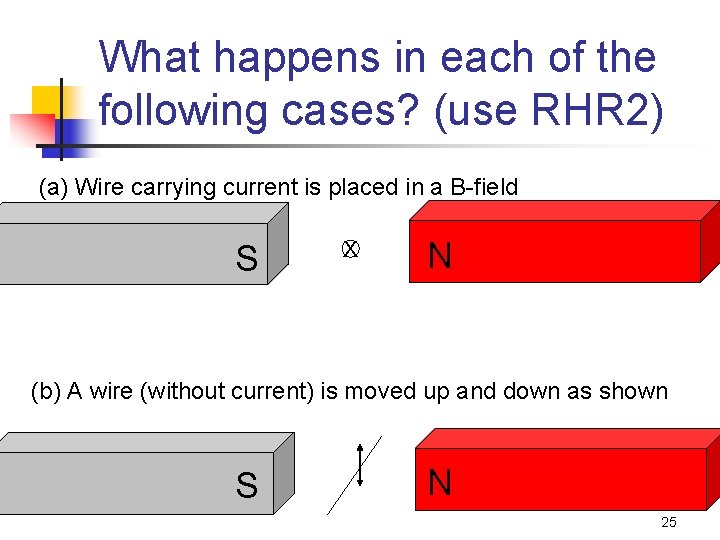
What happens in each of the following cases? (use RHR 2) (a) Wire carrying current is placed in a B-field S X N (b) A wire (without current) is moved up and down as shown S N 25
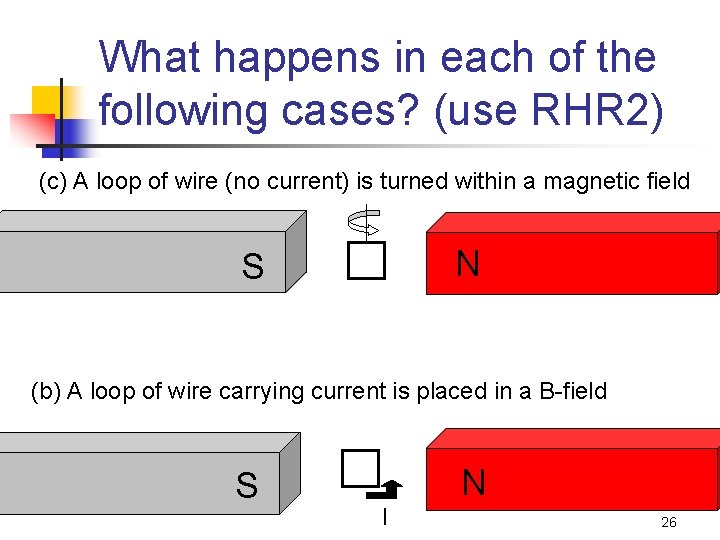
What happens in each of the following cases? (use RHR 2) (c) A loop of wire (no current) is turned within a magnetic field N S (b) A loop of wire carrying current is placed in a B-field S N I 26
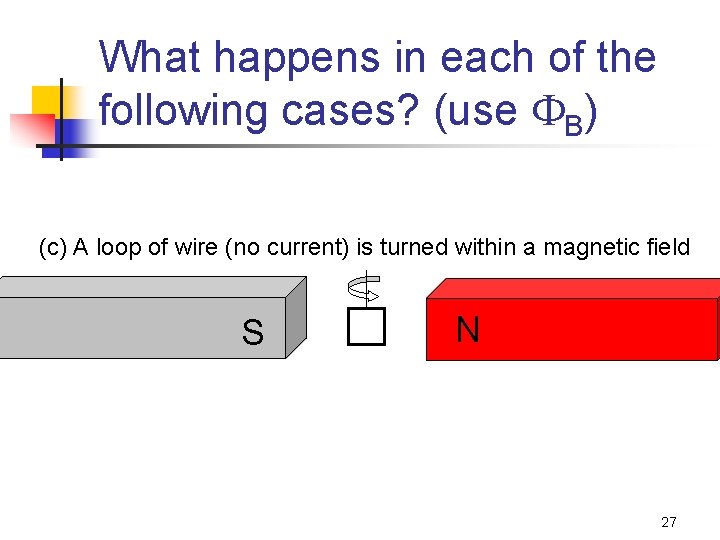
What happens in each of the following cases? (use B) (c) A loop of wire (no current) is turned within a magnetic field S N 27