
Physics 7 C SS 1 Lecture 4 Interference
- Slides: 11
Physics 7 C SS 1 Lecture 4: Interference 2 D interference Time-dependent interference Standing waves 1
Agenda n n n n Quickly Refer fundamentals of interference Answer any 1 D questions Quiz 1 Review 2 D interference (why “d sin ) Introduce time-dependent interference (beats) Introduce standing waves Begin Ray Model? (if time permits) 2
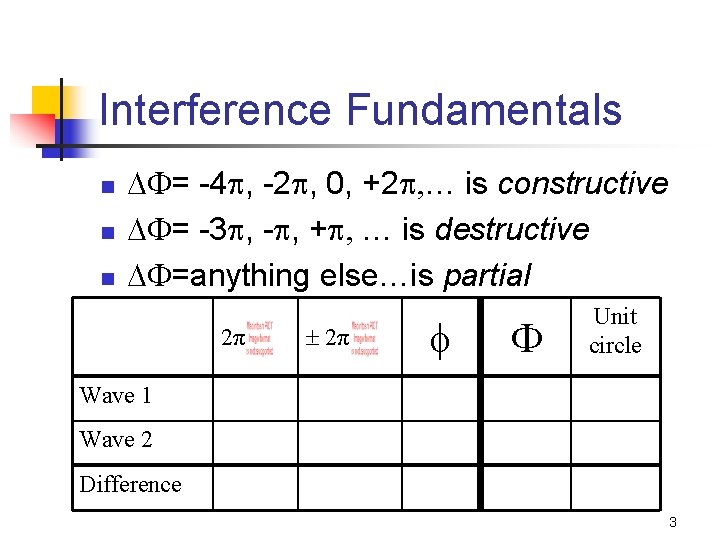
Interference Fundamentals n n n = -4 , -2 , 0, +2 … is constructive = -3 , - , + … is destructive =anything else…is partial 2π Unit circle Wave 1 Wave 2 Difference 3
Quiz 2 4
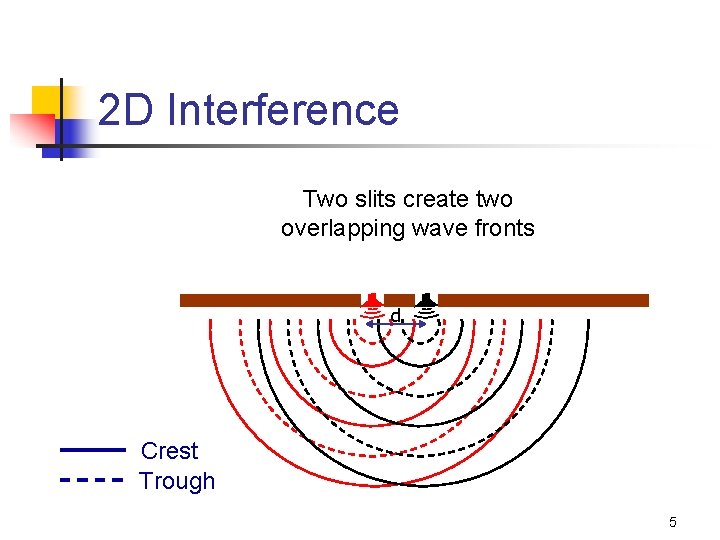
2 D Interference Two slits create two overlapping wave fronts d Crest Trough 5
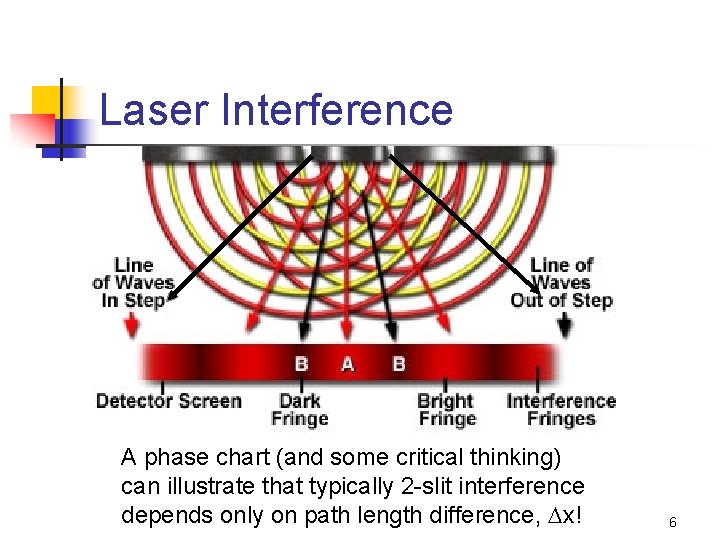
Laser Interference A phase chart (and some critical thinking) can illustrate that typically 2 -slit interference depends only on path length difference, x! 6
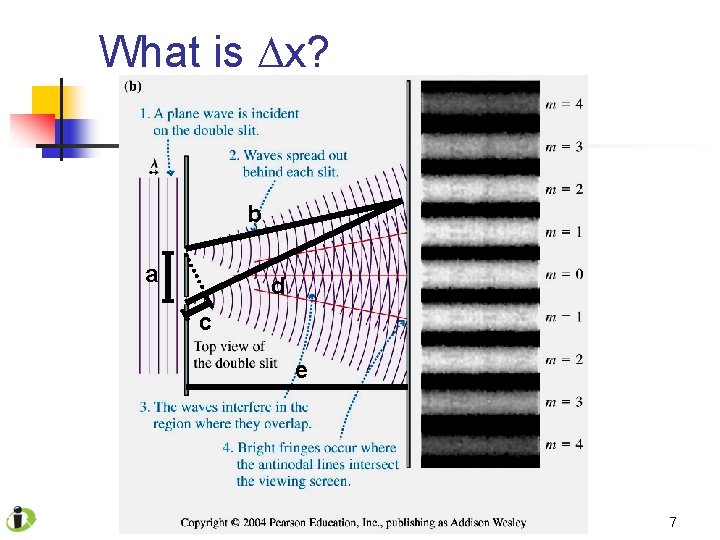
What is x? b a d c e 7
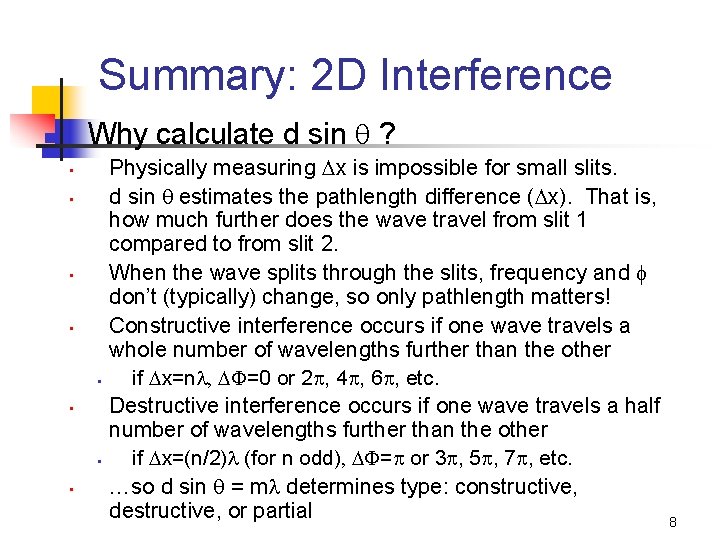
Summary: 2 D Interference Why calculate d sin ? n • • Physically measuring x is impossible for small slits. d sin estimates the pathlength difference ( x). That is, how much further does the wave travel from slit 1 compared to from slit 2. When the wave splits through the slits, frequency and don’t (typically) change, so only pathlength matters! Constructive interference occurs if one wave travels a whole number of wavelengths further than the other if x=n =0 or 2 , 4 , 6 , etc. Destructive interference occurs if one wave travels a half number of wavelengths further than the other if x=(n/2) (for n odd) = or 3 , 5 , 7 , etc. …so d sin = m determines type: constructive, destructive, or partial 8
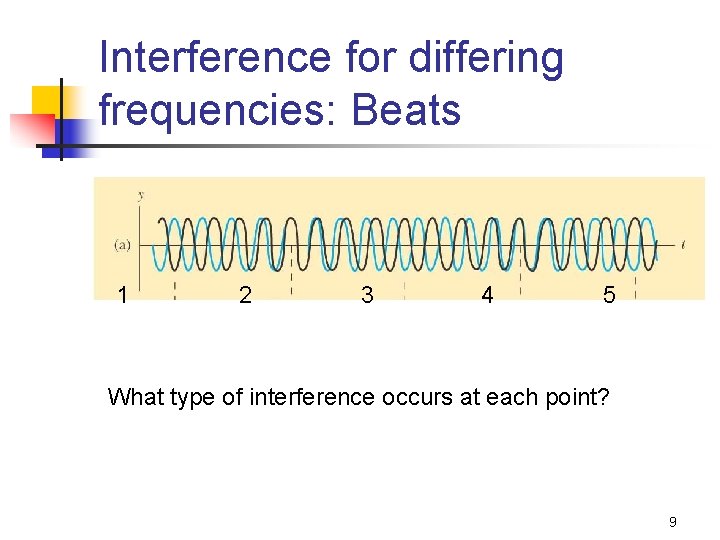
Interference for differing frequencies: Beats 1 2 3 4 5 What type of interference occurs at each point? 9
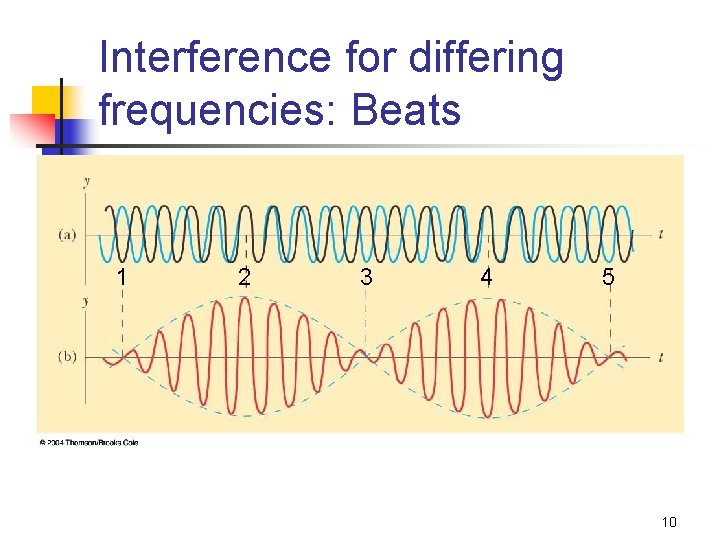
Interference for differing frequencies: Beats 1 2 3 4 5 10
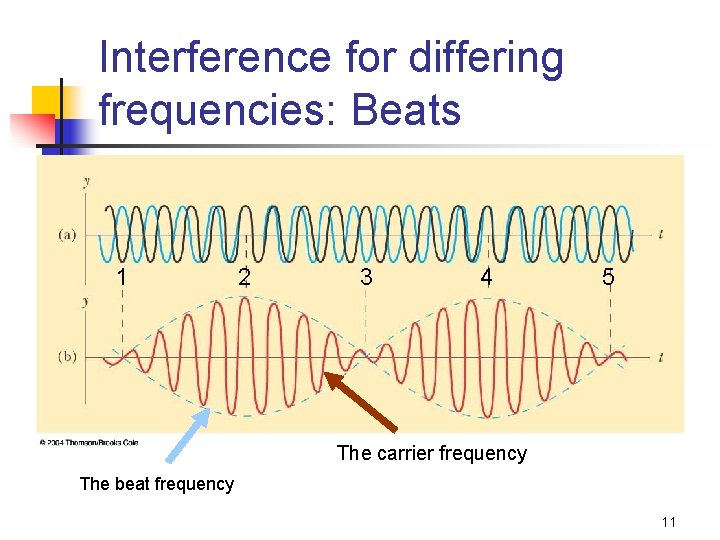
Interference for differing frequencies: Beats 1 2 3 4 5 The carrier frequency The beat frequency 11