
Physics 30 Unit 2 Review Electrical Forces and
- Slides: 39
Physics 30 Unit 2 Review Electrical Forces and Fields
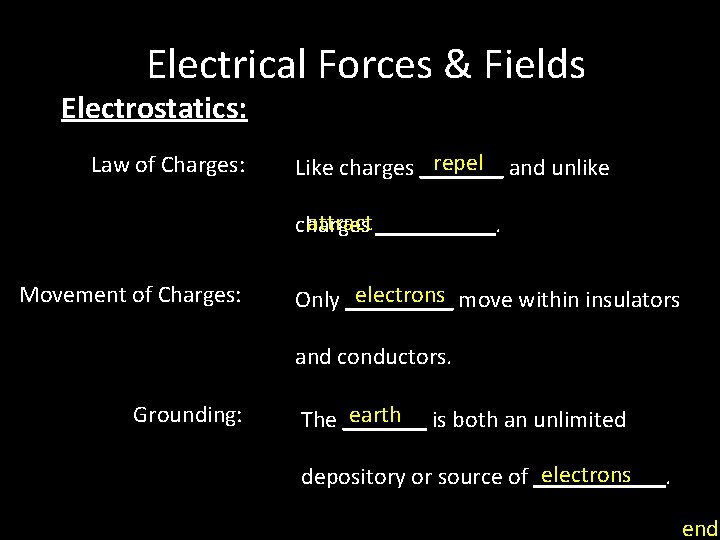
Electrical Forces & Fields Electrostatics: Law of Charges: repel Like charges _______ and unlike attract charges _____. Movement of Charges: electrons Only _____ move within insulators and conductors. Grounding: earth The _______ is both an unlimited electrons depository or source of ______. end
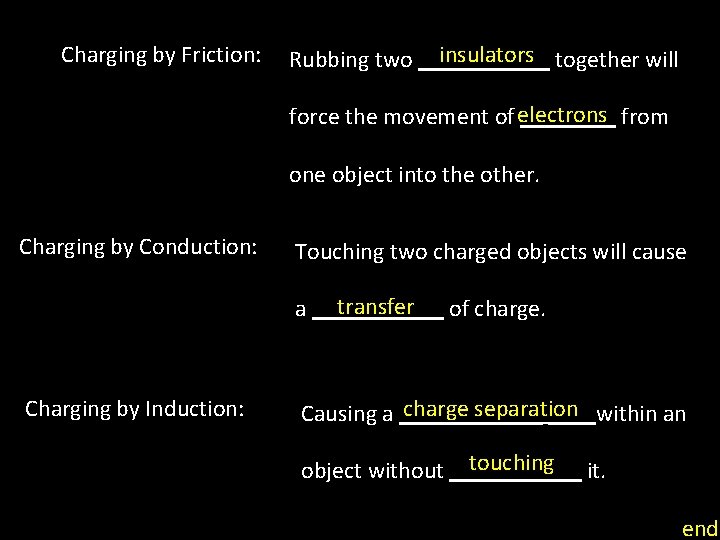
Charging by Friction: insulators Rubbing two ______ together will electrons force the movement of ____ from one object into the other. Charging by Conduction: Touching two charged objects will cause transfer a ______ of charge. Charging by Induction: charge separation Causing a ______within an touching object without ______ it. end
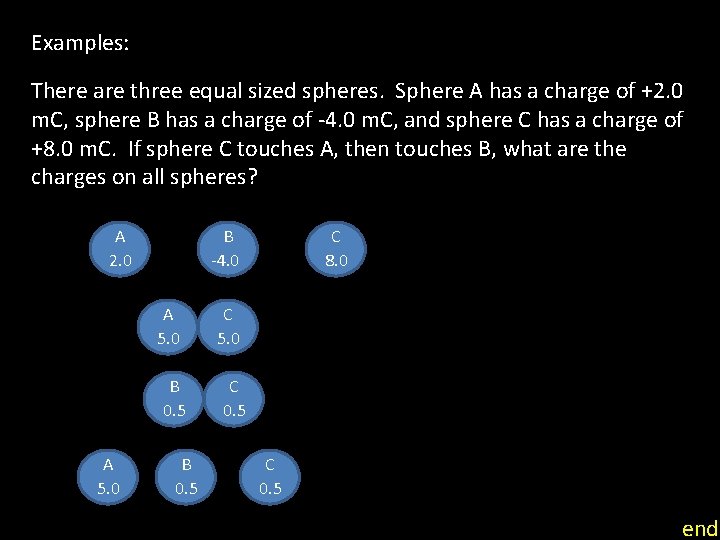
Examples: There are three equal sized spheres. Sphere A has a charge of +2. 0 m. C, sphere B has a charge of -4. 0 m. C, and sphere C has a charge of +8. 0 m. C. If sphere C touches A, then touches B, what are the charges on all spheres? A 2. 0 B -4. 0 A 5. 0 B 0. 5 C 8. 0 C 5. 0 C 0. 5 end
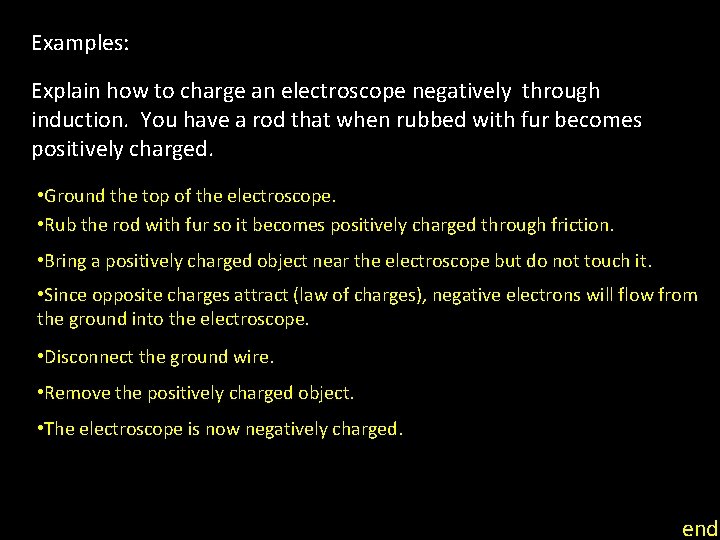
Examples: Explain how to charge an electroscope negatively through induction. You have a rod that when rubbed with fur becomes positively charged. • Ground the top of the electroscope. • Rub the rod with fur so it becomes positively charged through friction. • Bring a positively charged object near the electroscope but do not touch it. • Since opposite charges attract (law of charges), negative electrons will flow from the ground into the electroscope. • Disconnect the ground wire. • Remove the positively charged object. • The electroscope is now negatively charged. end
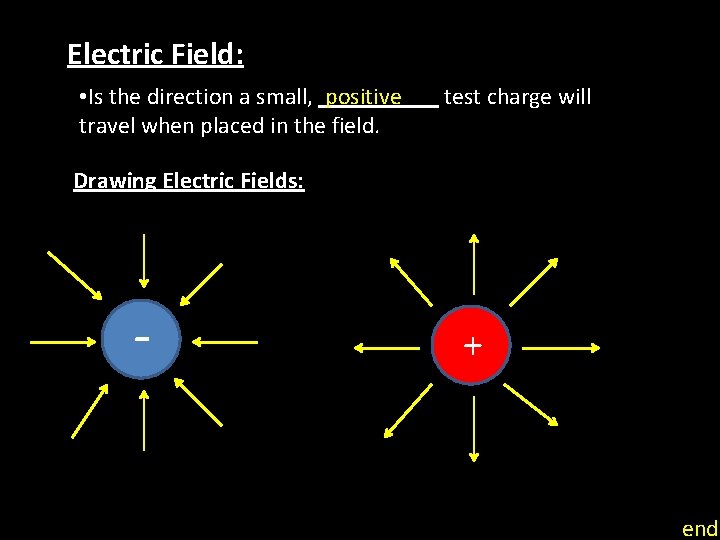
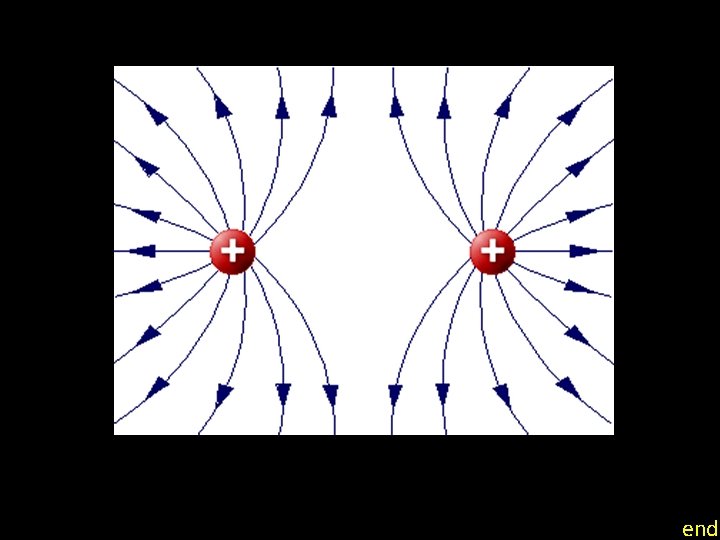
Electric Field: • Is the direction a small, _____ test charge will positive travel when placed in the field. Drawing Electric Fields: - + end
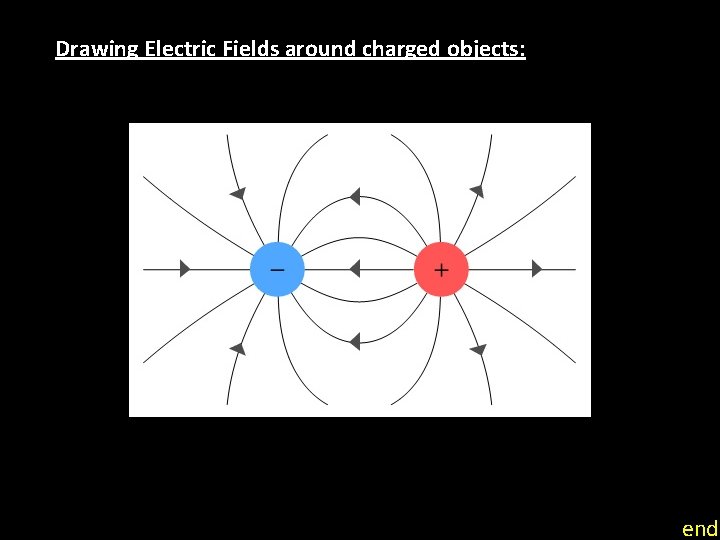
Drawing Electric Fields around charged objects: end
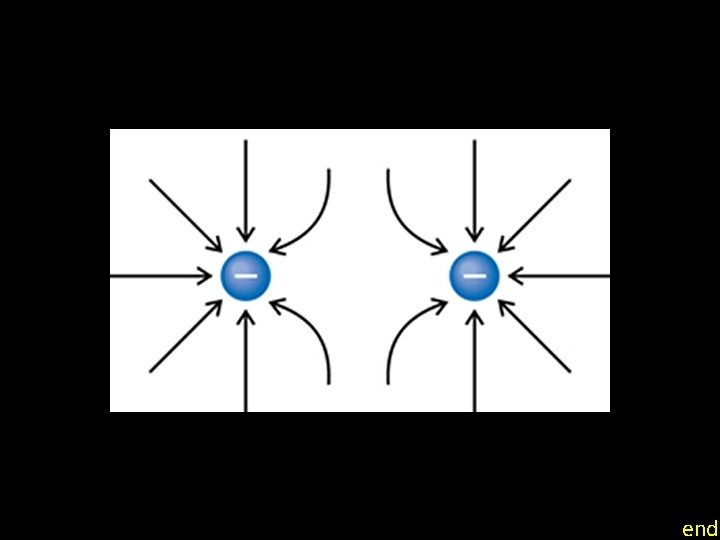
end
end
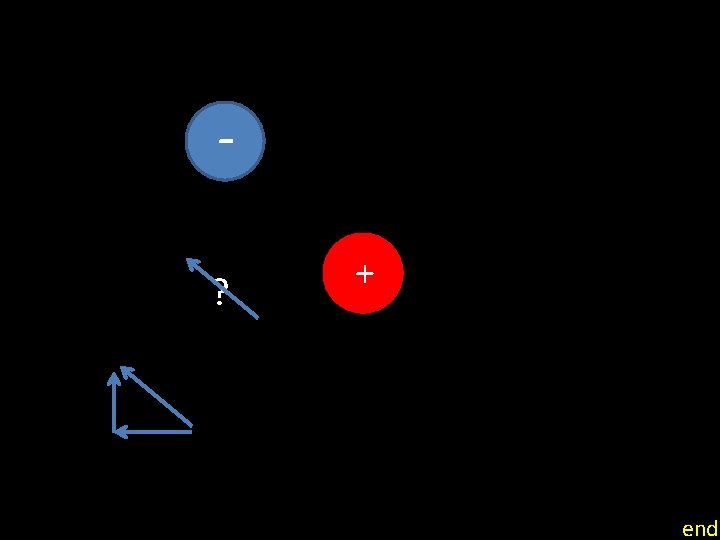
? + end
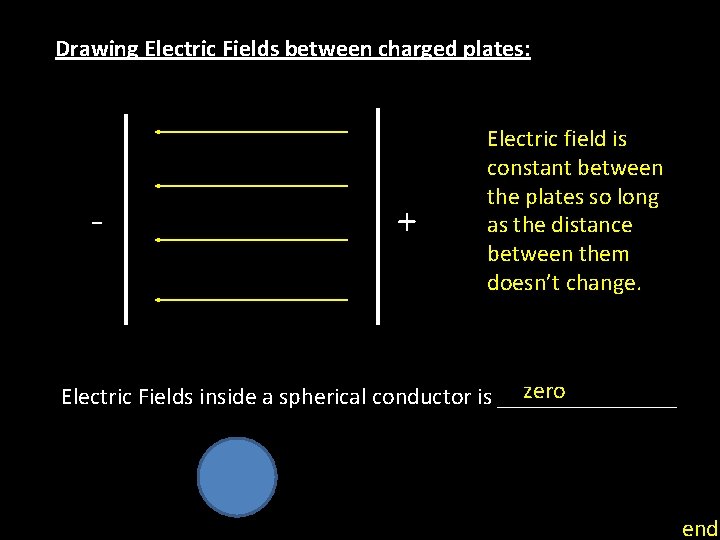
Drawing Electric Fields between charged plates: - + Electric field is constant between the plates so long as the distance between them doesn’t change. zero Electric Fields inside a spherical conductor is ________ end
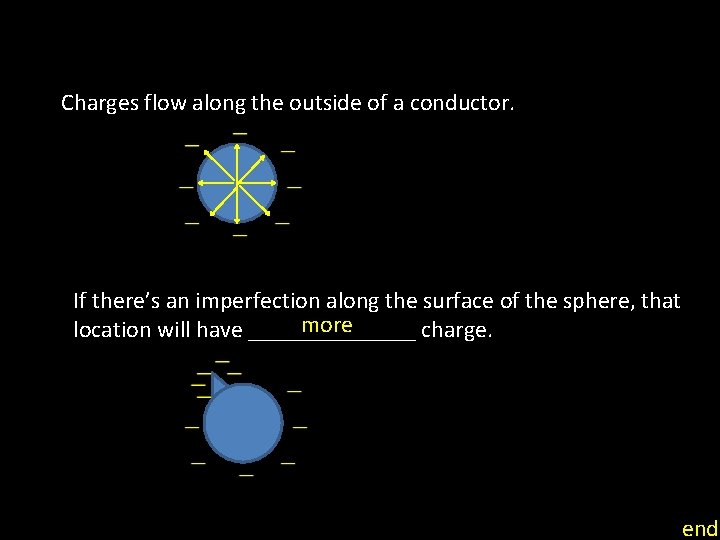
Charges flow along the outside of a conductor. If there’s an imperfection along the surface of the sphere, that more location will have _______ charge. end
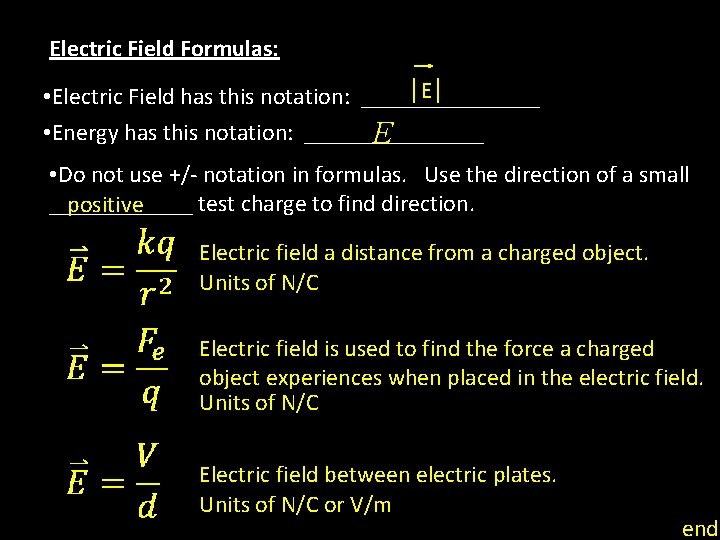
Electric Field Formulas: E • Electric Field has this notation: ________ • Energy has this notation: ________ E • Do not use +/- notation in formulas. Use the direction of a small ______ test charge to find direction. positive Electric field a distance from a charged object. Units of N/C Electric field is used to find the force a charged object experiences when placed in the electric field. Units of N/C Electric field between electric plates. Units of N/C or V/m end
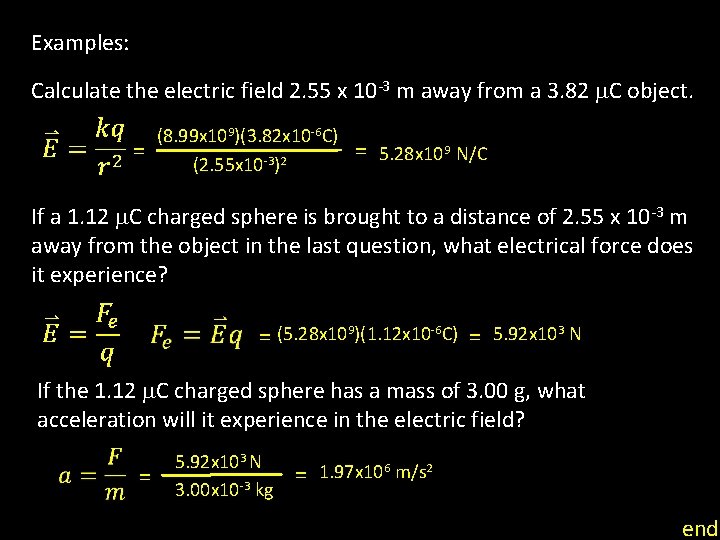
Examples: Calculate the electric field 2. 55 x 10 -3 m away from a 3. 82 m. C object. = (8. 99 x 109)(3. 82 x 10 -6 C) (2. 55 x 10 -3)2 = 5. 28 x 109 N/C If a 1. 12 m. C charged sphere is brought to a distance of 2. 55 x 10 -3 m away from the object in the last question, what electrical force does it experience? = (5. 28 x 109)(1. 12 x 10 -6 C) = 5. 92 x 103 N If the 1. 12 m. C charged sphere has a mass of 3. 00 g, what acceleration will it experience in the electric field? = 5. 92 x 103 N 3. 00 x 10 -3 kg = 1. 97 x 106 m/s 2 end
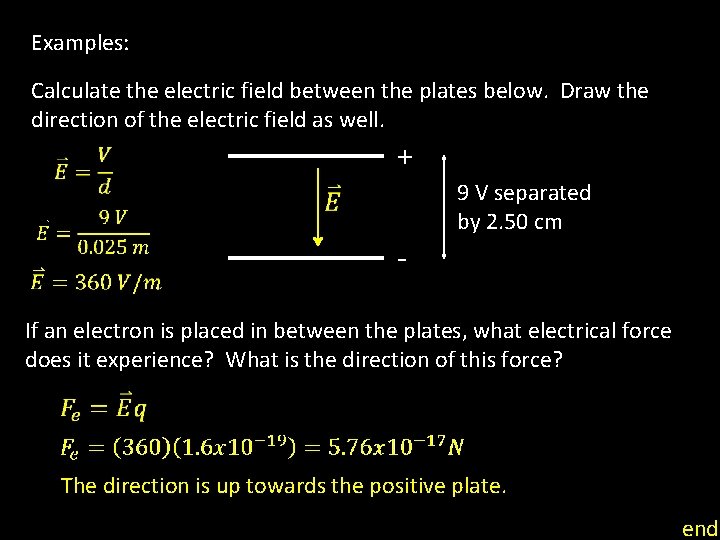
Examples: Calculate the electric field between the plates below. Draw the direction of the electric field as well. + 9 V separated by 2. 50 cm If an electron is placed in between the plates, what electrical force does it experience? What is the direction of this force? The direction is up towards the positive plate. end
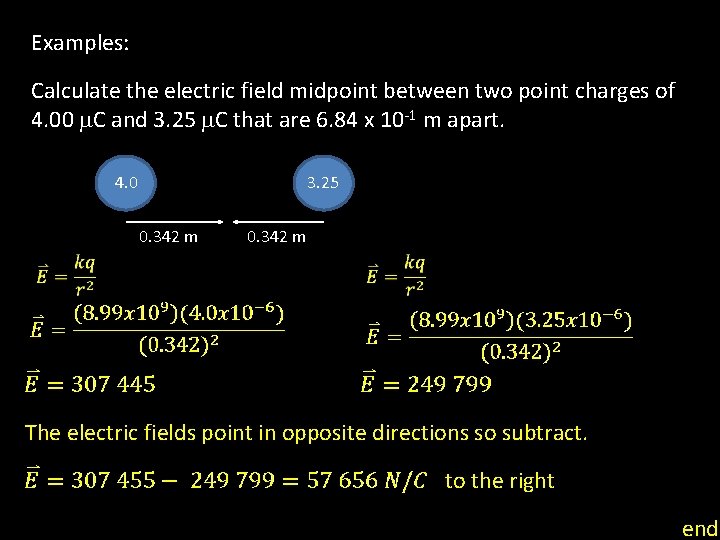
Examples: Calculate the electric field midpoint between two point charges of 4. 00 m. C and 3. 25 m. C that are 6. 84 x 10 -1 m apart. 4. 0 3. 25 0. 342 m The electric fields point in opposite directions so subtract. to the right end
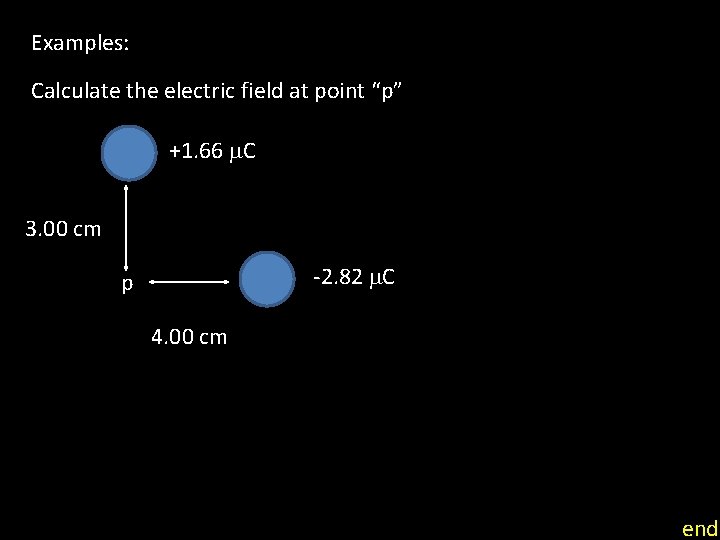
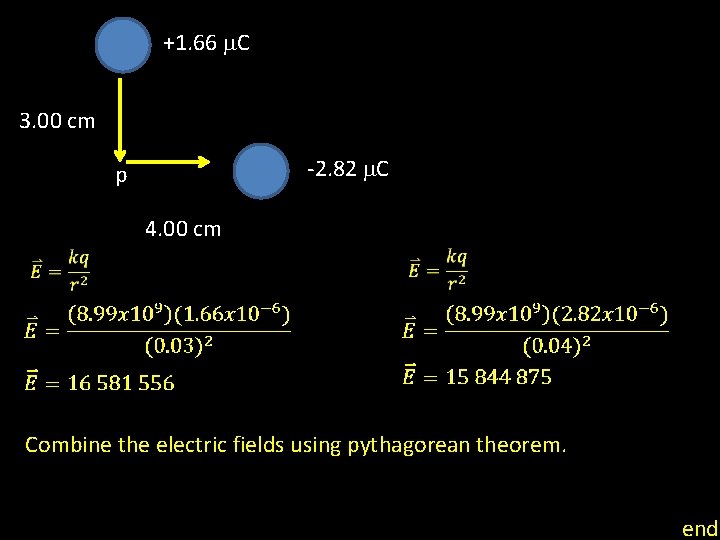
Examples: Calculate the electric field at point “p” +1. 66 m. C 3. 00 cm -2. 82 m. C p 4. 00 cm end
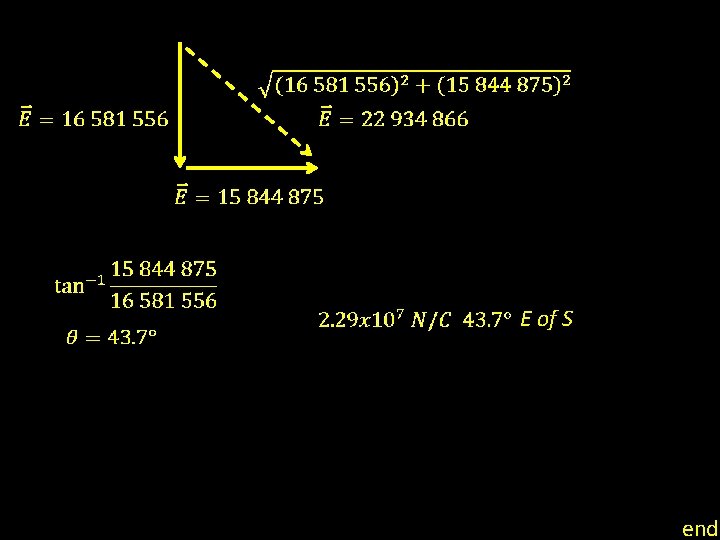
+1. 66 m. C 3. 00 cm -2. 82 m. C p 4. 00 cm Combine the electric fields using pythagorean theorem. end
E of S end
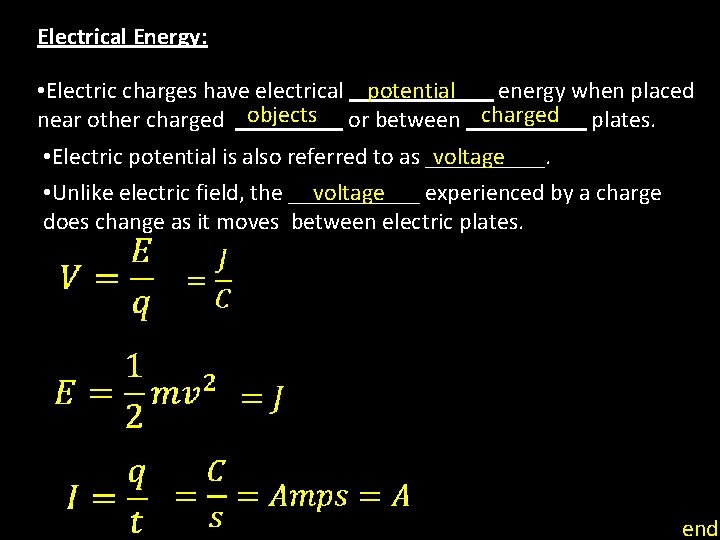
Electrical Energy: • Electric charges have electrical ______ energy when placed potential objects charged near other charged _____ or between _____ plates. • Electric potential is also referred to as _____. voltage • Unlike electric field, the ______ experienced by a charge voltage does change as it moves between electric plates. end
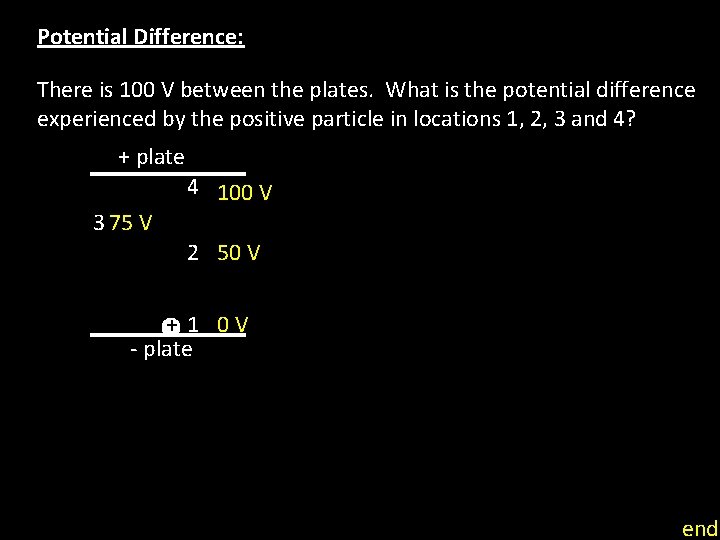
Potential Difference: There is 100 V between the plates. What is the potential difference experienced by the positive particle in locations 1, 2, 3 and 4? + plate 4 100 V 3 75 V 2 50 V + 1 0 V - plate end
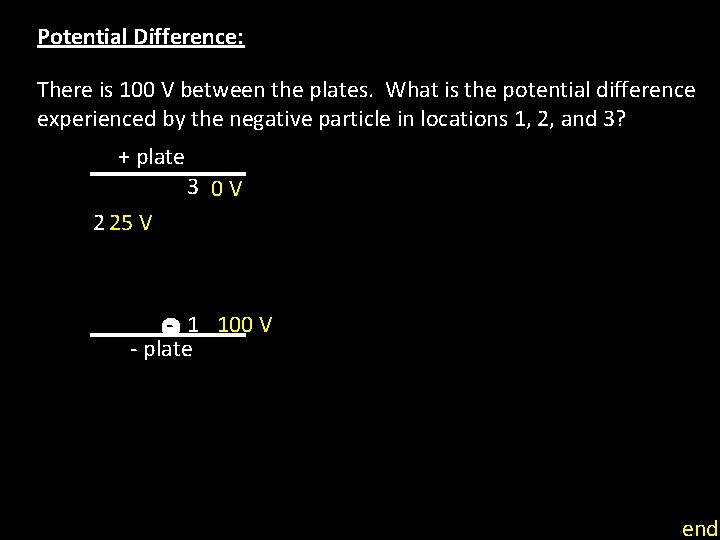
Potential Difference: There is 100 V between the plates. What is the potential difference experienced by the negative particle in locations 1, 2, and 3? + plate 3 0 V 2 25 V - 1 100 V - plate end
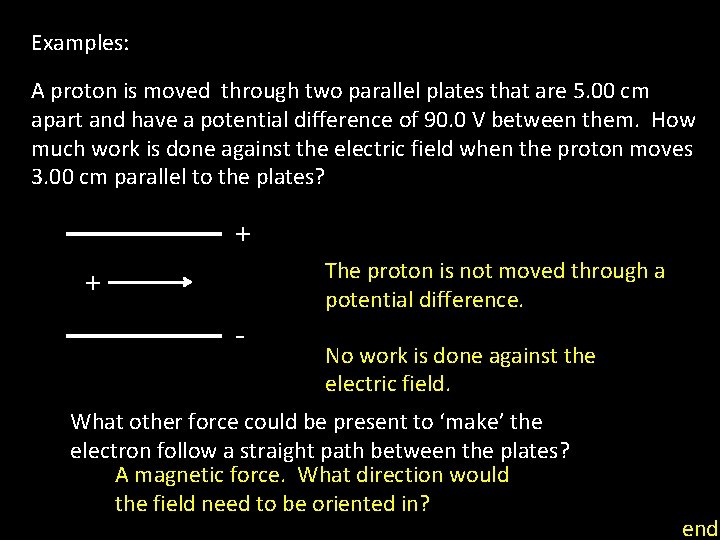
Examples: A proton is moved through two parallel plates that are 5. 00 cm apart and have a potential difference of 90. 0 V between them. How much work is done against the electric field when the proton moves 3. 00 cm parallel to the plates? + The proton is not moved through a potential difference. + - No work is done against the electric field. What other force could be present to ‘make’ the electron follow a straight path between the plates? A magnetic force. What direction would the field need to be oriented in? end
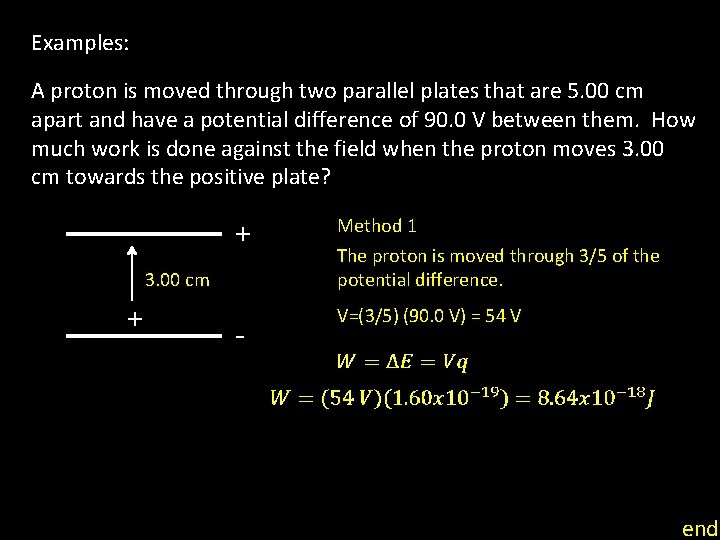
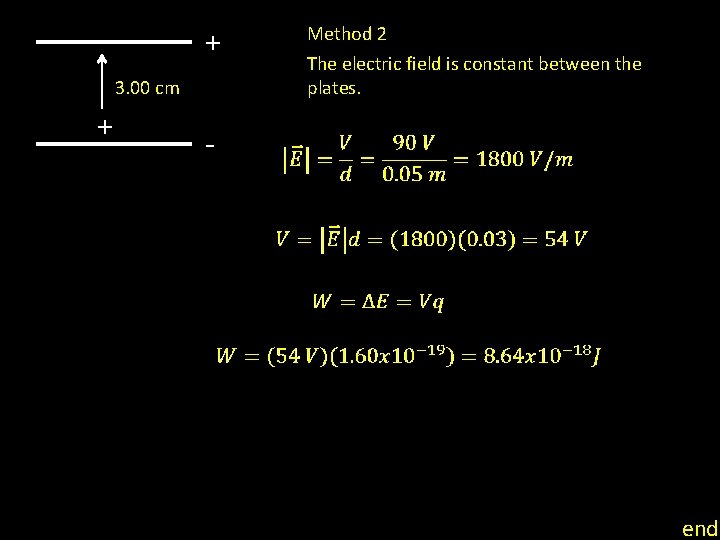
Examples: A proton is moved through two parallel plates that are 5. 00 cm apart and have a potential difference of 90. 0 V between them. How much work is done against the field when the proton moves 3. 00 cm towards the positive plate? + 3. 00 cm + - Method 1 The proton is moved through 3/5 of the potential difference. V=(3/5) (90. 0 V) = 54 V end
+ 3. 00 cm + Method 2 The electric field is constant between the plates. - end
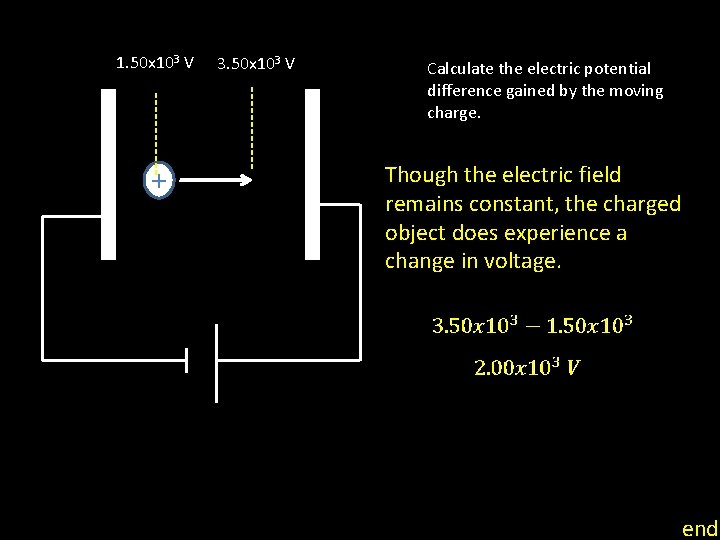
1. 50 x 103 V + 3. 50 x 103 V Calculate the electric potential difference gained by the moving charge. Though the electric field remains constant, the charged object does experience a change in voltage. end
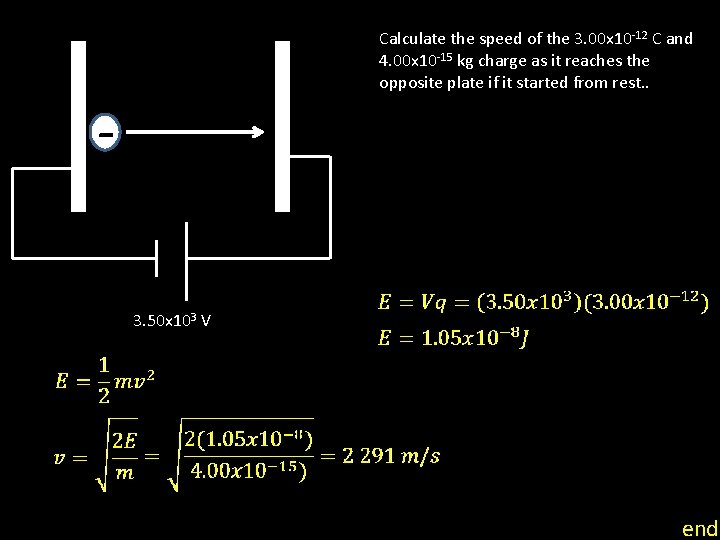
Calculate the speed of the 3. 00 x 10 -12 C and 4. 00 x 10 -15 kg charge as it reaches the opposite plate if it started from rest. . 3. 50 x 103 V end
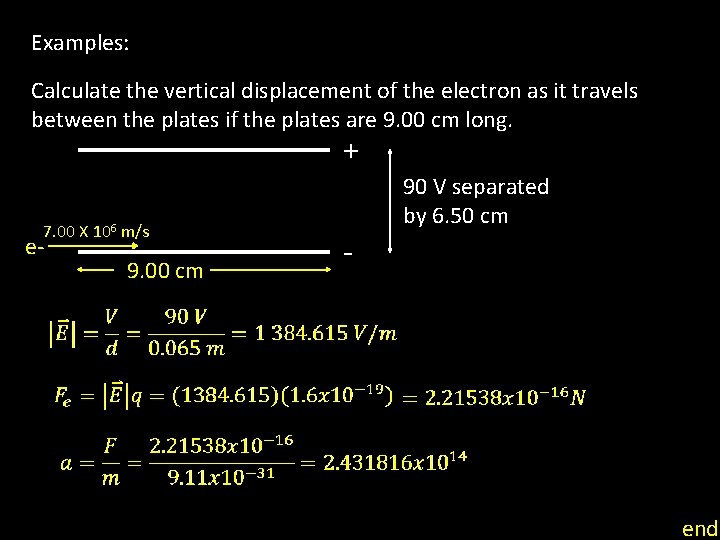
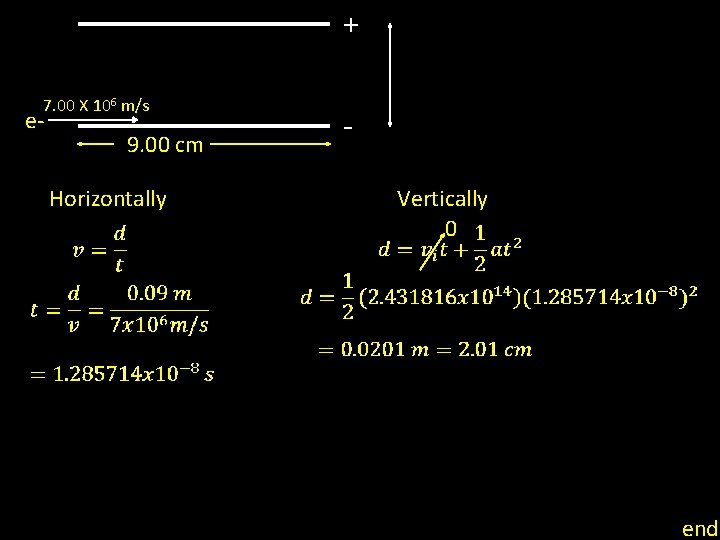
Examples: Calculate the vertical displacement of the electron as it travels between the plates if the plates are 9. 00 cm long. + 7. 00 X 106 m/s e- 9. 00 cm 90 V separated by 6. 50 cm - end
+ 7. 00 X 106 m/s e- 9. 00 cm Horizontally Vertically 0 end
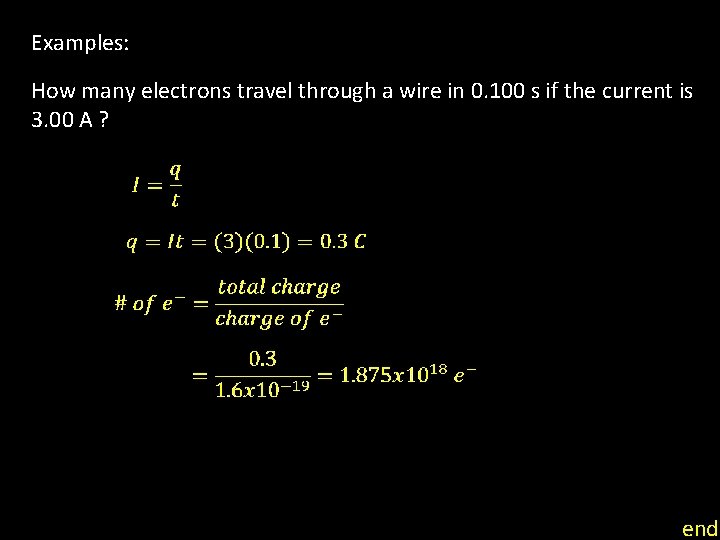
Examples: How many electrons travel through a wire in 0. 100 s if the current is 3. 00 A ? end
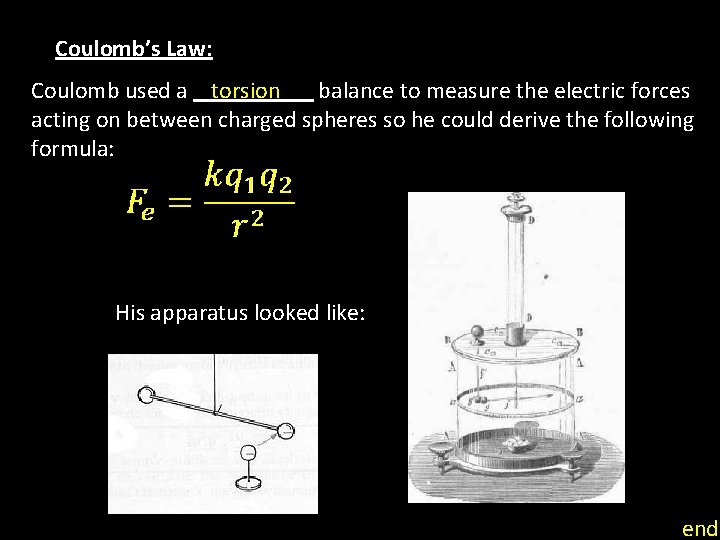
Coulomb’s Law: Coulomb used a _____ balance to measure the electric forces torsion acting on between charged spheres so he could derive the following formula: His apparatus looked like: end
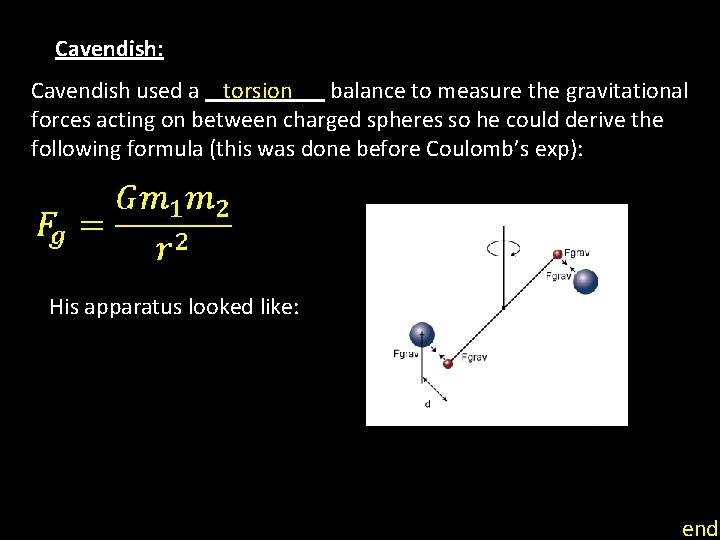
Cavendish: Cavendish used a _____ balance to measure the gravitational torsion forces acting on between charged spheres so he could derive the following formula (this was done before Coulomb’s exp): His apparatus looked like: end
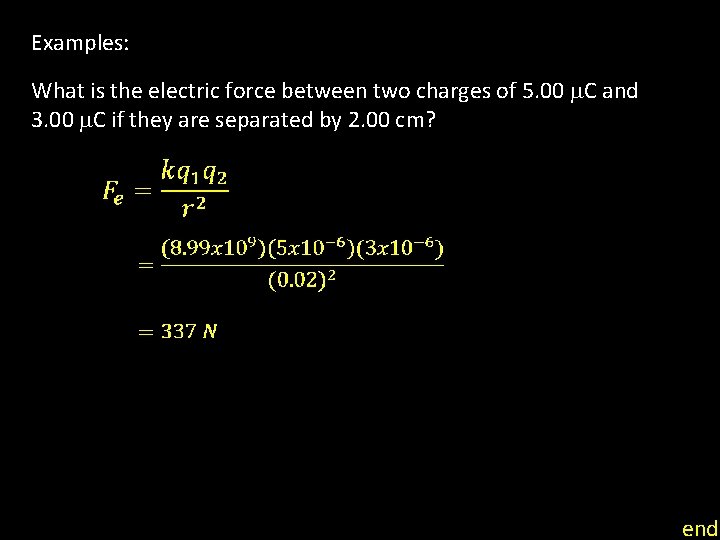
Examples: What is the electric force between two charges of 5. 00 m. C and 3. 00 m. C if they are separated by 2. 00 cm? end
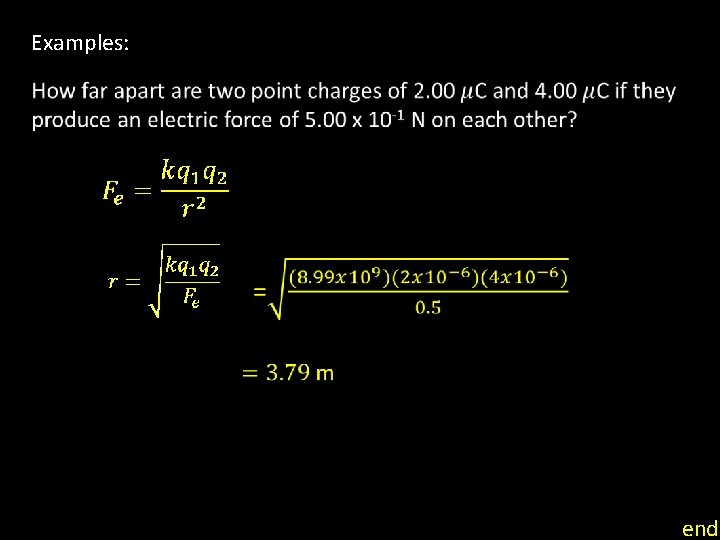
Examples: end
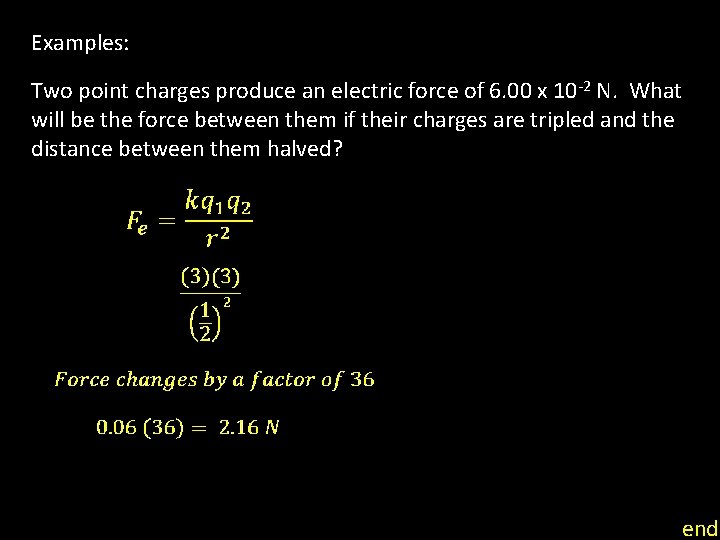
Examples: Two point charges produce an electric force of 6. 00 x 10 -2 N. What will be the force between them if their charges are tripled and the distance between them halved? end
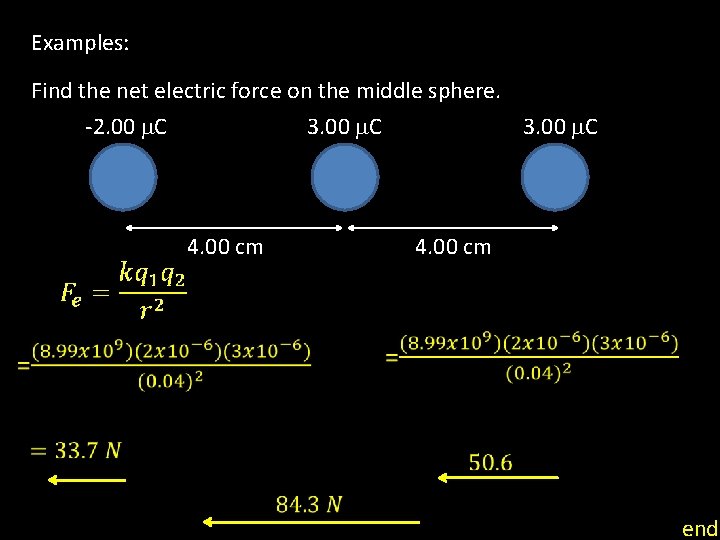
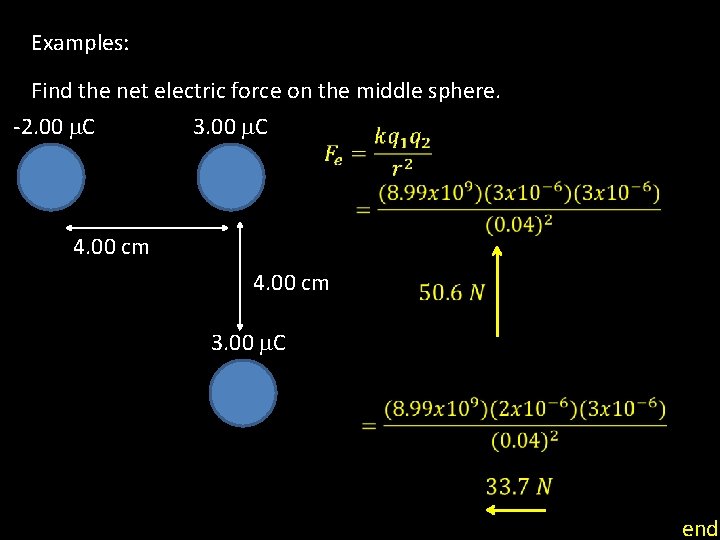
Examples: Find the net electric force on the middle sphere. -2. 00 m. C 3. 00 m. C 4. 00 cm end
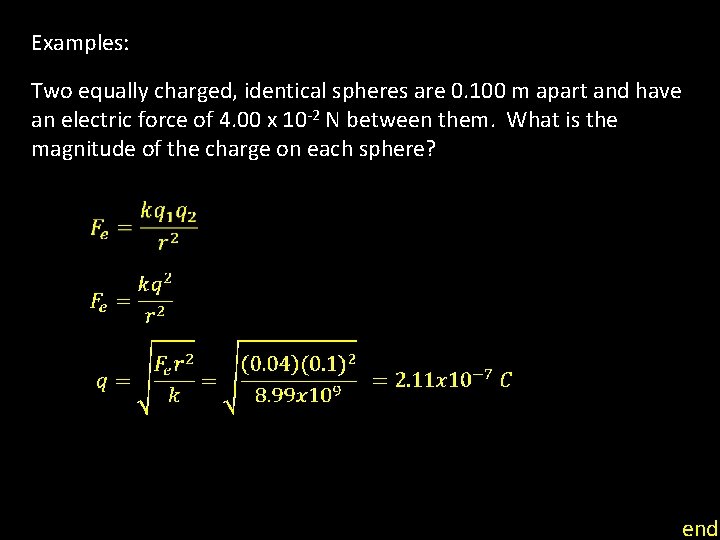
Examples: Two equally charged, identical spheres are 0. 100 m apart and have an electric force of 4. 00 x 10 -2 N between them. What is the magnitude of the charge on each sphere? end
Examples: Find the net electric force on the middle sphere. -2. 00 m. C 3. 00 m. C 4. 00 cm 3. 00 m. C end
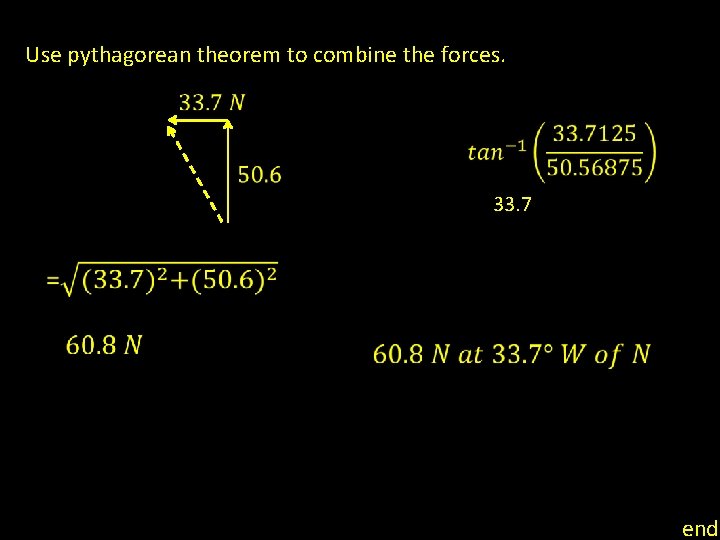
Use pythagorean theorem to combine the forces. 33. 7 end