
Physics 213 General Physics Chapter 5 Laws of
- Slides: 24
Physics 213 General Physics Chapter 5
Laws of Physics
True or False? • All things in nature obey the laws of physics • Most things in nature obey the laws of physics • Some things in nature obey the laws of physics
Laws of Physics • Man-made • Based on our observation of God’s creation
Newton’s 1 st Law • Objects at rest tend to remain at rest unless acted upon by an external force • Objects in motion tend to remain in motion unless acted upon by an external force
Newton’s 1 st Law • Simply put; objects tend to resist changes in their state of motion • Putting it another way, objects tend to resist acceleration • This tendency to resist changes in their motion is called inertia
Force A force is required to cause a change in motion
Force A force is required to cause an change in motion acceleration
Force A force is required to cause an change in motion acceleration Newton’s 1 st Law
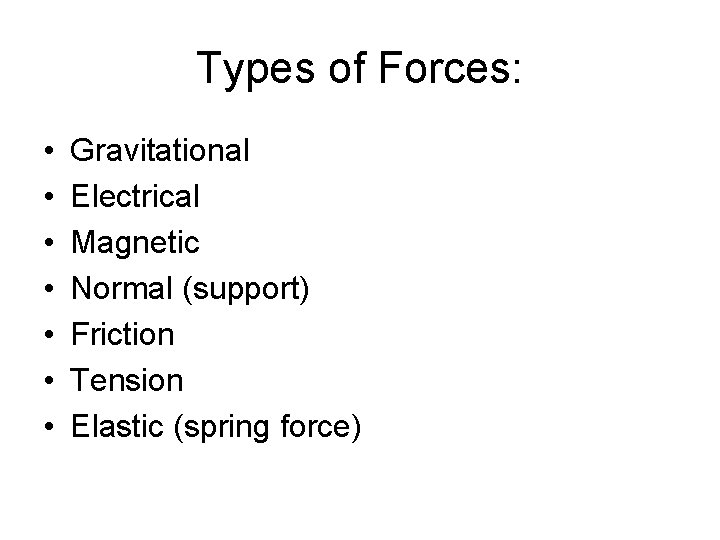
Types of Forces: • • Gravitational Electrical Magnetic Normal (support) Friction Tension Elastic (spring force)
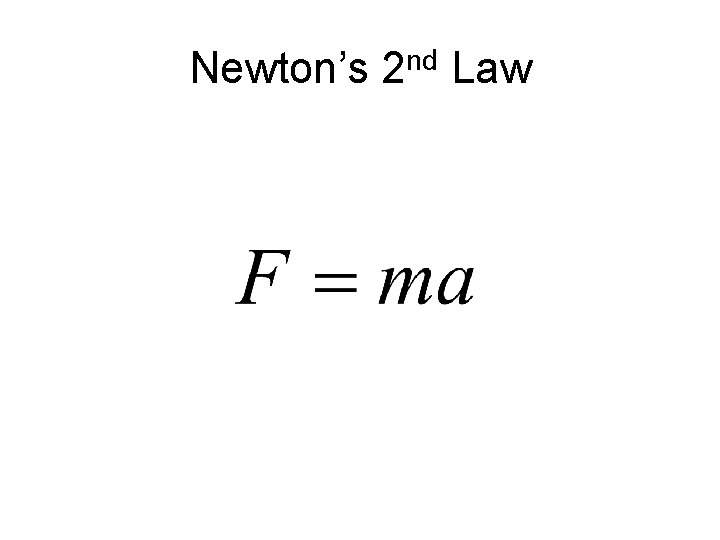
Newton’s 2 nd Law • Newton observed that if a force is exerted on an object, the object accelerates • By measuring displacements and times, he was able to calculate the corresponding acceleration
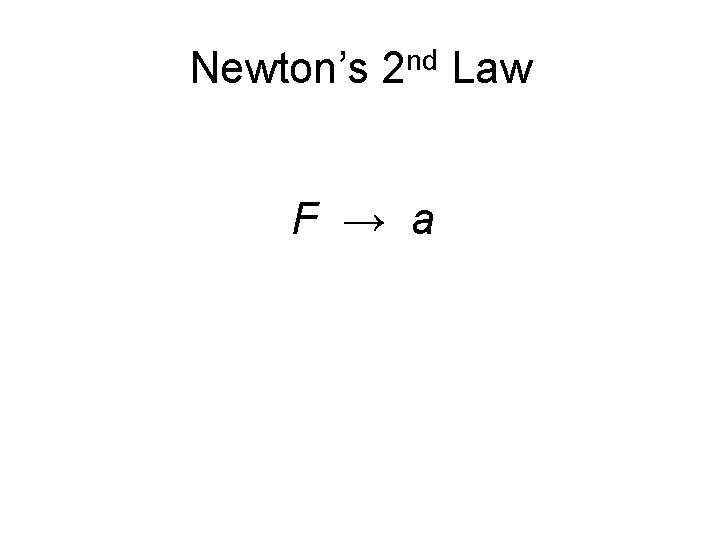
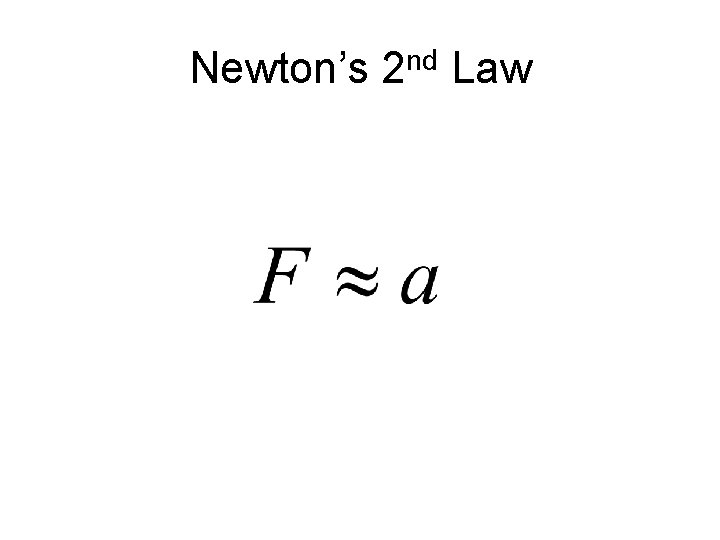
Newton’s 2 nd Law F → a
Newton’s 2 nd Law • Newton observed that an increase in force results in an increase in acceleration • Likewise a decrease in force results in a decrease in acceleration • The acceleration is directly proportional to the force causing the acceleration • By changing the magnitude of the force applied to the same object, the acceleration changed proportionally
Newton’s 2 nd Law
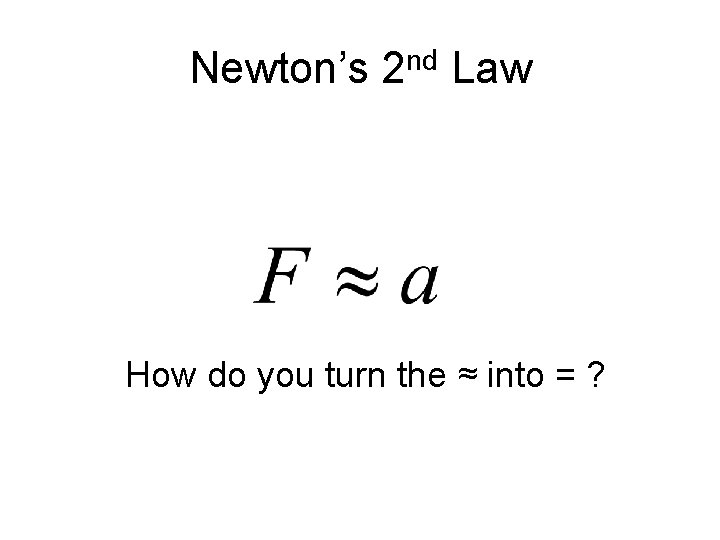
Newton’s 2 nd Law How do you turn the ≈ into = ?
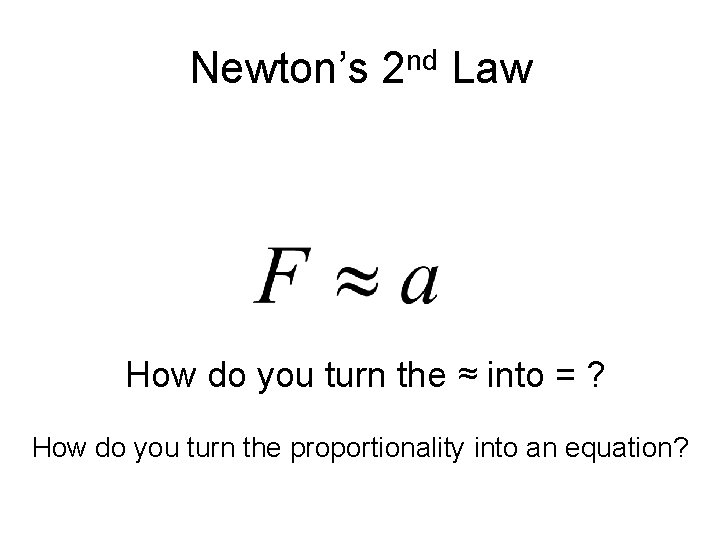
Newton’s 2 nd Law How do you turn the ≈ into = ? How do you turn the proportionality into an equation?
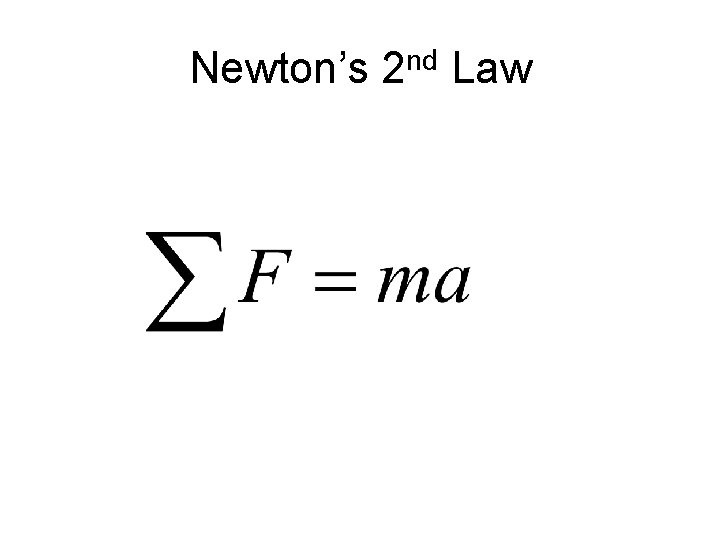
Newton’s 2 nd Law
Newton’s 2 nd Law
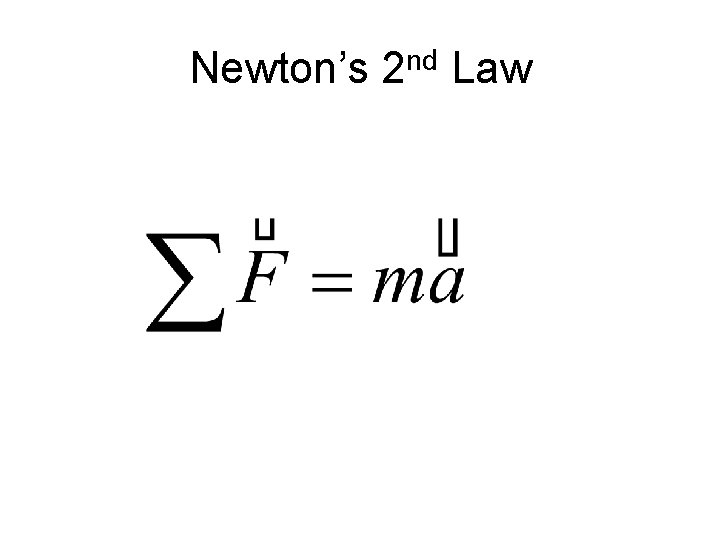
Newton’s 2 nd Law
Newton’s 2 nd Law Examples 1, 2, 3
Newton’s 3 rd Law When an object exerts a force on a second object, the second object exerts an equal and opposite force on the first object If I push on the wall with a force of 10 lbs, the wall pushes back on me with a force of 10 lbs
Newton’s 3 rd Law What force causes an automobile to move? What force causes a propeller-driven airplane to move? What force causes a rowboat to move? What force causes you to move when you walk? If a small sports car collides head-on with a massive truck, which vehicle experiences the greater impact force? Which vehicle experiences the greater acceleration due to the impact?
Newton’s 3 rd Law When a car collides with a mosquito, both feel the same force. Why does the mosquito stop while the car continues, seemingly unaffected?
Summary of Newton’s Laws 1 st Objects tend to resist changes in motion 2 nd An object’s acceleration is proportional to the net force applied to it 3 rd Every force has an equal and opposite force