
Physics 2102 Jonathan Dowling Lecture 23 THU 15






- Slides: 25
Physics 2102 Jonathan Dowling Lecture 23: THU 15 APR 2010 Review Session : Midterm 3
EXAM 03: 6 PM THU 15 APR LOCKETT 6 The exam will cover: Ch. 28 (second half) through Ch. 32. 1 -3 (displacement current, and Maxwell's equations). The exam will be based on: HW 07 – HW 10. The formula sheet for the exam can be found here: http: //www. phys. lsu. edu/classes/spring 2010/phys 2102/formulasheet 3. pdf You can see examples of old exam IIIs here: http: //www. phys. lsu. edu/classes/spring 2009/phys 2102/Test 3. oldtests. pdf
B Highest Torque: = ± 90° sin = ± 1 Lowest Torque: = 0° & 90° sin = 0 = 180° –cos = +1 = 0° –cos = – 1
Right Hand Rule: Given Current i Find Magnetic Field B
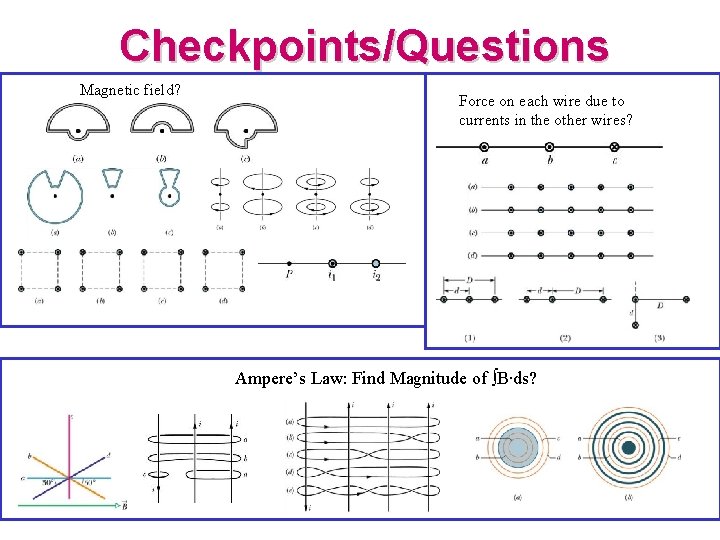
Checkpoints/Questions Magnetic field? Force on each wire due to currents in the other wires? Ampere’s Law: Find Magnitude of ∫B∙ds?
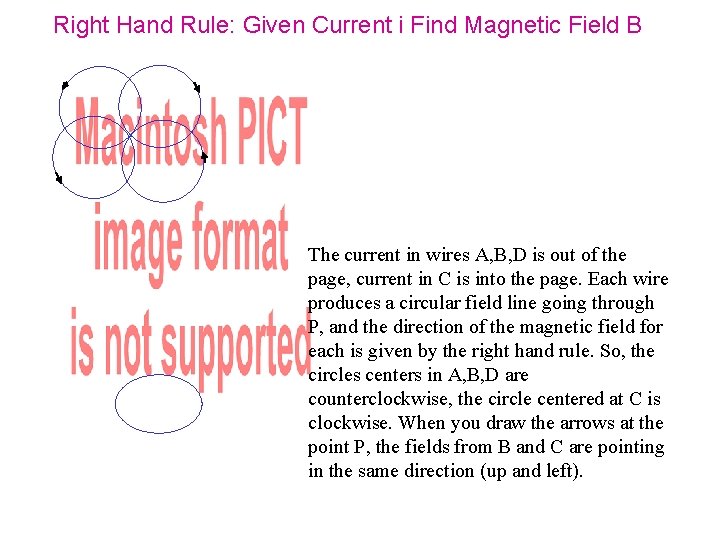
Right Hand Rule: Given Current i Find Magnetic Field B The current in wires A, B, D is out of the page, current in C is into the page. Each wire produces a circular field line going through P, and the direction of the magnetic field for each is given by the right hand rule. So, the circles centers in A, B, D are counterclockwise, the circle centered at C is clockwise. When you draw the arrows at the point P, the fields from B and C are pointing in the same direction (up and left).
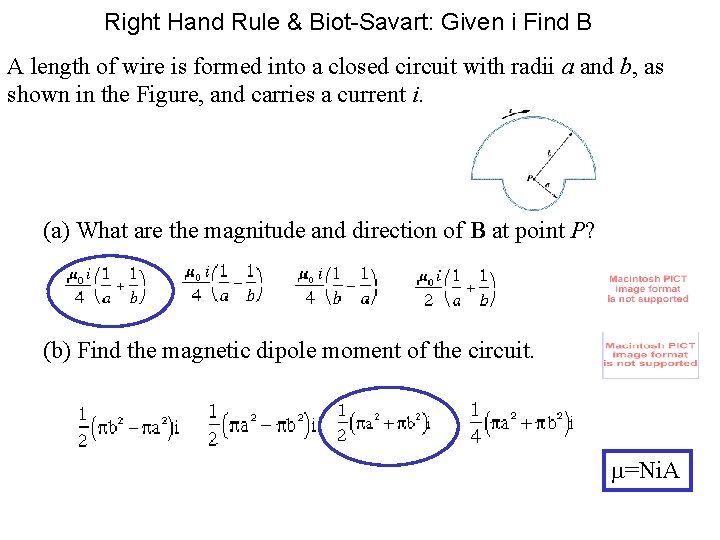
Right Hand Rule & Biot-Savart: Given i Find B A length of wire is formed into a closed circuit with radii a and b, as shown in the Figure, and carries a current i. (a) What are the magnitude and direction of B at point P? (b) Find the magnetic dipole moment of the circuit. m=Ni. A
Lenz’s Law
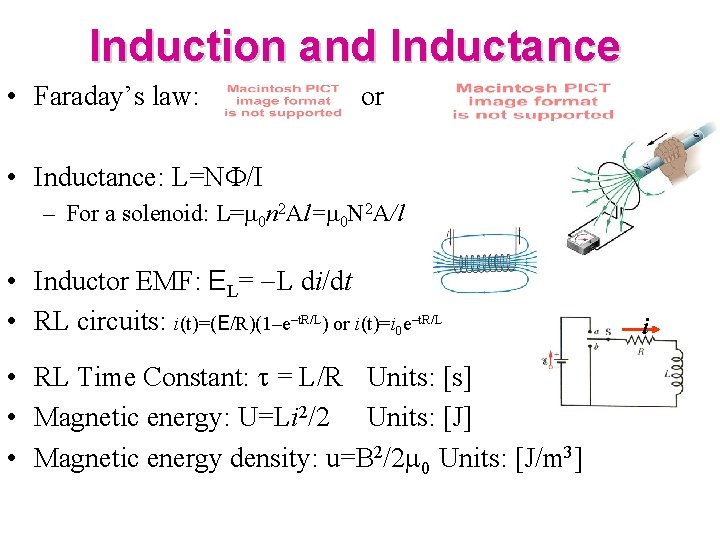
Induction and Inductance • Faraday’s law: or • Inductance: L=NF/I – For a solenoid: L=m 0 n 2 Al=m 0 N 2 A/l • Inductor EMF: EL= -L di/dt • RL circuits: i(t)=(E/R)(1–e–t. R/L) or i(t)=i 0 e–t. R/L • RL Time Constant: = L/R Units: [s] • Magnetic energy: U=Li 2/2 Units: [J] • Magnetic energy density: u=B 2/2 m 0 Units: [J/m 3] i
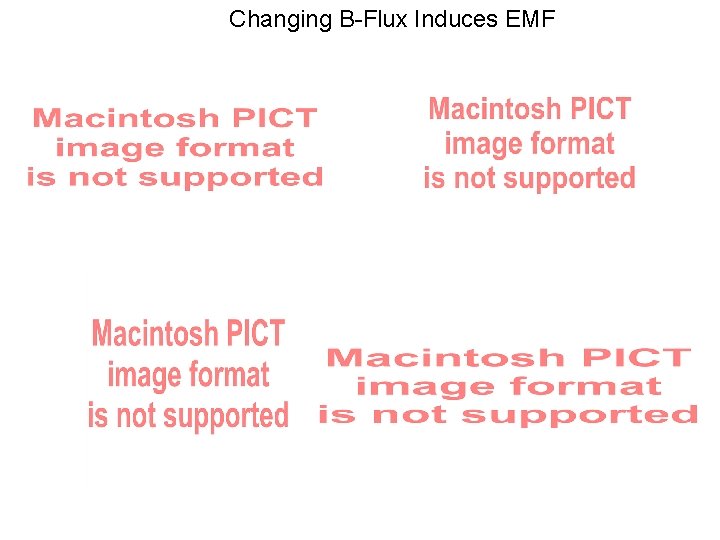
Changing B-Flux Induces EMF
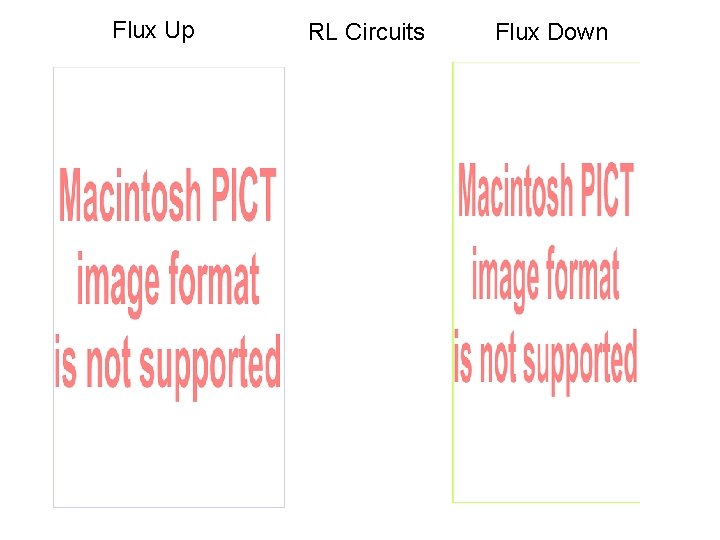
Flux Up RL Circuits Flux Down
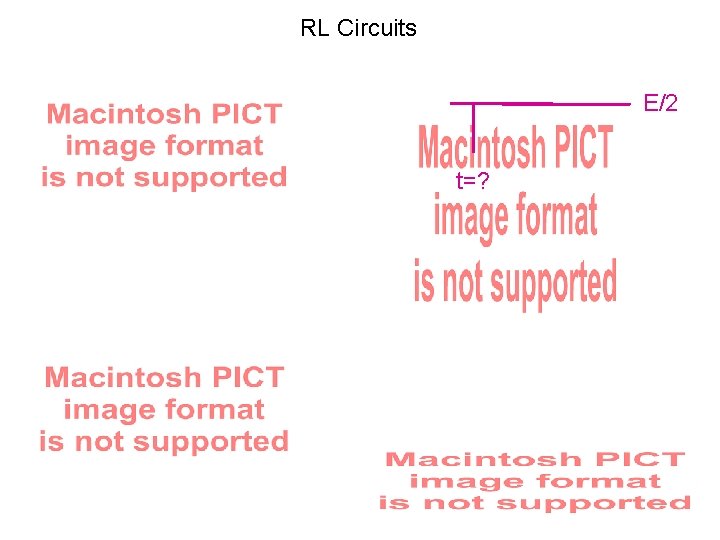
RL Circuits E/2 t=?
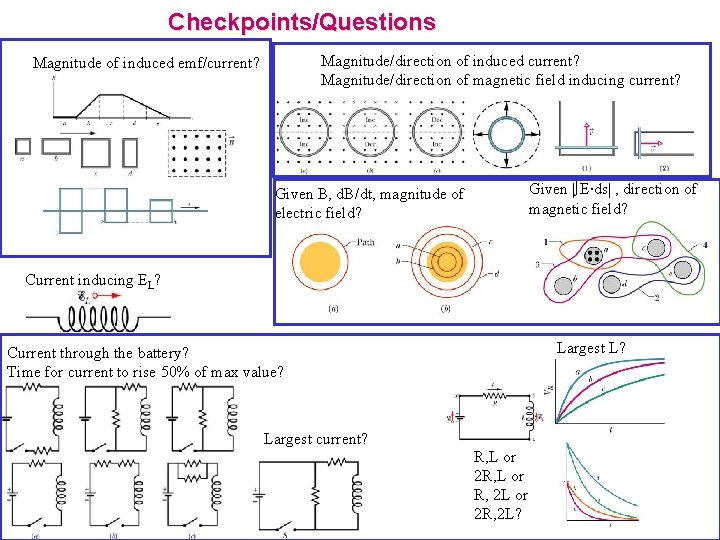
Checkpoints/Questions Magnitude/direction of induced current? Magnitude/direction of magnetic field inducing current? Magnitude of induced emf/current? Given |∫E∙ds| , direction of magnetic field? Given B, d. B/dt, magnitude of electric field? Current inducing EL? Largest L? Current through the battery? Time for current to rise 50% of max value? Largest current? R, L or 2 R, L or R, 2 L or 2 R, 2 L?
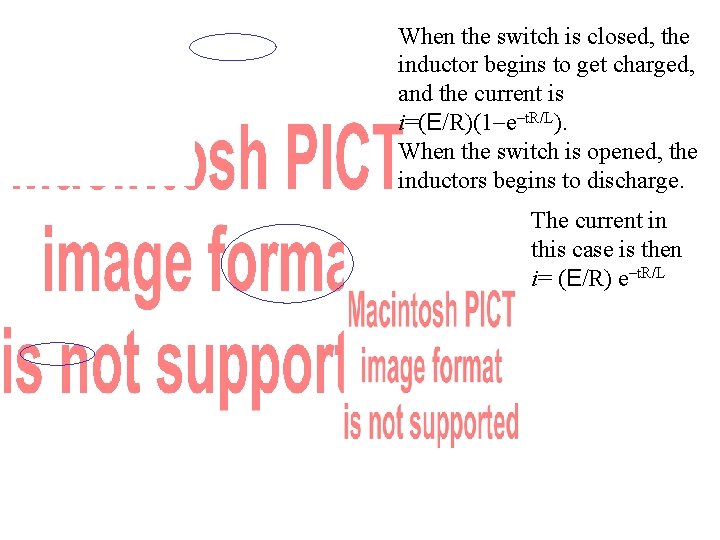
When the switch is closed, the inductor begins to get charged, and the current is i=(E/R)(1 -e–t. R/L). When the switch is opened, the inductors begins to discharge. The current in this case is then i= (E/R) e–t. R/L
E
LC Circuits
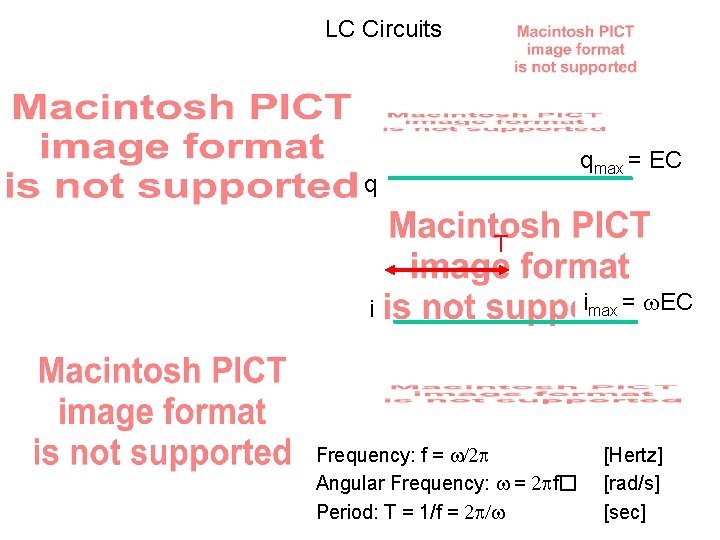
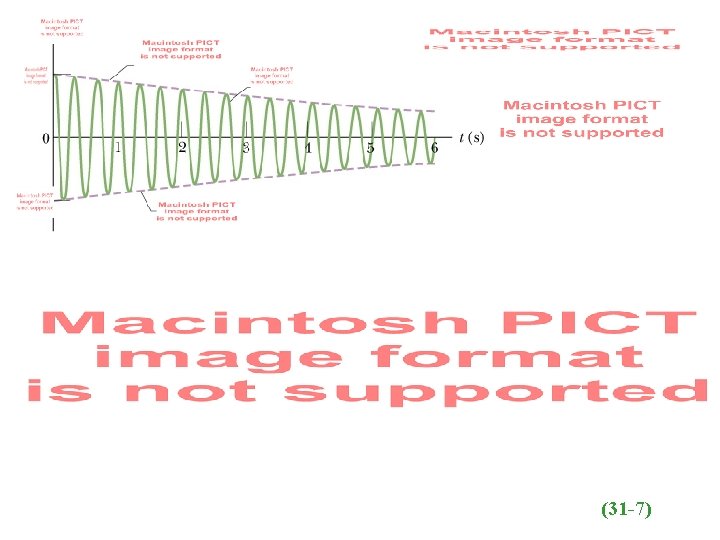
LC Circuits qmax = EC q T i Frequency: f = Angular Frequency: = f� Period: T = 1/f = imax = EC [Hertz] [rad/s] [sec]
(31 -6)
(31 -7)
r