
Physics 1 Revision Lesson 2 Factors affecting cooling
- Slides: 12
Physics 1 Revision Lesson 2 Factors affecting cooling and Insulating buildings
Factors affecting cooling
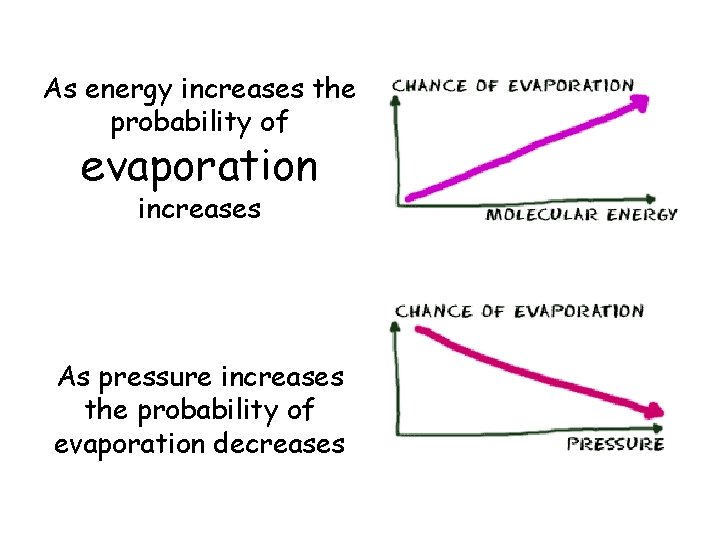
As energy increases the probability of evaporation increases As pressure increases the probability of evaporation decreases
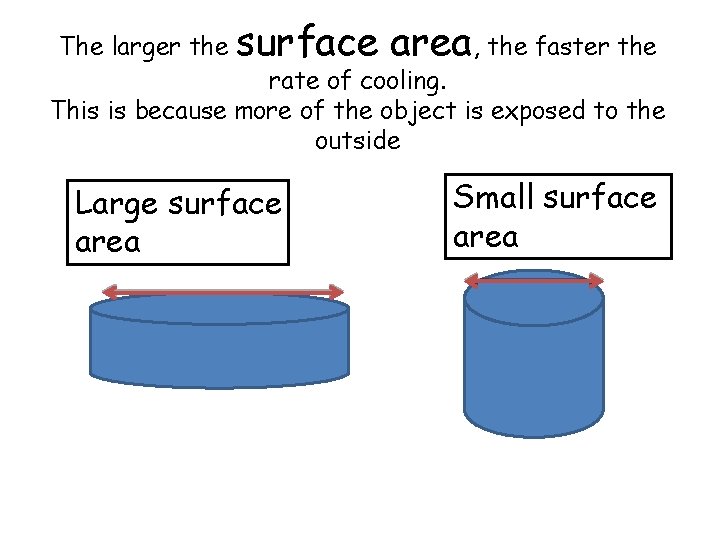
The larger the surface area, the faster the rate of cooling. This is because more of the object is exposed to the outside Large surface area Small surface area
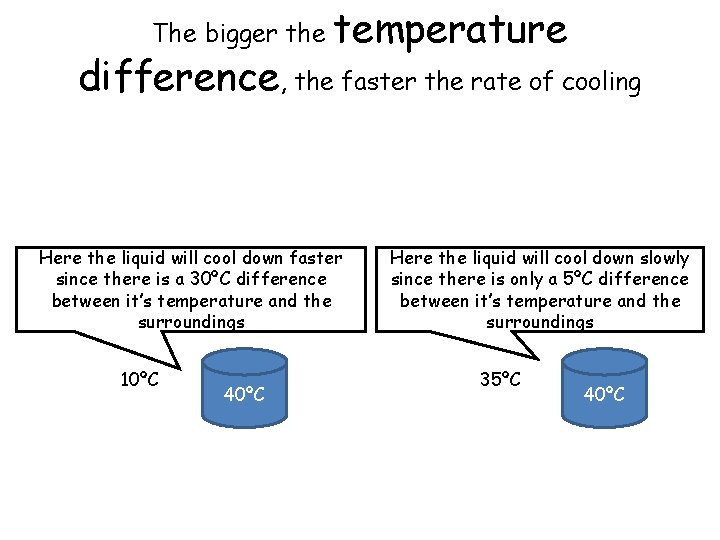
The bigger the temperature difference, the faster the rate of cooling Here the liquid will cool down faster since there is a 30ºC difference between it’s temperature and the surroundings 10ºC 40ºC Here the liquid will cool down slowly since there is only a 5ºC difference between it’s temperature and the surroundings 35ºC 40ºC
Heating and Insulating buildings
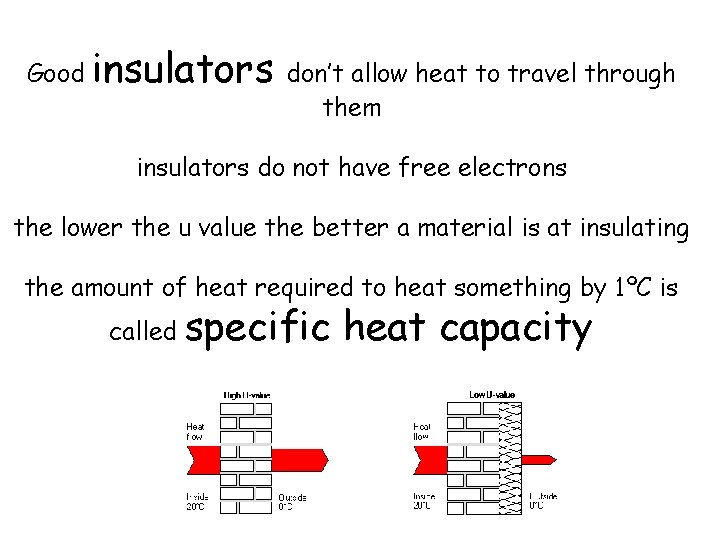
Good insulators don’t allow heat to travel through them insulators do not have free electrons the lower the u value the better a material is at insulating the amount of heat required to heat something by 1ºC is called specific heat capacity
Key words and statements
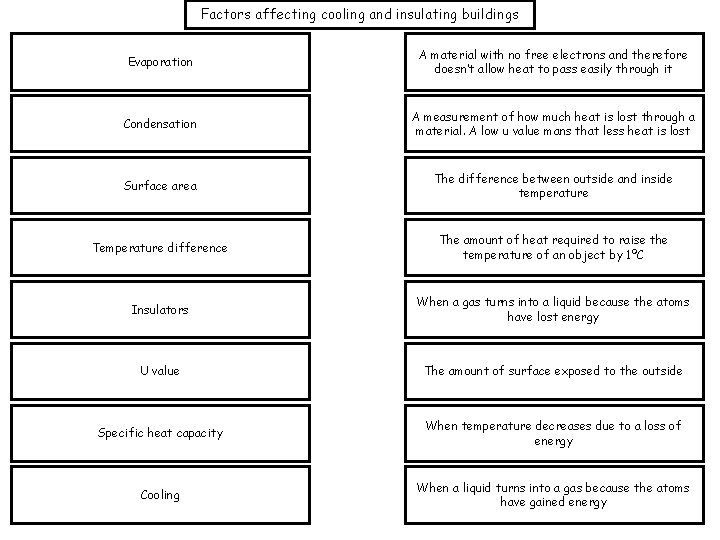
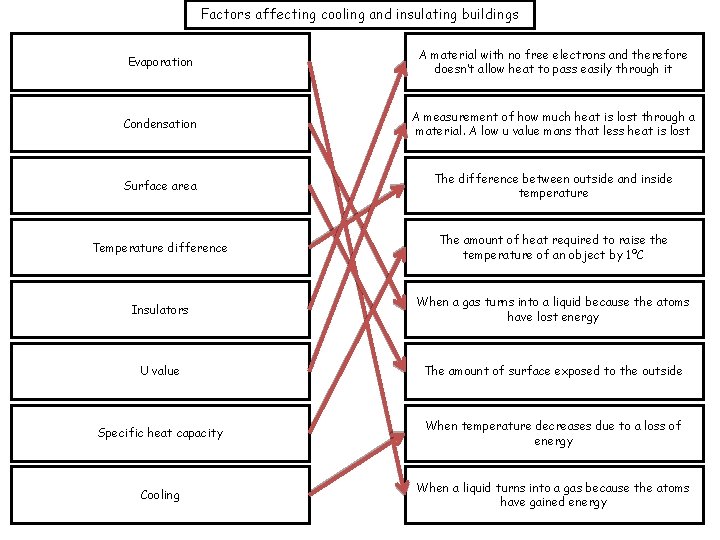
Factors affecting cooling and insulating buildings Evaporation A material with no free electrons and therefore doesn’t allow heat to pass easily through it Condensation A measurement of how much heat is lost through a material. A low u value mans that less heat is lost Surface area The difference between outside and inside temperature Temperature difference The amount of heat required to raise the temperature of an object by 1ºC Insulators When a gas turns into a liquid because the atoms have lost energy U value The amount of surface exposed to the outside Specific heat capacity When temperature decreases due to a loss of energy Cooling When a liquid turns into a gas because the atoms have gained energy
Factors affecting cooling and insulating buildings Evaporation A material with no free electrons and therefore doesn’t allow heat to pass easily through it Condensation A measurement of how much heat is lost through a material. A low u value mans that less heat is lost Surface area The difference between outside and inside temperature Temperature difference The amount of heat required to raise the temperature of an object by 1ºC Insulators When a gas turns into a liquid because the atoms have lost energy U value The amount of surface exposed to the outside Specific heat capacity When temperature decreases due to a loss of energy Cooling When a liquid turns into a gas because the atoms have gained energy
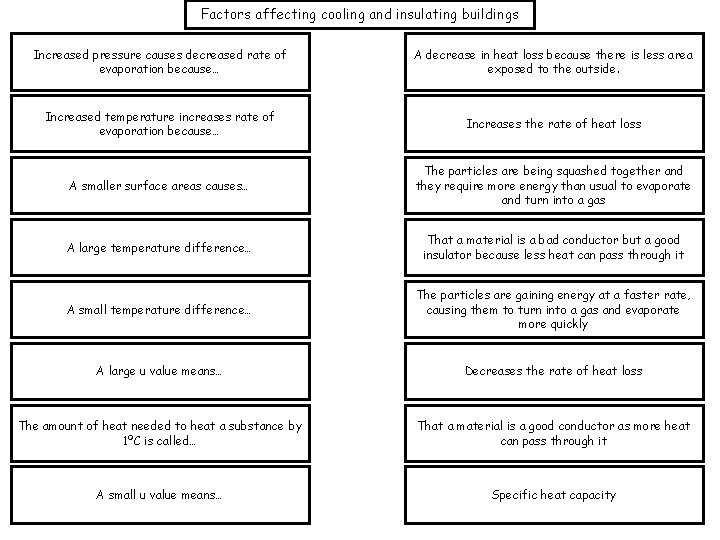
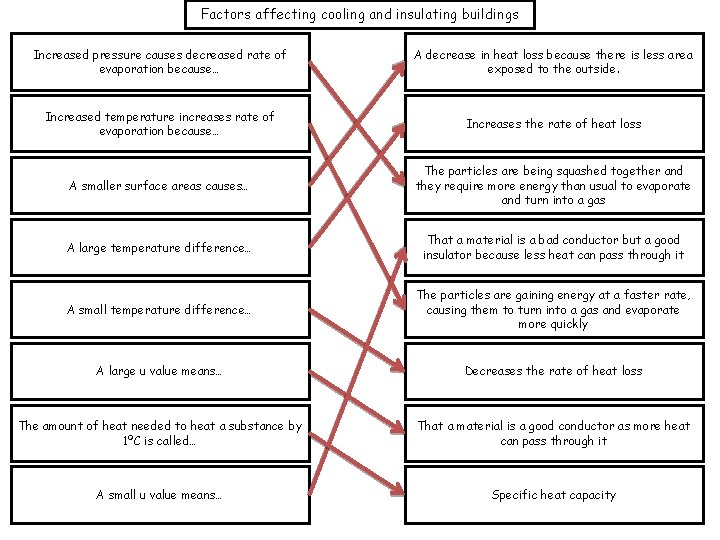
Factors affecting cooling and insulating buildings Increased pressure causes decreased rate of evaporation because… A decrease in heat loss because there is less area exposed to the outside. Increased temperature increases rate of evaporation because… Increases the rate of heat loss A smaller surface areas causes… The particles are being squashed together and they require more energy than usual to evaporate and turn into a gas A large temperature difference… That a material is a bad conductor but a good insulator because less heat can pass through it A small temperature difference… The particles are gaining energy at a faster rate, causing them to turn into a gas and evaporate more quickly A large u value means… Decreases the rate of heat loss The amount of heat needed to heat a substance by 1ºC is called… That a material is a good conductor as more heat can pass through it A small u value means… Specific heat capacity
Factors affecting cooling and insulating buildings Increased pressure causes decreased rate of evaporation because… A decrease in heat loss because there is less area exposed to the outside. Increased temperature increases rate of evaporation because… Increases the rate of heat loss A smaller surface areas causes… The particles are being squashed together and they require more energy than usual to evaporate and turn into a gas A large temperature difference… That a material is a bad conductor but a good insulator because less heat can pass through it A small temperature difference… The particles are gaining energy at a faster rate, causing them to turn into a gas and evaporate more quickly A large u value means… Decreases the rate of heat loss The amount of heat needed to heat a substance by 1ºC is called… That a material is a good conductor as more heat can pass through it A small u value means… Specific heat capacity